Shop by Vehicle
 Track Order
 Contact Us
sat·u·ra·tion point (n.)
1. The stage beyond which no more of something can be absorbed or accepted.
2. The point at which there are so many of a thing that no more can be added successfully.
If entry-level ADVs haven’t reached this juncture yet, they’re fast approaching it. That’s all the more likely with the emergence of the Kawasaki KLE500.
Small-bore varietals just keep sprouting out of the adventure landscape. Royal Enfield signaled the segment’s renaissance with its renewed Himalayan. Following close behind was the KTM 390 Adventure R. Momentum only built from there. Moto Morini’s Vettore 450 debuted this year. BMW’s F 450 GS waits in the wings. Even Honda’s long-standing CB500X/NX500 is a strong contender.
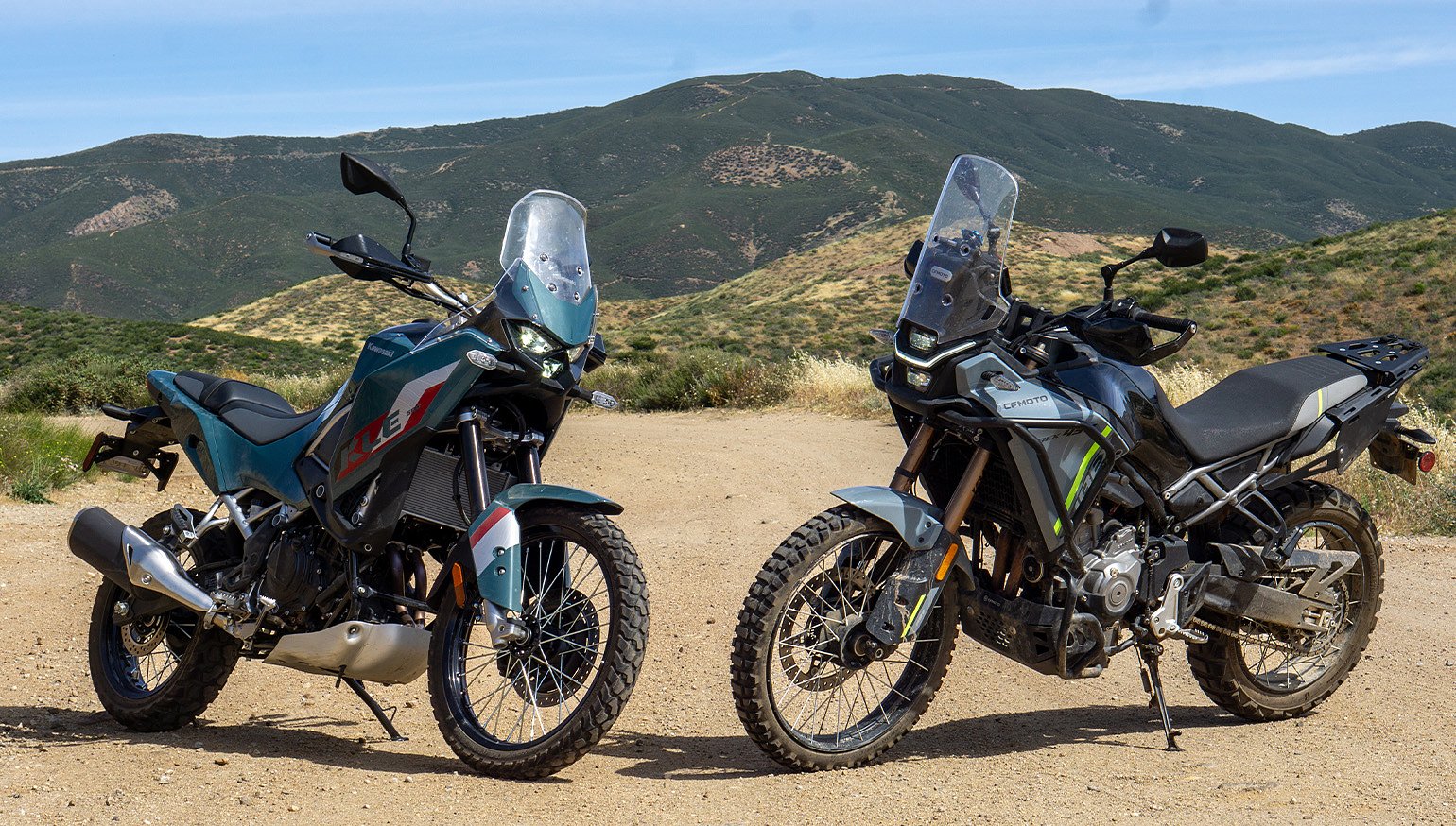
Suffice it to say, the class is crowded. While each newcomer has enjoyed its time in the spotlight, one model in particular has remained relevant since its debut. That, of course, is CFMOTO’s Ibex 450. If the KLE is to rule the roost, that’s the foe it needs to fell. What better way to find out if it’s up to the task than a head-to-head comparison?
Tale of the tape
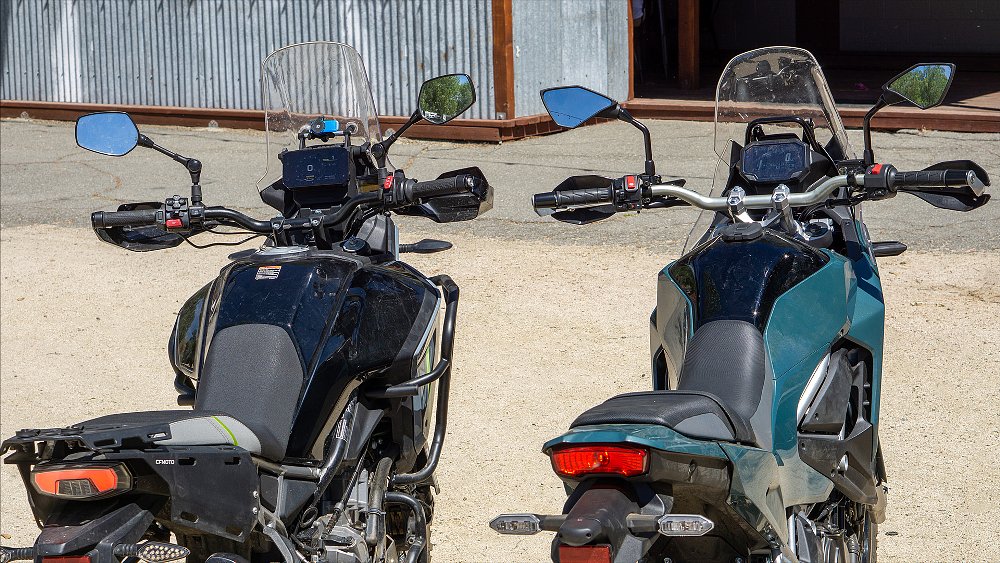
From an aerial view, there’s little to choose between the Kawi and CF. Both utilize steel trellis frames. Both cram parallel twins into those skeletal structures. Both weigh 420-something pounds (on RevZilla’s scales). But most importantly, both bear similar retail values. Sixty-four, ninety-nine buckaroos in the Ibex 450’s case and $6,599 for the KLE500. However, zooming in reveals both minor and major discrepancies.
The green machine shoulders a 4.2-gallon tank. Its Chinese counterpart holds 4.6 gallons. The former’s seat stands at a formidable 34.3 inches. Significantly shorter is the latter’s 32.3-inch seat height. Those dimensional deltas are just as pronounced when examining each model’s trail-capable build.
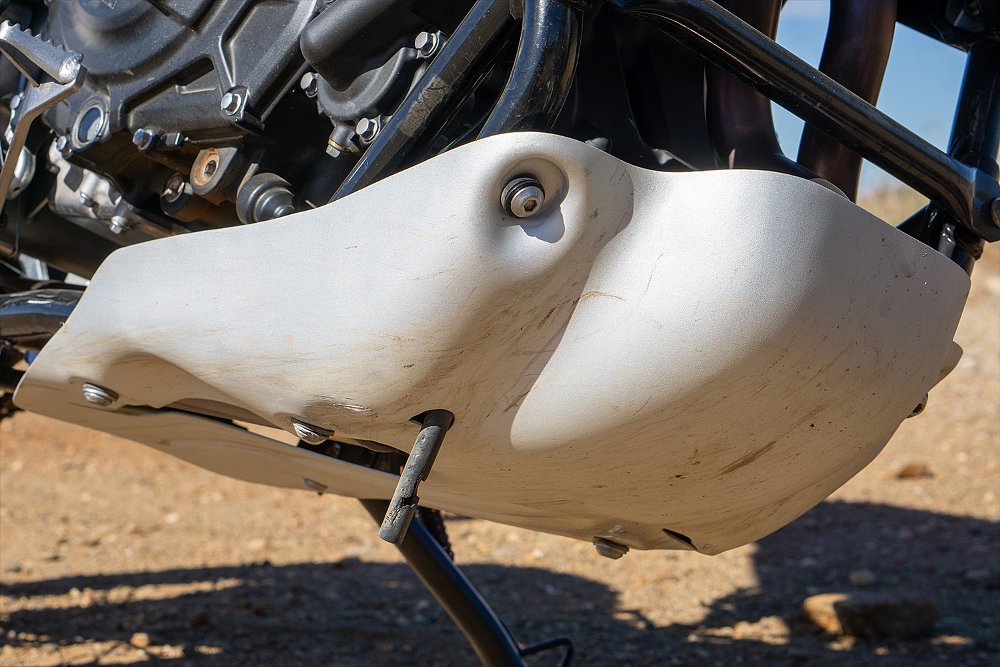
The KLE500’s front end enjoys 8.3 inches of travel, but its rear travel is reduced to 7.7 inches. By contrast, the Ibex 450 takes the balanced approach, floating on 7.9 inches of travel both fore and aft. More considerable is the gap in ground clearance. Hovering 8.7 inches over the terrain, the Ibex’s belly pan is far less likely to drag than the KLE’s, whose undercarriage rests just 7.3 inches from the ground.
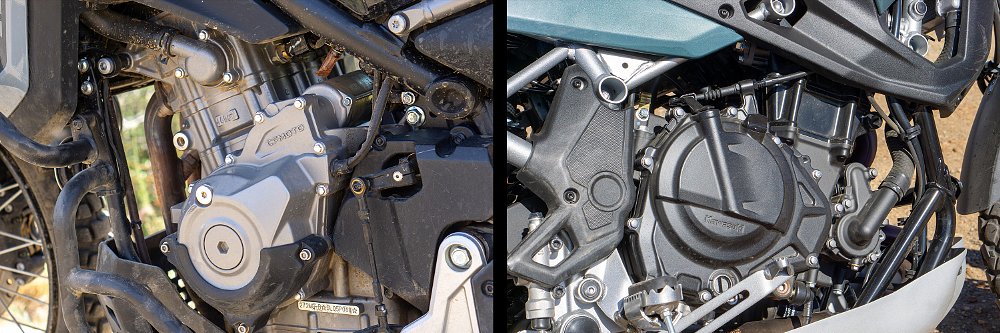
Many of the differences between the two mid-size models range from negligible to noteworthy, but the variances between their two engines rise to the philosophical plane. Both parallel twins powered sport bikes before venturing into the ADV domain. Namely, CFMOTO’s 450SS and the Kawasaki Ninja 500. Both engines are oversquare. Both mate to six-speed gearboxes and slipper clutches. But the major distinction lies in each engine’s firing order.
The Chinese-born example favors a 270-degree crankshaft, while the Japanese-made mill houses a 180-degree unit. Each bike’s listed power figures illustrate the strong suits of its respective configuration. Whereas the 44-horsepower Ibex peaks at 8,500 rpm, the Ninja’s, I mean, the KLE’s 51 ponies aren’t fully accessible until 10,000 rpm. That Freudian slip probably, no, definitely alludes to the fact that Team Green failed to retune its parallel twin for life in an adventure bike. It's an oversight that can’t be similarly attributed to CFMOTO.
The dissimilarities between the KLE500 and Ibex 450 are apparent on paper alone. Those deviations are even more distinct when riding both bikes back to back. We can pore over spec sheets, we can obsess over every millimeter, but if you’re reading this, my guess is that the in-saddle experience is what matters to you most.
The ground rules
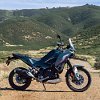
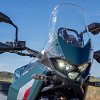
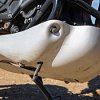
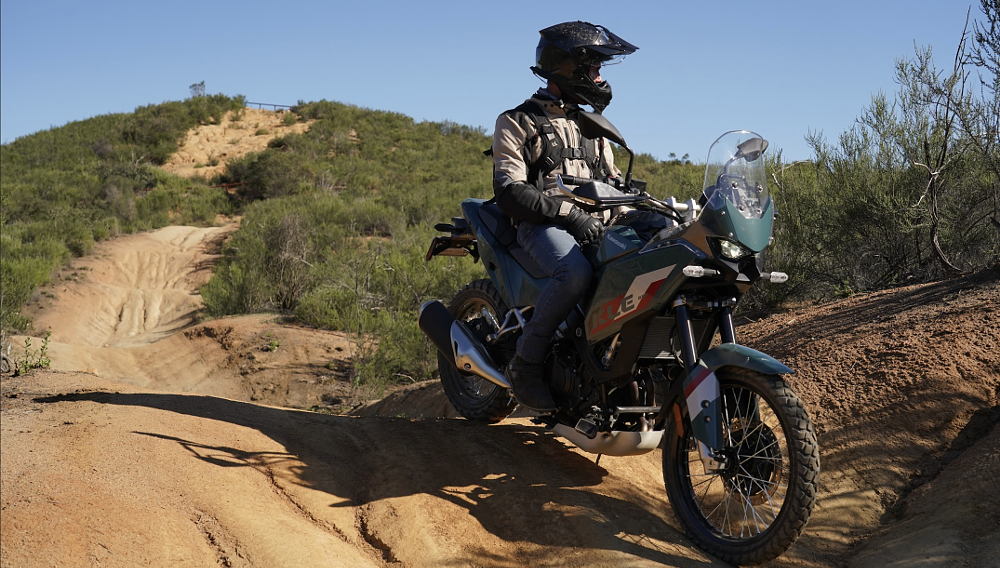
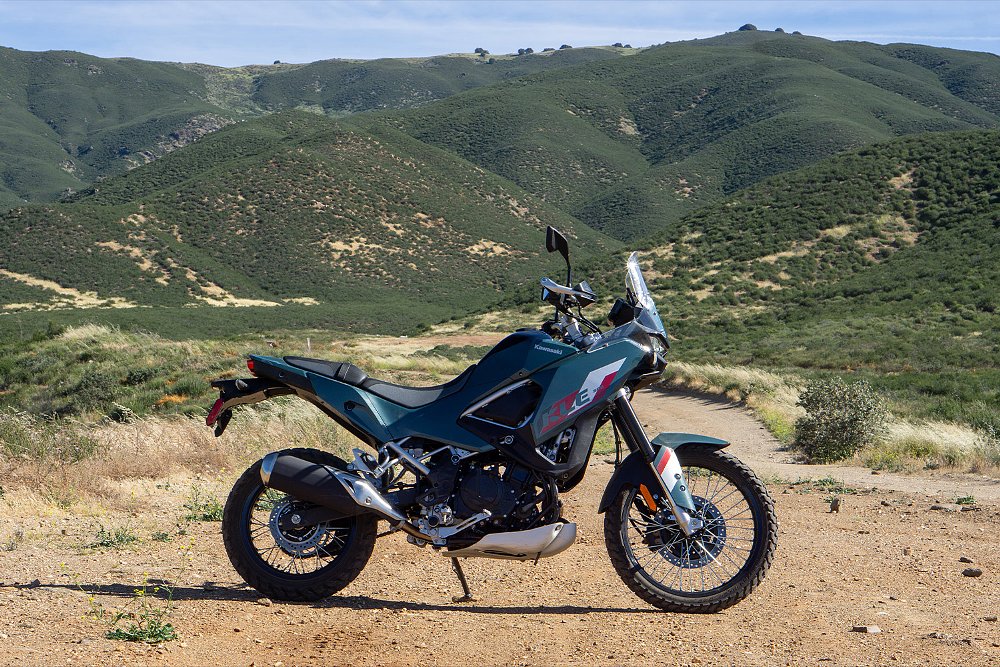
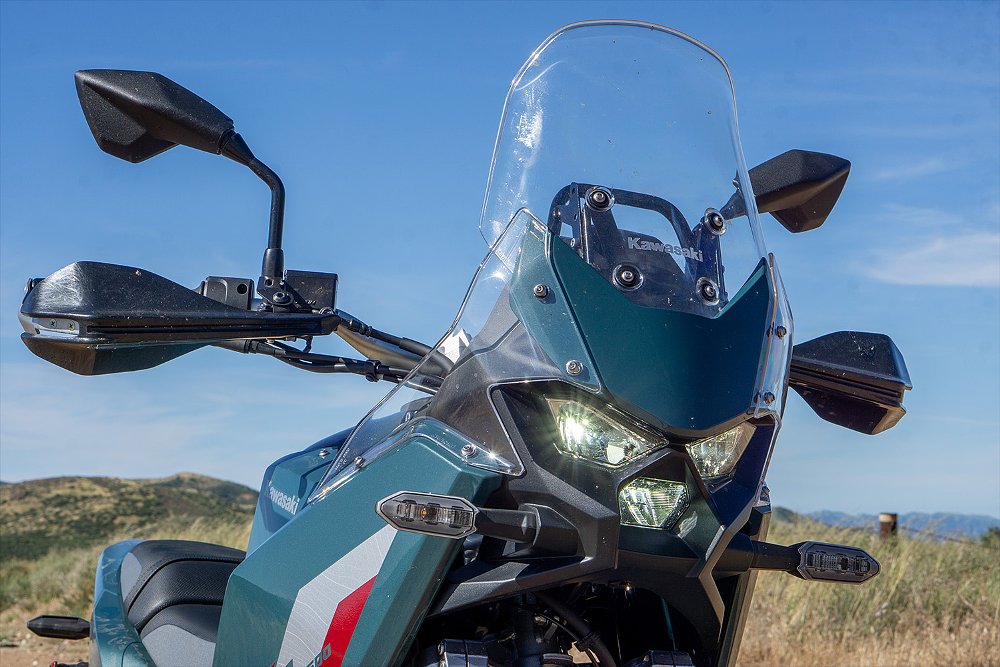
In the green corner, we have Kawasaki’s KLE500 SE. Unlike the base trim, which features an LCD instrument panel, a compact windscreen, and a skimpy skid plate, the SE indulges in several upgrades. Its metal-backed handguards and rail-wrapping bash plate bode ill for trailside brush and errant rocks. Meanwhile, a touring windscreen and a 4.3-inch TFT display enhance the comforts of the cockpit. Lest we forget the all-around LED lighting.
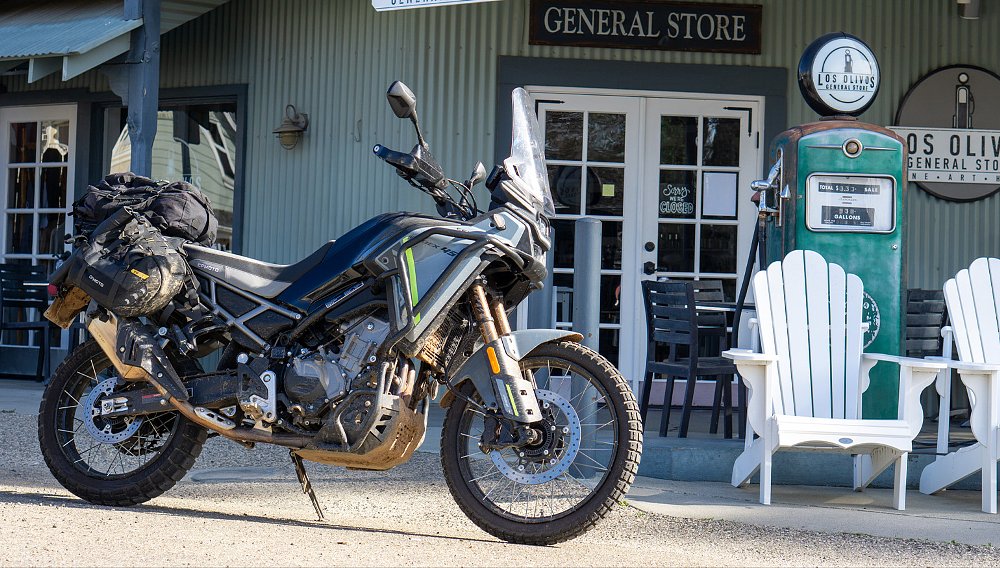
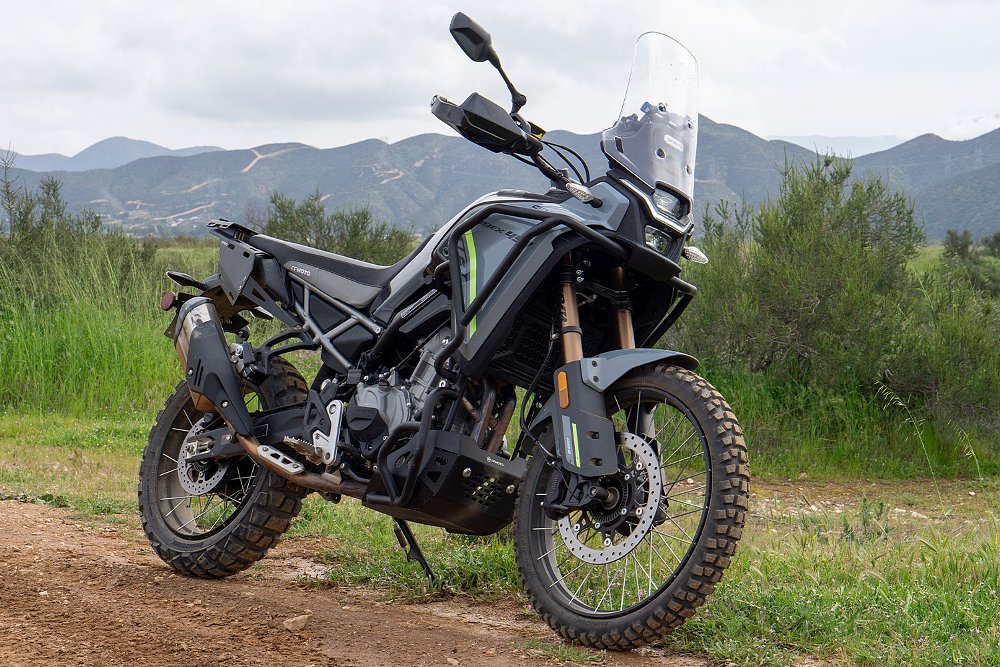
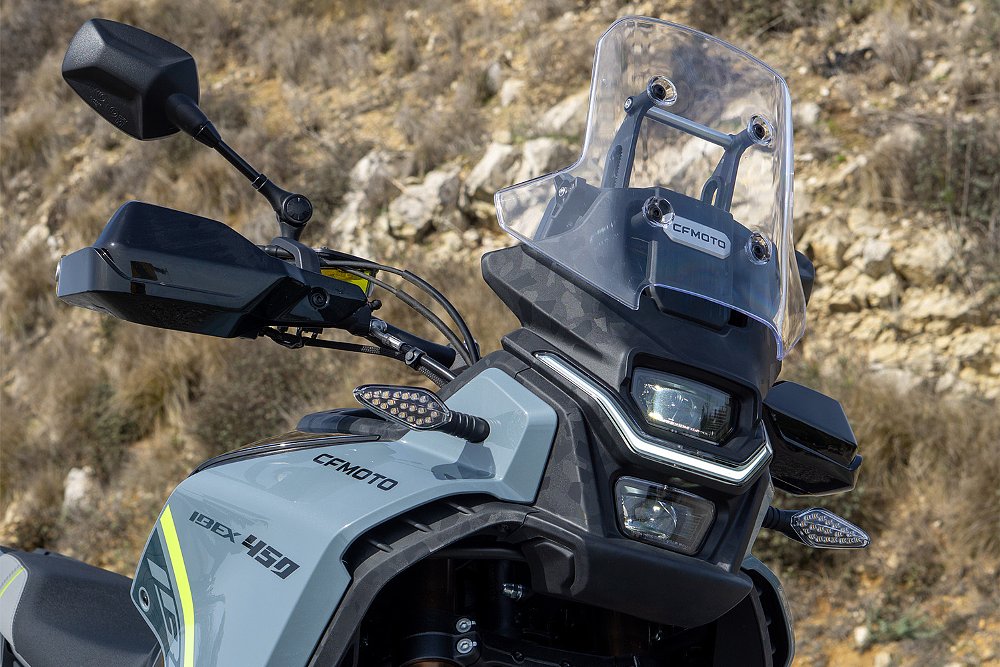
Standing in the teal corner is the CFMOTO Ibex 450. Unlike the SE, this Ibex isn’t a bone-stock example. Far from it, actually. Accessories like engine guards, heated grips, a reinforced skid plate, and a 44-tooth rear sprocket bestow both advantages and disadvantages on the Ibex. As such, my assessment of the model isn’t based on its current constitution. Instead, I will compare the KLE500 SE to the Ibex in its stock form. Let the punches fly.
Motoring down the road
Today’s breed of beginner ADVs are more like half-breeds. Small of stature and groomed to serve, these mounts still harbor a taste for untamed lands, like colts with various degrees of mustang blood in their pedigrees. What other reason for the tall saddle heights and long-travel suspenders? Why else adopt “rally-inspired” styling and 21-inch front hoops?
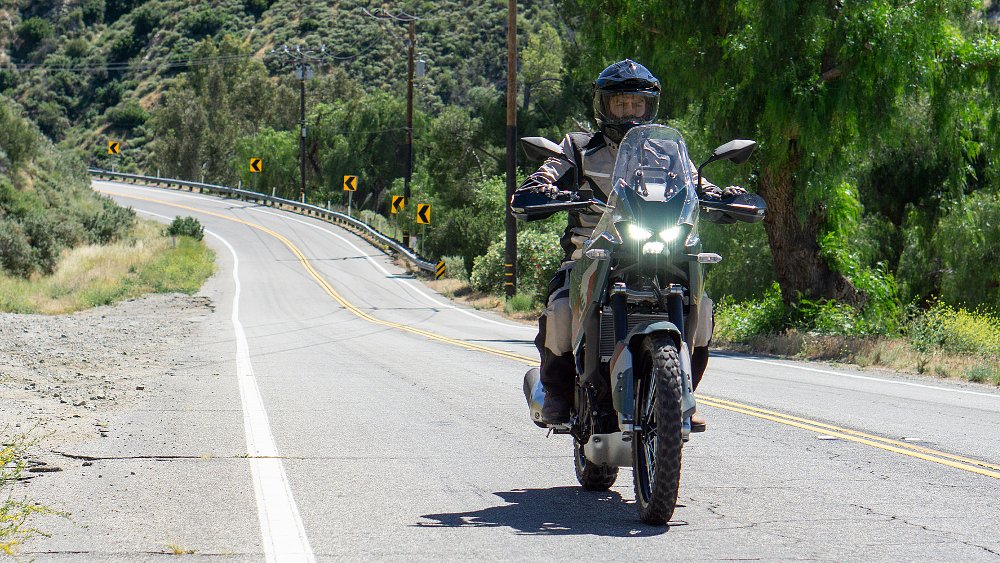
This herd of small(ish)-capacity adventurers are more fit for the trail than ever. That’s why it’s a shame that most are destined live out the majority of their years on the paved path. The KLE500 and Ibex 450 are no exception. Which is why, despite the segment’s new dirt-focused decree, this comparison starts on the blacktop. More specifically, how each engine performs in such environs.
CFMOTO’s 449 cc parallel twin is a well-known entity in these parts. Thoroughly documented in Joe Jackson's Ibex 450 first-ride review and frequently revisited in my ongoing long-term test, the powerplant’s reputation precedes it. Lacking neither bottom-end torque nor midrange throttle response, it’s impressed every Common Treader that’s given it a whirl. Not to mention, it carries a pretty spicy exhaust note, if you ask me. That’s not to say it’s faultless, though.
Undermining much of the mill’s performance potential is its short gearing. Cruising at 75 mph in top gear spins the engine up to 7,000 rpm (stock gearing). The little twin lets you know it, too. Forget singing, its screaming. Shrieking, even. With just 8,500 rpm on its rev counter, it’s easy to see why. Under practically all other conditions, the engine exceeds expectations, but interstate speeds are clearly its Kryptonite. The Ibex 450 isn’t the only one with both wonderful and woeful characteristics, though.
Earning just as much Common Tread coverage is Kawasaki’s 451 cc p-twin. That’s because the KLE500 isn’t the only model to house the mill. So, too, do the Eliminator, Ninja 500, and Z500. What’s more, the engine remains unchanged in all four bikes, which explains why the KLE prioritizes top-end horsepower over a torquey low end. Yes, its midrange response rivals that of the Ibex, but that peppiness arrives with a side helping of engine vibes.
As Ari noted in his first-ride article, the twin’s buzzy behavior rears its head as early as 4,500 rpm. Vibrations course through the footpegs, rattle through the seat, and jangle through the hand grips and levers. Basically, every touchpoint shudders as the KLE zips its way up the rev range, with the highest-frequency vibes arriving around 6,000 rpm. Unfortunately, that’s where I spent most of my time aboard the bike.
Kawasaki’s p-twin revs at 6,750 rpm when maintaining 75 mph in sixth gear. That’s spinning nearly as much as the Ibex at the same cruising speed. The main difference is that the KLE’s redline is 11,000 rpm, not 8,500 rpm. At fast-lane speeds, the Kawi may not be wailing like the CFMOTO, but the latter doesn’t vibrate like the former.
For that reason, I would choose the Ibex over the KLE when it comes to freeway duties. It’s by the narrowest of margins, though. That’s because both bikes possess their share of strengths and shortcomings. Neither cockpit is uninviting, thanks to ergonomics that slot the rider into a comfortable pocket — but neither is perfect. The KLE benefits from better leg room and wind protection. The Ibex boasts a broader seat and lower stand-over height. In the end, it’s engine character that splits the tie, and when it comes to mile-maxxing, I’d go with CFMOTO’s twin every time.
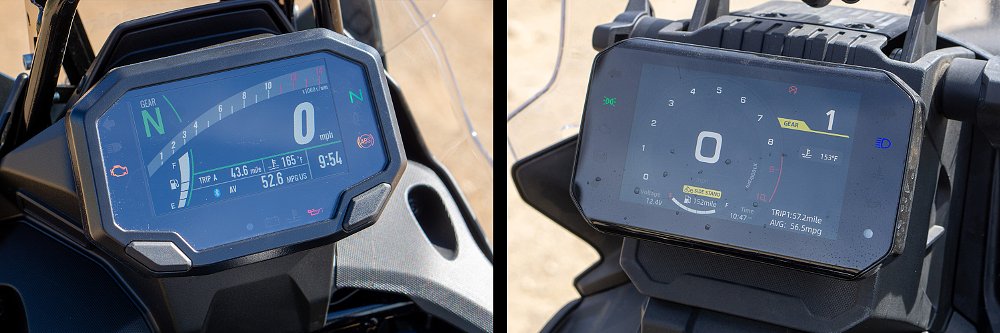
It’s the opposite outcome when the road starts to twist and turn. That’s to say, I’m choosing the KLE if I’m in a sporty mood. Not only does its high-revving mill suit such pursuits, but the accompanying vibrations aren’t nearly as distracting in those settings. In fact, they tend to enhance the experience. Add to that KYB’s slightly stiff suspension (through the initial stroke, at least) and a tall, wide handlebar, and you have a bike that bends around hairpins and flops side-to-side with the utmost of ease.
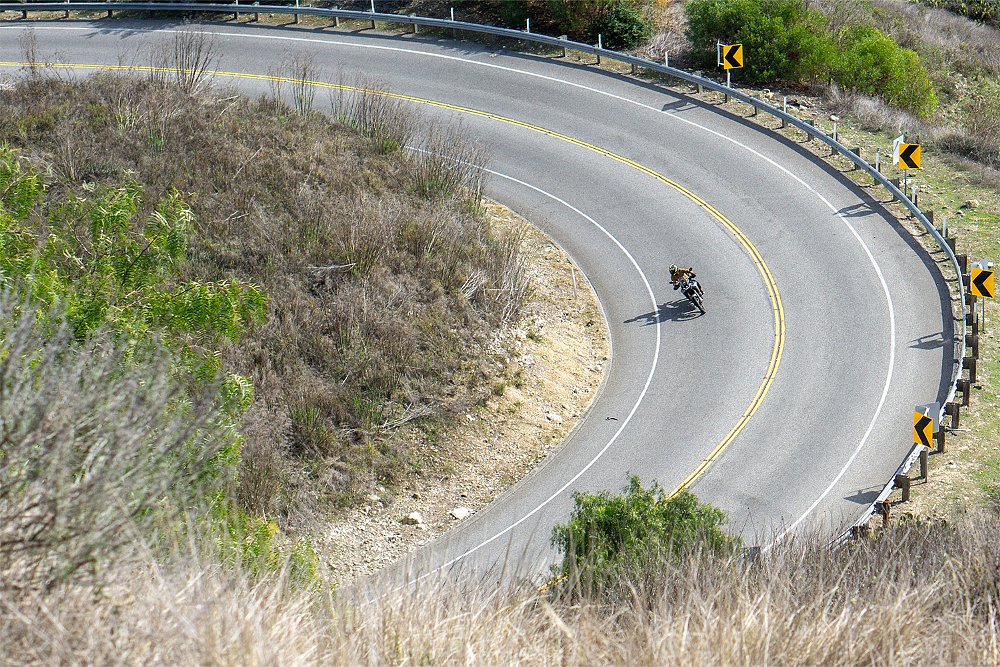
That doesn’t mean the Ibex is a poor-handling machine. Not in the least. I would happily bend the Ibex through a set of sweepers. It also holds its own in tighter, technical routes, but feels slightly less lively than its Japanese rival. Maybe that’s due to its larger tank and broader shoulders. Maybe it comes down to the — and I’m using the technical term here — squishier suspension. All I know is, if I’m looking for a good time on canyon road, I’m going with the green one.
For those losing count, the score is now 1-1. Which brings us to the all-important tie breaker.
Digging up dirt
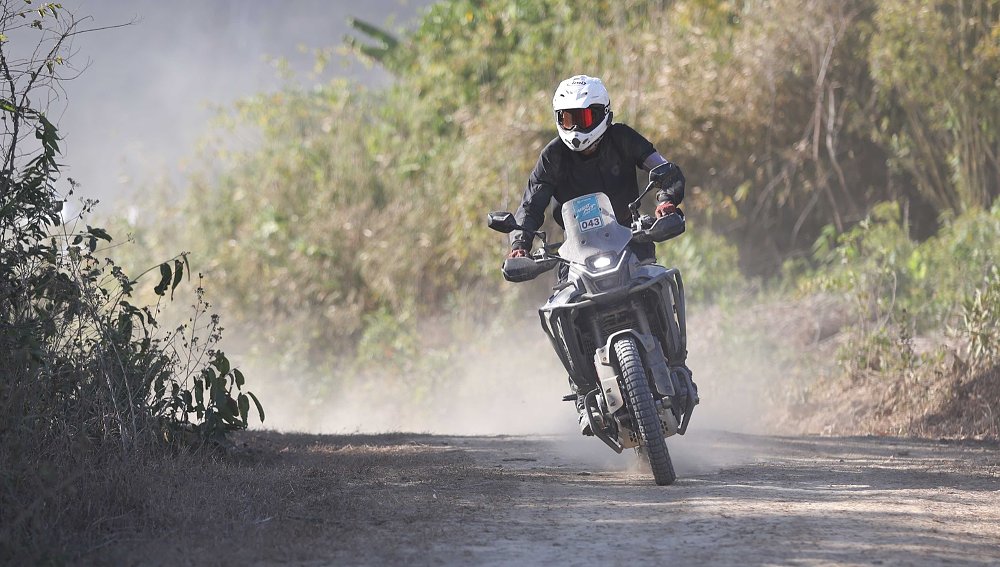
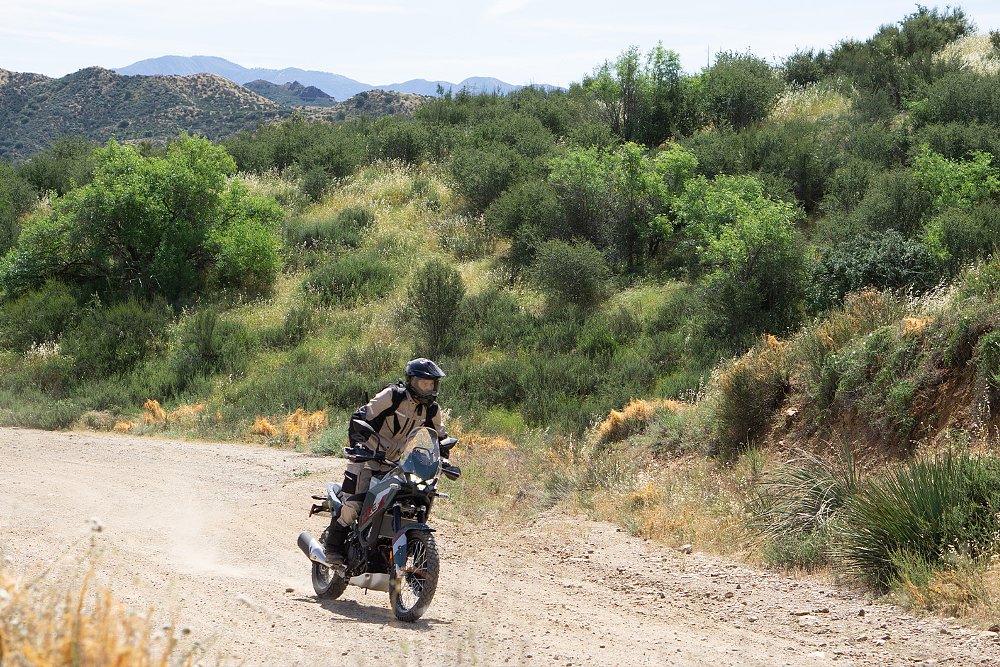
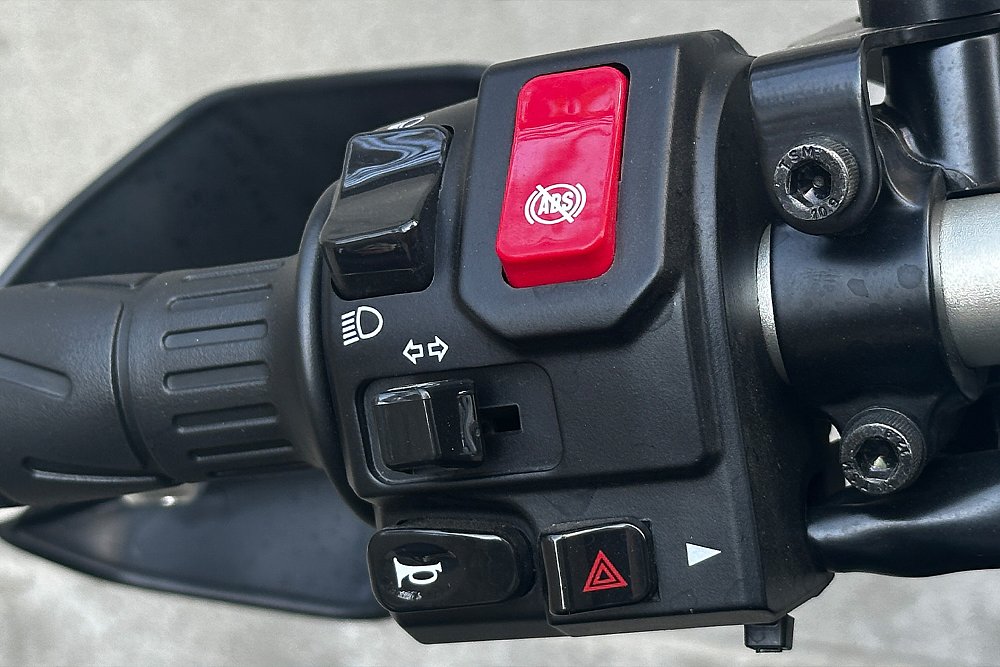
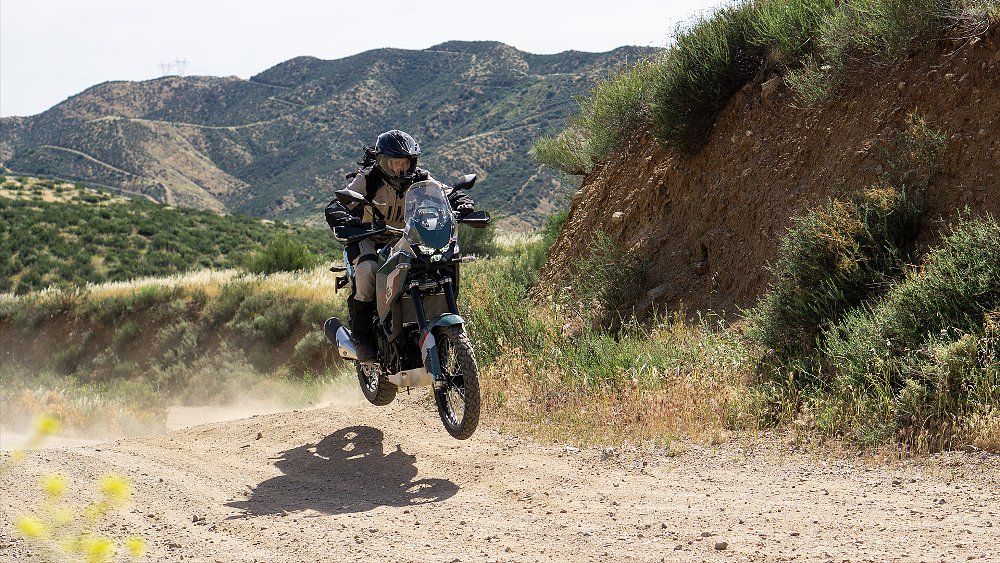
I wish I could drum up some drama here. I wish I could sustain the suspense. But the Ibex is the outright winner in this arena. After all, the Chinese-made ADV comes direct from the factory with fully adjustable suspension, tubeless spoked wheels, and folding mirrors. Its grunty, 270-degree twin feels at home in the dirt. As do its CST tires, which perform admirably in various conditions. Not to mention, users can disengage both traction control and rear ABS (front ABS remains active) by long-pressing the dedicated Off-Road button. Simple. As. That.
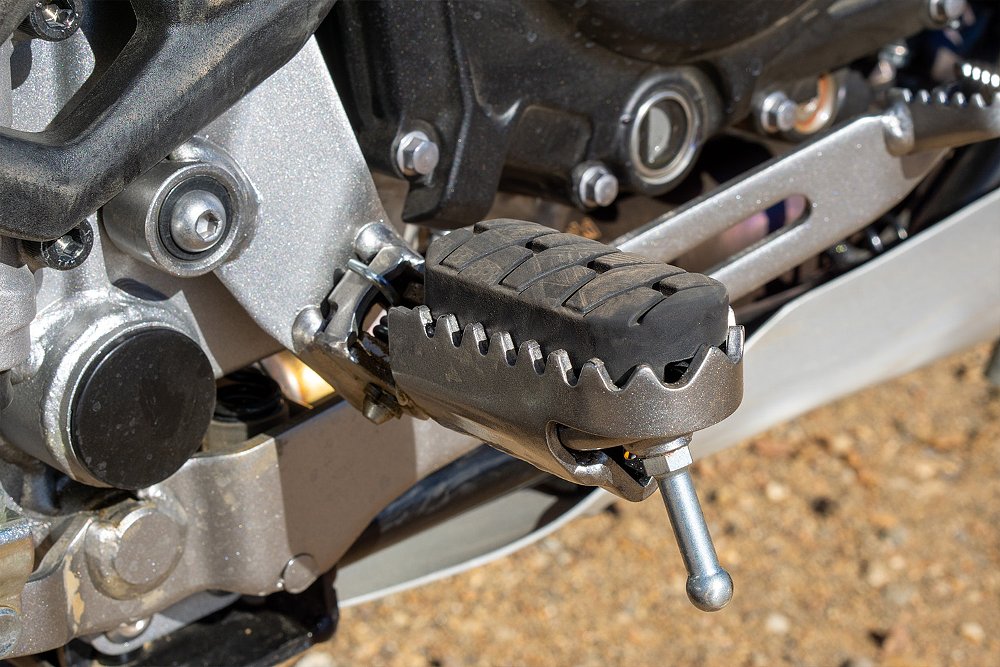
The KLE500 may wear a front fairing that honors rally racing, but venturing beyond the pavement feels more like an afterthought to the newcomer. For one, its footrests feature long, sport-bike-style footpeg feelers. Hardly off-road-oriented, if you ask me. Its mirror shakes loose over rough terrain and disabling its ABS system is unnecessarily complex. So much so that I was forced to Google the answer at the trailhead. Moreover, its end can sits low enough to catch my boot heel and calf when duck-walking through tougher terrain.
That’s not to say the KLE is a total tourist on the trail. It has a lot going for it, too. The narrower gas tank and midsection are easier to manipulate with one’s knees, especially through more technical territories. Its metal-backed handguards are superior to the Ibex’s all-plastic ones, and the rev-happy engine is surprisingly tractable. Outside of first gear’s slightly snatchy throttle response, the high-spinning twin is equally eager to rip down fire roads or pick through single track.
The suspension’s supportive ride is equally surprising, but that quality only lasts up to a point. While the setup stays stout into the mid-stroke, it easily blows through the latter half of travel. Rolling over deep ruts with some pace put that on full display, with the front end bottoming upon each blow. Launching the KLE only drove the point home, as the bash plate slammed into terra firma (emphasis on the firma) on several occasions.
Kawasaki’s newest ADV may not match the Ibex 450’s off-road skillset, but that doesn’t mean it doesn’t hold a strong spot in the ever-expanding segment. Quite the opposite, actually.
The scorecard
U.S. motorcycle sales slumped by 7.6% in 2025. Yet, sub-600 cc adventure bikes still posted a 10% sales increase year over year. It’s no coincidence the class continues to grow in 2026. Whether you’re pounding pavement or kicking up dust, whether you’re wild at heart or mild at heart, there’s a small-bore ADV to try on for size. The KLE500 and Ibex 450 are but two of them.
Both present a unique blend of on-road and off-road prowess. Both exhibit their own advantages and weaknesses. But only one can rule the segment. After hundreds of miles logged, after various off-road escapades, there’s an obvious winner. If prompted to go for a ride on either the Ibex or the KLE, I’d choose the Ibex four out of five times. Simply put, CFMOTO’s parallel twin is a more accessible, torque-rich experience. It doesn't need to get more complicated than that.
Be that as it may, the KLE500 still stands to carve out its own corner of the market. Anyone searching for a street-focused, dirt-capable machine would do well to look into Kawasaki’s entry. The mid-size ADV ecosystem hasn’t yet reached its saturation point, but the KLE’s simplicity and engine character only add to its biodiversity. More challengers are sure to come, but any future contenders will still be measured against the Ibex 450.
| 2026 Kawasaki KLE500 ABS | 2025 CFMOTO Ibex 450 | |
|---|---|---|
| Price (MSRP) | $6,599 base; $7,499 SE | $6,499 |
| Engine | 451 cc, liquid-cooled, eight-valve, parallel twin | 449 cc, liquid-cooled, eight-valve, parallel twin |
|
Transmission, final drive |
Six-speed, chain | Six-speed, chain |
| Claimed horsepower | 51 @ 10,000 rpm | 44 @ 8,500 rpm |
| Claimed torque | 31.7 foot-pounds @ 7,500 rpm | 32.5 foot-pounds @ 6,250 rpm |
| Frame | Steel tubular | Steel tubular |
| Front suspension | KYB 43 mm fork; 8.3 inches of travel | KYB 41 mm inverted fork, adjustable for preload, compression and rebound damping; 7.9 inches of travel |
| Rear suspension | KYB shock, adjustable for preload; 7.7 inches of travel | KYB shock, adjustable for preload, compression and rebound damping; 7.9 inches of travel |
| Front brake | Single Nissin two-piston caliper, 300 mm disc with ABS | Single J.Juan four-piston caliper, 320 mm disc with ABS |
| Rear brake | Nissin single-piston caliper, 230 mm disc with ABS | J.Juan single-piston caliper, 240 mm disc with switchable ABS |
| Rake, trail | 28.0 degrees, 4.1 inches | 26.0 degrees, 4.2 inches |
| Wheelbase | 61.2 inches | 59.3 inches |
| Seat height | 34.3 inches | 32.3 inches |
| Fuel capacity | 4.2 gallons | 4.6 gallons |
| Tires | IRC Trail Winner, 90/90-21 front, 140/70-17 rear | CST Ambro A4 90/90R21 front, 140/70R18 rear |
| Measured weight | 428 pounds | 426 pounds |
| Available | Now | Now |
| Warranty | 12 months | 24 months |
| More info | kawasaki.com | cfmoto.com |