Shop by Vehicle
 Track Order
 Contact Us
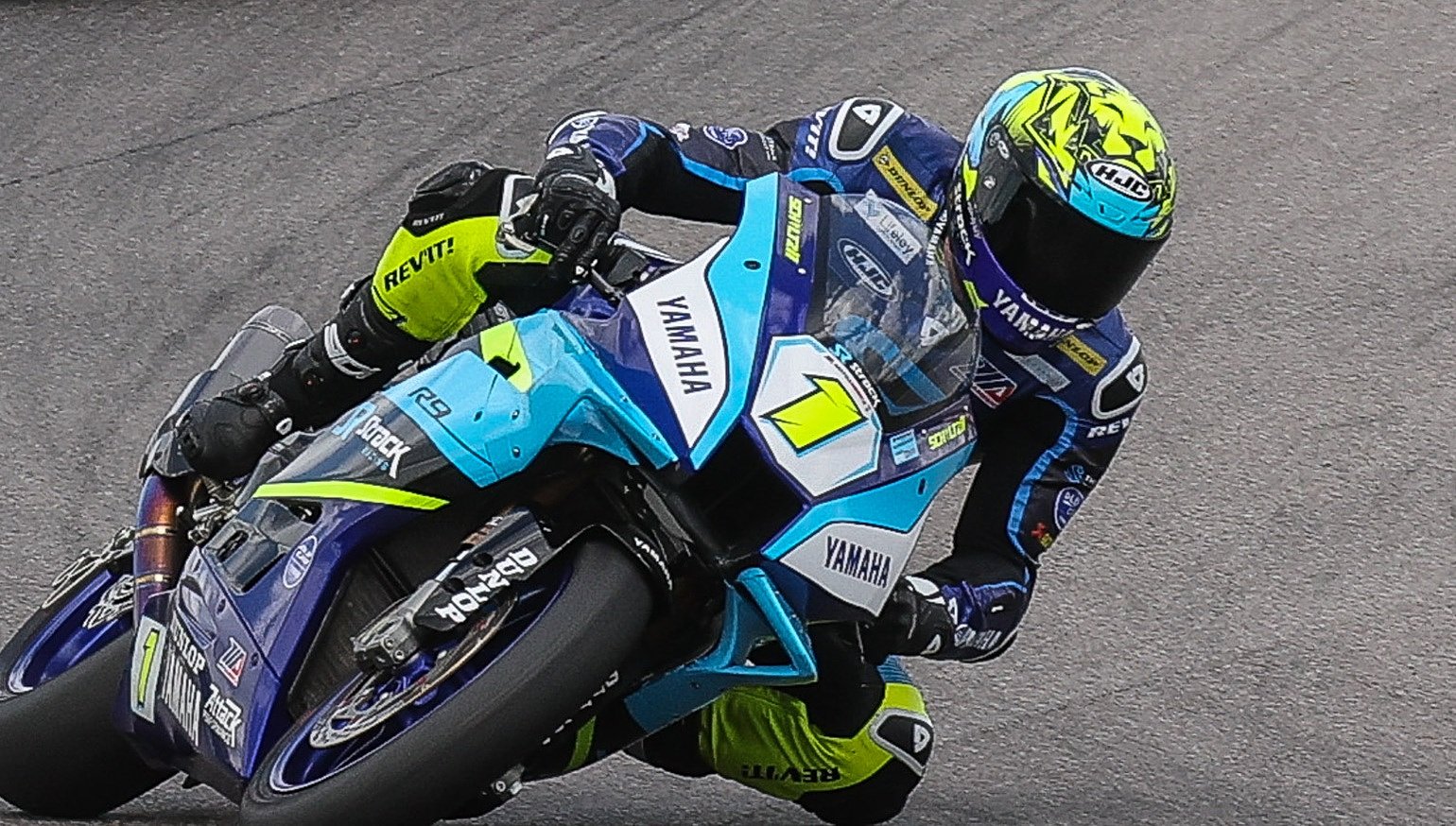
Of all the internet buzzwords surrounding motorcycle technique, trail braking might be the reigning champion. It's one of the most commonly searched riding terms online, and there are probably hundreds of hours of video of social media riding gurus (myself included) quoting one another and repackaging the concept in an attempt to sound unique or "set the record straight."
At the California Superbike School, I noticed something interesting: Depending on the class I was teaching, only about 20% of students could actually define the word "trail" in the context of trail braking. Most were at the school because they knew they had something to learn, so it wasn't surprising that they were unclear on some terminology. Many have busy lives and don't have time to get lost down YouTube rabbit holes. What I found was that many defined "trail" as a path, or to follow, or the difference between the contact patch and steering axis. None of these are correct.
In this context, trail means "to gradually diminish or reduce," like when we say something is trailing off. Trail braking is simply the gradual release of front-brake pressure as lean angle increases into a corner.
Trail braking has been explained in various ways:
- As lean increases, brake pressure decreases.
- Braking and cornering forces blend; as one increases, the other decreases.
- Keep front-tire load somewhat constant from braking into cornering.
- Ease out of the brakes as the corner itself takes over compressing the suspension.
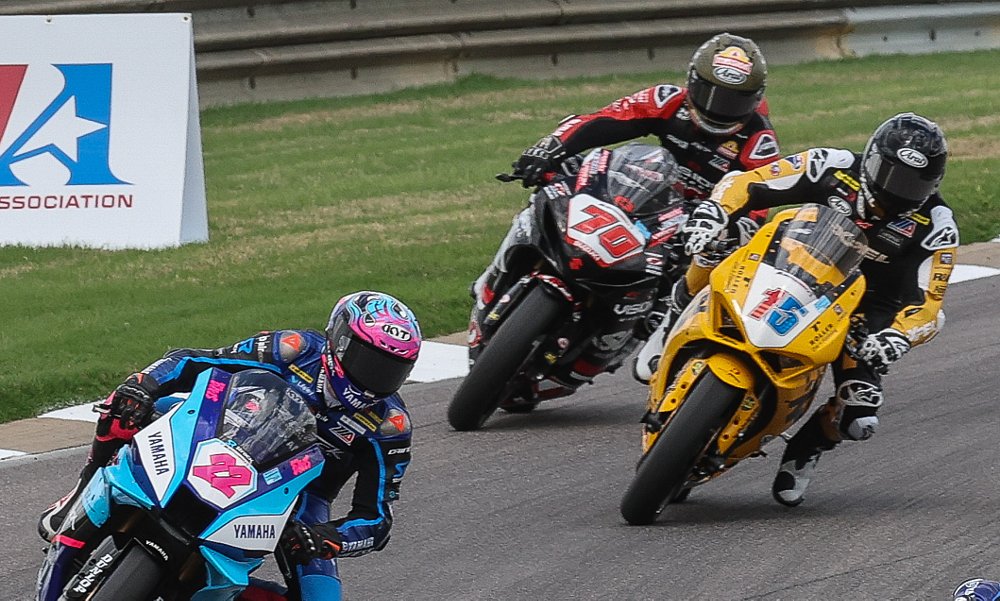
Nick Ienatsch uses the "100% of grip" idea: If lean uses 70% of your grip, you have 30% left for braking; if lean uses 10%, you have 90% for braking.
Brian at SoCal Supermoto calls it the "suspension no-move drill." Smooth inputs blend seamlessly so the suspension is not overworked.
Whichever helps you visualize the concept, all describe trail braking. In the California Superbike School video below, an instructor demonstrates, downshifting and braking into the corner, gradually reducing braking pressure after starting the turn.
The origins of trail braking
Trail braking began as an auto-racing term and has been discussed for over 60 years. Some trace it back to the 1920s in car racing. But it didn't really take hold in motorcycle language until the 1990s, largely due to tire technology evolving from bias-ply to radial construction.
My father, Keith Code, wrote in A Twist of the Wrist II, 33 years ago: "Radial tire technology allows for steeper lean angles while braking… the technique of carrying some braking down deeper into the turn's entrance has been improved and you find many riders using it."
Radial tires made modern trail braking viable by providing a more stable, consistent contact patch under combined braking and turning forces. Bias-ply tires distorted unpredictably during transitions; radials maintained grip and feedback as load shifted. That stability allowed riders to safely brake past turn-in, effectively enabling the trail-braking technique we use today.
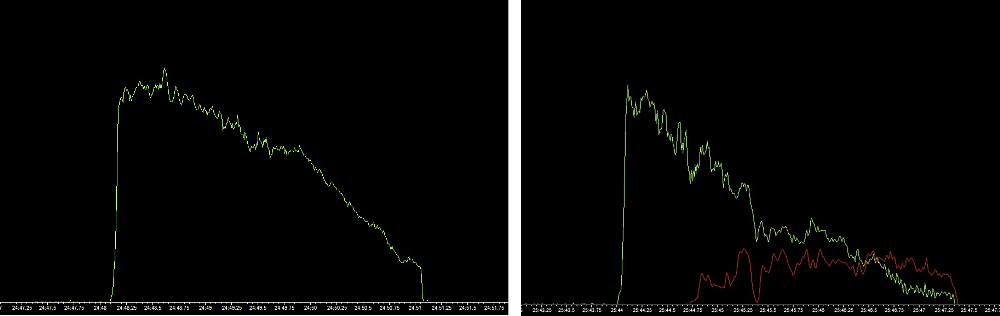
Trail braking in performance riding on the track
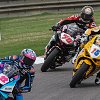
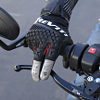
In modern usage, trail braking almost always refers to the front brake. Yes, you can trail the rear into a corner, but when riders say trail braking, they're talking about releasing the front brake as lean increases. Most top-level racers use the rear brake for small speed adjustments. They apply the front brake normally, then — while trailing the front — lightly drag the rear via the pedal, a thumb lever, or an auxiliary hand lever beneath the clutch. I prefer the extra hand lever. Anyone with mountain-bike experience would likely adapt to it quickly.
In performance riding, coasting is the enemy. It represents unused grip — wasted potential. Many racers simplify this as "You should either be on the throttle or the brakes." While there are exceptions, especially for casual riders on winding roads, the principle holds.
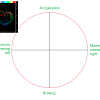
In 1936, German engineer Wunibald Kamm introduced the concept now known as the Kamm Circle, or the traction circle. It visually represents how a tire's available grip is shared between longitudinal (braking and acceleration) and lateral (cornering) forces. The center of the circle is coasting. No acceleration, no turning. At the side edges you have maximum lean. At the top you have maximum throttle; at the bottom, maximum braking. Between roughly four and five o'clock and seven and eight o'clock is where braking and cornering forces blend. That blended area is trail braking.
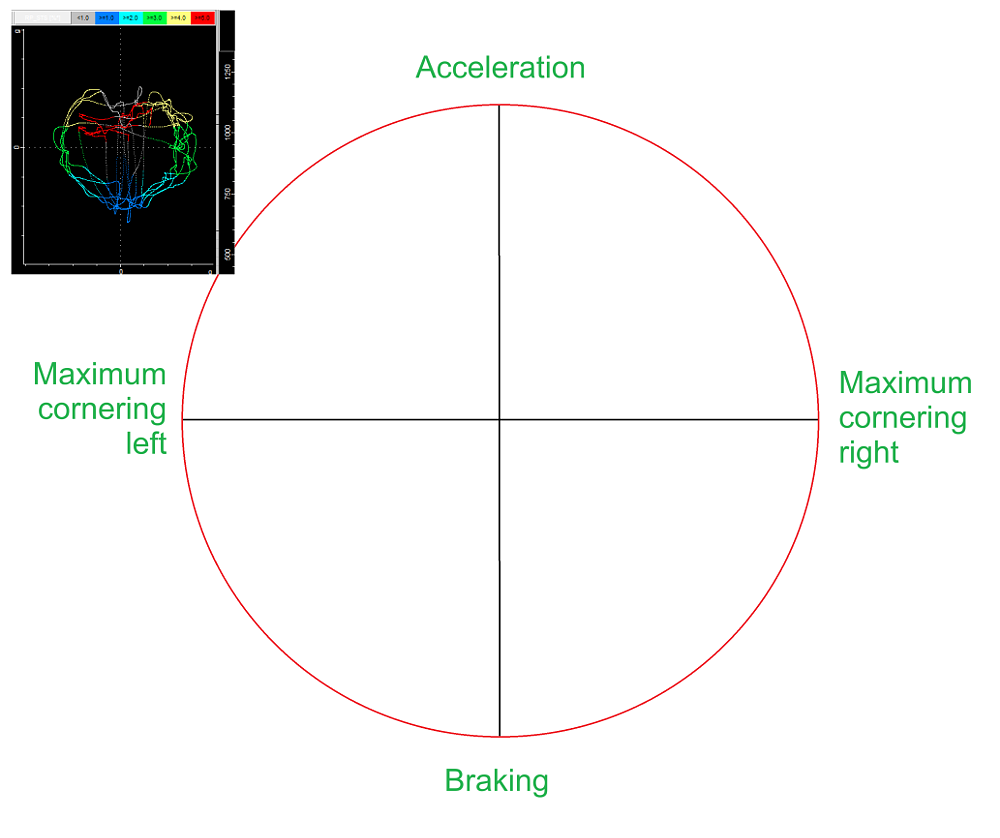
If a rider finishes all braking while vertical, they must coast into the corner while leaning in, which means dropping to the middle of the circle. That's a loss of performance.
Trail braking changes factors such as the geometry of the motorcycle and the tire load. Trailing the front brake shifts weight forward, compressing the fork legs and making them stand more vertically relative to the ground. This also slightly shortens the wheelbase. The combined effect is that the bike will tip into a corner more eagerly. Is it a dramatic, night-and-day difference? That depends on the bike, the road, and the rider. The best way to answer the question is simple: Get on your bike and try it. You be the judge.
While the classic laws of friction apply to rigid objects (which tires are not), it's still true that friction increases with the force pushing downward. When you apply the front brake, weight shifts forward, increases the load on the front tire, and therefore increases available grip. With hundreds of pounds of motorcycle and rider already on the front tire before the brakes are applied, the difference may not be dramatic. But it does increase front grip.
Do you have to use trail braking to go fast on the track?
Yes… and no.
You won't win a race coasting into corners. But will you be painfully slow without trail braking? Not necessarily.
Years ago, at New Jersey Motorsports Park, I was riding with Joe Roberts, who has since gone on to win races in the Moto2 world championship. My motorcycle was on street tires; he was on slicks (and already had a national championship under his belt). My chances of keeping up with him? Zero. So I challenged him: "Ride in fourth gear only with no brakes." His eyes lit up.
Out on track, staying with him was easy at first, but once we reached the corners his slicks gave him a huge advantage. I had to use every braking opportunity to close the gaps he created. I found myself trailing the brakes so deep into Turn One that my street tires were literally howling over the undulations.
Joe turned a lap of 1:30, about nine seconds off the outright lap record, in fourth gear, with no brakes. So yes, without trail braking you won't win a race, but depending on the track or road, you can still move at a respectable pace.
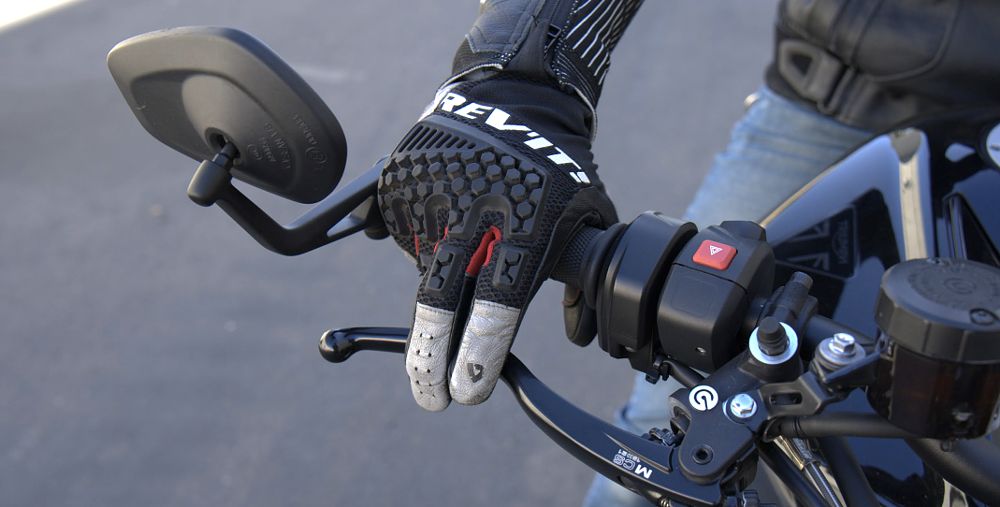
Trail braking on the street
There is a safety argument for trail braking in street riding. Approaching a corner with two fingers already on the lever reduces reaction time. A light front-brake application at corner entry helps fine-tune entry speed, and if you misjudge the radius, you're already in position to manage it by keeping some pressure on the brake.
The big warning: Remember you must decrease brake pressure as lean angle increases.
Unlike the track, riders on the street encounter more varied conditions. The road itself may be a barrier to trail braking. Uphill mountain roads with linked, same-speed corners often don't require trail braking. Small throttle adjustments and a satisfying rhythm side to side work better. Downhill, however, is a different story.
A friend who has raced the Isle of Man multiple times told me that fast, flowing sections often require throttle modulation far more than brake use. Slow, tight corners are the exception where trail braking becomes essential.
The argument against teaching it to new riders
Basic rider coaches often feel trail braking shouldn't be introduced to absolute beginners. The standard "slow, look, press, roll" formula works well when someone is just learning how to operate a motorcycle. First-time riders are already drinking from a fire hose.
I don't regularly teach first-timers, so I'll let specialists make that call. My sample size is too small to dictate what belongs in foundational training. At the Superbike School, though, trail braking is introduced on day two — Level 2.
Trail braking is a tool, not a silver bullet
Trail braking is a tool. In performance riding, it's vital. On the street, it's valuable for safety and entry-speed control. Is it necessary in flowing, same-speed corners? Not really. Is it something to hand a nervous beginner just trying not to stall at a stoplight? Probably not, but it's a skill that should come on their radar sooner rather than later.
Use it when it helps get the job done.
Image Gallery