Shop by Vehicle
 Track Order
 Contact Us

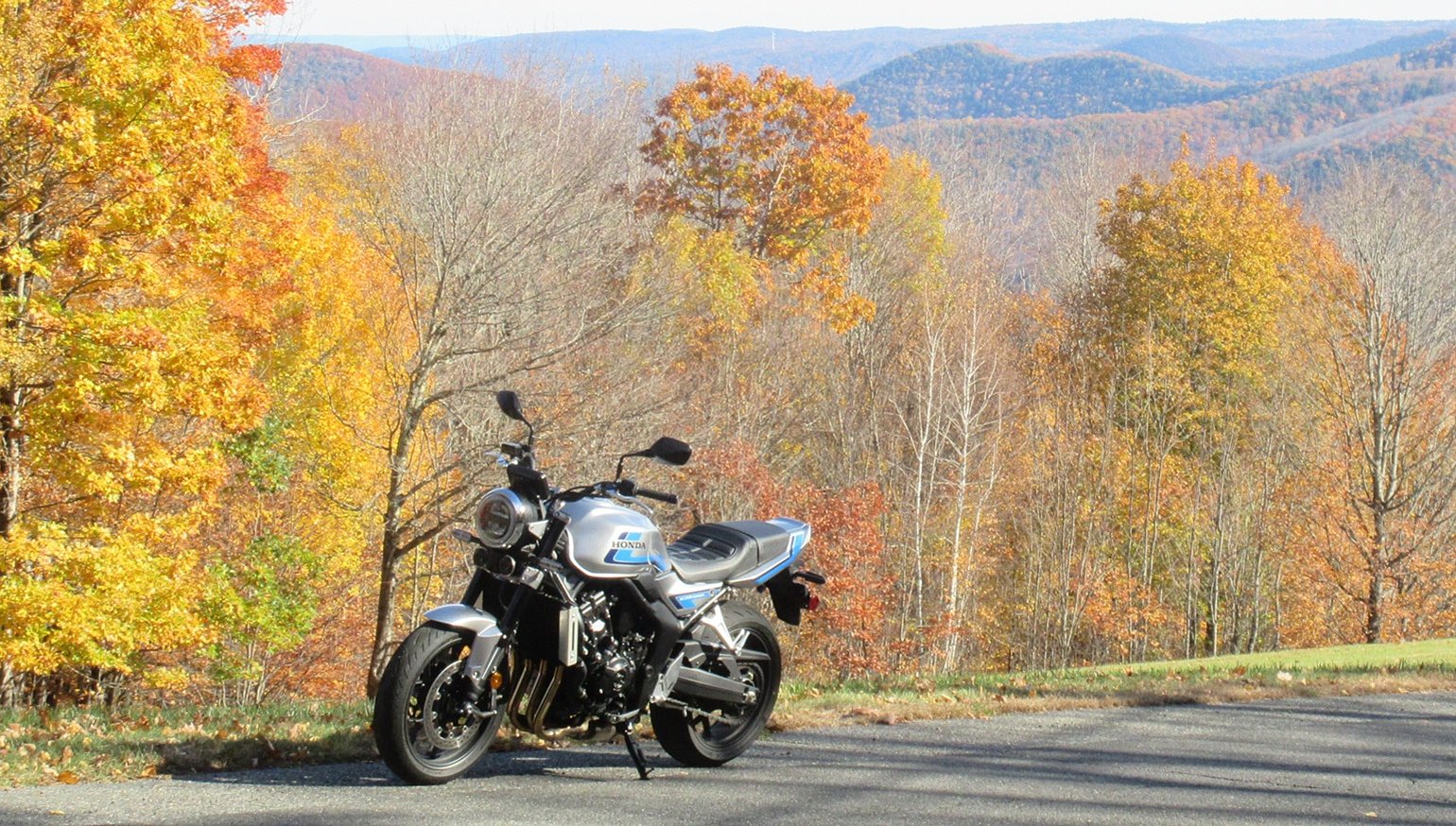
When we write these "one tank of gas" articles, they're typically quick, subjective, second opinions on a motorcycle someone else on the team has already reviewed more thoroughly. This one's a bit different because it includes a third opinion.
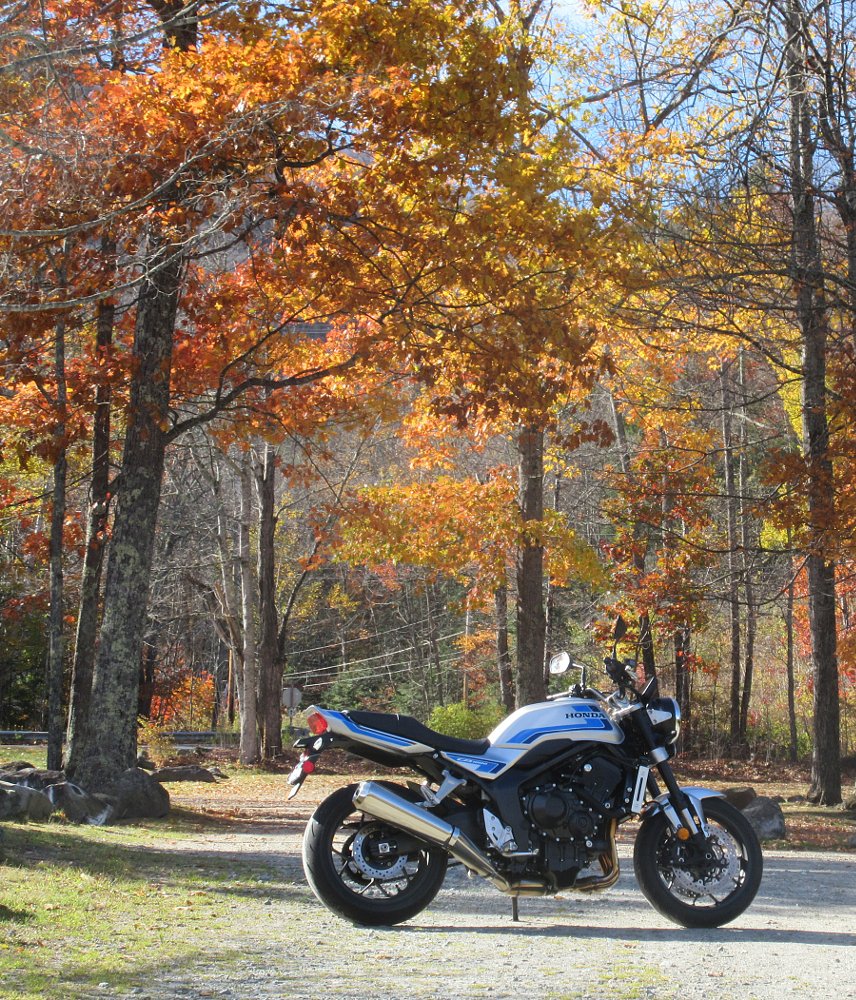
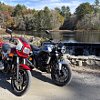
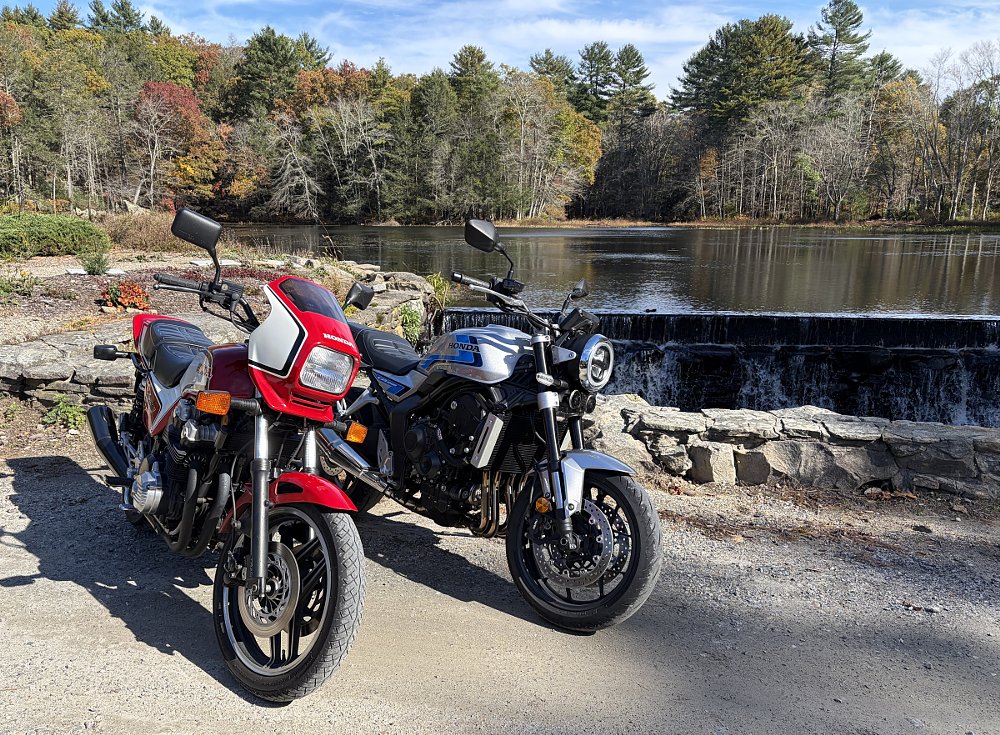
When I got the chance to spend a few days at home with the 2026 Honda CB1000F that Dustin recently reviewed, I immediately decided to take a 130-mile ride to meet up with my motorcycle industry friend Ken Condon, owner of Riding in the Zone motorcycle training and a former motorcycle magazine columnist. I wanted to do that for a couple of reasons. More generally, because Ken is an excellent rider with a diverse skill set that extends from roadracing to trail riding and he often notices details I miss. And more specifically, because he owns a 1983 Honda CB1100F that I've written about before on Common Tread and, as a young man back in 1984, he bought a new, leftover 1982 CB900F, the motorcycle that today's CB1000F is intended to bring to mind.
In addition to getting his riding impressions, I was also curious where Ken would fall on the spectrum of criticism of some of the styling choices Honda made, especially the digital display. But first, let's take a ride on the retro.
Ken's take on the CB1000F
The first thing that struck Ken when he sat on the CB1000F was how much the handlebar reminded him of his old 1982 CB900F.
We rode off, me hopping on Ken's CB1100F and him on the CB1000F, and that transition probably accentuated his next impression. The old bike is not cumbersome, but the new one is not only significantly lighter, but also feels much more agile.
"It handles as a street bike beautifully. The suspension is on task. It's tuned as it should be," Ken said. "It's very flickable. It's very sharp and easy to maneuver." The CB1000F may look like a big bike, but it rides like one that's smaller than it is.
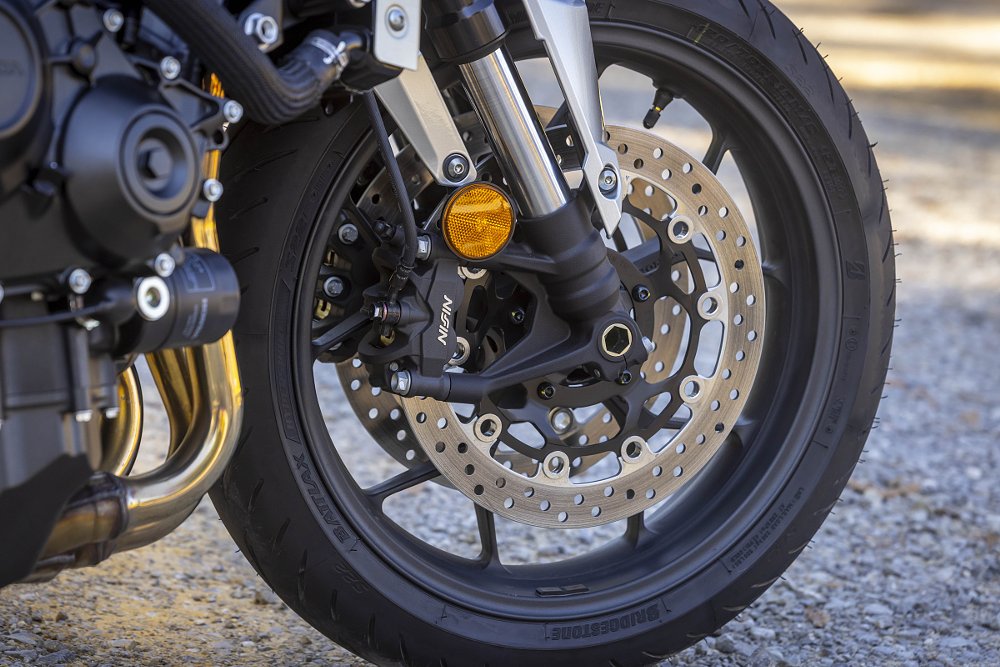
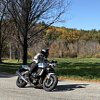
In what he called "the nit-picking category," Ken labeled the fueling as "Not perfect, but really good." He teaches training sessions on low-speed parking-lot maneuvers and he found that a little clutch work was needed for some of the U-turns he did as I was shooting photos. And he also detected a small flat spot.
"It's a powerful motorcycle. It'll pull from 2,500 rpm easily, but it feels like it stops doing something from that 4,000 to 4,500, and then it launches with authority," he said. "I would say that it's probably not going to be noticeable to most people."
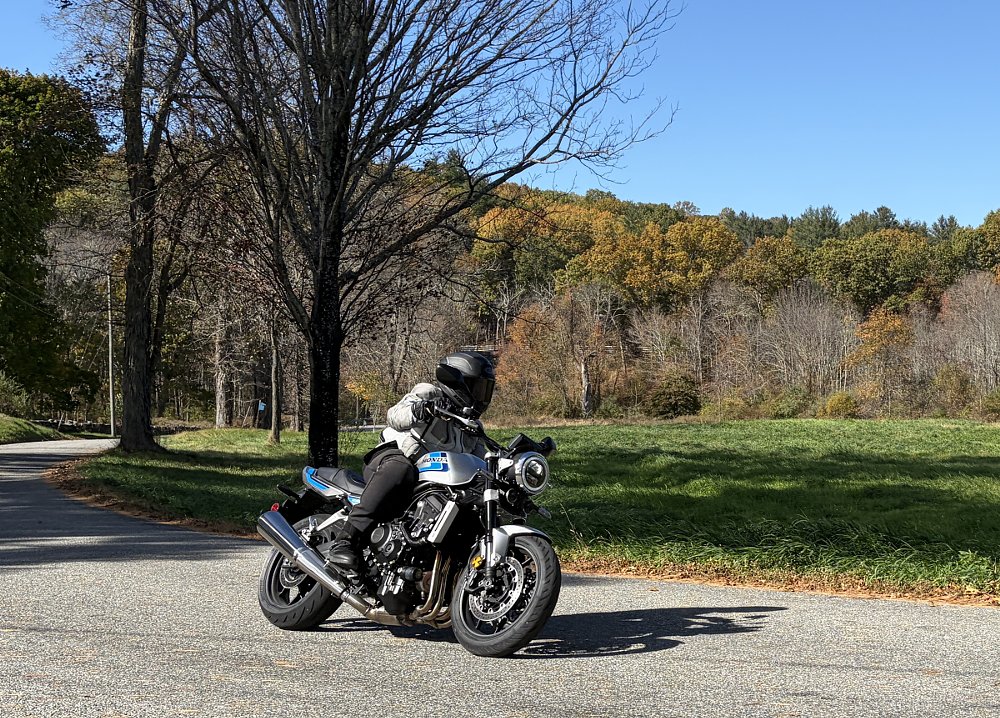
The main issue he identified was shifting.
"The biggest problem I had was just how difficult it was to get a clean shift" in the lower three gears, Ken said. "It's like it has no flywheel. If you squeeze the clutch at all the rpms fall so quickly you can't get a smooth transition."
"It's just an annoyance. You have to shift. It's not something you can avoid."
Ken speculated that the CB1000F would benefit from a quickshifter and the one that comes on the CB1000 Hornet SP is available as an option for $167.95 plus installation.
My take on the CB1000F
I'll admit to being one of those people Ken referred to who probably wouldn't notice the minor flat spot he detected. That may be partially because my perspective was different, coming from the CB1000 Hornet SP I rode last year, which had a much broader and more obvious midrange flat spot. While the Hornet and the F share the same engine, it's been retuned for the CB1000F, and I think that retune is a significant improvement. The CB1000F just pulls strongly across the rev range.
If I didn't notice the flat spot he mentioned, I was relieved he talked about the CB1000F being difficult to shift smoothly, because then I realized it wasn't just me. I had the same difficulty avoiding clunky shifts in the lower gears.
I also concurred with him on the handling. The CB1000F feels far lighter on its feet than I expected, either from looking at the motorcycle itself or from reading the spec sheet.
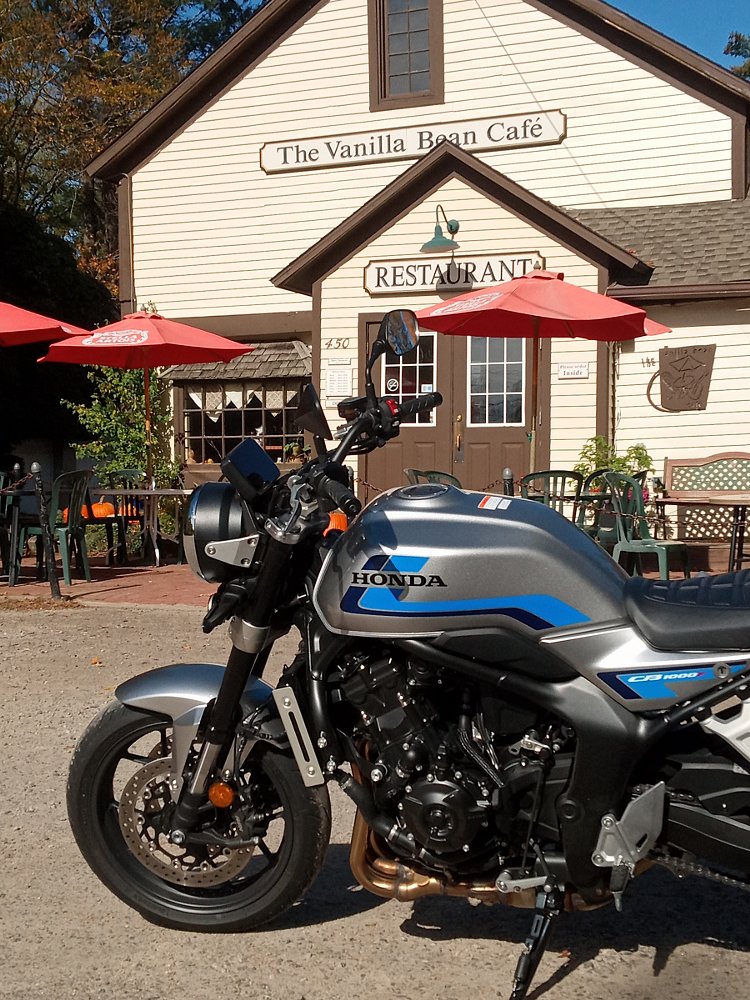
In response to Dustin's story, one reader asked about vibrations at highway speed. The CB1000F has a 10,000 rpm redline and I noted that 5,000 rpm in sixth gear yields an indicated 77 mph. Dustin noted some vibration, but only above 6,000 rpm. Sensitivity to vibration is one of those things that varies a lot from one rider to another, and in that regard I'm not usually bothered. Not only did I not feel any vibrations that would bother me, but I also doubt that anyone is going to spend long stretches of time above 6,000 rpm.
In fact, over most of my riding time with the CB1000F, it lulled me into a relaxed, short-shifting riding style. The engine is so tractable at low rpms that I often looked down and was surprised to see I was a gear higher than I thought I was. The big four-cylinder engine was happy to pull from down low, as Ken noted, and revving to redline just didn't feel necessary.
The flip side of that is that revving to redline also didn't feel particularly satisfying. If you're looking for that liter-class four-cylinder rush that you might expect from an engine with CBR in its lineage, you could be disappointed. Did I ever feel like I needed more power? Never. Did I wonder what it would be like if we got the tune used in the European version of the Hornet and CB1000F that provides a few more horsepower? Yes, it's human nature.
What everyone's talking about
It's not the engine performance or handling or even the overall look of the CB1000F that generates the most debate, however. It's one specific attribute: the full-color digital display. That thing that looks like a little iPad tacked on above the headlight could be used as a test by psychologists to sort motorcyclists into categories. On one hand, you have the retro purists, who insist that the Honda's display is an abomination and nothing other than two round analog dials for the speedometer and tachometer should be affixed to any retro-styled motorcycle. Then there are some who just shrug and don't much care. Some fall in a middle ground, not minding the modern functionality but perhaps wishing for a more graceful execution.
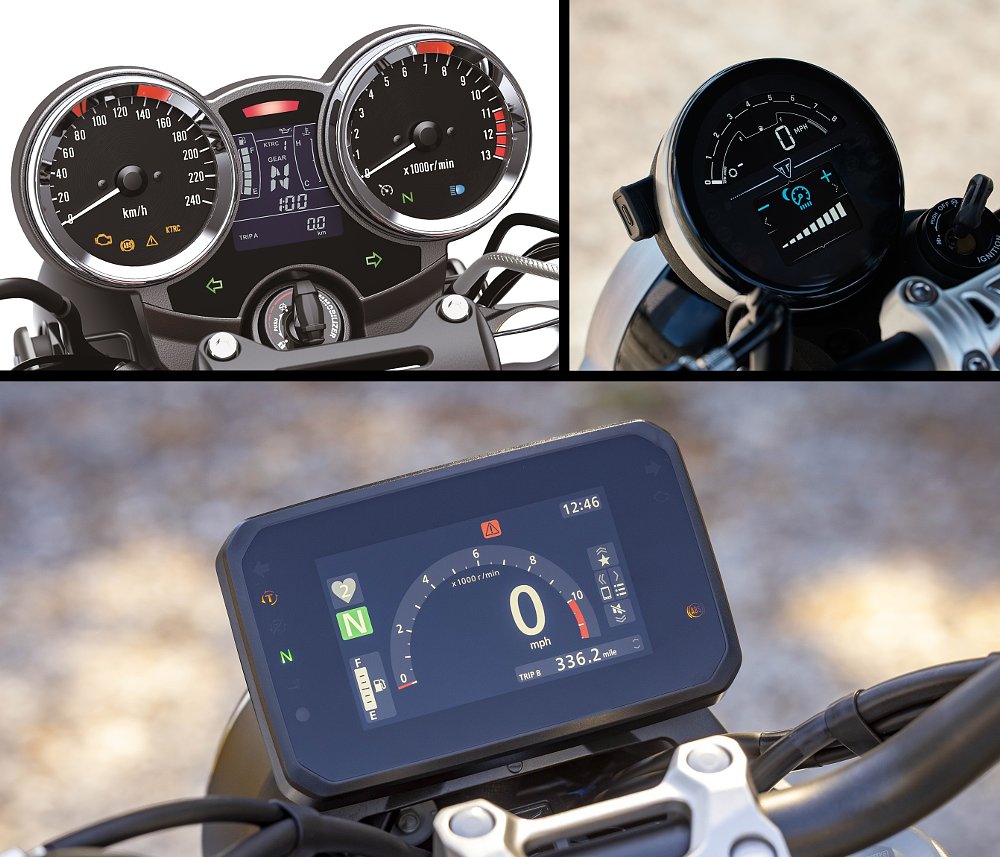
But it's the purists — whether they are the majority or just a very vocal minority, I'm not sure — who fill the comments section with criticism of the rectangular, digital panel. I heard some similar negative comments from fellow media types when I went to the press launch for the Triumph Speed Twin 1200 nearly two years ago, and that led to a discussion of the thinking behind Triumph's decision to go with a middle-ground approach. Their thinking was that the purists would buy a Bonneville, which is faithful to the original, while the Speed Twin buyer would be someone who appreciates a retro look but still also wants modern touches, features, and capability.
Honda doesn't have the equivalent of a Bonneville in its lineup to keep the purists happy, so did they just grab an existing digital display that was handy and slap it on the CB1000F without much consideration? I can't say. On its global corporate website, Honda has an interview with designer Yuha Suzuki (please, no jokes about Suzuki designing a Honda) and his approach to styling the CB1000F, but the digital display never comes up.
Our takes? Both Ken and I fall in the middle ground. I have a vintage bike and I don't need a modern one where the difference between a friendly nod from the constabulary and a request to see my license and registration is about a quarter of an inch on an analog dial I can almost read if I squint. Just give me a big, legible number so I know how fast I'm going.
"I think they could have done better but I'm not offended by it," Ken said of Honda's tablet-shaped display. "That would not keep me from owning the bike." He noted that the small fairing seen on one of the CB1000F concept bikes, very similar to the one on his 1983 CB1100F, would essentially hide the rectangular digital display and make it less of an issue.
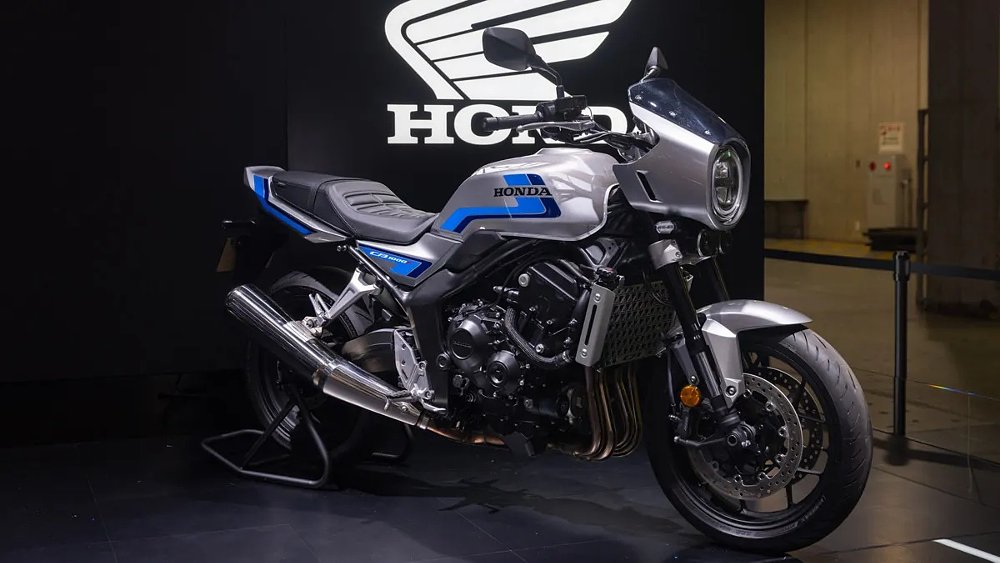
Interestingly, that fairing is not listed as available in the United States but it is available as an accessory in Japan and as part of an optional Sport Pack in Europe. The aftermarket is also coming along with solutions for the disgruntled purists, including a cover that goes over the back of the digital display so that while the rider still sees the modern piece, from any other angle it looks like an old-style Honda dashboard with two round dials.
What people might start talking about
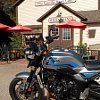
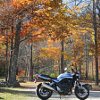
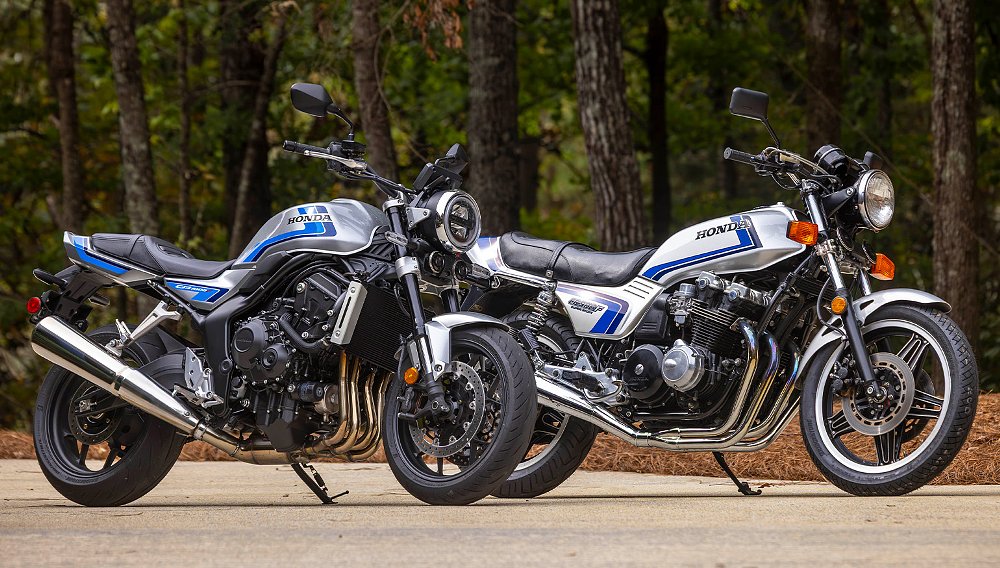
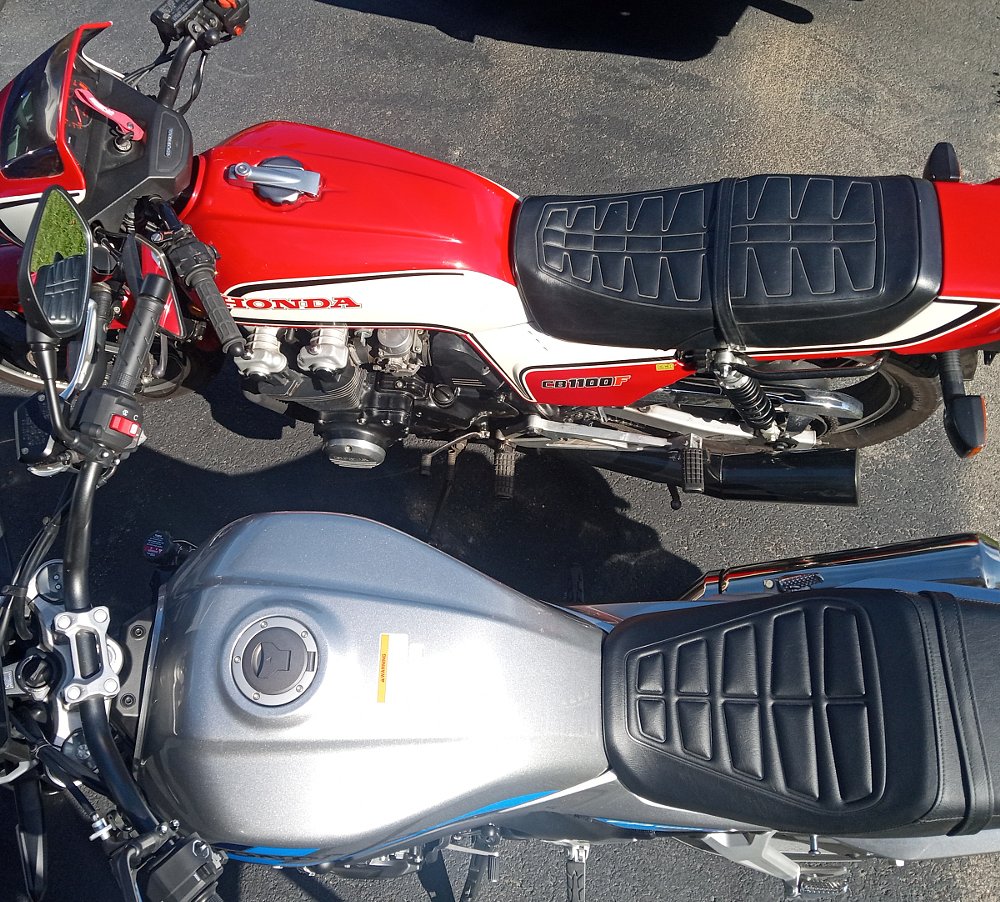
While everyone's talking about the digital display, because it's so obvious, Ken and I both think there's another styling issue that will get more attention as more of the purists — and maybe even the middle-ground retro fans — see the CB1000F in metal and plastic instead of just photos. Much like the fuel tank on the Kawasaki Z900RS, the CB1000F's tank looks, from the side, like a pretty close homage to the original. But viewed from above, it is much more broad-shouldered in the front. Some riders complained that the Z900RS tank looked too wide when viewed from the rider's perspective. They felt the proportions were off. As you can see from the photo above, the CB1000F's tank is also broader in the front and has a different shape from the old one.
Ken didn't like the styling of the front of the tank for other reasons.
"There are details the purists are going to complain about, and for me it's the front of the gas tank, and the shape of it, being flat, perpendicular," Ken said. "The gap between the front of the tank and the steering stem is too much."
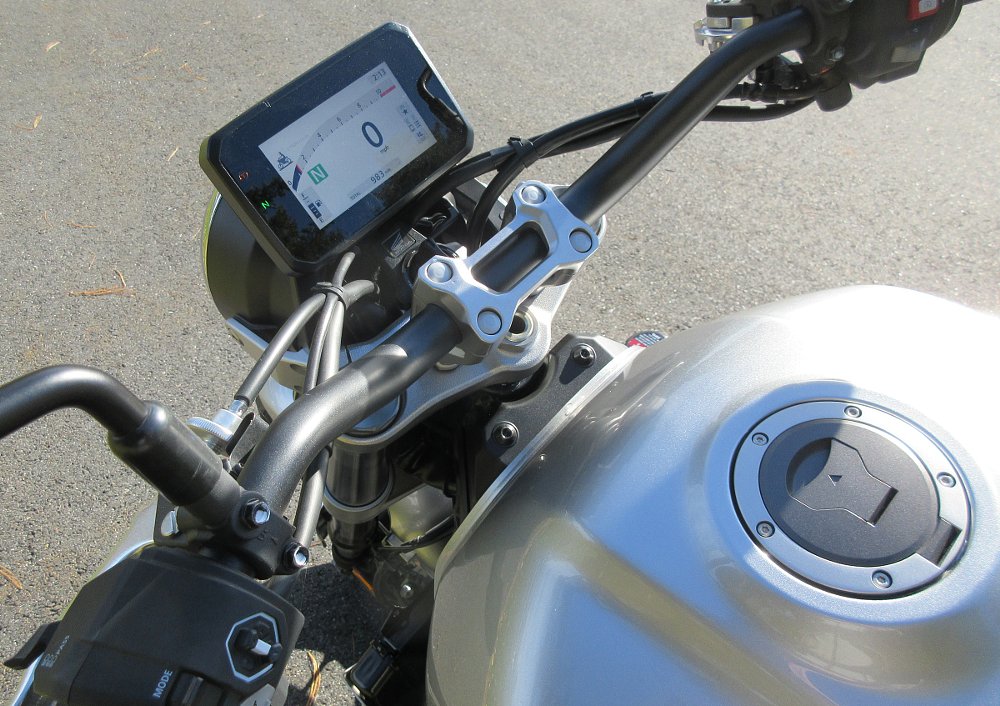
These are the little details that rarely get a mention on most motorcycles, but on one like the CB1000F that leans so heavily on style, every little decision and proportion is open to nit-picking. Are these turn-offs or too small to consider? Only you can decide for yourself.
One other question I know some are wondering about: Early CB1000 Hornet models, which use a version of the same engine, had oil consumption issues. Honda made some changes in production to address the issue. According to a spokesman for American Honda, those changes pre-dated production of the CB1000F models, so these bikes shouldn't have any issues with oil consumption.
Earning the "universal" in UJM
I can imagine the CB1000F being that elusive "one bike that does it all" for many street riders. Many riders place a premium on looks. To borrow an overused saying, they want to look back while walking away and admire their ride. Not everyone will like the early-1980s retro look but for those who do, the CB1000F will never blend anonymously into a modern crowd.
Beyond that, the CB1000F is simply a motorcycle that performs well at everything most street riders do. The nimble handling and tractable torque mean it never feels awkward or high-strung for around-town riding, urban transportation, or commuting. That same sweet handling and ample power mean it's fun for recreational weekend rides on your favorite roads. And while some will say that a naked bike is no candidate for long-distance travel, the decent seat and neutral ergonomics make it comfortable enough. Sure, there's no wind or weather protection, but I'd always rather have a naked bike's lack of wind management than a fairing that's imperfect and causes buffeting or noise. On the CB1000F, airflow across my helmet is smooth because nothing's disrupting it. And that much-maligned tablet of a display actually acts like kind of a small flyscreen. I wouldn't hesitate to load up the CB1000F and take off for a week-long trip. I've done it many times on less suitable motorcycles and enjoyed the journey.
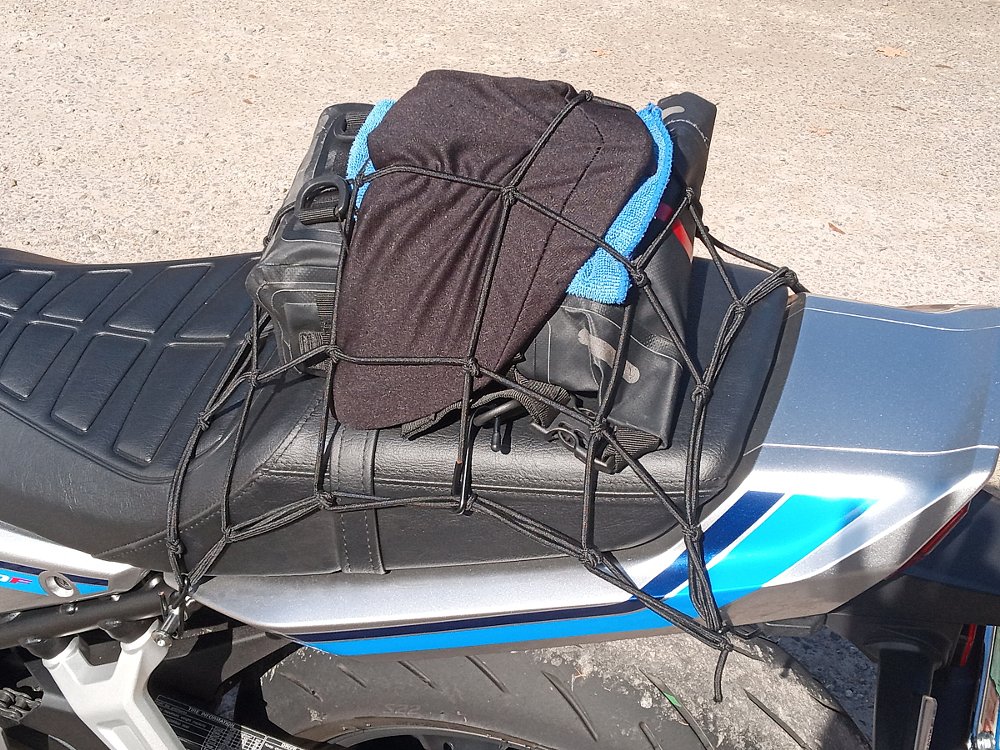
And all that makes sense, when you think about it. The CB1000F is styled after an ancestor that lived in a time when specialization hadn't sliced motorcycling into narrow segments with all kinds of rules about what a particular class of bike has to look like, what the ergonomics have to be, what stats it must have on the spec sheet, and what image it must project on Instagram. Part of the meaning behind Universal Japanese Motorcycle (UJM) was that it was supposed to be universally pretty good at motorcycling.
The CB1000F is a pretty damn good motorcycle.
| 2026 Honda CB1000F | |
|---|---|
| Price (MSRP) | $10,599 |
| Engine | 1,000 cc, liquid-cooled, 16-valve, inline four-cylinder |
|
Transmission, final drive |
Six-speed, chain |
| Claimed horsepower | N/A |
| Claimed torque | N/A |
| Frame | Steel twin-spar |
| Front suspension | 41 mm Showa Separate Function Fork Big Piston (SFF-BP), adjustable for preload, compression, and rebound damping; 5.1 inches of travel |
| Rear suspension | Showa shock, adjustable for preload and rebound damping; 5.5 inches of travel |
| Front brake | Dual radial-mount Nissin four-piston calipers, 310 mm discs, with ABS |
| Rear brake | Single Nissin one-piston caliper, 240 mm disc, with ABS |
| Rake, trail | 25 degrees, 3.9 inches |
| Wheelbase | 57.2 inches |
| Seat height | 31.3 inches |
| Fuel capacity | 4.2 gallons |
| Tires | Bridgestone Battlax Hypersport S22, 120/70R17 front, 180/55R17 rear |
| Claimed weight | 472 pounds wet |
| Available | Now |
| Warranty | 12 months |
| More info | powersports.honda.com |