Shop by Vehicle
 Track Order
 Contact Us
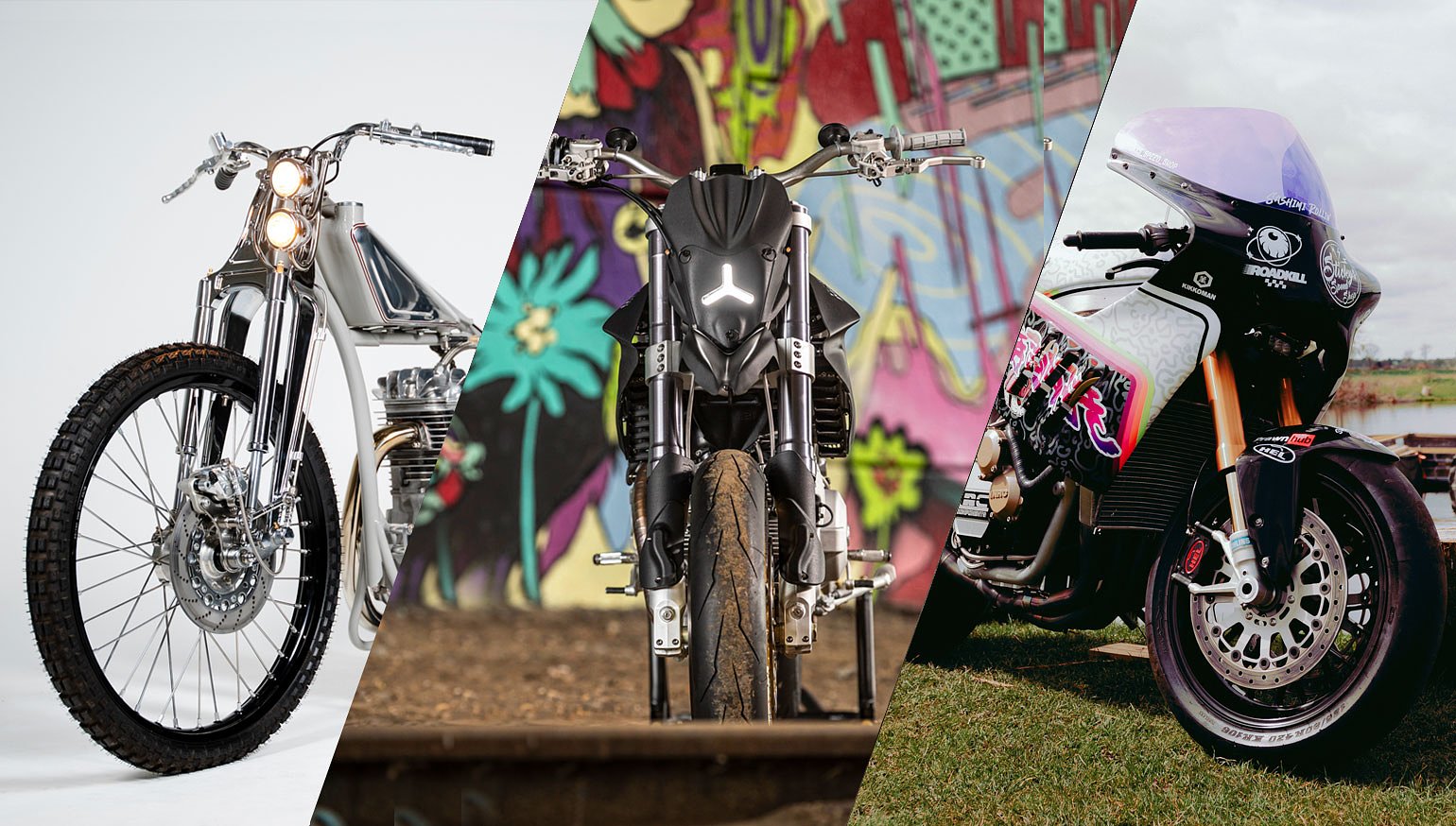
Three motorcycles, three builders, and three very different design approaches. This month, we start things off with a speedway fanatic's dream machine brought to life by Australia's Purpose Built Moto. We follow that up with a Ducati Multistrada transformed into a lightweight supermoto that was five and a half years in the making. And wrapping things up is a fiendishly clever modern-retro Suzuki Slingshot GSX-R from Britain's Sticky's Speed Shop.
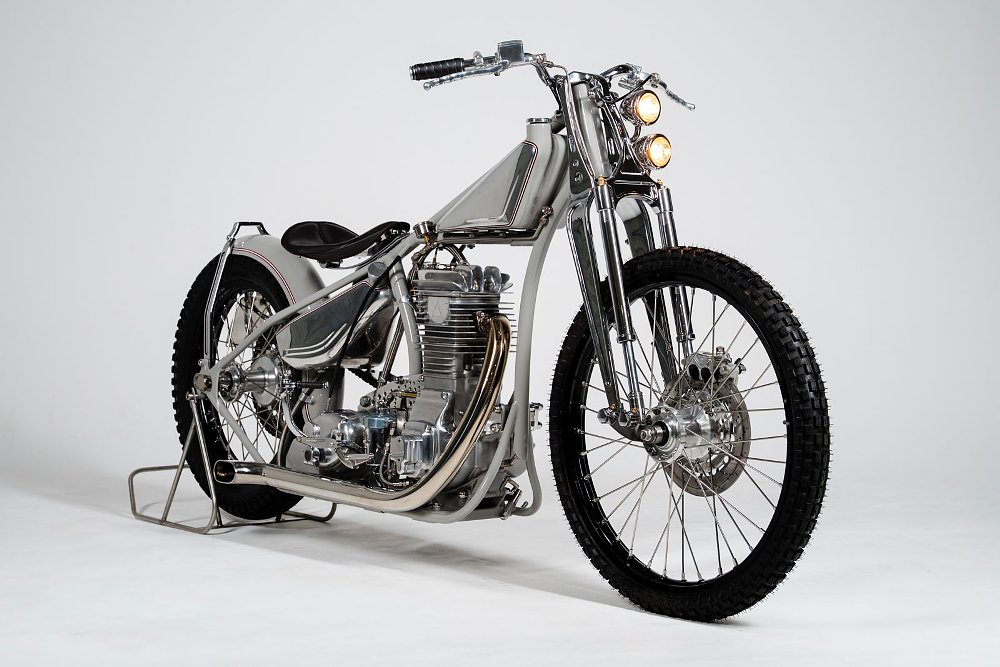
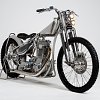
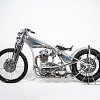
Purpose Built Moto Speedway 500 Streeter
Under the leadership of Tom Gilroy, Australia's Purpose Built Moto (Instagram) has grown to be one of the country's most respected workshops. PBM has amassed a portfolio of around 80 commissioned builds covering everything from café racers to choppers, but this project was something entirely different.
"This project was born out of a dream," Tom explains, and that dream belonged to Jake, a lifelong speedway fanatic who wanted a vintage speedway-inspired motorcycle he could legally ride on the street.
"We had discussed the build of this bike three years before it started," Tom recalls. "The conversation ended with me saying, 'We can make it happen. Just go buy a motor, find a pre-unit gearbox, and get some details on a speedway frame we can work with'."
After that, Tom focused his efforts on other builds in the workshop and expanding the PBM business. Then, years later, out of the blue, Jake got back in touch with news that he'd sourced everything requested to kick the project into gear.
With the parts amassed and the conversation reopened, Tom began designing the bike. "Inspiration came from '20s and '30s dirt-track racers, speedway bikes, and Jake's ultimate passion for the sport and its history," he explains. "We approached the build with a completely clean slate, designing from the ground up a bike that would look at home covered in dirt trackside, but held the craftsmanship and qualities of a show bike."
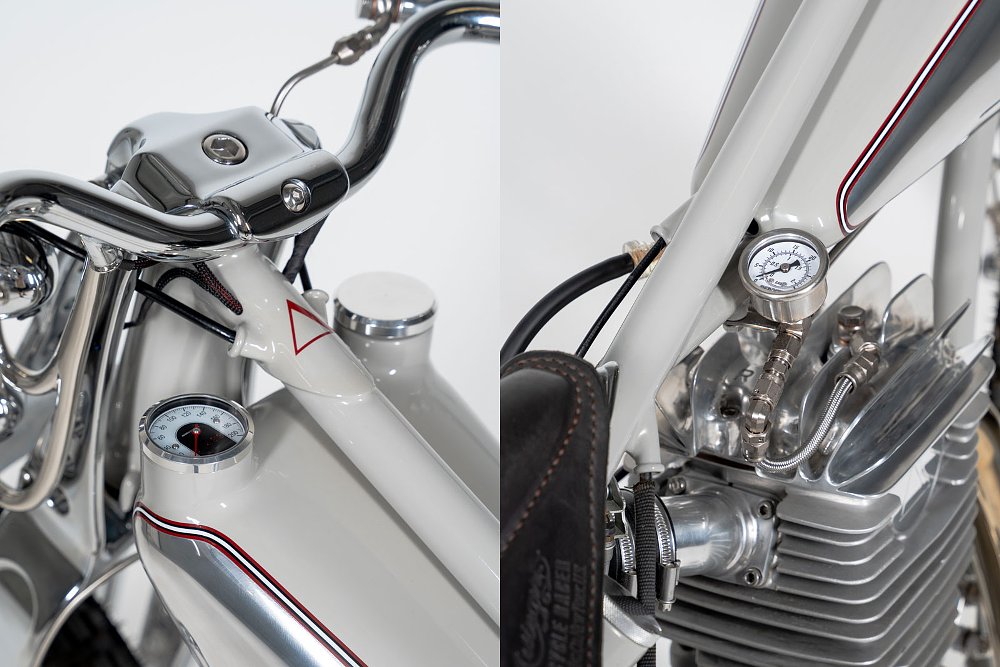
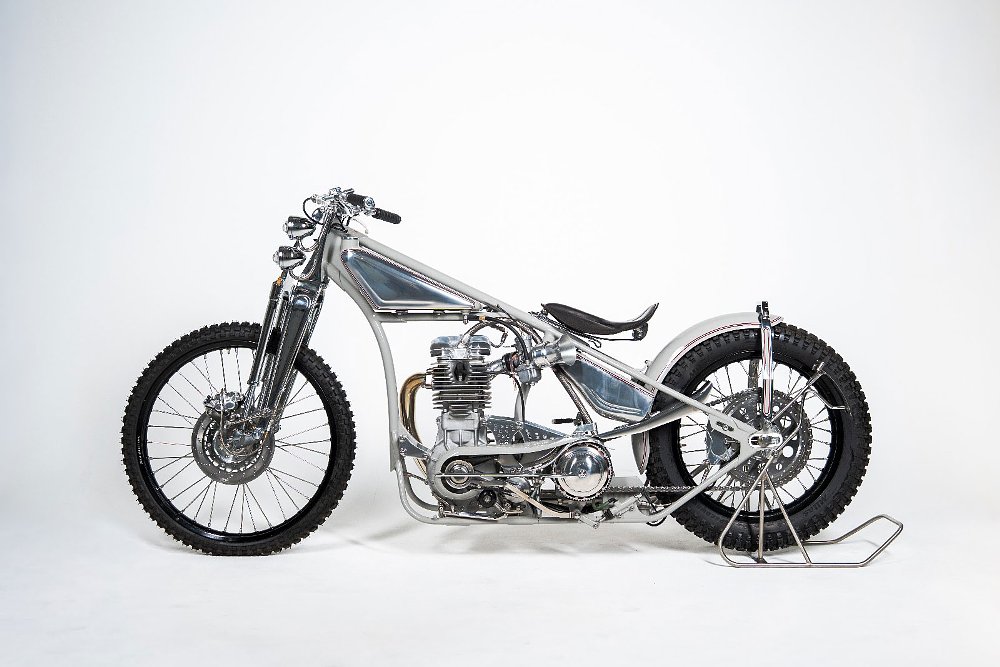
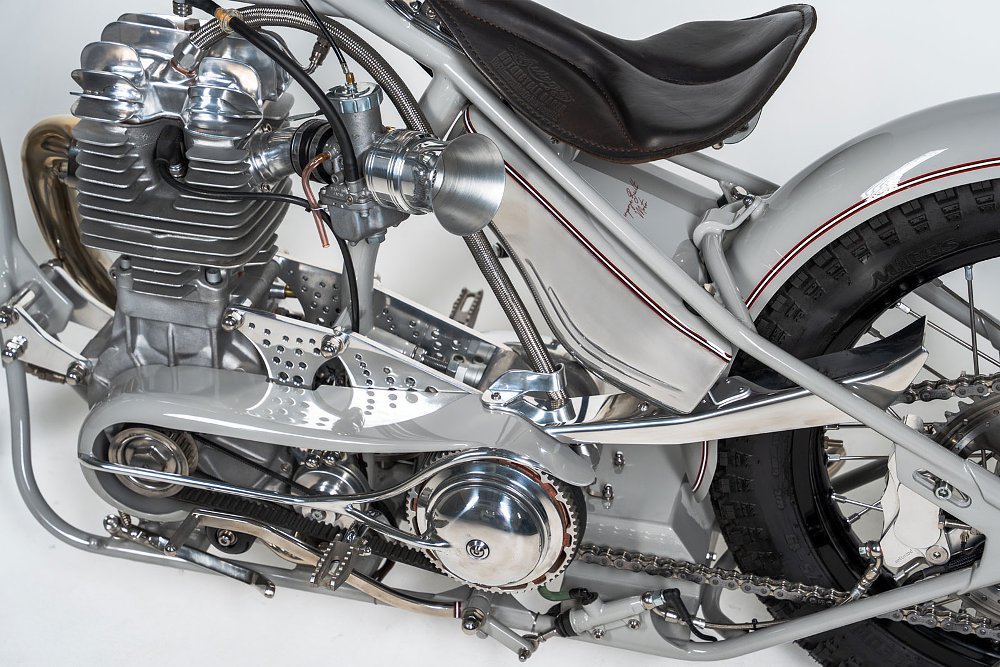
The bespoke frame Tom designed and built, made from chromoly tubing, combines race-inspired geometry with practical concessions for road use. To reinforce the vintage aesthetic, the neck was shaped by hand to resemble a cast component, and the machined engine and gearbox mounts feature obligatory speed holes. To complete the look, the chassis rolls on modern racing hubs laced to alloy rims. A custom-designed sprocket and brake rotor assembly provides the desired gearing without detracting from the speedway aesthetic.
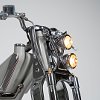
The design of the front end presented one of the project's biggest challenges. "Modern speedway fronts are ugly, and vintage speedway ones didn't look all that fun to make," Tom jokes. His solution was yet another custom creation that merged a girder look with telescopic functionality.
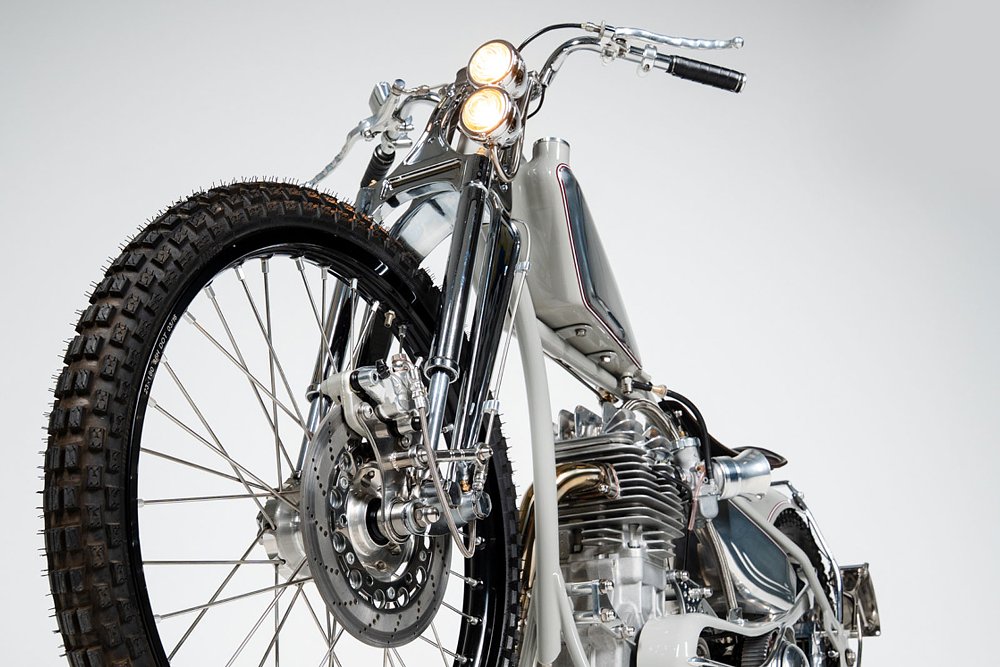
Sitting atop the fork is a handlebar inspired by those found on early Royal Enfields. They feature hidden wiring and an internal throttle. And since the bike was destined for road use, Tom developed a custom front braking system integrated into the front end and a unique headlight setup. "I aimed to create something that you would see on a chopper, like a part repurposed from an old car." His solution was a pair of chromed B-51 guide lights with concealed wiring.
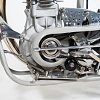
Power comes courtesy of a GM500 upright speedway engine, paired with a Mikuni VM round-slide carburetor and TTi Norton/AMC four-speed gearbox that Jake sourced for the build. The 500 cc four-valve OHC single was originally designed to run on race fuel and spend its life at full throttle for five-minute heats. Fortunately, this example had already been converted to run on pump fuel with 11:1 compression. PBM rebuilt the engine to clear out any gremlins and developed a custom external oiling system that utilizes an H-D Panhead oil filter, a Jawa external oil pump, and oil routing through the frame.
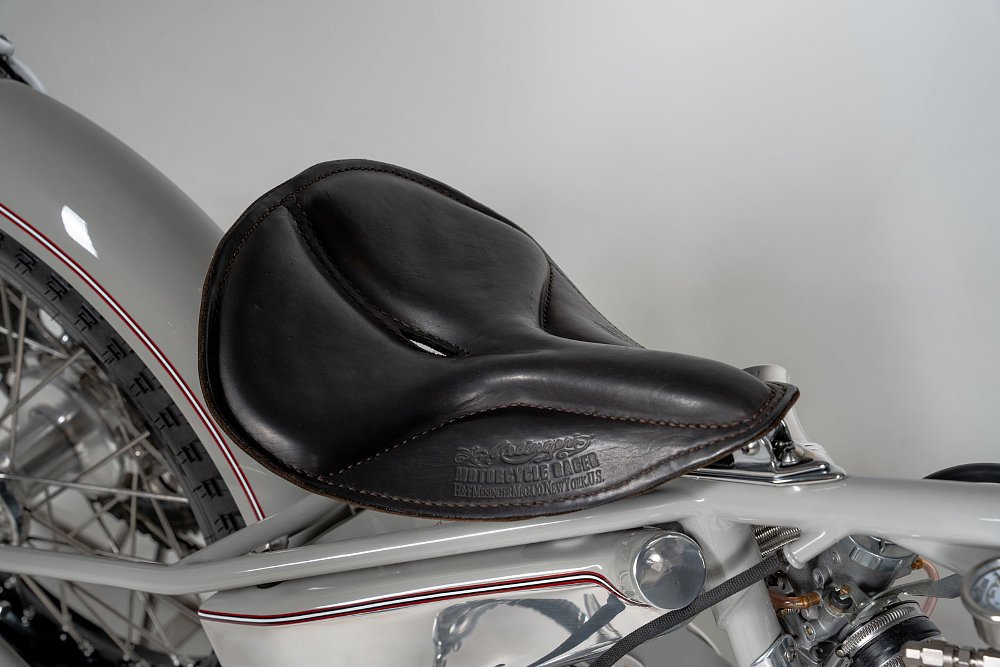
The bodywork blends elements of '80s speedway racers and early board-tracker styling. Hand-fabricated from sheet metal, the svelte fuel tank sits neatly between the frame rails. The oil tank under the seat and rear fender are equally understated. "Usually, I opt for a more flowing style. Here we went for pure function and industrial styling, just as you would expect to see trackside." In keeping with this ethos, the seat is based around a vintage-style Messinger racing saddle and is mounted on modified trailer leaf springs.
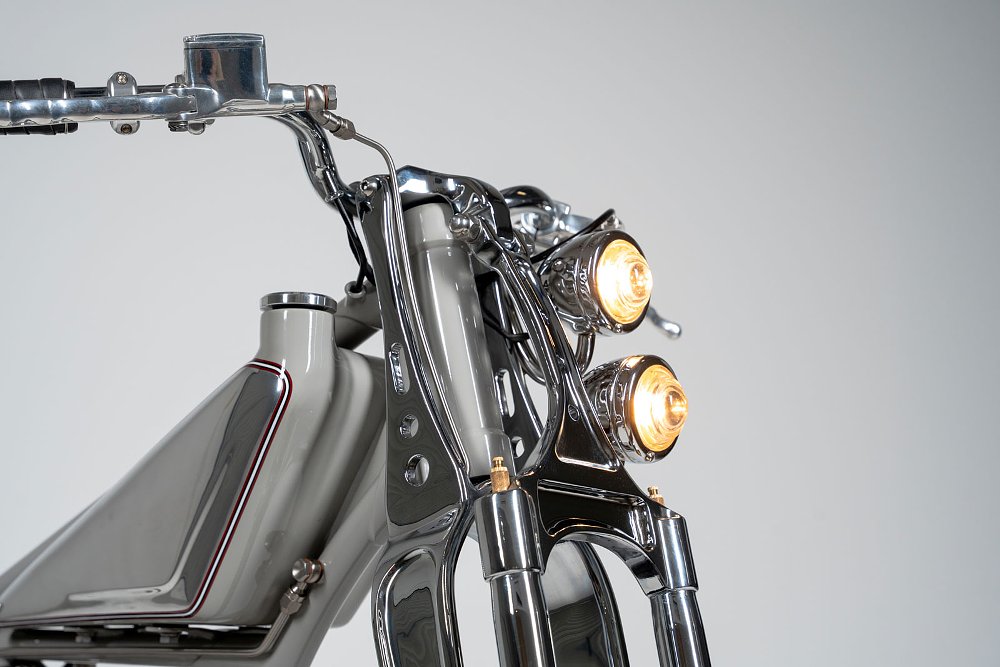
For paint, Justin from Pop Bang Classics laid down a bone-grey base accented with cherry red, white, and black pinstriping.
The finished motorcycle delivers precisely what Jake envisioned all those years ago, a street-legal racer that captures the speedway spirit. For Purpose Built Moto, it represents something equally significant: the workshop's first ground-up build, which I hope is the first of many.
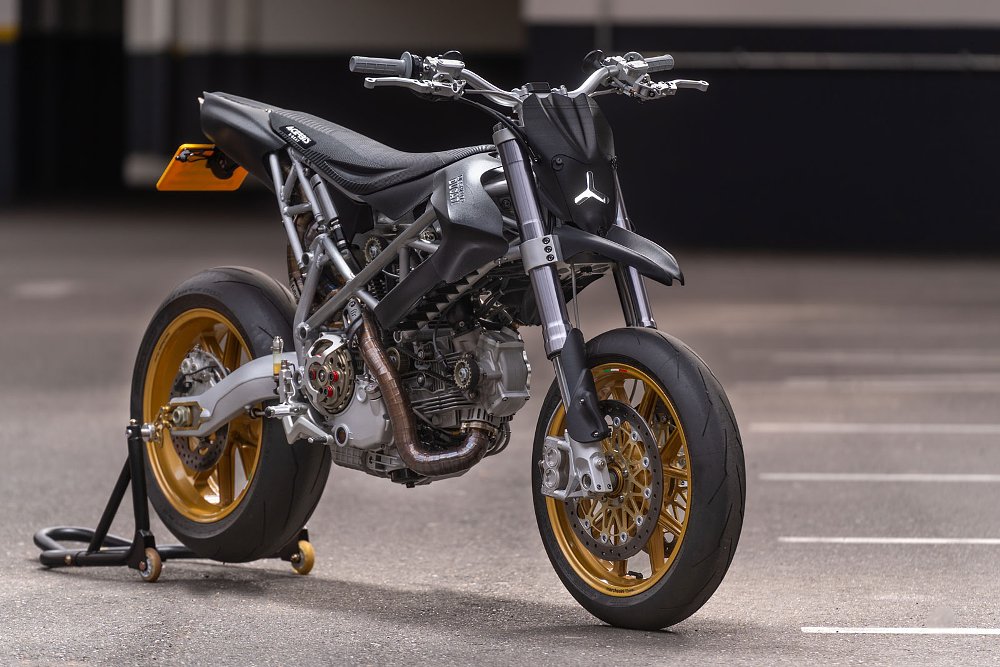
Futuri Motion Tech Ducati Desmoto
The Ducati Multistrada 1100DS was a game-changer in the adventure sport-touring segment. It combined all-day ergonomics with premium handling, extended service intervals, and sport bike power courtesy of Ducati's revered air-cooled Desmodue V-twin. Topping it all off was Pierre Terblanche's polarizing design, which has since helped the Multistrada achieve cult-classic status.
When Mark van Veggel got his hands on a neglected 1100DS, his interest wasn't in celebrating the bike's original form. Instead, he wanted to discover how far the platform could be pushed.
Based in Tilburg, Netherlands, Veggel is an IT professional by day and passionate custom bike builder by night. He calls his modest one-man workshop Futuri Motion Tech (Instagram), and it's where he combines his technical know-how and love of motorcycles to realize his two-wheeled visions.
"When I was young, my dad would take me to classic bike races and show me supermoto races," says Mark. "Watching those bikes drifting into corners sparked the motorcycle bug."
For Mark, that bug came in the form of Ducati ownership, hence the choice of donor for this project. And thanks to those formative experiences with his dad, the build would ultimately draw heavy inspiration from the supermoto world.
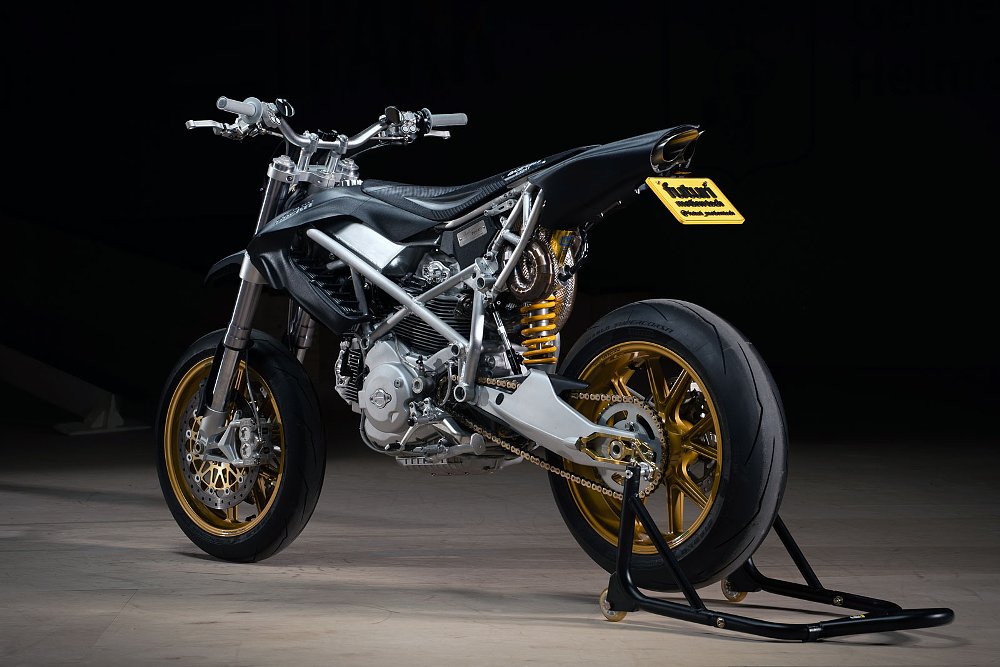
Looking at the finished bike, it bears little resemblance to a Multistrada 1100DS, as very little of the original machine remains. The engine is one of the few carryover components, but even it didn't escape extensive modification. Despite having only 20,000 kilometers (12,400 miles) on the clock, the Desmodue was completely stripped down, media blasted, and rebuilt using premium components.
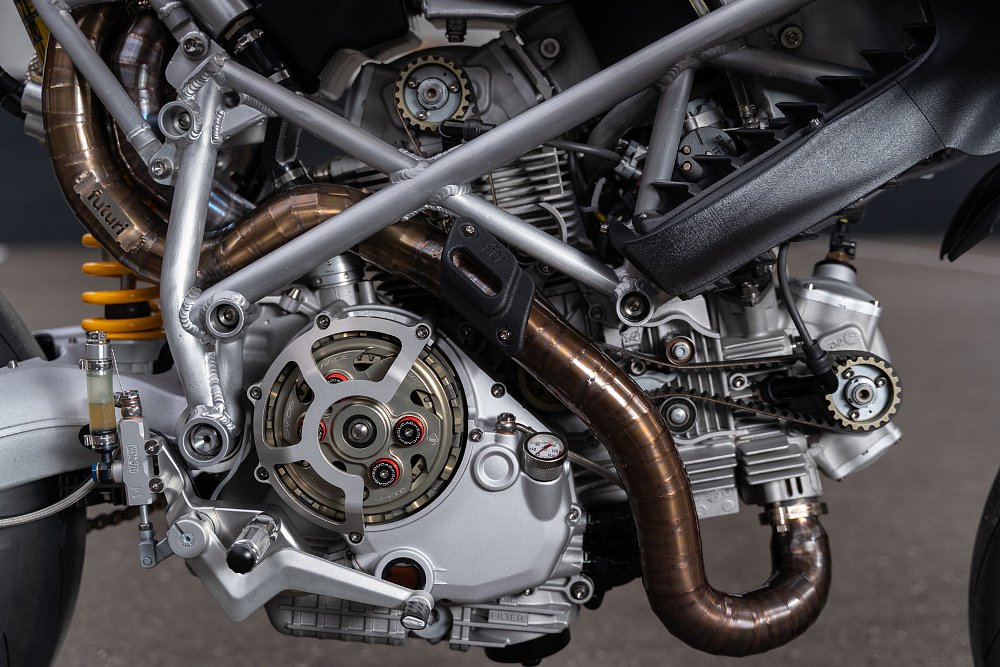
Internally, it now features 98 mm high-compression Pistal pistons, Carrillo connecting rods, and Kaemna/Puretec camshafts. The cylinder heads have been ported, and the intake system upgraded with 46 mm valves and 50 mm Ducati S4RS throttle bodies. Then there's the exhaust, a two-into-two pie-cut stainless-steel work of art. Each header snakes its way around the engine before terminating side-by-side within the tail piece. The result of all this is a significant performance gain, with output rising from 95 horsepower to 112 horsepower and torque increasing from 104 Nm (76.7 foot-pounds) to 123 Nm (90.7 foot-pounds).
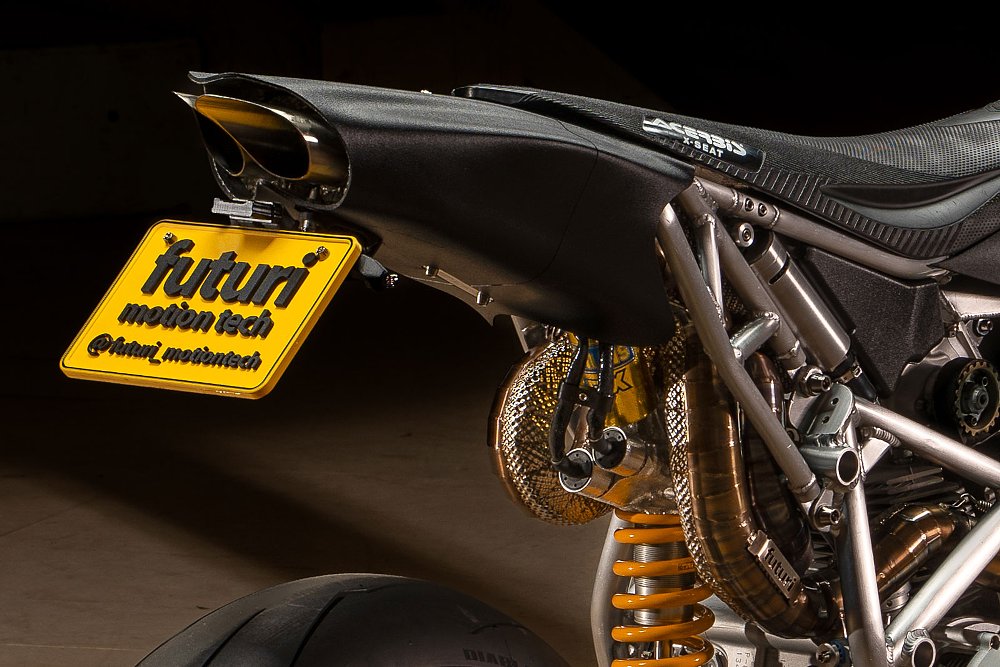
With weight reduction a priority, Veggel opted to discard the original steel chassis. In its place sits an aluminum frame and swingarm sourced from a Ducati 999. Up front, a Hypermotard 1100 fork is mounted in a custom-machined aluminum triple clamp with a 36 mm offset.
At the rear, suspension duties are handled by a Panigale Öhlins TTX shock, which can be adjusted via a Futuri Motion Tech ÖTX suspension controller, a system that Veggel designed, programmed, and built himself. This clever piece of tech, which he sells via his website, allows riders to adjust rebound and compression settings on electronically controlled Öhlins TTX rear shocks, front forks, and steering dampers with the press of a button.
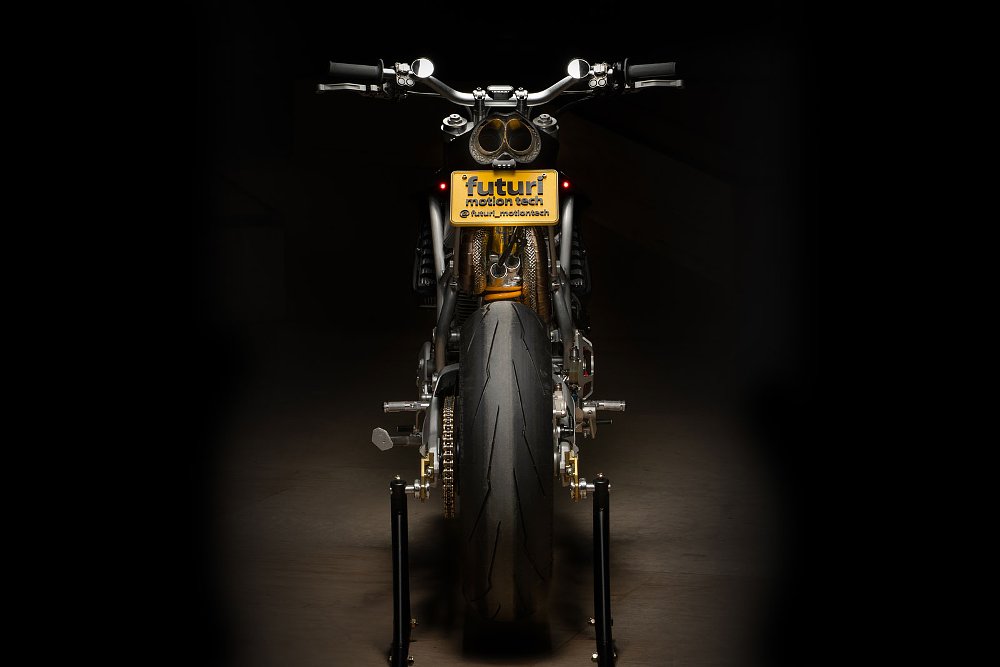
Additional weight-saving measures include the fitment of 749S magnesium wheels wrapped in Pirelli Diablo Supercorsa SP rubber. Veggel even spent €2,500 ($2,900 U.S.) on titanium fasteners to shave a further 3.1 kilograms (6.8 pounds) from the build, helping to achieve a remarkably low wet weight of just 141 kilograms (311 pounds).
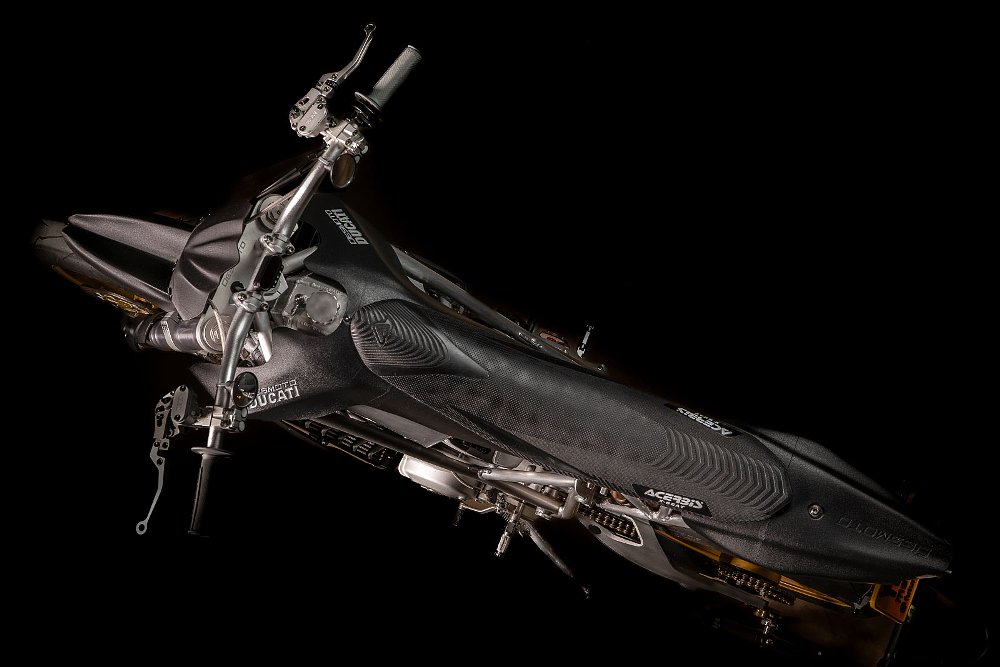
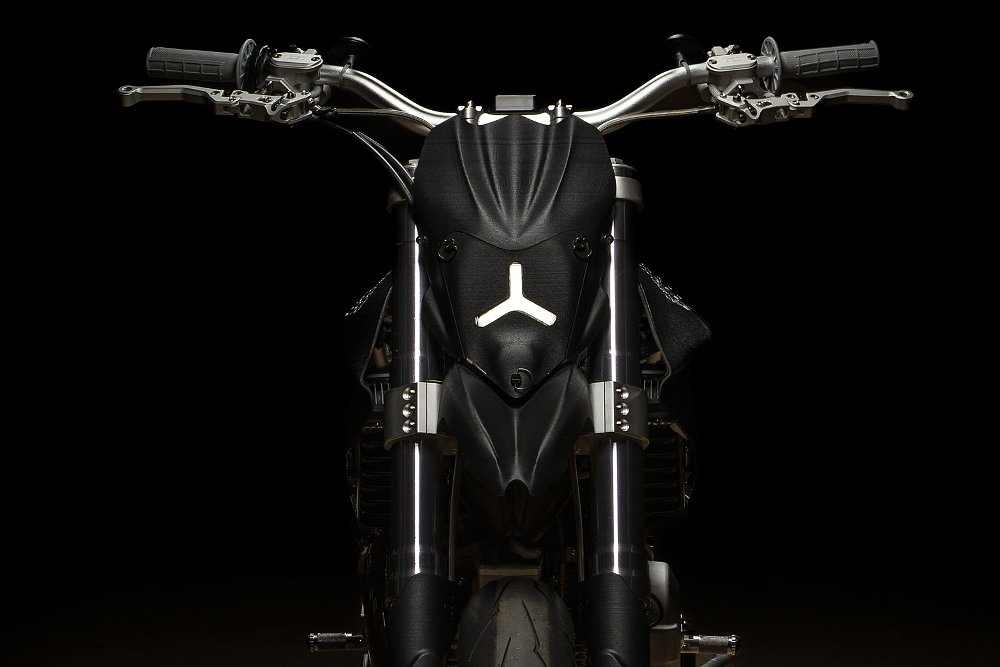
When it came to the bodywork, inspiration was found in a single aftermarket component, a KTM Acerbis X-Seat. Using 3D design software, Veggel created a tank cover and tail unit that complements the seat's lines and details. The headlight surround, front fender, and radiator shrouds follow the same design language, resulting in a cohesive package that's entirely 3D printed using heat-resistant, ultra-lightweight nylon carbon fiber.
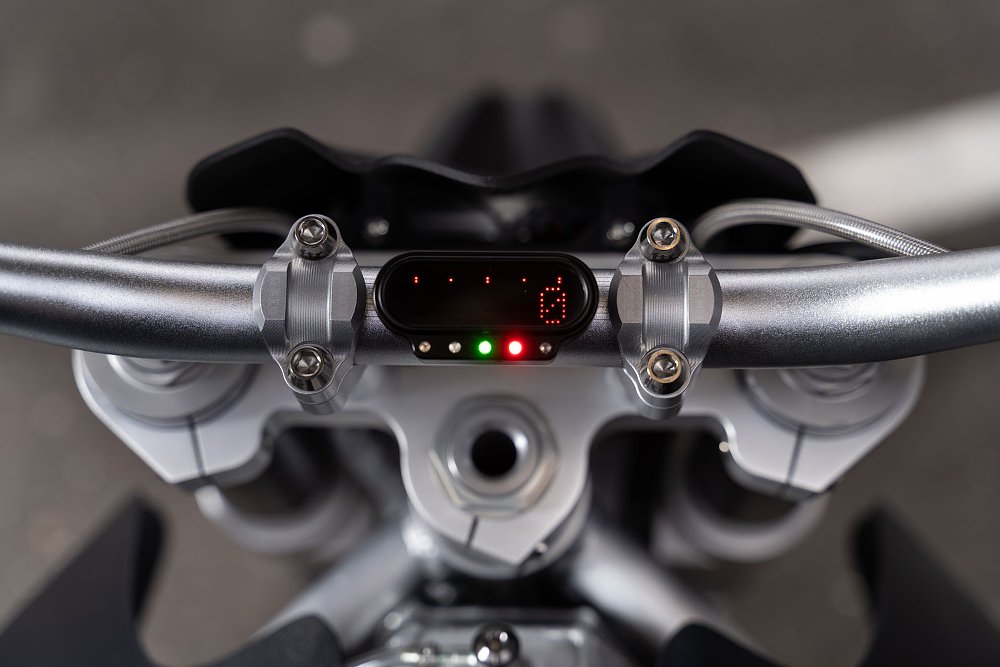
Veggel says that 95 percent of the Desmoto was custom-made and fabricated by his own hand, requiring over 2,000 hours and five and a half years to complete. Looking at the incredible finished product, I doubt anyone would question those claims.
Sticky's Speed Shop Sushi Suki GSX-R
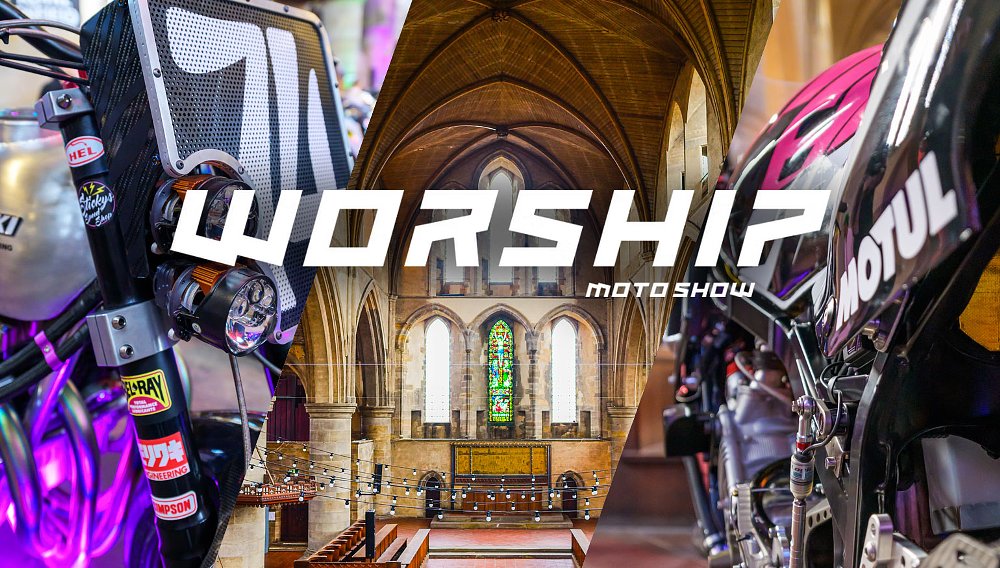
Trends in the custom bike world come and go, but right now two styles are leading the scene: rugged, rally-inspired adventure builds (like these from the April roundup) and modernized retro sport bikes. In the UK, it's the retro sport bike movement that's gaining the most momentum, where builders, such as Matt Coulter of Sticky's Speed Shop, have been creating some truly impressive machines. The trend has become so popular it has spawned dedicated events such as the Worship Moto Show and become a drawcard for the London Bike Shed Show.
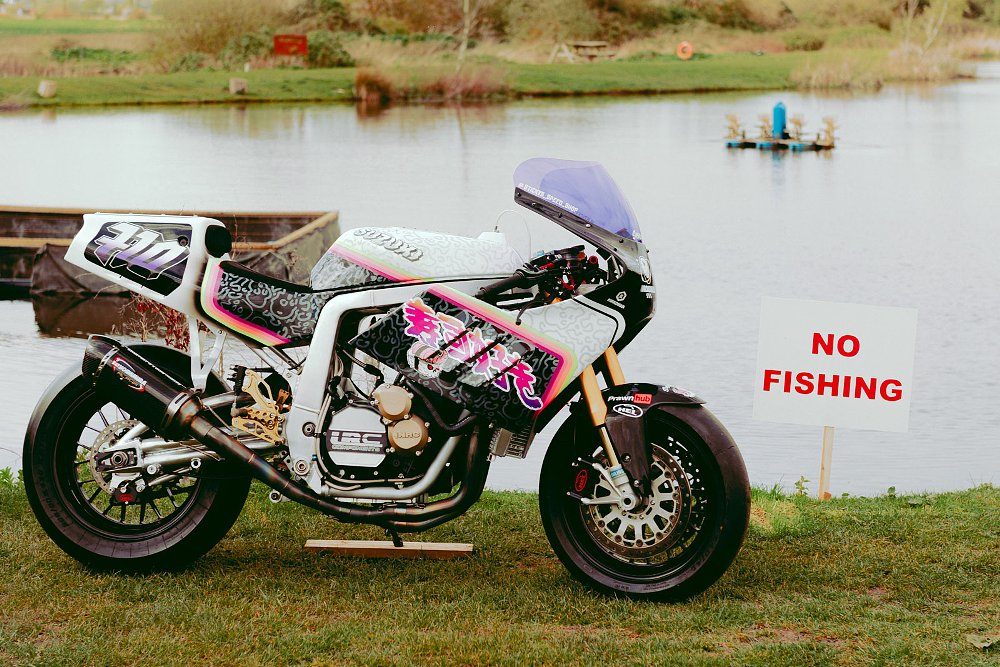
This bike, which Matt has coined Sushi Suki (sushi lover in Japanese) in his usual tongue-in-cheek style, is his take on a Suzuki Slingshot (as late 1980s and early '90s models were nicknamed) GSX-R. Using a retro-mod approach, he's merged the underpinnings and styling of the 1980s legend with later model K series performance and modern handling components.
The following is Matt's own recollection of how Sushi Suki came to be.
"When I first came up with the idea for the bike, I was seeing a lot of retro-modded superbikes, like GSX-R1000 K series with Slingshot and Slabside bodywork. I decided that it would be a bit cooler to try and do it the other way around, using a Slingshot base and adding a K-series engine.
"I already had a 1989 750 Slingshot frame on the shelf with a Steelheart swingarm and Öhlins shock, so it was an easy decision to make that the base for the project. I started to look around for a K-series GSX-R1000 engine and quickly found one. I then approached Lee at Steelheart Engineering to see if he was brave enough to try and retrofit the engine into the Slingshot chassis.
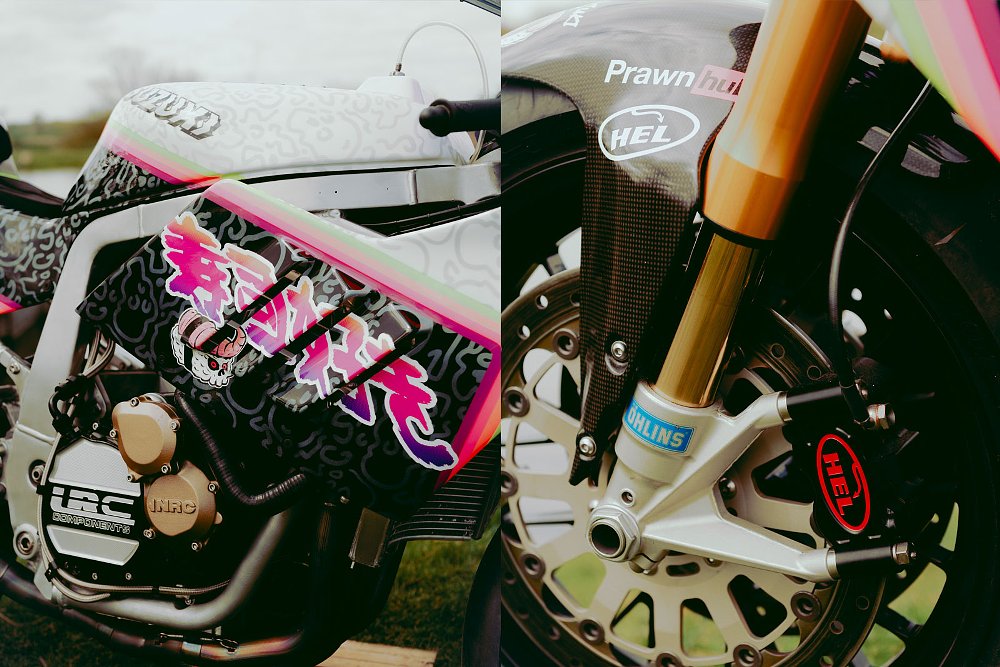
"Lee took some convincing but eventually gave in, and we got to work with a grinder. It didn't seem too bad to start with, but we quickly realized it was going to be a monumental task. Everything from the headstock down to the frame rails, lower suspension, and lower crossmember had to be re-fabricated.
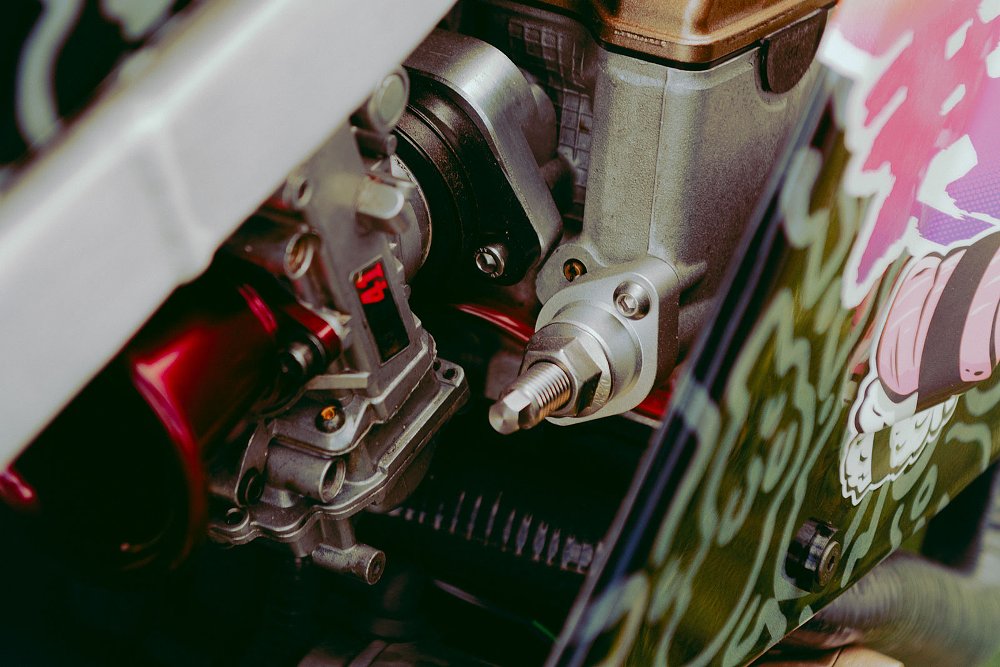
"We also realized that there was no way that the standard throttle bodies were going to fit, so I had the bright idea of trying to convert the intake from downdraft to crossflow. Lee ended up putting the head in his CNC to machine out the standard throttle body mounts and re-angle the ports to make it crossflow. For good measure and extra coolness points, we installed FCRs. This was also a tricky job as they're not meant to run so closely together, but we got there in the end!
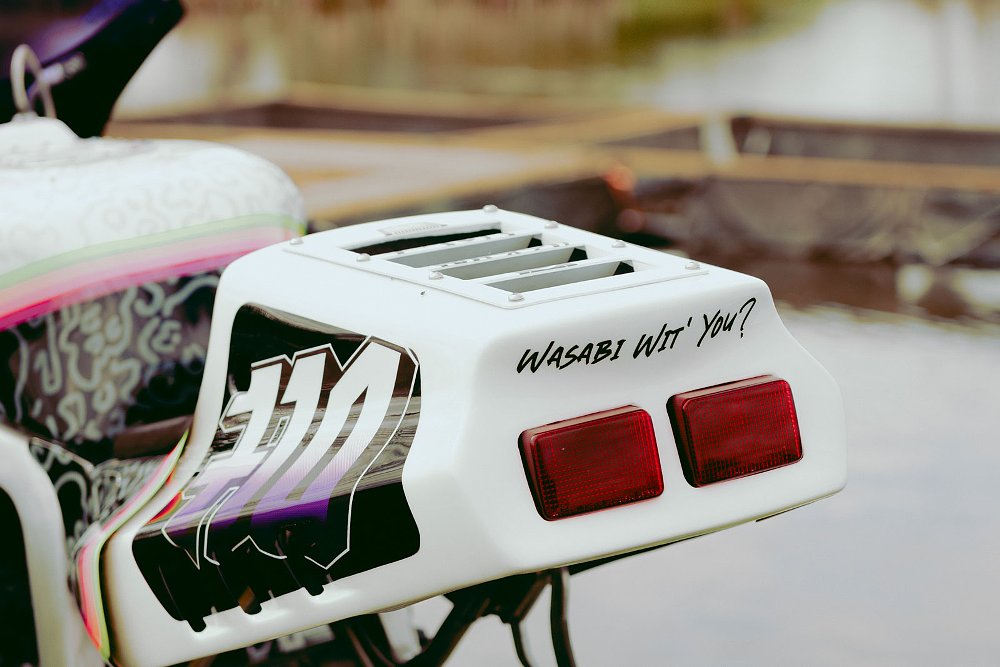
"For the front suspension, I had a set of the Ducati radial forks ready to go. My mates Gav and Gary helped with various fabrication jobs to get everything fitting right, while the superstars down at Hel Performance supplied a full brake setup along with a thumb brake, as it's got a pretty short wheelbase. Bodywork-wise, I put together a nice short RGV250 seat unit with an oil cooler in the tail and a Yoshi-style race fairing up front.
"Then, for the paint and graphics, I got in touch with my long-time collaborator Ryan Roadkill. Ryan had some great ideas and absolutely smashed it with the design. We always seem to be on the same page when it comes to how these bikes should finally look. I had the idea of incorporating some kind of fluorescent fade with thin pinstripes, and Ryan added that into the design.
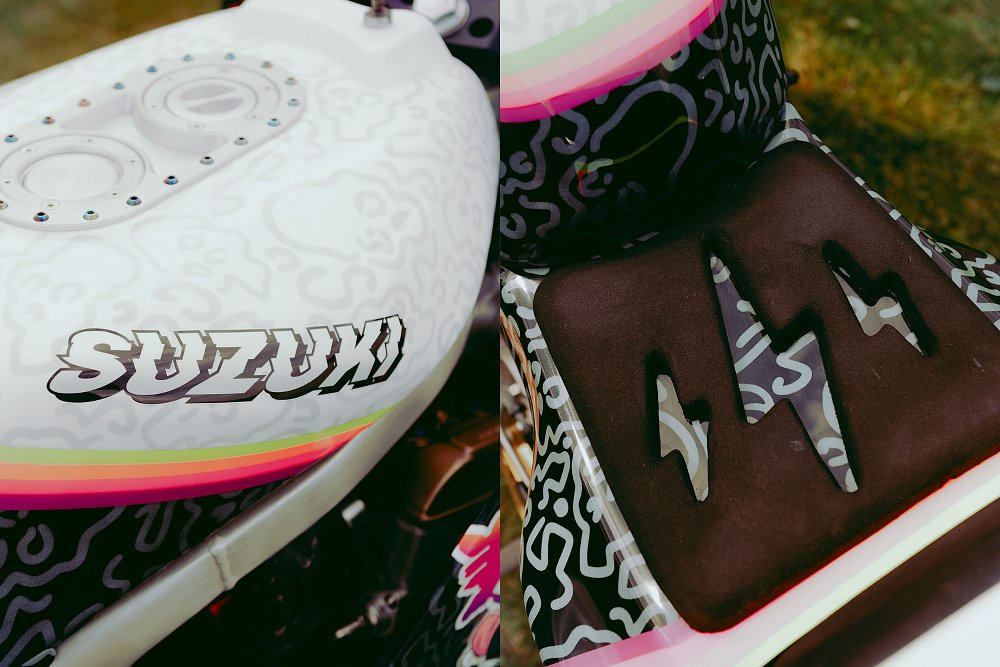
"When it came to doing the paintwork, my good friend Ian took the reins and again absolutely smashed it. We then completed the look with lots of little hidden fish puns. I like to put these details on my bikes as funny little Easter eggs that people can discover when they get up close to the bike.
"I really wanted this bike to have the look of a retro race bike with modern paintwork, so to complete the look, I wanted a set of 16.5-inch wheels. I struck gold when I found someone with some new old stock slicks that we could run, which are ultra rare, and since finding them, I've had a lot of people ask me my source. The bike will run 17s when we road test it, but for special appearances, we fit the 16.5s," says Matt.
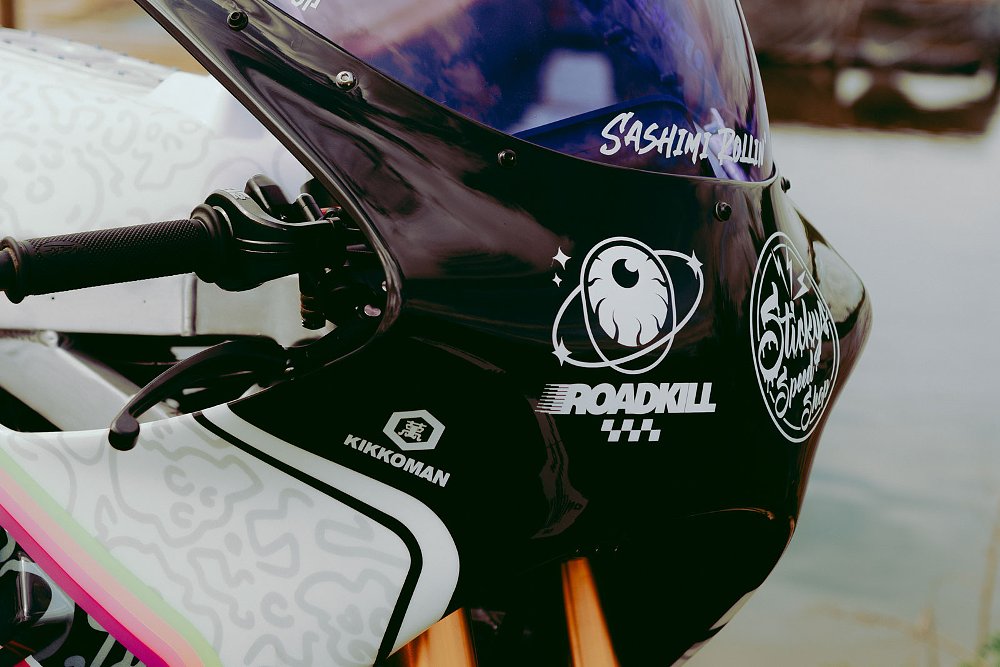
After its appearance at last month's Bike Shed Show in London, Sushi Suki is heading back to the workshop for more fettling. Matt's focus now is engine performance, and he's pulling out all the stops. First cab off the ranks (as we say here in Australia), Rob at Mistral Performance Engineering will be reworking and flowing an ex World Superbike head and cams and fitting new pistons and rings. With these changes and the lightweight nature of the build so far, Matt's confident it'll be well worth the extra effort.