Shop by Vehicle
 Track Order
 Contact Us
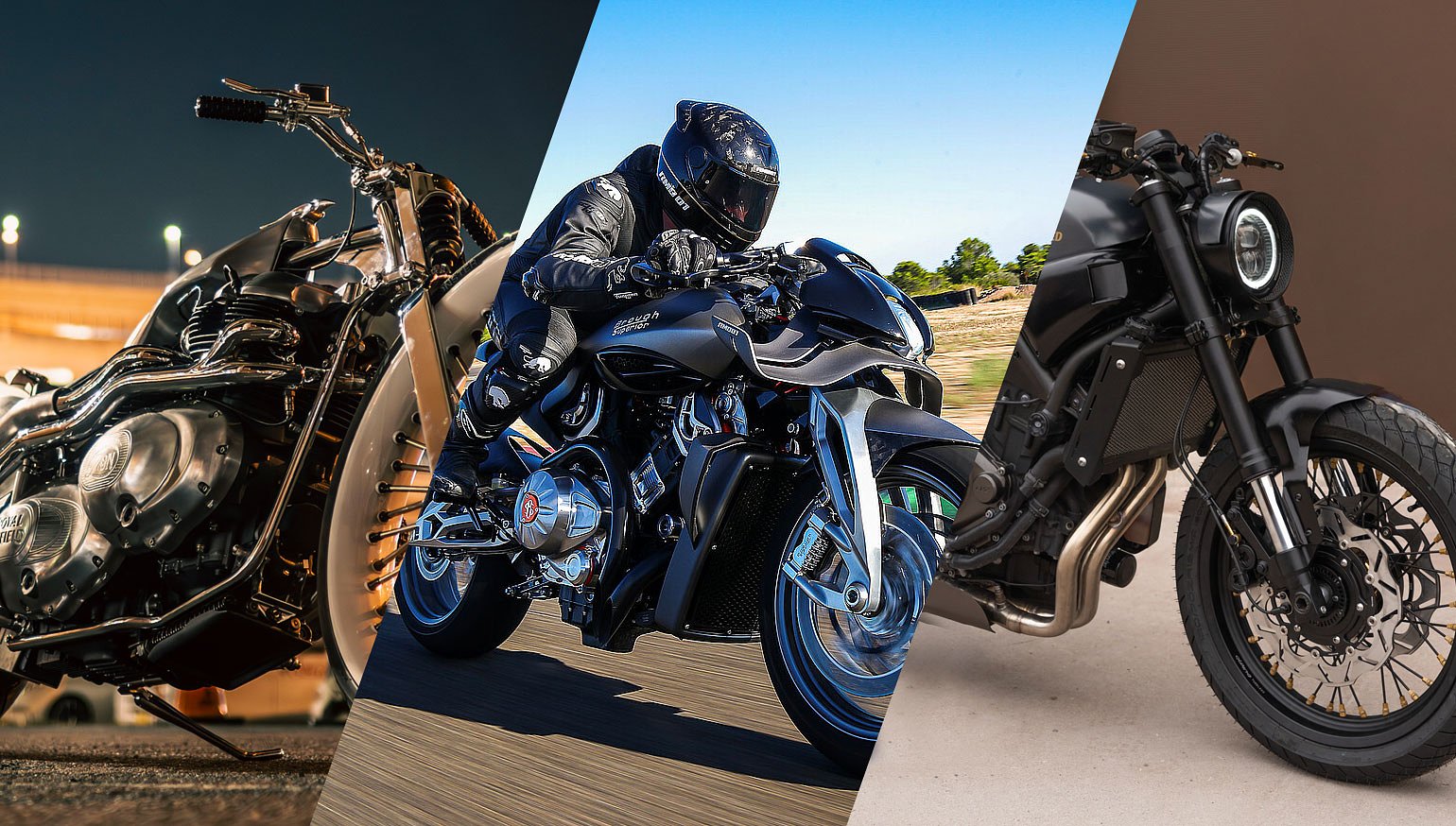
Are two engines better than one? Should Yamaha add a street-tracker to its Sport Heritage range? And would you be willing to sell a kidney (or two) to buy a motorcycle designed in cahoots with a watch brand? Take a look at this month's custom trifecta and judge for yourself.
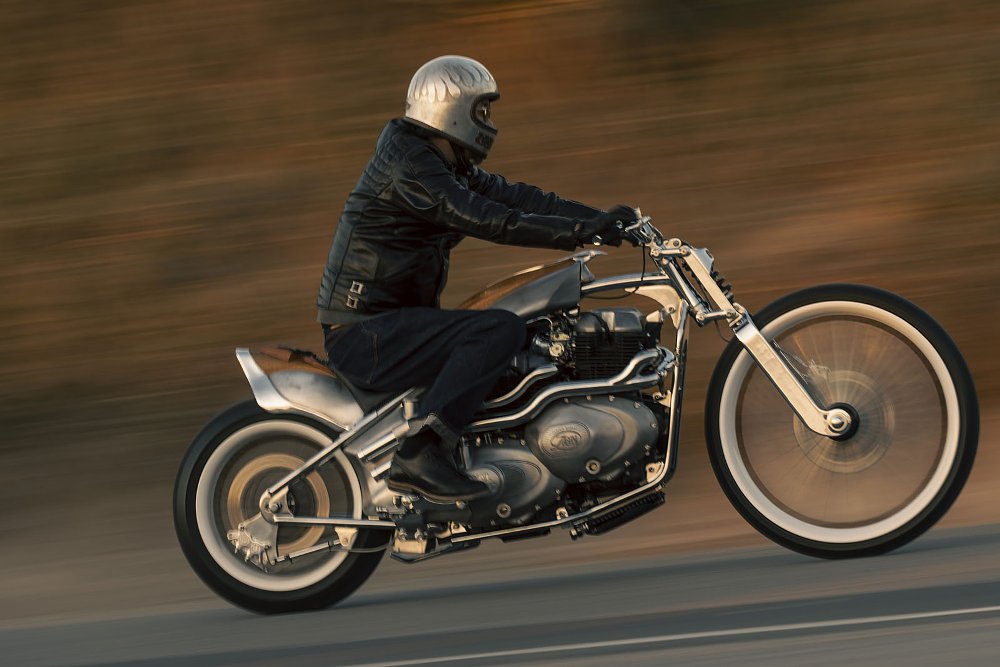
CW Zon "Vita" Royal Enfield Classic
If you've been following the custom roundup series, the name Custom Works Zon (Instagram) should ring a bell. Headed by Yuichi Yoshizawa and Yoshikazu Ueda, the Japanese workshop has earned a reputation for pushing conceptual and technical boundaries, often in ways that polarize opinions. That willingness to challenge convention is precisely why major manufacturers come knocking on their door, and their latest collaboration with Royal Enfield is the perfect case in point.
Commissioned by Royal Enfield for display at the 2025 Mooneyes Hot Rod Custom Show in Yokohama, Japan, CW Zon's brief was to transform the newly released Classic 650 into something unforgettable. Knowing full well that Mooneyes crowds love a spectacle, Yoshizawa-san knew subtlety wasn't an option.
"Most custom motorcycles showcased at HRCS are powered by large-displacement engines, and the engine's visual impact is always a crucial element," he explains. "The Classic 650 engine is beautiful, powerful, and full of character, but I wanted to elevate its presence even further." And elevate it he has, using not one but two Classic 650 engines to create the one-of-a-kind 1,300 cc Royal Enfield coined "Vita."
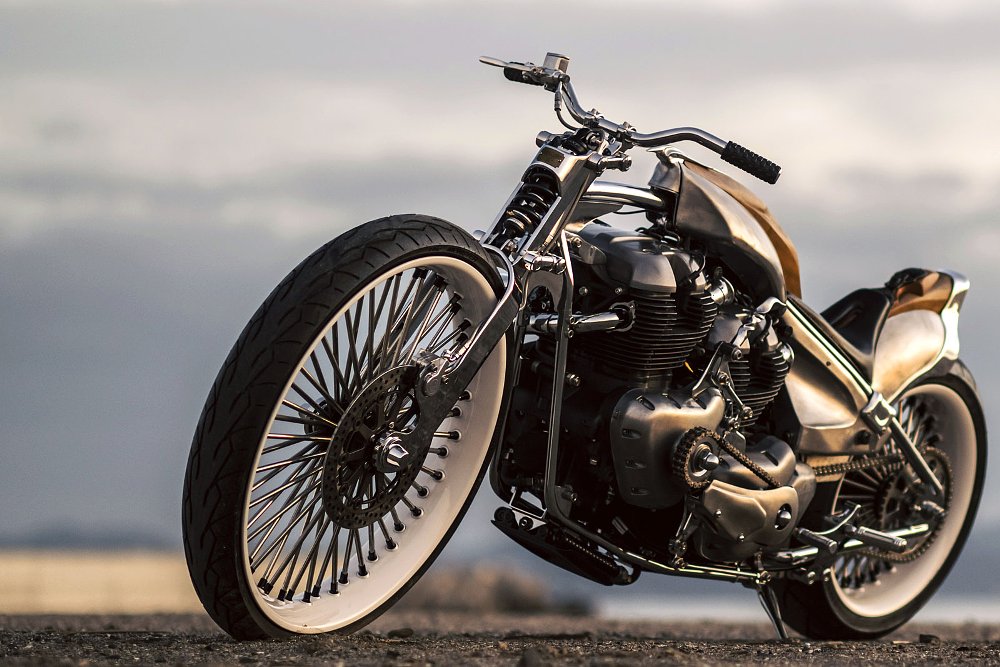
"I imagined a land-speed racer like those competing at Bonneville, two engines aligned inline front and rear," Yoshizawa-san says. "But that layout made the bike excessively long. I needed a better solution." The breakthrough came when he decided to stagger the engines vertically. "The front engine does not require a gearbox, so by separating the transmission section and trimming the crankcase, I could position it closer to the rear engine, which retains the gearbox. By staggering their height, I reduced the distance between the two units even more."
Unsurprisingly, linking the two engines together in such a way proved challenging. "Fortunately, the left-side magneto cover gives access to the crankshaft," explains Yoshizawa-san. "I fabricated an extension shaft and mounted a primary gear there, linking the two engines via a primary chain. It sounds simple when explained now, but reaching that solution required a lot of trial and error."
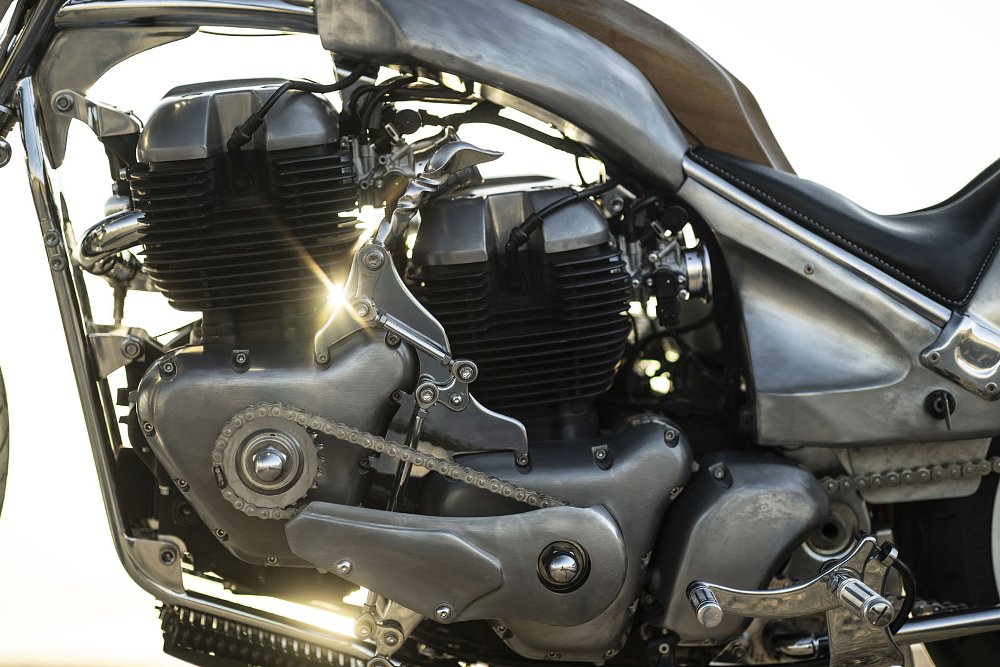
During this stage of the project, precision was critical. From perfect chain alignment to the opposing left- and right-hand threads required for each engine's extension shaft. However, thanks to the 650's modern engine mapping, synchronizing the pair proved surprisingly straightforward, with a single ECU managing them both.
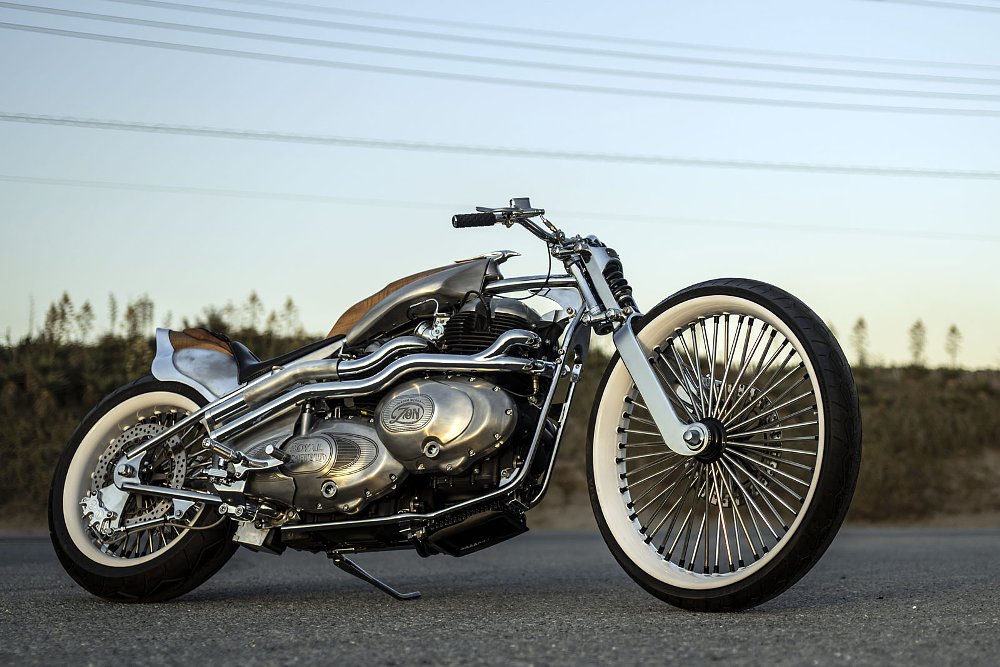
When it came to styling, Yoshizawa-san deliberately steered away from the salt-flats racers that influenced the engine setup. "Land-speed racing feels somewhat distant from mainstream custom culture in Japan," he says. "Choppers, on the other hand, are extremely popular. Debuting a dual-engine chopper would create a much stronger reaction, and personally, I've always loved choppers." As a result, the Enfield's chassis features a rigid rear-end design paired with a handbuilt, plate-steel girder fork. The top frame tube was designed with strength in mind, while detachable lower rails allow the tightly packaged engine to be installed or removed.
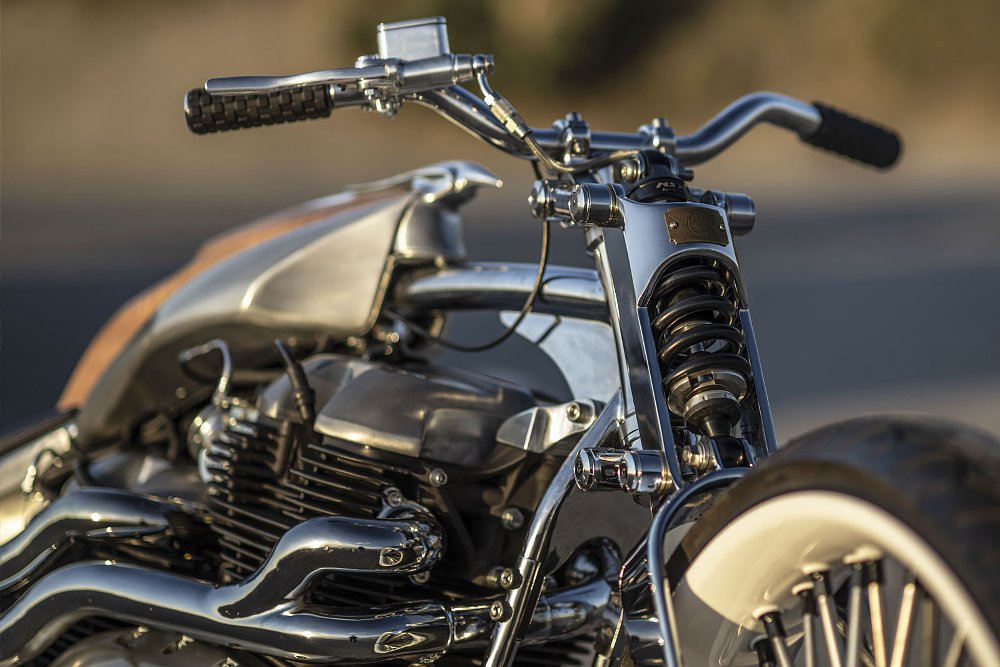
Another out-of-the-ordinary feature of Vita's design is that the fuel tank lives beneath the seat. This approach allowed the electrics to be housed in a faux tank that is finished with a hand-carved billet aluminum bird sculpture and mahogany spine that runs through to the tail piece. "Wood has its own warmth and power," Yoshizawa-san says. "To celebrate the raw character of each material, steel, aluminum, and wood, I left all exterior parts unpainted. The jockey shifter is hand-forged Damascus steel. I personally learned forging techniques by visiting a Japanese swordsmith workshop."
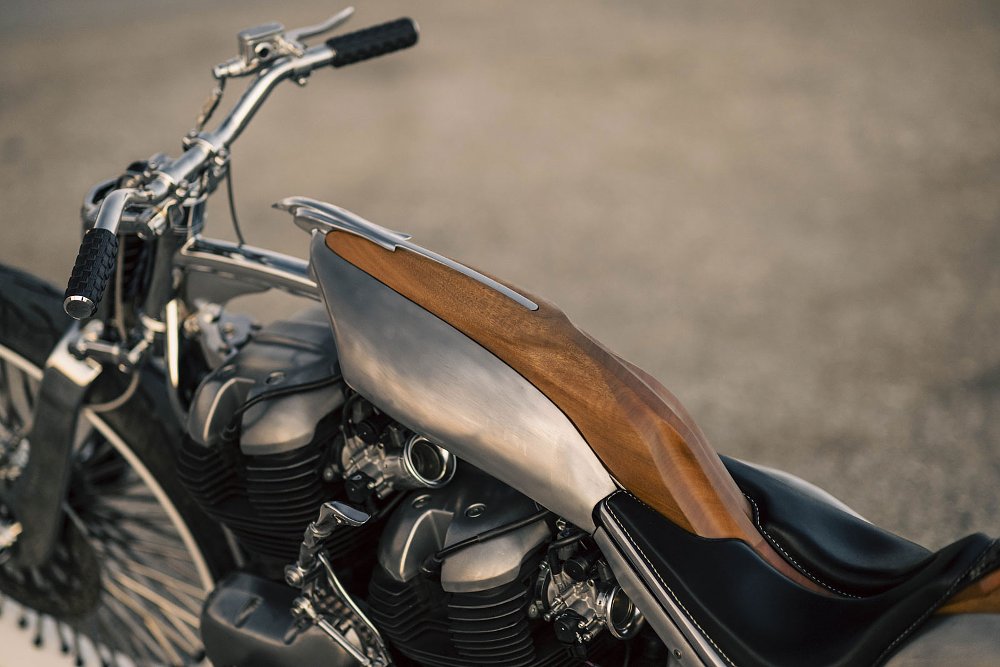
As for the motorcycle's name, "Vita," it comes from the Latin word for life, which Yoshizawa-san has expressed through chosen materials, sculptural elements, and the realization of his engine design.
Crooked Motorcycles Yamaha XSR700
Founded in 2018 by two friends with a shared vision, Germany's Crooked Motorcycles (Instagram) has amassed a custom portfolio of over 70 projects. Known for their modern minimalist design approach, they produce street-legal machines that boast factory levels of fit, finish, and attention to detail. Alongside their customer projects, they also design and manufacture a select range of bolt-on components, allowing customers to apply Crooked's unmistakable style to their own rides.
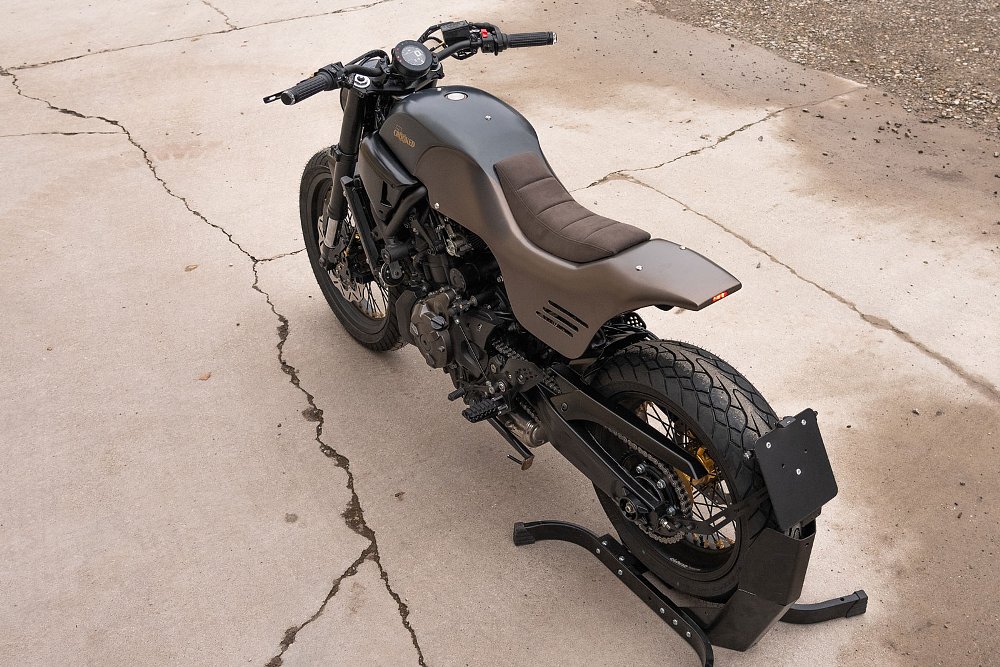
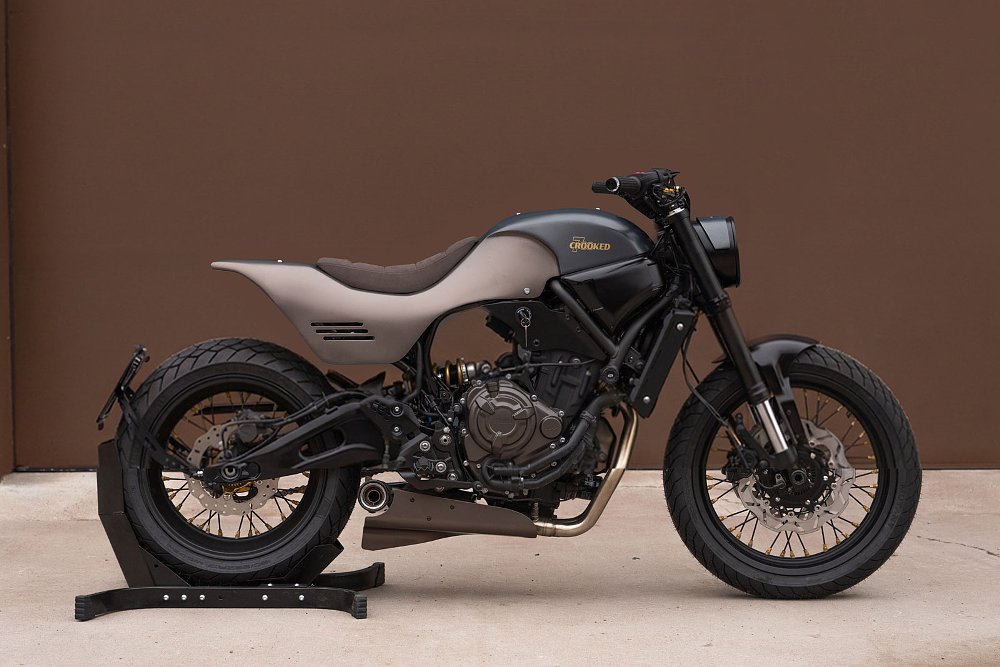
This Yamaha XSR700-based build, aptly named the Crooked700, was commissioned by a customer with a clear brief. As Crooked's founder and CEO Dominikus Braun explains, the owner "wanted something really special. So we created a design that focused on lightweight construction and improving the rider setup, since he disliked the original XSR configuration."
Crooked's visual transformation of the XSR700 takes cues from street-tracker styling. It's centered around a lightweight fiberglass body and a brown Alcantara seat that sits atop a custom-fabricated steel fuel tank.
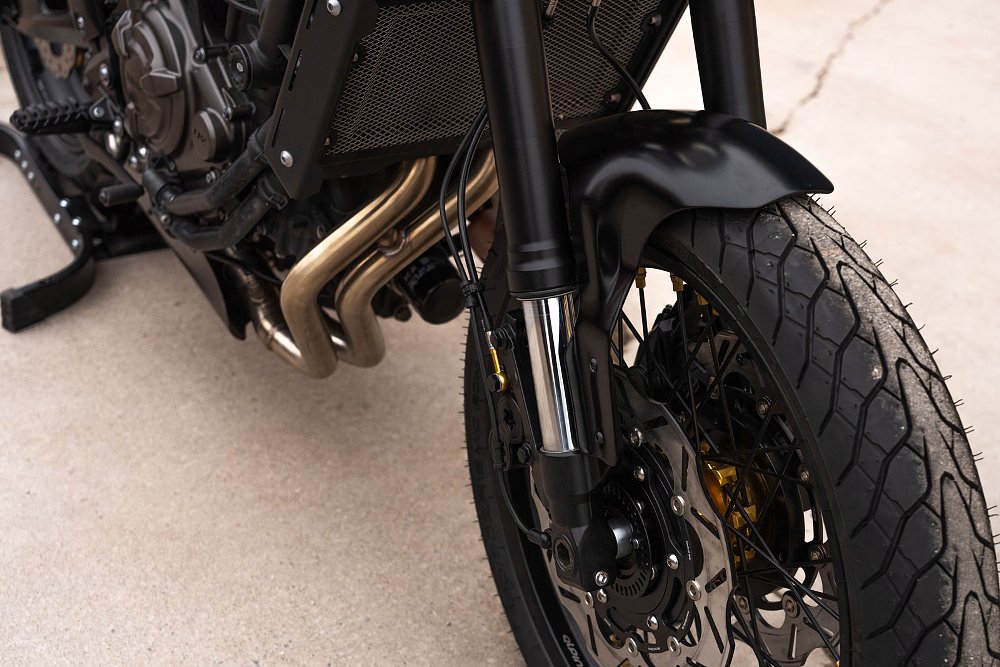
Handling improvements come courtesy of a Yamaha YZF-R1 fork, held by bespoke CNC-crafted triple trees, and a YSS shock in the rear. The original wheels have been swapped for lighter Alpina-spoked rims, and braking duties have also seen a big upgrade. "We used a CNC-drilled adapter with new R1 brake discs, combined with a new Brembo braking system," Dominikus explains.
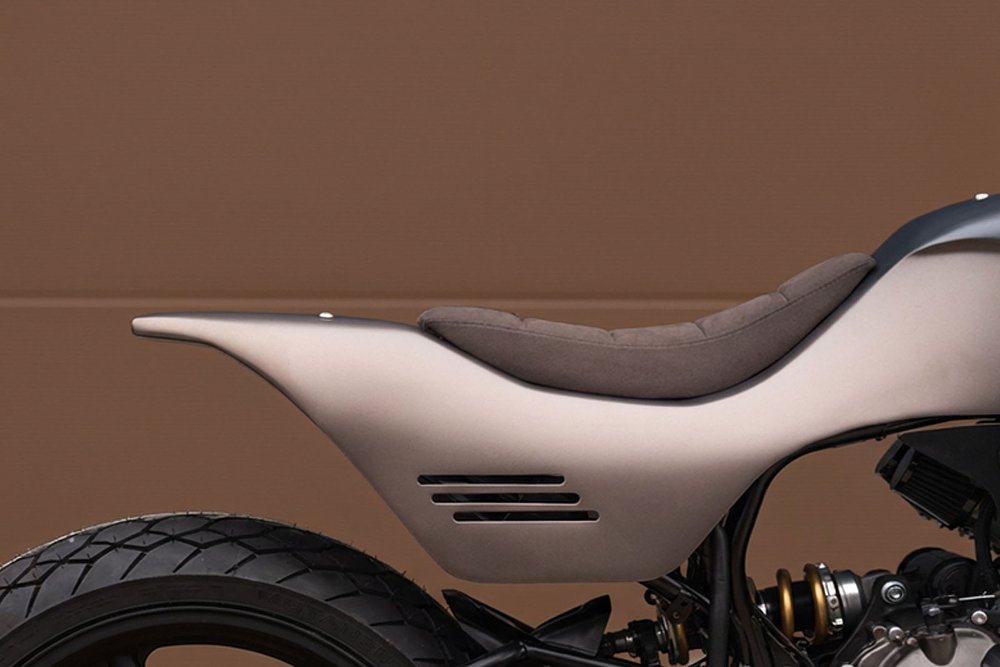
For this project, the color palette was deliberately restrained. "We aimed for a reduced look that left the focus on the lines of the bike," says Dominikus. "The original engine comes with a very classic bronze side cover, so we implemented this color in the design with gold details on the wheel hubs, Probrake levers and brake lines, rear suspension, and our own Crooked700 Logo."
Weight reduction was another key goal of this project. The use of composites contributed significantly to achieving this, and in the end, they managed to shed an impressive 35 kilograms (77 pounds) from the bike. "To reduce the bike's overall weight, we removed the air intake and designed an open filter system which works extremely well." Other weight savings came from the fitment of a custom exhaust system with an aluminum belly pan and a 3D-printed side cover with integrated air intakes that help cool the bike's electrical system.
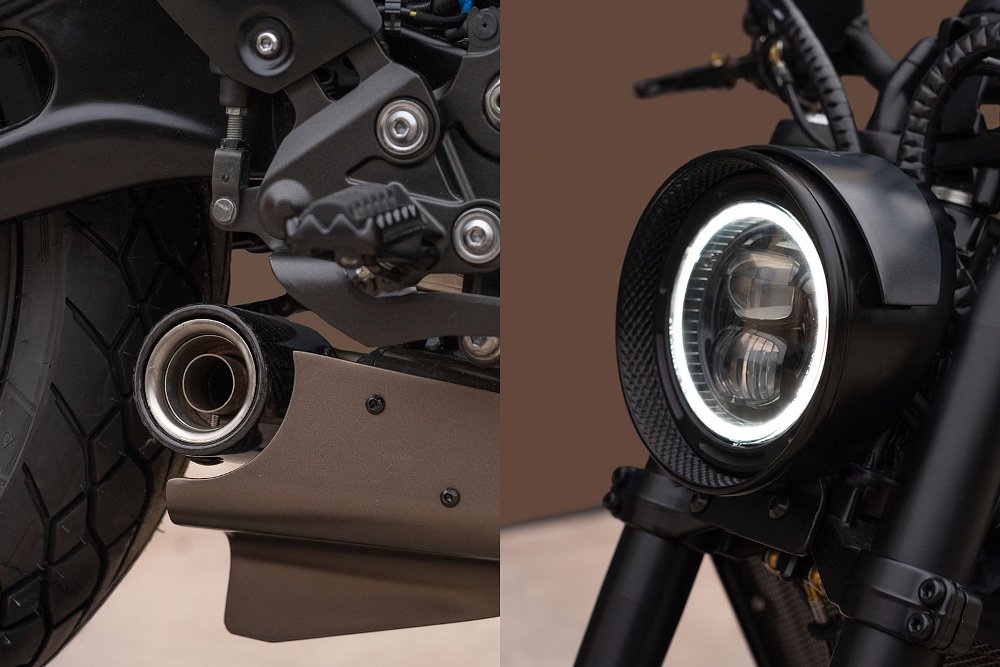
Additional design details on this svelte street-tracker include a bespoke Crooked LED headlight, produced using SLA 3D printing, Dunlop TT100 GP tires to complete the retro-modern performance package, and premium accessories from the Motogadget catalog.
"Simplicity is always a goal of our team," Dominikus says. "We want to bring out the beautiful lines of motorcycles." As is always the case with Crooked's work, that approach paid off. The client was "super happy about the result," and the Crooked team delivered an XSR700 that Yamaha's own designers would be in awe of.
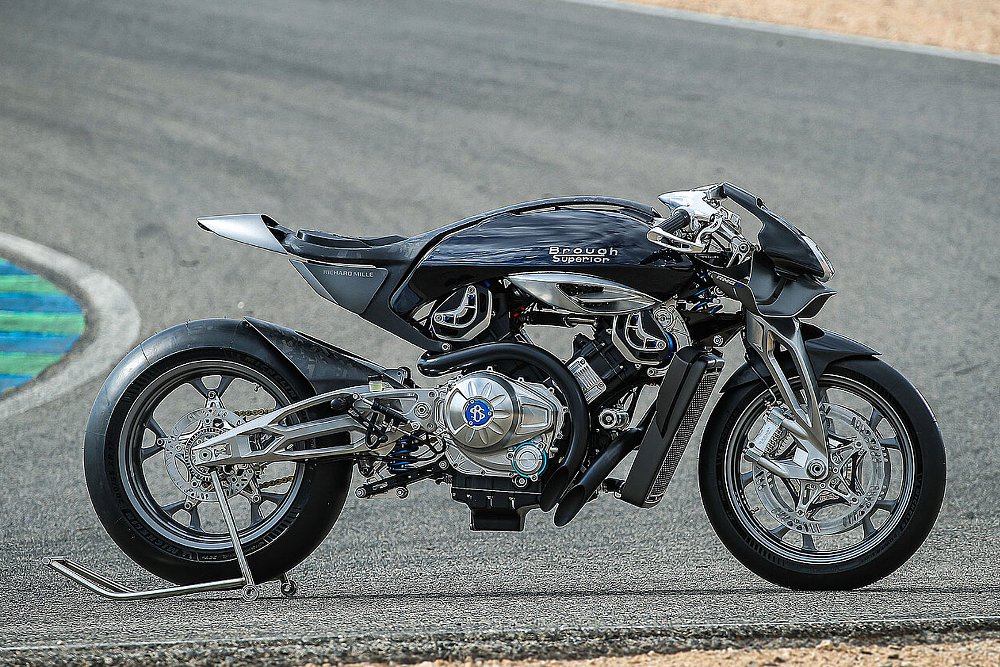
Brough Superior x Richard Mille RMB01
For many, the connection between wristwatches and motorcycles isn't immediately obvious. In a basic sense, one tells the time and the other is a form of transport, but dig deeper, and the parallels become obvious. Both are mechanical objects defined by precision, movement, and an almost emotional relationship with their owner. They're not simply tools; they're machines with a soul. As a result of this, there have been many collaborations between motorcycle manufacturers and watchmakers, like Breitling and Triumph, Gerald Charles and Ducati, and Seiko and Honda. But none have been as "ultra-exclusive" as this.
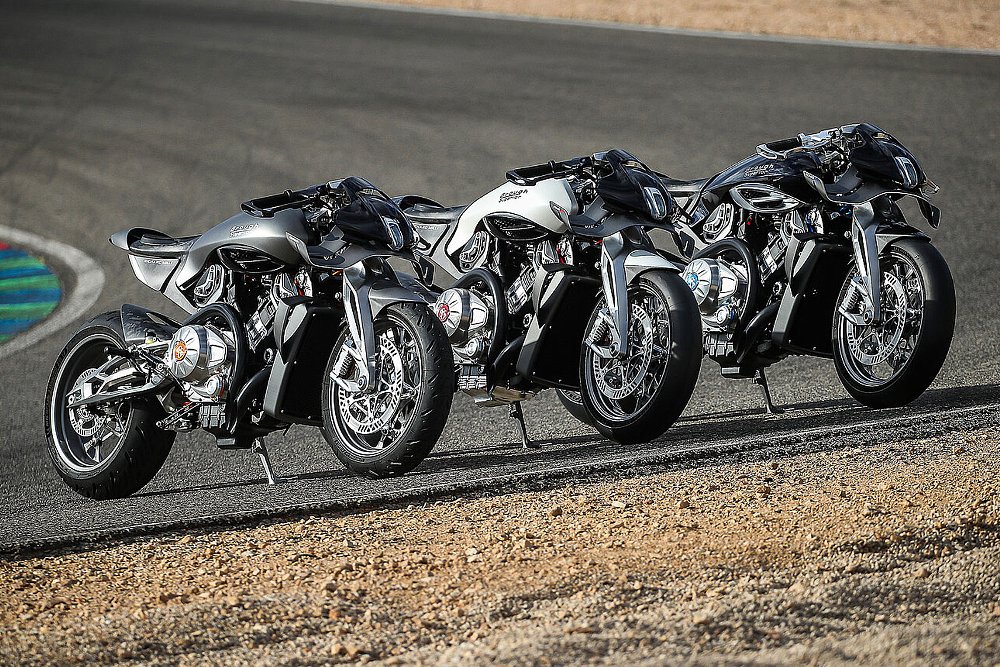
Swiss watchmaker Richard Mille has joined forces with legendary motorcycle manufacturer Brough Superior (Instagram) to create the limited-edition RMB01, a motorcycle that "blurs the line between mechanical art and high-performance engineering." Inspired by board-track racers of the 1910s and '20s, motorcycles that were light, fast, and brutally simple, Brough describes the RMB01 as a thoroughly modern interpretation of that ethos. While that connection is somewhat questionable, what the design may lack in a plausible backstory, it makes up for with incredible good looks.
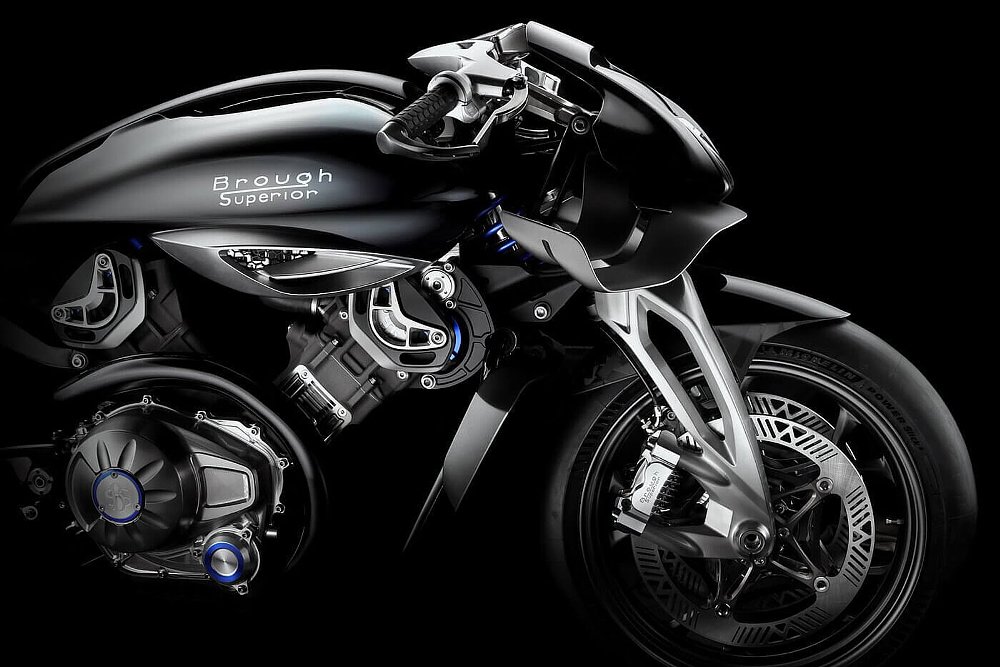
With its sleek, elongated lines, GP-style winglets, exposed engine, and intricate details, the RMB01 is as impressive as Richard Mille's high-end timepieces. Every component of this limited-edition motorcycle has been designed exclusively for it, starting with the forged carbon bodywork and CNC-machined aluminum frame. To keep weight down, the engine acts as a stressed member and was machined from solid blocks of aircraft-grade alloy, just like a Richard Mille watch case. Other similarities include details on the engine that mimic the internal components of Mille watches. The wheels reflect the stacking of gears of a tourbillon mechanical watch complication, and the speedometer with its exposed mechanics has the look of a skeletonized watch dial.
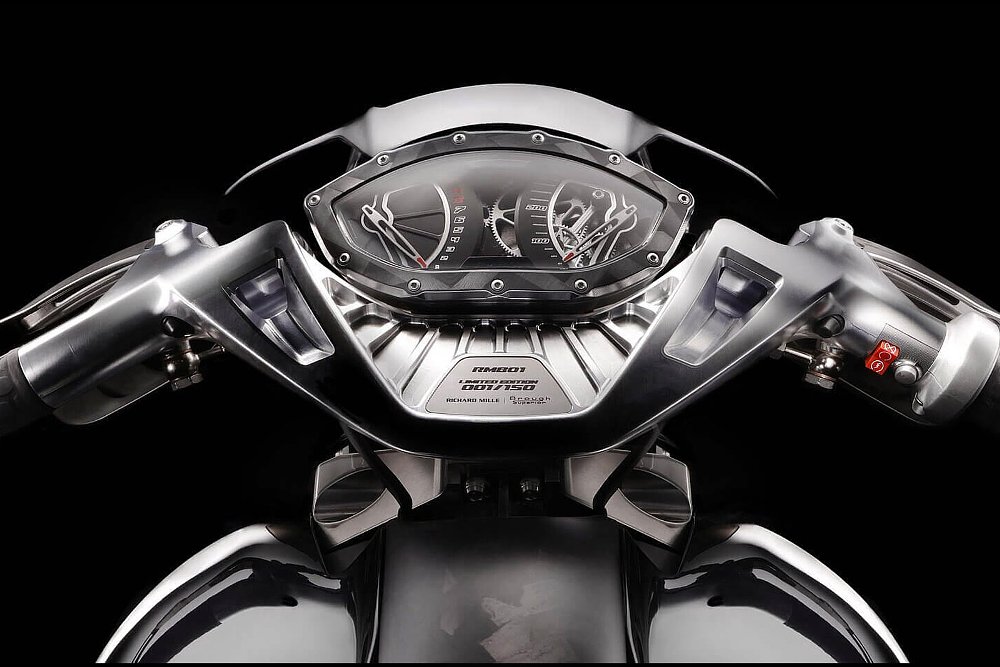
The RMB01 is powered by a 997 cc turbocharged V-twin that produces 130 horsepower. To put the engine's power to best use, the bike features fully adjustable suspension and premium brakes. Brough Superior's signature anti-dive Fior-type fork is a standout feature of the front end, and it's supported by top-of-the-range brake equipment from Beringer. A single-piece handlebar surrounds the unique dash, and everything is essentially made from either aluminum or carbon fiber to keep weight to a bare minimum.
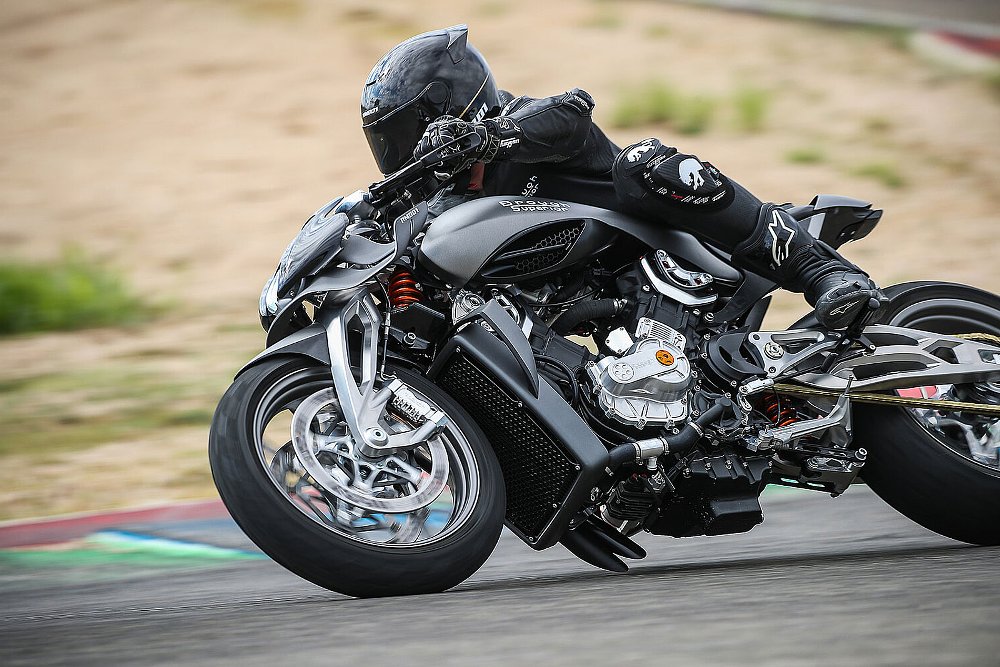
Limited to just 150 hand-assembled units, each RMB01 is built in France and bench-tested to ensure peak performance. Buyers have the choice of three colorways: the anthracite "Selene," the dark-blue, silver-highlighted "Nocturnal Sapphire," and the white-and-black "Pearl of Speed." Unfortunately for most of us, the limited numbers of the Brough Superior RMB01 aren't the only factor preventing ownership. Similar to Richard Mille's premium timepieces, you’ll need a very healthy bank balance to afford the $235,000 USD price tag.