Shop by Vehicle
 Track Order
 Contact Us

In October of 2025, I crashed at a track day in Spain, breaking my right ankle quite badly and my neck not so badly. In the immediate aftermath I had plenty of things to worry about — how I could do my job with a cast on my leg, and what I could do to help my wife with our 3-year old. After clearing those hurdles, with varying amounts of success, my mind eventually turned to the question most riders would have: What would it feel like to ride a motorcycle around a race track again?
A little more than 10 months after my crash I pulled into the gates of Sonoma Raceway, just north of San Francisco, ready to answer that question. By that point, I had started riding motorbikes again. I had also gotten back to walking, even running sometimes, plus riding a bicycle and chasing my kids around. Physically, I didn’t have many questions about my ability to ride a motorcycle quickly.
But, along with the special kind of danger that riding a motorcycle around a racetrack poses comes a special feeling. An intimate relationship with speed and a deep personal focus, driven by some amount of desire to go fast in the first place. I assumed I still had that desire, because I’ve always had it and never questioned it, and yet I couldn’t shake a looming feeling that I wouldn't be able to channel the same ambition or achieve the same satisfaction. I expected to have the skill, but wondered if my heart would question the whole endeavor and I would be left cold.
Many things contributed to this doubt. The months of using crutches and dozens of physical therapy visits congealed into one, broad memory of discomfort. Watching a woman who is eight months pregnant load and unload a wheelchair to and from our car, again and again, just so I could go to the grocery store brought new meaning to “in sickness and in health.”
The day before my track day at Sonoma, as I packed my track gear into a bag, a special reminder fell out of a boot — the tip of a finger from a purple latex glove. In that moment I was transported back to the feeling of scissors cutting off clothing, and to staring at the ceiling of a Spanish hospital. The finger of that EMT’s glove brought me a fresh wave of memories, some of which weren’t really memories at all, but visions of the havoc I created. Simple vignettes of a stretcher in a gravel trap, and colleagues collecting my stuff in the paddock garage.
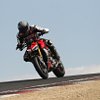
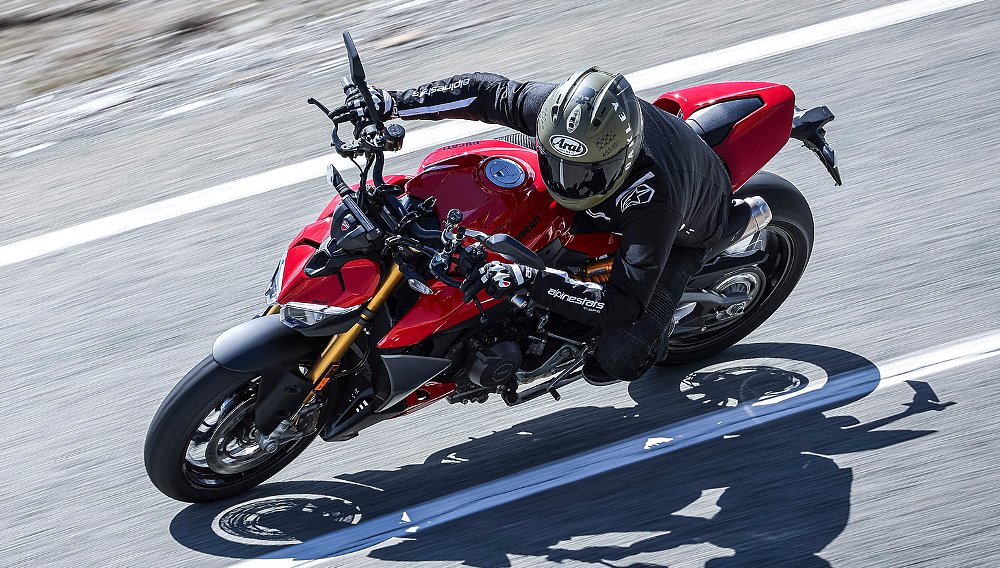
It takes a lot of effort to heal from an injury, but despite all of the encouragement and congratulations I never felt heroic so much as I felt like a burden on my own life. That drag and resistance that I created on all of the things I know and love is what felt too strong to ignore. Yet there I was, loading a Ducati Streetfighter V2 S onto a trailer, borrowing a folding chair from my father-in-law, and getting up before sunrise, all in the name of going to do something that gave me so much consternation for the better part of a year.
As I strapped my helmet on and headed for the circuit, I asked my mind for calm. But it wasn’t. The fluency I have for riding out of pit lane and onto a racetrack is pretty complete, I have done it so many times that I don’t need to think much about etiquette or procedure. And so my mind wandered a bit, distracted by the moment, wondering if it meant anything. The sky was overcast and the air was cool, which felt like a good allegory for my psyche. In the third corner of the first lap the cold hypersport tires squirmed nervously, like a dog growling as it makes eye contact.
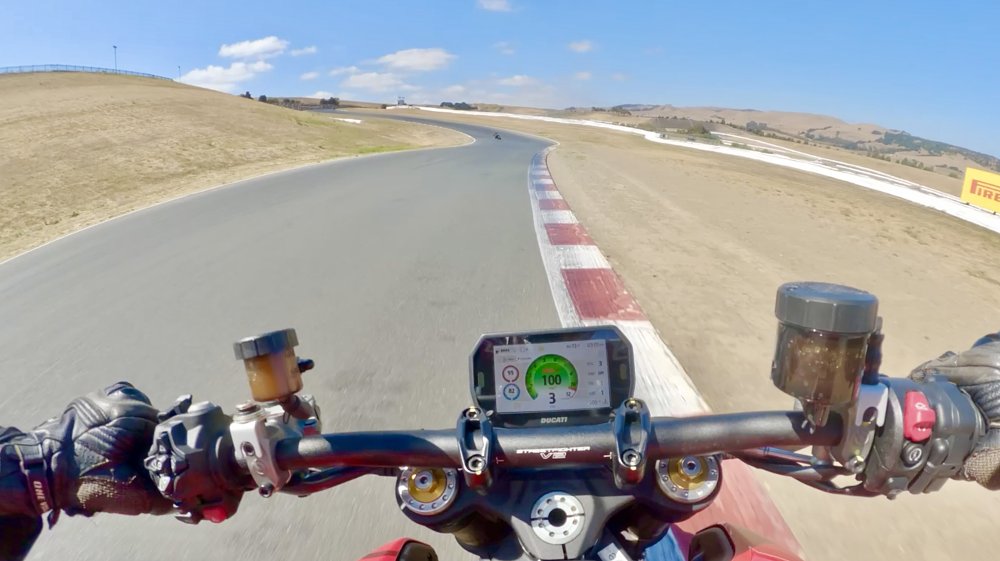
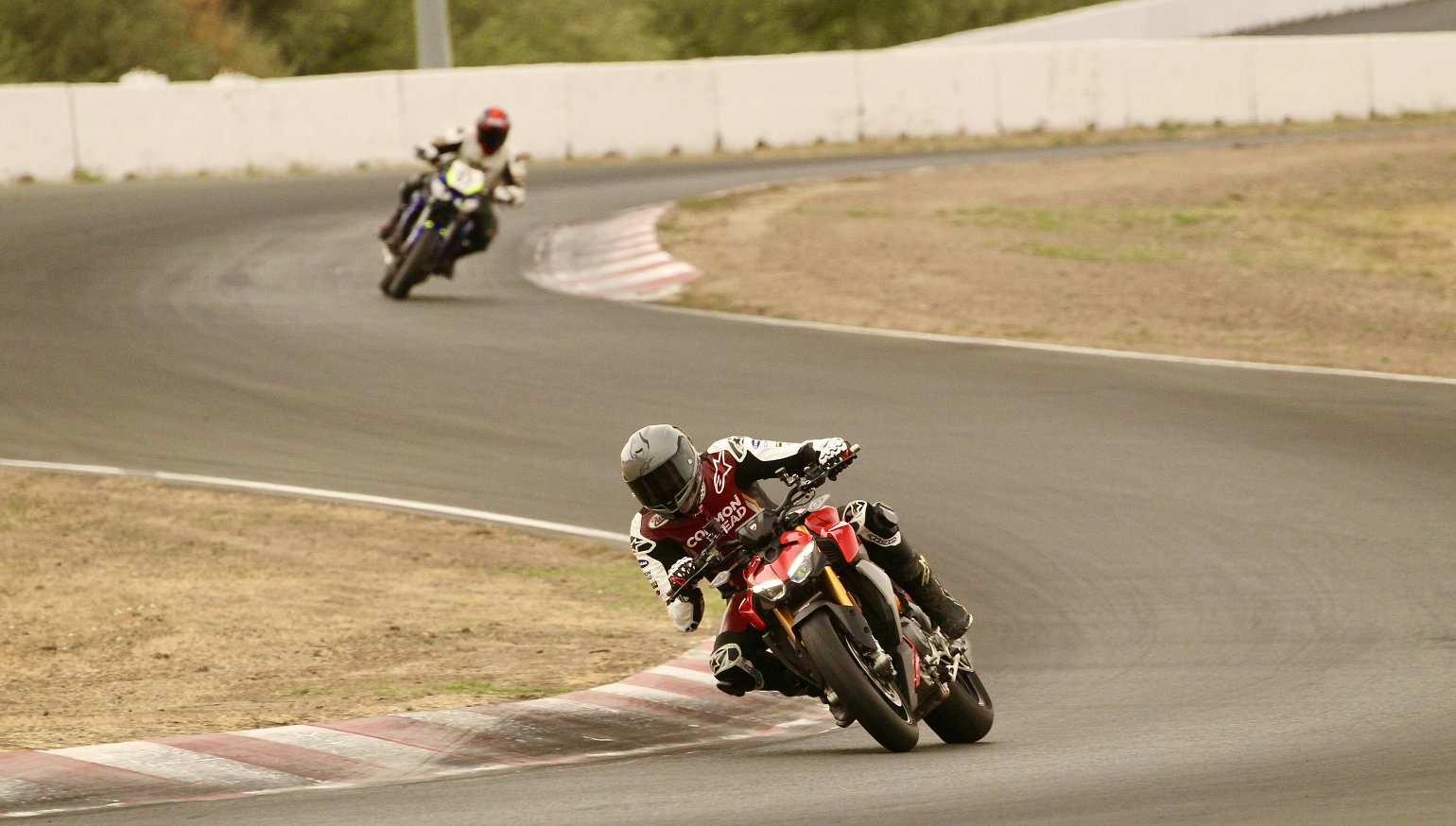
Even as the tires warmed up, everything felt slow. My knees were miles from dragging and my brain was processing things in each moment instead of being at least one step ahead, as you should be on a track. But, even if I wasn’t going particularly fast, the rhythm of the course and the drone of the engine pulled me into a familiar mindset. As I searched for the correct gear pattern in each set of turns and rememorized visual markers, the experience began to feel meditative. I started to feel speed as a rider should, not as a number but as something that is respected and appreciated. In this environment speed is an emotion, not digits on a screen.
The proverbial rust was being shaken off, and the feeling was good. I felt even more at home as the second session began. Waiting for the tires to warm up over the course of the first lap struck me as tedious. My psyche was eager to get up to speed. Still, I noticed that I was tentative in certain parts of a lap. For one, I had more apprehension than usual to open the throttle aggressively. Part of this is basic instinct. It’s something racers and track riders always practice in order to avoid the dreaded highside. My caution felt pronounced, like it was bigger than a notion. Probably because, in my track-riding brain, a violent crash was one of the most recent things to happen.
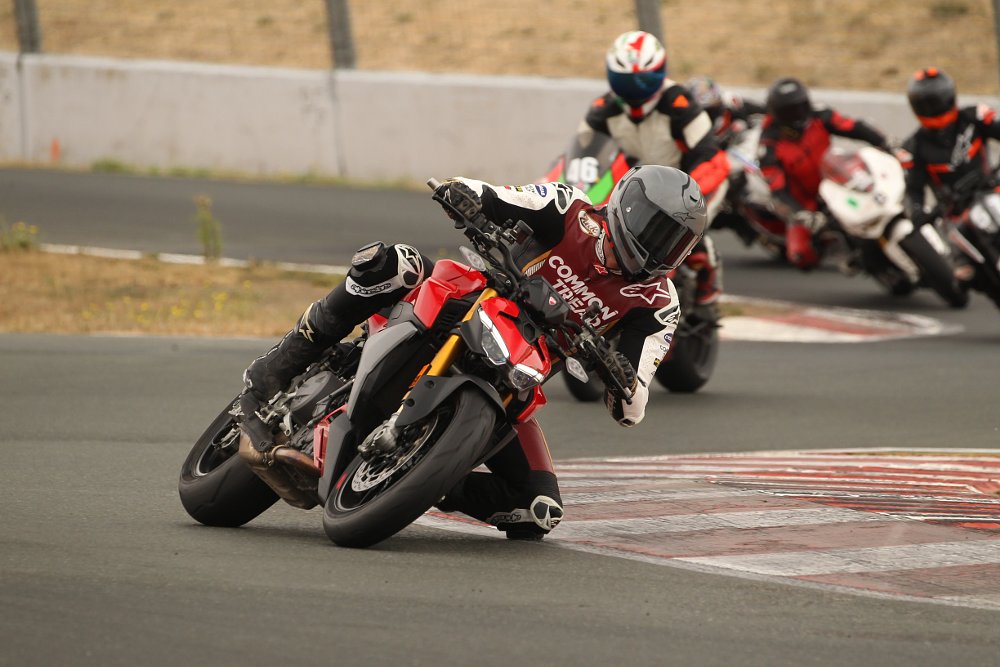
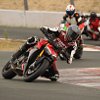
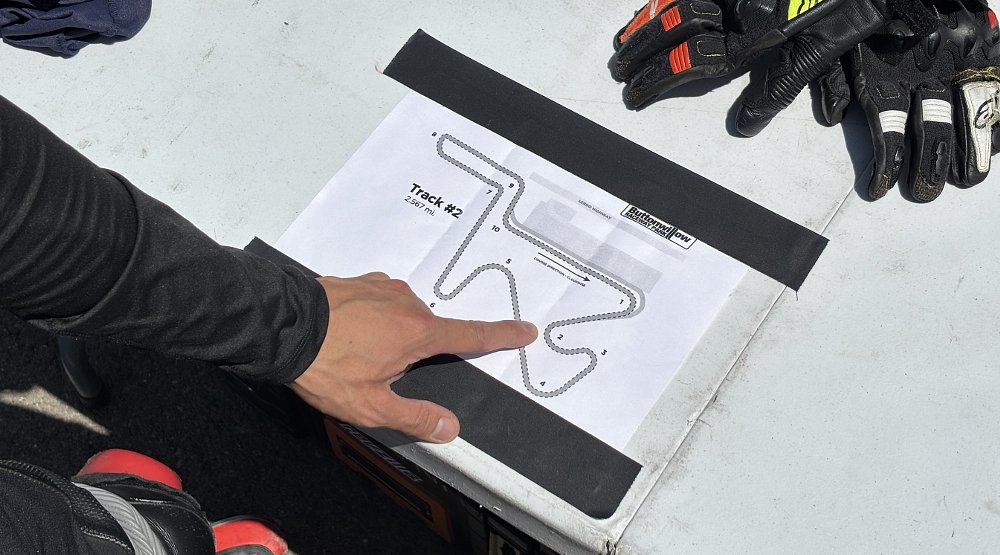
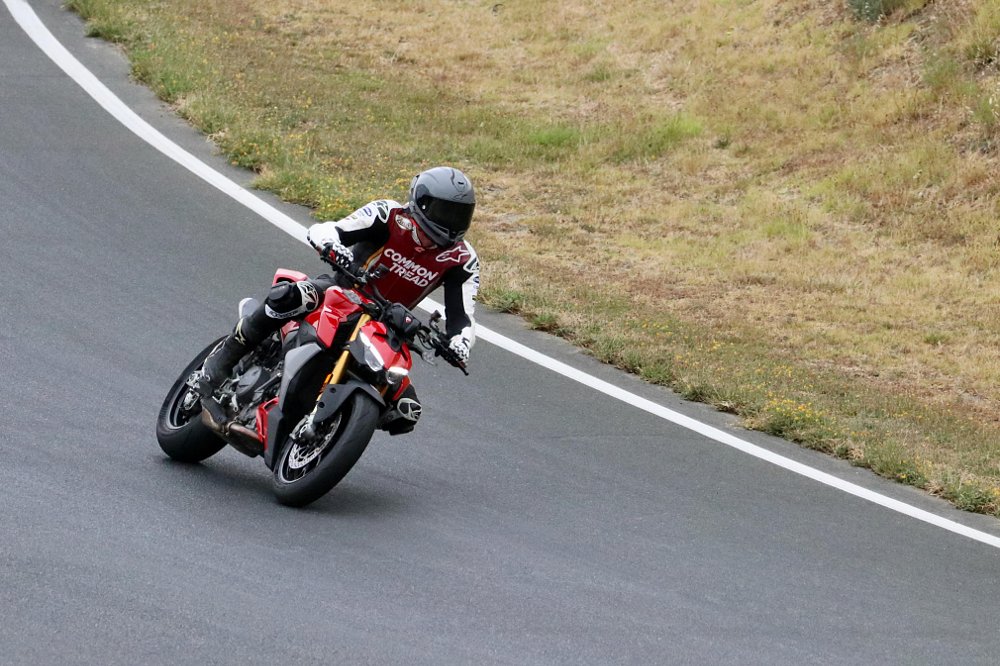
In the middle of the second session, a moment changed the whole day. My pace had picked up with a warmer track and more laps under my belt, but I was riding pretty gently and moving my body casually. As I settled into the long, downhill left-hander that is Sonoma’s famous Turn 6, I had an instinct to alter my riding style. I scooted more to the side of the seat and hung off the bike slightly, then hunkered my upper body over the tank and dropped my shoulders toward the pavement. A moment after I did, I broke into a smile in my helmet.
I wasn’t going any faster, but I felt something pronounced and profound. By changing the attitude of my body I changed the attitude of my mind. I laughed a little bit. It was like a hug from an old friend — no conversation, just an embrace and a knowing smile. This is right.
By the time I was midway through my third session at Sonoma the sun was out, literally and figuratively. The track was warming up and I was back in the state of mind that track riders crave and cherish. My shoulders started to hurt under braking and my hands felt the pinch of pressure on the grips. There is wind noise and engine noise, and violent forces pulling in different directions, and yet what we track riders feel is serenity. We accelerate away from a corner, downloading and digesting the little mistakes that were made so that they can be avoided next lap, while thinking about the next corner before it arrives.
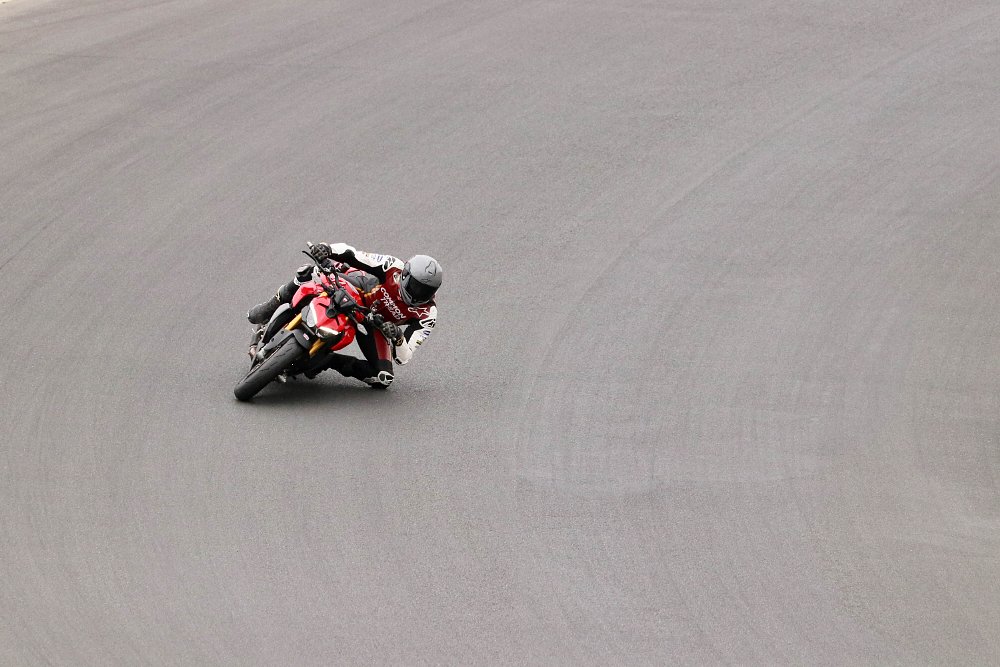
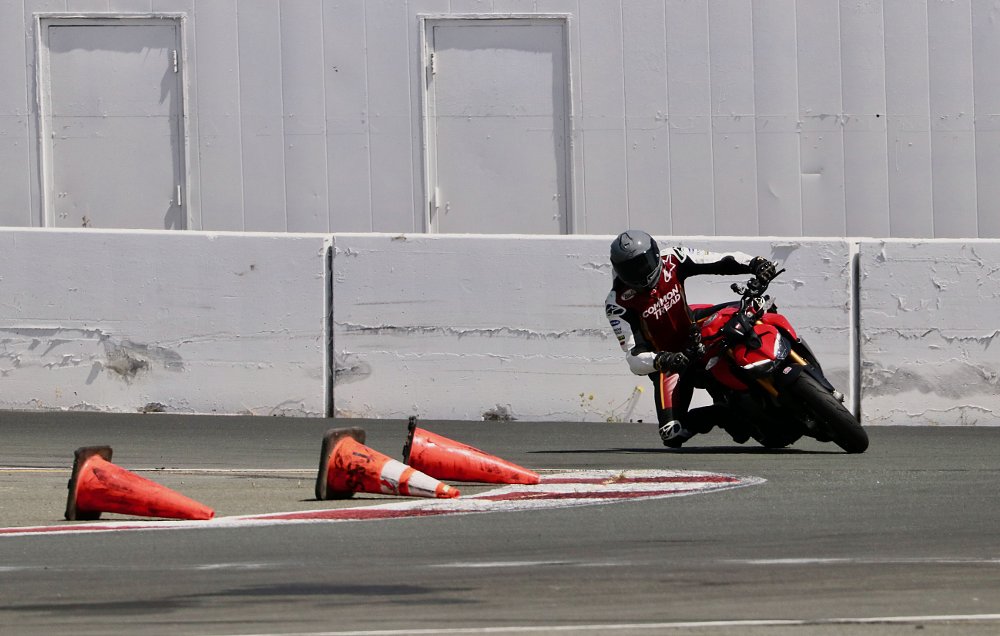
Later in the day, there was one more poignant moment. As I exited the slow left of Sonoma’s tight chicane, rolled the throttle open and pulled the Streetfighter down toward the fast, penultimate right of the lap, a shot of pain fired up from my ankle. Noticeable because it hurt, notable because of the context. It took me briefly away from the joyous exercise of hustling a motorcycle around a track, and then it was gone.
I suspect I will get those reminders for the rest of my life and riding career. As I take a morning jog my ankle breathes a gentle mist of memories at me, considerations of suffering gone by. And as I feverishly steer a motorcycle around race tracks in the future, pushing on the controls and grappling with physics, I know my body will carry the memory of when it didn’t go so well. For now, though, it feels like the healing properties of track riding will overpower everything else.