Shop by Vehicle
 Track Order
 Contact Us
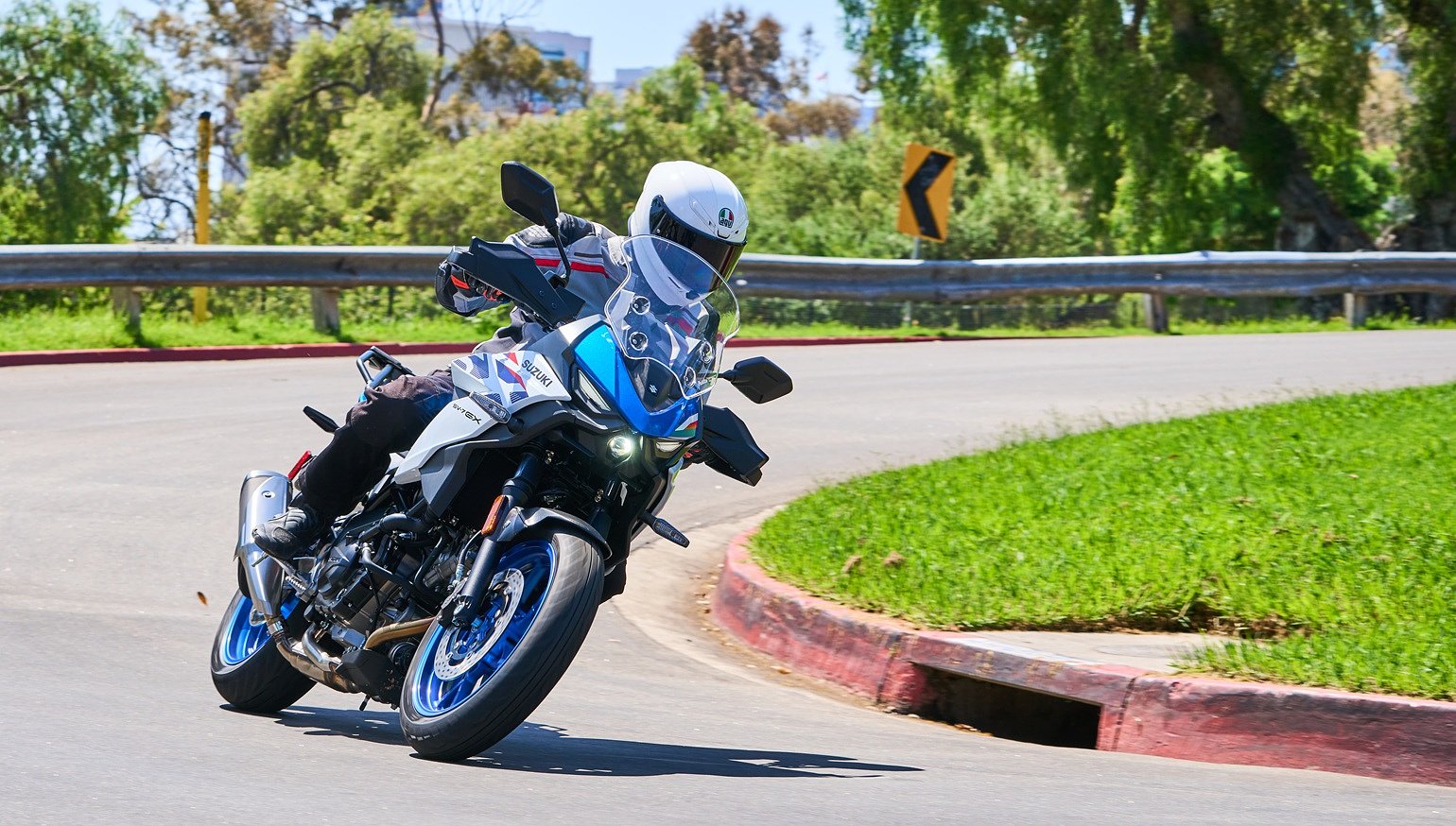
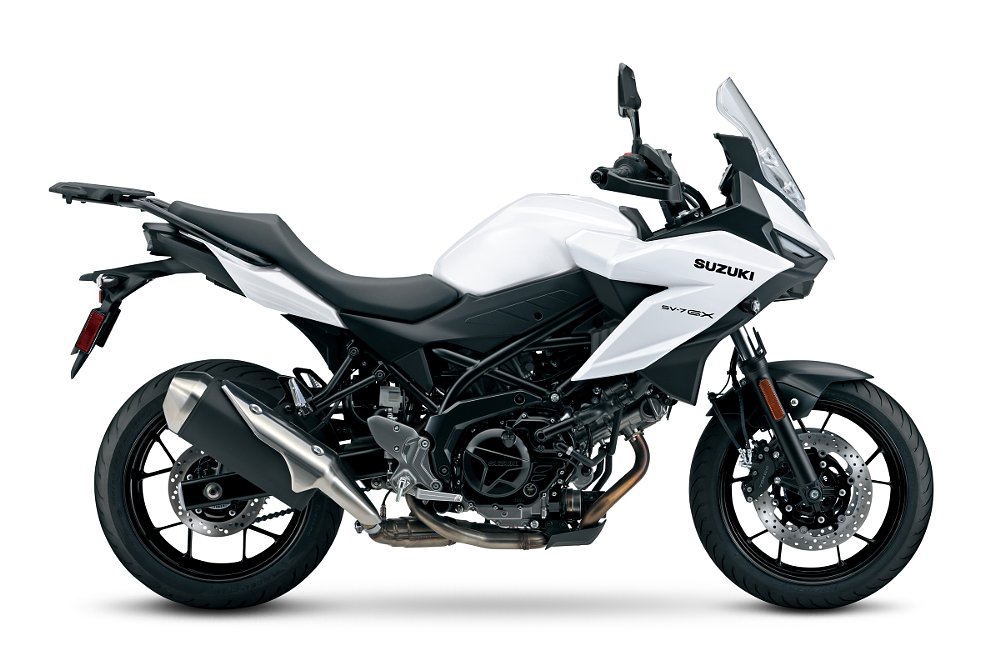
It seems a lot of people, from Common Tread readers to folks who make their living at Suzuki, are happy the long-running 645 cc V-twin is not doomed to extinction but instead will carry on — among an expanding sea of parallel twins, including Suzuki's own 800s — in the new 2027 SV-7GX.
"A lot of people just assumed the SV650 and the V-Strom 650 would go away, but Suzuki has invested in the platform," said Avery Innis, who worked at Suzuki for more than 30 years before retiring recently.
"I'm just happy the SV is continuing," said Garrett Kai, principal of Suzuki's external public relations agency, who recalled going to the introduction of the original SV650 in 2000 as a member of the motorcycle media.
Since that introduction more than a quarter of a century ago, more than half a million SV engines have been built, and that earned the SV650 a huge fan base and a Highside/Lowside podcast as one of the iconic models in motorcycling. The investment Innis referred to was making the engine emissions-compliant around the world, so it could be sold everywhere. And that kept it in Suzuki's lineup.
Of course an engine is nothing if it isn't slotted into a good motorcycle. Fortunately, the SV-7GX is a good motorcycle. Given its added versatility, to go along with the existing positive attributes of the SV650, I'd argue that the SV-7GX is an ideal home for the popular V-twin.
A 7 crossover: What's in a name?
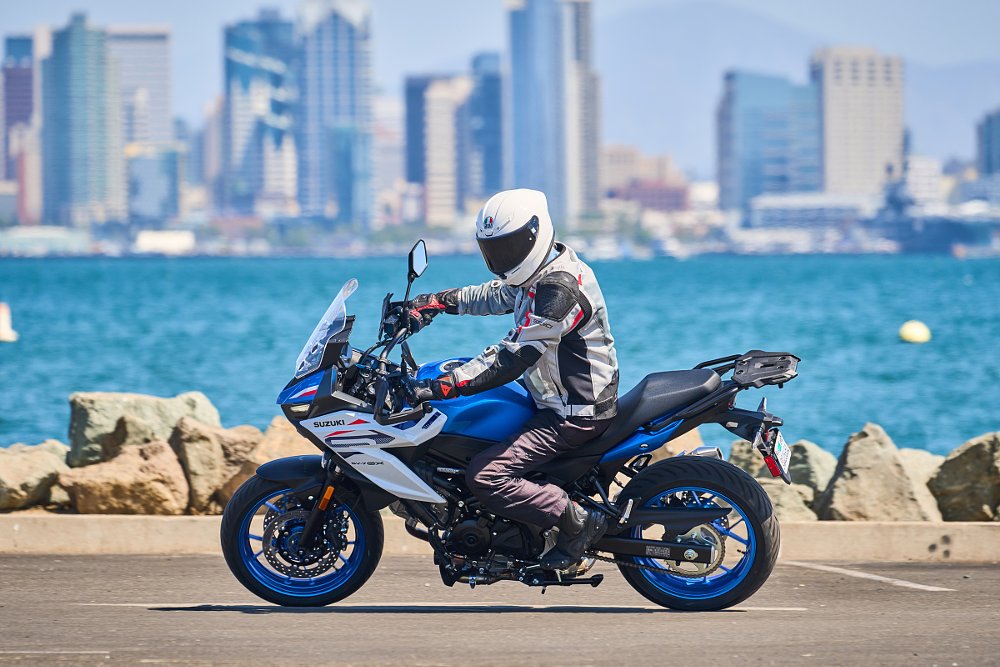
Suzuki calls the SV-7GX a crossover. To me, crossovers are those boxy, lumbering things with an excess of two wheels that I dispatch at the first available passing zone when I'm riding the SV-7GX, which I'm just going to call a street bike. Plus, despite the "7" in the name, it's still the same 645 cc displacement.
The SV-7GX splits the difference between the two models that have carried Suzuki's popular V-twin. It's more comfortable and versatile than the SV650, without giving up much in the way of sportiness, and it's sportier for street use than the V-Strom 650, which was already a particularly versatile motorcycle.
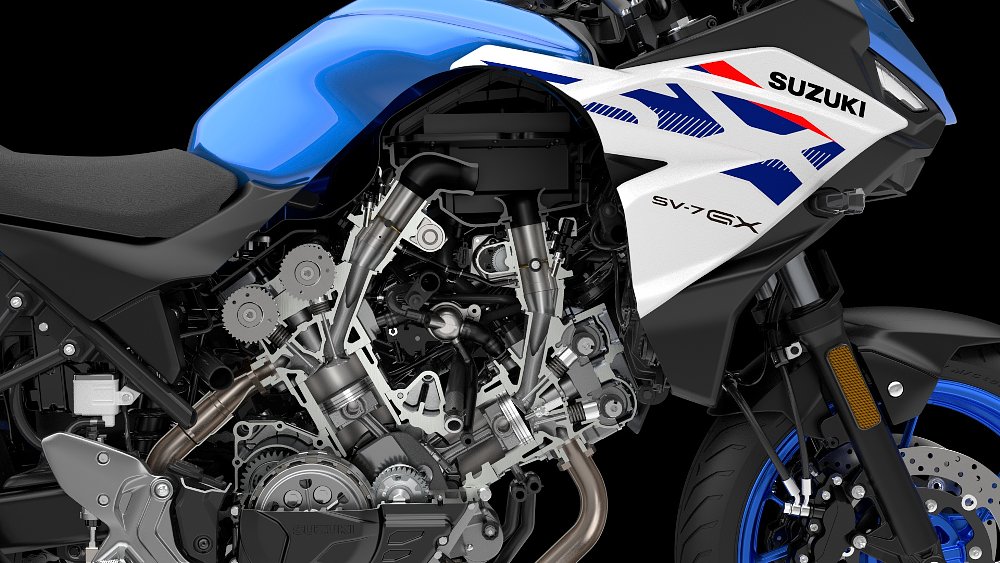
The engine and trellis frame from the SV650 are the core of the SV-7GX. Suzuki had to do less than you might imagine to get it past the emissions regulations that had taken it off the market in Europe. The current version of the V-twin uses a ride-by-wire throttle to control new 39-millimeter electronic throttle bodies. One advantage of the electronically controlled throttle bodies is that they synchronize themselves, so that's one less maintenance task to do or pay for. Dual iridium spark plugs fire in the two combustion chambers and the engine is happy to drink 87 octane (R+M/2) fuel.
While the SV's big brother, the GSX-S1000GX, comes with all the features, including semi-active electronic suspension, cruise control, an inertial measurement unit informing the traction control, and more (and also costs more than twice as much), the SV-7GX keeps things relatively simple but still provides the basics. There are three ride modes, called Suzuki Drive Mode Selector (SDMS) in company nomenclature, three levels of traction control plus the ability to turn it off, and a bi-directional quickshifter. Before you ask, no, despite the presence of the ride-by-wire throttle, it doesn't have cruise control.
Suzuki labels the three modes A for Active, B for Basic, and C for Comfort. These only control the power delivery. A and B both provide full power but A gives a more urgent throttle response. Unlike other Suzukis, the C mode not only softens power delivery but also reduces the maximum power level to 60 horsepower. That could be useful when riding in a low-traction environment, sure, but I could also see this as a step-up second motorcycle for a newer rider, and the lower power level could provide a transition period for someone coming from a motorcycle with a smaller engine.
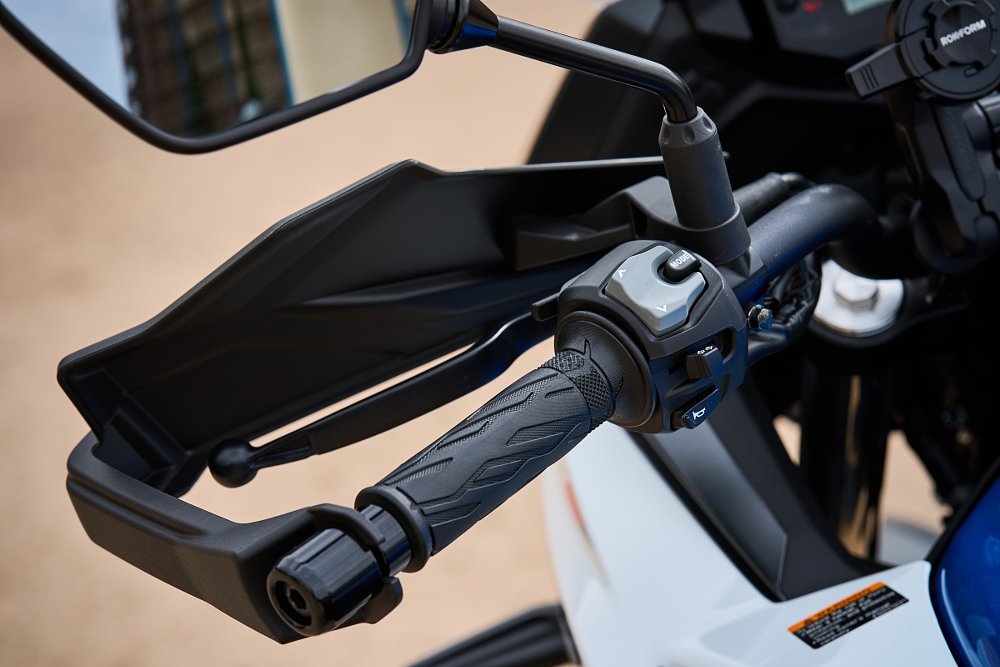
Most brands offer ride modes that control throttle response, the level of traction control, and perhaps the level of anti-lock brake intervention, and then they offer the option of a customizable mode if you don't like the preset combinations. Suzuki took a simpler approach here. The level of traction control is set separately from the ride mode. Want the maximum power and sharper response of mode A but the highest level of traction control as a safety net? No problem. Want to turn off traction control? Go for it. It's a simple approach that's still versatile. You can also switch modes or levels of traction control on the fly.
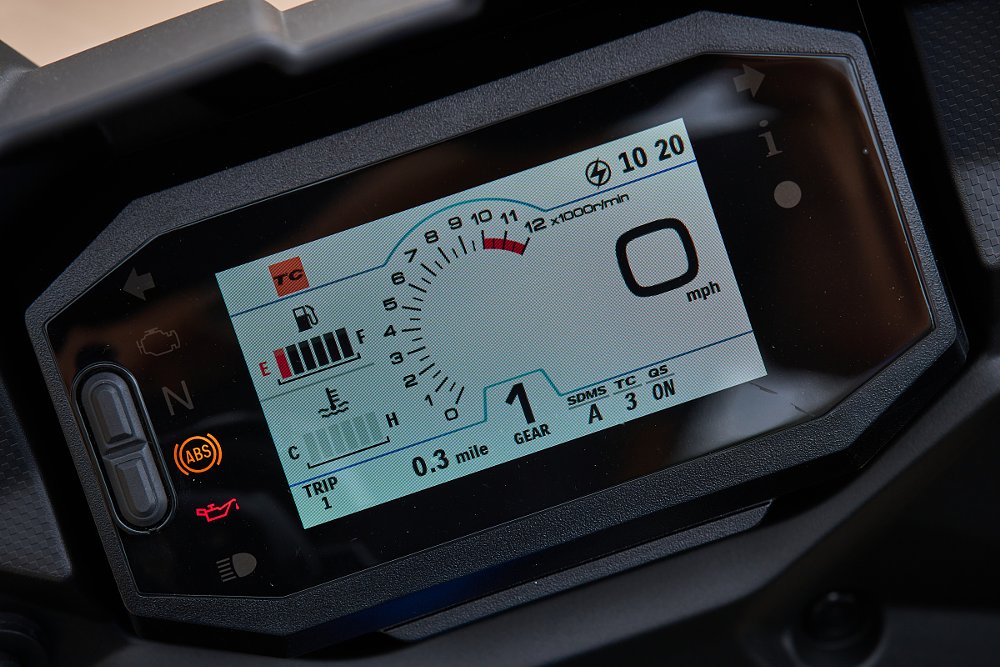
All of this is controlled through a mode button and rocker switches on the lefthand switchgear and a 4.2-inch TFT display that's a little smaller than on some competitors. The display manages to show a lot of information, though by necessity, given its size, some of the numbers are rather small. Suzuki's mySPIN app was far from universally loved, so for the SV-7GX the company is introducing a new app, Suzuki Ride Connect+, to allow you to connect your phone so that you can see notifications about calls, weather alerts, turn-by-turn navigation, or other information on the TFT screen. I was unable to download a U.S. version of the app, however, and Suzuki couldn't resolve the issue immediately, so I wasn't able to test this feature in the short time I had the motorcycle.
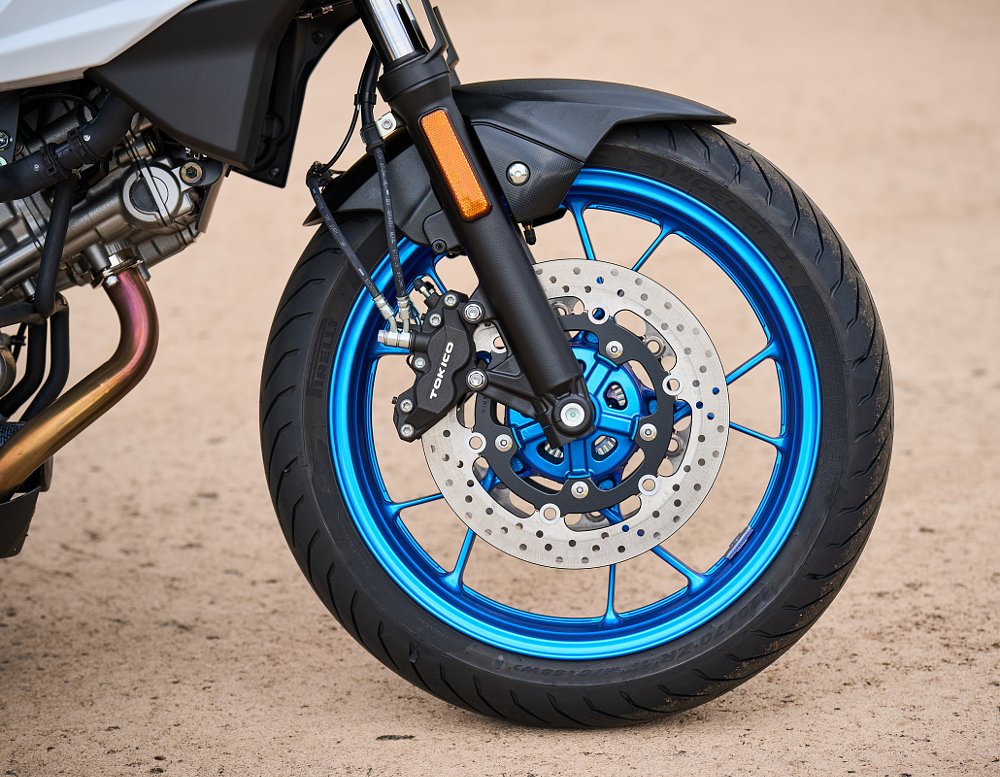
Suspension and brakes are also fairly basic. There's no adjustment to the conventional 41 mm fork and only seven-level preload adjustment on the linkage-style rear shock. There's nothing fancy about the four-piston Tokico calipers squeezing the 290 mm front brake discs, either.
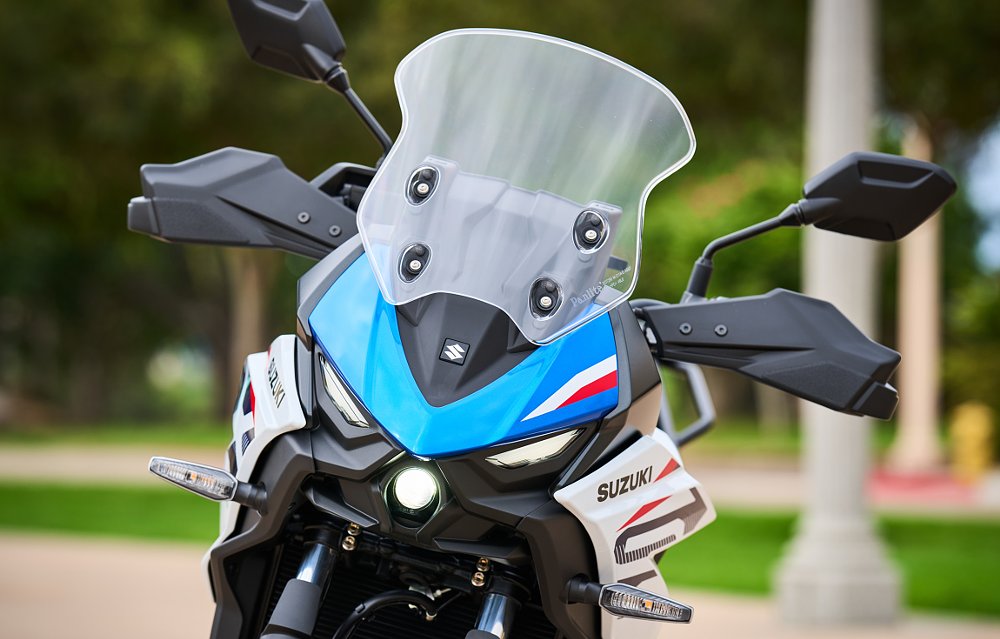
Somewhat fancy is the projector-style LED headlight, which uses a special lens that focuses the headlight beam in either high or low positions. While some bikes have features that enhance lighting in cornering situations at night, Suzuki tried to accomplish something similar in simpler fashion. Instead of just a round splash of light on the road ahead, the lens creates a broader shape that casts more light to the side, for visibility in cornering.
A few features add to the SV-7GX's long-haul abilities, starting with a 4.6-gallon (17.4-liter) fuel tank, which along with the engine's efficiency easily allows a range of more than 200 miles. The rear rack is standard and the one-piece seat has 0.39 inches (10 mm) more padding for the rider and 0.78 inches (20 mm) more for the passenger, compared to the SV650's seat. The handguards are also standard and the windscreen can be adjusted to three positions using a hex wrench.
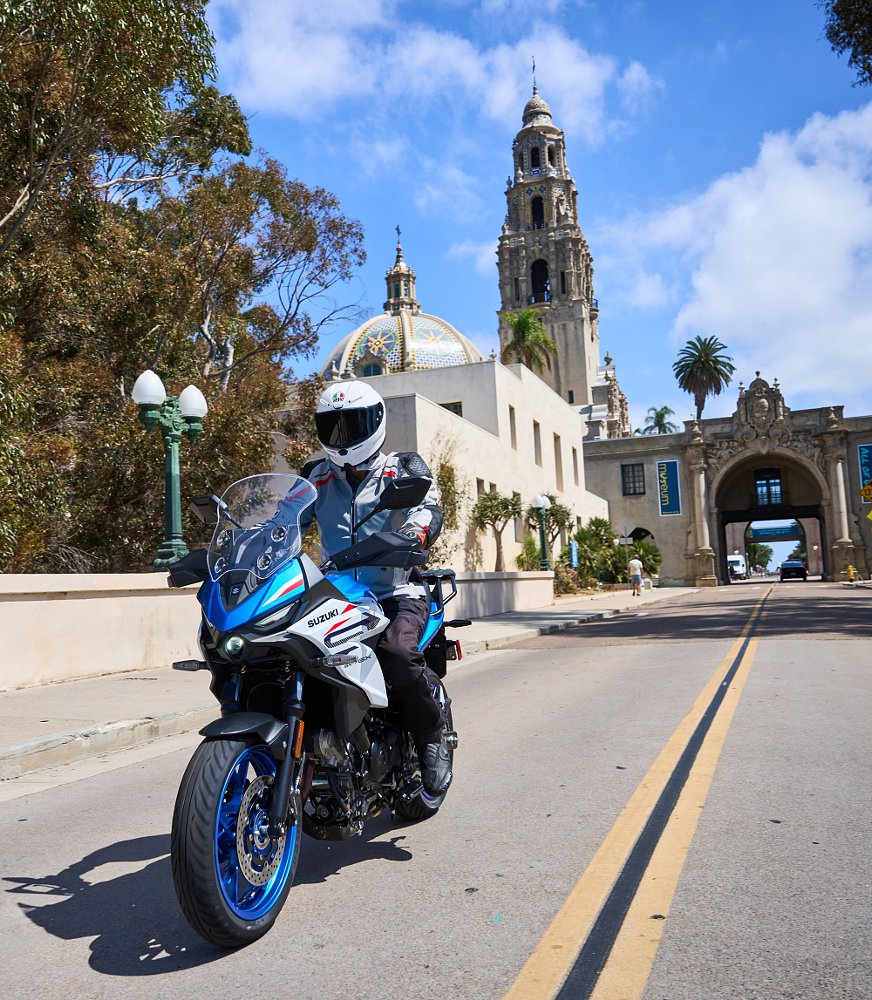
So we have a popular and well known engine but with a new ride-by-wire throttle. Thoughtful comfort features are included but other components are basic. On paper, it looks like the SV-7GX has the potential to surprise to the upside or be a bit of a disappointment. A test ride was clearly in order.
Riding the Suzuki SV-7GX
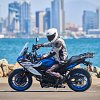
Suzuki presented the new SV to the motorcycle media in San Diego and then, after a short presentation, let us ride away with test units for further evaluation. That meant I had time the next day for a day-long ride in a variety of conditions. Then I took the bike to our West Coast office, where my colleague Dustin Wheelen also had a chance to ride it, and I expect it will star in a future episode of Daily Rider, as well.
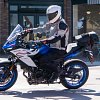
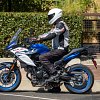
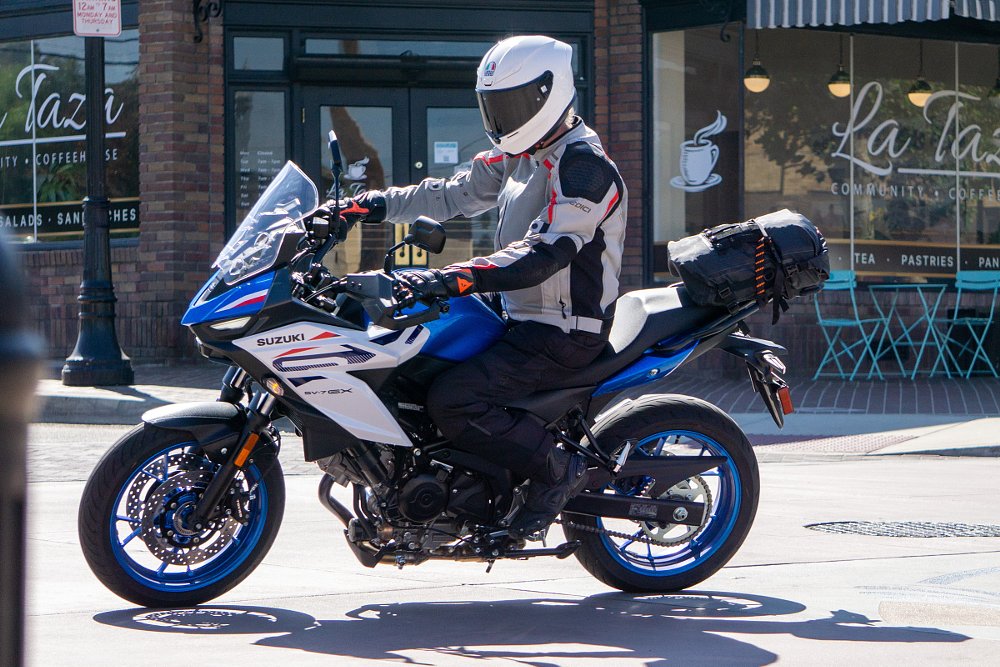
Suzuki's diagrams say the SV-7GX positions the rider in a slightly more forward lean than the V-Strom, but honestly it felt to me like I was sitting bolt upright. The 31.3-inch seat height made it easy for me to get feet flat on the ground with my 32-inch inseam. Overall, the position feels neutral.
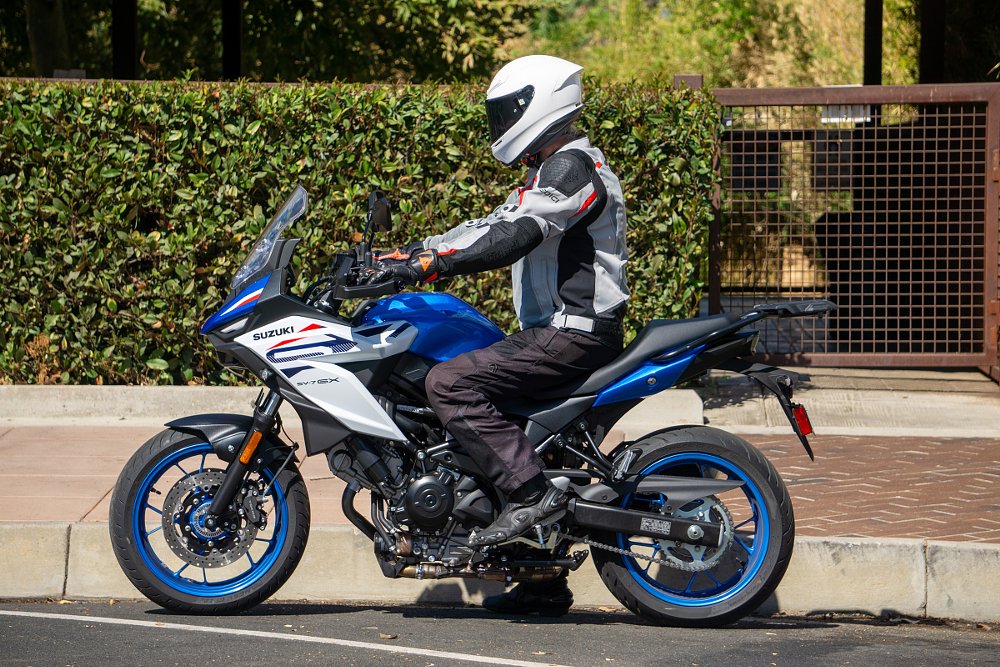
The Suzuki Easy Start System means one push of the button that combines the kill switch and starter will bring the familiar V-twin burbling to life. The SV also has Suzuki's Low RPM Assist feature that increases revs when taking off to reduce the chance of stalling, though I never really even noticed it at work.
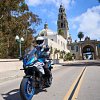
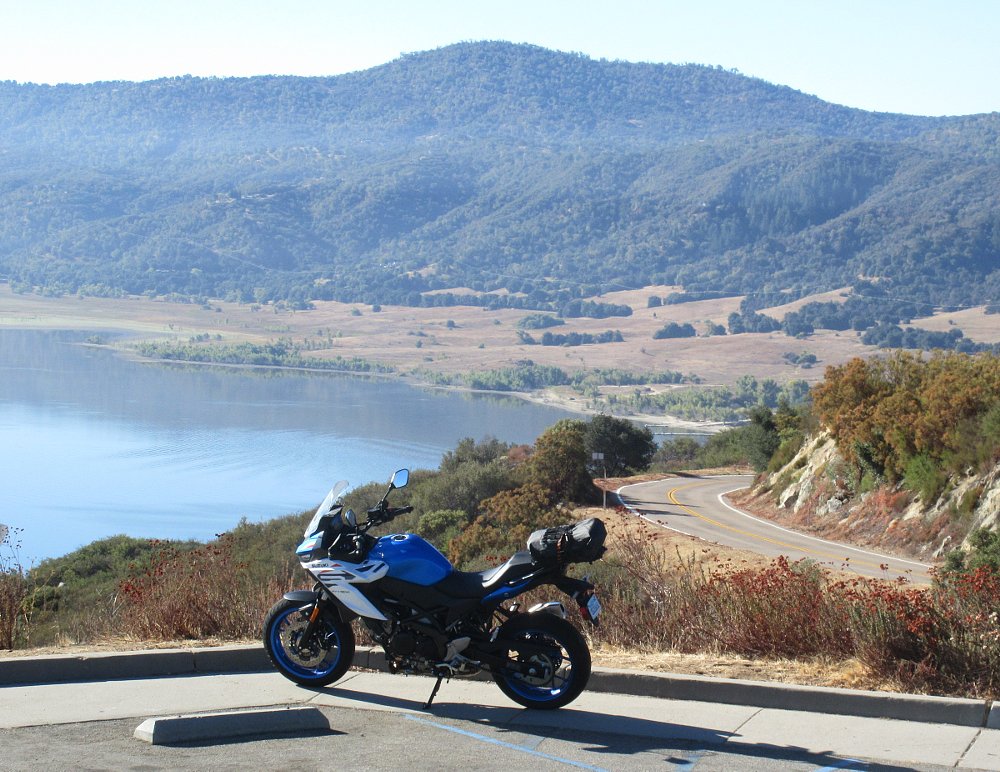
As you can see from the REVER map below, my day of riding included a real variety: from San Diego County's Sunrise Highway, rising to 5,900 feet, to a blast across the desert on Interstate 8 and open two-lanes, dropping below sea level where the temperature hit 98 degrees F before noon, and on to a loop of the endless hairpins and curves of Palomar Mountain. And then the next day I rode into Los Angeles, where I got a large dose of urban riding.
I posted on social media, asking if anyone had questions they wanted answered, and one of the first and most obvious ones was whether Suzuki got the ride-by-wire throttle right. I'm happy to say it was clear from the start that the engineers did their job well. No off-idle abruptness. No peaks or valleys in the powerband. Just a predictable response across the rev range up to the 10,000 rpm redline.
On the interstate, an indicated 70 mph in sixth gear showed 5,000 rpm on the tach. I could feel a few vibes through the tank at some speeds, but nothing that ever felt intrusive. In its standard position, the windscreen had the air flow hitting me at the top of my forehead. Unfortunately, while Suzuki includes two hex keys under the seat, neither is the correct size for the windscreen bolts, and since I didn't pack a tool kit with me on the plane to California, I did not have the chance to change the windscreen setting to test different heights. I'd characterize the noise level (always a subjective business) as average for a motorcycle with this kind of fairing.
It was later in my ride when I got back in the mountains that the SV-7GX's most endearing trait shone through. And that's the handling. Tipping into the tight corners and sweepers alike on Palomar took light effort, and once in the turn the SV held its line with no surprises, whether under braking, steady throttle, or acceleration. I'm sure the sweet handling was aided by the tires. Suzuki didn't go cheap with rubber on its affordable mid-size, fitting Pirelli Angel GT II sport-touring tires with a 160-section rear that contributes to the nimbleness compared to the 180-section rear on bigger bikes. When Dustin got to ride the SV on some rare curves in the Los Angeles sprawl, he also loved the way the SV sliced through the turns.
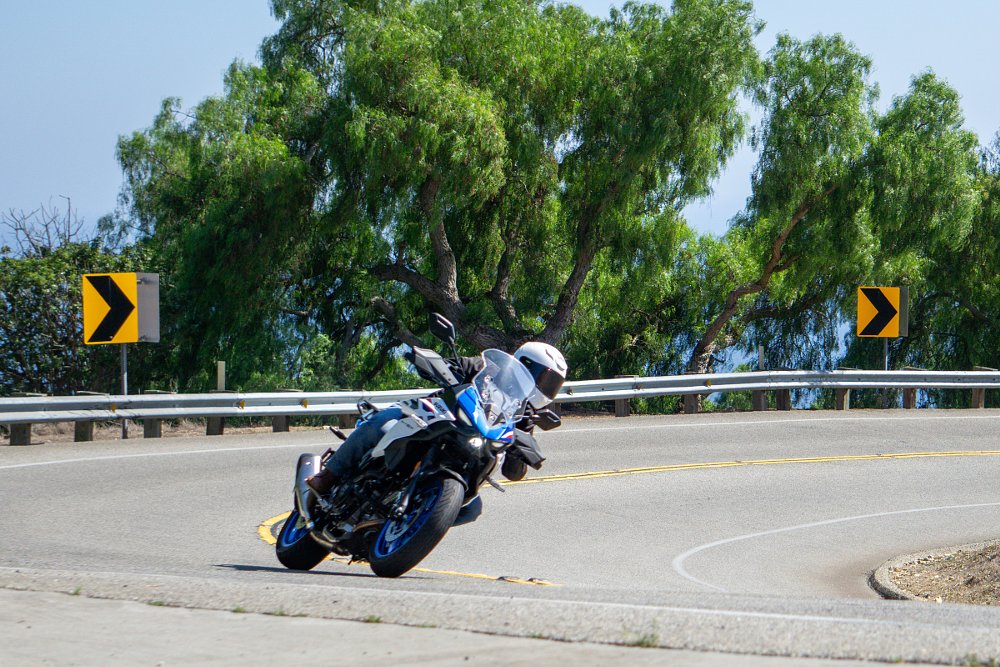
Praise for the handling doesn't mean the suspension didn't show its limitations, however. Dustin noted some front-end dive under braking and some bounciness at the rear in on-road whoops. I noticed a little roughness when I was dealing with broken urban pavement. It's not much to complain about. It's the nature of non-adjustable suspension that doesn't cost a fortune. The other thing to consider is that Dustin and I are both similar in size. If you're much larger or smaller, you may find the stock suspension calibration doesn't work as well for you.
Despite their run-of-the-mill spec, we both found the brakes to be perfectly fine for the street riding we did.
While the SV-7GX doesn't pack a lot of frills, you do get a bi-directional quickshifter. Clutch pull is not particularly light, but the quickshifter makes that less relevant. Upshifts were good as long as I was able to overcome my 50 years of habits and ride it as you should ride a motorcycle with a quickshifter. Meaning hold the throttle steady and click through the gears, letting the motorcycle work it out. Pulling onto an interstate ramp was the perfect scenario. I felt that downshifts were not as consistently good. Sometimes they were smooth, sometimes a little clunky, and I never figured out what was causing the difference. I fell into the habit of using the quickshifter for upshifts and the clutch for most downshifts.
While we both appreciated the precise fueling, Dustin preferred the sharper response of mode A and I, in keeping with my never-ending quest for riding smoothness, preferred the way the power came on in a more gradual fashion in mode B. And that's the beauty of today's modern electronics. Just the push of a button, without even having to stop riding, could give either of us what we preferred. In the old days, Suzuki would have chosen one engine map or the other and one of us would have been stuck with a riding experience that was just not quite what we'd prefer — unless we did some time-consuming and expensive tuning.
Versatility and verdict
When we got to our West Coast office, Ari Henning's 2020 Kawasaki Versys 650 was in the garage, about to go out for a rental. Sitting side by side, the SV-7GX looked and felt noticeably more compact while still offering the Versys 650's wind protection. The first half of the Versys name stands for "versatility" and the new SV is clearly a direct competitor. The SV-7GX is a versatile bike that can fulfill a range of missions: compact and agile for urban commuting, sporty enough for recreational weekend rides, and comfortable enough for weekend (or longer) trips. It can also serve a variety of riders, from a newer rider stepping up from a beginner bike to a first new motorcycle to more experienced riders who just want something nimble yet capable.
If there's one of those areas where I wish the SV-7GX performed a bit better it's the long-haul capability. Comfort is a notoriously subjective topic. Personally, I complain a lot about seats, sometimes even about seats that others think are just fine. On the other hand, I'm usually fine with an amount of legroom that some find cramped. In the case of the SV-7GX, despite the added padding, Dustin agreed with me that the seat was less comfortable than he'd like, so that made me feel that it wasn't just my usual whining. The seat is narrower at the front, which makes it easier to get feet on the ground, but offers less seating area. And when we both slid back to where it was wider, that made for a longer reach to the hand grips that had our arms fully extended, making me more tired in the shoulders after my interstate highway section. Dustin was concerned about the legroom on a longer ride, but wasn't bothered on the shorter ride he did and, as usual, I thought the legroom was fine.

The other long-haul question is luggage. The rear rack makes it easy to add a top box and Suzuki offers both 45-liter and 27-liter sizes. An aftermarket case would also be easy to add. Suzuki's accessory catalog also offers a tank bag and throw-over soft saddlebags, but be aware the straps go over the passenger seat, so they may or may not be comfortable for two-up use. I expect the aftermarket will be along shortly with even more luggage solutions for this new model.
The SV-7GX makes a strong case for itself as a do-it-all on-road motorcycle for those who are more interested in agile handling and a fun character than in owning the biggest bike on the block or winning spec-sheet supremacy. It also looks like a decent bargain. MSRP for the SV-7GX is $8,599 ($200 less if you opt for the plain-white SV-7GXV with black wheels). A Kawasaki Versys 650 LT ABS lists for $10,399, but that includes integrated, locking panniers. Some riders will want the Kawasaki's luggage, some will prefer the nature of the Suzuki V-twin over the Kawasaki parallel twin. Another competitor is the Triumph Tiger Sport 660, which is more powerful and comes with cruise control for $1,846 more. The Yamaha Tracer 7 is an obvious competitor in other markets, but Yamaha has decided not to bring it to the United States.
In recent years we've seen some great new motorcycles emerge in the middleweight adventure-touring category as riders have realized that bigger is not always better. There are fewer options and less progress, however, in the middleweight sport-touring category for riders — and I firmly include myself in this group — who want a relatively light and nimble street bike that's also capable of going long distances. We have some great naked bikes, but only a few options with built-in wind protection and good luggage options.
The SV-7GX is a welcome and affordable addition to those thin ranks. And it's a fine use of Suzuki's 645 cc V-twin. The V lives on.
| 2027 Suzuki SV-7GX | |
|---|---|
| Price (MSRP) |
$8,599 $8,399 for SV-7GXV |
| Engine | 645 cc, liquid-cooled, eight-valve, V-twin |
|
Transmission, final drive |
Six-speed, chain |
| Claimed horsepower | 72.4 @ 8,500 rpm |
| Claimed torque | 47.2 foot-pounds @ 6,800 rpm |
| Frame | Steel tubular |
| Front suspension | 41 mm fork; 4.9 inches of travel |
| Rear suspension | Monoshock, adjustable for spring preload; 5.1 inches of travel |
| Front brake | Dual four-piston calipers, 290 mm discs with ABS |
| Rear brake | Single-piston caliper, 240 mm with ABS |
| Rake, trail | 25.0 degrees, 4.2 inches |
| Wheelbase | 56.9 inches |
| Seat height | 31.3 inches |
| Fuel capacity | 4.6 gallons (17.4 liters) |
| Tires | Pirelli Angel GT II, 120/70ZR17 front, 160/60ZR17 rear |
| Claimed weight | 465 pounds |
| Available | Now |
| Warranty | 12 months |
| More info | suzukicycles.com |