Shop by Vehicle
 Track Order
 Contact Us
Twisting the duvet around me like Houdini, I checked my phone to confirm my fear: I'd been attempting to sleep for four hours. While I should have been getting well rested for the next day's ride, I was mulling questions about whether the bike I was going to test in a few hours had a place in the U.S. market. I imagine Houdini would not have been impressed by the things keeping me up at night.
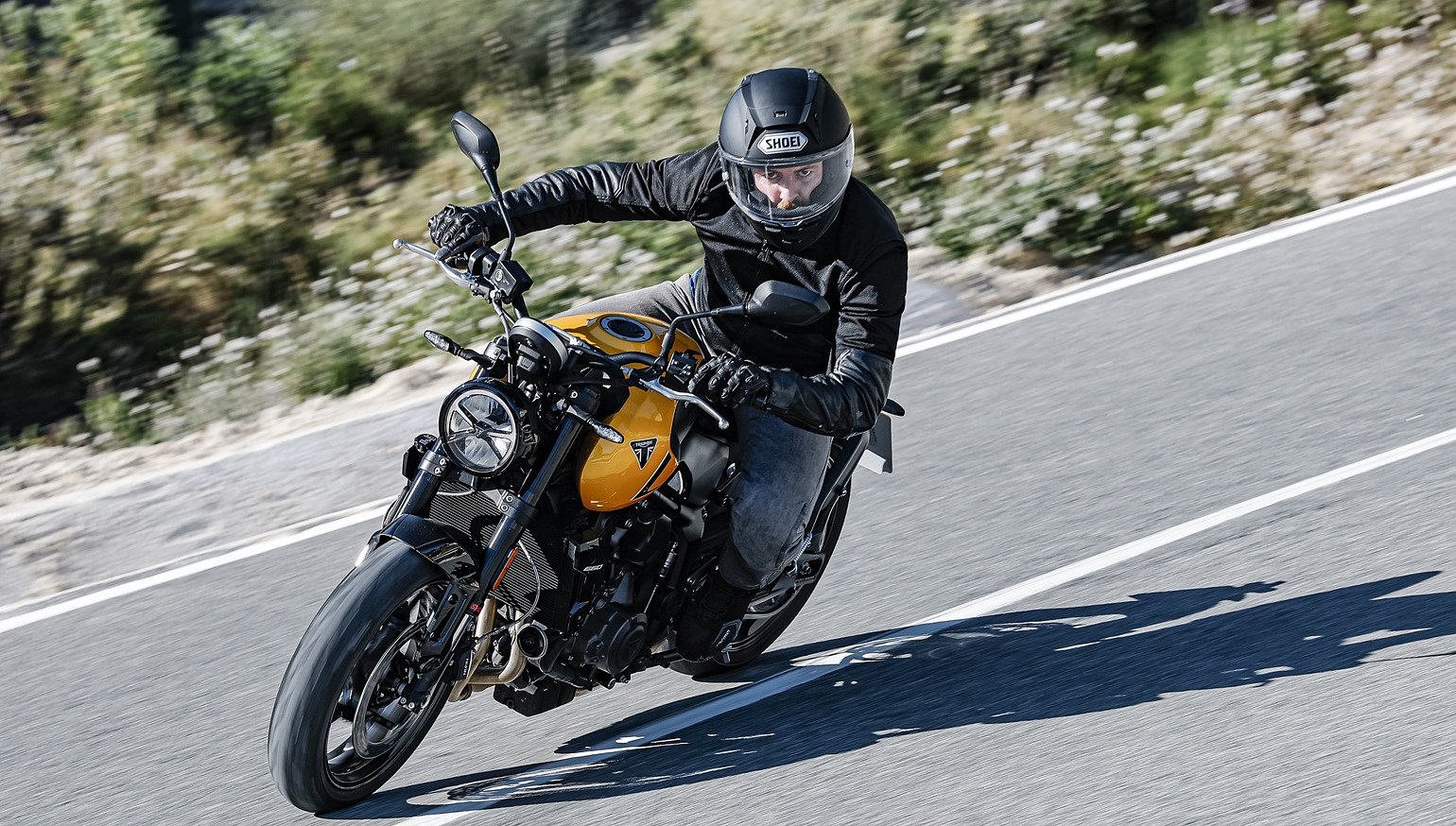
A beautiful mess of squiggly Spanish asphalt (with the kinds of crests that you can plausibly say, "That was a genuine accident, officer") awaited me to test Triumph's heavily updated 2026 Trident 660. Well, the engine took the brunt of the updating as Triumph's engineers worked to ensure it makes as much horsepower as possible while still being eligible for the European A2 license category. But, when the same license category limitations don't apply in the United States, the Trident 800's $9,995 MSRP looks more enticing to me than the Trident 660's $8,995 price tag.
"Shut up. Be a journalist. Revisit these ideas after the test," was my inner monologue for most of the morning before riding the Trident 660. I'm not the target audience for the Trident 660, and I had to remind myself of that. To give this model a fair shakedown around the sun-kissed asphalt that blesses Alicante, I placed my concerns in a mental lockbox, which I'll open at the end of the review.
I rode the Trident 660 for what it is: Triumph's offering for riders moving up to their "first big bike." I can confirm that the Hinkley firm's engineers have pushed the limit of what we should recommend as a first big bike.
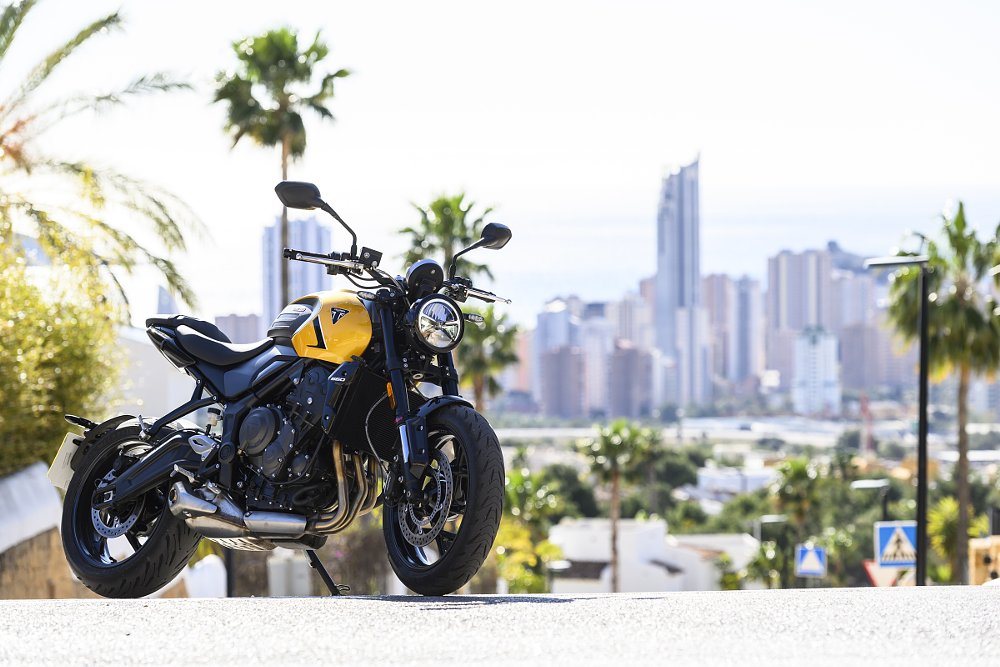
Who the Trident 660 is for, what's new
During the Trident 660 presentation, representatives said in no uncertain terms that the model is aimed at learner or newer riders. Given that, I'd say this model doesn't have everything that its target audience could ask for, but it has everything they should ask for.
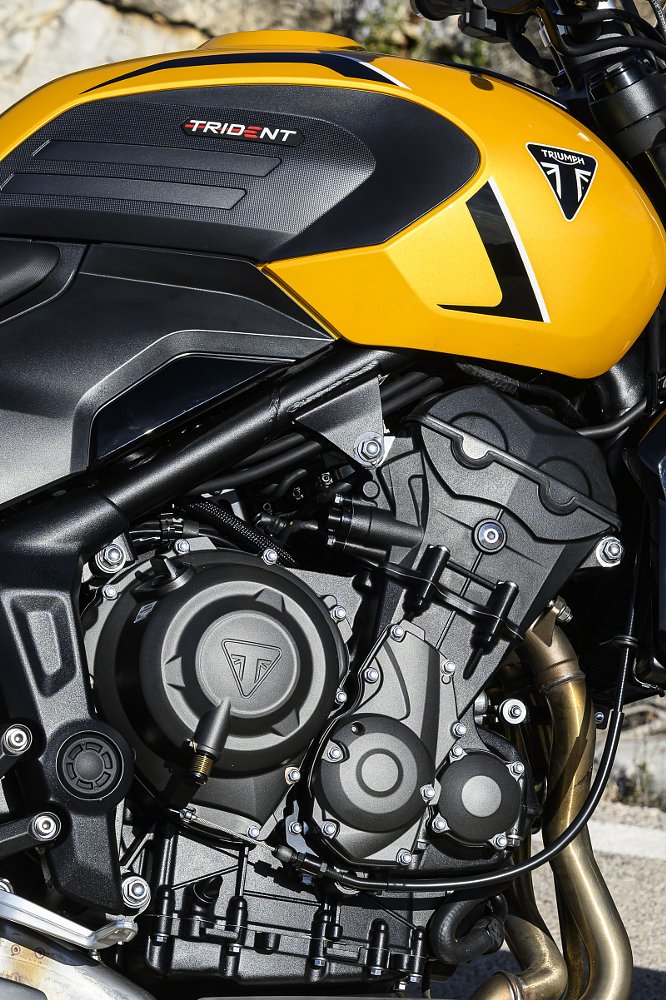
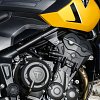
Nothing emphasizes that as much as the Trident 660's headline-grabbing 94 peak horsepower output, an increase of 17% for 2026. (By regulation, 94 horsepower is the most a motorcycle can have and be restricted to 47 horsepower for riders in Europe with an A2 license — a key point I'll get to later.) To achieve this power increase, Triumph has spent 90 cents of the dollar on upgrading the Trident's engine for the latest model year, starting with the redline, which is now 12,650 rpm, or 20% higher than the 2025 model. The liquid-cooled, inline, three-cylinder, 660 cc powerplant now features three 44 mm throttle bodies compared to the singular 38 mm the previous model wore, so it can breathe better and is more responsive. We're still just at the tip of the engine tweaks.
Triumph's engineers revised the cylinder head and cam profiles. The 660 powerplant now features larger exhaust valves and higher-lift cams, which support better airflow at high revs. A larger, front-mounted airbox and revised intake allow the engine to take in more air with less resistance. It doesn't hurt that this update amplifies Triumph's trademark triple induction howl. Finally, a repositioned and enlarged radiator and fan help to manage temperatures when exploiting the upper limits of the platform's new redline.
Everything that's involved in getting the power from the engine to the rear wheel has been revised, too, to keep the triple as refined as we've come to expect from the Trident 660. The latest model still uses a six-speed, close-ratio transmission but has a taller first gear to make the new 50.2 foot-pound peak torque figure more usable, and a tall final gear for highway mile-munching.
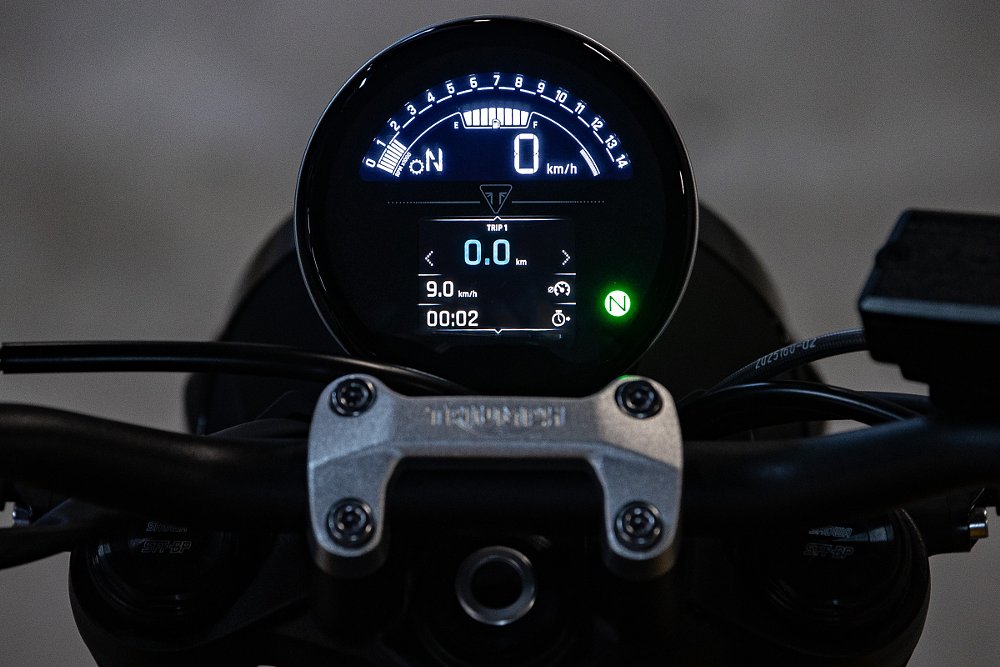
The electronics have also been adjusted to keep the class-leading (among A2-eligible motorcycles) power figures in check. The Rain, Road, and Sport riding modes all arrive at the same maximum power output, however, the way each one gets there is indicative of its respective name. The cornering ABS and Traction Control, which still comes in three levels, work with a six-axis IMU to adjust for lean angle and have also been optimized to handle the extra ponies. As with the previous models, you can use your preferred TC level irrespective of riding mode or turn it off altogether. Although, if you turn the bike off and on again, it'll reset the TC according to your ride mode — not what all you 12 O'clock Boys want to hear.
New for this model year is the brand's bi-directional Shift Assist quickshifter system as a standard feature. You get the same non-adjustable Showa 41 mm inverted Separate Function Big Piston fork with 120 mm (4.72 inches) of travel, but the Showa monoshock RSU with 130 mm (5.12 inches) of travel now features rebound adjustment along with preload adjustment, which is toward the upper end of the spec list in this class.
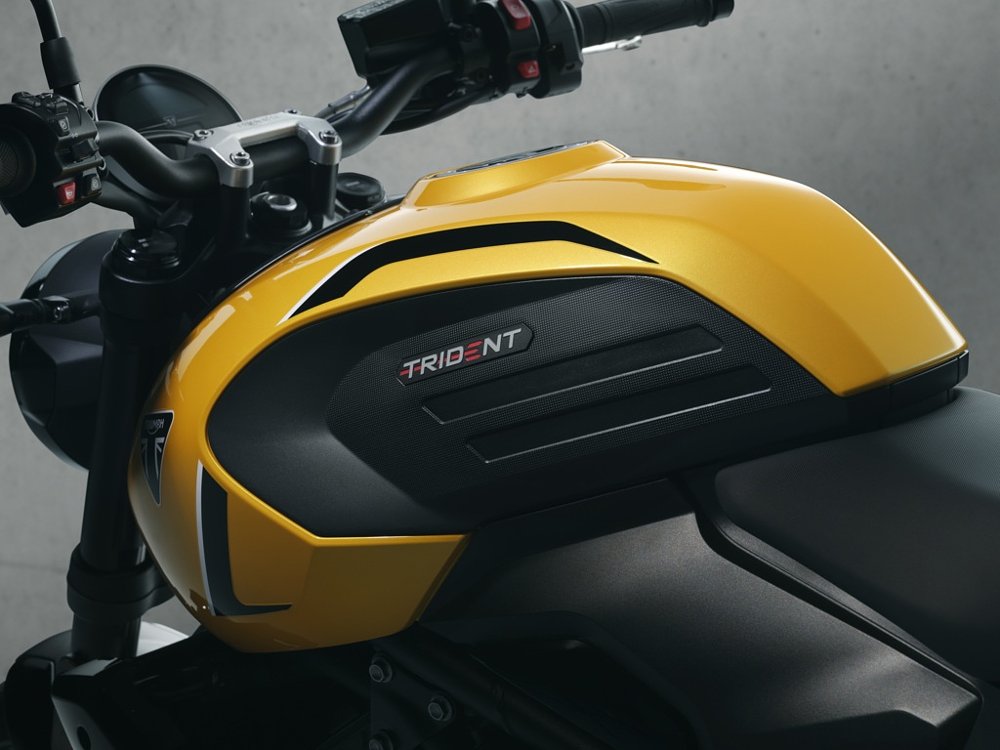
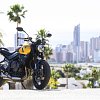
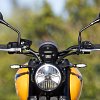
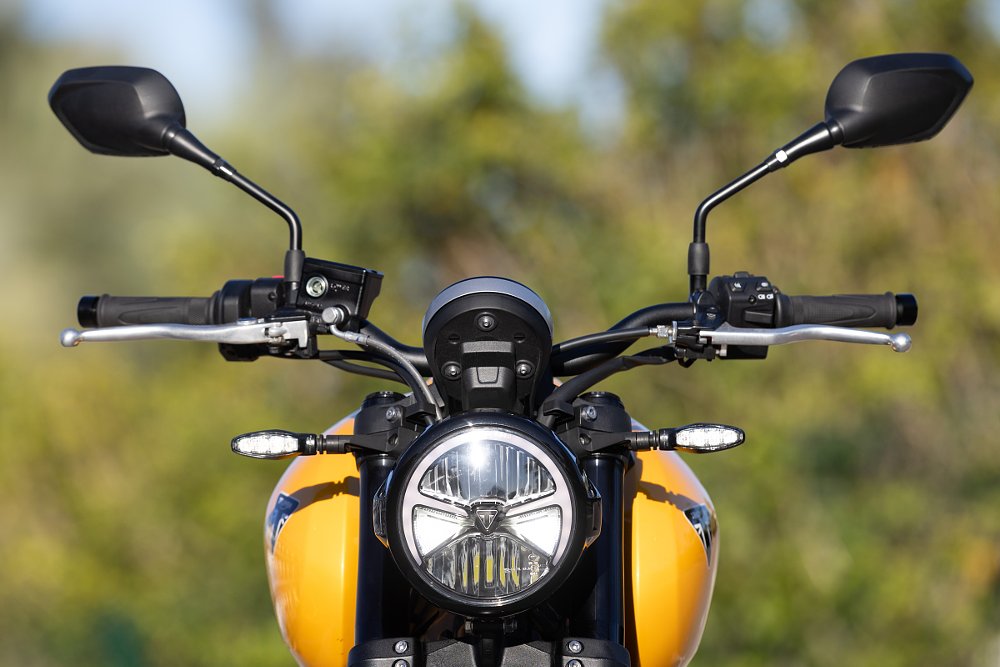
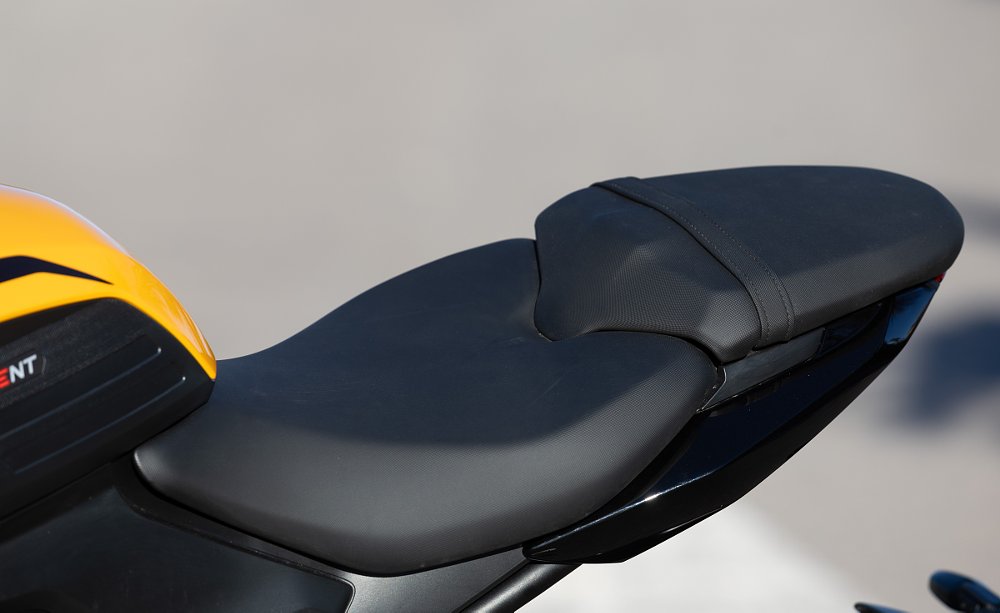
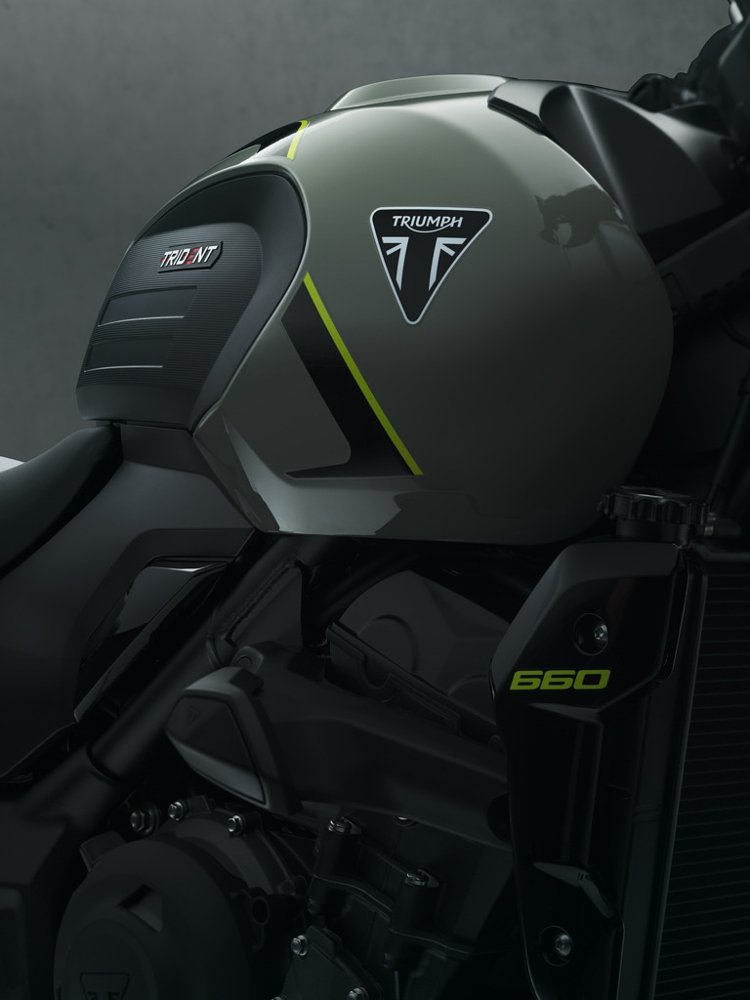
Also new for 2026 is a stylistic update in the form of a burlier gas tank, which is wider and has deeper cutouts, although it keeps the same 3.7-gallon fuel capacity. In keeping with the theme of making the Trident 660 sharper and more aggressive is a revised headlight assembly and updated mounting bracket, and a split rider/pillion seat, which means you can now fit a seat cowl if that's your thing.
Carried over from last year, but still worth mentioning are the one-touch cruise control and My Triumph Connectivity System, which supports turn-by-turn navigation, music control, and phone integration via Bluetooth. Most everything else you can think of is carried over from the 2025 model, barring a new steel tubular perimeter frame that was necessary to accommodate the new engine hardware.
Back to my original point, if you’re a newer rider taking your first step into the world of big bikes, I suppose you could ask for more rider aids, adjustable ABS, engine braking control, etc., but your plate is pretty stacked already with the Trident 660. Triumph hasn't adorned this model with features purely to win at top trumps. During the presentation, the representatives honed in on the rider that this bike best serves, and it isn't just folks in the early stages of their riding journey, but also ones who use their bike almost every day, whether that's to commute or widen their pupils on the weekends.
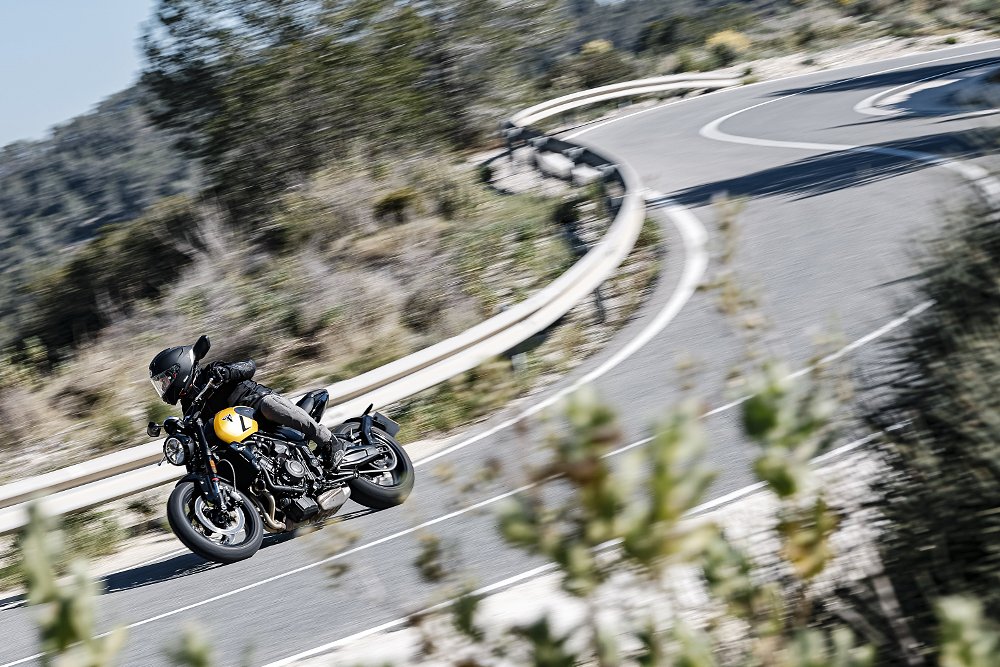
Riding the Trident 660
As a six-foot-tall rider, throwing my leg over the Trident 660's seat was effortless. I shouldn't have been surprised because I rode the Trident 800 less than a month before, but settling into the 810-mm (31.9-inch) seat felt like the quiet comfort of slipping on my favorite fleece before writing these words. The ease of flat-footing the Trident is partly due to how narrow Triumph has made the seat, making the bike feel slight between your legs when stopped. You might have to forgive me now, because this feeling of effortlessness, as overused as the term is, will be a theme.
Right foot to right peg, press brake, turn key, arms to switchgear — all tactile responses happen where and when expected. This is to say, the Trident's ergonomics are bordering on perfect for the quintessential modern roadster that its bodywork represents. It wants to be an all-rounder and the riding position is sculpted for exactly that. But I was about to experience how these ergonomics fared in an urban environment — a place Triumph envisions this bike will spend much of its life.
Effortless. Damn, there it is again. The bike's short 1,401-mm (55.2-inch) wheelbase and low-feeling center of gravity meant setting off in a small, but busy, Spanish town felt easy. If I'd let my mind wander when pulling away for the first time, the lightness of the lever, thanks to Triumph's Assist Clutch, and the smoothness of the power delivery from just above idle, might have fooled me into thinking I was on one of the brand's 400 cc machines. Had I been fooled, my naivety would've been short-lived.
Up to about 3,000 rpm, the Trident pootles along, happy to trundle out of small-town roundabouts in fourth gear if you're feeling exceptionally lazy. But once you go over three grand, you're reminded that this engine makes more torque than the original Street Triple 675. The Trident 660 produces 80% of its peak torque from 3,000 rpm all the way to nearly 12,000 rpm. Around the towns of rural Spain, that meant I could fully engage the clutch quickly, as though I were riding a smaller bike, but warp through narrow streets if I were too ham-fisted with the throttle.
As a commuter, this power delivery and the amount delivered is exactly what I want. Although there were times I could've been in a better gear, thanks to the spread of torque, the Trident never made me feel like I was in the wrong gear — another recurring theme.
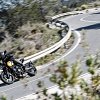
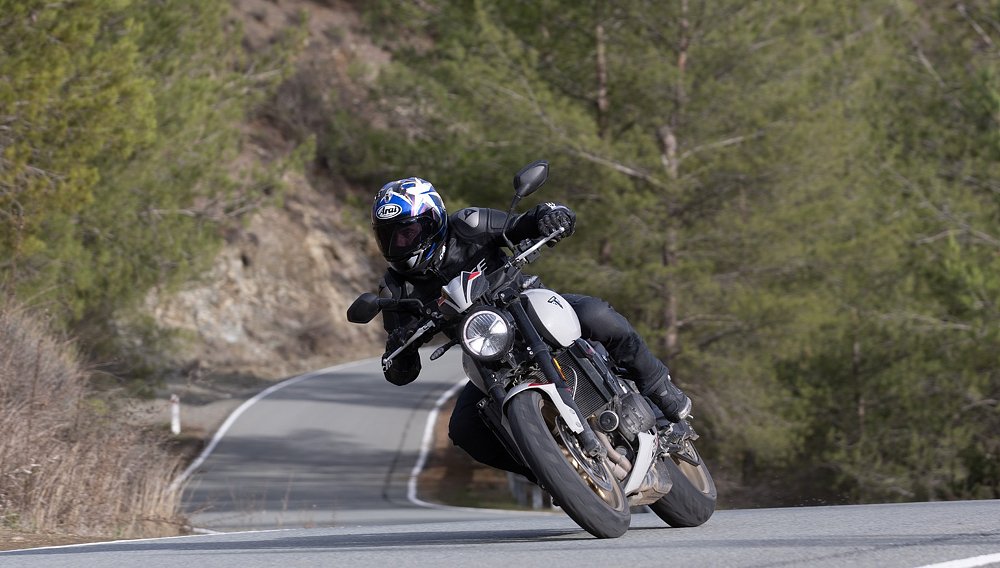
You may feel like you're riding a rocket on narrow streets but that illusion can quickly dissolve on open roads, which is where the group was heading next. Finally, I thought, a chance to let this engine eat, and my God did it gobble all the way up to its 12,650-rpm redline. The power delivery entices you to grip the tank at around 5,000 to 6,000 rpm and by peak torque at 8,250 rpm the bike surged in a way that made me wonder if the front wheel was about to come up, but it generally won't unless, I imagine, you give it some clutch-assisted persuasion. After the surge, the engine serves a frenzied howl to redline, without ever making me feel, well, frenzied. It was exciting, but not terrifyingly exciting.
Between peak torque and redline is where the Trident 660 sets itself apart from the other bikes in its class, namely, the 270-degree twins. There's just enough spice at 11,250 rpm — the bike's peak horsepower output — to make you want to wring out a gear from time to time. Each time I did, I got enough of a rush to make me smile, but not so much that I was discouraged from doing it again at the next available opportunity.
The Trident 660 fits perfectly into my theory that some bikes make you ride their ride, while others let you decide. This motorcycle lets you decide. You can stretch out second gear until the tendons on the sides of your neck are popping out in anticipation of the rev limiter, or short-shift all the way to fourth. After trying both methods, I settled on working the gearbox. Although the Trident won't punish you for being in the wrong gear, it rewards you for keeping it around 8,000 rpm, and that bi-directional Shift Assist quickshifter is arguably the best in the class, making my left toes friskier than usual. The slipper clutch deserves a shout here, too. I chose to shift using the clutch lever from time to time, feeding the gearbox cast iron downshifts but the slipper churned them into butter.
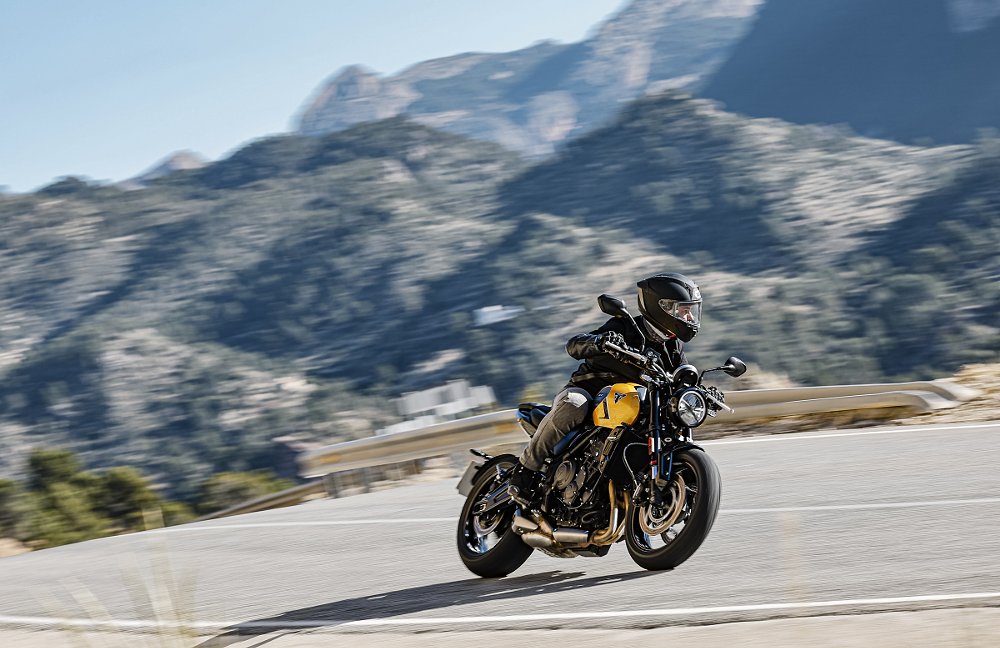
Whatever way I decided to play with the Trident's powerband and gearbox, I never felt like I was chasing the fastest way to round a curve. I didn't care. The 660's frame, the same one the Trident 800 uses, means you probably won't care, either.
The thing I loved on the Trident 800 is echoed in 660 — it turns almost every corner into an event. The amount of chassis flex and the feeling of what's happening with the bike through my bum, hands, and feet made me feel engaged, even through low-speed, tight corners. When I go for rides, what I'm doing is stringing along a series of events — dropping into a turn, flowing through it, cracking the throttle at the perfect moment, and pulling smoothly until the next application of the brakes — and the more events I string together, the more enjoyable the ride.
That seriousness of more capable machines, à la Street Triple 765 RS, is stripped away on the Trident and replaced by a more innocent feeling of fun. Bloody good fun. At times, a tad too much fun, it seems, as TC stepped in to keep me in check over some road snakes. I only have myself to blame for losing traction because the new triple-throttle-body setup and flat-spot-eliminating fuel map gives a connection to the engine that left me wanting for nothing.
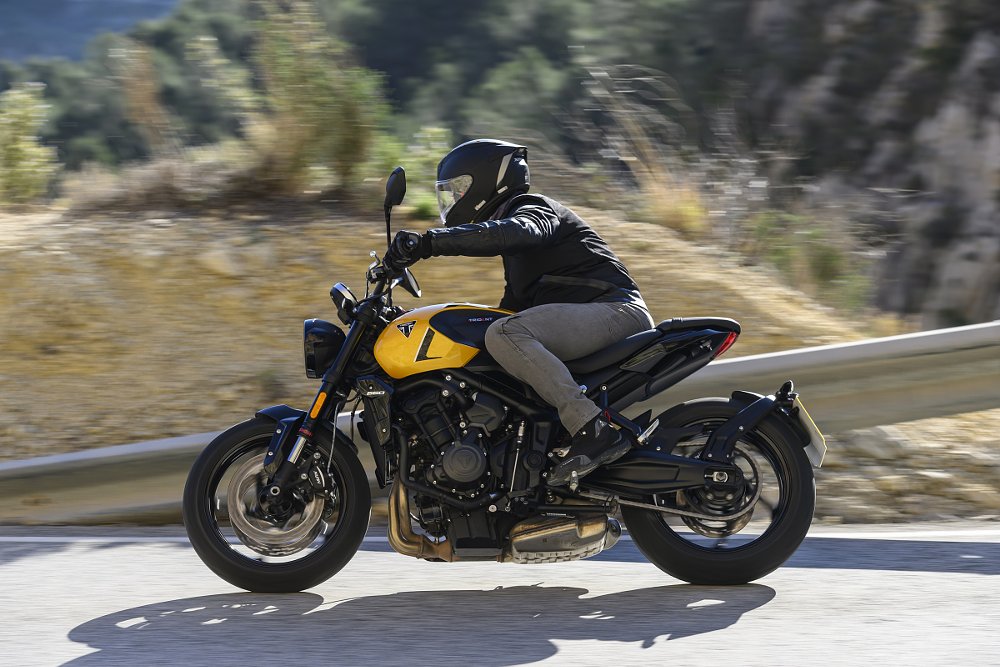
I chose Road Mode for most of the day, as I do on most modern bikes. The delivery and connection from my right hand to the engine was so good I never thought about it until after the ride. But Sport mode is a viable option, unlike many of today's bikes where it seems like they're trying to show you how aggressive the bike can be, rather than give you a sportier, usable throttle map. I was enjoying Sport mode, the added hairs it was raising on my forearms, and how the 20 mm of width added to the handlebar for 2026 helped me push it into the corners that took some extra persuasion. I was loving it, until it led me to be greedy and ask for more from the Trident than its target market likely ever will.
Pushing on through some of the most beautifully strung together curves I've ever ridden, I couldn't stop wishing the non-adjustable Showa forks and the rear Showa monoshock were stiffer out of the gate. The comfort I felt over potholes and speed bumps in urban settings had a consequence: The suspension is a tad soft for sportier riders. I asked a Triumph technician to add some rebound damping after lunch, which helped things.
If you want a motorcycle that does everything well, you have to make compromises. I couldn't fault the Trident's suspension on the roughest road surfaces we found, but it gives up some competence in the twisties to achieve that. The newer riders this bike is aimed at won't find the limitations of the suspension, but if you keep it for long enough, you might. The suspension components are still comparable to the other models in this class. But the brakes I take umbrage with.
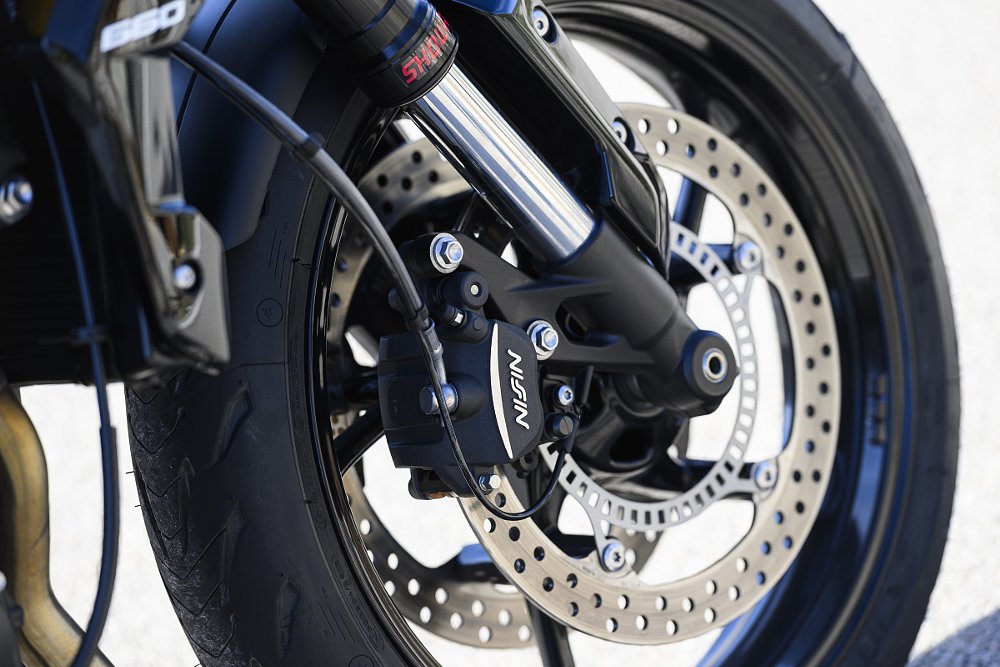
On paper, the list of braking components reads OK. The system consists of twin 310 mm discs with two-piston Nissin sliding calipers, braided stainless-steel lines, and an axially mounted OEM master cylinder. In reality, there is not enough stopping power. There's a decent feeling through the adjustable lever, but not the feeling I want. I felt a soft initial bite and not much progression beyond that. On the briskest sections of the ride, I was pulling with enough strength that I was sure the ABS would kick in, based on muscle memory, but the braking force wasn't there. On the opposite end of the spectrum, the rear 255 mm disc with a single-piston caliper made keeping the bike stable around town a doddle, thanks to good feel and stopping power.
Triumph upgraded the Trident 660 to make it the most powerful motorcycle in its class, while still aiming it at newer riders upgrading to their first big bike. The first port of call should've been to add better brakes to help newer riders better deal with the situations that almost 100 horsepower will get you into, rather than cosmetic upgrades or adding rebound adjustment to the shock.
I only got to use the rudimentary one-touch cruise control for a moment on the highway as the ride came to a close. It worked exactly as it should. The highway stint was short, and I didn't catch exactly what the revs were at 60 mph, but they were low, and there was no vibration worth noting.
The cruise control, inclusion of My Triumph Connectivity System, and the fact that I felt no discomfort during the ride, left me pondering as I refilled at the pumps: What would life be like if I still commuted and this were my bike? Almost perfectly served, save for wind protection, but even wind wasn't overly irritating during the admittedly short highway stint. Now is a good time to mention that after 87 miles of admittedly very spirited riding, the Trident's tank was down to just two bars on the gauge, but that's not the reason I'm struggling to recommend it.
The Trident 660's place in the U.S. market
Like any motorcycle, the Trident 660 is the sum of its parts, but its parts carry very different weight, figuratively speaking. The engine, frame, rider aids, and general electronic features that come as standard are top-class and good enough to satisfy most any rider. The suspension is decent when compared to the competition, but experienced riders will probably want more. Then there's the brakes which, if I bought the bike, I would upgrade straight away.
Triumph has, by most measures, produced a very good bike in the Trident 660, and that's frustrating, because it's difficult to recommend it. In the class of A2-compliant naked machinery, the Trident 660 is easily the most refined I've ridden, and I'm sure that's in no small part due to it being the only triple. It also feels well made, has enough power for seasoned motorcyclists, rides well, and looks the most gentlemanly of the bunch. But if I bought one, I'd feel shortchanged.
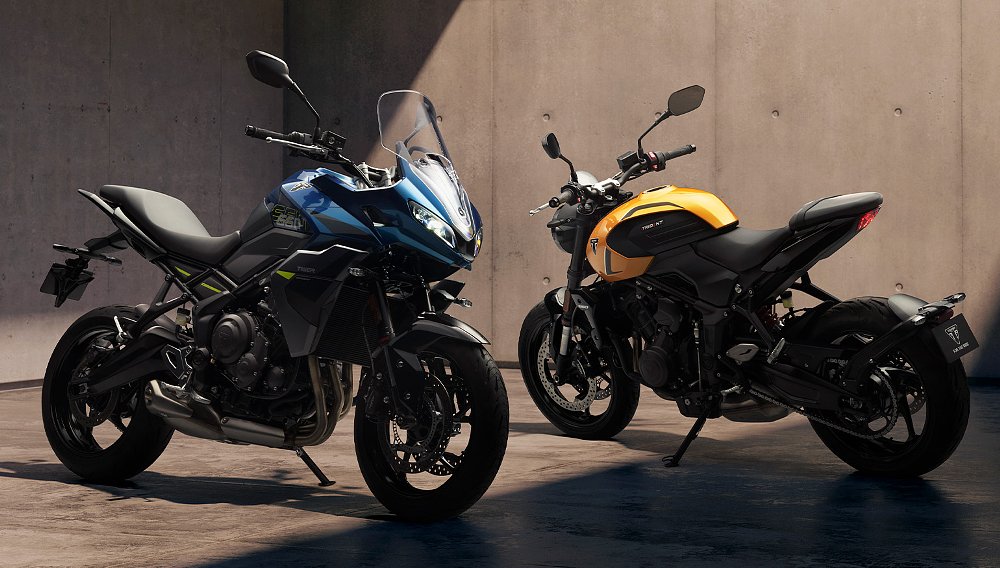
The biggest problem with the Trident 660, the reason I'd feel shortchanged, is the competition in house. It's the gnawing idea that kept me awake for half the night before the launch. Opt for the Trident 800, spend $1,000 more, and you get better brakes, better tires, higher-spec suspension, 19 additional horsepower, and an extra 11.8 foot-pounds of torque. And those are just the performance upgrades, because you also get a flyscreen and belly pan as standard. It'd cost you an extra $453 to add a belly pan and flyscreen to a Trident 660, putting you tantalizingly close to the price of a Trident 800.
It feels like Triumph messed up the price point of this bike or of the Trident 800, or both. The class leader is arguably the Honda CB750 Hornet, which costs $7,999, and you’ll need to pay another $3,000 to jump to the CB1000 Hornet SP. Likewise, the price difference between a Yamaha MT-07 and an MT-09 is $2,300. But, if you add the cosmetic parts to the Trident 660 that come as standard on the Trident 800, the price gap is just $547. Please, if anyone from Triumph is reading this, do not take it as a sign to increase the MSRP of the Trident 800, because that motorcycle arguably has the best value proposition in its class.
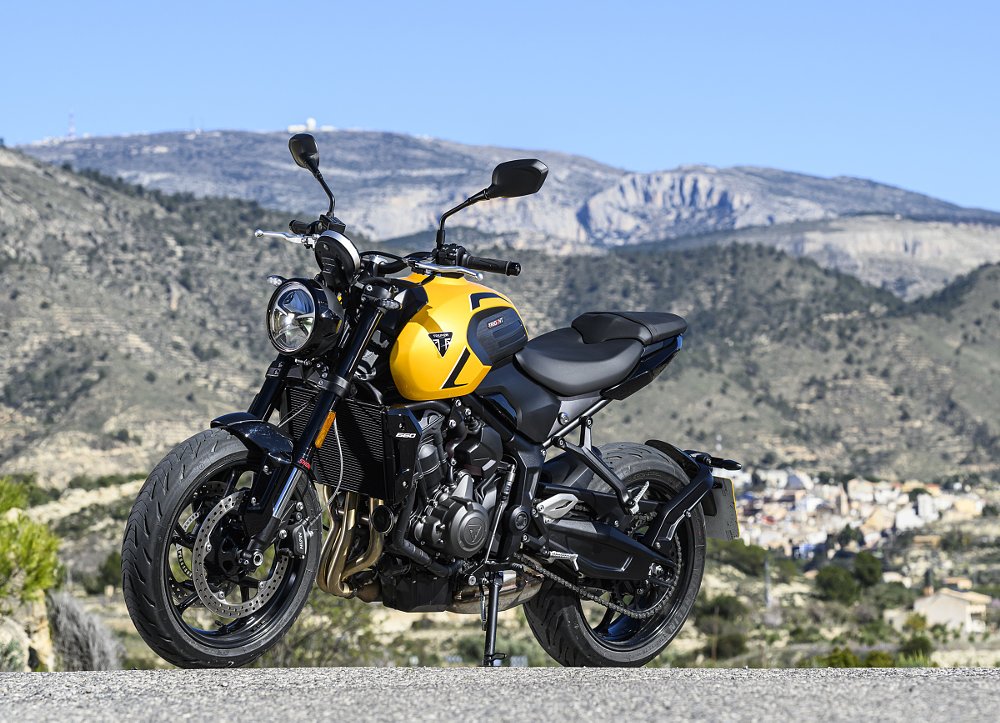
With all that said, there's still a place for the new Trident 660, although it's niche. If you're upgrading from something Kawasaki Ninja 500-esque, the Trident 660 is a bike that'll take you to the next chapter of your two-wheeled journey, and then some. It's even more for you if you're not tight on cash and will pay more for refinement and styling that draws on a retro roadster, rather than the more angular, aggressive style most other bikes in this category wear. If this is you, congratulations, because you've probably found your bike.
Likewise, if the Trident 660 is already stretching your budget and another $1,000 is completely out of the question, then I can assure you that the bike planted a massive smile on my face and should do the same to yours.
There is a third group of riders who, realistically, are the ones the bike was designed to suit, and they're like me: European. When license restrictions mean you can't look past 94 horsepower and you want to keep your bike after you get your full, unrestricted A license, this is the most powerful motorcycle you can buy. That's a pretty strong selling proposition for young riders.
It's frustrating to delve into the pricing numbers and try to make them make sense. It's even more frustrating still when they don't. In isolation, the Trident 660 is a good all-rounder and great fun. After the best section of pavement of the ride in Spain, the bike had four test riders, myself included, and the lead rider from Triumph — about a century of riding experience between us — howling with giddy laughter. But in the real world, I'd be too salty about what's on offer from the same company for an extra $1,000.
| 2026 Triumph Trident 660 | |
|---|---|
| Price (MSRP) |
$8,995 U.S. $11,145 Canada |
| Engine | 660 cc, liquid-cooled, 12-valve, inline triple |
|
Transmission, final drive |
Six-speed, chain |
| Claimed horsepower | 94 @ 11,250 rpm |
| Claimed torque | 50.2 foot-pounds @ 8,250 rpm |
| Frame | Steel tubular perimeter |
| Front suspension | Showa 41 mm; 4.72 inches of travel |
| Rear suspension | Showa monoshock, adjustable for spring preload and rebound damping; 5.12 inches of travel |
| Front brake | Dual two-piston calipers, 310 mm discs with ABS |
| Rear brake | Single-piston caliper, 255 mm disc with ABS |
| Rake, trail | 24.5 degrees, 4.25 inches |
| Wheelbase | 55.2 inches |
| Seat height | 31.9 inches |
| Fuel capacity | 3.7 gallons |
| Tires | Michelin Road 5, 120/70R17 front, 180/55R17 rear |
| Claimed weight | 429.9 pounds |
| Available | Now |
| Warranty | 24 months |
| More info | triumphmotorcycles.com |