Shop by Vehicle
 Track Order
 Contact Us
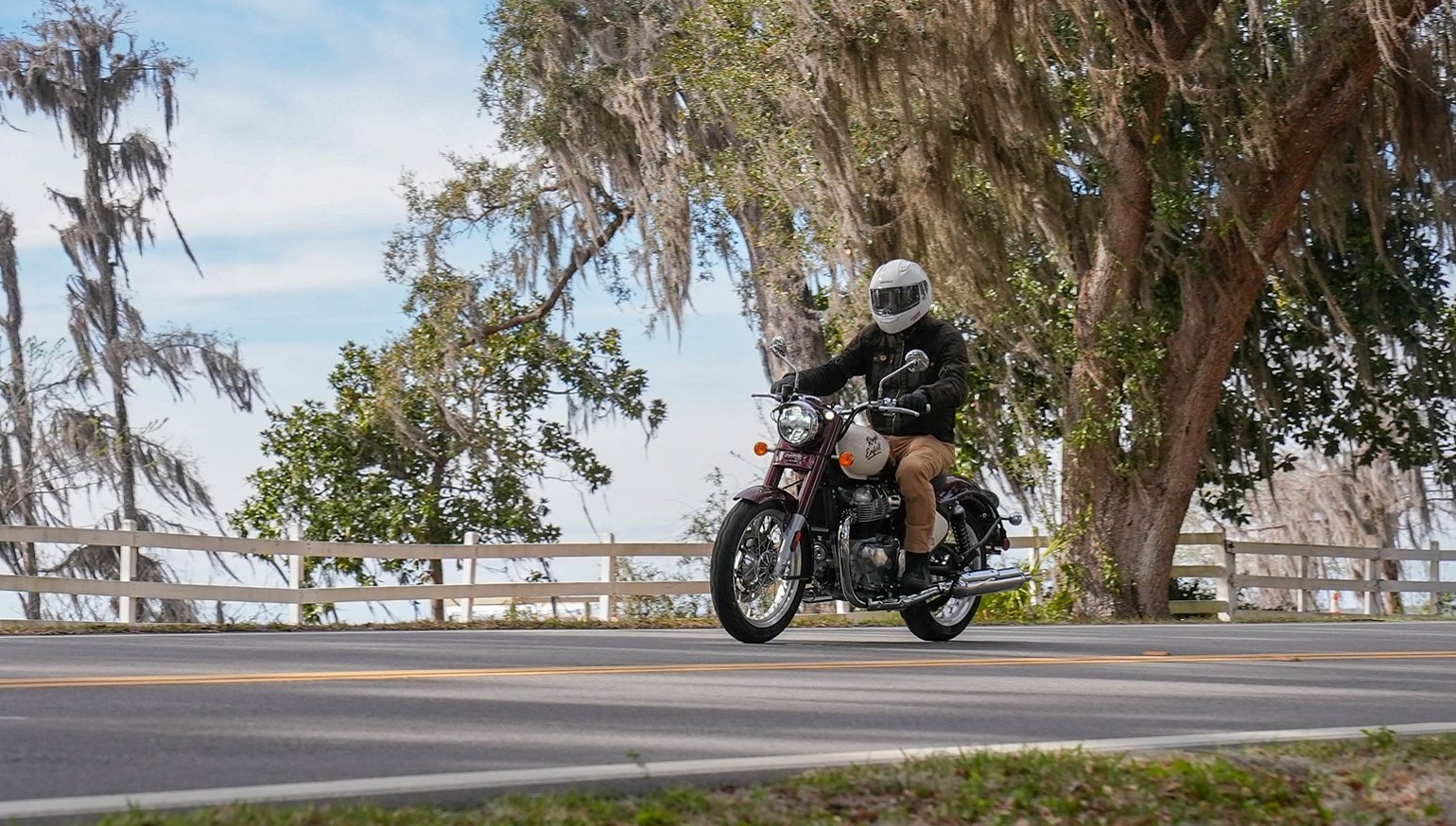
When was the last time I reviewed a motorcycle where the spec sheet was less important than with this Royal Enfield Classic 650? I'm not sure.
I don't think anyone is going to look at the Classic 650 and prefer it because it has five more horsepower than a competing model or cross it off the list because it weighs 30 pounds more. No, some riders will look at this motorcycle and instantly say, "Nice, but not my style." Some others will take one look and think, "I have to have it."
The Classic 650 is not about specs and features and performance. It is all about honoring the company's history (more about that history coming next week) and melding the style of the past with enough modern function to make it useful and easy to live with.
We're in a run of 125th anniversary celebrations, with Indian marking 125 years since its founding. Triumph and Harley-Davidson will be along shortly. But unlike Indian, Royal Enfield can say it's been building motorcycles for one and a quarter centuries without interruption.
Today, the United States is a key new market for the Indian manufacturer that originally built its first motorcycle as a British company in 1901. And while sales here will always be a tiny fraction of the sales in Royal Enfield's home country of India, company executives say they're committed to the U.S. market. The Classic 650 is evidence of that. While the Classic 350 has been a sales success, especially in India, most U.S. consumers demand a larger engine. The plan was always to add a Classic model with the company's 648 cc parallel twin, said Royal Enfield Chief of Design Mark Wells.
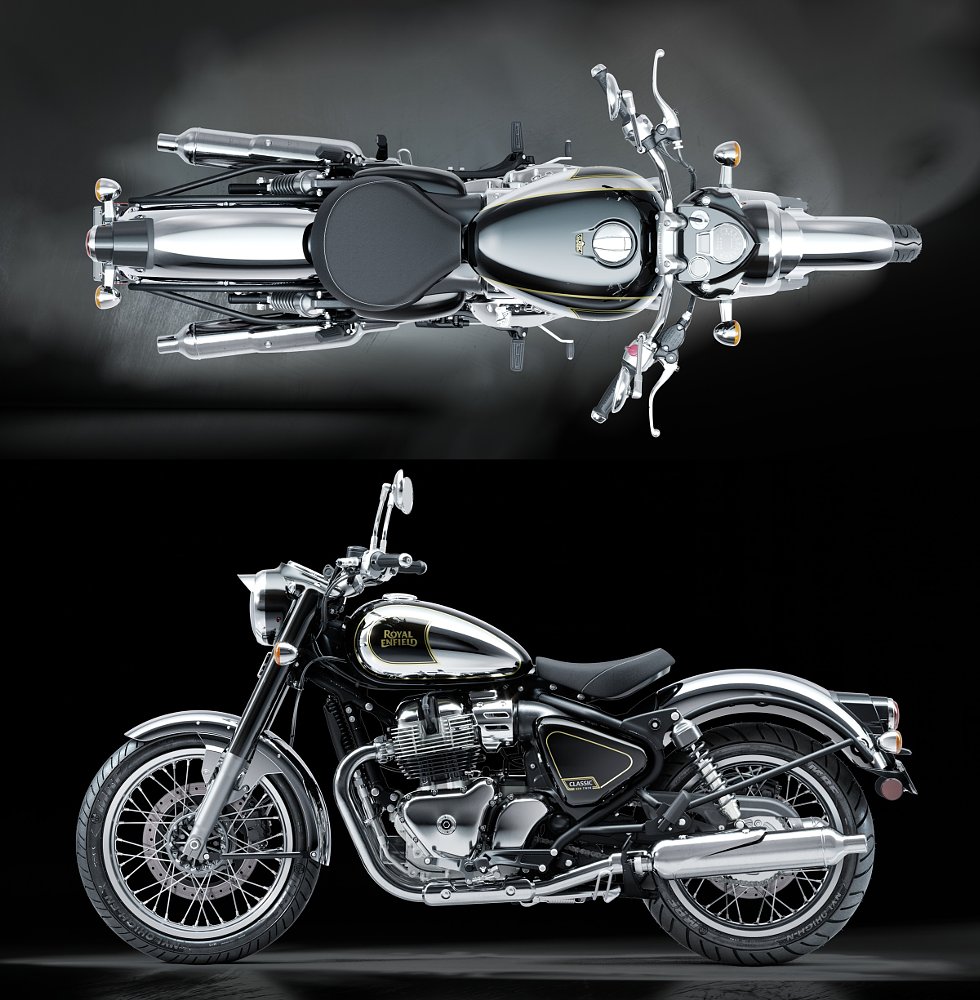
The Classic 650 uses the same frame as the Super Meteor and Shotgun and uses the same air-cooled, parallel-twin engine we've seen since the company made it's push into the U.S. market nearly eight years ago with the Interceptor and Continental GT. In the Classic 650, Royal Enfield claims 47 peak horsepower from the air-cooled, eight-valve twin with a 270-degree crank. It has a single disc brake on each wheel and a new suspension built by Showa. But again, this is not about specs or features or electronic rider aids.
Four years ago, when I test rode the Royal Enfield Classic 350 in the similarly historic city of Savannah, Georgia, I had this to say about the presence of electronic rider aids:
"It comes standard with three ride modes. The basic setting is the 'ride your own bike' mode, with no electronic intervention between the rider's throttle, brake, and steering inputs and the machine's response. Then there's the 'park your motorcycle' mode, which can be selected by the rider when the motorcycle is stopped by turning off the key and deploying the sidestand, for times when you don't feel like riding. And third is the 'crash your motorcycle' mode for those occasions when you choose the base setting but don't execute your responsibilities sufficiently and there's no electronic nanny around to save you."
Of course the exact same applies to the 650. If you're one of those readers who regrets that 50% of most modern-day motorcycle reviews is devoted to electronics, relax. You're safe here.
The Classic 650 is about a certain style and feel and that style is very much tied to Royal Enfield's past, most specifically to its most important and longest-running model, the Bullet. Some Common Tread readers (as well as some testers at other sites) have been adamant that digital displays are unacceptable on a retro-styled motorcycle, even if they're shaped to look like small, round dials, and instead we must have a physical needle sweeping around a dial of numbers. Not surprisingly, the latter is what you get with the Classic 650. Just below that speedometer is a small, LCD screen that discretely displays a bar-graph fuel gauge, the odometer or tripmeters, and a gear position indicator.
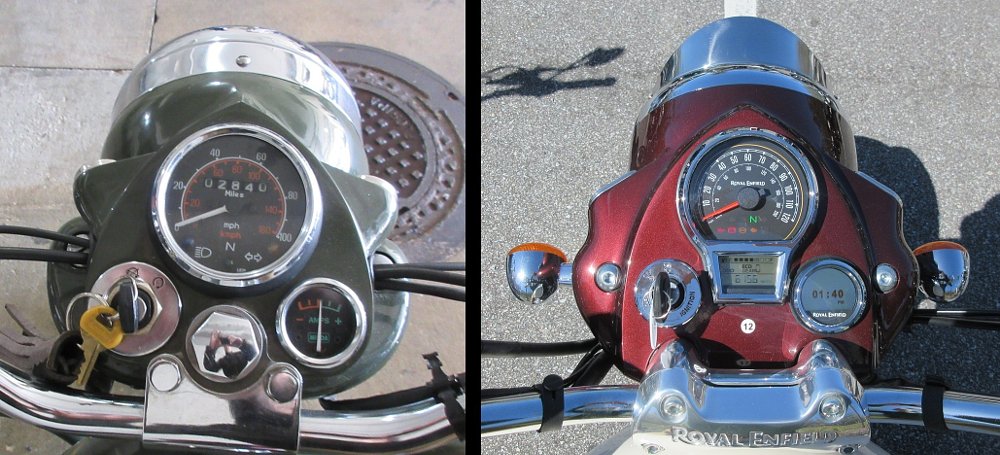
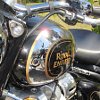
Below right is another small, round digital display that shows a clock or the Tripper navigation system, which provides basic directions. All of this is set in what the Royal Enfield folks told us is properly called as casquette, not a nacelle. The metal surrounds the headlight and holds the displays, looking very much like what you see on a Royal Enfield Bullet from 50 or 70 years ago. Then there's the chrome eyebrow over the headlight and the polished upper triple clamp with the logo. Wells said the designers paid particular attention to what the rider sees in the cockpit.
Actually, a lot of attention went into the styling overall. Compared to the Classic 350, Wells described the stance of the 650 as "italicized," with the engine leaning forward slightly. You have the traditional teardrop fuel tank. Retained are the classic parking lights alongside the headlight called "tiger eyes" in India 50 years ago when they were common. Naturally, the fenders are metal. In fact, it's hard to find plastic anywhere on the Classic 650. Even the switchgear pods are aluminum.
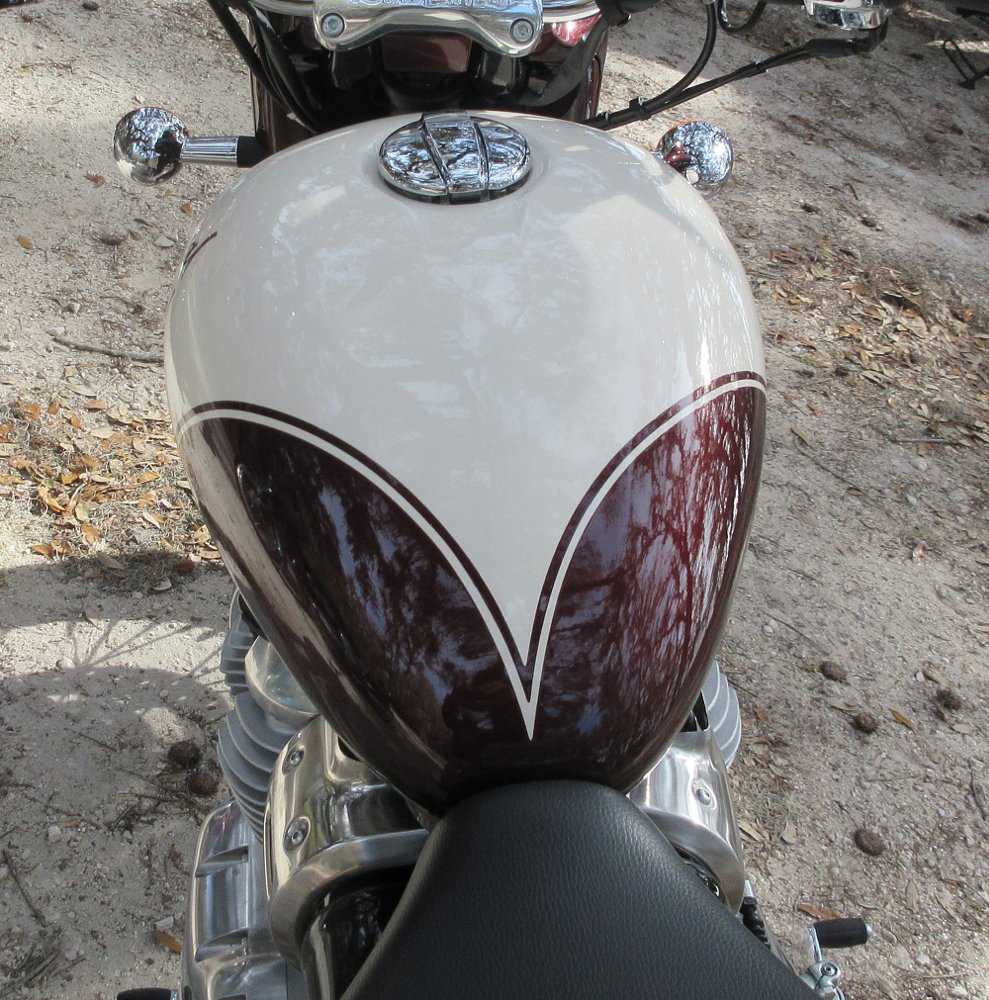
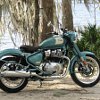
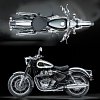
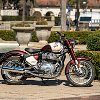
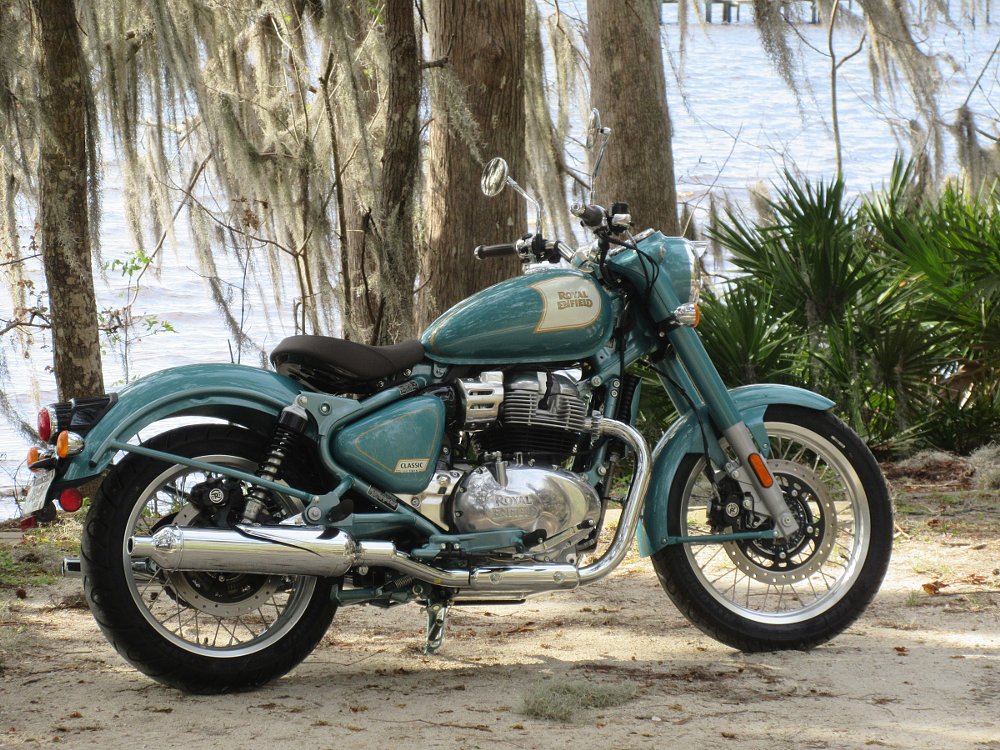
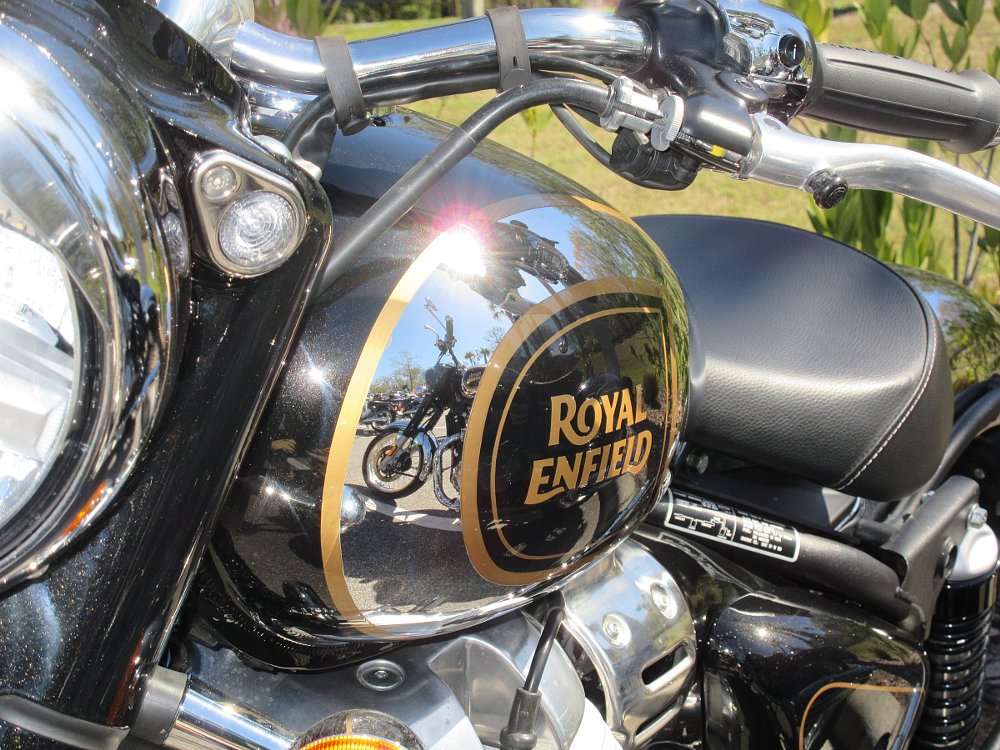
And here's another way that Royal Enfield tends to do things differently. In an age where most motorcycle manufacturers love to paint their new models in various shades of gray, Royal Enfields are available in a range of often vibrant colors. The 2026 Classic 650 gives you three distinctly different choices: Chrome Black, with gold pinstripes separating the black paint from the mirror finish on the sides of the gas tank; Vallum Red, with the brand name in script; and most distinctive of all, the Teal version, which also has a color-matched frame and oil cooler shroud. By the way, those gold pinstripes are still painted by hand in India.
Easily the most distinctive color, the Teal version has a story behind it. The idea for that color came when someone saw a photo in a book by Royal Enfield historian Gordon May. Once the color was chosen, May pointed out that the reason the bike in the book looked like it was teal colored was because the color registration was off when the book was printed and, in real life, the motorcycle was gray. So we got teal thanks to a happy accident. Good, I say. In 2026 the world doesn't need another gray motorcycle.
Riding the Royal Enfield Classic 650
As the world's oldest motorcycle manufacturer in continuous production, Royal Enfield decided to introduce us to the Classic 650 in the oldest continuously inhabited European settlement in what is now the United States. St. Augustine, Florida, dates back to 1565, was fought over by the European colonial powers, raided by pirates, burned to the ground, and has enough other history to fill several books.
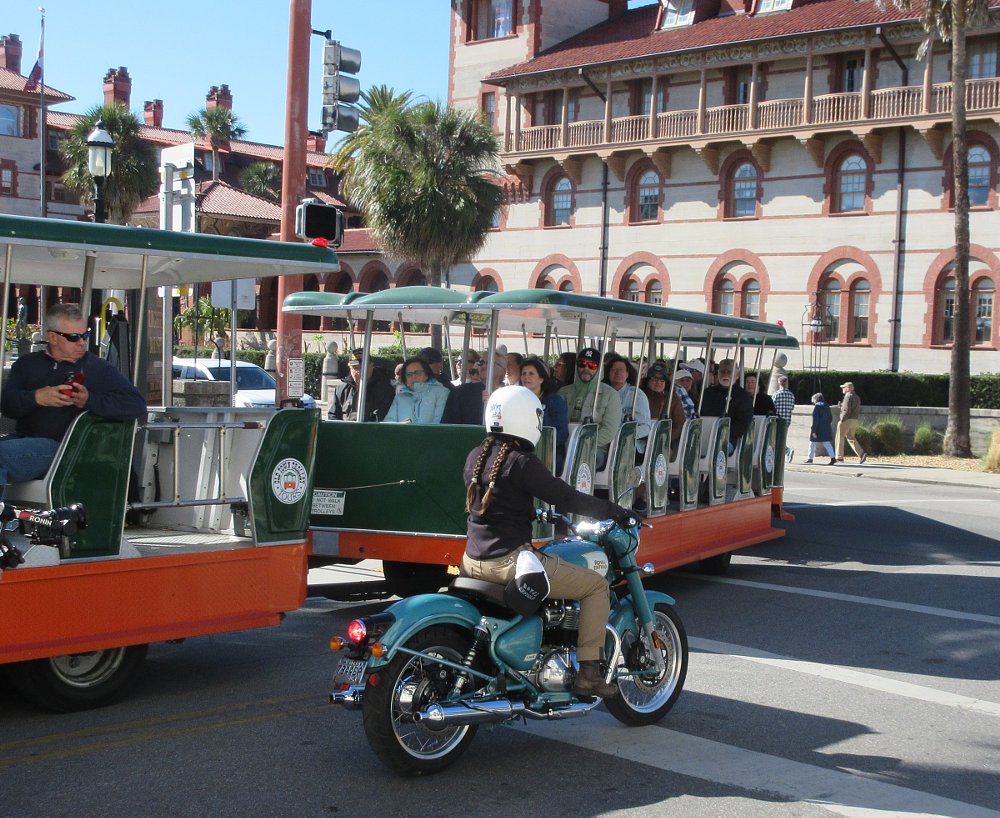
St. Augustine's history and style are fun and all, but test riding a motorcycle anywhere on the peninsula of Florida presents some challenges. The roads are flat and straight and it's hard to find a curve that isn't a highway on-ramp. On the first day, we did a 67-mile loop with scenic attractions ranging from riverside views with Spanish moss dripping from the trees to St. Augustine's old lighthouse, and the second day we rode down A1A along the coast to Daytona Beach where Bike Week was just getting started.
How's the handling? Let's just say I never had the opportunity to visit the edges of the Classic 650's tires. How does the new Showa suspension soak up life's inevitable jolts? All the roads we traversed were smooth and flat. No winter potholes or frost heaves down here. When we made it to Daytona the second day, I did find a few manhole covers and even one or two spots of broken pavement to hit intentionally. The suspension was firmer than I would have expected, given the bike's mission, but it wasn't uncomfortable.
Settling into the solo saddle, the riding position is upright and neutral. Footpegs are moved forward enough for a relaxed bend in the knee but far back enough to allow the rider to stand up to absorb a bump.
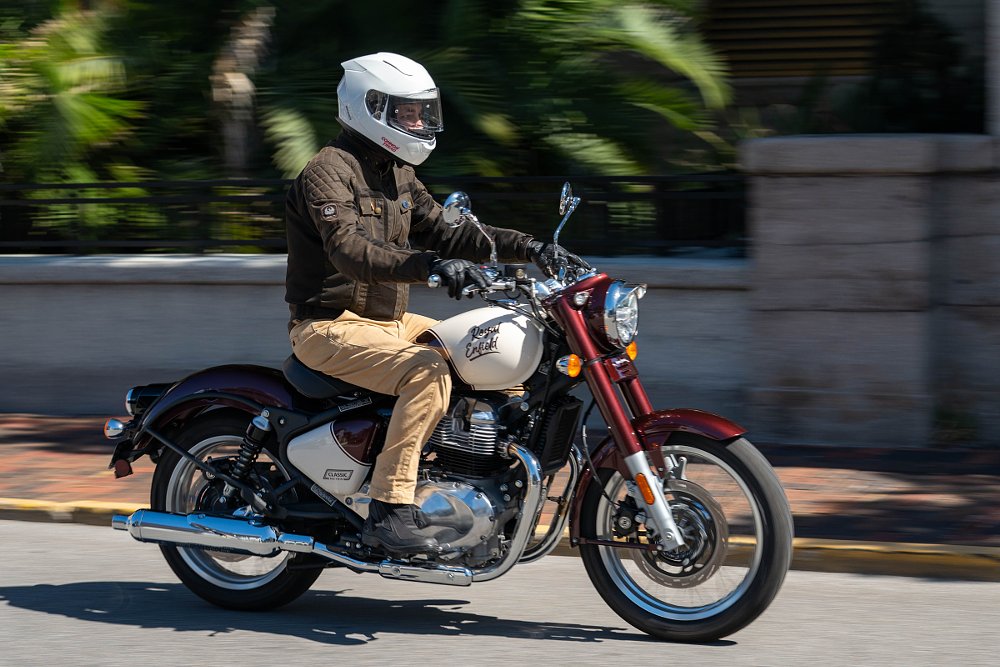
Pulling away, clutch pull is on the heavy side, but in a nice touch, both the clutch and brake levers are adjustable. I also found that the Classic 650 didn't mind clutchless upshifts in the higher gears.
At about 60 mph, some buzz became apparent through the seat, but not enough to be bothersome. It stepped up a notch at 70 mph. At that point, I found myself looking for seventh gear, because the character of the twin means it prefers midrange. What rpm? I don't know. There's no tachometer, though there is a little arrow beside the digital gear indicator in the small LCD screen that points upward when the motorcycle thinks you should upshift. That advisory seems to be focused more on maximizing fuel economy than maximizing forward progress. It almost always thought I should be in a higher gear. When it does think you're doing a proper job of conserving fuel, it flashes "ECO" as a reward.
Moving more than 500 pounds of metal down the road with 47 horsepower means your pace will typically be relaxed. In keeping with its British heritage, the engine's character is more "Keep calm and carry on" than lunging forward with hurried urgency. A positive side benefit is that there is no twitchy fueling or noticeable fluctuations in the powerband. Just steadfast, unspectacular forward progress.
Stopping power from the single disc brakes both front and rear is similarly sufficient (unless you want to do a stoppie), rather than outstanding in any way. Like many cruisers, the rear brake felt more satisfying. In our close-quarters group riding, I didn't have a chance to see how the ABS worked.
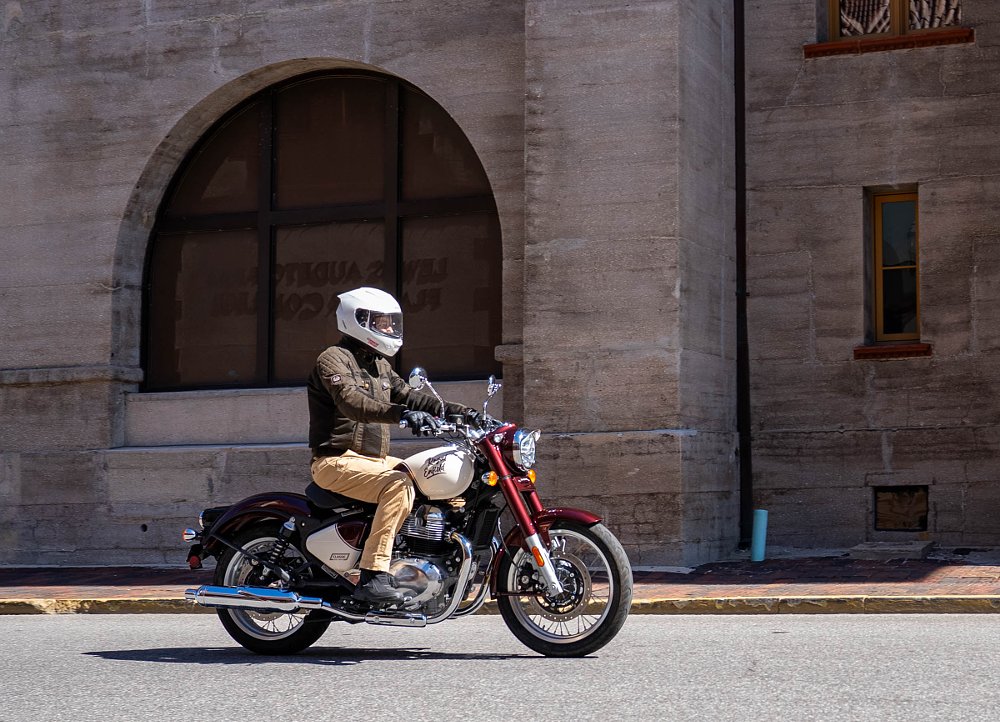
The word that comes to mind most for me when riding the Classic 650 is "solid." The weight is substantial but mostly low, so the motorcycle does not feel ponderous and I would still classify it as easy to ride. (I watched a woman smaller than me expertly spin one of the Classic 650s 180 degrees on the sidestand — in a sand parking lot.) The power delivery feels... solid. Not exciting. Not inadequate. Solid. Rap any surface of the bike with a knuckle and you'll get the ping of metal, not the dull thunk of plastic. Solid.
So how does that sound to you? Refreshingly authentic? Attractive in a classical way? Or dull and likely to leave you feeling down with insufficient adrenaline levels?
I think it's interesting the last motorcycle reviewed here at Common Tread was the KTM 990 Duke R. In terms of both aesthetics and performance, I feel there's zero overlap between those two models. Anyone considering buying one of those is highly unlikely to be considering buying the other.
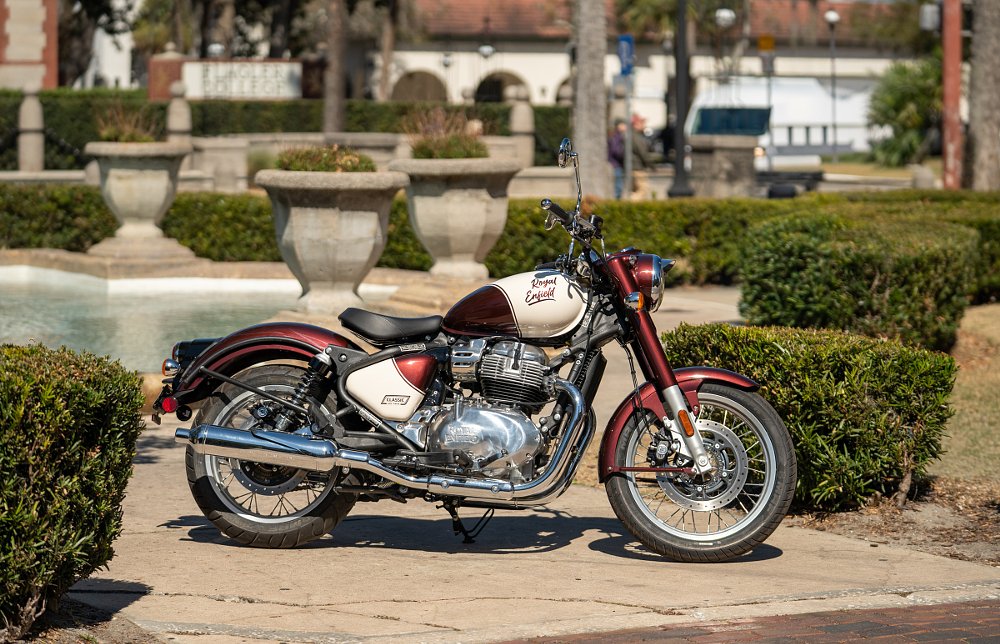
The cruiser for riders who don't like cruisers
One final thought. When I was a young man, I owned a couple of motorcycles that would have been considered cruisers at the time. They had some "cruiserish" styling touches, but in just about every functional way they were what we'd call standards, today. My butt wasn't 26 inches from the ground, but at a normal elevation. My arms weren't reaching for something resembling mini-ape-hangers. The footpegs were beneath me such that if I saw a pothole coming I could stand up a little and let my legs absorb some of the shock, instead of all of it going up my spine. Suspension travel was reasonable.
That's not what cruisers look like today, with the feet-forward riding position and ever lower seats being obligatory. But is that what a cruiser is really about?
The question of what makes a good cruiser is one that our old friend Lemmy chewed over nearly a year ago after riding a bunch of Harley-Davidson's new models. He came down to the idea that it's a motorcycle that has style, that is more about torque than redline horsepower, and is just right for a ride of moderate distance to a neat ice cream shop.
Royal Enfield will say, of course, that they have the Shotgun 650 for anyone who wants a cruiser, but I'd argue that the Classic 650 is a great cruiser for people who love that kind of riding but don't love the modern-day orthodoxy of feet-forward ergonomics and ultra-low seats that result in two inches of rear suspension travel. The Classic 650 is dripping with classic looks. It's built for that relaxed ride to the ice cream shop. You already knew after looking at the first photo whether it's your style or not. If it is, I don't see any reason why you'd regret buying it.
| 2026 Royal Enfield Classic 650 | |
|---|---|
| Price (MSRP) |
$7,499 U.S. $9,999 Canada |
| Engine | 648 cc, air-cooled, eight-valve, parallel twin |
|
Transmission, final drive |
Six-speed, chain |
| Claimed horsepower | 47 @ 7,150 rpm |
| Claimed torque | 38 foot-pounds @ 5,250 rpm |
| Frame | Steel tubular |
| Front suspension | 43 mm fork; 4.72 inches of travel |
| Rear suspension | Twin shocks; 3.54 inches of travel |
| Front brake | Single two-piston caliper, 320 mm disc with ABS |
| Rear brake | Twin-piston caliper, 300 mm disc with ABS |
| Wheelbase | 58.07 inches |
| Seat height | 31.5 inches |
| Fuel capacity | 3.9 gallons |
| Tires | MRF NYLOHIGH-FN, 100/90-19 front, 140/70R18 rear |
| Claimed weight | 535 pounds (wet) |
| Available | Early April |
| Warranty | 24 months |
| More info | royalenfield.com |