Shop by Vehicle
 Track Order
 Contact Us
My first disillusionment with school-book learning arrived after walking into the remains of a house buried by the Vesuvius volcano in 79 AD and seeing a full-vanishing-point-perspective mural on the wall painted, approximately, 1,300 years before my high school art history teacher (and Renaissance apologist) had believed such lines were drawn.
The second time was believing that motorcycles had followed a straight line of progress from the 1950 air-cooled 500 cc Isle of Man-dominating Norton Manx to the rapid development of the Japanese bikes of the 1970s to the high-tech wonders we enjoy now. Then I wandered into the back corner of the Piaggio Museum near Pisa, Italy (of leaning tower fame) and I saw the world championship-winning 1938 Gilera that was an inline-four with liquid cooling, overhead cams… and a supercharger.
World War II cost us all more than we can ever know.
And in another timely reverberation of history, in a miscalculation of its post-World War II status, Britain tried to retake the Suez Canal militarily from a toll-seeking Egyptian nationalist who seized it in 1956. The ensuing confrontation between the UK and the United States signaled the end of the British Empire and triggered the subsequent cascade of financial pressures which would ultimately doom the British motorcycle industry. With the loss of the canal, the price of oil shot up in the UK, forcing consumers to choose smaller, more fuel-efficient bikes, while higher interest rates (to fight the oil shock inflation) starved Norton of the capital it required for R&D to compete with the surging Japanese.
The factory which built the Manx closed in 1962 and the engineers were forced to make riskier reliability decisions to keep outdated foundational designs making modern power. The cylinder studs were too short for the higher compression pistons, the bearings didn't have enough rollers, and the British companies were merged into the Norton Villiers Triumph before being declared insolvent in 1975.
But the British are nothing if not resilient! Norton stacked all its financial chips on David Garside, who designed a 588 cc air-cooled rotary engine with twin rotors. Think Mazda RX7! They thought they might be able to leapfrog the Japanese with this "no stroke" engine design. A liquid-cooled version of the bike actually went on to win the 1992 Senior TT, which was the first British win in 31 years, but ultimately, even that couldn't stop the sun from setting on the British factory.
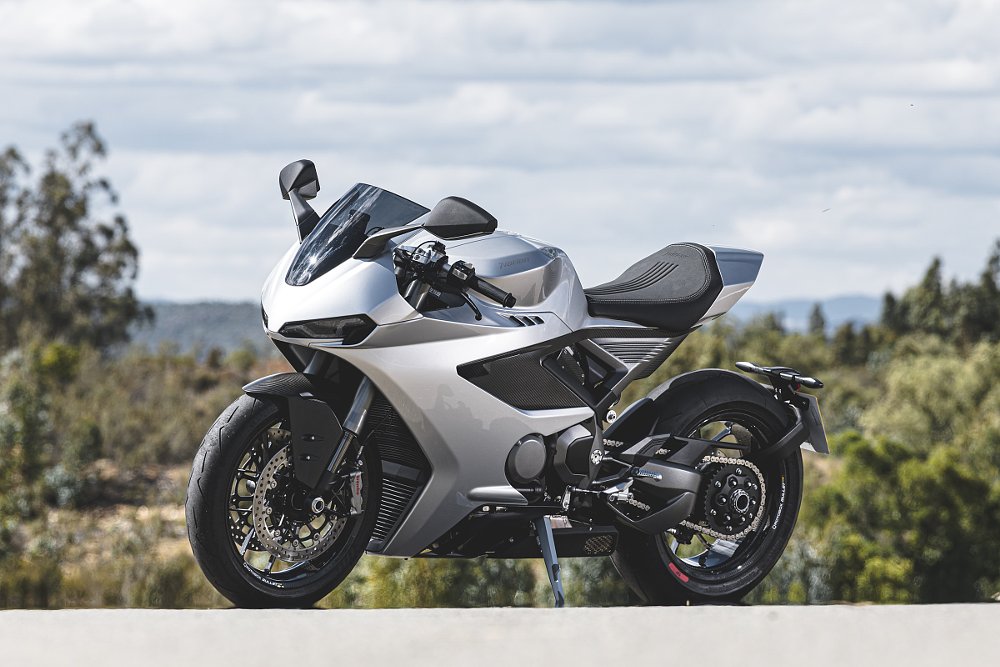
Norton then went through a bit of a scammy phase with various sketchy owners and big promises but never found its Triumph Renaissance until, maybe, now. TVS is the third-largest motorcycle manufacturer in the world and is part of a large Indian family conglomerate. And now, TVS is bringing back the Norton name with a premier, prestige, luxury, performance sport bike: the Manx R. You might then wonder, as I did, if the bikes are all new and without any connection to the legacy past, why would TVS release them as Nortons? Probably because the Thirukkurungudi Vengaram Sundram Manx R is a bit of a mouthful.
The new Norton
After overtaking Yamaha this year, TVS is currently the third largest motorcycle manufacturer in the world. Sourcing parts to build over six million motorcycles a year, its purchasing power is enormous. TVS already has distribution and supply chains set up in 90 countries worldwide and has staff on the ground working through the paperwork for the United States.
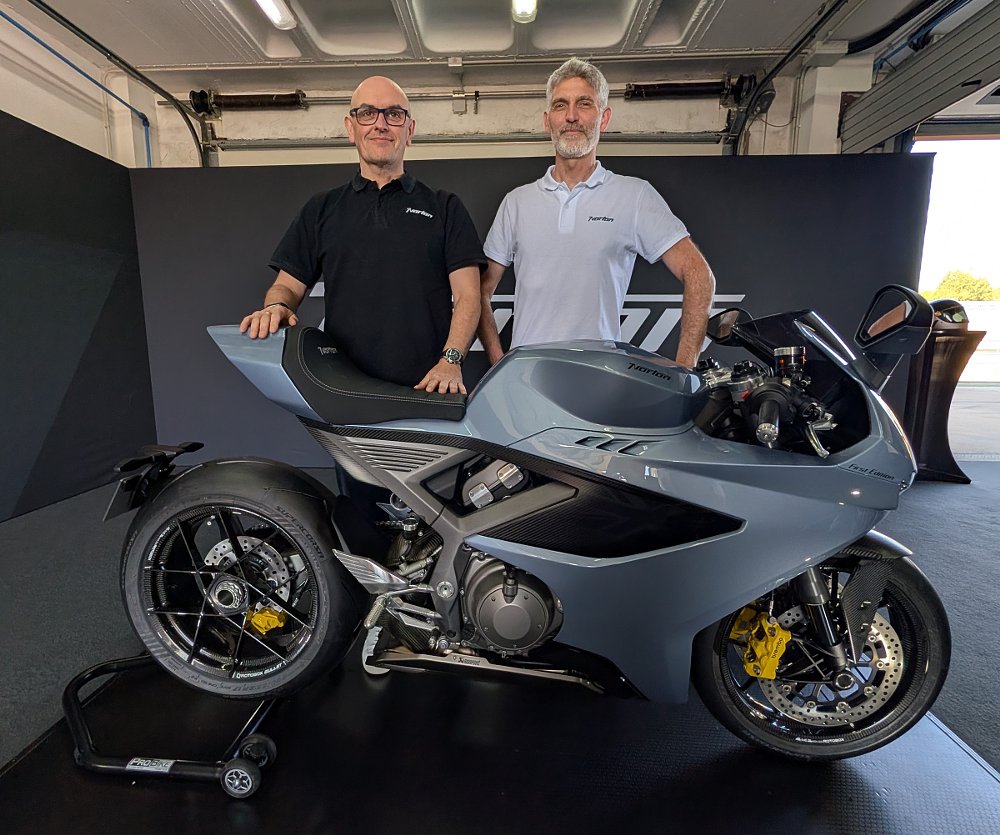
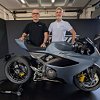
TVS is enormous and has massive amounts of capital and people to support the Norton project, but the bike is largely the brain child of Head of Design Simon Skinner and Chief Technology Officer Brian Gillen. Both of these guys are hardcore motorcycle enthusiasts, cross trained in both design and engineering, affable, very smart and, dare I say, fun.
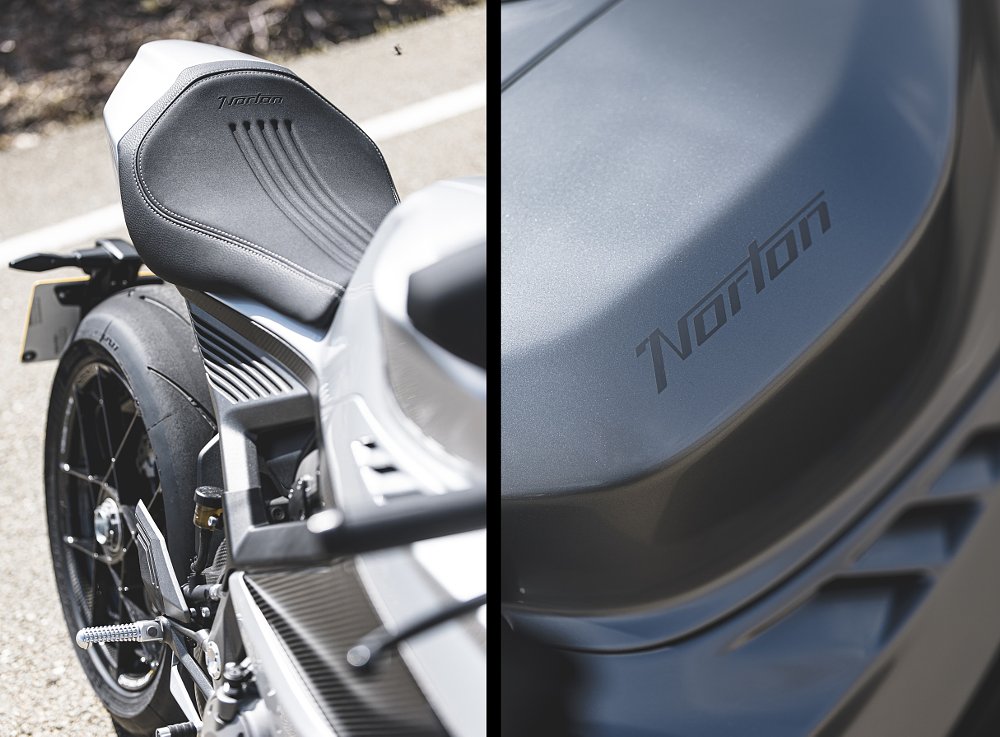
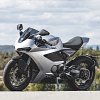
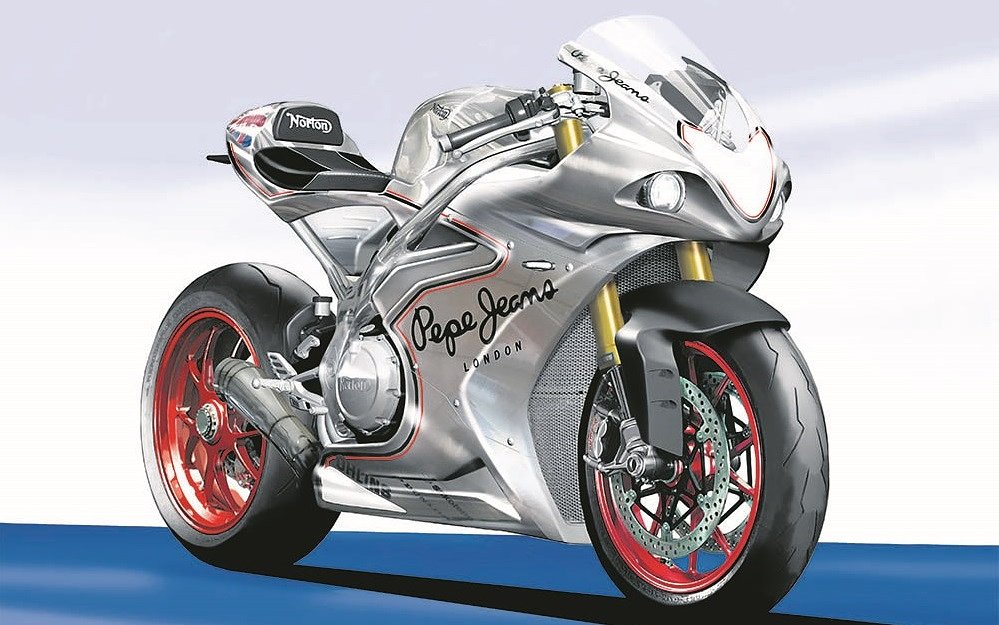
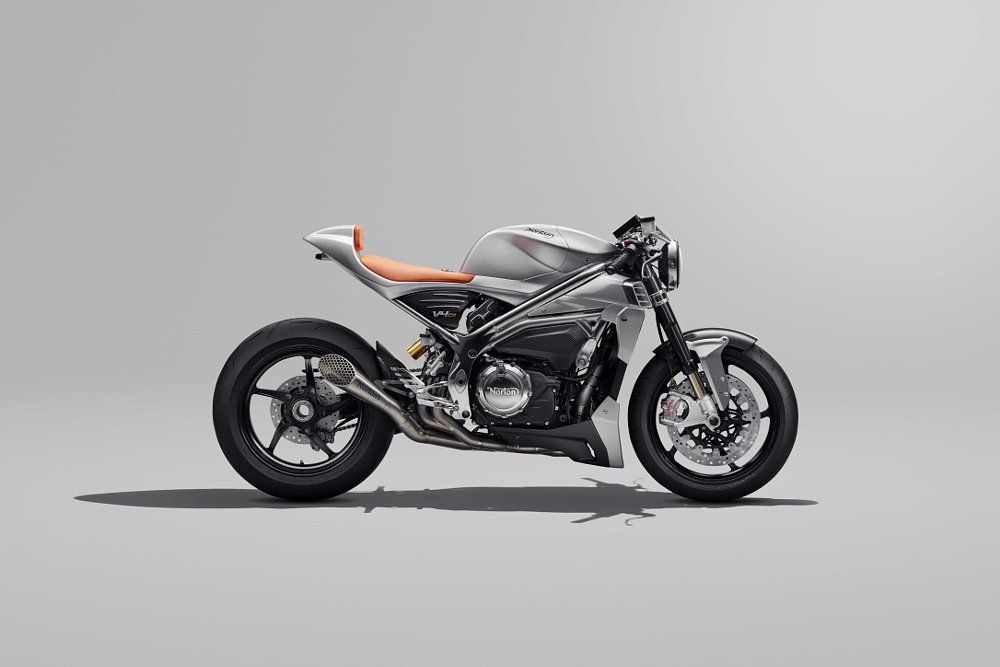
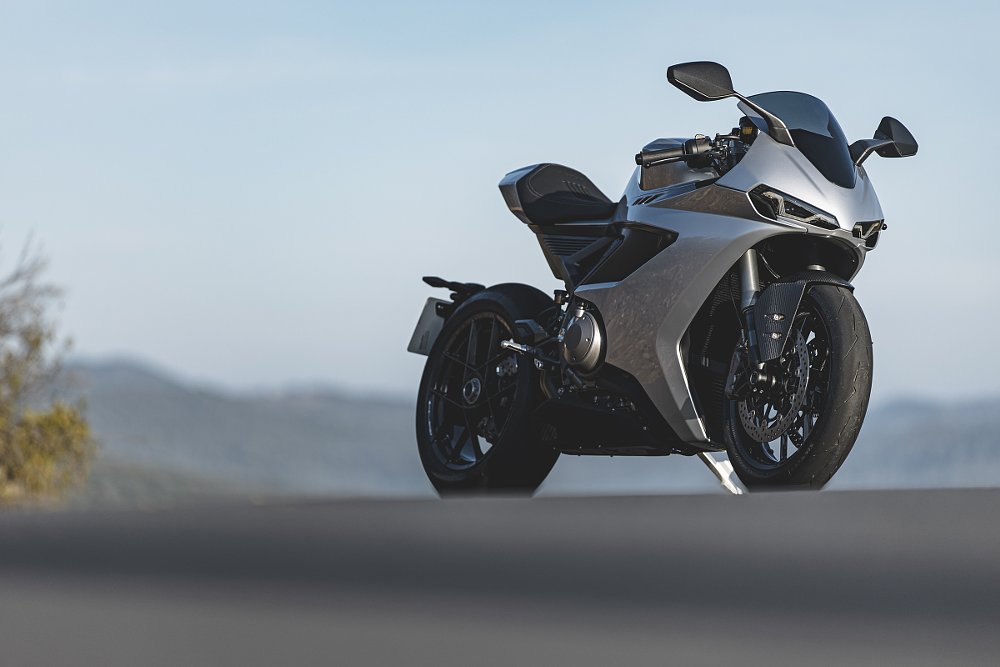
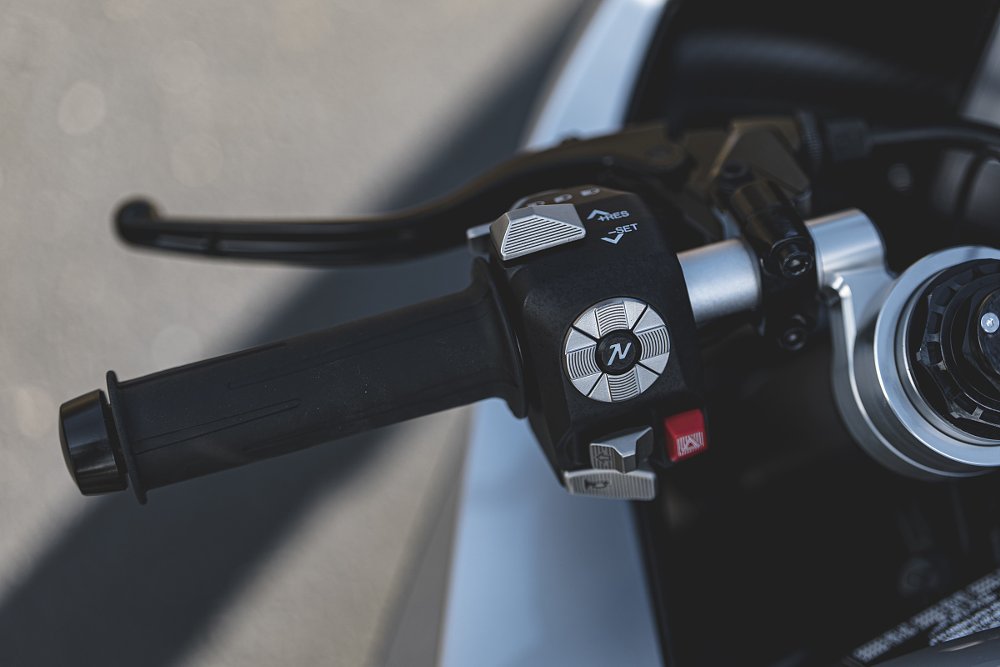
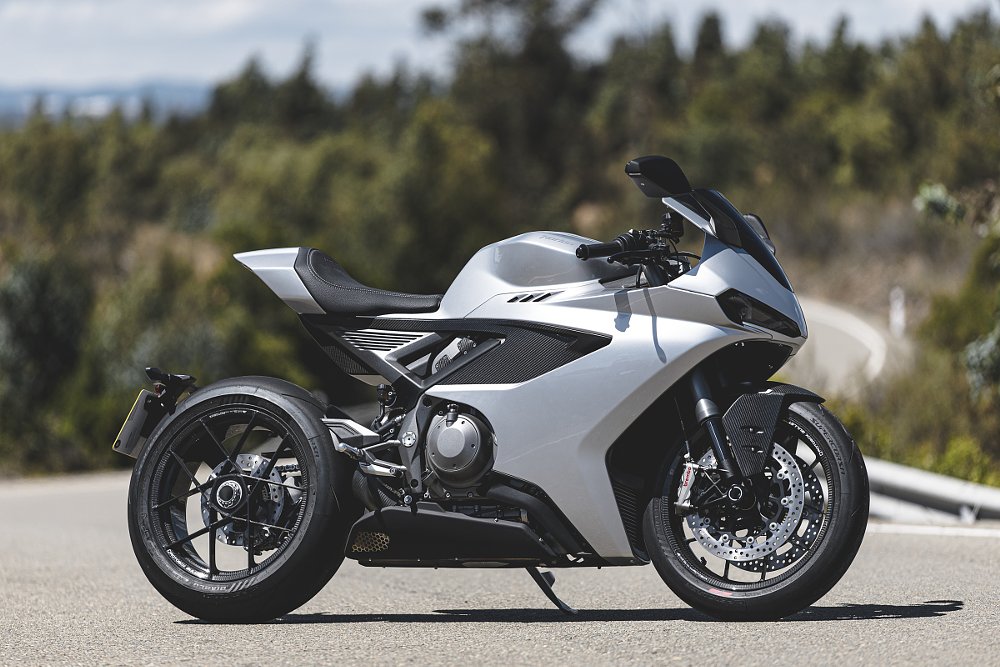
While the Norton engineering is spread across three geographies (England, "Motor Valley" Italy, and India), the goal was to produce a bike that is the "Bentley" of sport bikes: fast, very high quality, luxury, and with a bit of British understatement. So Skinner has created a design strategy with a common language for the new Nortons which features the key themes of Modern, Integrated, Dramatic, Connection. Skinner wanted good proportions with forward, flat, clean lines. He also included elegant details like nice feeling buttons (made of metal!) and theatrical daytime running light LEDs. Norton aimed to have paint quality that matches a Bentley with five layers of paint. The paint is so thick that they needed to accommodate the paint depth as part of the fit and finish of the bodywork which, aside from the front fender, has no visible fasteners!
And then there is Brian Gillen. Brian is an American who left his home and family motorcycle dealership in Buffalo, New York, to make his career and raise his family in Bologna, Italy. He was most recently head of engineering at MV Agusta. He is also a great rider, has a garage full of bikes, rides motocross with his sons and, when he was recruited by Norton, was given carte blanche to build the best bike he could. Or as he says: "It's a huge honor to be entrusted with the Norton brand."
Northern Italy, and particularly the Emilia Romagna "Motor Valley," is home to many premier motorcycle manufacturers, MotoGP teams, F1 teams, and all the suppliers that produce castings, suspension, brakes, electronics, etc. Brian (we're on a first-name basis) set up an engineering hub in Bologna that currently has 56 engineers.
While he was busy recruiting engineers, his team procured top models from Ducati, Aprilia, and BMW, and with a team of top riders on tracks and roads, logged a cumulative 218,000 kilometers (135,000 miles) of riding with data acquisition. They found that 99% of the time, the bikes were under 8,000 rpm. So he decided to build the Norton with the power stacked where riders ride.
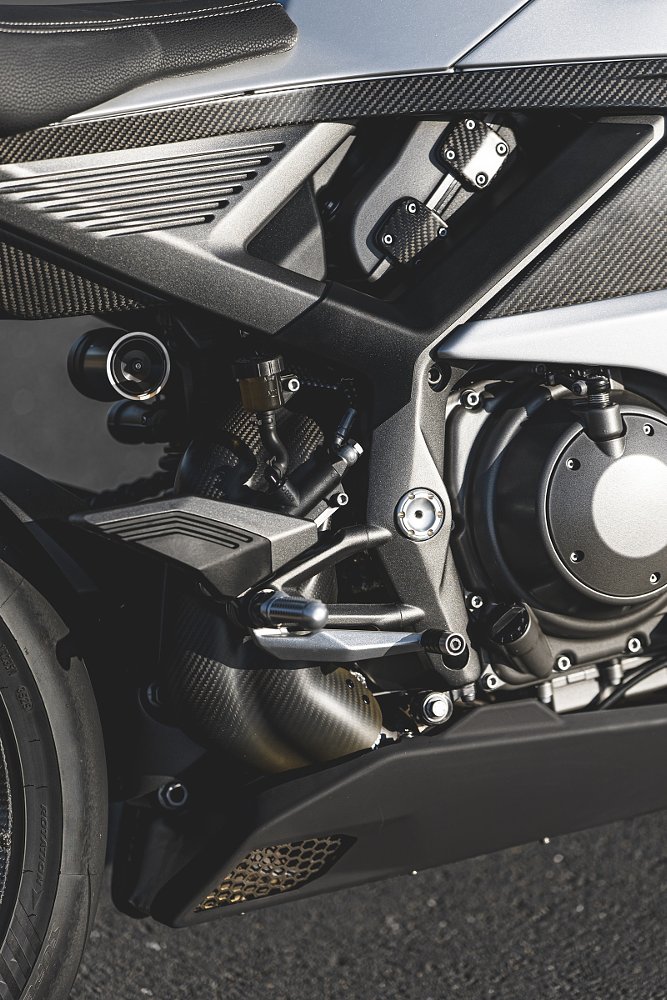
Brian's team used software to virtually build all sorts of engines, even modeling the intake and exhaust notes so they knew what it was going to sound like before they even made the first prototype parts. The result is a 72-degree, 1,200 cc V-four engine boasting 206 horsepower, delivering 55% of its available torque at 4,500 rpm, and with more mid-range power up to 11,000 rpm than the other premier European bikes.
And this V-four has all sorts of clever engineering. In the world of motorcycles we don't often talk about how much the crankshaft impacts the riding experience. Crankshafts are heavy and spin at high rpm, creating a massive gyro that the rider must fight in order to change direction, or even slow down. V-fours inherently have a narrower crankshaft than inline-fours, which means the rider has a denser gyroscope with less resistance to turning. Brian included a phased firing order to group some power pulses together and then a longer pause to allow the tire to recover grip. The crank design makes the bike easier to steer while also making life easier for the rear tire.
To keep the engine smooth, Brian's team incorporated a counter-rotating balancer shaft that cancels the vibration. Because the balance shaft is spinning backwards in relation to the crankshaft, it helps cancel the gyroscope of the crankshaft, which noticeably improves handling at high rpms. Brian previously ran world race teams, so he incorporated a cassette transmission, which means you can pull the gear clusters out of the side of the motor without dropping the engine or splitting the cases. And, because this 72-degree V is on the narrow side, the transmission shafts could be positioned high and tight, getting them out of the oil bath and thereby reducing power losses due to hydrostatic drag while allowing the engine to be more compact.
Also lifted straight from the race track is the split control of the throttle bodies on the V. Races are won and lost at the "first touch" of throttle at the apex of the turn where the rider has to go from off throttle to on throttle without upsetting the tire or chassis too much. Race engineers figured out that with electronic throttle valves, where the engine control unit is actually controlling the butterflies, they could avoid overwhelming the rear tire by only having two of the four butterflies open coming off the apex. Then the other cylinders kick in as the rider reduces lean angle. The Norton runs as a 600 cc twin at high lean angles and low throttle openings before seamlessly blending in the other cylinders. As a street bike, the Manx R also idles on only the front cylinders at traffic lights in order to reduce heat soaking the rider while waiting for the green.
Euro5+ emissions regulations are very strict on overall motorcycle noise, which measures decibels being produced from all over the bike, including the chain, gears, and even the rattle of fork springs. Brian's team spent long hours eliminating as much of the engine and suspension noise as possible, all so they could have a louder exhaust note!
But Brian didn't use his personal notebook of engineering dreams just on the engine. The frame has longitudinal stiffness comparable to any top sport bike (to handle braking at 1G or throttle-chopping wheelies), but the torsional stiffness is reduced so that the frame can absorb bumps when cranked over. And the attention to detail with the frame extends to the manufacturing process. The five castings are welded and then fixed (bolted down) within a single CNC machine, so all machining and tapping is done from a single fixture. That totally eliminates stacked tolerances during the manufacturing process—meaning, if one fixture is 0.1 millimeter off and the next is 0.1 millimeter off and the next is 0.1 millimeter off, then you might end up with clearances that are 0.3 millimeters off by the end of the machining. Could you tell? Maybe not — as I've turned faster lap times on race bikes after mid-race crash repairs — but you can flex on your buddies when you break out the tram gauge at bike night!
While that historical Gilera relied on friction dampers, for the last 50 years or so we've been riding around on springs and oil that gets smooshed through little passageways, or flexing cleverly stacked thin washers to force a piston (be it fork or shock) through oil. Good bikes have suspension with external adjusters to tune the damping, or you can tear down the suspension to change the springs and valving to try to achieve your desired result. And, just as that Gilera's supercharger was eventually outlawed by racing officials, electronic suspension is currently outlawed on race bikes.
But the Norton Manx R Signature is not a race bike, and so it is treated to Marzocchi Semi-Active Suspension with integrated potentiometers, and the aforementioned fork spring noise dampers. This system is also fitted to the Ducati Multistrada V4 and the high-end MV Agustas, and it actually uses predictive algorithms in an attempt to read the actual bumps you are hitting and react accordingly. The suspension has a dedicated computer reading data from the rest of the bike's CANBUS system, including the inertial monitoring unit, sampling the suspension action 1,000 times a second and then adjusting solenoid valves in less than five milliseconds. The bike can also adjust its own dive and squat! It uses data from the ECU and the IMU to differentiate between vehicle dynamics and road camber. This is a fork that lets the shock know a bump is coming. This is suspension that knows you're going into a wheelie, or knows the bike is pumping the rear wheel and damps it out, or knows you are braking hard, and hitting bumps.
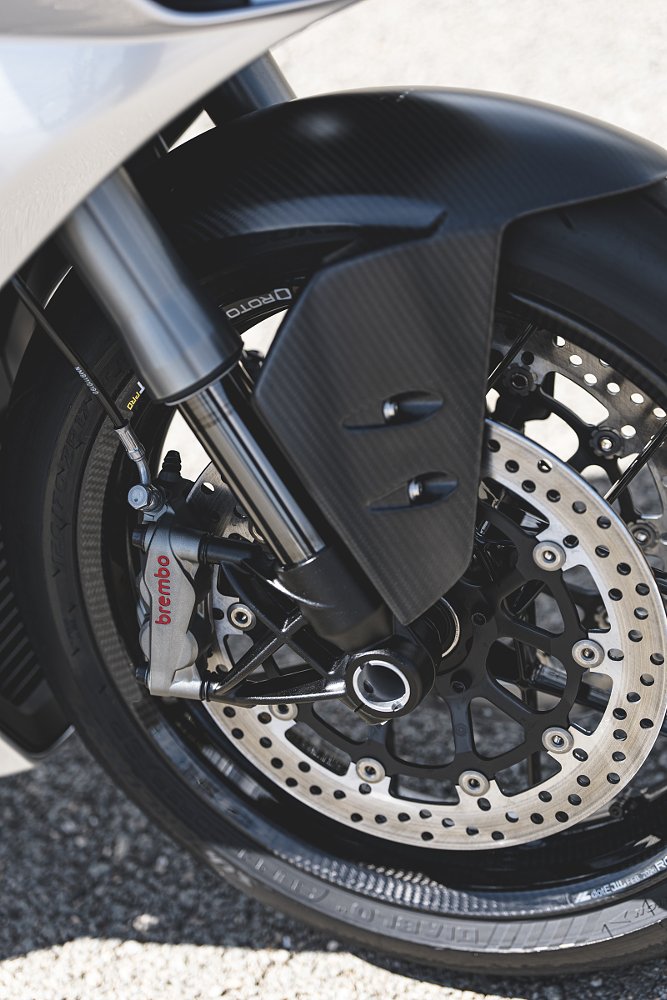
Brian also spent a lot of time on balancing the brake system between pure power and feel. The system incorporates top-of-the-line Brembo components with Hypure Calipers, 320 mm floating rotors, and a 245 mm rear rotor. In the experience of this rider, all ABS bikes lack a little feel compared to old-school direct brake lines. Although we didn't discuss it, Brian must have felt the same way as he spent a lot of time getting the brake lines (all "no flex" lines) to just the right diameter to give a linear feel from lever to axle. Combined with the longitudinal stiffness of the frame, Norton claims this allows the Manx to brake at 1G, 5% more than any other production sport bike.
Riding the Norton Manx V4
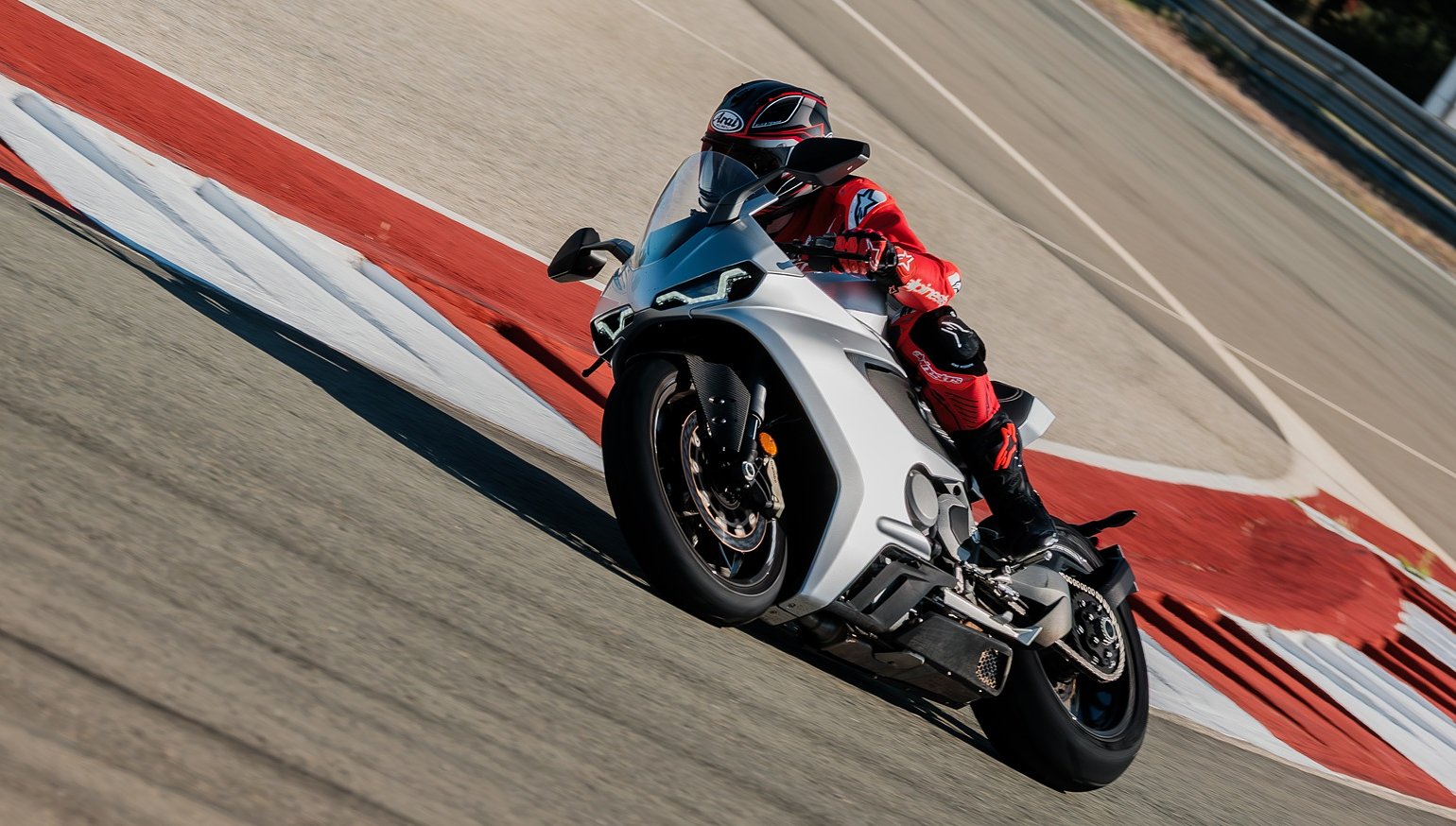
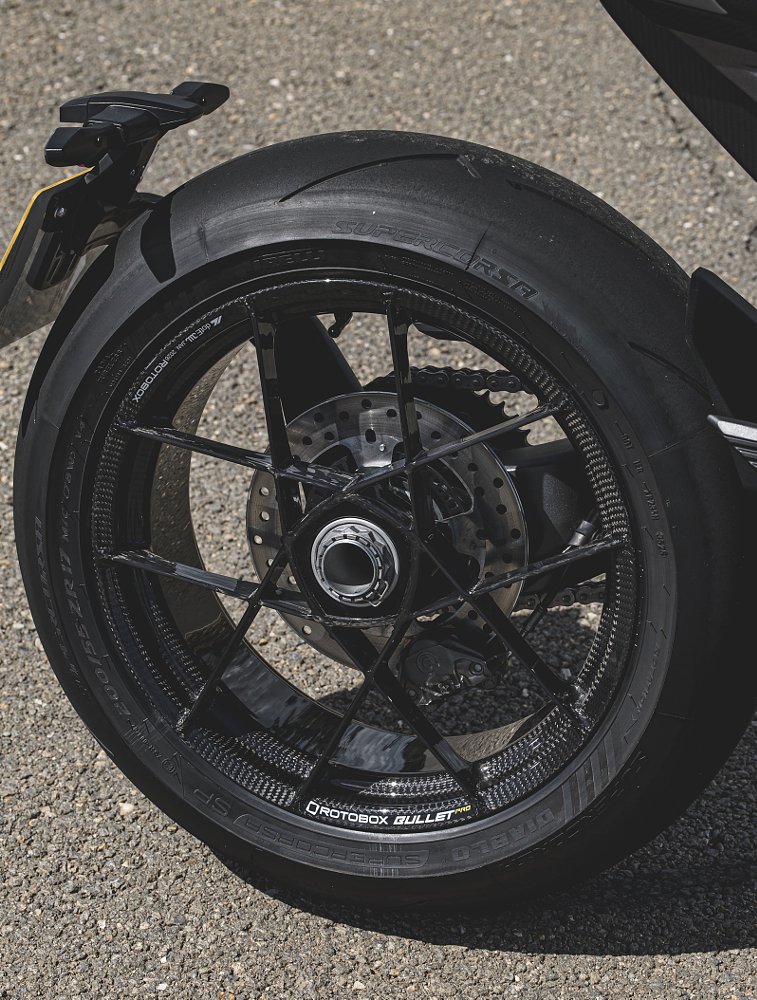
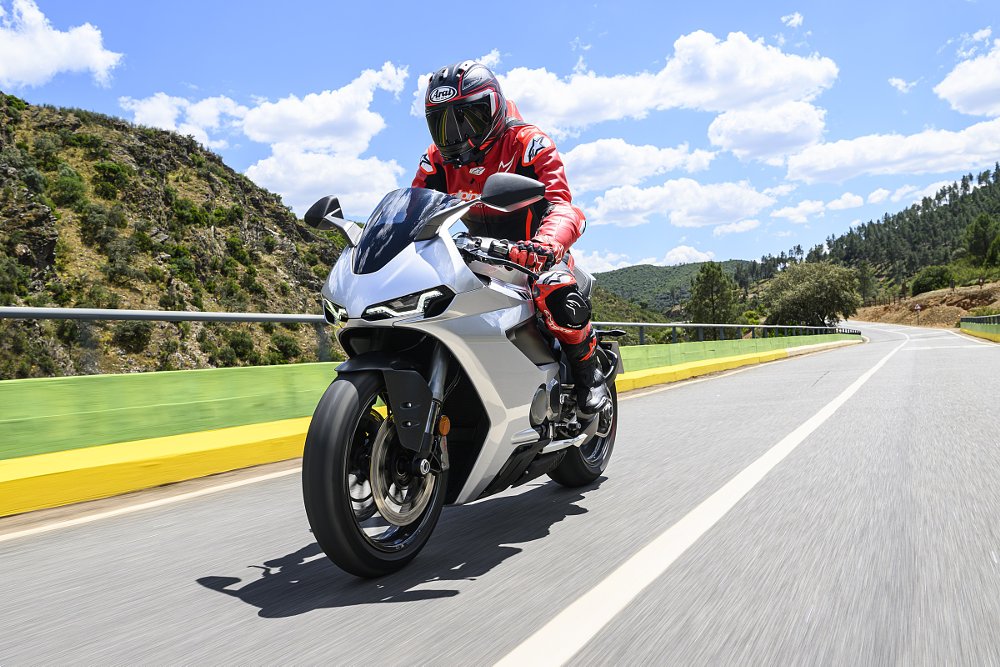
My first chance to ride the bike would be around the Circuito Monteblanco circuit in Seville, Spain. As part of Norton's "luxury ownership experience," I would actually be led around the track by a guide for two laps before having the entire circuit… to myself. This was novel. The Manx R Signature is fitted with Rotobox Bullet Pro Carbon Fiber wheels with Pirelli Diablo Supercorsa SP-V4 tires with a 120/70ZR17 front and a 200/55ZR17 rear and the morning was cold enough that my guide was wearing a down vest over his leathers.
The Manx R is designed to be a road bike that can stand on its own at a track day. As such, the riding ergonomics are sporty without being cramped for my five-foot, 10-inch frame. The seat is long enough to scoot back and tuck under the ample bubble. The Manx R has five riding modes: Rain, Road, Sport, and two Track modes. I ended up riding in Track mode both on the track and on the street as well because, when in Track mode, there is a single button on the left handlebar for each major setting, such as power response, wheelie control, suspension settings, and ABS, and another up and down button for traction control. I very much liked how easy it was to toggle through the power modes or suspension settings.
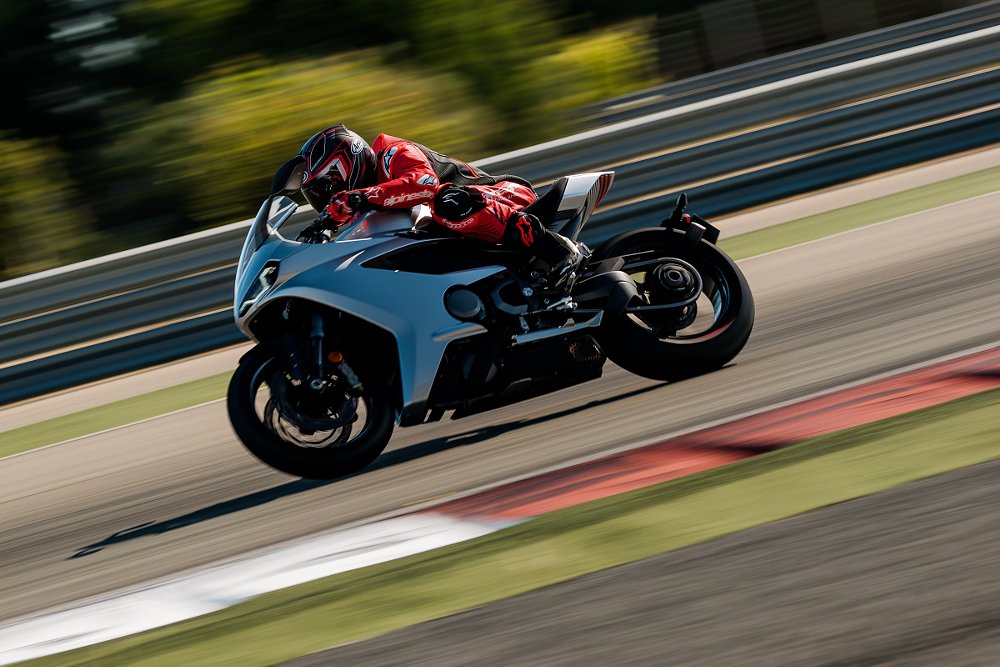
But my first corner, first turn, warm up lap riding impression was: The bike steers slow. Like, it felt like the front tire was underinflated slow. I was mortified because I couldn't believe that Brian would get the geometry wrong. But then my guide waved me by on the front straight and I started to string together some laps and the lazy steering disappeared, replaced by rock-solid stability, even over bumps, even at lean. About halfway through my session, I realized that Brian (we're still on a first-name basis) had put high stability geometry into the chassis (24.1 degrees of rake, 3.72 inches of trail) to make the bike rock solid at high speeds (with the steering damper at its lowest setting), and let the low polar moment of his engine and the carbon wheels allow the bike to turn. In other words, it is a quick-steering engine, not a quick-steering head angle.
The electronics are very refined. The clutchless up and downshifts all were perfect, the transmission was smooth, the aluminum knurled pegs had ample bite for my boots, and I was knee down on my sixth turn so it is certainly sporty enough. The phased pulse traction and the split throttle bodies gave massive confidence to roll on the throttle early in the turn.
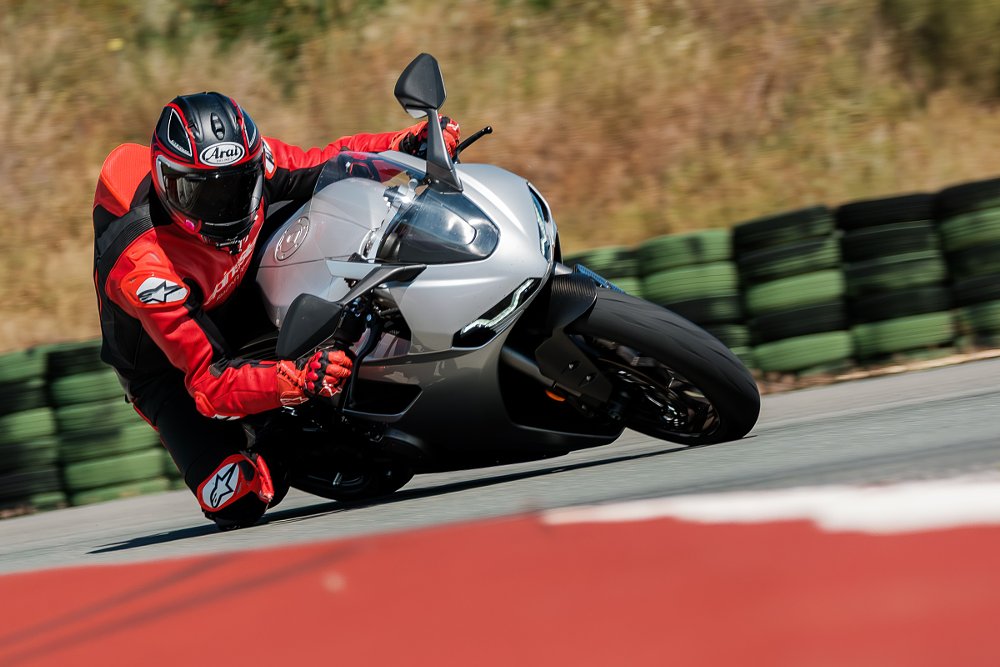
As a rule I don't like using first gear on race tracks so I was rolling a lot of the slower turns in second. The big 1,200 would pull the bike out of them but it felt a little lazy. Brian recommended using first instead, and the bike felt much better all spun up, getting it properly into the engine braking map as well as the exit power. But I did, of course, hit neutral a few times.
Starting with first onto the front straight and running up through the gears rewarded me with 258 kph, or 160 mph, at the brake marker. Turn one is a first-gear double-apex turn and my neck muscles were straining to keep my head up with the prodigious braking power of the Brembos. Once I was down in first gear, I found that using the medium power setting made it easier to hold steady throttle around the turns and, of course, the Norton's accessible buttons made it easy to toggle to the slightly softer power setting. The track has an uphill cresting turn where I could reliably park the Norton on the wheelie control. The Manx also has a rear brake slide control to assist with backing the bike into turns but, with the limited time I had on the bike, I don't think I was using that feature to good effect.
Most bikes have stock gearing that is a bit tall for racetracks if you want to stay out of first gear. Dropping a tooth off the front of the Manx R would have put me back into using second for the tight stuff, and all the electronics will automatically recalibrate after the gearing change. You can even flip the shift lever to run track shift where up is a downshift and down is an upshift.
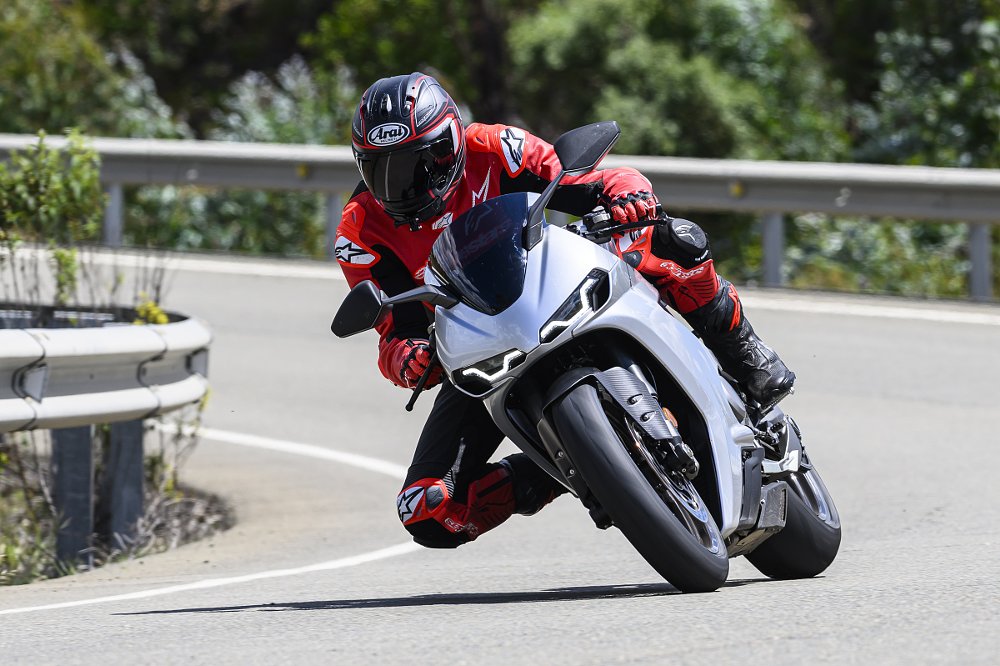
After our laps on the track, our road ride was a bonkers fast tour of the Spanish countryside with undulations, seams, the occasional dirt patch, and a lot of olive trees. I had switched the suspension from Race mode into Road mode and, either because the pace was so hot or because the suspension moved a bit more, I never noticed that slow-steering feeling I had on my out lap on the track. The pace was so spirited on the road ride that my main concern was not knowing what was over a rise or not being able to see cross traffic, but the bike itself didn't misbehave once. And, very noticeably, I wasn't nearly as uncomfortable as I had expected, based on the sporty ergonomics.
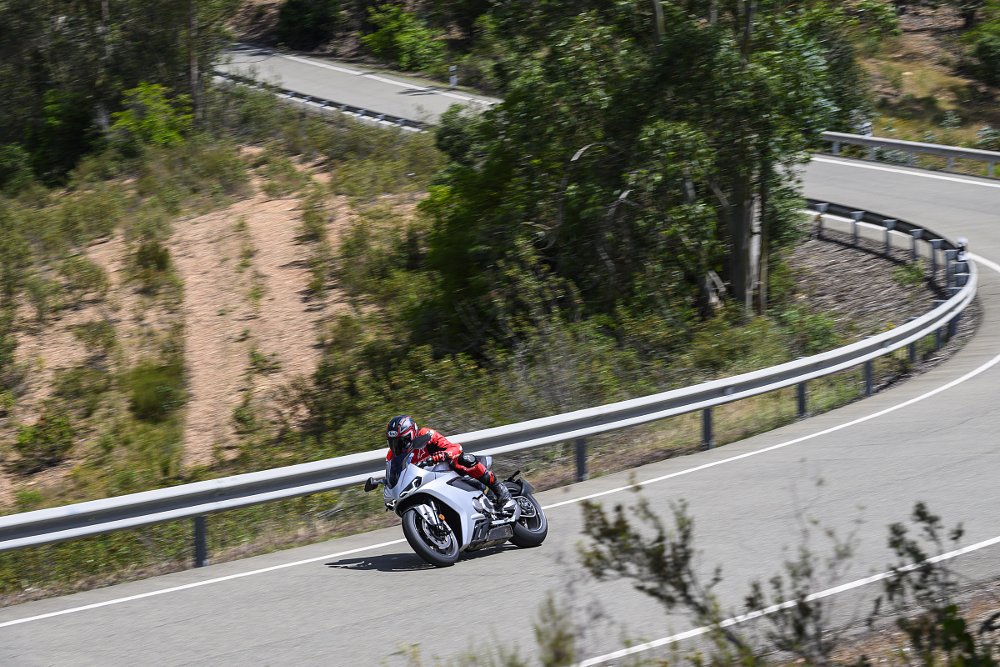
I had only packed race leathers so I was wearing a lot of gear, plus it was a warm day, but over the three-hour ride the counterbalanced engine meant that my hands never went numb, my knees never locked up, and I was shifting my weight back and forth to make the turns, not because my butt was uncomfortable. And the ruts and bumps that I feared would send stingers into my back… didn't. It was all very civilized, refined even, for a 206-horsepower pavement-rippling V-four.
So what's all this going to cost me?
The Manx R is available, in other countries, in four trims. We were riding the Manx R Signature, with carbon-fiber wheels and bodywork and available in no fewer than six color options, which lists in the European Union for €43,750, so easily topping $50,000. Bentley indeed. The base Manx R comes with the same drivetrain and electronics but without the semi-active suspension, rolls on cast aluminum wheels, and weighs 15 pounds more, but knocks more than €20,000 off the price. Between those two is the Apex, with some component upgrades from the base Manx R, and at the top of the line is the Manx R First Edition, with some additional appearance changes and special paint options. Pricing on the First Edition has not yet been announced.
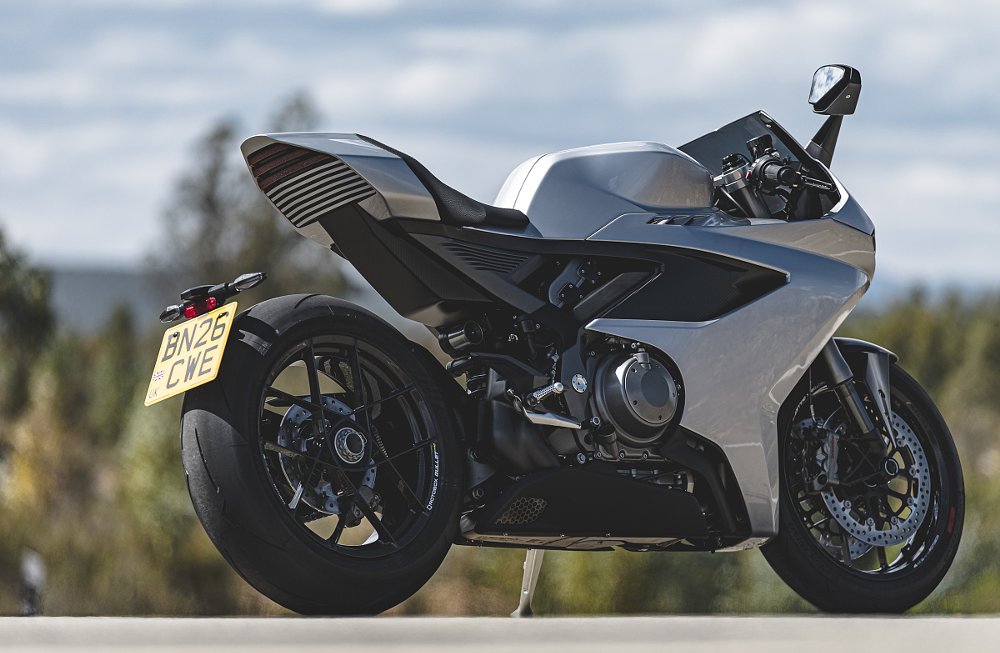
Of course none of these are inexpensive. But Norton is being reintroduced to the world and its new ownership clearly wants to establish the brand as a premium product with class-matching engineering. The Manx R Signature is a halo bike designed to cast a beautiful glowing light on the rest of the bikes to follow.
The Nortons are not available yet in the United States. Norton has established a U.S. company that is still running the gauntlet of federal and state regulations to be able to import the new models. So you should be able to buy a Norton in the United States in the foreseeable future, assuming the Strait of Hormuz, the modern world's Suez canal, reopens so the price of oil and fertilizer doesn't skyrocket interest rates and crash the world economy.
| 2026 Norton Manx R Signature | |
|---|---|
| Price (MSRP) |
TBA in U.S. €43,750 in Europe |
| Engine | 1,200 cc, liquid-cooled, 16-valve, V-four |
|
Transmission, final drive |
Six-speed, chain |
| Claimed horsepower | 206 @ 11,500 rpm |
| Claimed torque | 96 foot-pounds (130 Newton-meters) at 9,000 rpm |
| Frame | Aluminum |
| Front suspension | Marzocchi semi-active electronically controlled 45 mm inverted fork with four riding modes; 4.7 inches (120 millimeters) of travel |
| Rear suspension | Marzocchi semi-active electronically controlled shock with four riding modes; 5.0 inches (126 millimeters) of travel |
| Front brake | Brembo Hypure four-piston calipers, dual 320 mm discs with cornering ABS |
| Rear brake | Two-piston caliper, 245 mm disc with cornering ABS |
| Rake, trail | 24.1 degrees, 3.72 inches (94.5 millimeters) |
| Wheelbase | 56.5 inches (1,435 millimeters) |
| Seat height | 33.1 inches (840 millimeters) |
| Fuel capacity | 3.8 gallons |
| Tires | Pirelli Diablo Supercorsa SP-VR, 12/70ZR17 front, 200/55ZR17 rear |
| Claimed weight | 448 pounds wet, no fuel |
| Available | TBA |
| Warranty | 36 months |
| More info | nortonmotorcycles.com |