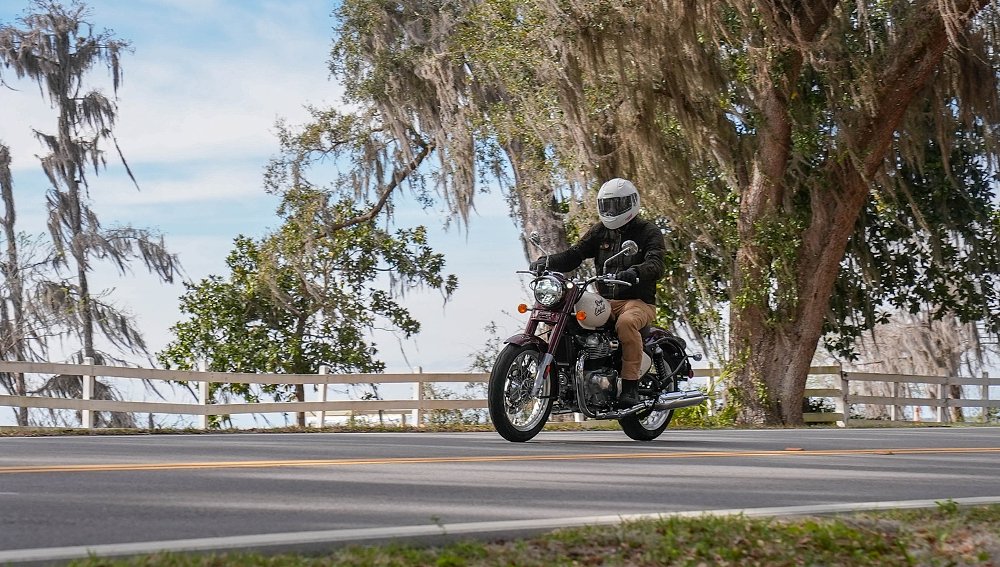
Royal Enfield, the oldest motorcycle manufacturer in continuous production, decided it would be appropriate to show off its new Classic 650, a motorcycle that's a rolling tribute to the company's past, in St. Augustine, Florida, the oldest continuously inhabited European settlement in what is now the United States.
Amid the deep history of the town, Royal Enfield added its own story for a few days, bringing in some of the most important models from its 125-year run of building motorcycles and setting them on the grounds of some of the most famed architecture of the town. Motorcycles dating back to 1901 adorning the lawns of the city dating back to 1565.
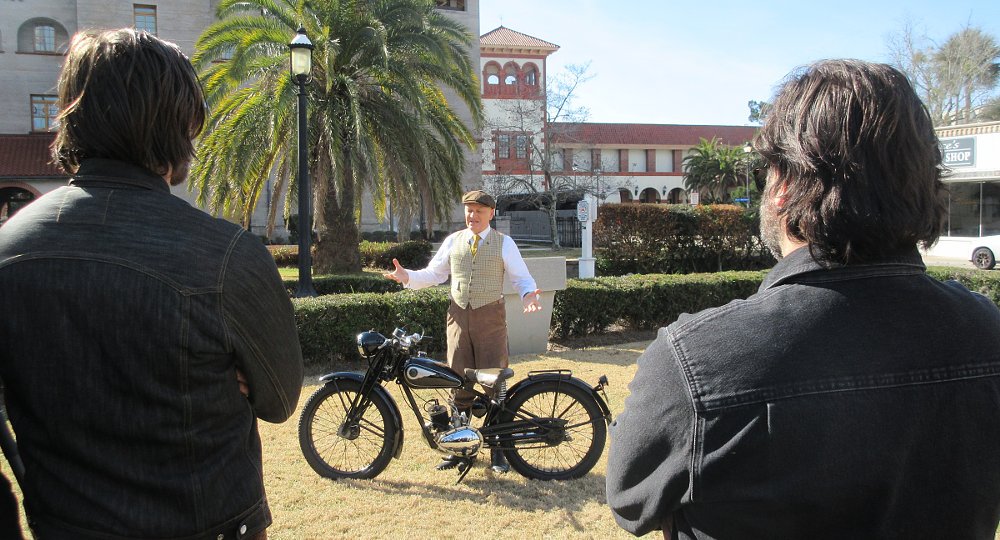
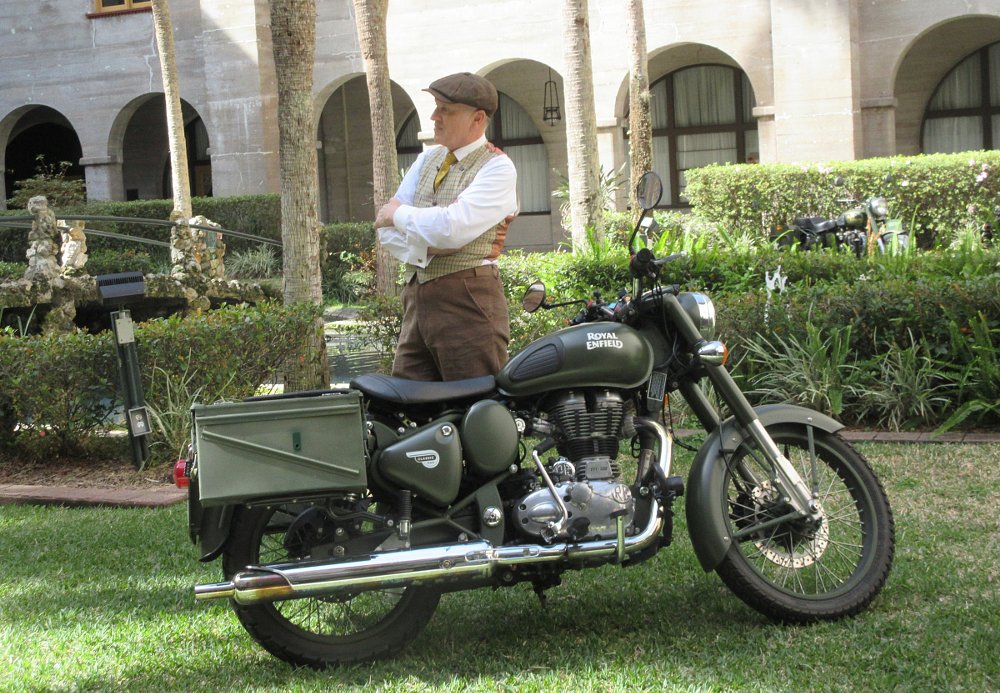
Royal Enfield historian Gordon May gave a quick tour through the company's history, and while this sample just barely hits the highlights, the photos below provide a look at Royal Enfield's past and present.
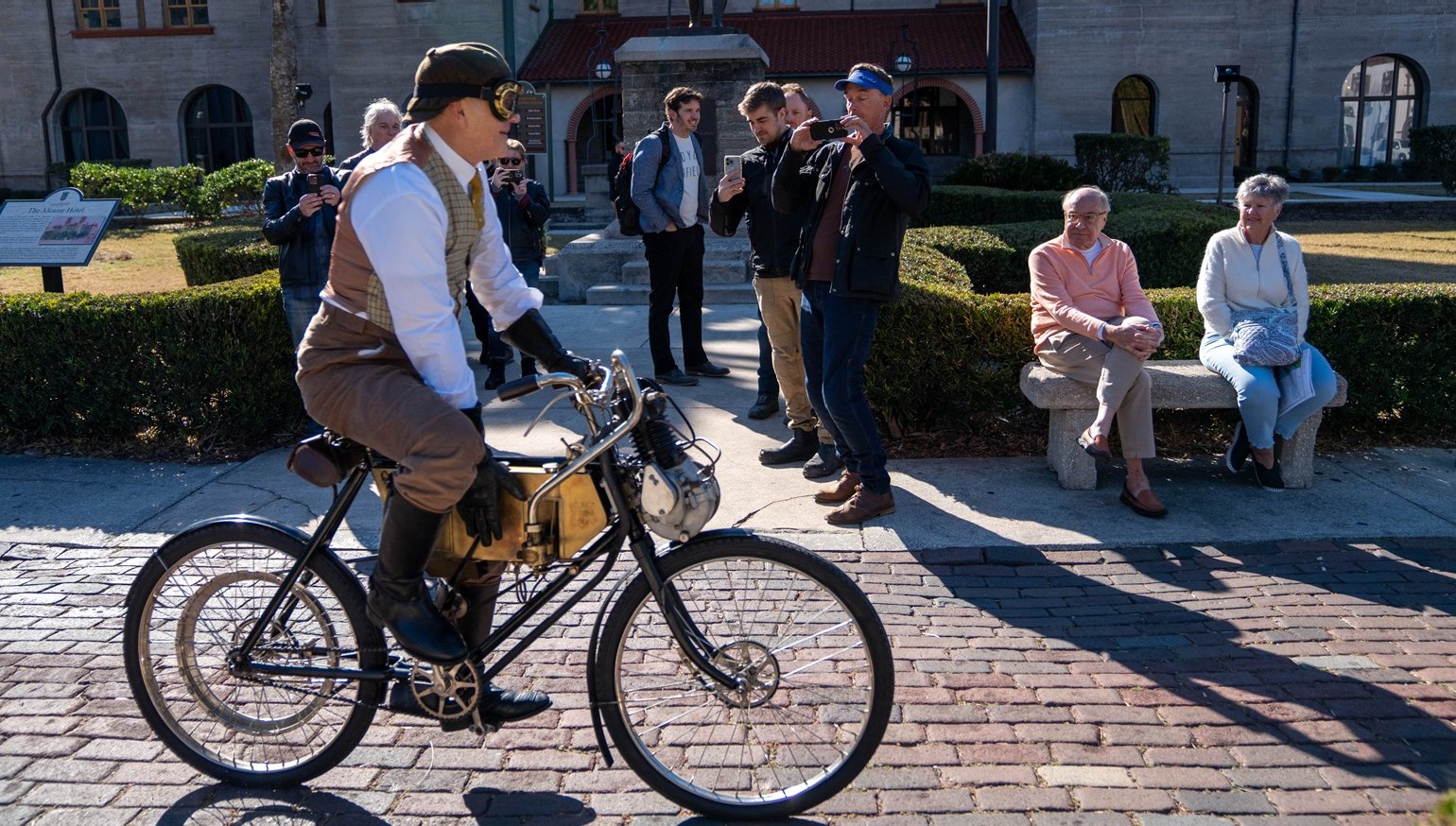
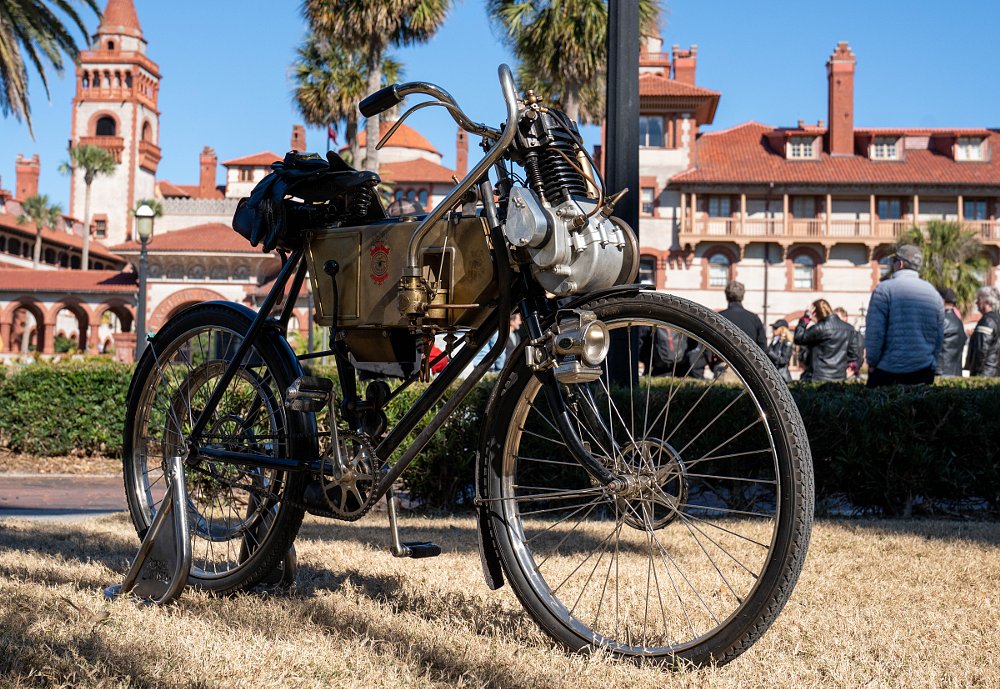
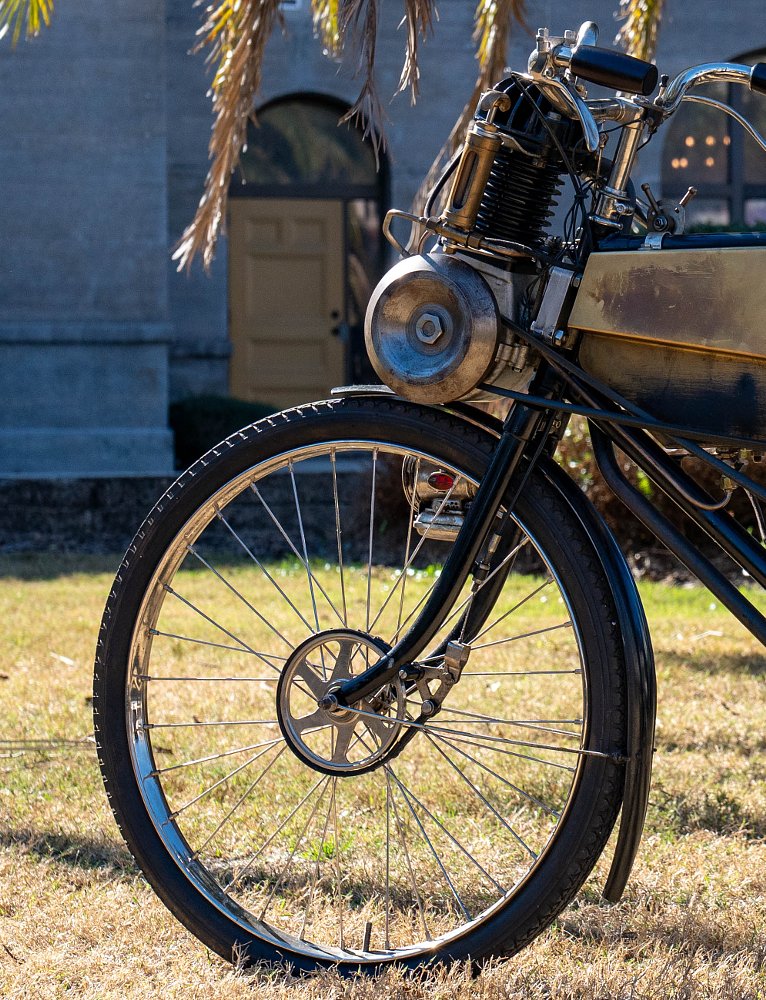
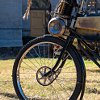
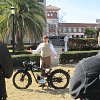
Originally based in Redditch, England, Royal Enfield was building bicycles and producing parts for guns in the late 1800s. The company actually built a motor-driven four-wheel "quadricycle" before it ever built a motorized bicycle. The first powered two-wheeler was produced in 1901, so the company today is the oldest motorcycle manufacturer in continuous production. No examples of the 1901 model are known to exist, but in 2020, based on photos alone, since no other records existed, the company built this fully working replica, which has been displayed at events around the world. A single-cylinder engine, mounted in front of the handlebar, sent power to the rear wheel by a long, thin belt. Photo by Royal Enfield.
Gordon May has ridden demonstration laps on the 1901 replica on race tracks and streets on multiple continents. Its operation is mind-bending for a modern rider. There's no clutch or throttle, so the rider slows for a turn by cutting the engine power. The weight of the 1.75-horsepower single-cylinder engine, perched in front of the handlebar, makes for interesting handling. And if you think drum brakes are old technology, look at the band brake on this bike. Stopping is more of a vague notion than a command fulfilled. Royal Enfield photo.
Royal Enfield built the Flying Flea for use by paratroopers in World War II. Soldiers could jump out of a plane with one of these small, two-stroke-powered motorcycles and have running transportation less than one minute after touching down. The Flea weighed just 121 pounds, so a soldier could pick it up and carry it if needed. Today, Royal Enfield is reviving the Flying Flea name for its forthcoming electric motorcycles. Photo by Lance Oliver.
Easily the most important model in Royal Enfield's history is the Bullet, introduced in 1932 and built in multiple displacement categories for decades to come. It introduced features such as a swingarm rear suspension and foot shift that are the norm today. In India, the army bought thousands of them and civilians considered it the king of the road. Photo by Lance Oliver.
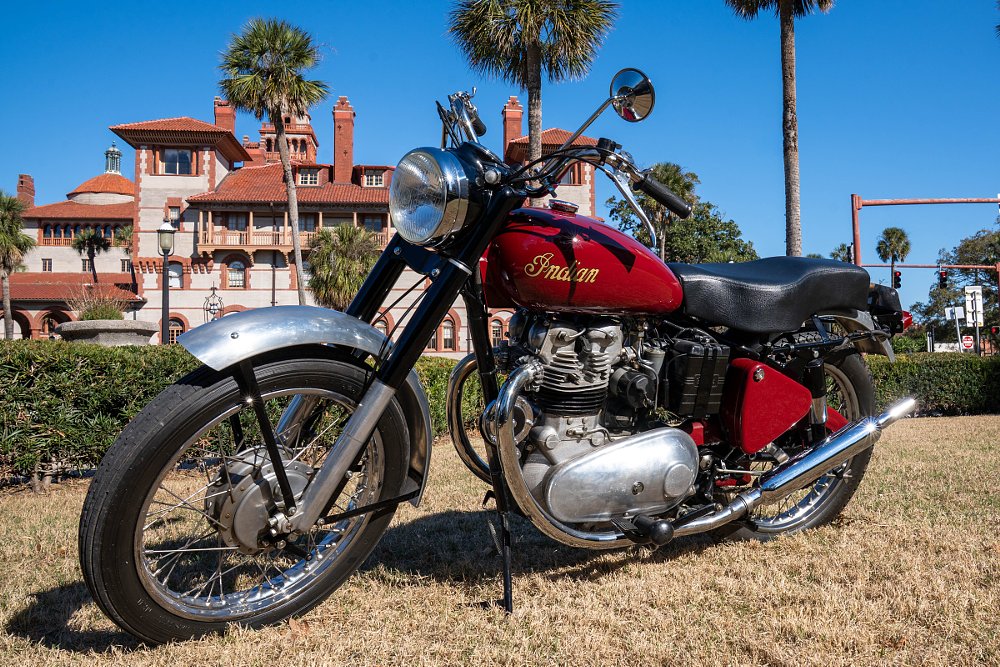
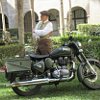
In 1955, Royal Enfield partnered with Madras Motors in India and a new plant was built and began producing motorcycles the following year. At first, the factory in India just assembled knock-down kits sent from the UK, but gradually the India operation began producing more of its own parts and expanded. When Indian Motocycle in the United States stopped production, some Royal Enfield models were rebadged as Indians and sold in the U.S. market, like the one above. As May noted, that meant that "In 1955, Indians were building Royal Enfields and Royal Enfield was building Indians." By 1970, production stopped in England but continued in India, and by the late 1970s, Royal Enfields built in India were being exported back to the UK. Royal Enfield photo.
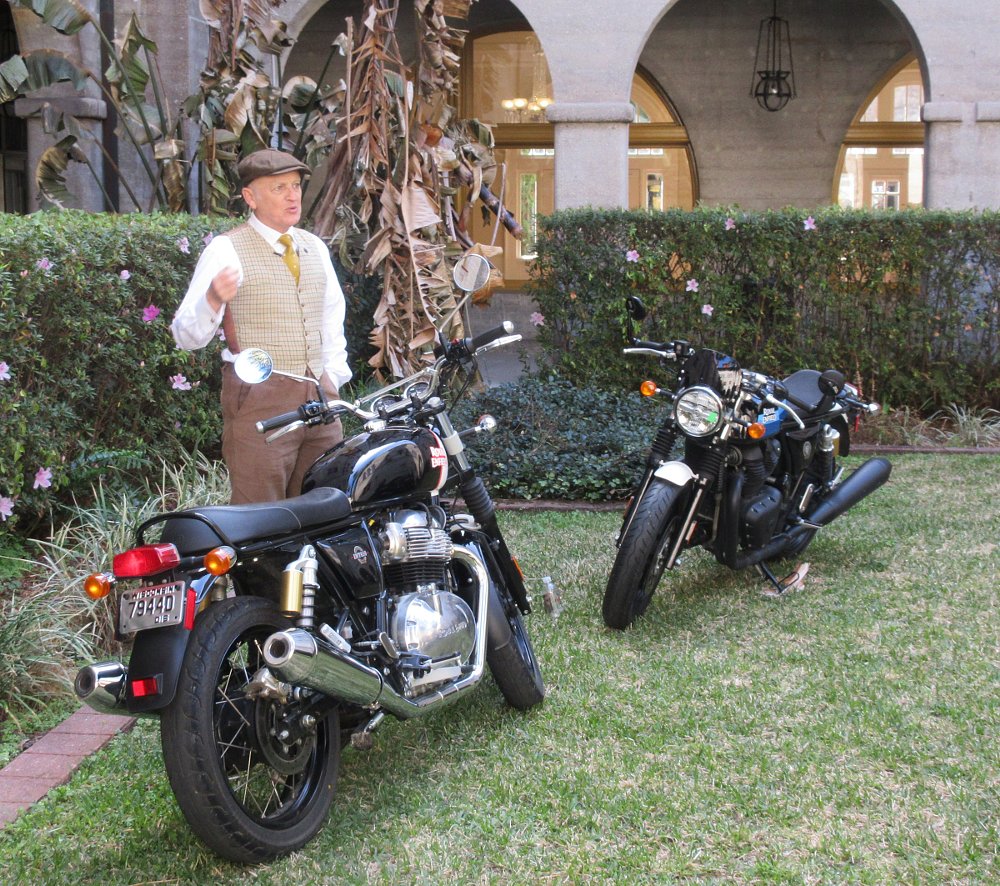
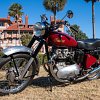
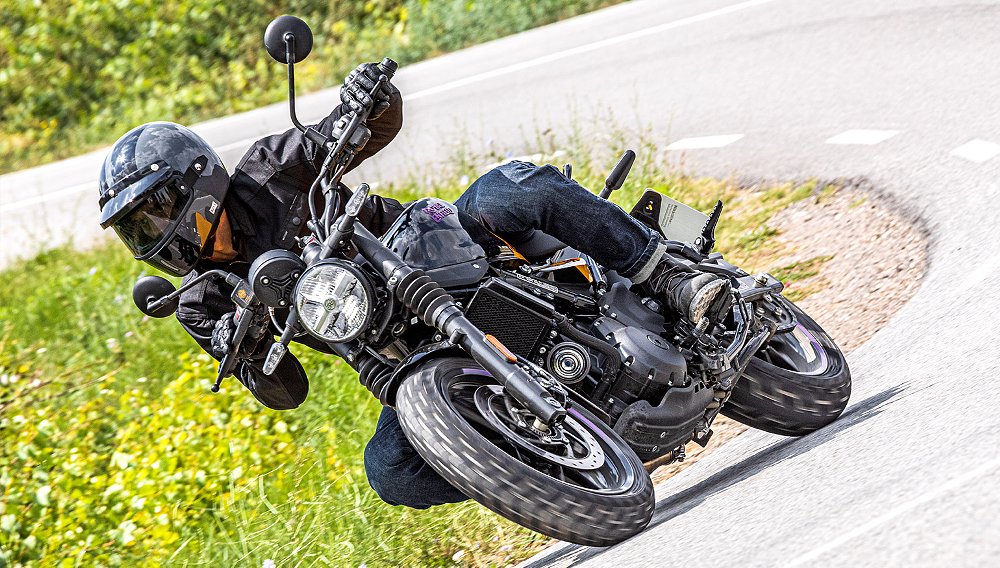
Some 75 years after Royal Enfield began building the Bullet, it was overdue for a more modern engine. That arrived in 2008 in the form of the Unit Construction Engine (UCE). The Eicher Group, which acquired Royal Enfield in 1994, has put the focus on building middle-displacement models and, more recently, has expanded aggressively into the U.S. market. The twin-cylinder, 648 cc UCE engine first seen in the U.S. market in the Continental GT and Interceptor, shown above, was key to the growth strategy in North America. Now, the line continues to expand, most recently with the Classic 650. Photo by Lance Oliver.
By purchasing and enrolling in Riders Preferred Membership, you agree to the
Program Terms and Conditions.
*Some exclusions apply: 10% RPM discount applies on full price and sale price Exclusive Brands.
10% RPM discount applies on additional select brands at full price.
Exclusions apply.
RPM free 2-day shipping applies on qualifying items, contiguous U.S. only.
Not available for AK, HI, or U.S. Territories.
View shipping policies.
RPM free returns apply on qualifying items and are processed on standard return timeline, contiguous U.S. only.
View return policy.

 Shop by Vehicle
 Track Order
 Contact Us