Shop by Vehicle
 Track Order
 Contact Us
If you ask me, Grand Prix motorcycles have only been getting uglier in the past 25 years. I love the sleek and simple lines of the late-90s 500 cc era, but when a modern MotoGP bike goes by I feel like I don’t know whether to cover my ears or my eyes.
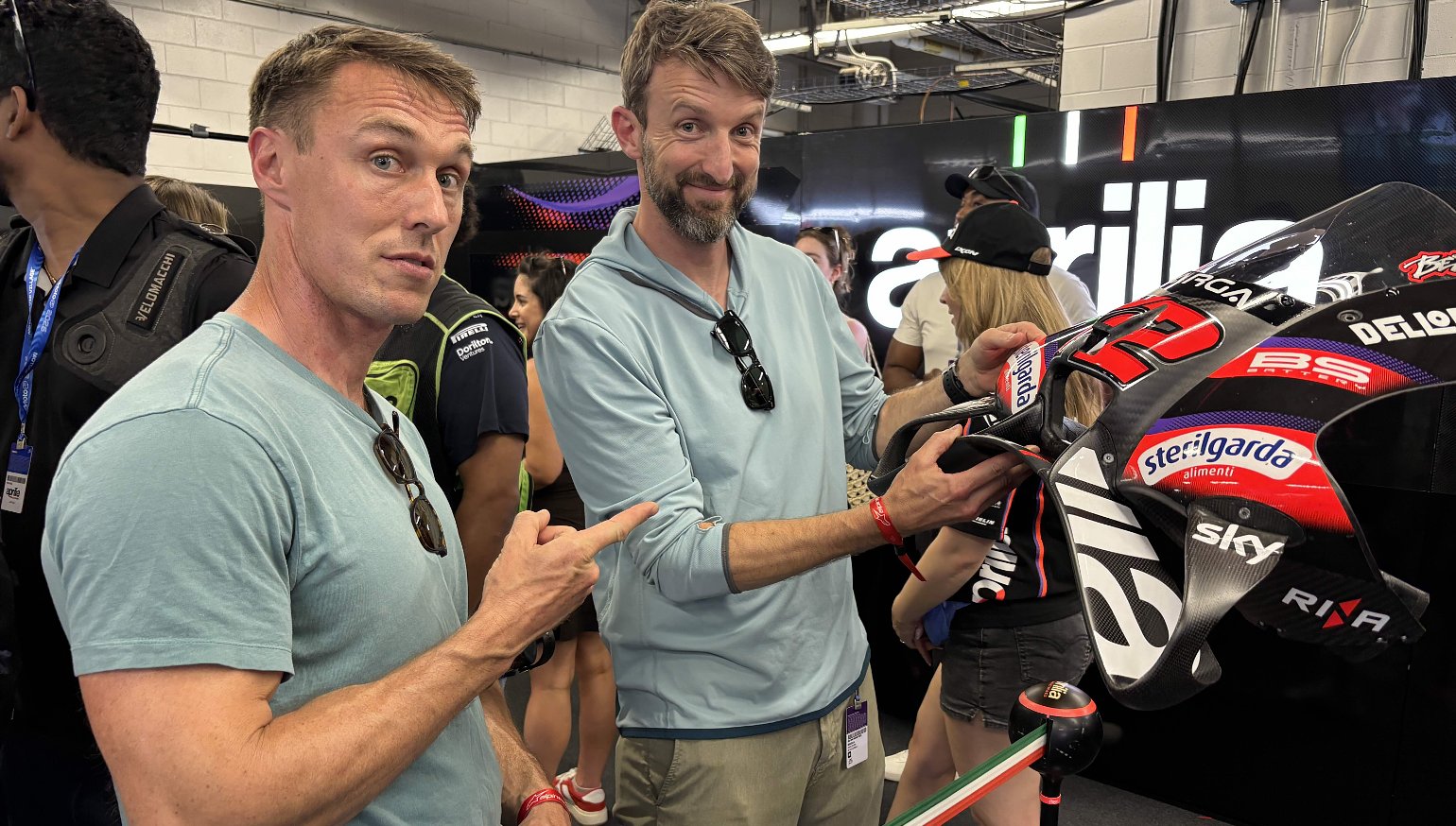
A few of us from the Common Tread team were fortunate enough to attend the only MotoGP race weekend in the U.S. of A. at the end of March (formally, the Red Bull Grand Prix of the Americas at the Circuit of the Americas in Austin, Texas) and I have to say that seeing the bikes in person, as opposed to on a screen, offers a less binary perspective.
In the flesh and very loud
As most race fans know, some of the rules for MotoGP motorcycles are set to change for the 2027 season — among other things, engines will shrink from 1,000 cc to 850 cc, ride-height and holeshot devices will be banned, and aerodynamic bodywork will be trimmed. To put it another way, this year is the last chance for manufacturers to capitalize on nearly 15 years of development of 1,000 cc engines and technology regulations. For us enthusiasts, 2026 is one last chance to see these beasts in their current state.
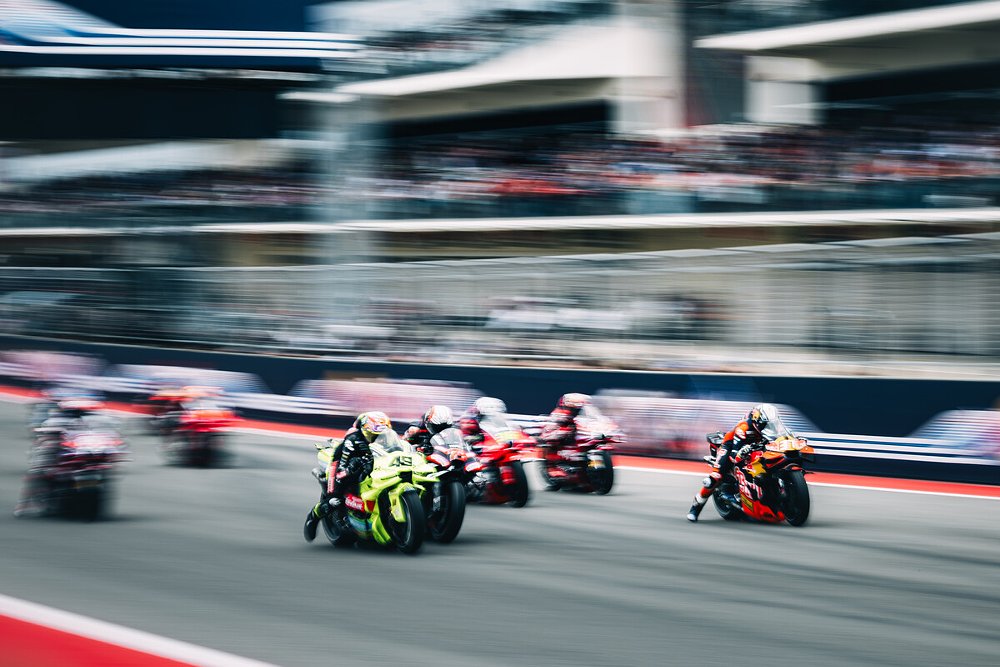
To say that the motorcycles of MotoGP feel special in the flesh is kind of obvious. GP bikes have always been special. The machines of 2026 offer a similar vibe to yesteryear’s grand prix races — the bikes are horrendously loud, and by and large painted brightly. There’s also a similar mystique and secrecy shrouding the equipment. Every team is painting within the same lines, and at the same time careful with what they show to the public.
Seeing the bikes flash down the front straightaway at COTA and slam on the brakes going up the steep hill into Turn 1 and then disappear down into Turn 2, I was reminded that GP machines of this era are unique in the way they move. They stop, turn, and accelerate so fast that it seems unnatural at first.
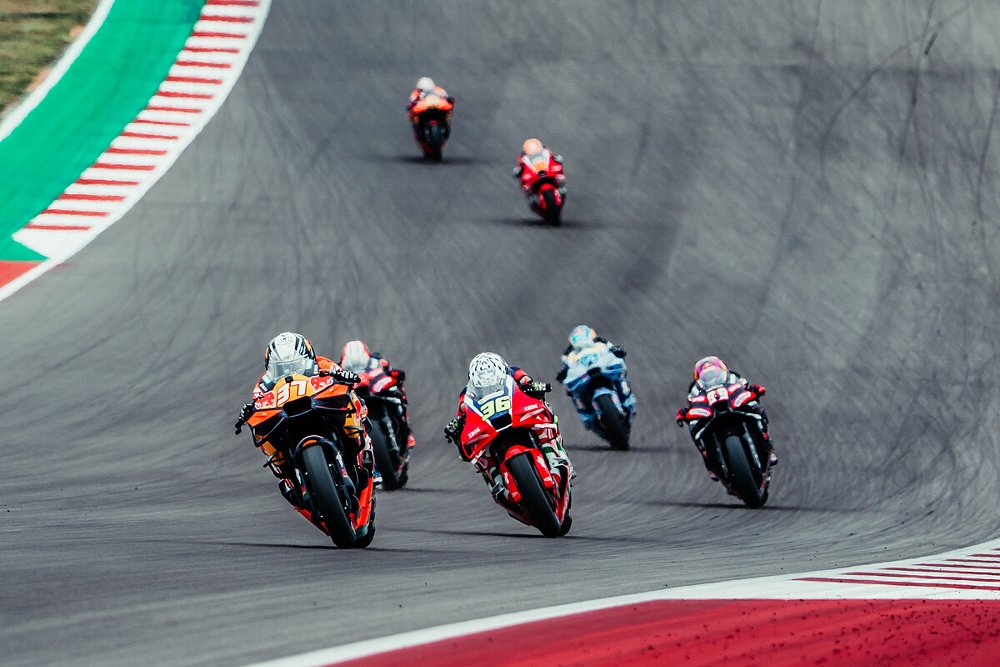
As you watch a MotoGP rider sit up and get on the brakes for a corner, it kind of seems like there’s no hope of stopping in time. The combination of track-only carbon brakes and absurdly talented riders makes it look like a tape playing at 1.1-times normal speed; except it’s your eyes, not a screen.
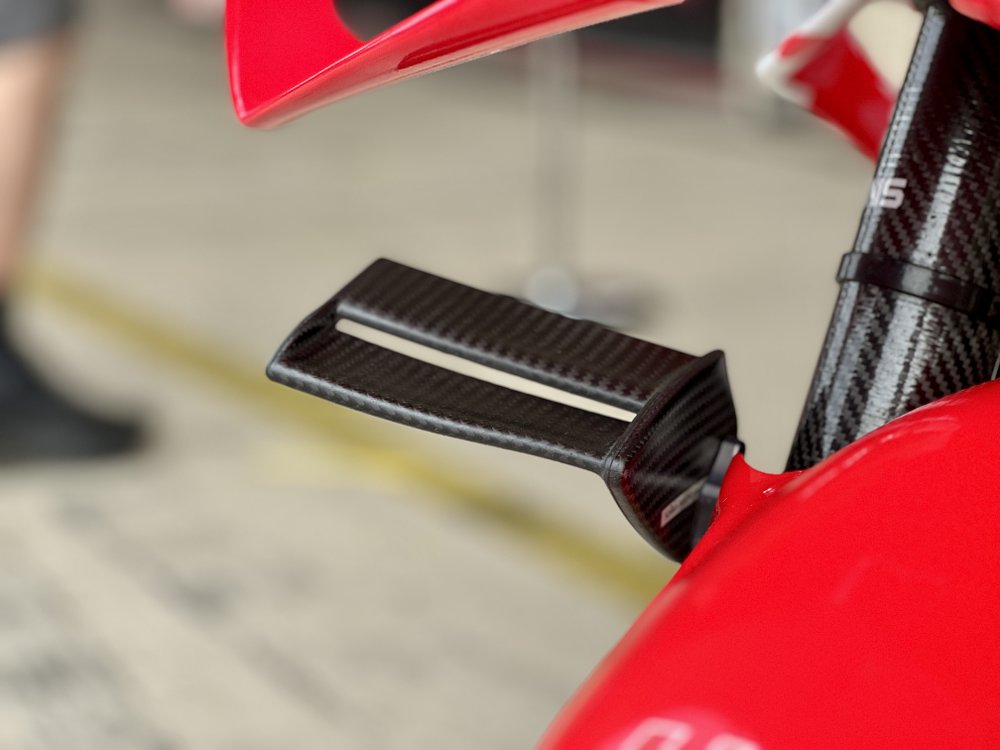
After a quick dip of lean angle through the left-hand hairpin of Turn 1, the rear suspension does not rebound and instead the motorcycle squirms and weaves as it fires over the crest of the hill. The riders flash through the arc of Turn 2 in the distance, winged bodywork pushing the bikes down against the pavement for freakish grip and speed.
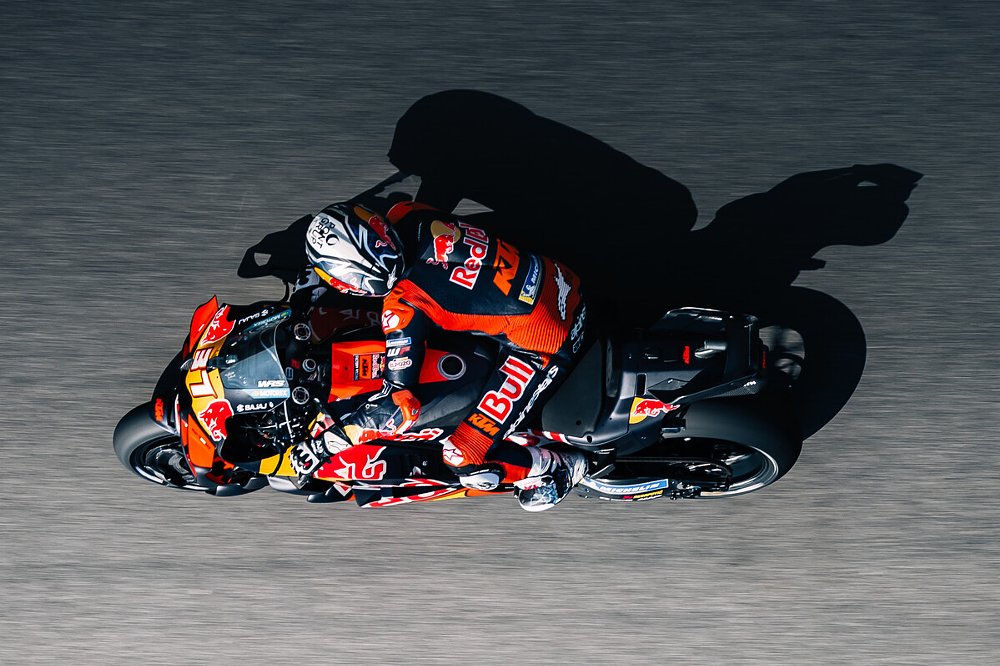
It’s bizarre, and pretty undeniably cool.
Almost touching the untouchable
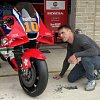
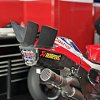
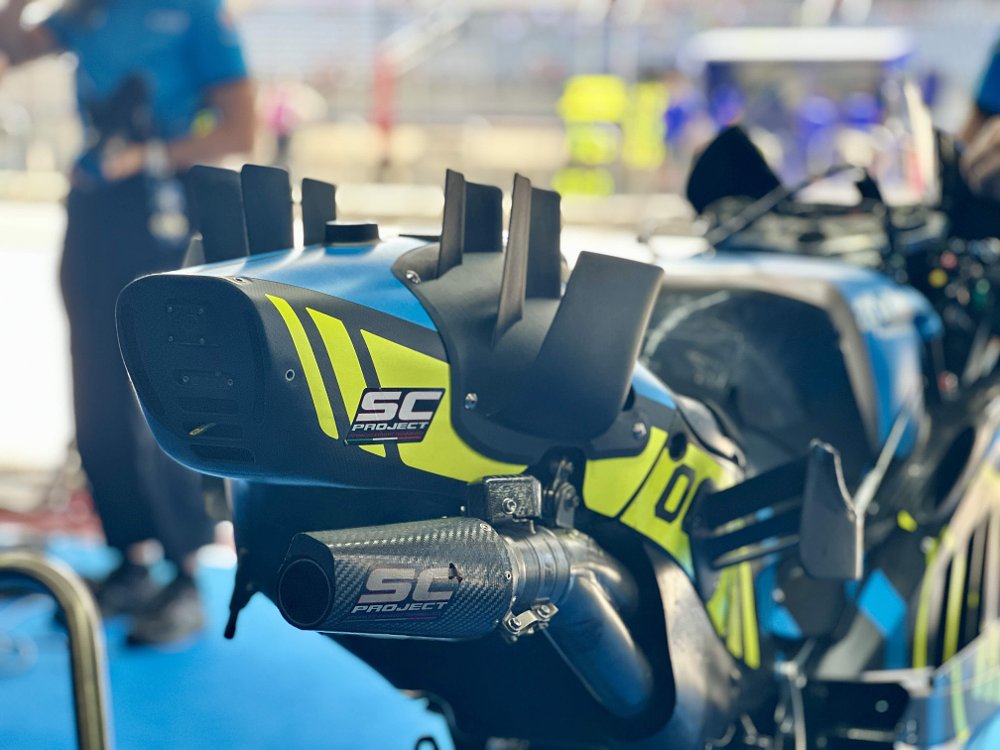
Inside a MotoGP team garage, the bikes are similarly interesting. The brake calipers shimmer with nickel plating and gaudy heat-dissipation fins. Carbon-fiber bodywork is stacked in piles next to neatly arranged sets of various-sized fuel cells, presumably selected based on the session at hand. Depending on the brand, the engines’ exhaust pipes seem to get smaller as they route rearward.
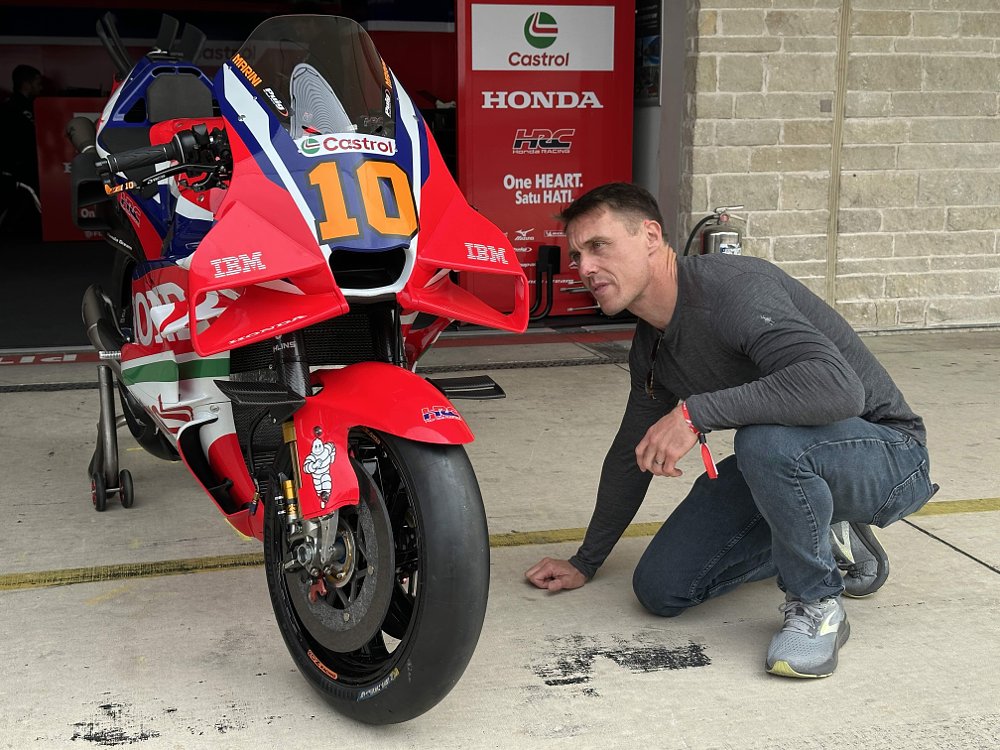
Heck, even the tools are cooler than usual, as “The Shop Manual” host Ari pointed out. A three-tier cart he spotted was made completely of tubular titanium, with drop-in trays made of carbon fiber. He also noticed that some teams have front stands that appear to be plumbed with pneumatic ports on one side and adorned with flexible lines on the other, so that the stand itself can be used to clean the brake system or other parts. If you’re even a little bit of a gearhead, there’s an endless list of intriguing things to notice.
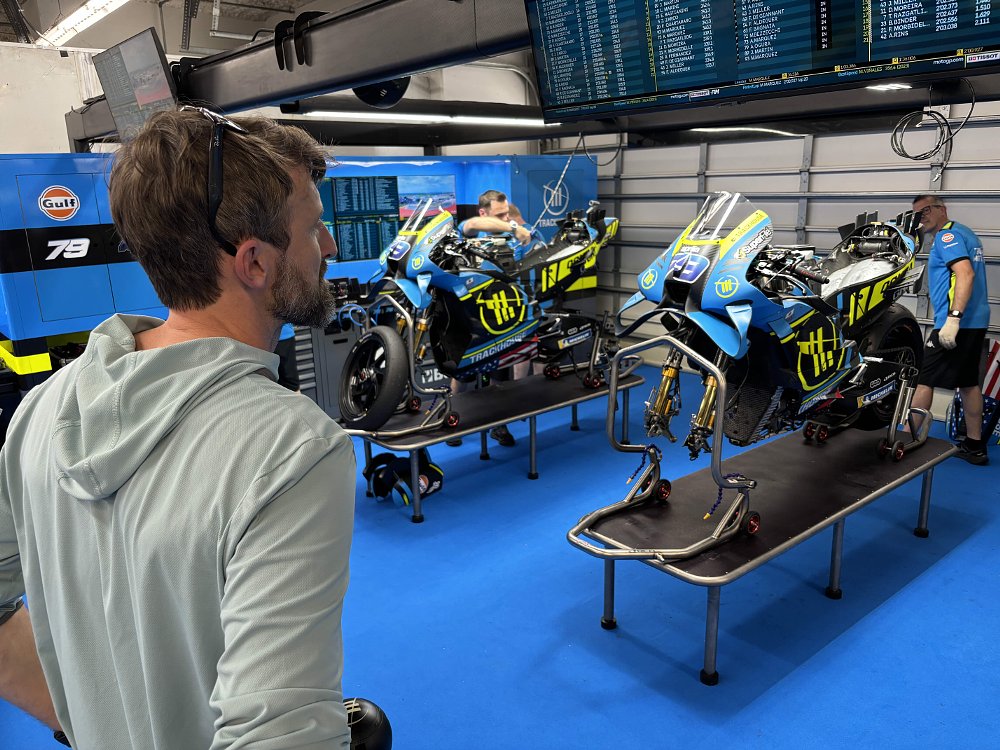
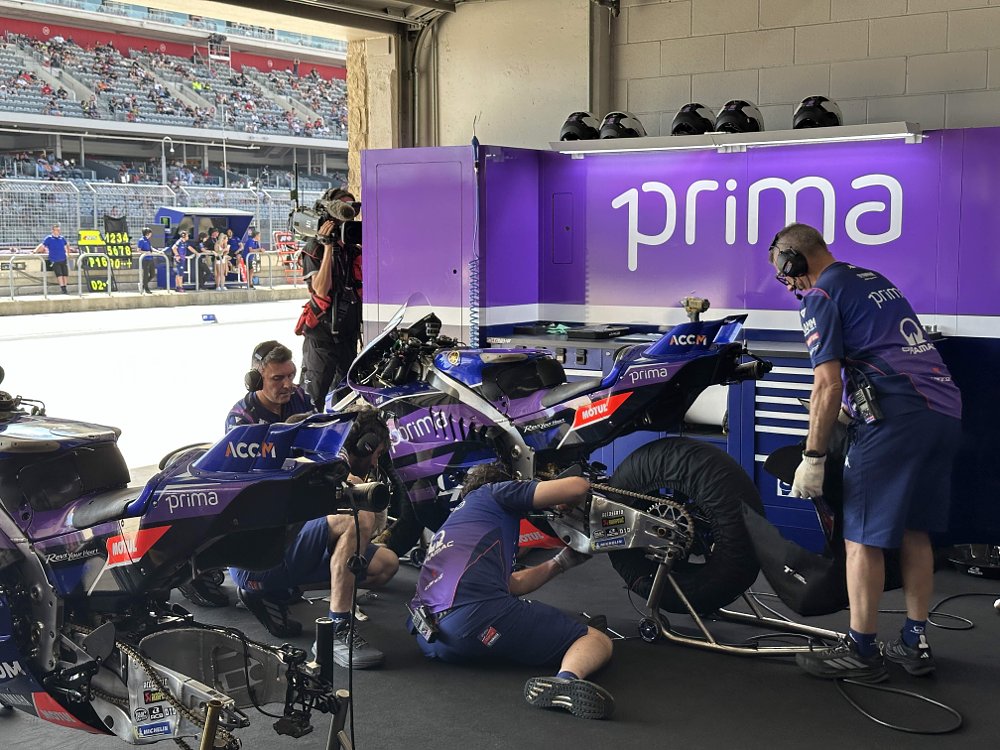
There is a massive bustle of activity around each machine, any time it makes its way into the paddock during a live riding session. Some stuff is obvious — swapping tires and wheels or tweaking suspension settings — while other activity is more subtle. For instance, every team always seems to have at least a few people looking at computer screens.
In the Trackhouse Aprilia garage, Head of Communications Jeremy Appleton reveals that each bike has 80 sensors that collect data, from accelerometers measuring sprung and unsprung sections of the chassis to heat sensors on various parts of the machine, and more. The team receives 50 gigabytes of data per bike, per weekend, and there’s always more to learn from analysis.
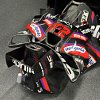
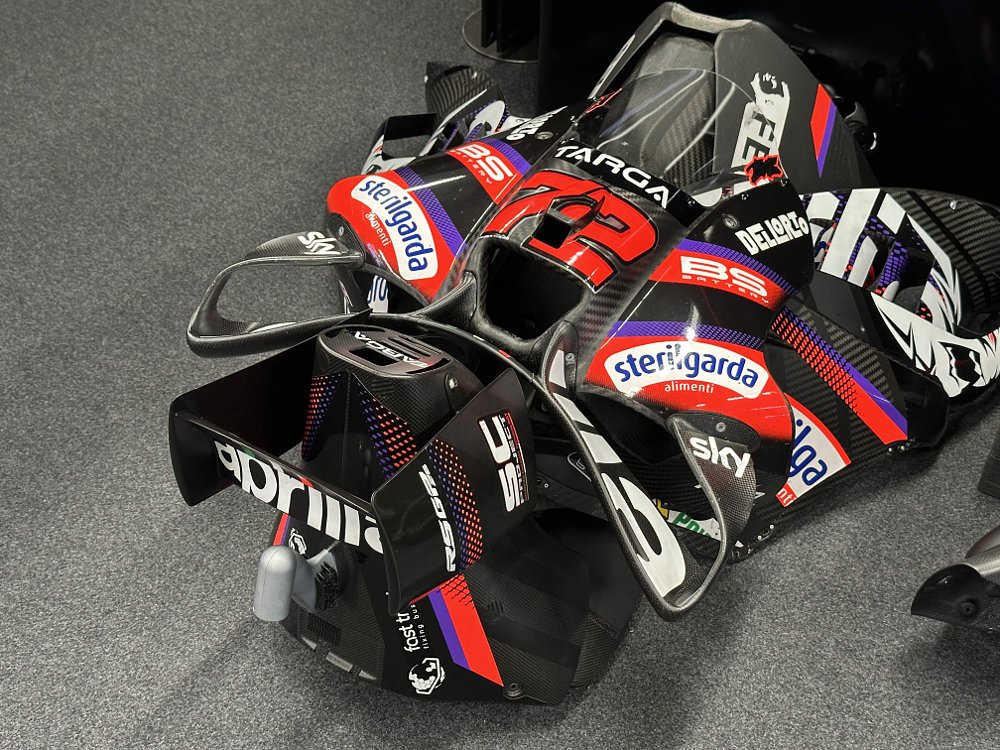
Up close, MotoGP bikes look even weirder than they do on track. The tail sections, for example, are hilariously wide and large but when the seat comes off it reveals mostly empty space. Holding the main nose fairing of a factory Aprilia in our hands, the front wings are even thicker and wider than they seem from afar. Being that the piece is mostly carbon fiber, it’s also ridiculously light.
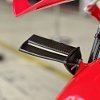
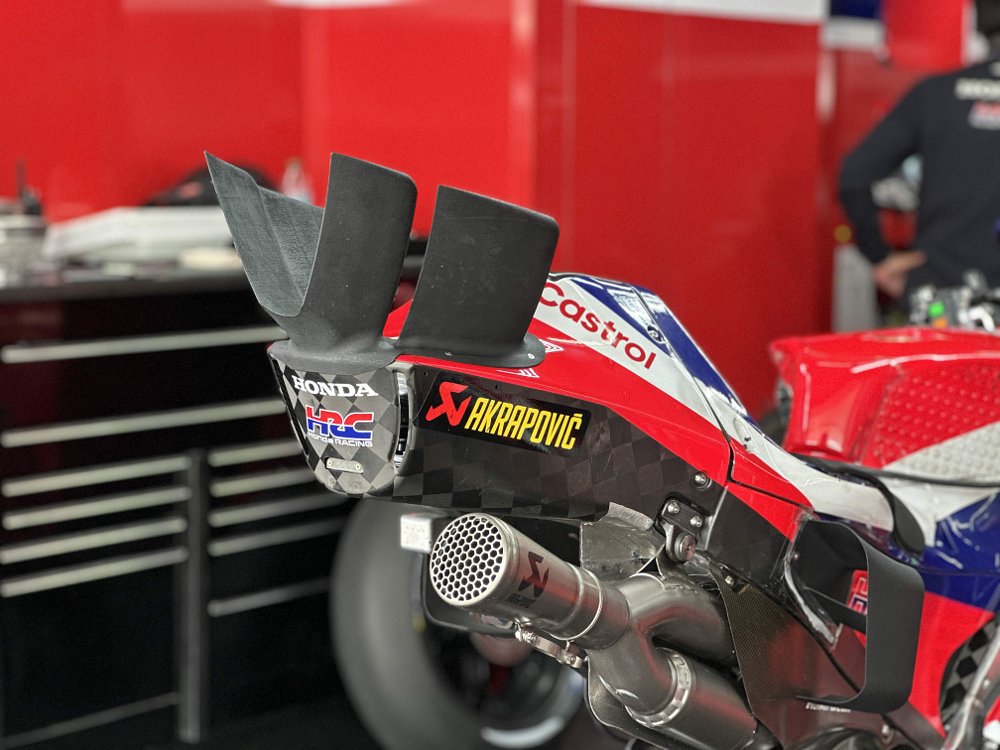
For all of the striving for perfection, any racer or former paddock-dweller will recognize the experiments in motion. Most of the rear-mounted, stegosaurus-tail winglets are 3D-printed and riveted or glued in place. On the Honda, side-mounted wings that sit just below the riders’ hips were stuck in place with rivets and, essentially, clear tape.
With all of the effort and money that companies put into MotoGP motorcycles, plus all of the flashy paint and matching clothing of the teams, it’s easy to consider the bikes as some kind of polished performance perfection. When you’re close enough to touch them, it’s clear that each one is an ongoing science project, driven by a ravenous hunger for success.
To 2027, and beyond
Seeing all of this now, in 2026, is a testament to the level of competition. Even faced with a new set of regulations that will need to be followed in less than a year, there’s still the whiff of desperation to evolve that can always be found in racing. Whatever headway is being made now, or will be made the rest of the year, is worth it if it means winning in two hours or two weeks.
In a quick chat with Massimo Rivola, head honcho at Aprilia Racing, he told us that planning for 2027 is pretty much what you would imagine — a small, dedicated team working on the 2027 machine that will steadily grow as time passes, until it outgrows the number of people focused on 2026. Testing has already started with Pirelli tires, though Rivola didn’t seem sure how it would affect performance yet.
One prediction he did make, even with tires being something of an unknown, is that the 850 cc machines of 2027 and beyond will eclipse the lap times of 2026 bikes within a couple of years. Part of the reason for that is that he doesn’t expect any changes in resources or staffing — despite cutting some technology and lessening of aero parts, he expects the teams to be the same size and the progression of performance in the bikes to be similar.
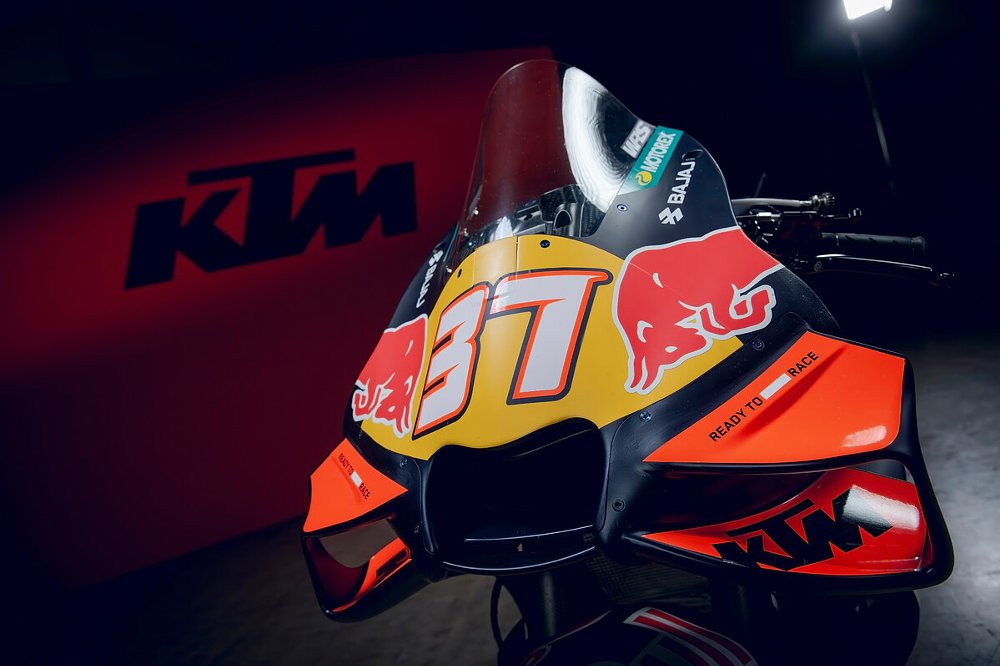
I would like to think the motorcycles of MotoGP in the future will be more pleasing to the eye, but after being close to the machines I was reminded that looks aren’t the point. Beauty is fairly irrelevant.
I’ve heard people say that a racing machine should be form following function, pure and simple. Whatever shape a machine takes that makes it go faster is therefore more attractive. Performance is what’s beautiful. Being someone who has spent some amount of my life striving for lower lap times, I can appreciate that outlook. And I’ll have it in mind as I watch the final season of fire-breathing, winged, 1,000 cc dragons roaring and striving for every hundredth of a second.