Shop by Vehicle
 Track Order
 Contact Us

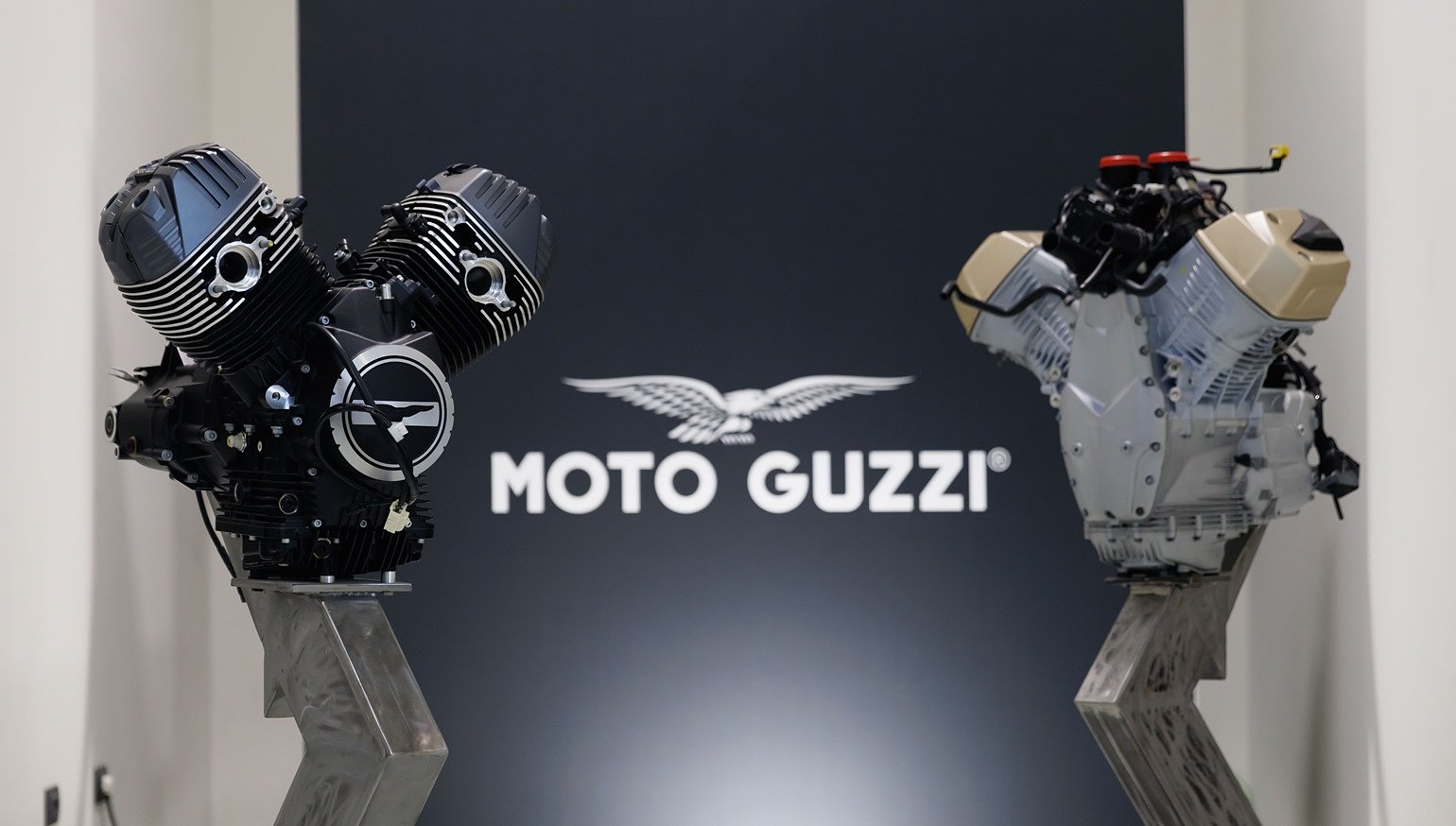
The transverse V-twin engine is Moto Guzzi's golden goose. For six decades it's kept giving and giving. It made the historic Italian marque distinct in the market, and over time became synonymous with the brand. So much so that motorcyclists may forget that Moto Guzzi is bigger — or could be bigger — than a single engine configuration.
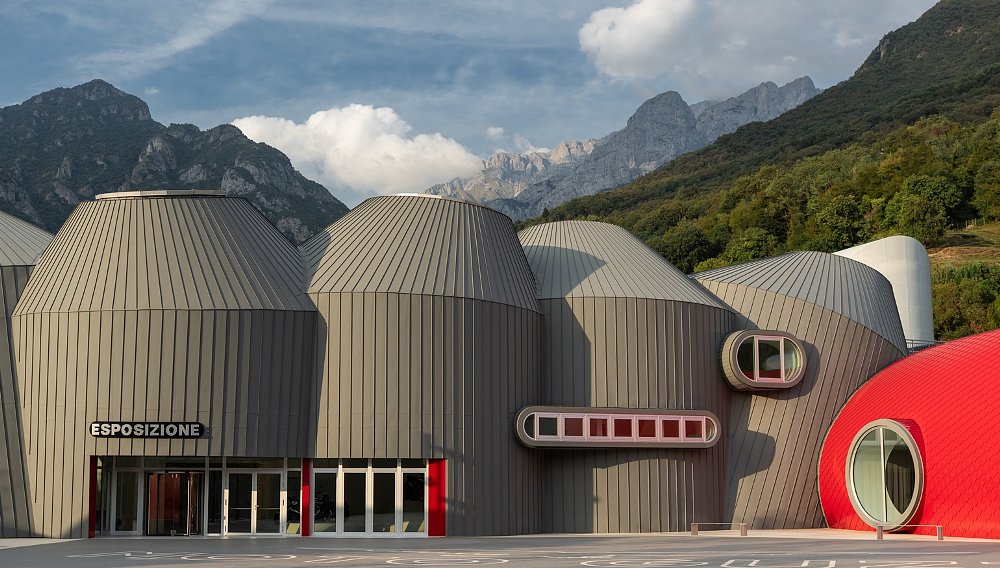
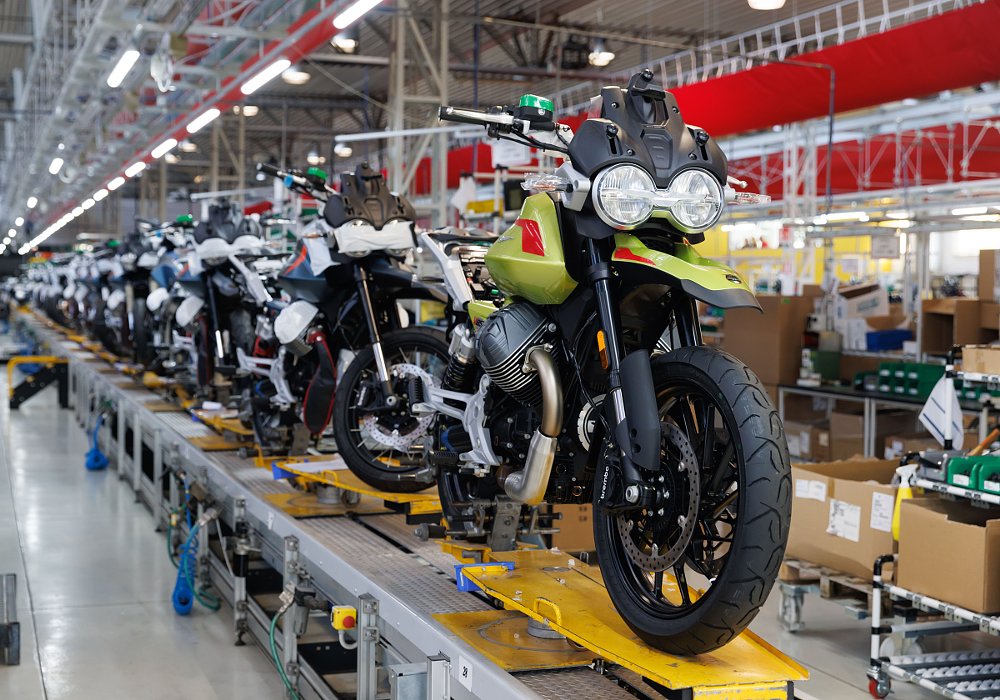
"Moto Guzzi is reshaping its own brand," says Sergio Ignelzi, plant manager in Mandello. Reshaping the brand includes a €50 million renovation of its historic factory in Mandello del Lario that gives the company increased production capacity and greater efficiency. What could a reshaped Moto Guzzi look like? Perhaps the answer can be divined in its existing model lineup.
During Moto Guzzi's annual homecoming festival, this year celebrating its 105th anniversary and the grand opening of the new factory complex, I had the chance to ride the 2026 V7 Sport and the V100 Mandello S, two motorcycles that articulate Moto Guzzi's double nature, the distinct wings of its flying V.
The 2026 Moto Guzzi V7 Sport
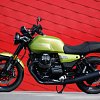
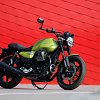
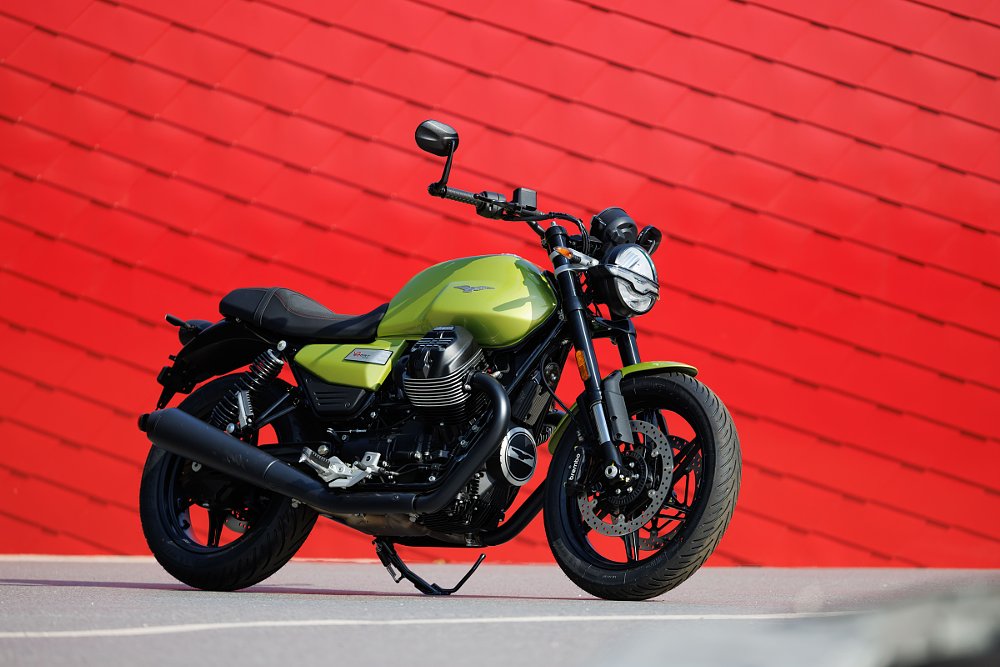
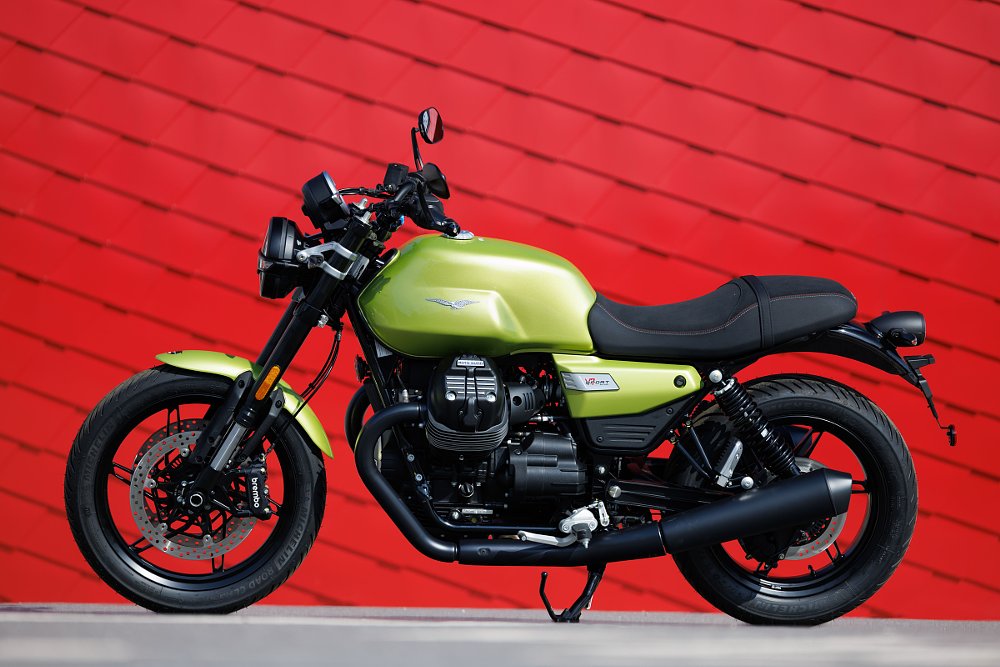
I started out on the V7 Sport ($10,990), 2026's interpretation of Moto Guzzi's most iconic model. Firing it into life, there's no mistaking it for anything else. The exhaust note's lilt. The whole bike's rightward tilt when the engine revs. Pure Guzzi. It sounds like a 90-degree twin, but not like a Ducati; the torque reaction, the hallmark of the transverse twin's longitudinal crankshaft and shaft drive, is charmingly pronounced. While some might snicker at the spectacle of its obligate trait, Moto Guzzi celebrates it. Heck, even the fuel tank quakes with delight, shimmying atop the frame tube, when the engine fires to life.
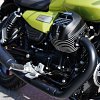
For 2026, the V7's 853 cc engine received revised valve timing, modified oil jets for improved piston cooling, and an updated airbox and exhaust. Moto Guzzi claims it produces 67.3 horsepower at 6,900 rpm and 58.3 foot-pounds of torque at 4,400 rpm, numbers roughly on par with other retro roadsters.
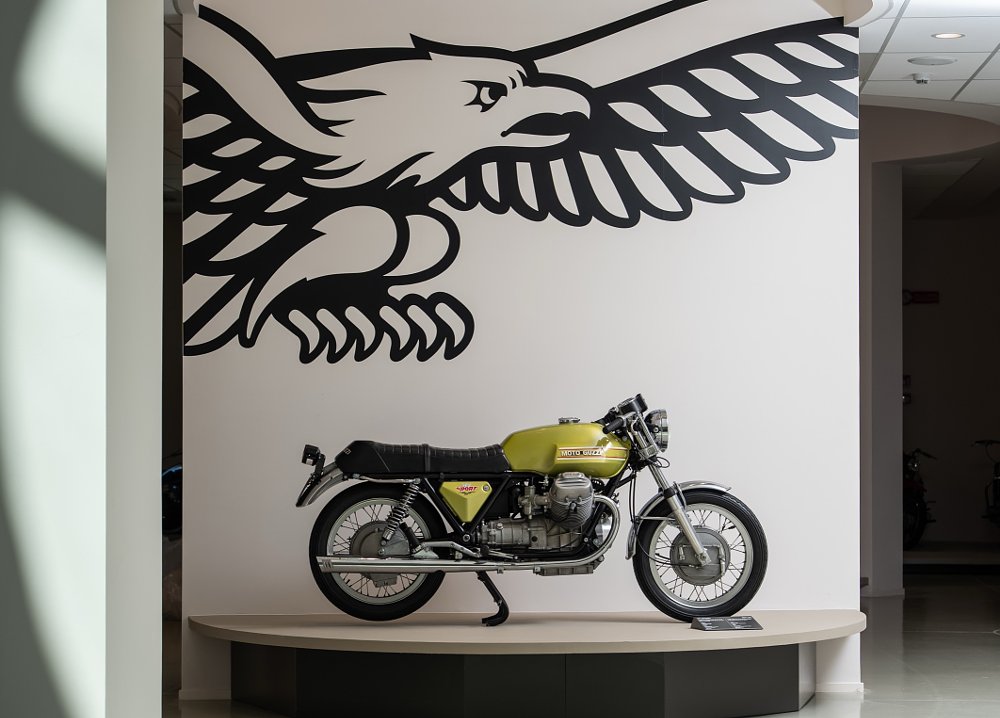
In 1971, when Cycle Word's Italian correspondent tested the first V7 Sport, he wrote: "Under 3,000 rpm, the 68-bhp alloy Twin, fed by two 30-mm concentrics, isn't happy, but it pulls like a turbine from there up to a little over 7,000 without annoying vibration. The five-speed gearbox is a bit noisy, but it is otherwise quick and sure."
If it weren't for the mention of concentric carburetors and a five-speed gearbox, it could almost be an account of the new model: 68 horsepower then, 68 horsepower now. How's that for fidelity to form and function? I wouldn't say it "isn't happy" below 3,000 rpm, but at around 2,000 rpm the ride-by-wire connection feels a bit numb, and on- or off-throttle response is a tad abrupt. Otherwise, like its predecessor, it pulls like a turbine with nary an unpleasant vibration. With the throttle at the stop, acceleration isn't blinding, but the V7 isn't a bike meant to be ridden wide-open. Roll on the throttle, though, and torque is laid out like a red carpet.
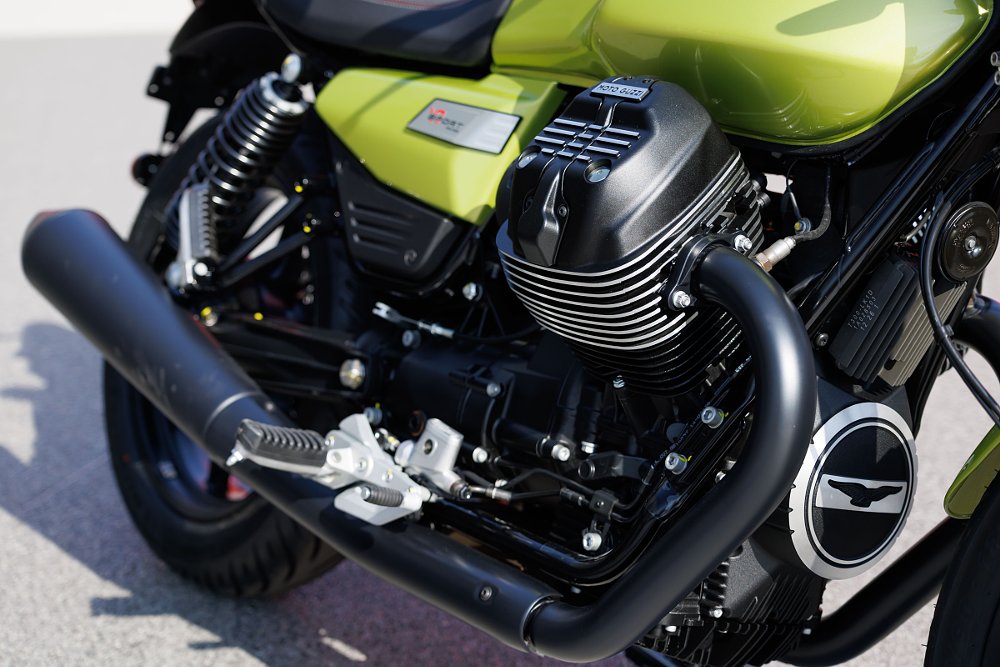
Moto Guzzi first designed the transverse twin for use in a 3x3 utility vehicle, and its agricultural roots are still palpable, with a single-plate dry clutch sandwiched between the engine block and gearbox. Compared to wet, multiplate clutches with hydraulic actuation, the V7 setup may take some time to get accustomed to. It has a relatively nebulous friction zone that will be the biggest hindrance for beginning riders. Otherwise, the V7 Sport is very approachable.
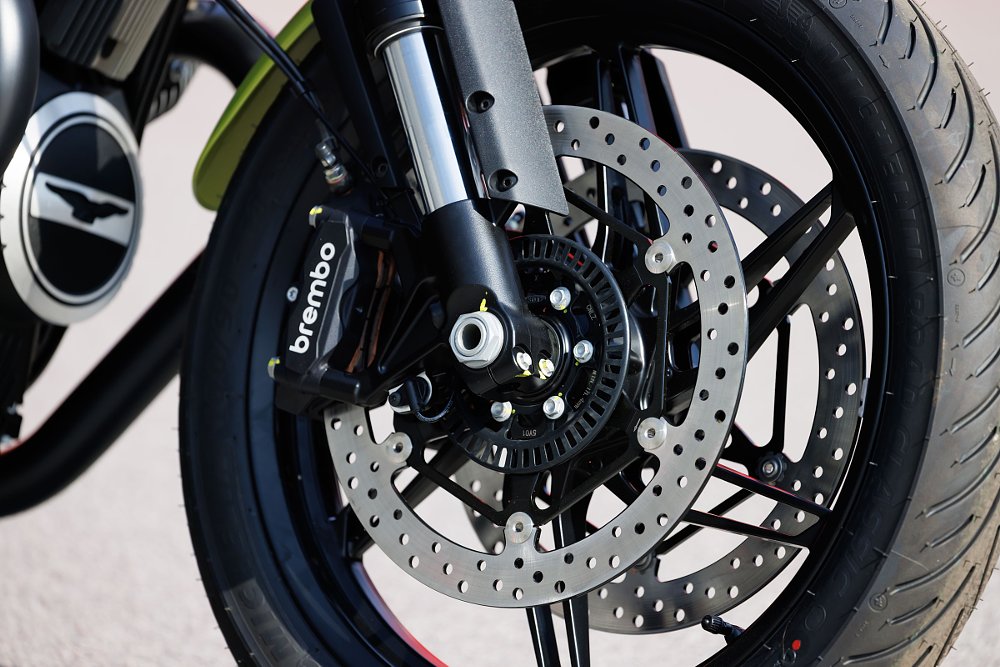
Its suite of electronic rider aids, managed by a six-axis IMU, and more up-spec suspension and braking components (compared to the V7 Special and V7 Stone) give the V7 Sport a decidedly modern edge. But don't think that automatically puts out old school Guzzisti.
While I was in Mandello del Lario, I met the biggest celebrity in the Moto Guzzi universe. No, not Ewan McGregor, but Mark Etheridge, master mechanic and owner of Moto Guzzi Classics in Long Beach, California. Mark wrenched on vintage Guzzis in relative anonymity for over 40 years, until his nephew started filming him and turned him into a social media star — to Guzzisti, at least. Seriously, hanging out with this guy was like witnessing Beatlemania.
Anyway, Mark's dedication to vintage Moto Guzzis — the newest ones he'd previously ridden were around 20 years old — made him skeptical of these newfangled, rider-aid-equipped Guzzis. But after riding a V85, which shares much of the mechanical underpinnings of the V7, he was won over.
"I absolutely love my old bikes, but they're turds compared to these," he said in the typically salty fashion that endears him to his fans. "It took me two minutes. People are idiots if they don't buy them. I was worried I wouldn't like them, but they're awesome. I'm totally in shock."
Notice he didn't say "they don't feel like Guzzis" or "the old ones have more character." He likes the modern bikes for what they are.
Which is really the only way to appreciate the V7 lineup. Compared to vintage Guzzis, they're naturally on a completely different plane of sophistication, but even the Sport, with its upgraded brakes and suspension and modern rider aids, is pretty ambivalent toward spirited riding. Its performance limitations ultimately decree the riding experience.
The V7's character is found in what it doesn't do well as much as it is in what it does. It doesn't have great cornering clearance, but that means finding fun at more carefree lean angles. It's not terribly fast, but isn't slowing down the world around you sometimes what you need from motorcycling?
The V7 Sport is an Italian motorcycle with a distinctive sound and feel, classic looks, and an off-kilter air about it. If it exudes a whiff of anachronism, despite the modern tech, that's really all to the better. As an object of self-expression, the V7 Sport has a lot to say. So scratch my earlier statement; the transverse twin isn't the golden goose — the V7 is.
The V100 Mandello S, on the other hand, is a goose of a different feather.
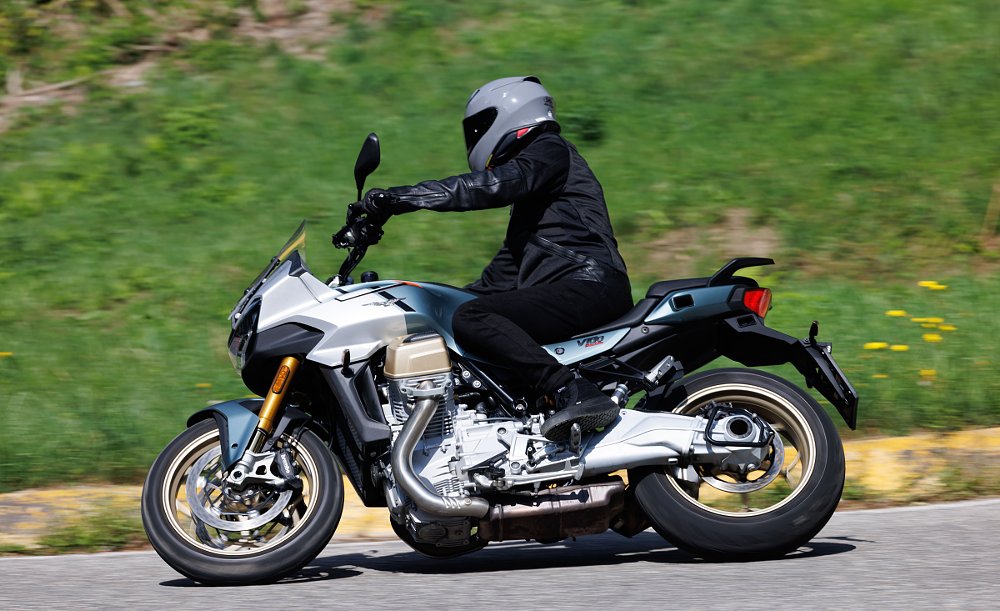
The 2026 Moto Guzzi V100 Mandello S
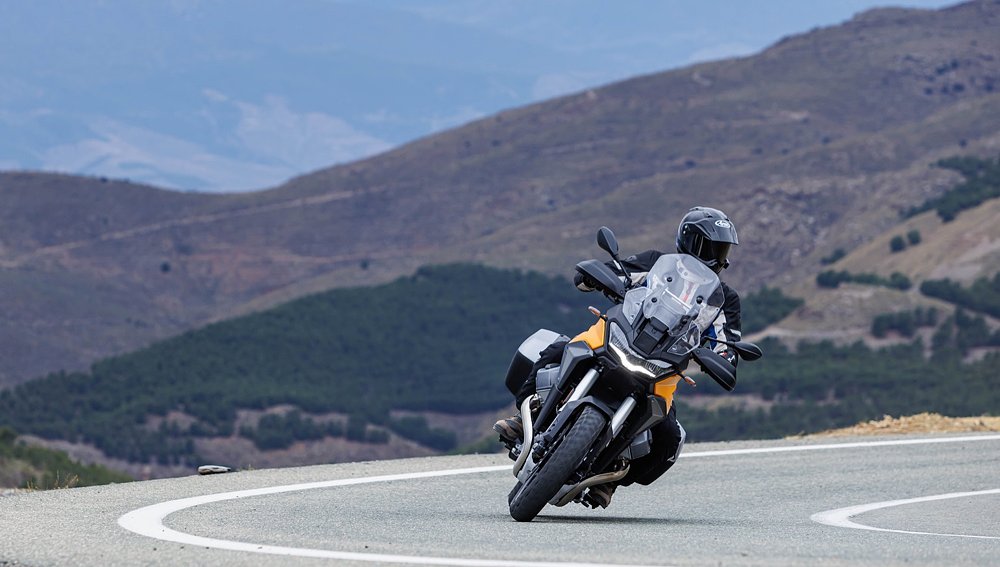
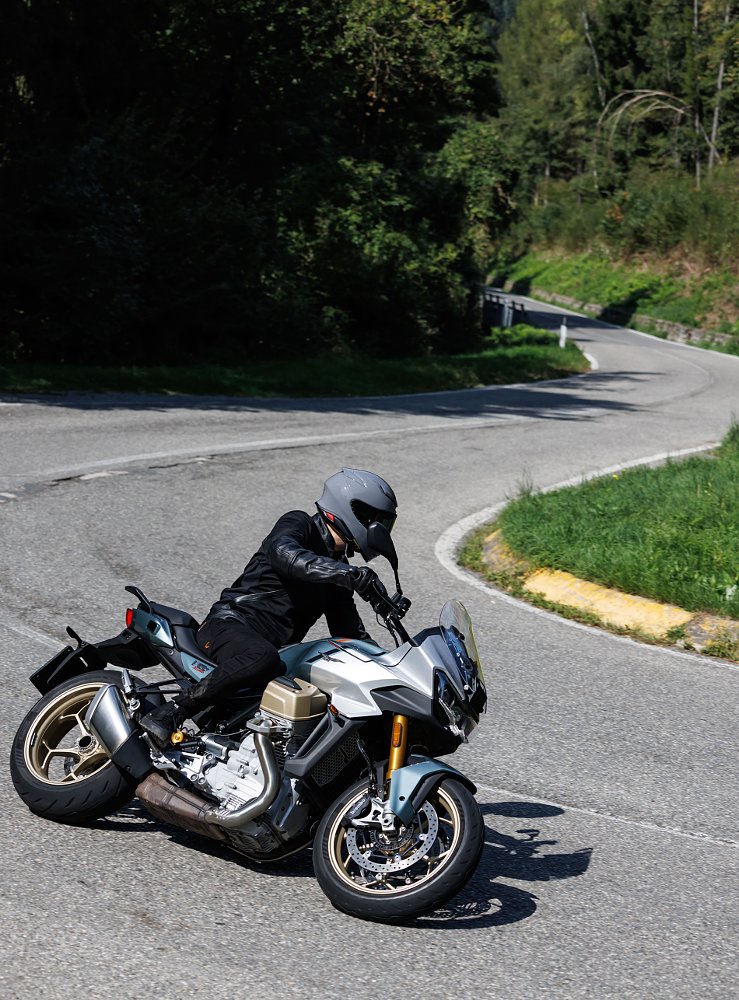
The pace of our test ride was pretty serene, which was fine, given the astounding scenery surrounding Lake Como, but the V100 wanted to stretch its legs. It was itching to go, and my hand was twitching at the right grip. There were too many V7s in the group holding me up. Not natural playmates, these two.
Only during the photo pass, when the road ahead of me was clear, could I open the taps to see what Mandello's 1,042 cc twin is capable of. Maybe you buy a V7 because you like what it says about you; you buy a V100 for what you'll have to say about it.
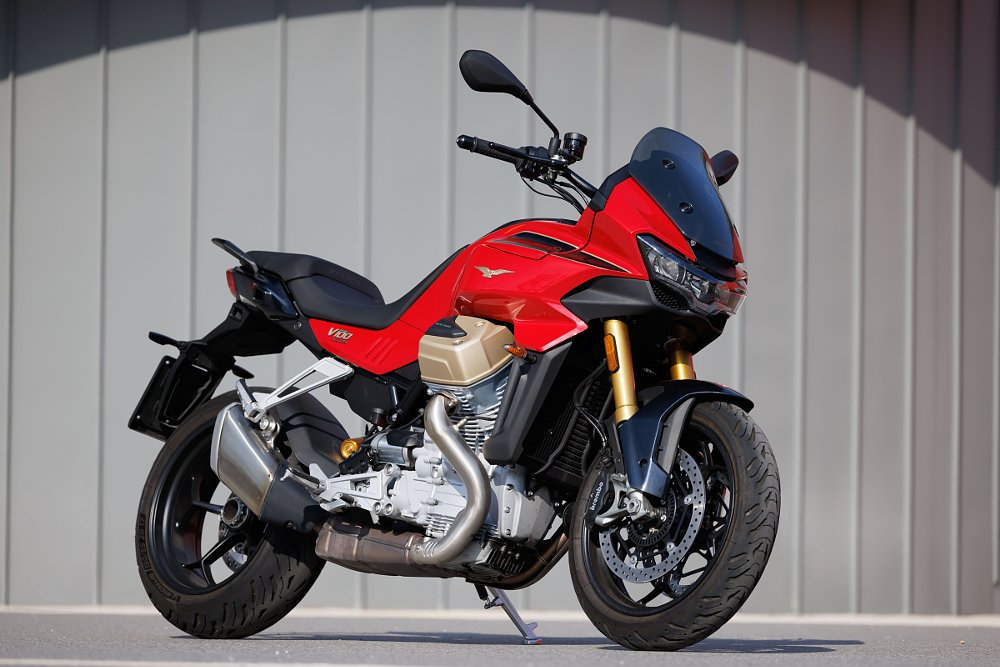
Unveiled in 2021 and slightly revised in 2025, the V100 is the Aprilia of Moto Guzzis (more on that later). It's basically as techy a motorcycle as you can get in 2026, especially the S model I tested, which was equipped with Moto Guzzi's PFF Rider Solution Package, featuring Lane Change Assist, Forward Collision Warning, and a Blind Spot Information System. The radar also enables adaptive cruise control. A full suite of IMU-managed rider aids, a quickshifter, active aerodynamics, an electric windscreen, and semi-active Öhlins Smart EC 2.0 suspension make its $17,690 price tag look like a bargain in today's market.
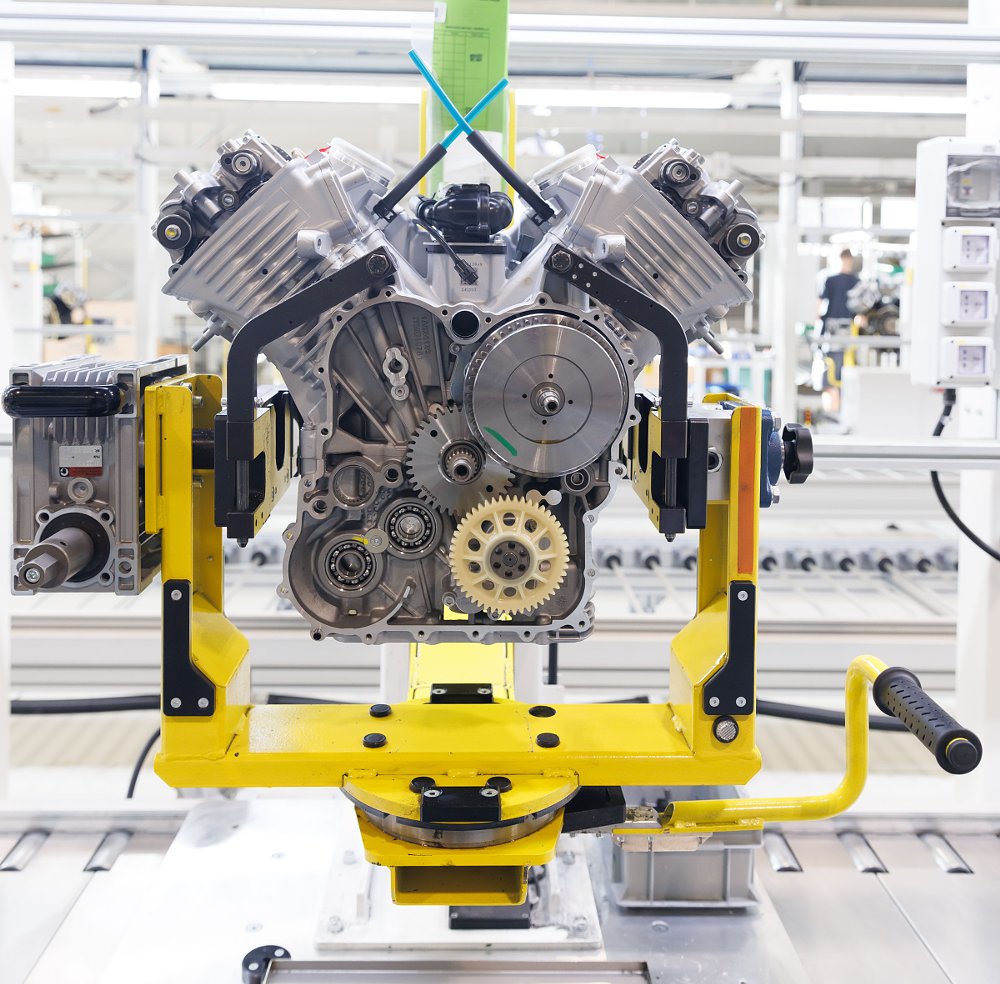
Moto Guzzi claims the engine produces 115 horsepower at 8,700 rpm and 77.4 foot-pounds of torque at 6,750 rpm, 82 percent of which is available at 3,500 rpm. Except for the arrangement of its cylinders, the V100 engine is the anti-V7. It's liquid-cooled, it uses a multi-plate wet clutch, and it has double overhead cams and four valves per cylinder. Guzzi engineers rotated the cylinders 90-degrees — which is obvious from the headers exiting on the down sides of the vee instead of the front — to create more room for the intake system and a larger airbox.
On the road, the V100 is poised, refined, and decades beyond the V7 Sport in terms of capability. Like the BMW R 1300 GS's wasserboxer is to the R nineT's oilhead, the V100's engine is to the V7's: the shared heredity is evident yet completely transformed via techno-generational distance. What the four-valve twin loses in visceral feel and innate charisma, it makes up for in every other way. The gearbox is solid and the quickshifter is precise, though like many motorcycles, manual shifts are smoother between first and second gear. The engine revs freely thanks to a lighter crankshaft. In all, it's smooth-running, fast, and friendly. The chassis is well-matched, offering lots of stability, though direction changes require some force at the handlebar to initiate.
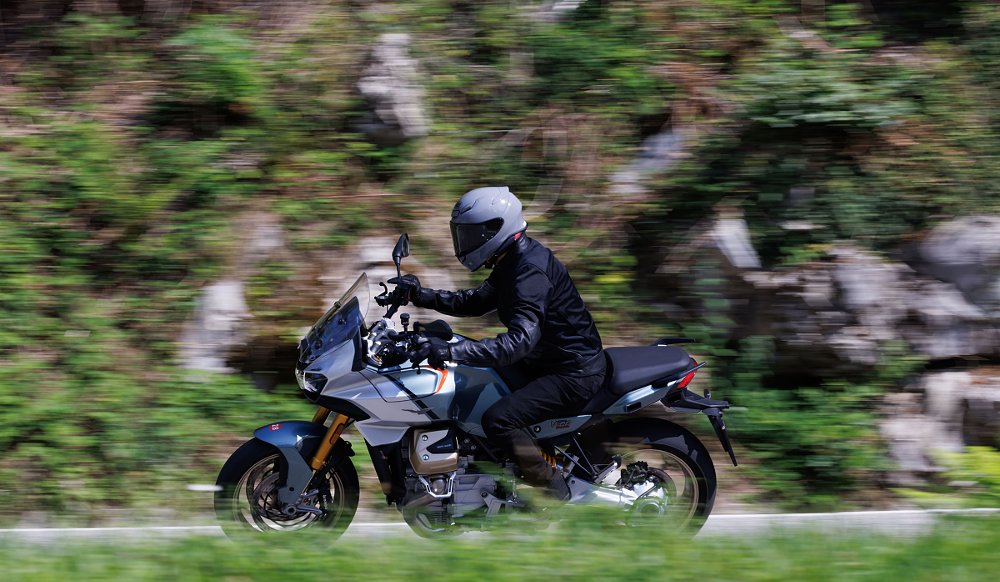
Intriguingly, on my test ride, there was a contingent of riders who only had eyes for the V7 and V85. They refused to even ride the V100 models, believing they'd be "too much of a handful" and "way too fast" on the tight mountain roads above Lake Como. I couldn't disagree more.
On modern motorcycles, regardless of category, technology is often applied in the service of ease-of-use as much as it is in the service of performance. A motorcycle can be judged as objectively "better" when it can be controlled more easily and naturally. There's no need to be afraid of horsepower, at least not on a motorcycle like the V100 that offers crisp fueling and a predictable powerband. I was far more confident — and thus rode better and more safely — on the V100 because of its higher sophistication and refinement, to say nothing of all its high-tech rider aids.
The two wings of the flying V
"The data points just to understand whether or not we are on the right path are BMW and Ducati," Ignelzi says. "But we are not paying attention to them [too much] so as not to lose our own way."
The V100 firmly places Moto Guzzi on the right path. Its liter-class engine obviously doesn't have the same output as larger-displacement Ducatis and BMWs, but it can hold its own — and, as a matter of fact, asks a lot of questions of its rivals. For one, the Mandello S is about $10,000 to $12,000 less expensive than a Multistrada V4 S or BMW R 1300 GS. While it doesn't compete directly with those flagship motorcycles, that's intentional, as Ignelzi points out. Using BMW and Ducati as pole stars of technology and design hasn't painted Moto Guzzi into a corner.
For decades, Moto Guzzi has tried to serve two markets: the technically driven one that wants a performance-oriented product and the sound-and-feel one that wants the traditional Guzzi experience. While the traditional Guzzisti had their two-valve engines, Moto Guzzi developed a four-valve-per-cylinder engine, first introduced in the 1992 Daytona sport bike, to serve riders who wanted more performance. As a response to market needs, the two-engine solution was perfectly rational. Technically, however, the four-valve engines couldn't compete with performance engines from other manufacturers. Optimizing the potential of a four-valve head requires liquid cooling to cope with the extra-hot area between the two exhaust valves and ports, but Guzzi persisted with air cooling. The last 1200 8V engine was phased out over a decade ago.
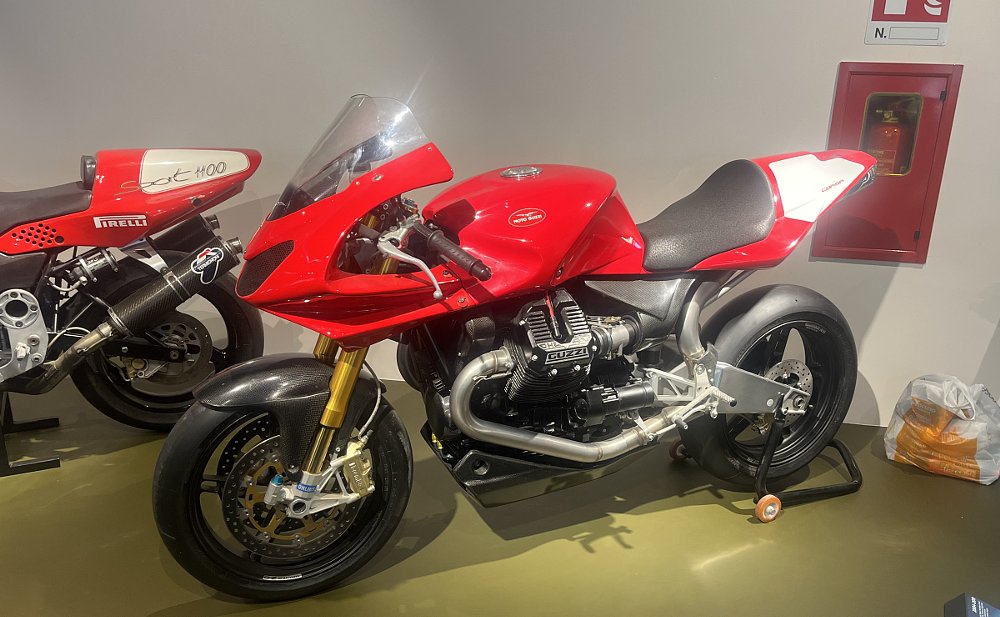
The liquid-cooled V100 engine meets the demands of the technically driven market like no other four-valve Guzzi engine before it. It's been a long time since Moto Guzzi offered something for customers wanting performance-oriented motorcycles, but some of us with long memories (or accumulated years) still fondly recall the Daytonas and lusting after the MGS-01, that limited-edition, track-only stunner.
Unlike Harley-Davidson, whose average customer hasn't quite embraced the brilliant Revolution Max engine, perhaps viewing it as too far removed from the heart of the brand's identity, Moto Guzzi more easily encompasses the old and the new, the two-valve and the four-valve, the air-cooled and the liquid-cooled. The V100 is proof positive that Moto Guzzi is a most protean marque. Come to think of it, maybe the V100 platform is really the golden goose.
What's good for the goose is good for the gander
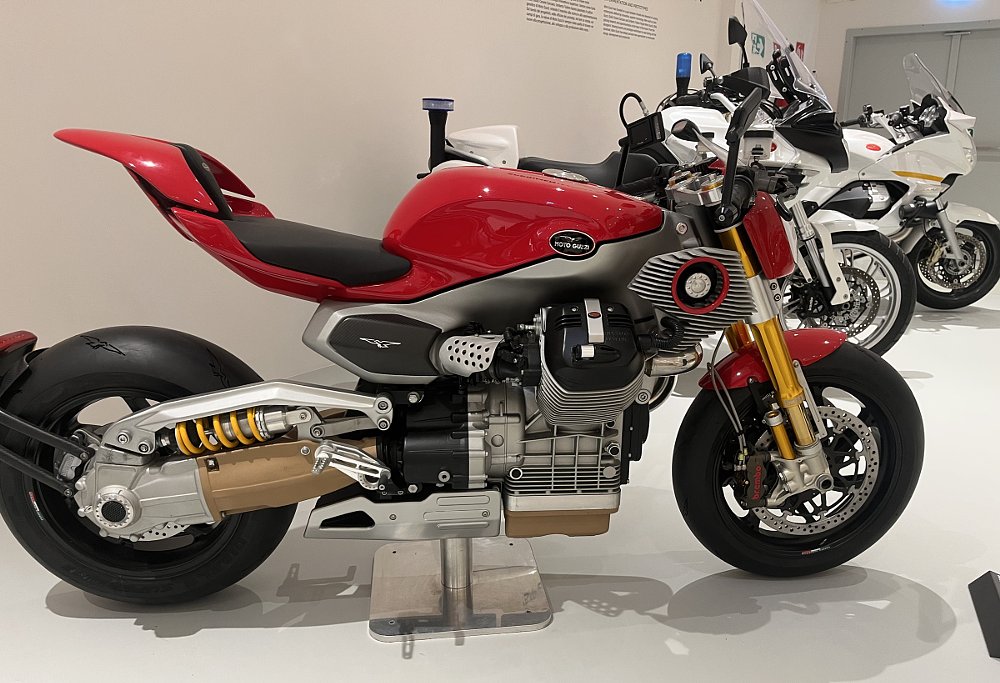
But Moto Guzzi could still take inspiration from Harley-Davidson — and BMW and Ducati, for that matter. Consider how many different models those brands build around single engine platforms. Meanwhile, Moto Guzzi has just four models in its lineup, two models per engine platform. Compared to its competitors, it's hardly a full complement. Why doesn't it have a sport bike, a scrambler, a modern Griso-style roadster?
No doubt there are lots of reasons, none of which I'm privy to. Zooming out at least offers some perspective.
Remember that Moto Guzzi is owned by Piaggio, which also owns Aprilia (and Vespa, among others). Though Moto Guzzi and Aprilia are two distinct brands, from the outside it sure looks like product development for both is dictated by a single corporate strategy. In other words, the vision for each brand is not without regard for the other. Peel off the Aprilia or Moto Guzzi badges from their tanks and stick a Piaggio symbol in their place, and suddenly the product lineup starts to look more complete.
Looking at it that way, the strength of Moto Guzzi's identity can be both an asset and an obstacle. For example: Want an Aprilia adventure-tourer? That's the Stelvio. Want a Moto Guzzi sport bike? Well, that's not an RSV4, is it? Want a pared-back Aprilia to ride to the shops? That's a V7 Sport. Want an off-road-worthy Moto Guzzi? That's not the Tuareg. Not with that engine.
Which is a convoluted way of saying that adding a sport bike to Guzzi's lineup would be amazing. Not some round-headlight-retro, either, but a V100-powered, clip-on-wearing, Dr. John Wittner-honoring, real-live sport bike. In 2026, a sport bike doesn't have to be a race replica. Transverse twin charisma, a sweet-sounding exhaust note, a trackday-worthy chassis, and inspired looks would attract a customer who doesn't see something they want in the current Guzzi or Aprilia lineups.
And what about the air-cooled engine? How about using it in an off-road-worthy scrambler to compete with the BMW R 12 G/S and Triumph Scrambler 1200? Revive the Regolarità name. Give it long-travel suspension, knobby tires, and white number plates.
Perhaps making use of the new factory's increased production capability to expand the lineup with more models could increase visibility. After all, SKU proliferation works in the beer aisle. More models equals more eyeballs. More eyeballs equals more butts in seats.
I say all this only as an enthusiast, understand. I'm only speaking from a place of excitement. And it's hard not to be excited about the possibilities — whatever they are. And they could be anything.
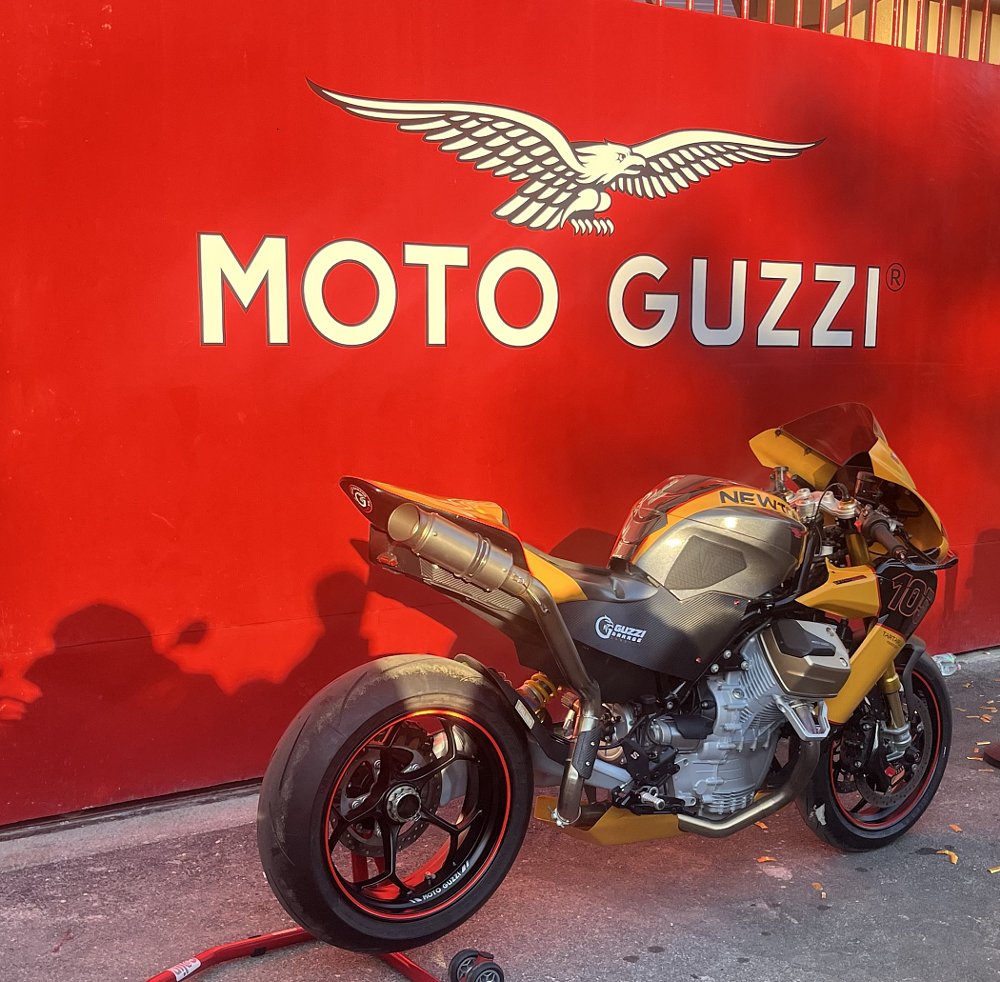
Over the course of its 105-year history, Moto Guzzi has built just about every style of motorcycle conceivable: from sport bikes to scramblers, little scootery-things to baggers. While it could do a lot with the two existing engine platforms, Moto Guzzi's legacy stretches beyond the transverse twin. From 1921 until the mid-1970s, Moto Guzzi's signature engine wasn't a V-twin, but a horizontal single. In fact, think of a cylinder number and arrangement and Moto Guzzi has probably done it. An explosion of innovation in racing designs before the second world war saw Guzzi design a 120-degree V-twin, a parallel twin, a triple, an inline four, a V-four, and, most famously, a V-eight. Later, under ownership of De Tomaso, it even built ill-conceived across-the-frame fours to compete with the Japanese.
Piaggio didn't make any product planners available to interview, but Ignelzi indicated Moto Guzzi is focusing on developing products for younger riders. If spy shots and trademark applications are correct, Moto Guzzi is planning an entry-level model called The Trip 500 using Aprilia's 457 cc parallel-twin engine. So not something with immediate distinction, like a history-honoring horizontal single or twin.
"The point is sometimes the customer is not ready to move to the new path by himself," Ignelzi says. "The strong brand is the brand able to move the customer in the right direction."
Moto Guzzi is that strong brand. But another parallel twin is white noise. Is that really the path forward? Something different, something styled like the 1966 Dingo Super, for instance — that could really move customers.
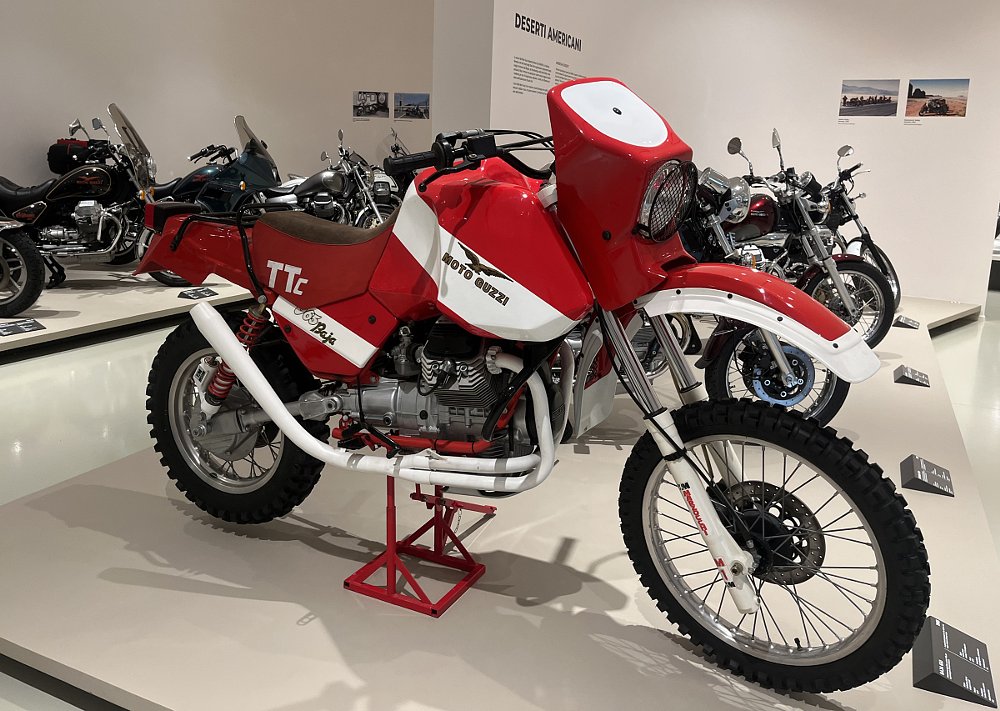
If what the brand can be is found in what it was, Moto Guzzi could become one of the most innovative brands in motorcycling. Regardless of where I sat, be it in the saddle of the V7 Sport or the V100 Mandello S, it looked like a brand firing on all cylinders. If only there were more than four models to choose from.
The golden goose isn't just the transverse twin. Nor is it the V7 Sport or the V100 Mandello S. Moto Guzzi itself is the golden goose. Well, at least it could be.