Shop by Vehicle
 Track Order
 Contact Us
It's natural that new or aspiring motorcyclists — especially ones who didn't grow up in a motorcycling family and don't have mentors handy — will turn to the internet for advice. So it's no surprise that we see a lot of people searching online for phrases like "best beginner motorcycles of 2026." But there are some problems with that.
Namely, that when you're a new or aspiring rider just getting started, that's when you're least equipped to sort the good advice from the bad advice. And believe us, there's plenty of both out there.
Because there's a lot of interest in the topic and a lot of people looking for guidance (and because we want to help them join the ranks of happy motorcyclists), we've addressed the issue of beginner bikes in the past in several ways, from a full-length CTXP shootout video to our guide to the different kinds of motorcycles and how to choose among them to a previous look at good options for beginning riders.
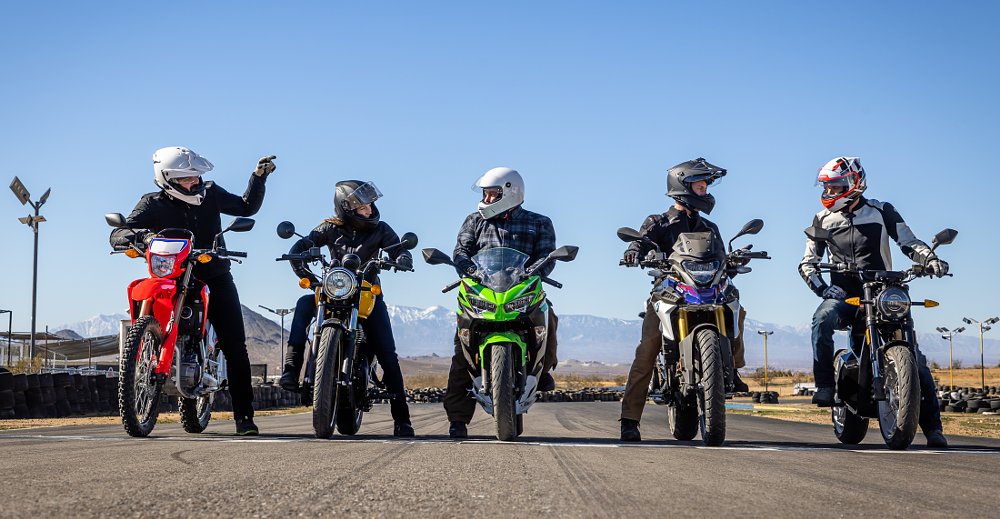
We've also given advice that some aspiring riders tend to resist. Such as don't buy your dream bike to start. Instead, buy something cheaper and smaller so your inevitable mistakes — whether finding out you bought the wrong kind of motorcycle or dropping it and scratching it — will be less costly, both financially and emotionally.
Buying used for your first ride is good advice, but still, we recognize that some people just want a new motorcycle. Especially if you're unsure about your ability to do maintenance or repairs, a factory warranty can be a comforting security blanket. So we asked each member of the Common Tread team to suggest a new model available in 2026 that's a good choice for a first-time rider, along with an alternative for those willing to take our advice, save a few dollars, and shop used. Here's what they had to recommend.
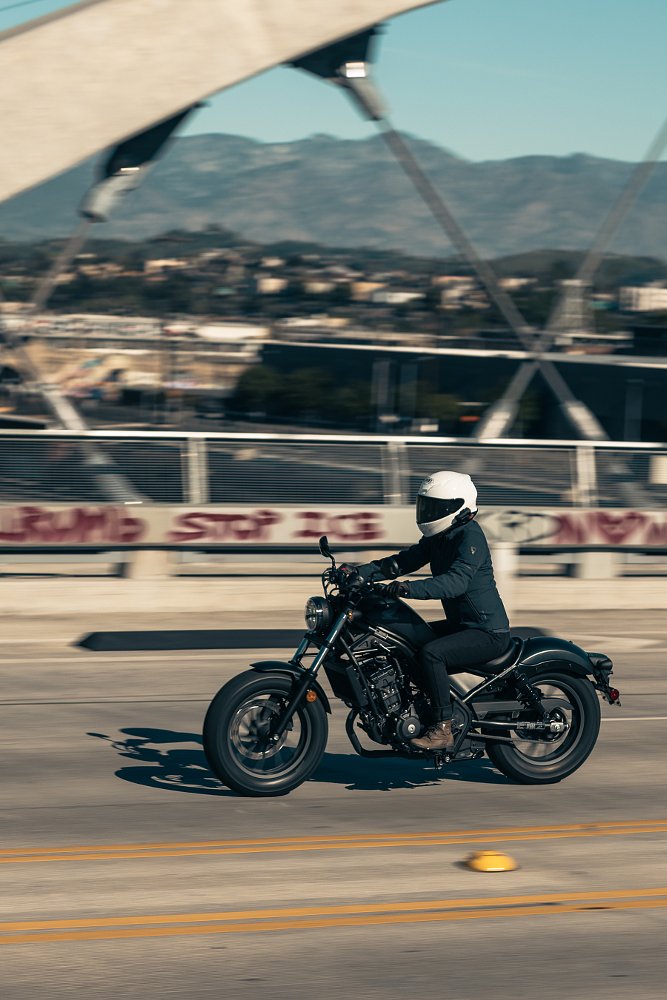
Ari Henning: The reliable Rebel
Figuring out the best new beginner bike is easier if you zoom out a bit. Step back — perhaps to before you were born — and one bike continually rises to the top of the beginner-bike ranks: Honda's Rebel.
Since its debut as the CMX250 in 1985, the littlest Rebel has combined Honda reliability with a super-low seat height, low weight, low price, and cool cruiser style that attracts new riders like moths to a flame. It's the bike many rider-training courses use specifically because it's so approachable and easy to manage, and those characteristics stand true today.
In fact, the 2026 Rebel 300 is more appealing than ever, thanks to the addition of E-Clutch, which is like having an expert clutch operator in your back pocket. If you’re a new rider and intimidated by the clutch and worried about stalling or screwing up shifts, E-Clutch has your back and makes using the clutch lever on the handlebar optional. And with an MSRP of $5,349, it's not that intimidating financially, either.
As appealing and reassuring as the latest automatic-clutch technology is, you can get essentially the same machine minus E-Clutch by buying any 2017-or-later Rebel 300. That's when the bike underwent its last major overhaul, which saw a full makeover and upgrade to a fully modern liquid-cooled, fuel-injected engine, digital dash, and optional ABS. Asking prices range from the high $2,000 range for older ones to low $3,000 range even for some that are nearly new, and most have low mileage. If cruisers aren't your thing, the CB300F naked bike, CBR300R sport bike, and CRF300L dual-sport all use the same engine and offer similarly low weights and friendly demeanors.
Lance Oliver: Z sweet spot
To refer back to the second paragraph of this article, about the good and bad advice you'll get as a new rider, one of the common pieces of advice I see that rankles me is "Don't get that small motorcycle as your first bike because you'll just outgrow it." Well, yeah. Growth is the whole idea. Any new experience is a growth process, so your first job out of college isn't CEO of a major corporation, you don't graduate kindergarten and skip ahead to your sophomore year in high school, and you shouldn't pass the MSF Basic RiderCourse and buy a Ducati Panigale "dream bike" on your first day as a licensed motorcyclist. Buy something that will help you grow, not intimidate and possibly discourage you to the point of quitting.
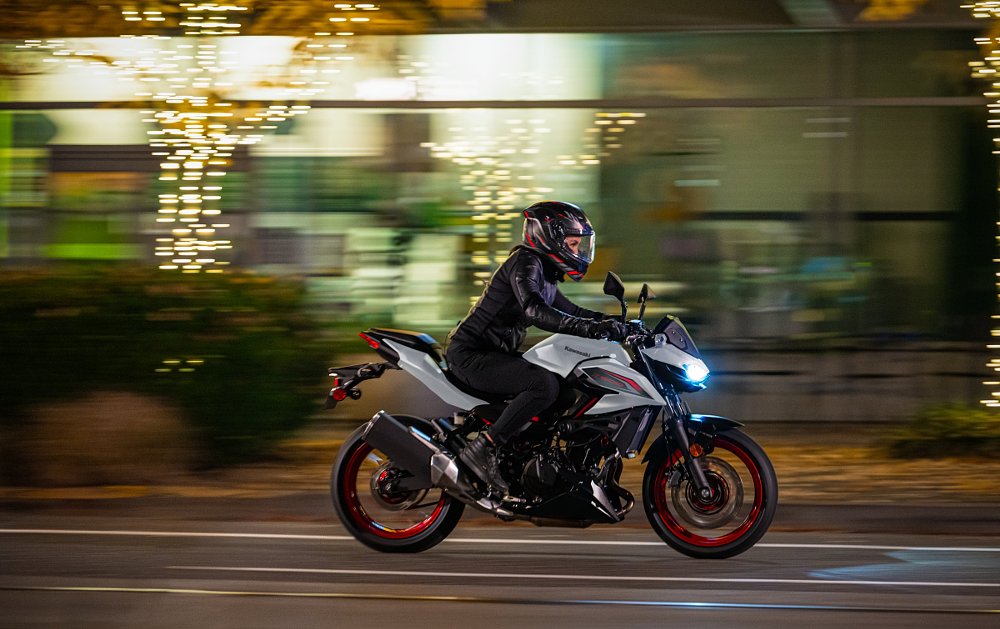
Now I'll step down from my soap box, recognize that some people do have a concern that a beginner bike might not enable them to do all of the kinds of riding they'd like to try, and I'm going to suggest the most powerful motorcycle on this list: a Kawasaki Z500. Its twin-cylinder engine produces more power than all the singles here, so highway speeds are no sweat, but it still weighs well under 400 pounds, has a manageable 30.9-inch seat height and — crucially, in my mind — comes with anti-lock brakes, which is a great safety net to have when you're still learning. A Z500 lists for $5,699, which is in line with the other new motorcycles recommended here but is more broadly capable than most.
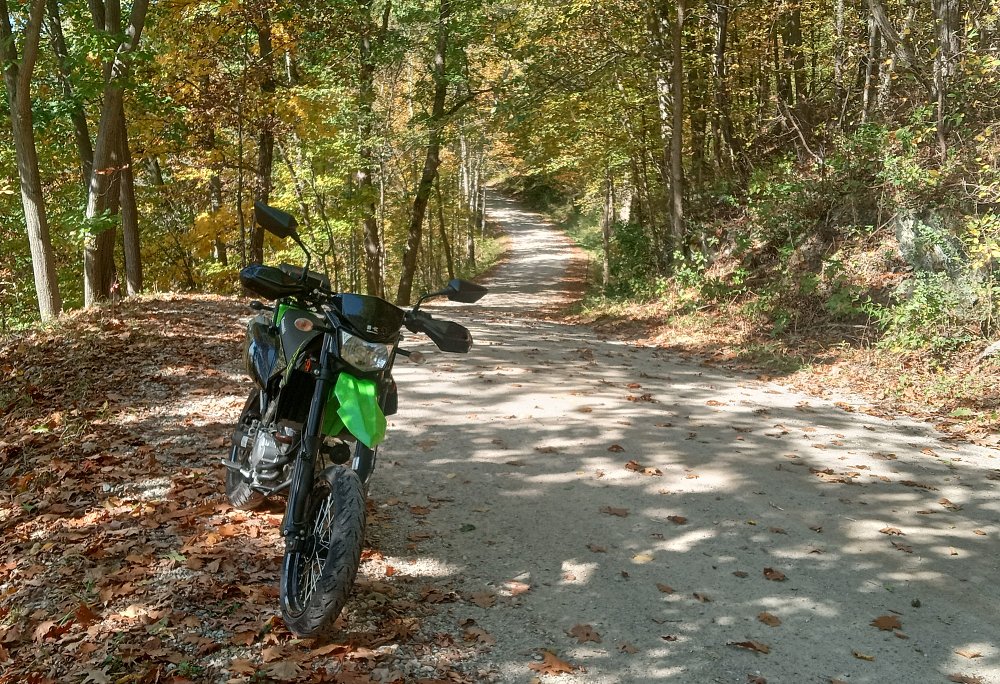
My alternative is an often-overlooked choice because it's not that common but is so easy and fun to ride I bought one myself. Last year I picked up a used Kawasaki KLX300SM supermoto. For you new riders, this supermoto is essentially Kawasaki's dual-sport bike with 17-inch street tires, a stronger front brake, and a lower seat. It's light for a street bike, just over 300 pounds, and it comes with adjustable suspension, so new riders can start learning about turning clickers. Even my recent model in good condition without a lot of miles cost me less than $4,000 and I've since seen other examples with even lower miles and asking prices in the mid-$3,000 range. I use it for all my local around-town transportation and I love the simplicity and easy handling. I bought my first motorcycle 47 years ago and have since ridden everything from 50 cc to 1,800 cc to electric, but I still haven't outgrown the little KLX.
Spurgeon Dunbar: A Triumph-ant entry into motorcycling
"A thing of beauty is a joy forever." Considering John Keats' life ended nearly a century before the first motorcycle took to the streets, it’s amazing to consider how succinctly that singular line sums up my thoughts regarding my first motorcycle. I loved the way my Triumph Bonneville looked the day I bought it and I still love the way it looks to this day. In fact, I didn’t know much else about it outside of the fact I liked the way it looked (and I got approved for financing), but reflecting back it was a pretty heavy bike for a beginner to start out on, even a beginner who is six feet, three inches tall.
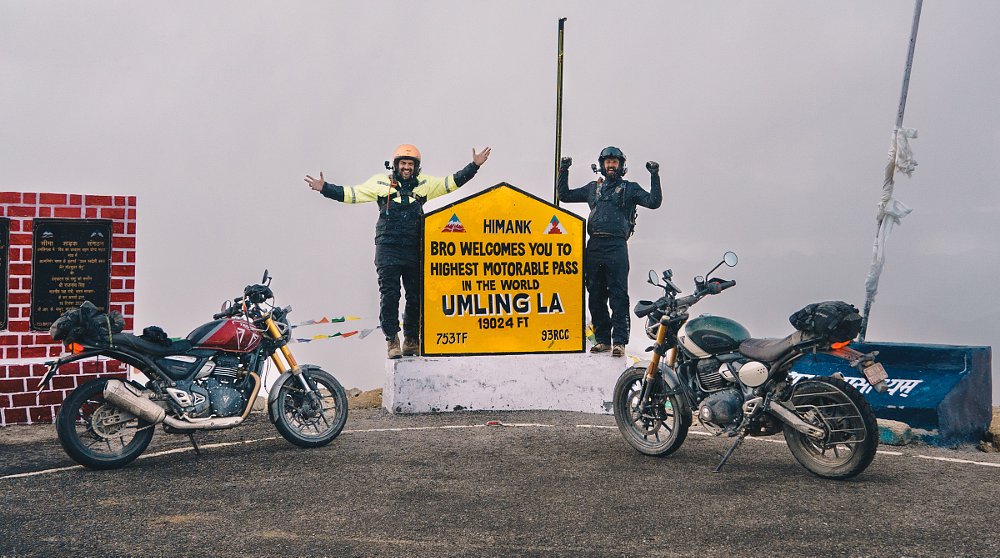
I could never understand why manufacturers, especially Triumph, couldn’t offer a properly sized beginner bike that looked, put simply, more like a motorcycle and less like a transformer. Historically, Triumph had the Cub through the 1960s, so why not offer something similar to the modern rider? The solution came two years ago in the form of their Speed 400 and Scrambler 400 single-cylinder machines. The bikes looked sharp, rode great, and had enough power on tap to haul my 215-pound butt 1,500 miles across India and up Umling La, the highest road in the world. For 2026, Triumph is introducing even more style variants to choose from in the form of the Tracker 400, Thruxton 400, and Scrambler 400 XC.
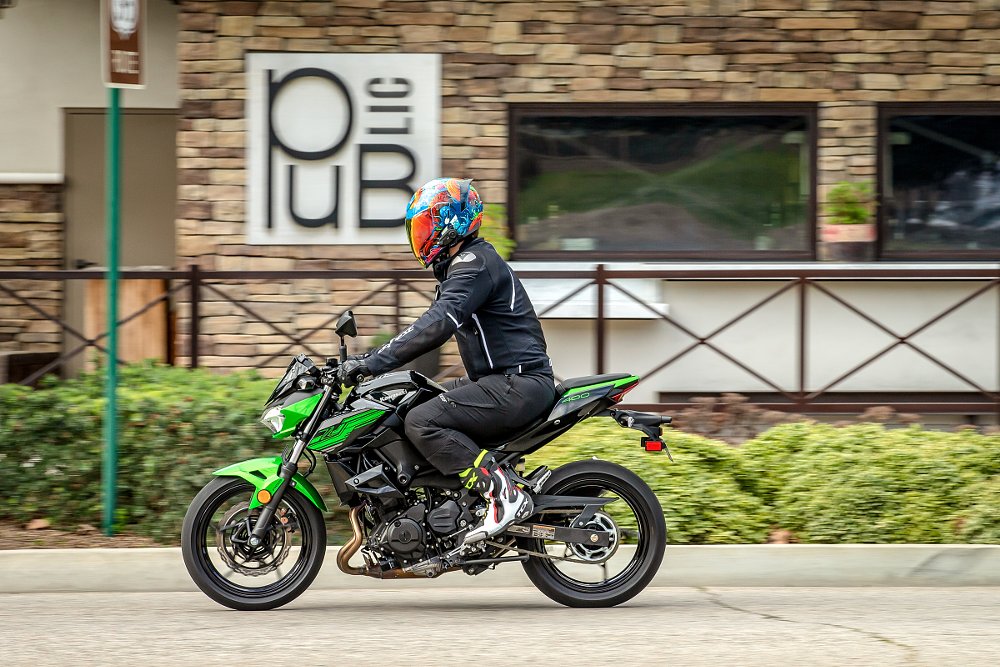
However, if your idea of eternal beauty is more angular in nature you can explore the used market for a Kawasaki Z400. On Kawasaki’s website you’ll notice that inflation has affected both the price tag and engine size of the Baby-Z since I first reported on this bike back in 2019. But with used examples to be had for under $4,000, you can decide for yourself if the additional 52 cubic centimeters of engine displacement in the newer Z500 is worth the extra cash. While beginner motorcycles aren’t necessarily intended to bring eternal joy, new riders no longer have to choose between good looks and beginner practicalities.
Dustin Wheelen: A tough Royal Enfield single
If you absolutely insist on buying a new bike — and I mean absolutely — you should probably buy a cheap one. First bikes are like first loves. You don't know what you're doing, you're going to screw up, and you'll probably want something different in a year. Mistakes are inevitable, but those mistakes don't need to be expensive. At the same time, buying cheap doesn't always mean buying a cheap bike.
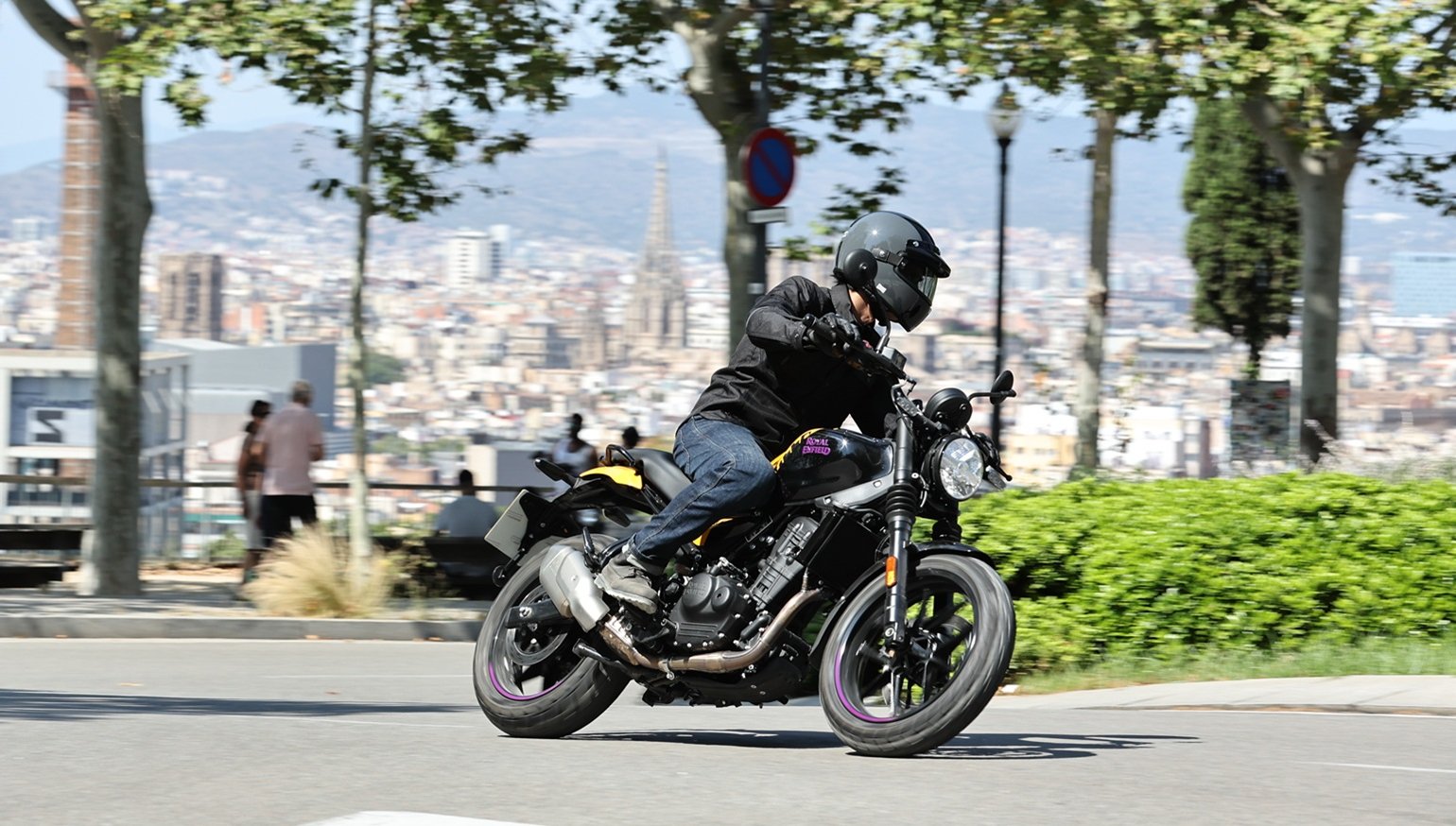
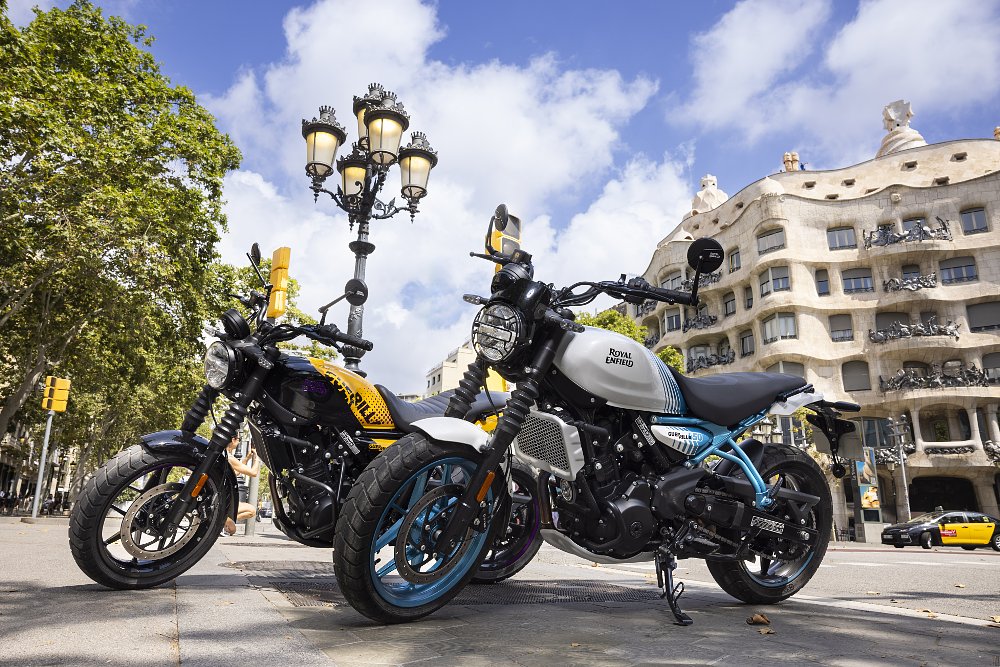
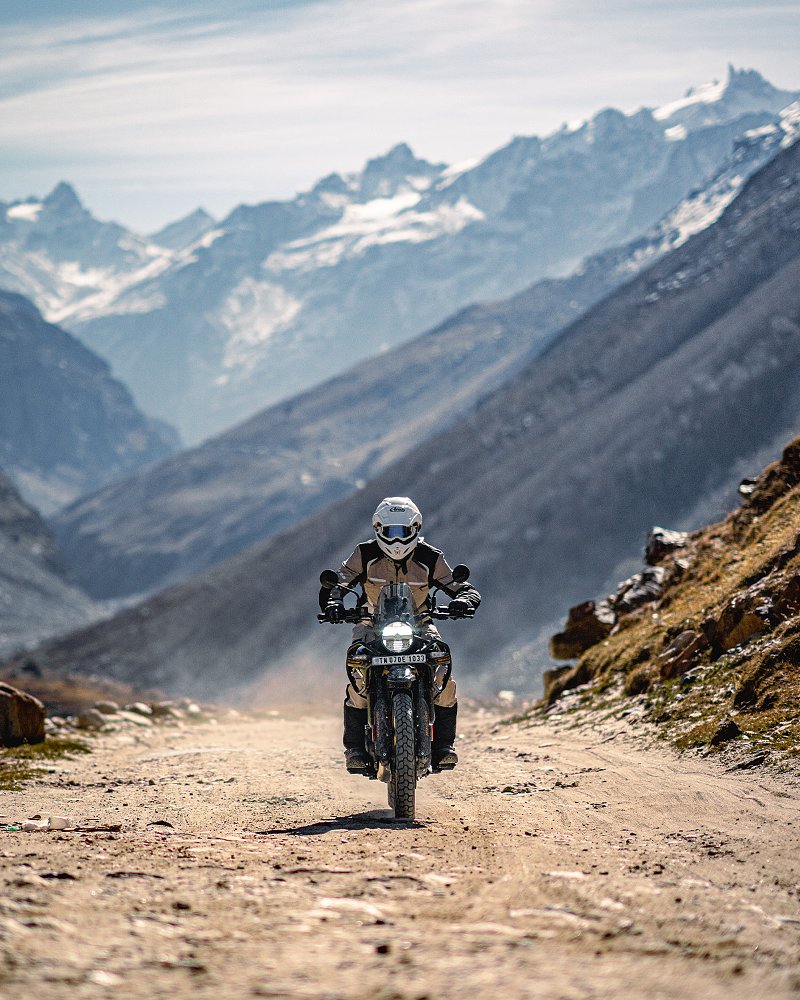
Two motorcycles that immediately come to mind for me are Royal Enfield's Guerrilla 450 and Himalayan. Both pack Royal Enfield's modern, single-cylinder Sherpa engine into an agile chassis, weigh a little over 400 pounds, have seat heights of 30.5 and 32.5 inches respectively, and, importantly, are affordable. The Guerrilla lists at $5,299 while the Himalayan has an MSRP of $5,999. Choose the Guerrilla if you plan to stick to the street or the Himalayan if you think you might want to dabble in the world of adventure riding. Either way, you get a lot of bike for your buck, but beginners can find even better cost savings in the used market.
Displacement creep can be aggravating for owners of previous/current-gen models, but it's often a windfall for used-bike buyers. Such developments often devalue outgoing bikes. That's why I agree with Spurgeon that a used Kawasaki Z400, the predecessor to the Z500 Lance mentioned, is such a good buy. Well-"loved" examples often go for less than $4,000. At that price, you get around 45 ponies, a Showa fork, a KYB shock, and Nissin brakes. The wet weight is sub-400 pounds, and the seat height is sub-31 inches. I rest my case.
Zack Courts: Why not go mini?
My advice is simple: Go small, if you can. One of the most important eras of my riding life was when I was a kid. Sure, my bones were made of rubber, but the other reason I could afford to be so dumb is that my bikes were slow. Those 80 cc, 100 cc, and 250 cc dirt bikes taught me to respect the machine, without savage consequences. So, no matter what age you are, get something that seems too small.
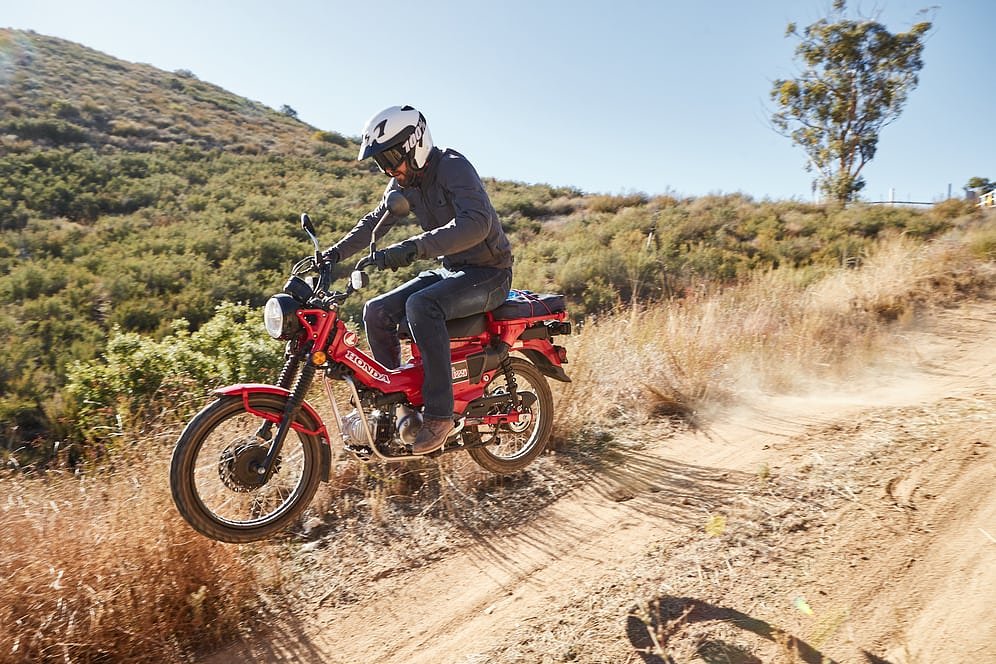
Specifically, if I had to slide a perfect training tool underneath every 16-year-old who wanted a motorcycle license, I'd go with a Honda Dax. Or Trail 125, or Super Cub, whatever. Yes, they are little pieces of nostalgic jewelry that look good on a Baby Boomer's RV bumper, but they're also terrific for understanding how to ride a motorcycle. If you drive a manual-transmission car, or are otherwise quite confident that you want a traditional clutch lever, then getting a Grom or even a 400-class machine is a fine idea. MSRPs for Honda's 125 cc miniMOTOs range from $3,599 for the Grom to $4,349 for the cute Monkey.
With all of the E-Clutch and DCT variants in Honda's lineup it's easy to forget about the semi-automatic transmission fitted to some of Big Red's miniMOTO models. A Dax will teach you how to shift smoothly, but won't stall and won't demand that you know how to use a clutch, like I ranted about in my first-ride article. And if $4,000-something is too spicy for a toy, there's a range of Honda Trail and Cub models dating back to black-and-white days, all of which use the same, ultra-simple transmission and have loads of charm. Finding one a few years old for under $3,000 is not too hard. It will get you started and there will be plenty of time for TFT screens and heated grips later; for now, learn to love the machine.