Shop by Vehicle
 Track Order
 Contact Us
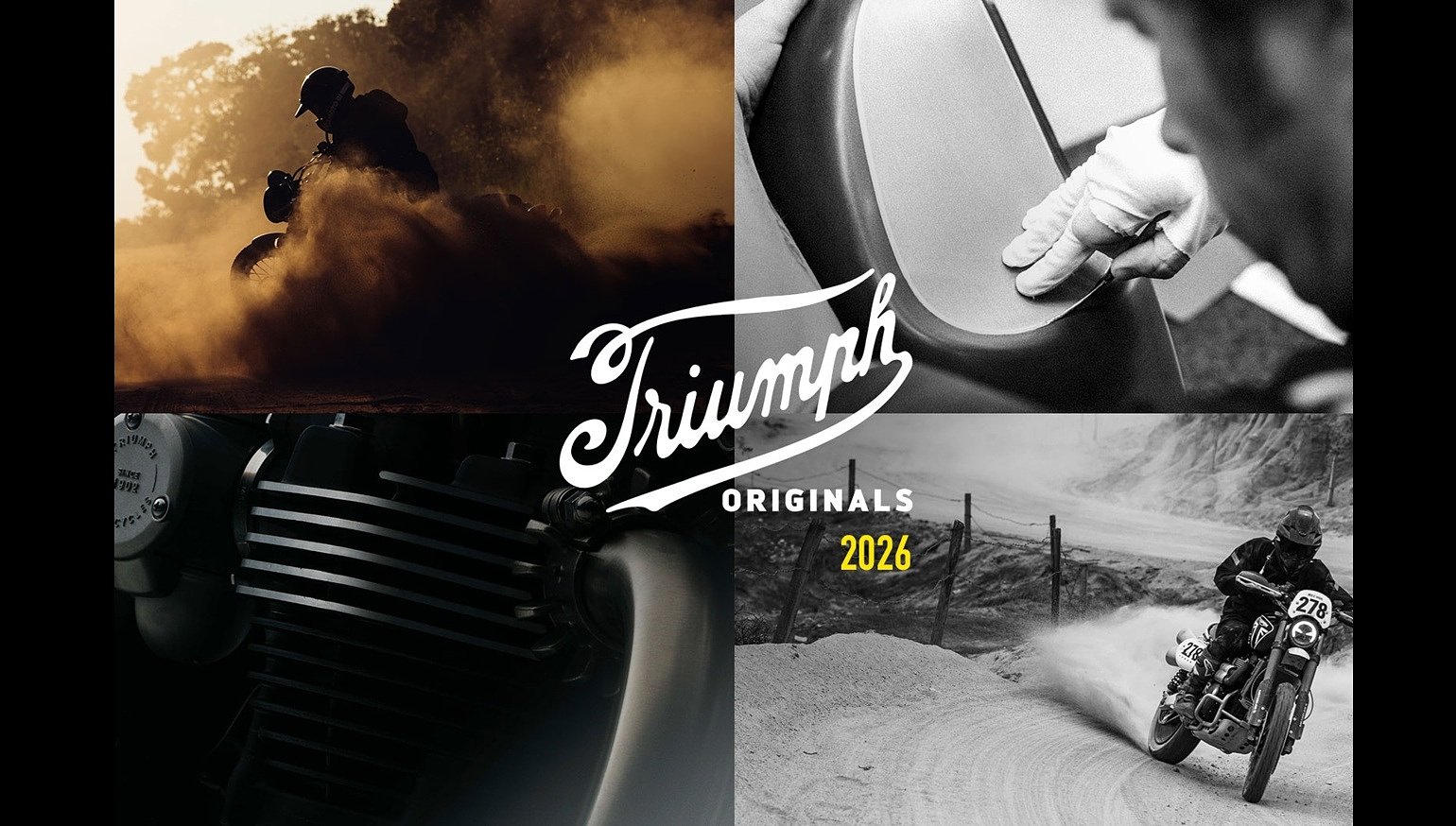
As Dustin so eloquently put it in his recent article, "Special-edition motorcycles seem somewhat less 'special' these days." This is because manufacturers have developed a go-to formula that, somehow, works. It goes something like this: Lay down a unique paint scheme, throw on a few higher-spec parts, add a numbered limited-edition plaque, build some marketing hype, and sell it for a premium.
Triumph is as guilty of this as any other manufacturer, but thankfully, it hasn't forgotten where some of its best ideas came from. During the brand's formative years, owners were modifying Triumphs to suit their needs. It was a time when customization went beyond the form and deep into the function. If you wanted to go fast on the street, you built a café racer; if you loved riding off-road, you built a scrambler. These weren't just passing trends; they became part of Triumph's identity, eventually finding their way into the company's production motorcycles.
Triumph Originals reflects those roots. The initiative invites custom builders to reinterpret a motorcycle, with the winner decided by a panel of expert judges and voting by the public.
This year, seven builders from around the globe were offered a model from Triumph's Scrambler range and given a build theme of "Time Capsule." The brief was simple but deliberately open to interpretation. With builders from China, the United States, Canada, Italy, Spain, France, and the UK taking up the challenge, the results were always destined to be varied. From 1980s motocross to modern supermoto and desert racing, each builder found a very different way to interpret the brief. Here's how seven stock Scramblers became seven very different machines.
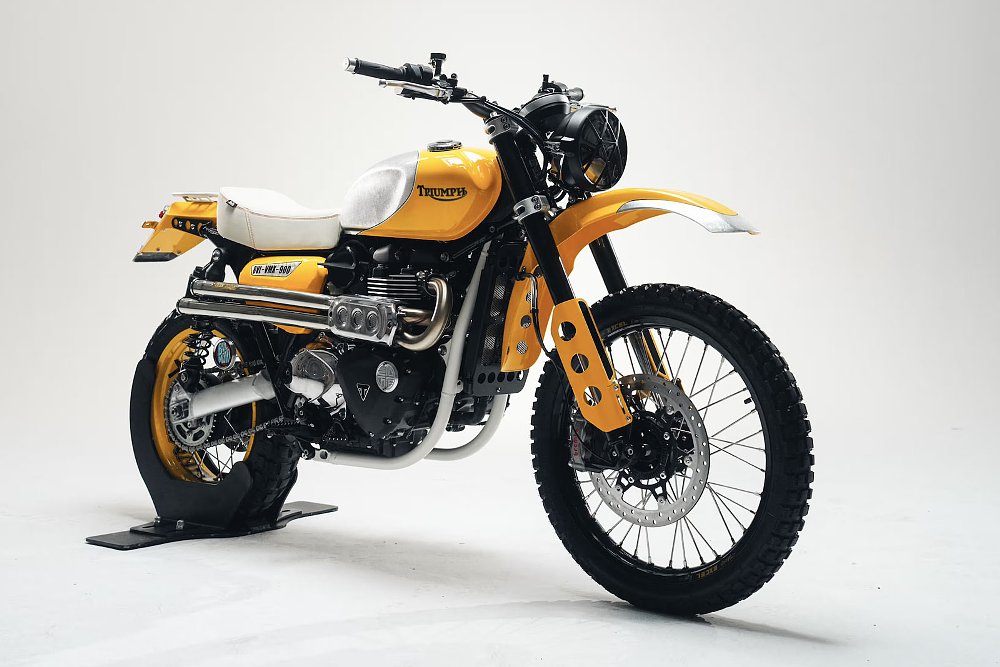
BVL Garage China: BVL-VMX-900
When you're based in the world's manufacturing mecca, it makes sense to take advantage of the latest technology to bring your ideas to life. For the past decade, Chinese workshop BVL Moto Garage has been doing exactly that. The industrial designers turned custom bike builders use a data-driven, detail-obsessed approach to create their distinctive look.
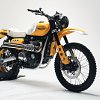
For their Originals build, BVL opted to work with the extensively updated 2026 Triumph Scrambler 900. Similar to the motorcycle itself, they took a modern approach with their custom build, but their concept was inspired by an icon from Triumph's past: the 1981 TR7T Tiger Trail. Produced for just one year and in a very limited 180-unit production run, the TR7T formed part of the foundation for Triumph’s modern adventure bikes.
BVL's approach with its TR7T tribute wasn't simply an aesthetic recreation. Instead, they imagined what the Tiger Trail may have looked like if it had been built using today's manufacturing tech.
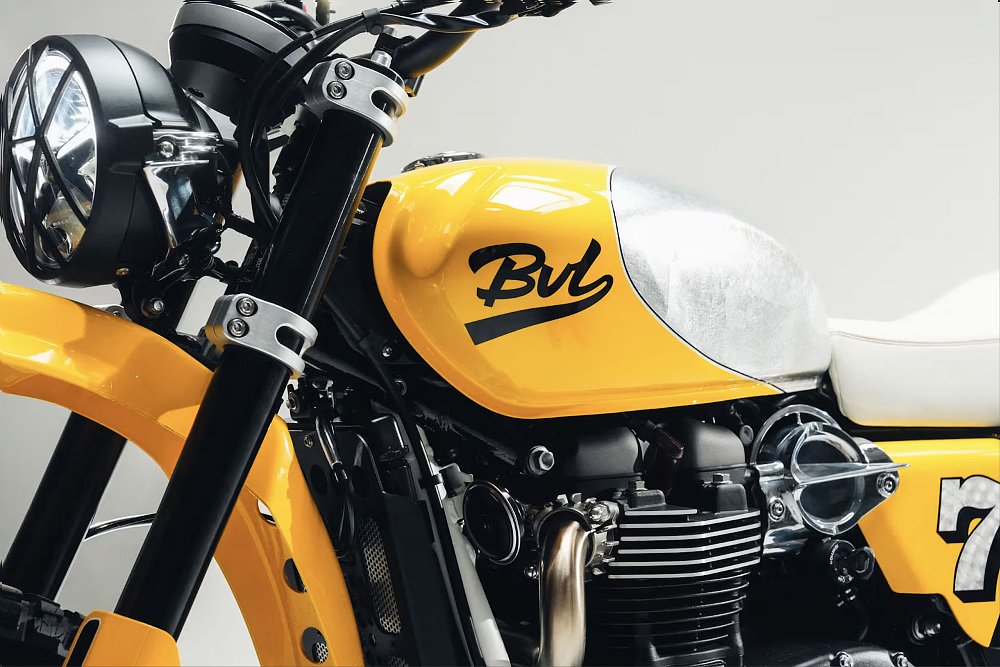
After completing a full 3D scan of the motorcycle, the BVL team tore the bike down and began designing the new components digitally. The major structural changes to the BVL Scrambler consist of a redesigned chassis for a smoother silhouette around the engine, an off-road-focused suspension overhaul, and larger wheels for increased ground clearance and improved off-road capability.
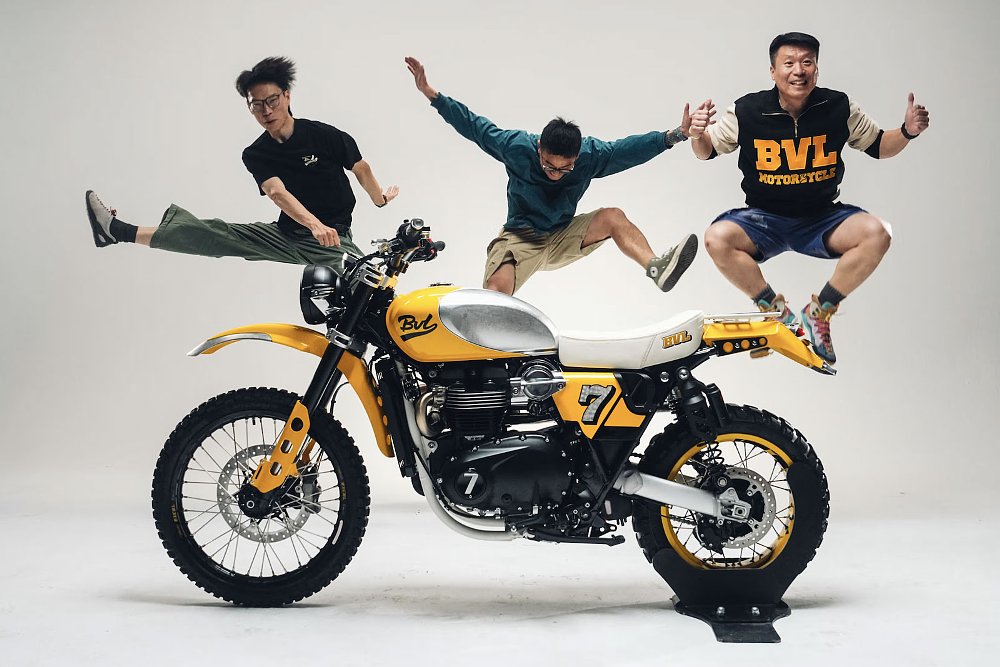
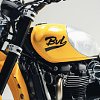
To create the bike's new look, BVL used a mix of 3D printing, laser cutting, and handcrafted metalwork. Upfront sits a high-mount fender, fork guards, and a custom headlight and gauge mount. The Scrambler's mid-section has been slimmed down using metal 3D-printed intake covers, side panels, and a custom solo seat. And wrapping up the rear, a laser-cut and hand-fabricated mudguard and carry rack. Finally, to complete the look, the Scrambler was finished in a bright TR7T yellow paint scheme with silver foil details.
BVL nailed it with their TR7T tribute, but this is no trailer queen. The BVL-VMX-900 has already been put to the test out in the wild and proved itself a truly capable Scrambler.
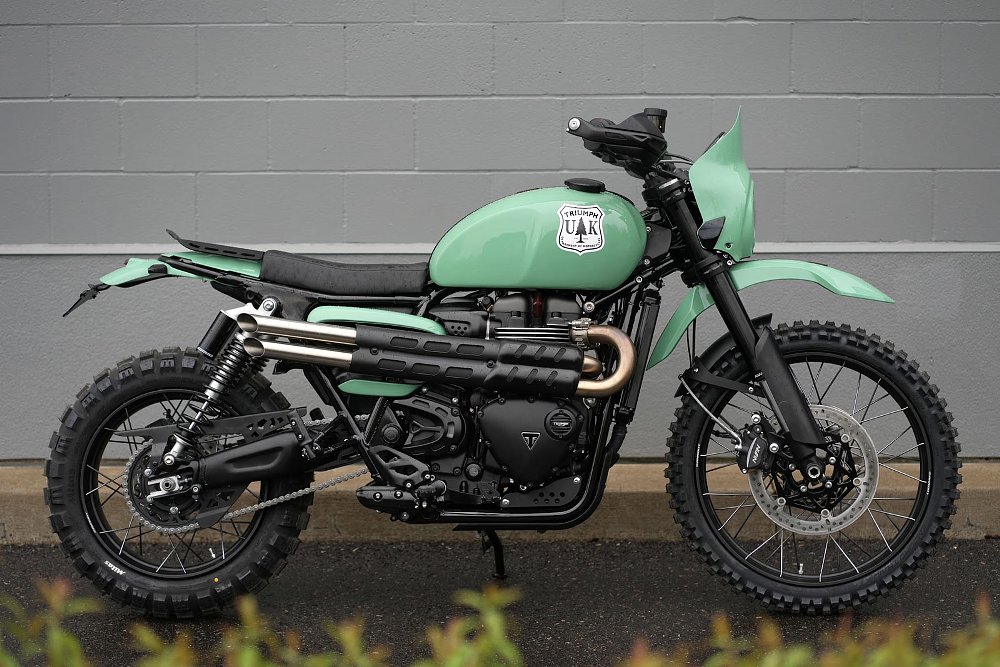
Triumph Columbia River USA: A Tribute to PNW Adventure
The U.S. entry into the 2026 Originals hails from the Triumph Columbia River dealership in Portland, Oregon. General Manager Liz Rubin and her team chose the Scrambler 1200 as their starting point and set out to build a homage to their home turf.
"I've been at Triumph dealerships since 2001, helping riders make their bikes their own," says Liz. "I'm not a fabricator, just someone who loves motorcycles and believes custom builds shouldn't feel out of reach."
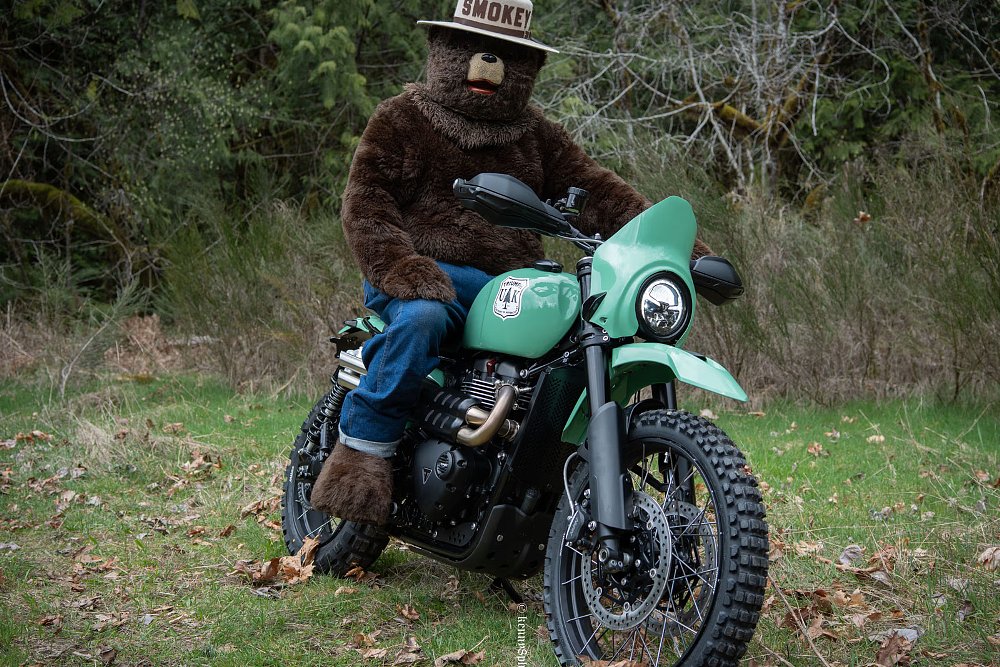
Rubin's concept was to create a motorcycle that celebrated all aspects of Oregon's great outdoors. Influences included the Pacific Northwest’s riding culture, Smokey the Bear, and U.S. Forest Service vehicles. In keeping with her "customs shouldn't feel out of reach" ethos, Liz's design retained a familiar Scrambler 1200 silhouette while adding some Pacific Northwest character.
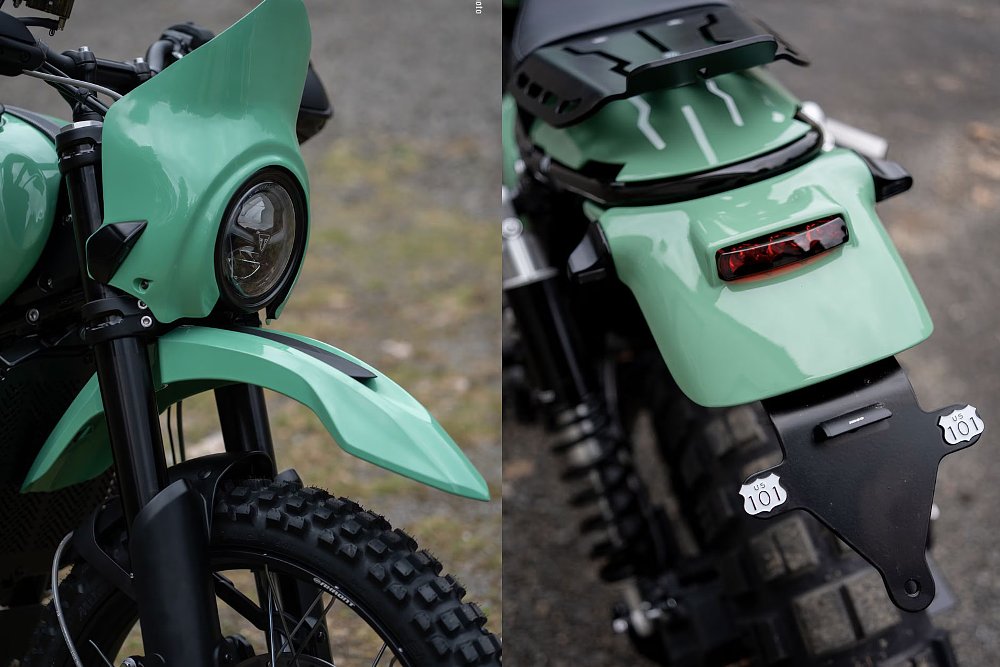
The aesthetic changes to this build center around parts from Germany's Crooked Motorcycles. Crooked has developed bolt-on conversion parts for several late-model Triumphs, including the current model Scrambler 1200. For this project, the Columbia River crew acquired a complete Crooked Motorcycles Alps edition body kit. The kit includes a front cowl with LED turn signals, high-mount front fender, radiator guard, chain guard, modular single seat, rear fender with LED taillight, license plate holder, and all of the associated fitment hardware.
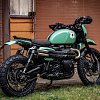
Along with the bodywork modifications, this Scrambler 1200 wears purposeful rubber to prep it for the trails, a high-mount two-into-two Scrambler exhaust, and a selection of blacked-out accessories from the Triumph catalog.
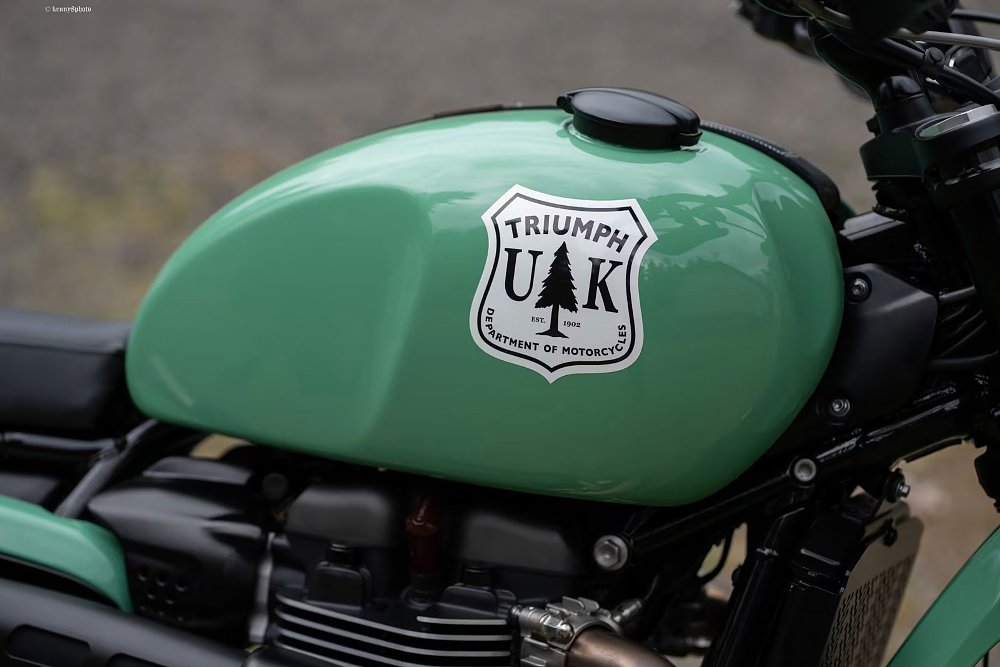
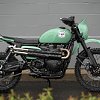
Completing this Scrambler's new look is a PNW adventurer-inspired colorway and livery. Vibrant sage green paint on the tinware pops against the blacked-out running gear, and U.S. Forest Service-inspired shields on the tank add a tongue-in-cheek connection to the Triumph brand.
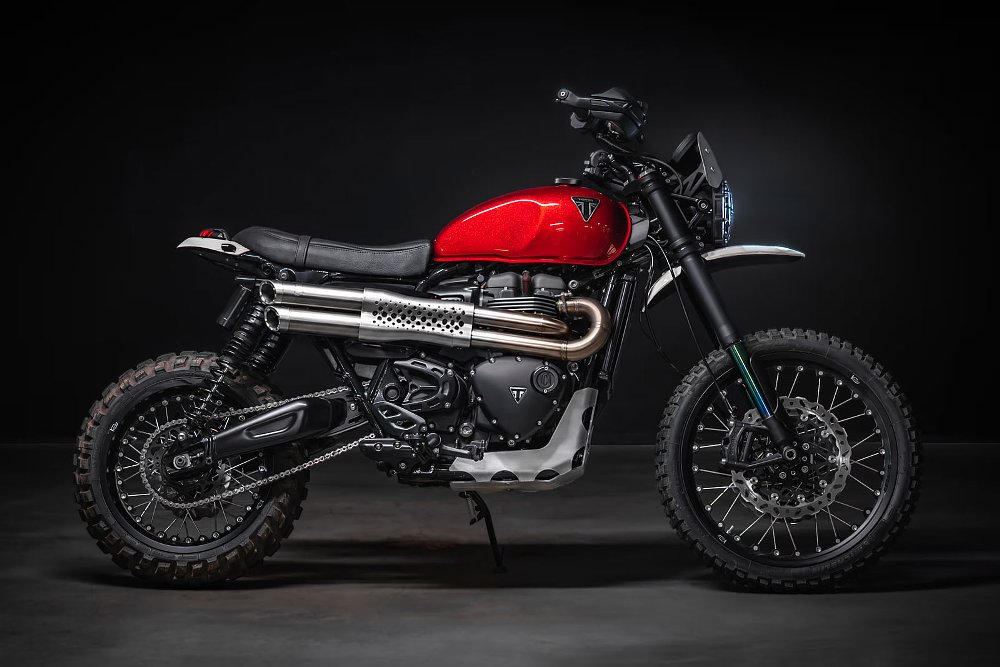
FCR Original France: Red Dust
Over on the other side of the Atlantic, French workshop FCR Original (Instagram) also opted for a Scrambler 1200 starting point. What makes the FCR team's approach different, however, is its racing background, and they've used that experience to give this 1200 XE a performance edge.
The particular era of racing that inspired FCR's project was 1960s and '70s desert racing. This translated into a stripped-back, essentials-only approach focused more on purposeful function than showstopping form. "For us, the word Scrambler, above all, evokes freedom," says FCR Original.
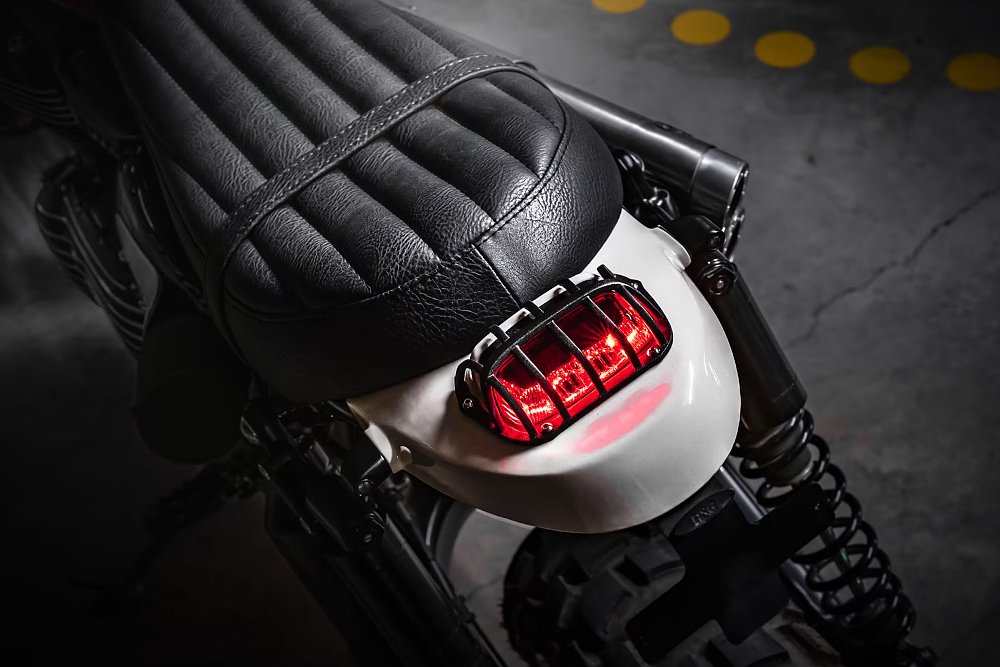
As racers, FCR applies a strict "every modification has a purpose" philosophy to its work. With their Triumph Original, that approach remains firmly intact. Nothing has been changed simply for the sake of appearance, with every modification intended to improve the motorcycle's performance, ergonomics, or ride experience, particularly when taken off-road.
The first stage of FCR's build involved stripping away all the non-essential equipment and weight. The biggest savings came from the bodywork modifications. FCR dispensed with the factory side panels, original fenders, and tail unit, replacing them with lightweight alternatives developed using 3D modeling and rapid prototyping.
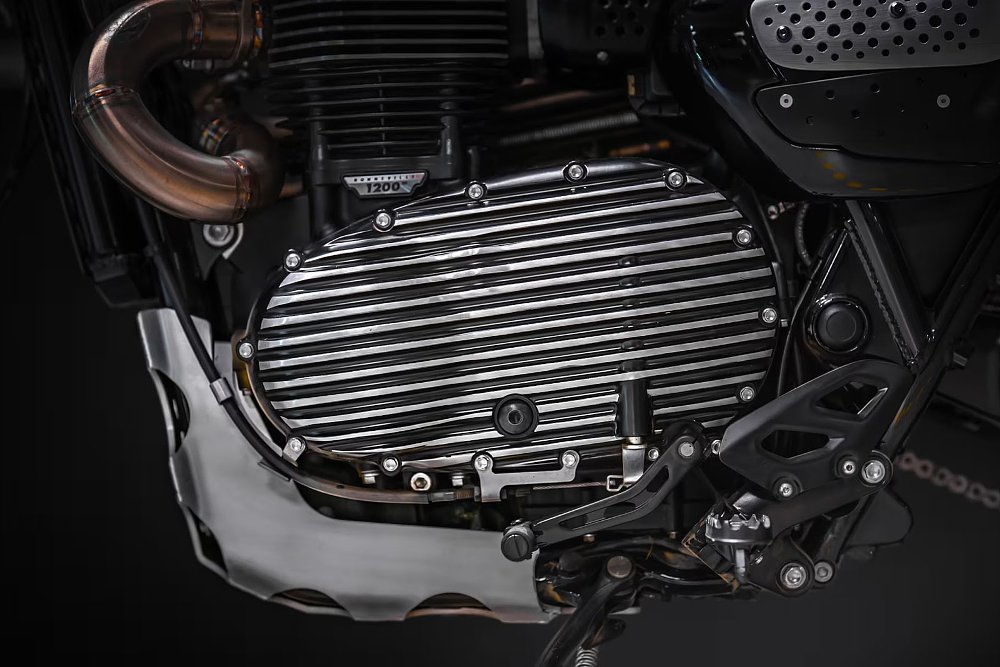
Next, they prepped the Scrambler for serious off-road work with a handmade belly pan. A custom high-mount exhaust sheds additional weight, while changes to the ergonomics set things up nicely for the dirt. Finally, to add a bit of flair, FCR applied candy-red-flake paint to the fuel tank just so no one forgets that riding motorcycles, for whatever purpose, can still be good fun.

Motos Illimitées Canada: Brit Super Moto
Canadian Triumph dealership Motos Illimitées (Instagram) took a very different approach when modifying its Scrambler 1200 XE. Rather than looking to the past, they've created a potential future direction for the Scrambler platform.
Motos Illimitées' concept guides the Scrambler away from the dirt and sits it firmly on the tarmac. Using a similar approach to how the style was itself created, they've transformed the Scrambler into a rip-snortin' good times supermoto. In other words, they've taken a motorcycle born from customization and customized it in the opposite direction.

The key component in achieving the switch from scrambler to supermoto was the wheels. After the removal of the 1200's stock 21-inch front and 17-inch rear factory wheels, the Motos Illimitées team replaced them with matching 17-inch alternatives from a Thruxton RS. Surrounding each rim is Metzeler's high-performance, road-legal racing rubber, the Racetec RR. Moto-Master wave disc rotors take braking power to another level.
In addition to the wheels, this Scrambler's been treated to a range of other tweaks to further enhance its supermoto stature. The list includes MX-style footpegs, a relocated instrument cluster and ignition, Renthal handlebar, Acerbis bodywork, and a custom Zard exhaust.
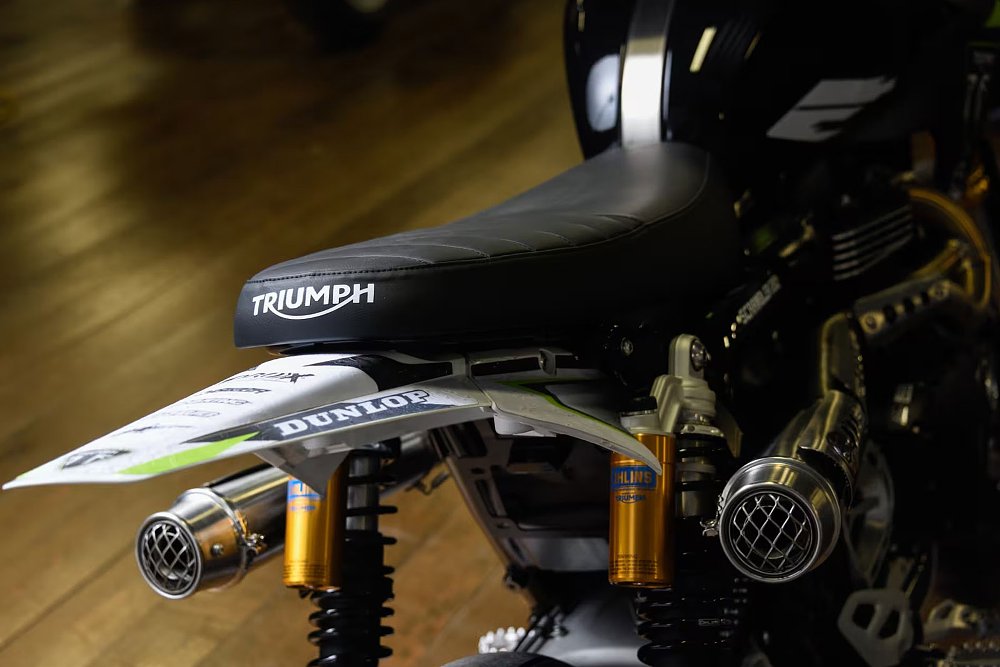
The styling is where Motos Illimitées has really taken their Scrambler in a new direction. The combination of the new bodywork and color scheme was directly influenced by Triumph’s TF 250-E Enduro. Custom race livery and lace-inspired graphics complete the look of what is perhaps the most unexpected translation of this year's Originals brief, but it is certainly no less impressive for it.

South Garage Motor Co. Italy: Dune 400
Italian workshop South Garage Co. (Instagram) took a similar approach to the Canadians. The Milan-based multidisciplinary workshop, boutique, and bistro put together an Originals concept that could easily become a model in Triumph’s lineup. Built around a Scrambler 400 XC base, the Dune 400 is South Garage’s interpretation of a 1980s and '90s desert rally racer. The result is a striking modern retro adventure tourer that would be an appealing offering against models like the CFMOTO Ibex 450 or Royal Enfield Himalayan.
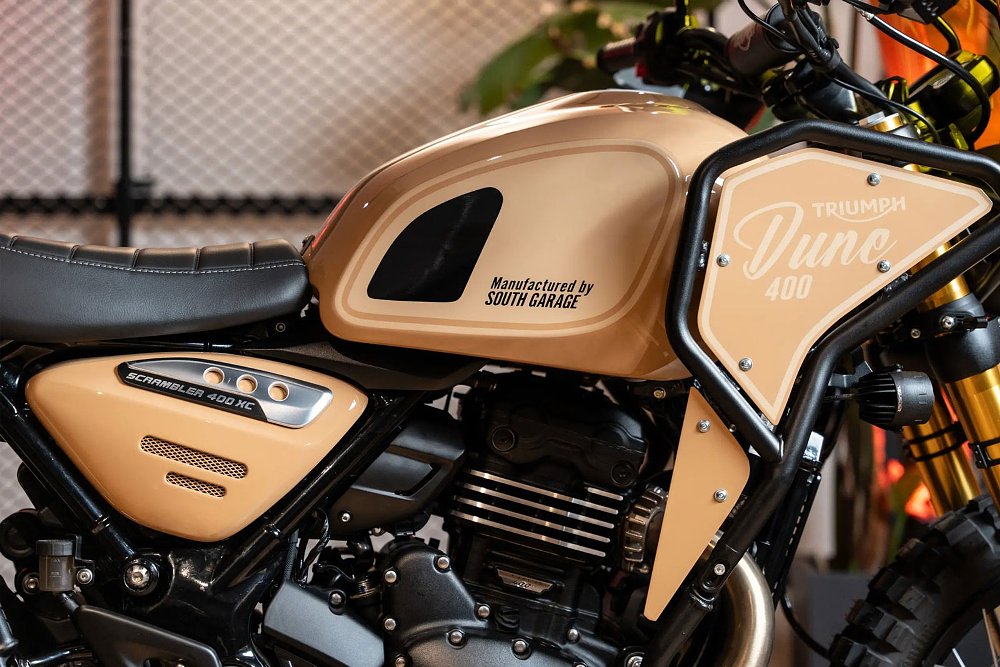
The conversion from scrambler to desert rally racer centers around utilitarian modifications that add function and protection to the 400 XC. The biggest change comes to the front end, where South Garage has added comprehensive crash protection and a rally-style tower and windscreen. Additional guards around the belly of the engine and on the handlebar let you know this bike is built for getting off the beaten track.
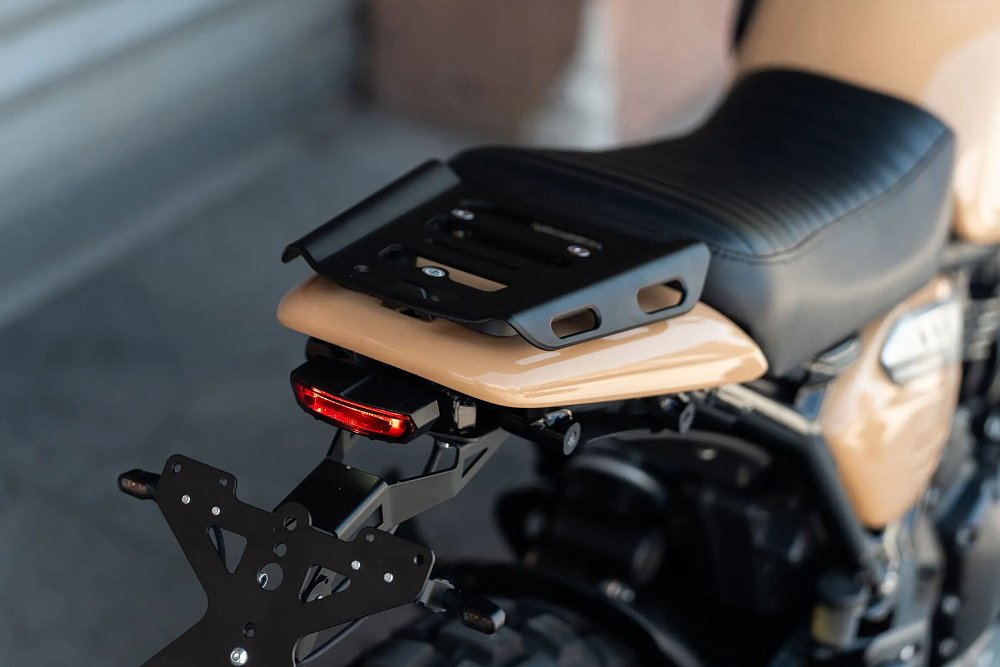
Additional functional mods on the Dune 400 include a GPS mount behind the tall screen, spot lights for night riding, block-pattern dual-sport rubber, a high-mount exhaust, and a new tail section complete with a luggage rack.
Finished in a fitting sand-colored paint scheme and built to a factory level of fit and finish, the Dune 400 looks less like a one-off custom and more like a motorcycle Triumph could slot into its lineup.
LIND Group x Stockwell Design UK: Scrambler 900
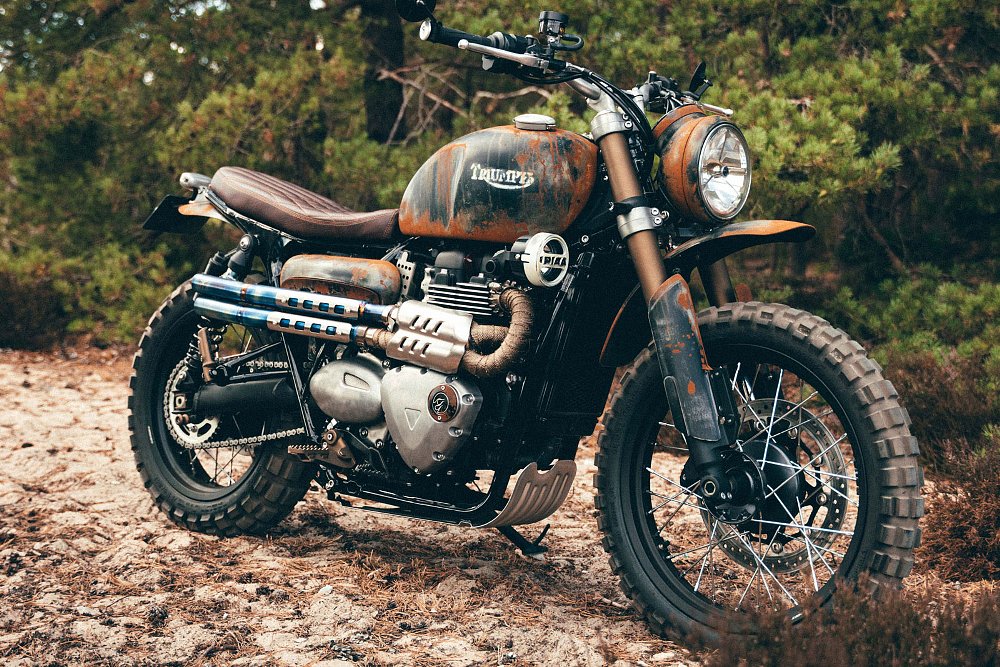
The LIND Group and Stockwell Design Scrambler 900 conversion is perhaps the most intriguing Scrambler of the bunch. Stockwell set out to create the "ultimate British icon," creating a bike that borrows styling from Scramblers of the 1960s and '70s and looks like it's lived a long and eventful life.
The build was commissioned by Dougie Poynter, songwriter and bassist for British pop band McFly. Poynter loved the 2026 Scrambler 900, but has a soft spot for machines whose appearance tells a story. Stockwell describes the brief as creating a bike that had "spent its time traveling around the world and then come back home to England, rising through muddy lanes."

This build was an exercise in smoke and mirrors. Poynter wanted a motorcycle with the physical character of one that had spent decades being ridden hard yet performed like new. So Stockwell set about giving the Scrambler the kind of patina that comes from years of use.
To achieve the look, Stockwell combined genuinely old parts with some clever paint trickery. The seat uses a custom pan upholstered in leather from an old jacket, burnished to enhance its vintage look. The headlamp hails from a 1990s Bonneville and has been modified to house the instrument cluster. High fenders, chunky rubber, a vintage PIAA spotlight, and custom pipes with wrapped headers amp up the Scrambler vibe.
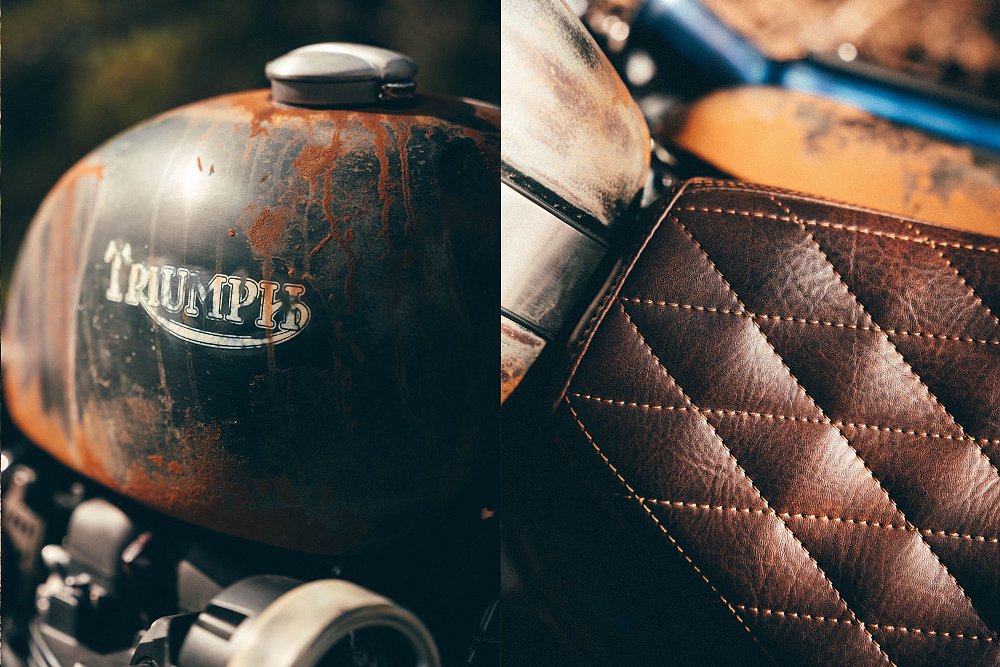
Creating the motorcycle's aged appearance took more than simply throwing some dirt at it. Polished surfaces, including the engine cases and top clamp, had their clearcoat removed and were sanded to dull any shine. For the paintwork, Stockwell applied a black basecoat before adding a special coating activated by an acid wash, causing it to rust instantly. Strategic application resulted in corrosion that convincingly looks like the product of decades of exposure.
They say that patina is earned, not manufactured. Stockwell seems to have proven otherwise.
Tamarit Motorcycles Spain: MIURA
No Triumph custom build-off would be complete without an entry from Spain's Tamarit Motorcycles (Instagram). With more than 200 completed builds, Tamarit is arguably the most prolific Triumph-focused custom workshop in the world.
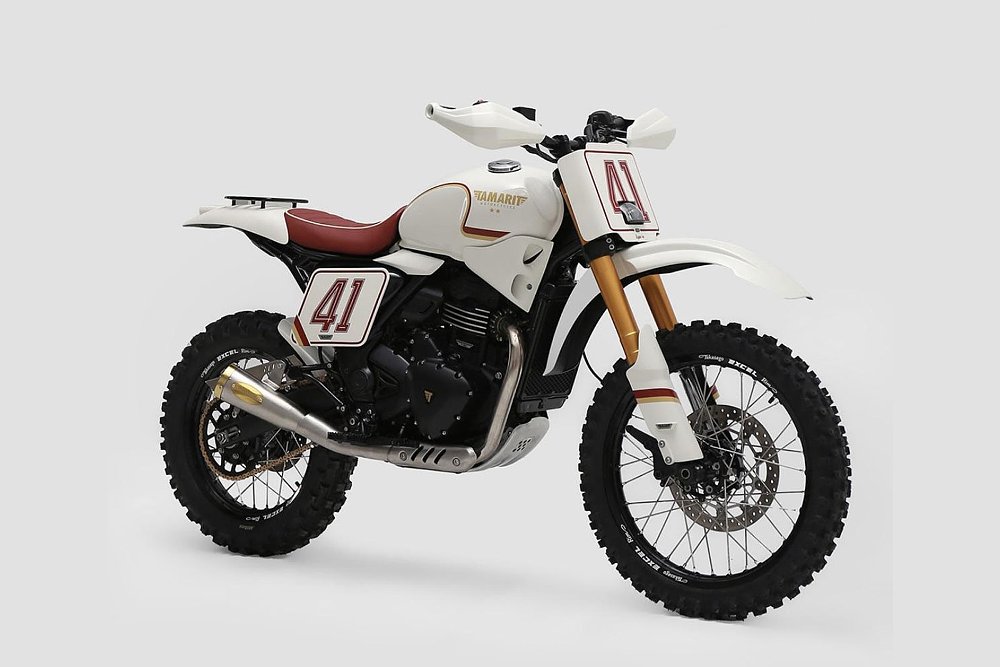
For their Originals project, Tamarit chose the Scrambler 400 XC as a starting point. This makes it the first 400 Tamarit has ever worked on, so they made sure it would leave an impression.
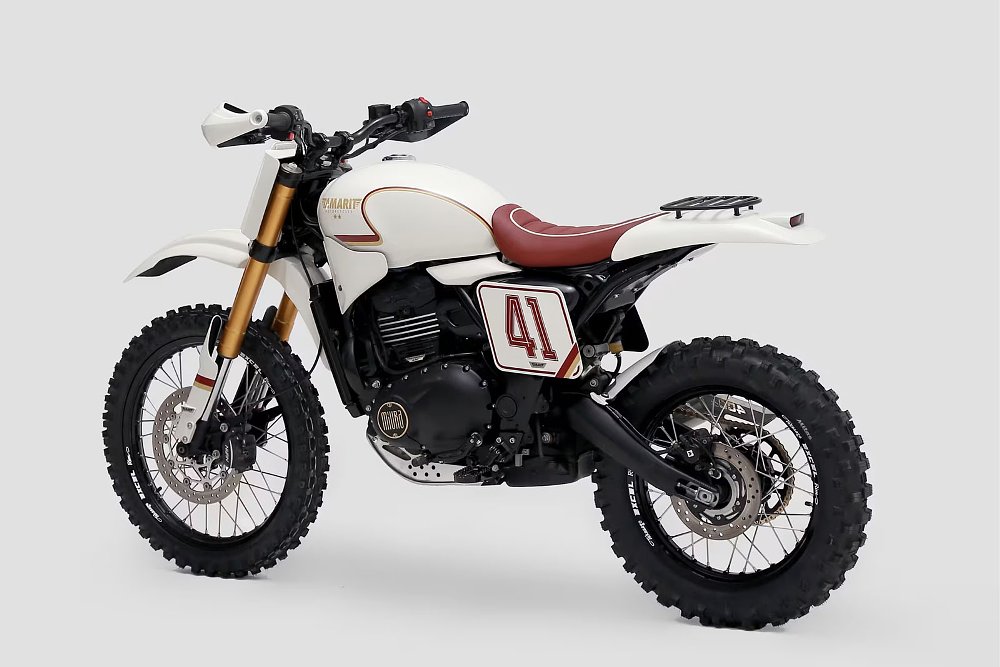
Painted in the colors of the Spanish national football team, Miura is a celebration of Tamarit's Spanish roots. Stylistically, it's a mashup of 1960s and '80s off-road motorcycles, but this build goes well beyond aesthetics. What they've created could be described as the workshop's own interpretation of an ADV Unicorn.
Almost every aspect of this 400 XC has been modified or refined in some way. The chassis features an entirely new lightweight subframe and revised geometry, with considered changes to the rake, trail, and wheelbase. The suspension uses components from a Tiger 800, rebuilt to suit the 400. Spoked Excel Takasago wheels run a 21-inch front and 18-inch rear combination, while Brembo and Nissin components handle braking.
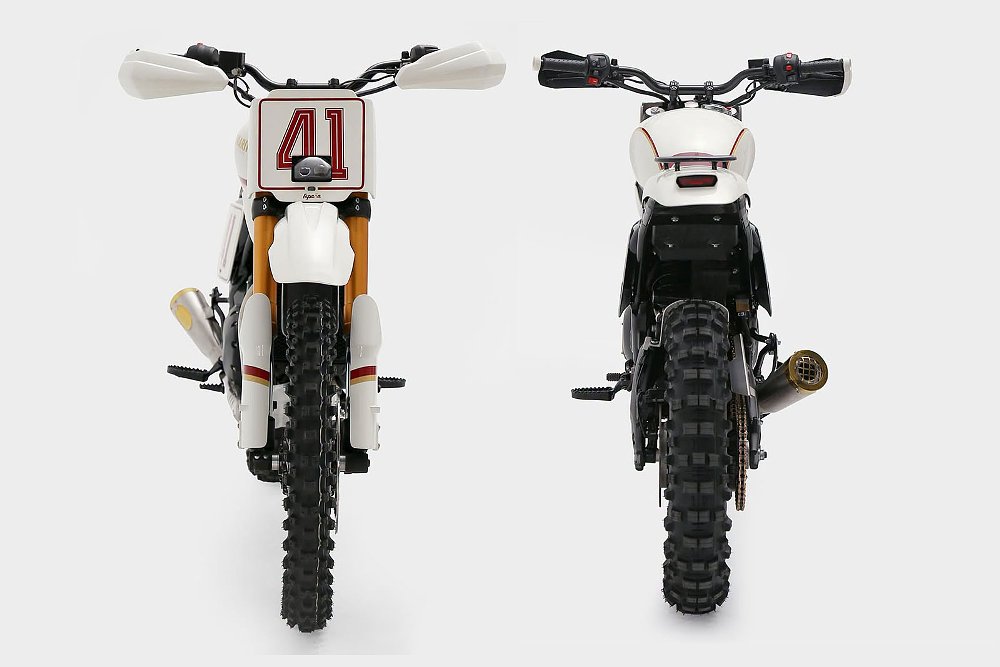
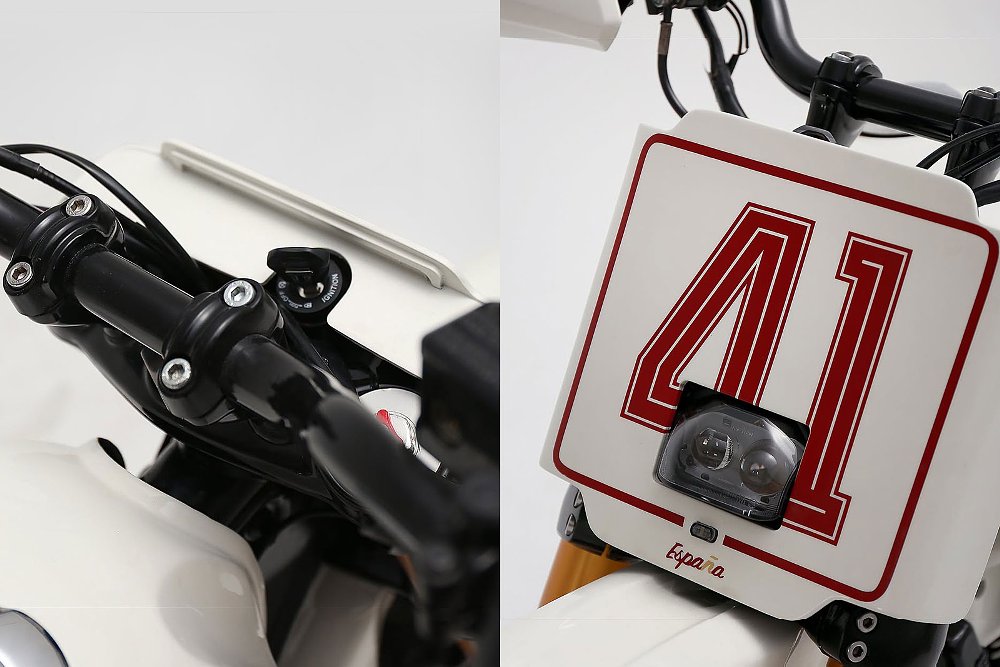
Equal attention has been paid to the styling, where once again function played a role in every decision. The fuel tank is the stock unit, but it's been shifted forward to help establish the reworked riding position. An aluminum handlebar, a custom solo seat, and off-road footpegs complete the setup, while a combination of 3D-printed and hand-crafted aluminum body panels adds protection where required. Lighting has been reduced to a minimum, and a custom exhaust helps unleash some additional grunt from the 400 single.
What makes all this particularly impressive is just how drastically these changes have affected the bike's handling. In addition to the benefits gained from the revised geometry, riding position, and upgraded equipment, Miura weighs a whopping 25 kilograms (55 pounds) less than the motorcycle it started life as. That's not just a custom build; that's a completely different motorcycle.
Vote for your favorite
Seven different interpretations of the same brief, from seven builders in seven different countries. For the second year running, Triumph Originals has produced some intriguing results, with some builds looking to the past and others hinting at what the future might hold. Now it's up to the panel of judges and the public to pick a winner, and public voting begins today and runs until September 22.
I already know where my vote is going. The question is, which one gets yours?