Shop by Vehicle
 Track Order
 Contact Us
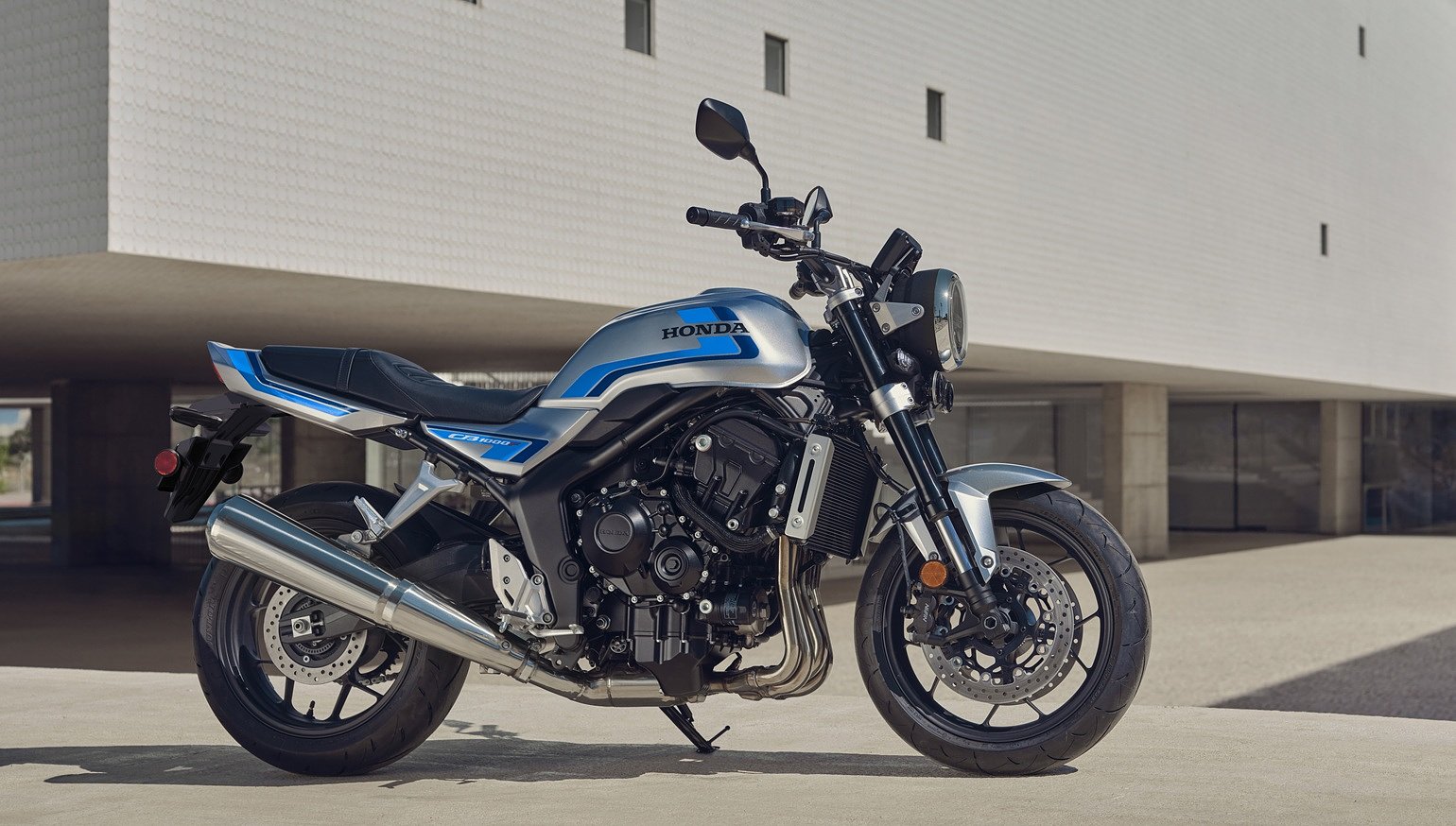
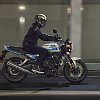
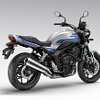
Honda has confirmed that its retro CB1000F, with a paint job that's faithful to the look of the CB750F Freddie Spencer rode in the early days of U.S. Superbike racing, is now arriving at U.S. dealerships.
The CB1000F concept was on display last year at the Coca-Cola Suzuka 8 Hours Endurance Race in nearly street-legal form, raising hopes that Honda would put it into production. It has already come out in Europe and is now available in the United States. MSRP is $10, 599 with a $775 destination charge.
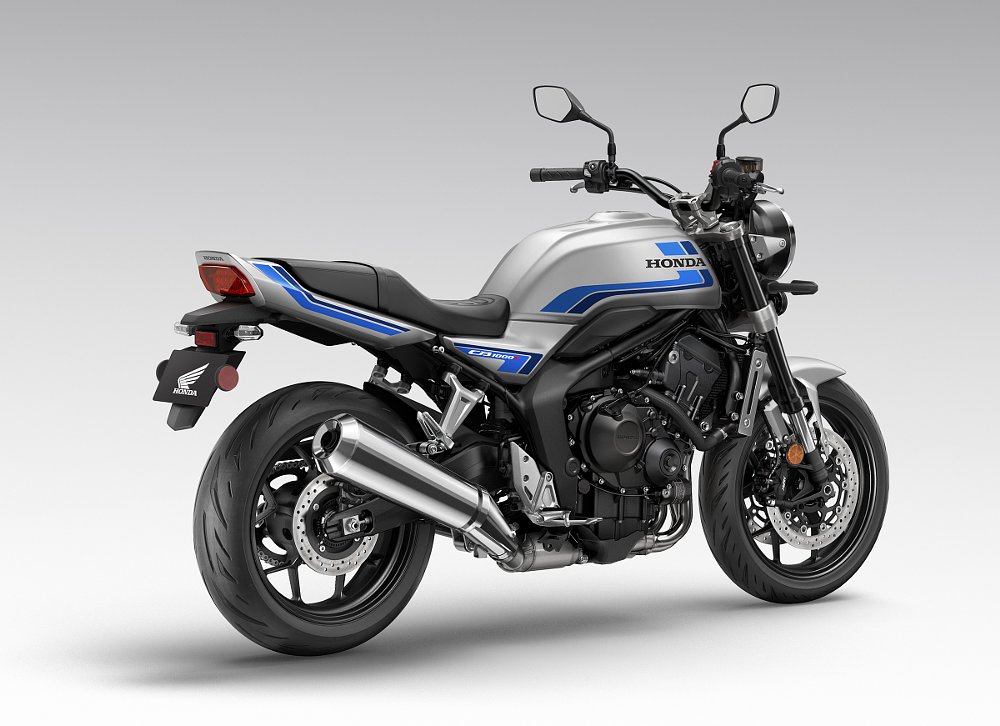
Much of the CB1000F is the same as the CB1000 Hornet SP I test rode last year, but anyone who prefers early 1980s Superbike style over today's looks now has an option. The CB1000F is even closer to the base Hornet sold in Europe, but that model is not available in the United States, where we only get the SP. For U.S. consumers, then, the differences between the CB1000F and the Hornet SP are mainly a Showa rear shock instead of an Öhlins unit and Nissin front brake calipers instead of Brembos.
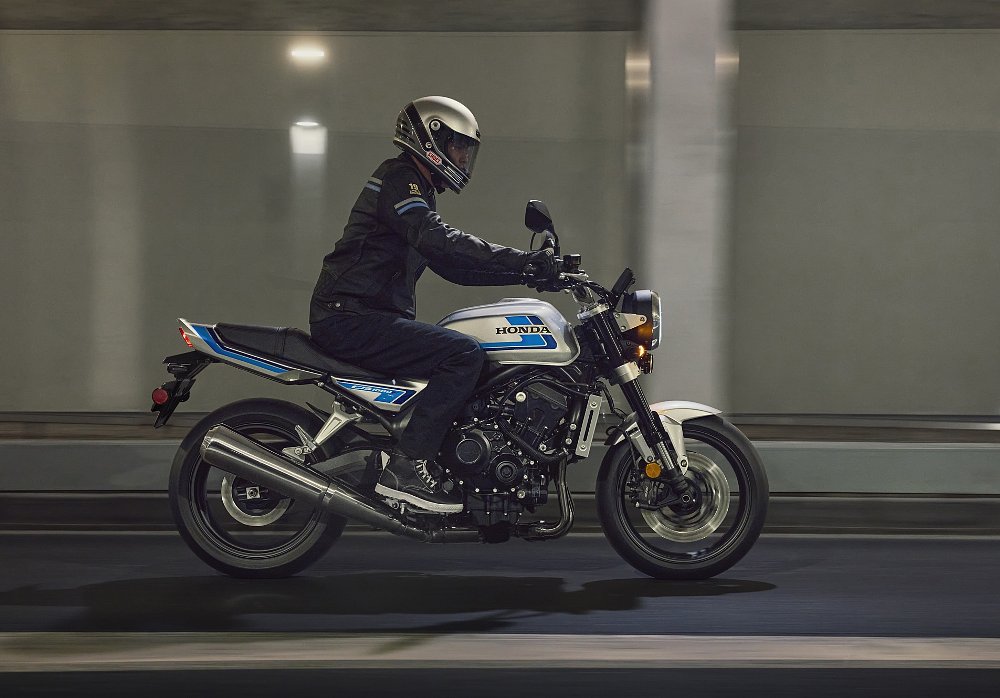
The other major difference between the CB1000F and the Hornet is that Honda has made some changes to the engine and transmission to fit the personality of the retro bike. The Hornet comes alive above 6,000 rpm, but the CB1000F is tuned to push the power lower in the rev range. The intakes are longer and narrower and cam profiles are different. The first and second gears have a lower ratio than the Hornet while the rest have a higher ratio for more relaxed engine speeds at cruising velocities, in keeping with the nature of the engine.
And of course the most obvious difference from the Hornet is the looks. That's the CB1000F's true unique selling proposition.
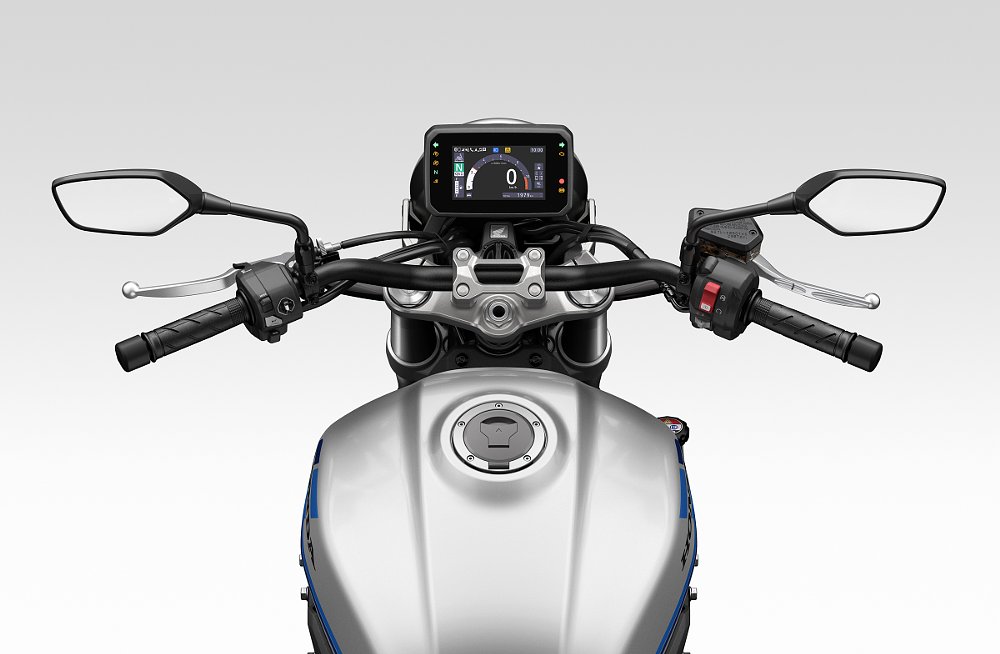
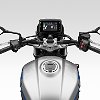
The CB1000F won't make you ride like it's the early 1980s, however. It's equipped with a five-inch TFT display and offers the same five ride modes as the Hornet, including two customizable User modes that allow you to set your preferred levels of power delivery, engine braking, and traction control. An inertial measurement unit enables cornering ABS, as well as informing the traction control.
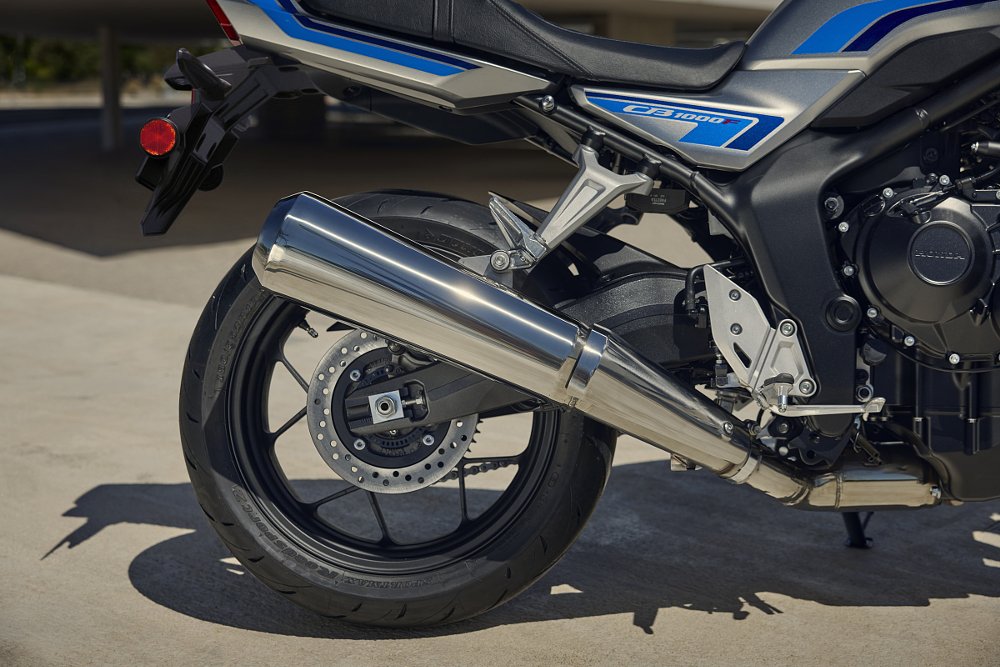
Having ridden the Hornet, I personally suspect those tuning changes will be good for the new retro model and would be an improvement, in many riders' opinions, on the Hornet, too. If there's anything to be disappointed about, it's that Honda isn't offering the small fairing it showed on some of the concept bikes at Suzuka last year. I guess if you really want to go full-1980s-retro, you could always bolt a #19 number plate to the front and really look like Fast Freddie.
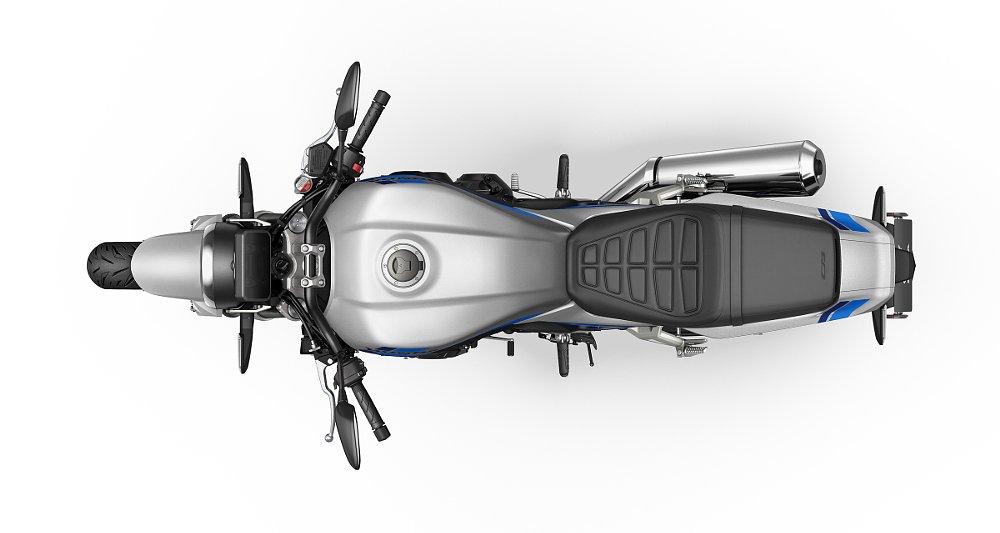
| 2026 Honda CB1000F | |
|---|---|
| Price (MSRP) | $10,599 |
| Engine | 1,000 cc, liquid-cooled, 16-valve, inline four-cylinder |
|
Transmission, final drive |
Six-speed, chain |
| Claimed horsepower | N/A |
| Claimed torque | N/A |
| Frame | Steel twin-spar |
| Front suspension | 41 mm Showa Separate Function Fork Big Piston (SFF-BP), adjustable for preload, compression, and rebound damping; 5.1 inches of travel |
| Rear suspension | Showa shock, adjustable for preload and rebound damping; 5.5 inches of travel |
| Front brake | Dual radial-mount Nissin four-piston calipers, 310 mm discs, with ABS |
| Rear brake | Single Nissin one-piston caliper, 240 mm disc, with ABS |
| Rake, trail | 25 degrees, 3.9 inches |
| Wheelbase | 57.2 inches |
| Seat height | 31.3 inches |
| Fuel capacity | 4.2 gallons |
| Tires | 120/70R17 front, 180/55R17 rear |
| Claimed weight | 472 pounds wet |
| Available | Now |
| Warranty | 12 months |
| More info | powersports.honda.com |
Image Gallery