Shop by Vehicle
 Track Order
 Contact Us
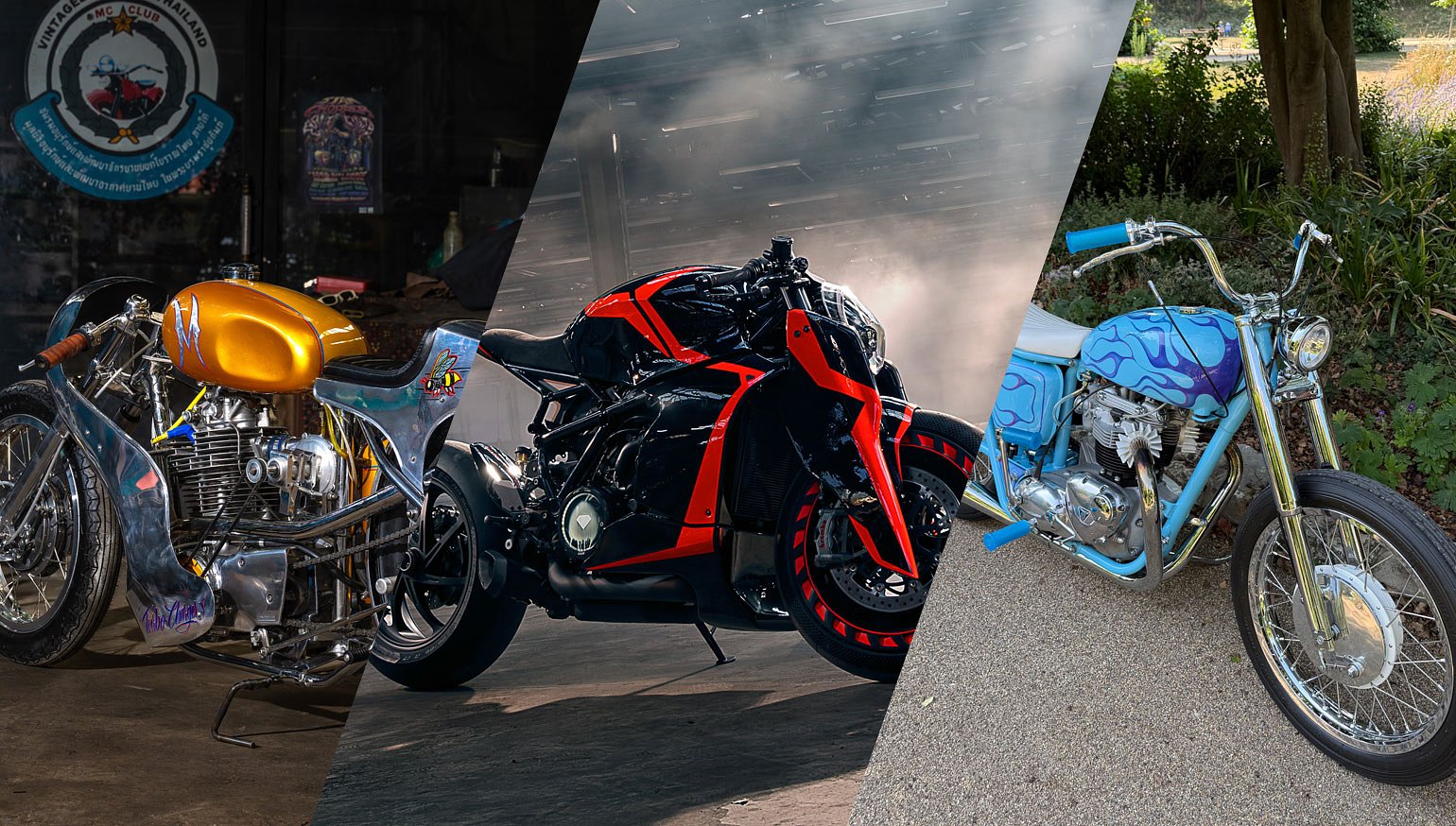
This month's roundup trio borrows the old, embraces the new, and throws in plenty of blue, reminding us that few relationships are as durable as the union of man and machine.
Leading the pack is a showstopping thumper with a repurposed frame from Thailand. Next, a category-defining, electroluminescent motorcycle from Germany. And rounding things out, a British bitsa gets a new lease on life in the UK.
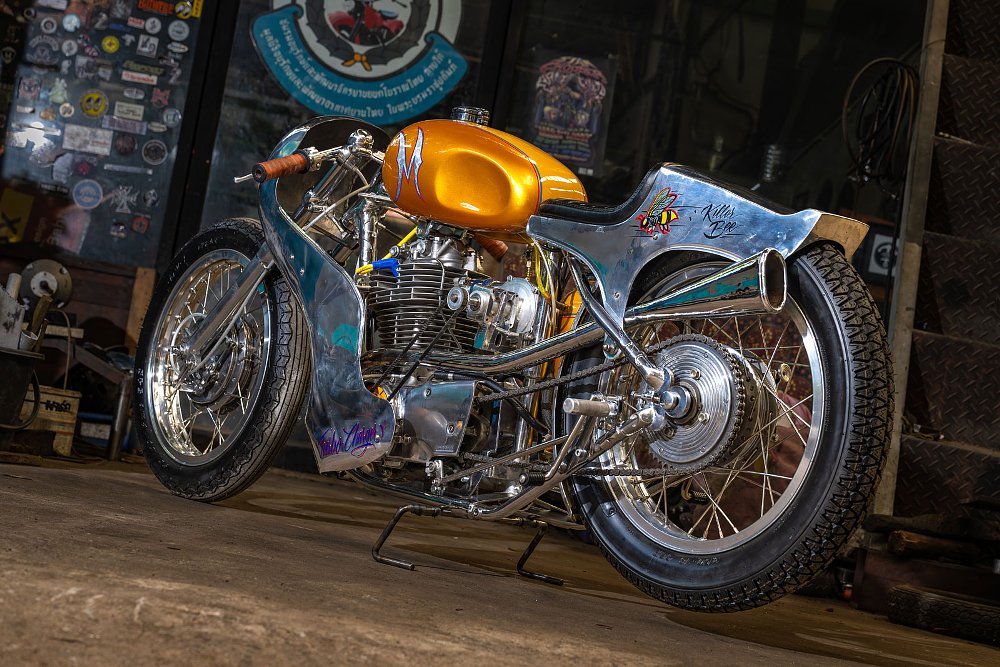
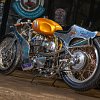
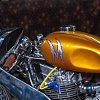
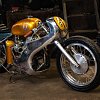
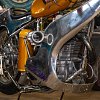
Lex Custom Service Killer Bee SR400
Last month in the custom roundup, we featured a wild chopper by Nanthapat "Bomb" Unpikul, the man behind the Bangkok Hot Rod Custom Show. This month, we're heading back to the Land of Smiles to check out another equally unhinged build from one of the event's competitors. Hailing from Nonthaburi, Thailand, this outrageous Yamaha SR400 is the work of Lek from Lex Custom Service.
"The story goes back to 2024, when I worked together with Komron Charoenyoung, also known as Jeab Retro, to build a custom motorcycle for the Hot Rod Custom Show," Lek recalls. "That bike won the Best Japanese Motorcycle award. But after the show, Jeab tore it down and sold the parts off to fund other projects."
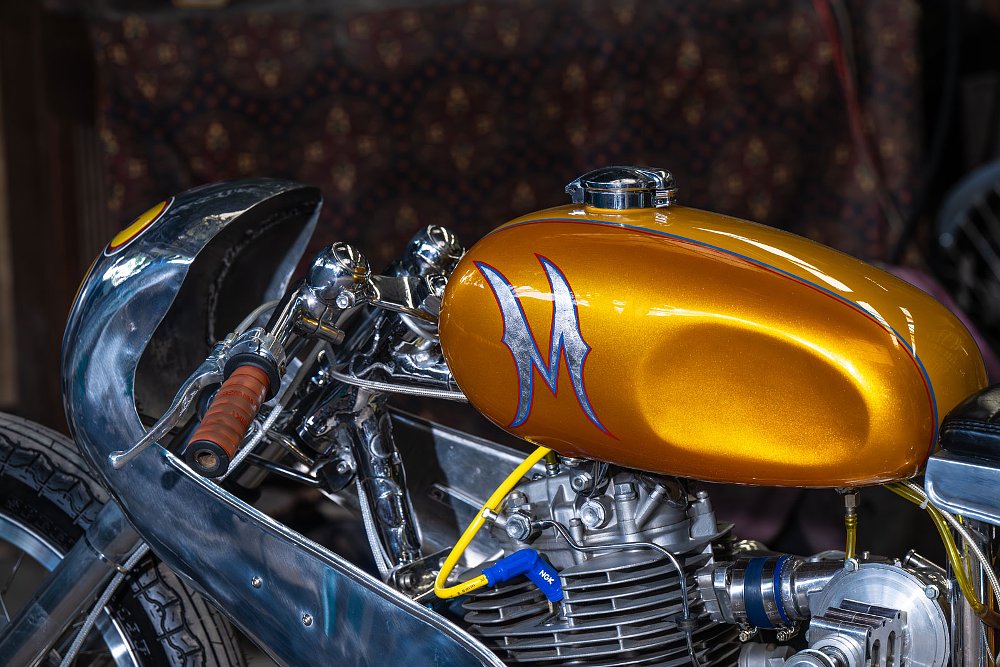
As fate would have it, two years later the buyer of that bike's handmade frame walked into Lek's workshop with the idea of building a machine for the 2026 show. Recognizing his own handiwork, Lek gladly took on the project, determined to create something capable of winning the judges over once again.
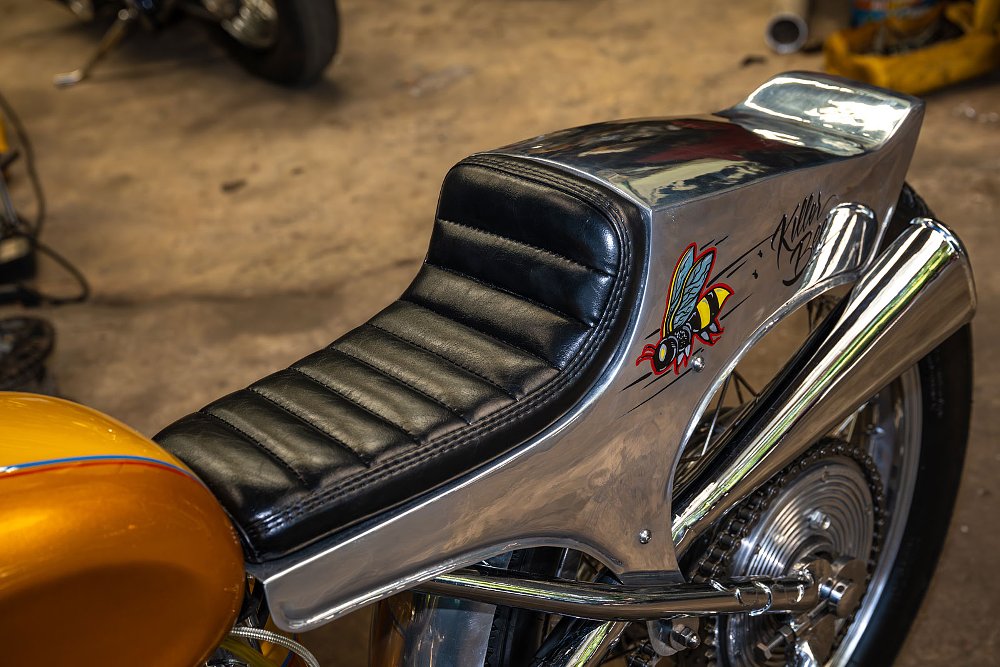
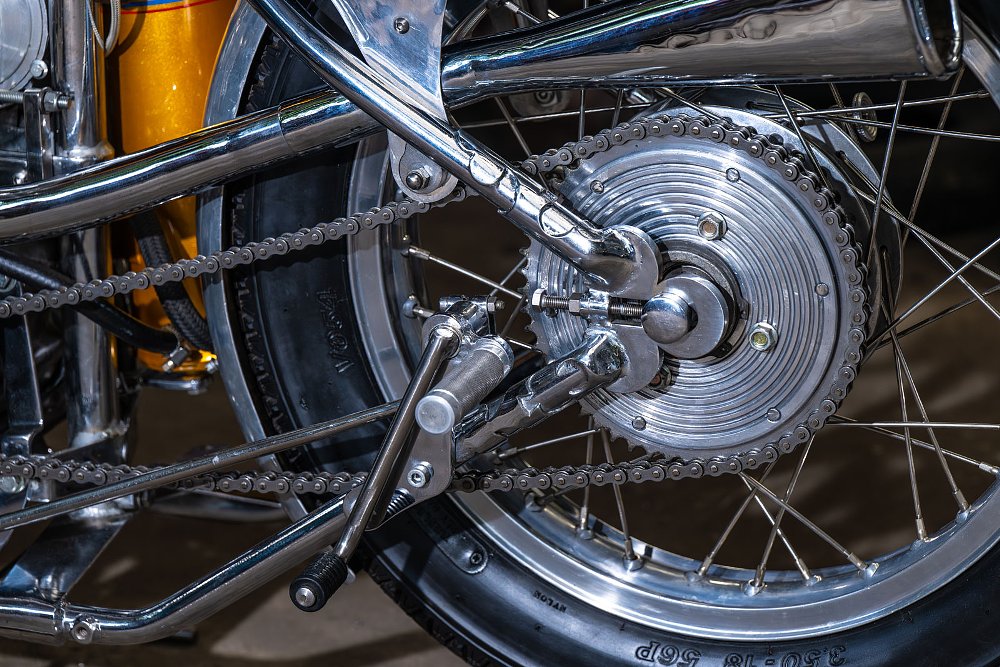
Influenced by café racer styling and his love of vintage motorcycles, Lek developed a concept that borrowed styling from some of his favorite machines. The resulting design features a fuel tank inspired by classic Italian motorcycles, an aluminum racing cowl from a similar era, and a tightly wrapped single-seat tail. Staying true to his hands-on approach, every panel was hand-shaped from aluminum before being carefully fitted to the frame. Lek also hand-fabricated the triple clamps, clip-on handlebars, and foot controls to establish the bike's aggressive riding position.
When the time came to choose an engine, Lek opted for one of the most iconic powerplants in the Japanese custom scene, Yamaha's SR400 single. Suitably proportioned for the frame, the thumper was the ideal choice, but its performance didn't provide the wow factor he was aiming for. So, to fix that, he bumped its capacity up to 500 cc and boosted it.
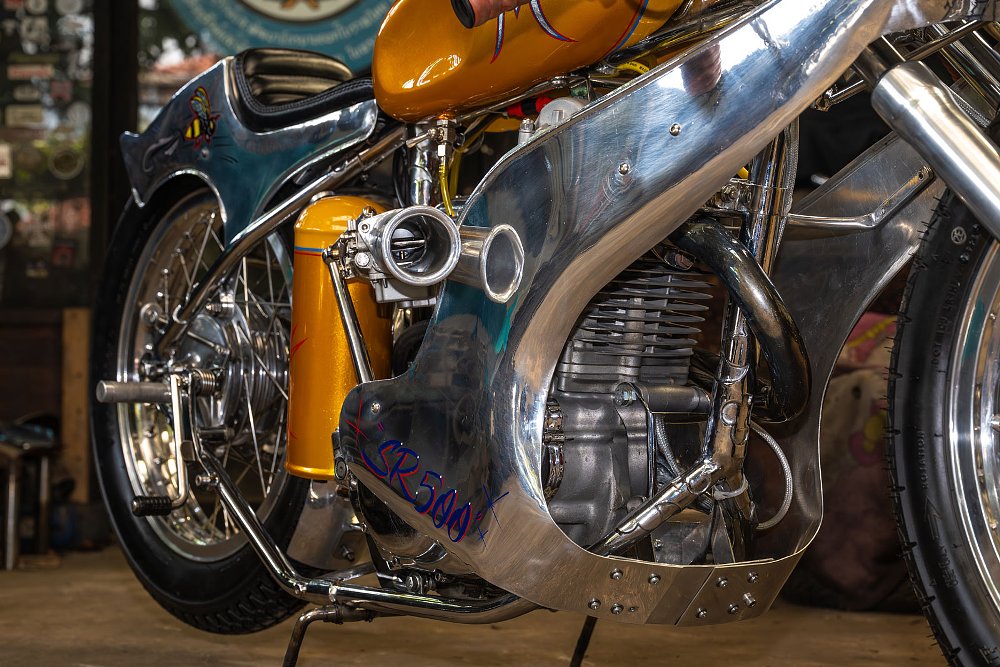
Like almost everything else on this motorcycle, Lek built the forced induction system himself. He took a turbocharger and modified it to work as a supercharger, driven by a belt. The clever arrangement eliminates much of the bulky pipework while delivering boost in a smooth, linear fashion.
"The difficult part was that every component had to be redesigned and recalculated, including the mounting position, drive system, operating speed, and overall stability," explains Lek. "The goal was to make the turbo work properly with the engine while keeping the system stable and reliable."
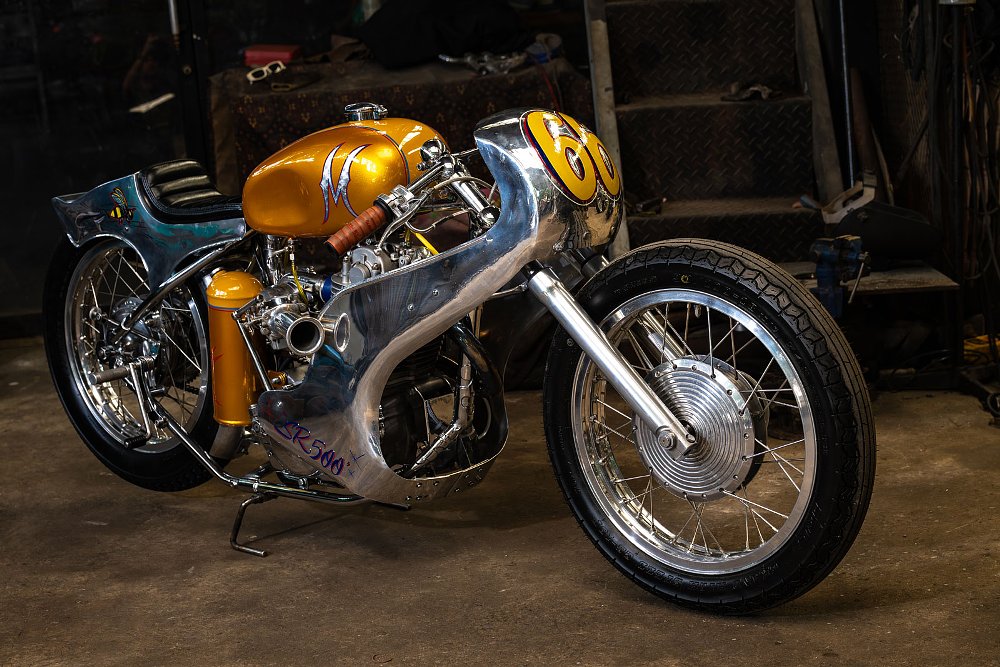
With a name like Killer Bee, there was really only one direction to take the paintwork, so the fuel tank wears a custom blend of gold and mustard yellow. The remaining aluminum bodywork has been polished to a mirror finish and garnished with pinstriping.
Lek's efforts on this build paid off spectacularly when history repeated itself at the 2026 Bangkok Hot Rod Custom Show. Killer Bee, with its repurposed frame, claimed the Best Japanese Motorcycle award once again and cemented Lex Custom Workshop as a force to be reckoned with.
Diamond Atelier DA#22 Ultron Hyperbike
By definition, a hypercar is an ultra-limited-production vehicle boasting extreme performance, top-tier equipment and finishes, and a price tag to match. In the motorcycling world, there have been very few true hypercar equivalents, but Munich-based custom motorcycle workshop Diamond Atelier (Instagram) is looking to change that.
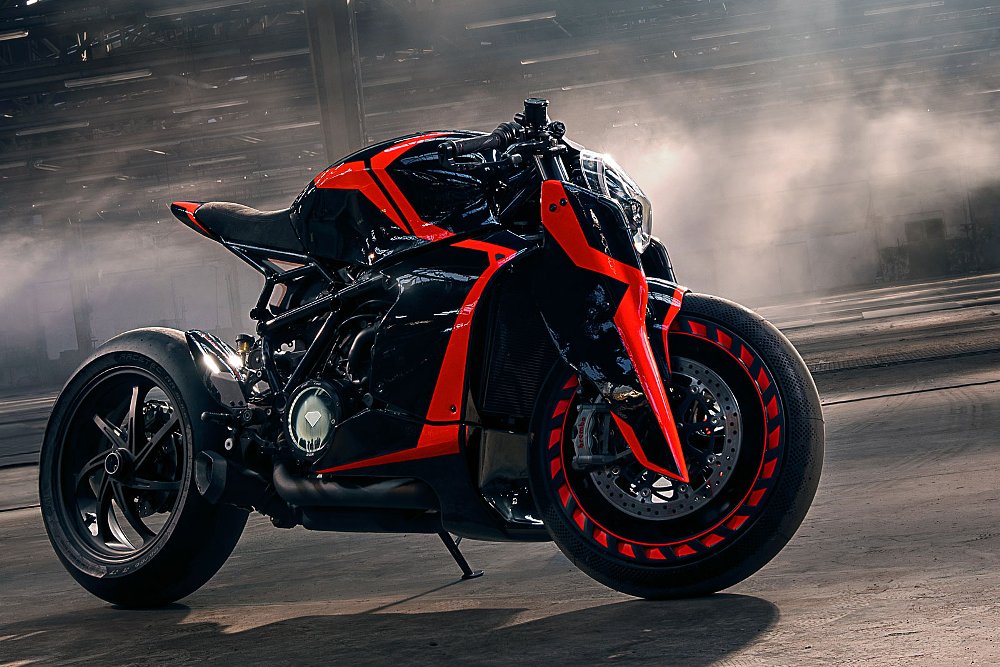
Unveiled at the 2026 Goodwood Festival of Speed, DA#22, otherwise known as Ultron, is the company's fully operational, road-legal, one-off prototype and the first of an upcoming Hyperbike series.
The concept behind Ultron was to introduce an entirely new category of motorcycle, a machine that captures all the characteristics of its hypercar counterparts in a two-wheeled package. As company CEO Ben Herrmann explains, "At Diamond Atelier, we do not begin with a donor platform, a trend or a list of parts. We begin with the why. Why should this machine exist? Why would it matter? Why would it deserve to be built?"
Using a design-first approach, Diamond Atelier has created a thoroughly modern concept that expresses both the motorcycle's performance and its elite status.
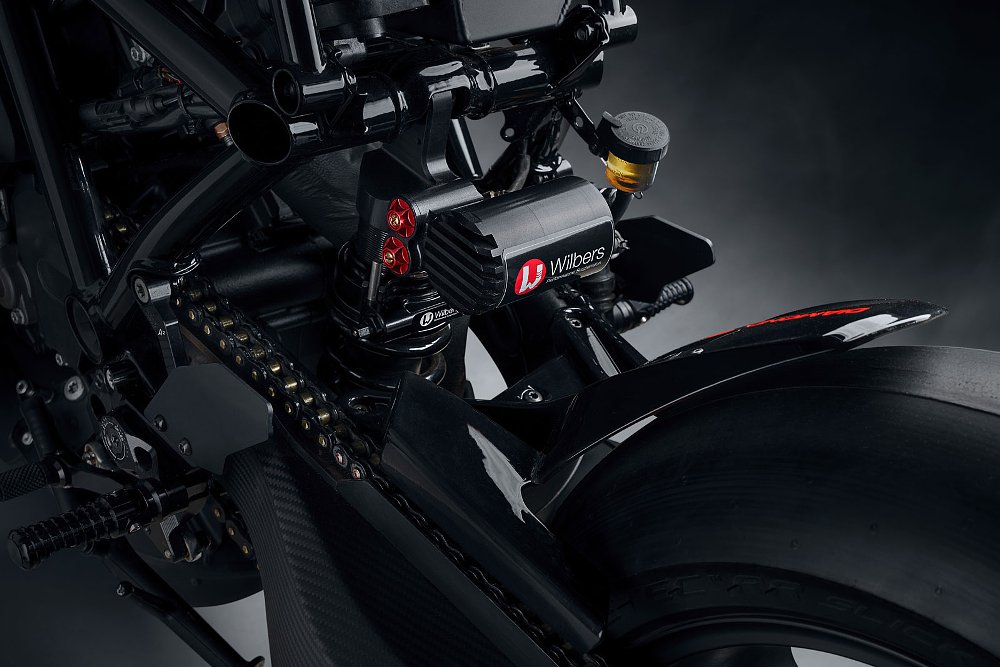
To create the bike's bodywork, Diamond Atelier partnered with master coachbuilder Mervin Dehl of KRT Framework to translate its vision into hand-built aluminum components. Beneath the alloy exterior sits a tubular-steel trellis chassis developed in conjunction with suspension specialist Wilbers. The frame is paired with a TYPE 46 RR Wilbers fork derived from World Superbike technology, and a custom-developed Wilbers rear monoshock. Metal additive manufacturing specialist Aconity3D also contributed to the setup with the fabrication of a 3D-printed titanium upper triple clamp.
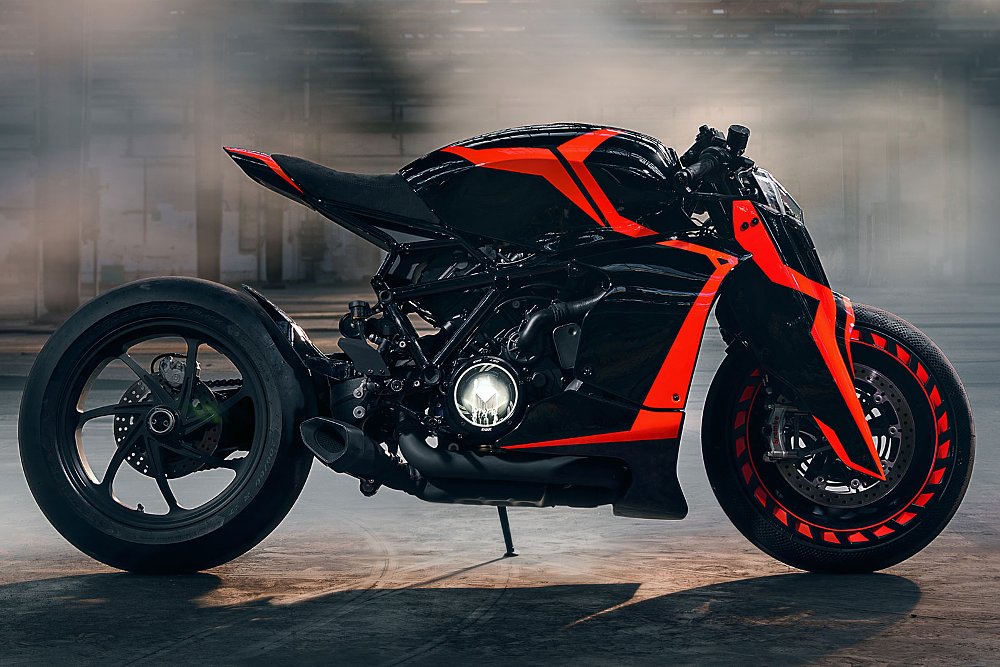
As for Ultron's performance, it won't be for the faint-hearted. Sitting within the bespoke chassis is a KTM LC8 V-twin, the same engine found in the manufacturer's category-topping Super Duke RR hyper-naked. In its current state of tune, Ultron's LC8 produces 205 horsepower, a figure that puts it in the elite tier of liter-class sport bikes alongside motorcycles like BMW's S 1000 RR.
Although Diamond Atelier hasn't released an official weight, Ultron is likely to tip the scales at around 395 pounds. The proposed shift to carbon fiber bodywork for the rest of the series could see a further saving of around 12 pounds. That would result in a power-to-weight ratio of over one horsepower per kilogram, positioning it at the highest end of street bike performance.
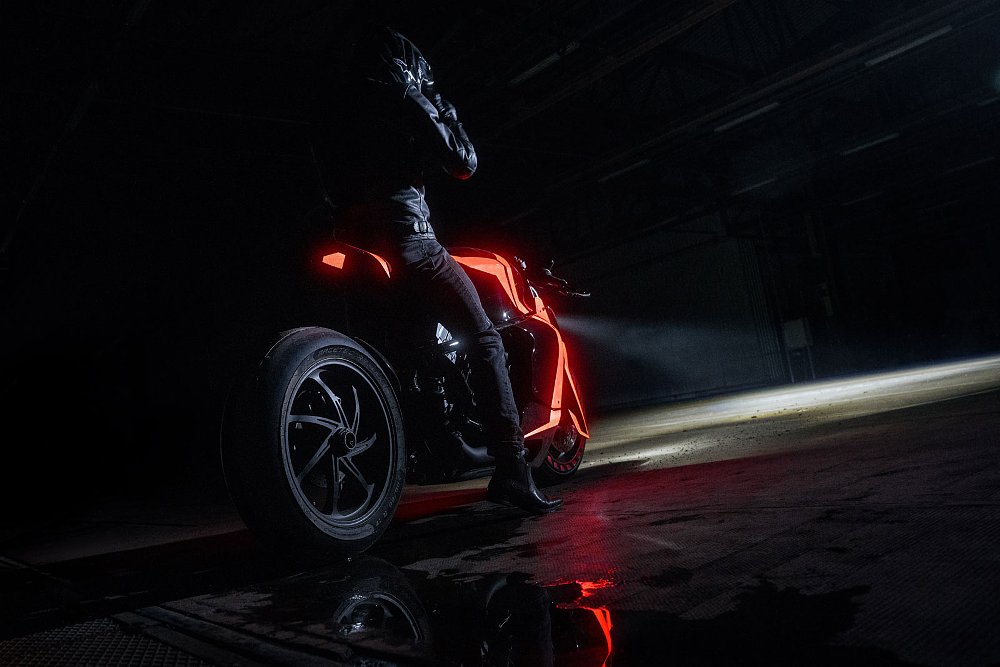
Despite the impressive list of features and specifications, the standout feature of Ultron has to be its "Tron"-esque paintwork. Applied by Alex Bloch of Stilbruch Lack, the red details aren't simply UV-reactive paint, but an electronically activated electroluminescent coating. Every motorcycle in the DA#22 series will feature the same paint technology, although each of the planned 12 bikes will glow in its own unique color.
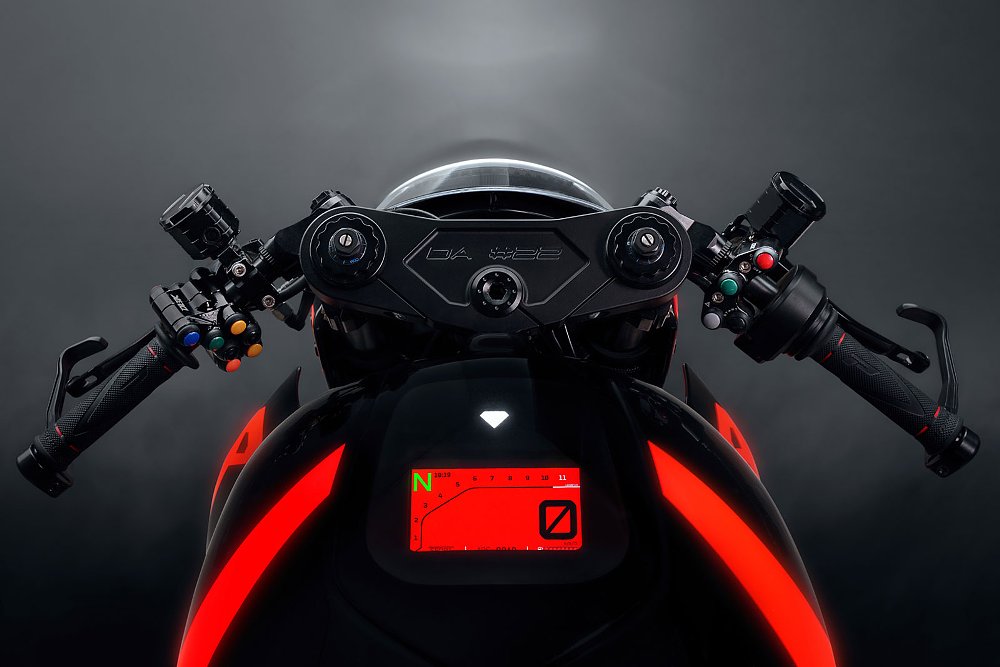
Other noteworthy features of the DA#22 Hyperbike series include Formula 1-style controls, an ultra-lightweight titanium 3D-printed exhaust system, a motorsport-derived digital gauge integrated into the fuel tank, a DKB transparent illuminated clutch cover, Gilles Tooling clip-ons and rearsets, 4JET's one-of-one diamond-pattern tire profile, and a 0.17-carat diamond (yes, you read that correctly) set into the top clamp.
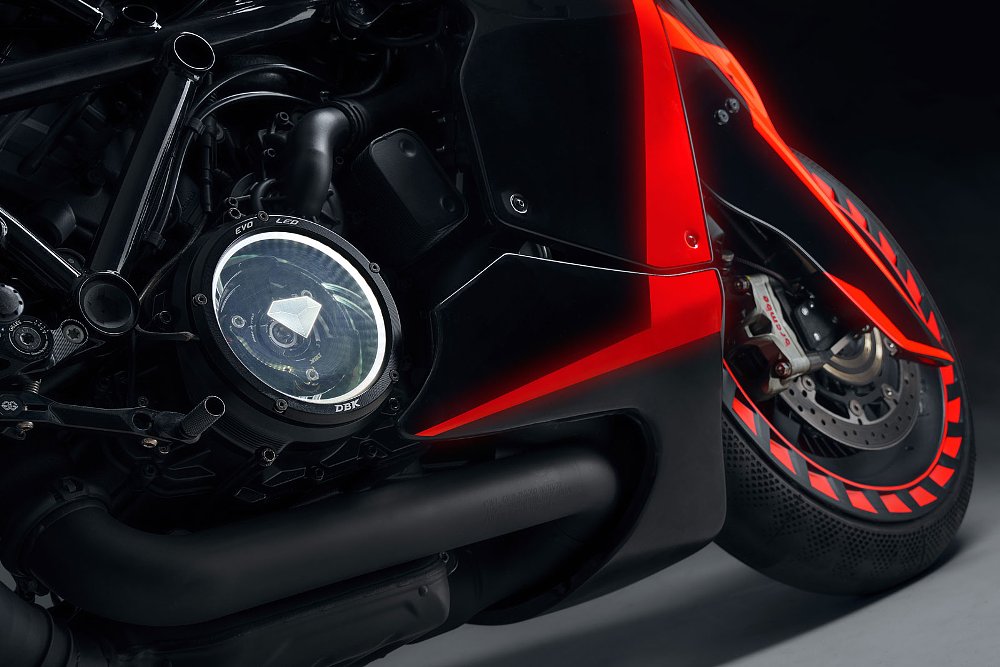
In true hypercar fashion, Diamond Atelier will supply each motorcycle in the series with its own set of unique accessories. Designed by Vanessa Göbhardt and produced in collaboration with Alpinestars, the collection includes an Ultron-themed helmet, leather race suit, gloves, and boots, all of which will be tailored to each of this series' well-heeled buyers.
Keepers Motorcycle Co. Triumph Popcycle
As I'm sure readers of this article are aware, motorcycles have an indelible effect on people. For Alec Padron, what began as the need for affordable transport evolved into a lifelong career. Over the past decade, he has become an integral part of Revival Cycles' team in Texas and has since launched his own motorcycle tech support shop, Keepers Motorcycle Co. (Instagram), in the UK.
During his time at Revival Cycles, Alec helped build many of the shop's award-winning customs. Naturally, he also enjoys building bikes to his own taste. This bike, which he calls the Popcycle, came about after a classic right-place-at-the-right-time encounter.
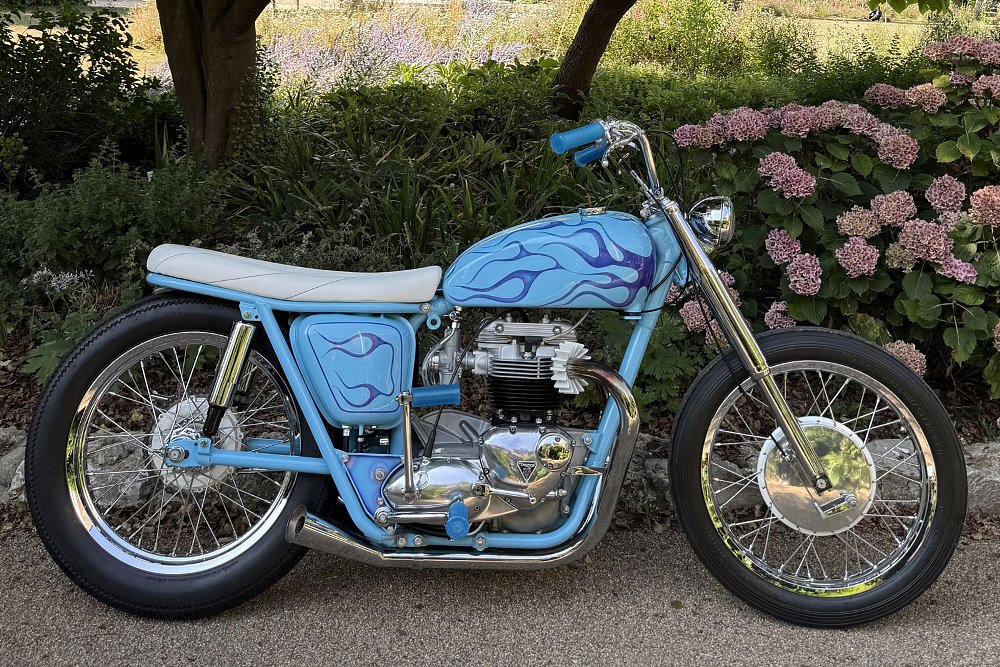
"I had been in the market for a really cheap Triumph project for a few years," Alec recalls. "One day I was with a buddy of mine buying a bike. There, in the seller's garage, buried among a handful of other bikes, was the longest girder I'd ever seen, sticking out of the pile like a sore thumb. Out of curiosity to see what it was attached to, I walked over and saw what may have been the ugliest Triumph ever built. So naturally, I had to have it."
After a chat with the owner, he learned the engine was blown and managed to buy the bike for just $500. Alec trailered it home, rolled it into his living room, and that's where it sat for the next three years while he pondered what to do with it.
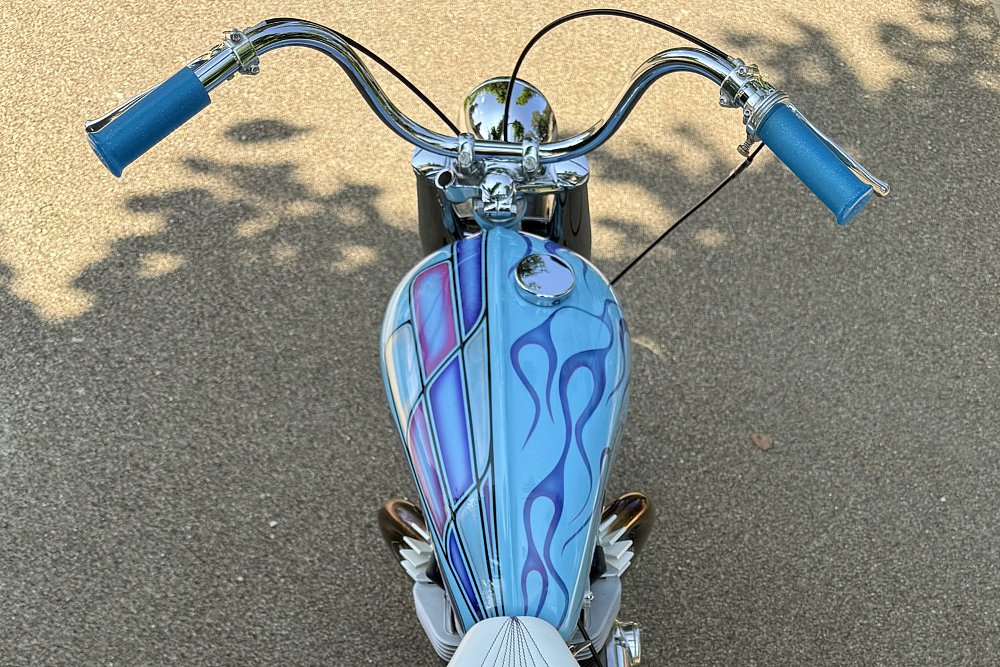
"I knew I wanted to build something out of it but couldn't decide if I wanted to keep it a chopper or bring it back to its original state," he says. "My good friend and amazing painter Josh said he wanted to paint it, so I knew it would at least be eye candy and, thus, the build began. I was building a shiny daily rider."
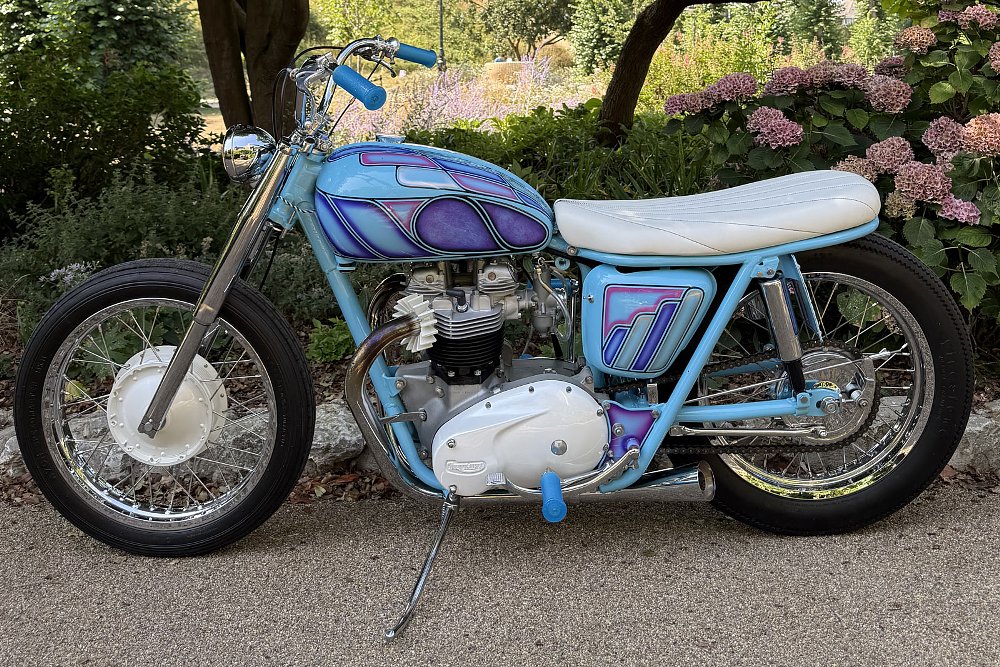
The bike as it stood was a mix of different Triumph models. The frame hailed from a 1969 T120R while the engine came from a 1967 TR6R. Once Alec decided to abandon the chopper styling, only the engine, the front half of the frame, and the hubs were retained.
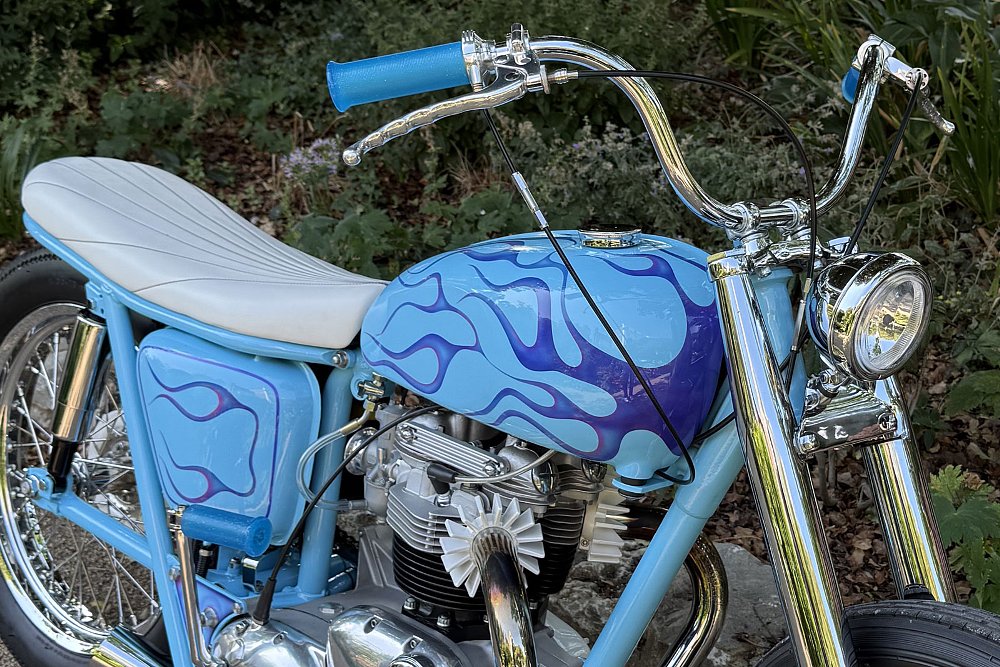
Starting at the pointy end of the bike, Alec installed a stock fork that was shaved, shortened, and fitted with MCM fork covers. The handlebar was fabricated from stock tube and then chromed, while the front and rear hubs were laced to 19-inch high-shouldered rims. The frame received a facelift with the removal of non-essential tabs and the addition of a bolt-on subframe. A custom swingarm-mounted rear fender keeps debris out of the carburetor velocity stacks, while modified factory side covers conceal the battery and updated fuse box. Remarkably, the only aftermarket parts used were Kustom Tech brake and clutch levers and throttle assembly.
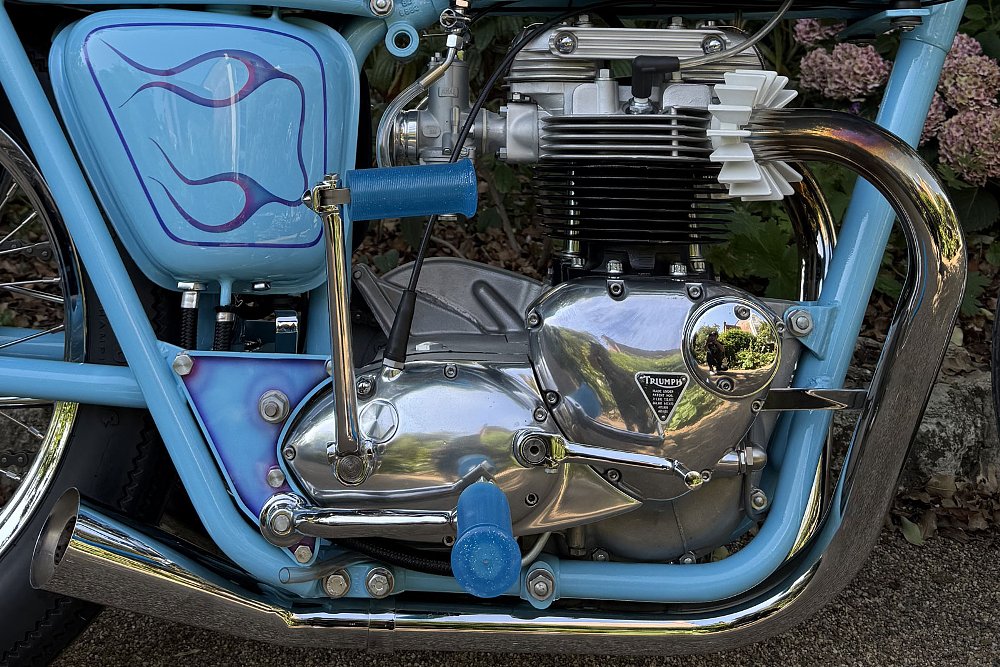
To get the 650 cc parallel twin running again, Alec carried out a full rebuild. After replacing anything that showed signs of wear, he installed a 750 cc kit and ported and polished the heads. A C5 electronic ignition, along with an entirely new wiring harness, completed the overhaul and should keep this Triumph running reliably for years to come.
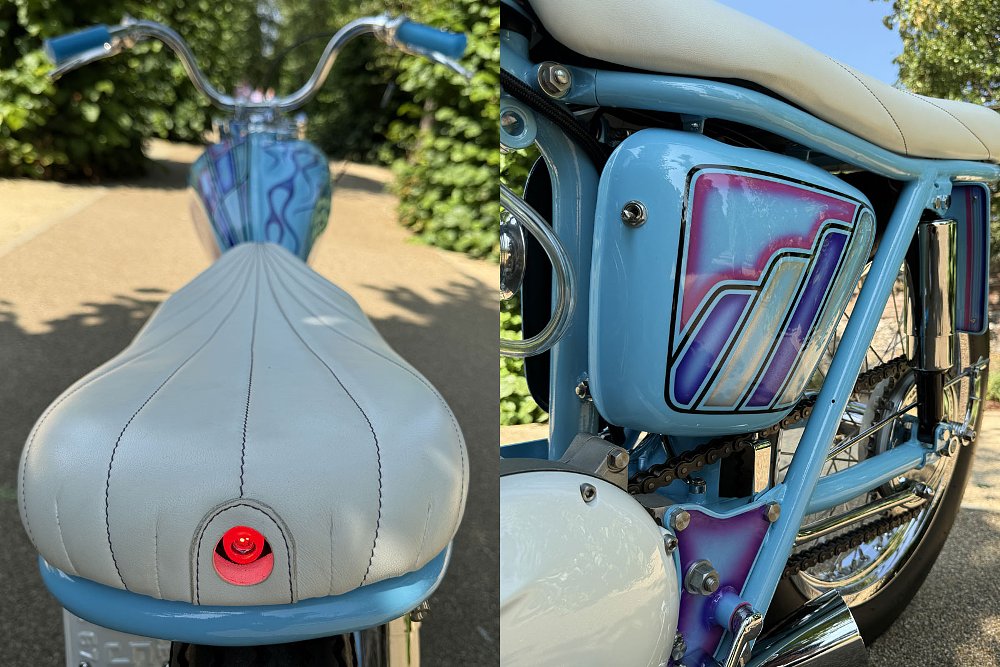
For the bike's final look, Alec drew inspiration from the legendary hot rod, Iron Orchid. After tracking down the original paint codes, Josh recreated the car's blue basecoat, intricate pinstriping, and flame-job graphics. The white leather seat with its integrated taillight, pearl-white hubs, and the generous use of chrome further reinforce the connection.
I think it's safe to say that subtlety isn't one of Alec's strengths, and there's nothing wrong with that.