Shop by Vehicle
 Track Order
 Contact Us

The saying goes, “Never meet your heroes.”
Whoever coined that phrase never met Freddie Spencer.
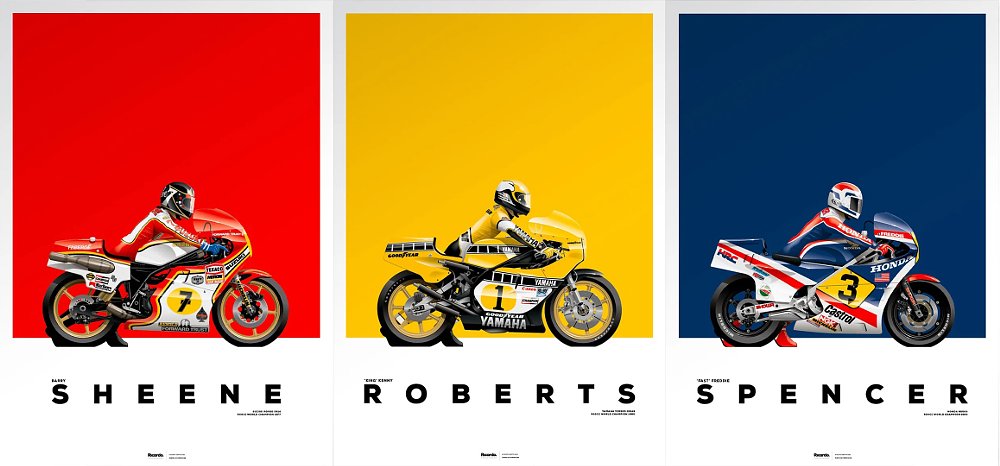
On my office wall hangs a three-piece art print of Barry Sheene, “King” Kenny Roberts, and, you guessed it, Freddie Spencer. I was born too late to watch that holy trinity of Grand Prix racing live on the track, but I’ll always revere that two-stroke era. So you can probably imagine my delight, surprise, and outright awe when “Fast” Freddie himself sat next to me during the welcome dinner for Honda’s CF1000F press launch.
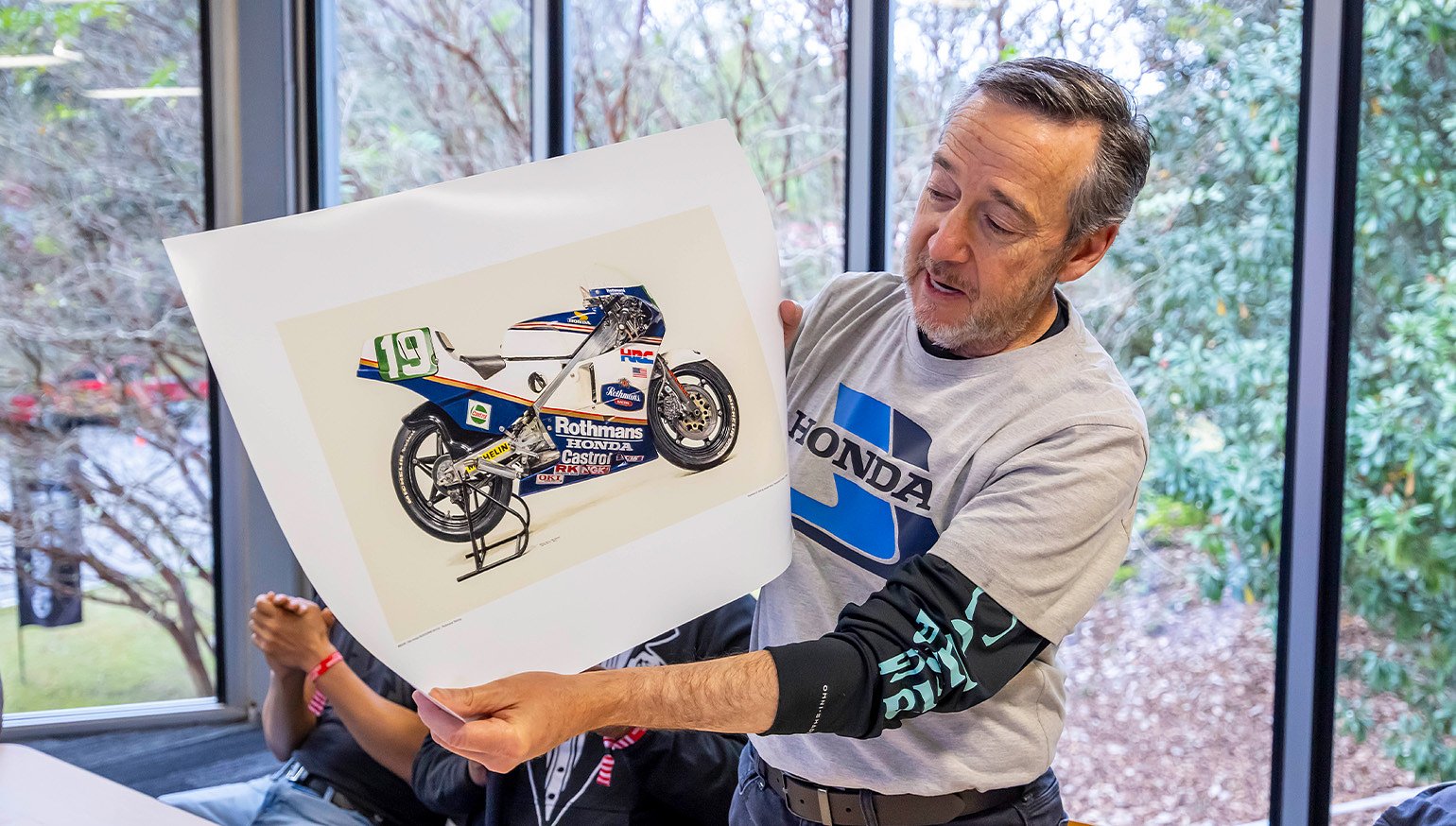
Before I summoned the courage to introduce myself, Freddie took the lead, offering an outstretched hand. No ego or pretension to detect. Instead, the three-time Grand Prix champ was the most gregarious member of our party, fully engaged in each conversation. Listening more than talking. He had the affable nature of Mr. Rogers mixed with the southern charm of a Shreveport native.
That weekend, he regaled our group with stories of his 1983 GP campaign (when he famously won both the 250 cc and 500 cc titles) and the mind games “King” Kenny and he used to play at 170 mph. But it was Freddie’s opinions of the modern motorcycle industry and the next generation of riders that truly highlighted our conversations. So much so that I later revisited those topics with him over the phone to get his thoughts on the record.
Common Tread: For over a decade, you coached riders at your Freddie Spencer High-Performance Riding School. You now mentor the women racing in Royal Enfield’s Build. Train. Race. (BTR) series. What motivates you to stay involved in motorcycling after your racing career?
Freddie Spencer: I'll give you a perfect example. I had three [BTR] riders who wanted to increase their exit speed sooner in the corner. They knew they could begin preparing to accelerate before they got to the apex of the corner. They understood exactly what they wanted to do.
I knew where that needed to start: at the exit of the previous corner, which was the long straightaway leading into turn one. So, I took them through this process, and they all went out and increased their lap times. One of them was three seconds quicker a lap.
There are so many ways that I get personal enjoyment out of it because that's all of my life experience. I can help them accomplish something that took me years to refine. And the look on their face, the enjoyment. It's priceless. It's why I do it.
CT: You interact with a lot of motorcyclists, both here in the United States and abroad, both young and old. When you talk to beginner riders, what draws them to motorcycling?
FS: After I stopped doing my [riding] school, I went to Europe again. It was about going back to grassroots. I mean, going to places like Schottenring and Schwenningen. And doing events like Wheels and Waves in France and Glemseck in Germany. I said, "These events are where the demographics are that we got to reach.”
So I've always paid attention to that, and I've always been curious, and I ask questions, you know, like, "What is it that prevents [teenagers] from getting a bike?" And so over the last 15 or 16 years, I've been given the opportunity to talk to teenagers about riding. One of the things that they said is that they were drawn to these classic events with retro racing bikes. That they could hear two-strokes like their dad and their grandfather talked about. And the noise! But they loved what it made them feel.
They're not different than when I was young; I have the same feeling today at 64 that they're talking about, and they're 18, 19 years old. They want that experience. They want what they read about. [They want] the vibration, the sensation, you know, having to use the clutch and things. When I talk about it to them, their eyes light up. I understand what they're wanting to experience because I did.
CT: So how should manufacturers go about attracing that next generation of riders?
FS: There's a place for technology, but it's not attracting younger riders, for sure. I've gone to Glemseck [or] Wheels and Waves, where there's 60,000 riders there that are on bikes they built. They got their hands involved. It's their bike, and they have that flexibility, because that has been passed along generation to generation.
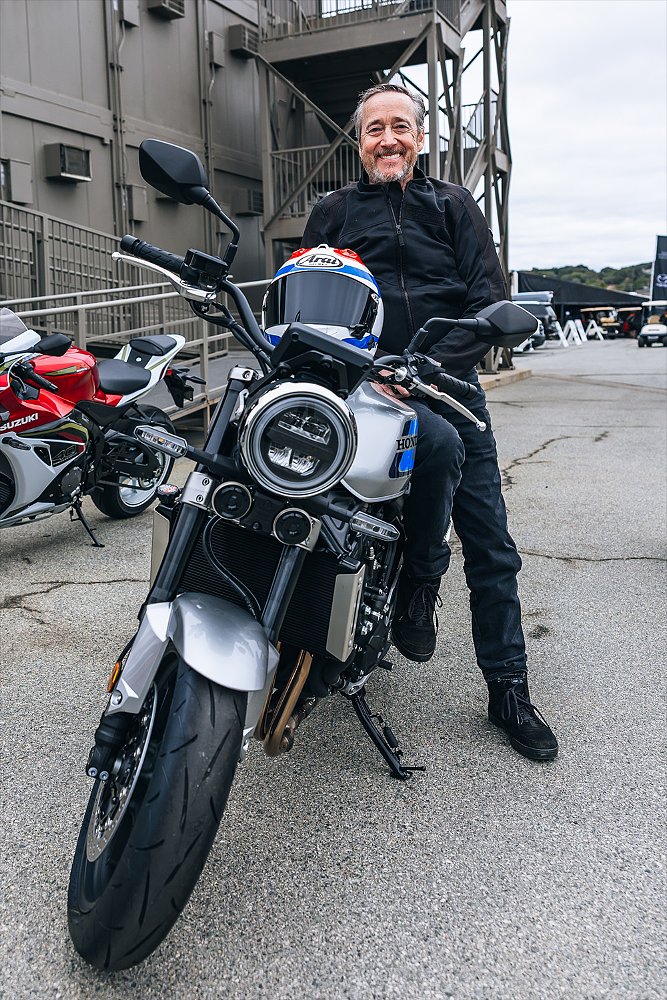
Instead of turning away from that, they want to embrace that purity. I think offering those type bikes, having that available [is important]. Not just the motorcycle has become so technology-driven, but daily life has. How do we utilize technology, but where it doesn't interfere with the purity of the riding experience? It’s something that I've been talking about for years.
CT: It’s been 30 years since you retired from racing. Motorcycle development has come a long way in that time. Where do you think motorcycling will be in the next 30 years?
FS: Well, I think we're at a tipping point, and I think it's all going to be dependent on bringing these next generations in. It's not going to be about how far we'll get with technology, but I think the technology has its place. What I hope we will see is a broadening of education that teaches the younger generation what the motorcycle experience can be, but we have to provide motorcycles that provide that experience.
After riding the very first bike that had traction control, which was the Honda RC211V GP bike, I said, “It's going to be the greatest improvement in safety for the average rider.” [Technology] needs to go to a certain point, but not beyond where it takes away from the riding experience.
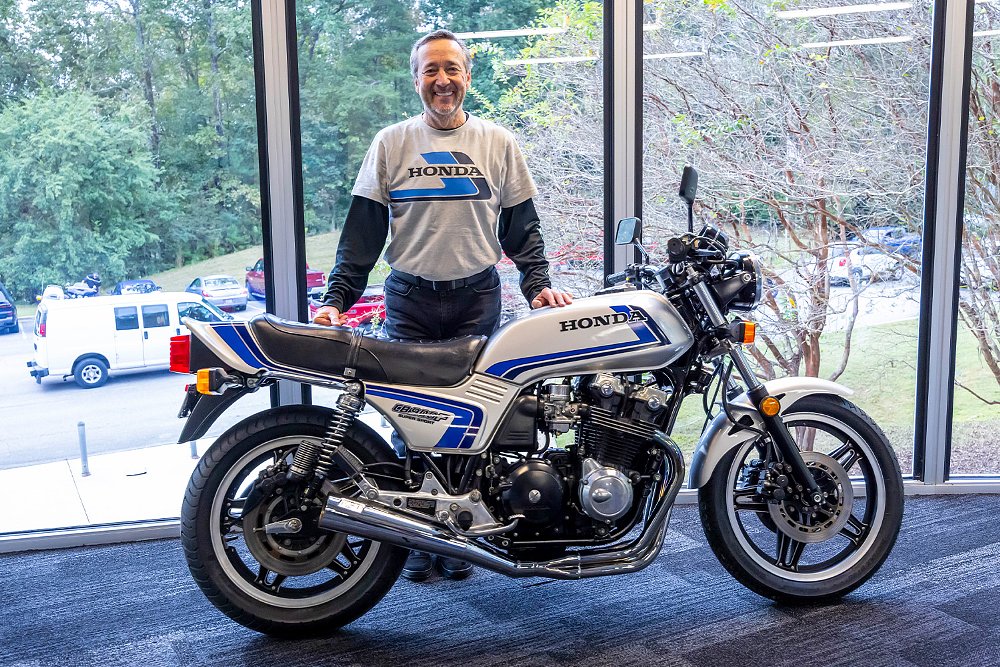
Concluding our conversation, Freddie added, “Motorcycling has been a teaching tool; a lifelong one that has given me faith and trust in my judgment and my ability to see a situation and react accordingly.” That feeling doesn’t come from advanced technology. It comes from successfully operating a motorcycle. I know that now.
They may warn you against meeting your heroes, but I’m sure glad I met Freddie Spencer.
Image Gallery