Shop by Vehicle
 Track Order
 Contact Us

“The bike started to dwindle a little bit in global markets.”
“We’re happy to keep it going, and see where it goes in the future.”
“[Suzuki] has been very successful with this platform, especially in endurance racing. So they want to make sure that they maintain a strong presence — if not a championship presence — in that racing [series].”
That’s how Suzuki personnel framed the 2026 GSX-R1000RS at the model’s press launch. The tone, a mix of cautious optimism and over-explaining, underscored every line in the presentation. Almost like the Hamamatsu House was hedging its bets in real time. That tends to happen when a platform goes ignored as long as the Gixxer Thou has.
After all, Suzuki let its flagship sport bike fall out of compliance with Japanese, European, and Indian emissions regulations, making it unavailable in many global markets since 2023. It’s not just that the brand knows that the GSX-R has been back-burnered for years. It’s that it knows that we know. (Maybe that’s why the Suzuki reps sounded so self-conscious.) But the GSX-R1000 has been trending this way for some time now.

Waiting (on) the wings
Over the last decade, the inline-four-powered liter-class race replica has become the neglected sibling of Suzuki household. That wasn’t always the case, though. The manufacturer bestowed update after update upon the platform in the early 2000s. Shortly after its 2001 debut, the GSX-R1000 returned lighter, lither, and more powerful in 2003.
Similar upgrades followed in 2005 and 2009, although the model started gaining weight after Euro 3 regulations were implemented in 2007 (due to heavier exhaust systems). Emissions prompted the 2017 redesign as well, with Euro 4 influencing Suzuki’s engineering revisions. Minor adjustments followed, but nothing as invested as the 2026 update.
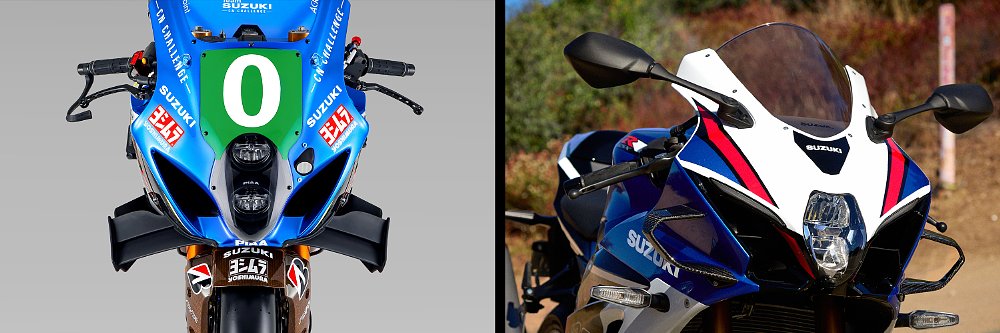
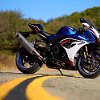
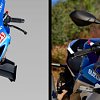
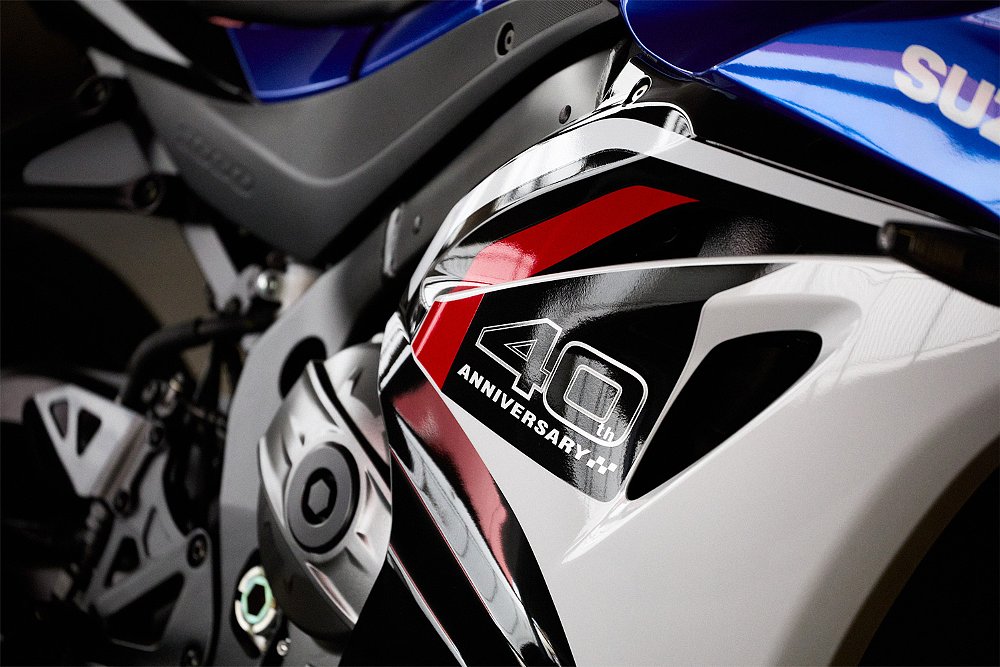
From the outside, it’s easy to reduce the Gixxer’s latest update to a minor facelift. Even that description seems generous, given the stylistic stasis over the past 10 years. Only the RS variant wears the model’s new carbon fiber winglets. Suzuki will tell you that it made considerable changes, but from the consumer's perspective, it doesn't look like much has changed. That's because the firm focused much of its efforts on what's under the plastics.
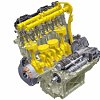
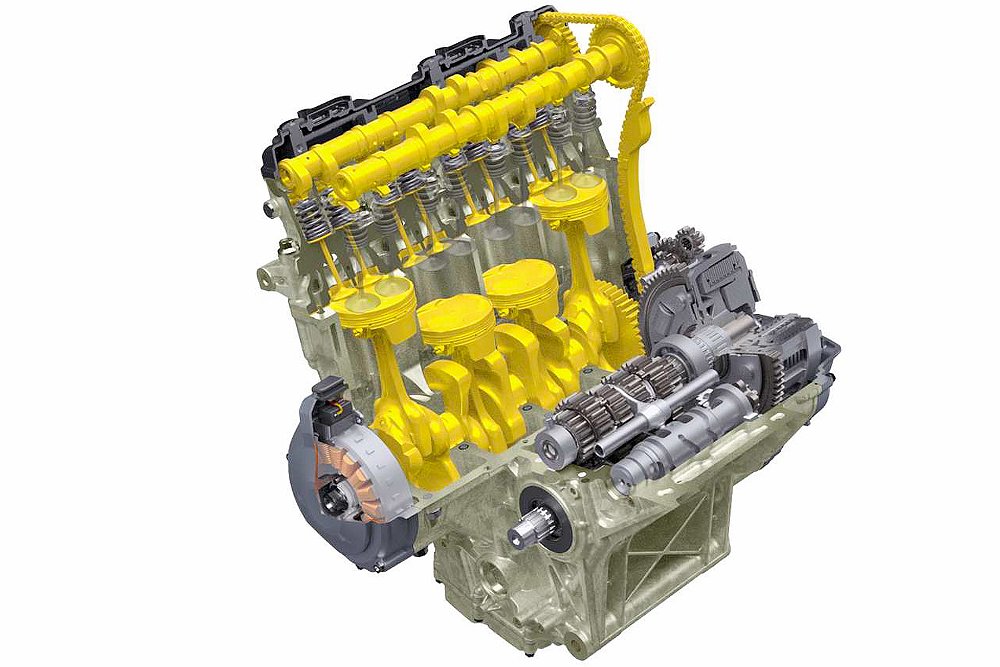
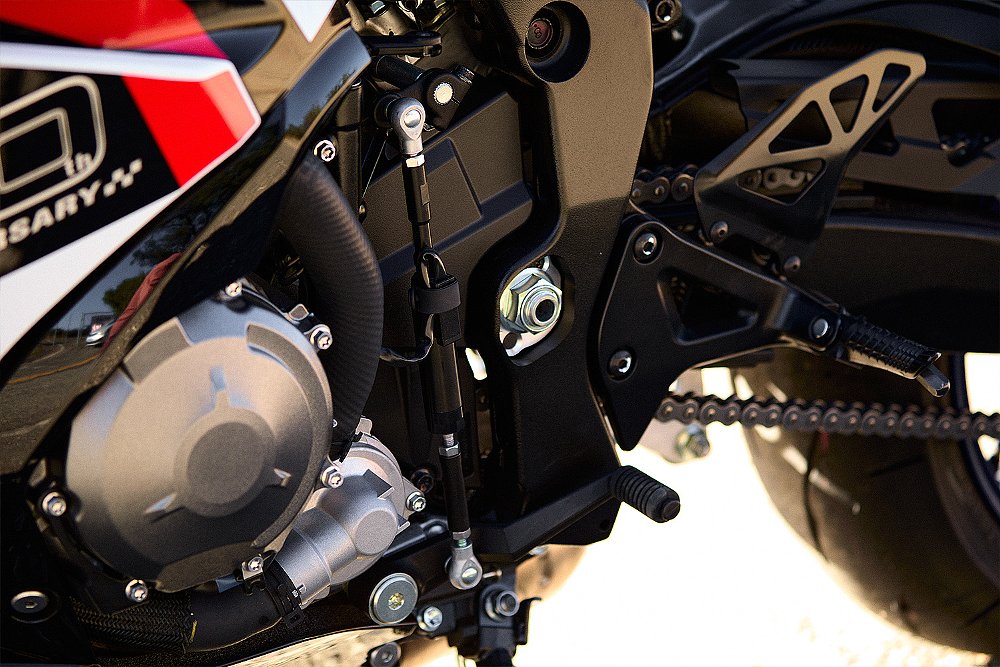
The inline-four engine retains its 999.8 cc capacity, but little else remains. The crankshaft and corresponding crankcase are updated. The forged aluminum pistons are reworked, with new crowns that increase the compression ratio to 13.8:1 (from 13.2:1). Reshaped rocker arms and cam lobes improve lubrication. A wider cam chain achieves the same ends. The exhaust valves are larger (24 mm to 25 mm). So too is the throttle body (46 mm to 48 mm). The fuel pump is more precise. Even the sump pan was redesigned to accommodate the new exhaust system.
Those measures were performed in the name of Euro 5+ approval, but the modifications also yield more performance. Suzuki lists the GSX-R1000RS at 192.4 horsepower (at 13,200 rpm) and 81.1 foot-pounds of torque (at 11,000 rpm). That’s about 7.1 ponies and 0.5 foot-pounds more than the outgoing U.S.-spec model. Suzuki didn’t limit its changes to the hardware, either.
For the first time in GSX-R history, the liter bike boasts the full S.I.R.S. (Suzuki Intelligent Ride System) suite. That includes cornering ABS and rear wheel lift control, all aided by a new Bosch six-axis inertial measurement unit (IMU). There are two ride modes (A and B) and 10 traction control settings. The Lift Limiter governs wheelie height, while Roll Torque Control metes out engine performance based on the current lean angle.
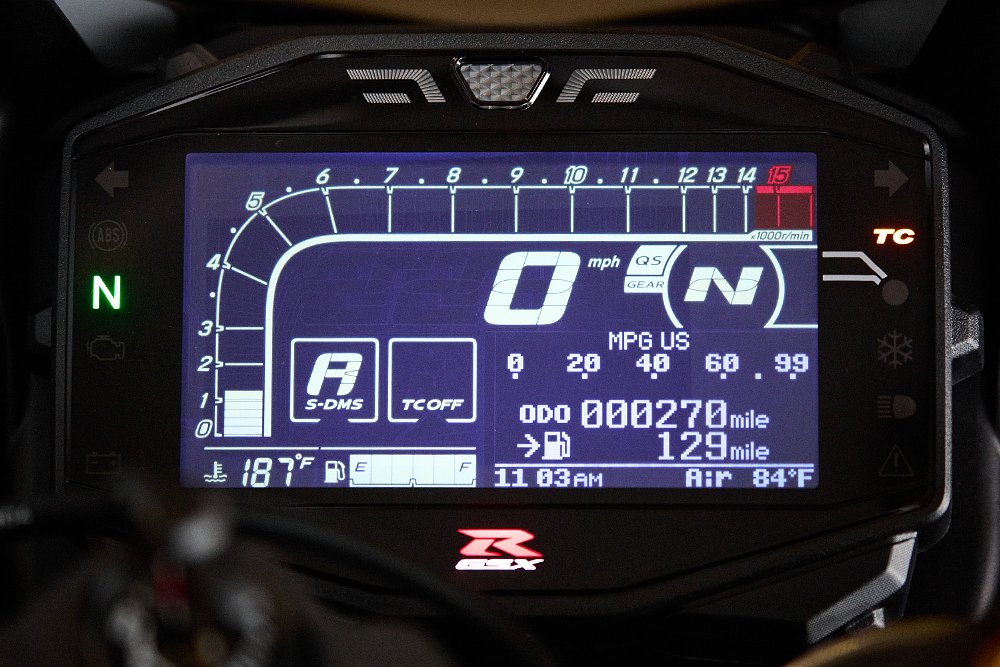
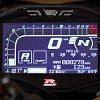
Launch control, a bi-directional quickshifter, and a lithium-ion battery all meet today’s standards for the class. It's the reverse LCD instrument panel that shows the GSX-R's age. It’s those forces of past and present that tug at the 2027 GSX-R1000RS. Both on the spec sheet and on the road.
Of little comfort
No motorcycle that's the basis for a Superbike racer is built for comfort. Nor is it built for touring. Those two facts were resoundingly clear after an hour in the Gixxer’s saddle. Oddly enough, the least of my complaints lay with the model’s seat. As far as sport bikes go, the foot pegs provided sufficient legroom, too. My main source of discomfort were the clip-on handlebars. Mounted below the top clamp (as all Superbike bars should be), the controls stretched me over the tank, shifting much of my weight onto my wrists. That’s not to say there weren’t ways to relieve that pressure.
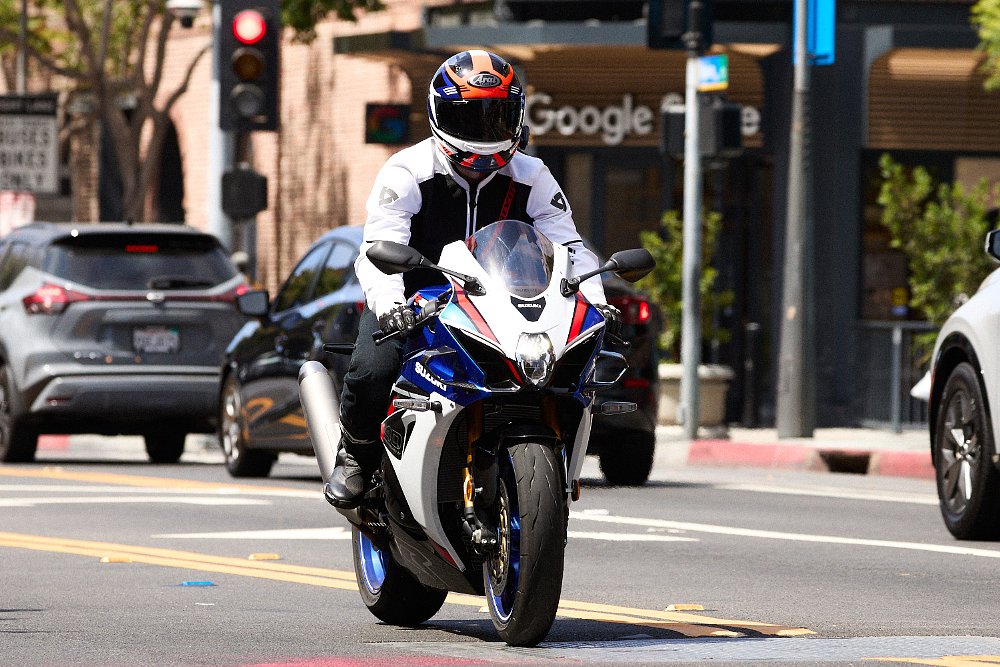
My wrists only bore less of the load if my knees pinched the tank like Suzanne Somers used to squeeze the ThighMaster. At times, I felt like I was riding a two-wheeled adductor machine. Unfortunately, my quads and my core could only maintain the strain for a short period. Before long, I was all but forced to shift my weight back onto my wrists. That grew increasingly taxing for my right hand over the long haul, as the GSX-R doesn’t come equipped with cruise control.
Managing that discomfort gave rise to other habits, such as resting my elbow on the tank or occasionally shaking out my wrist on the fly. It wasn’t the only tendency I developed. The RS’s Showa suspension is tuned for precise handling, not cushy cruising. It reminded me of that every time I rolled over a pothole or large crack. Hovering my backside over the seat was the only remedy in those instances.

The moral of the story is that this GSX-R1000, like all GSX-R1000s before it, doesn’t deliver a luxurious ride. The rider triangle resembles that of a horse jockey on the home straight. The inline four runs as hot as an iron on the silk setting (regularly operating over 220 degrees F), with the side fairing directing engine heat right at the rider’s knees. The stiff suspension doesn’t do you any favors, either. The RS offers little in the way of comfort, but that tax is worth paying once you get the bike on twistier terrain.
Friendlier confines
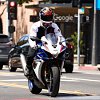
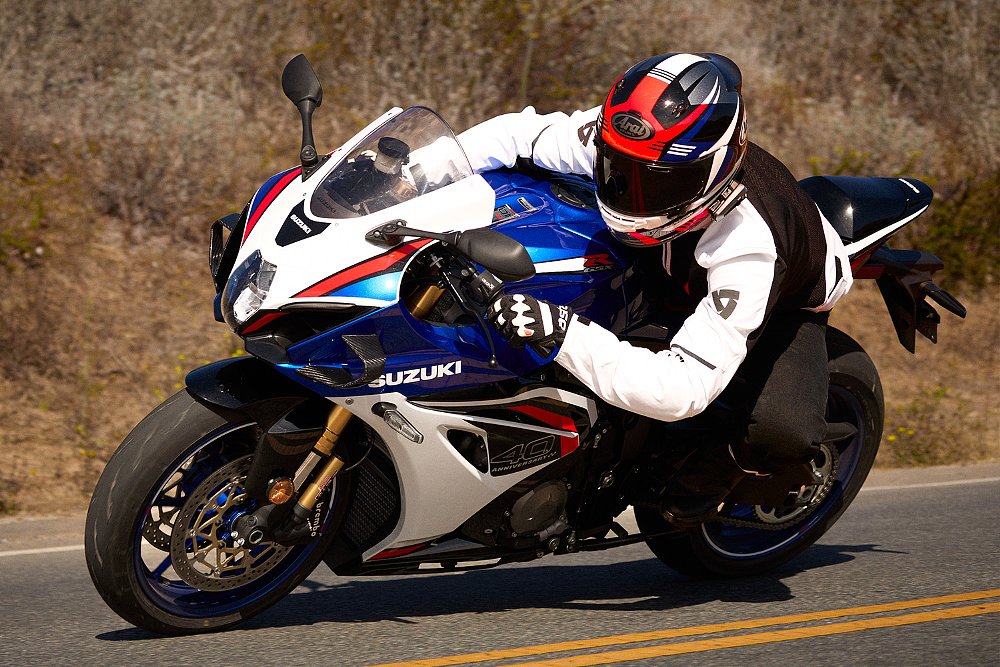
The GSX-1000RS does two things: goes fast and turns fast. Doubt the former at your own peril. To tame the Gixxer in urban areas, I defaulted to its less aggressive B ride mode. Even then, I often short-shifted, grabbing a gear before the bar-style tach surpassed six grand of its 14,000 rpm allowance.
Pushing past that spending limit produced scenery-blurring results, with the engine rpm spiking to five digits before I could utter, “Check your shorts, Dustin.” It’s like being at the business end of a lasso, feeling yanked backwards, all while the bike streaks ahead. Again, we’re talking B mode here.
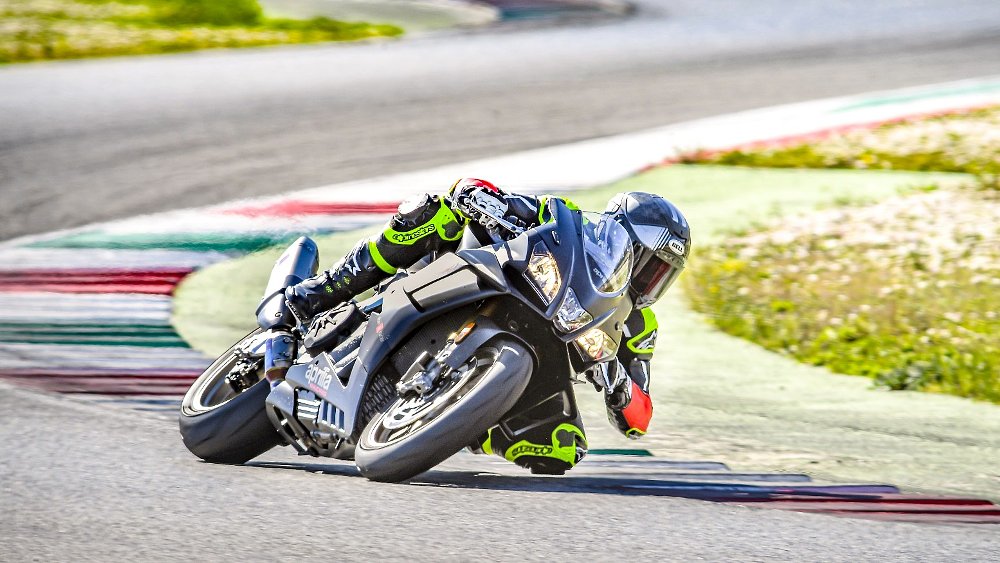
I almost exclusively reserved A mode for canyon carving duties. Such venues provided enough runway for the RS to hit full gallop, but not all twisty roads are created equal. The Gixxer was most at home on fast, flowing routes, with abundant sweepers and fast bends. In those environs, it doesn’t merely wind through turns; it pours through them, hugging each curve more like a liquid than a solid. Just as impressive is its direction-changing ability, with the chassis flip-flopping through chicanes with equal parts agility and accuracy.

The only time the model trips over itself is when the corners become tight and technical. It’s less about its handling and more about its nearly 200 horses. With less runway, less runoff, and less margin for error, threading the RS through the needle of tip-in, apex, and corner exit is an exercise in restraint. In most cases, I feel like I’m holding the GSX-R back, keeping it from realizing its license-suspending potential. But that has more to do with the engine than the chassis. When it comes to handling, the GSX-R is almost faultless. Almost.
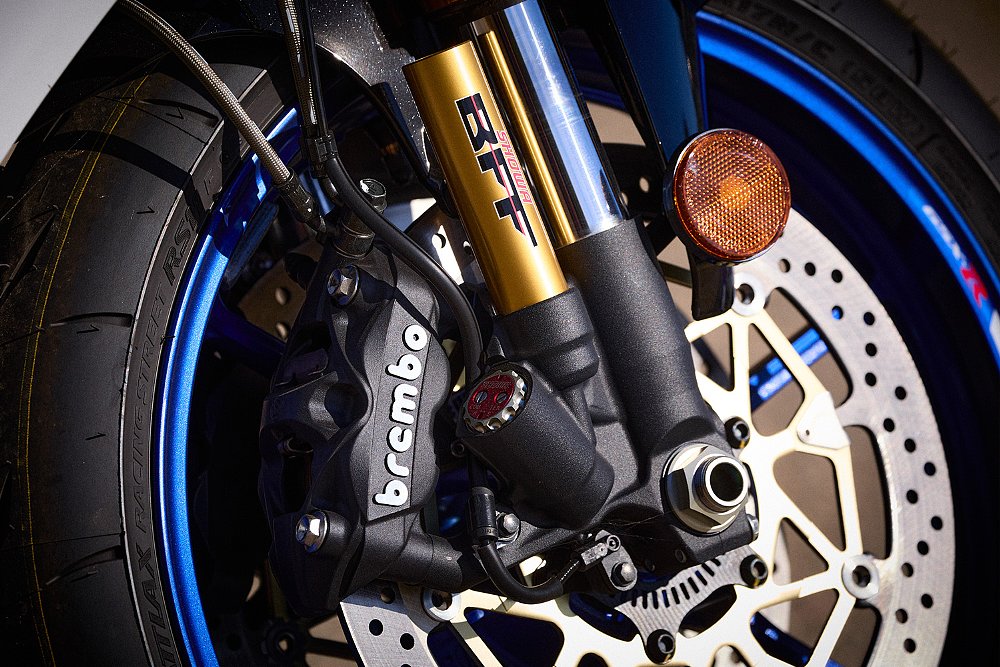
While the braking system sheds speed sufficiently, it doesn’t deliver the level of feel and feedback I’ve come to expect from modern liter bikes. Whether that’s due to its Brembo M4.32 monobloc calipers (not the flagship Stylemas or Hypures) or the Nissin master cylinder, who’s to say. All I know is that I’d address that shortcoming in short order if I owned the RS.
What you’ll seldom hear me complain about is the GSX-R’s electronics package. With just the ride mode and traction control settings at the rider’s disposal, I hardly suffered from analysis paralysis. In fact, once I set the rider aids to my preferences, I promptly forgot about them. There’s no fiddling with slide control or engine braking levels. I simply hopped on and rode away. It’s that simplicity that separates the Gixxer from its techno-obsessed rivals. It’s that simplicity that may be its strongest value prop.

The spartan superbike
The RS variant tested here retails for $18,639, but the base model GSX-R1000 starts at $16,399, making it the most budget-friendly superbike on the market. More important than its price tag is what the Gixxer line represents within the segment. Manufacturers often reserve advanced features and innovative rider aids for flagship models. That explains the technological arms race we’re currently living through. But in a class of digital excess, the GSX-R remains moderate, if not downright conservative.
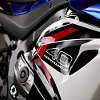
Yes, its styling is as dated as waxed canvas jackets and man buns. Sure, its dash looks like it belongs on a flip phone. Of course, its winglets are more fashionable than functional. But that doesn’t make it a bad bike. Even if it lacks the futuristic features of its contemporaries, the GSX-R1000 remains a solid option among the liter-class race-replica ranks. It’s still a good bike, albeit slightly passé. That’s something that Suzuki should be proud of, not self-conscious of.
| 2027 Suzuki GSX-R1000RS | |
|---|---|
| Price (MSRP) | $18,639 (RS); $16,399 (base model) |
| Engine | 999.8 cc, liquid-cooled, 16-valve, inline-four |
|
Transmission, final drive |
Six-speed, chain |
| Claimed horsepower | 192.4 @ 13,200 rpm |
| Claimed torque | 81.1 foot-pounds @ 11,000 rpm |
| Frame | Twin-spar aluminum |
| Front suspension | Showa BFF fork, adjustable for spring preload, compression, and rebound damping; 4.7 inches of travel |
| Rear suspension | Showa BFRC-lite shock, adjustable for spring preload, compression, and rebound damping; 5.1 inches of travel |
| Front brake | Dual Brembo Monobloc four-piston calipers, 320 mm discs, with ABS |
| Rear brake | Nissin single-piston caliper, 220 mm disc, with ABS |
| Rake, trail | 23 degrees, 3.7 inches |
| Wheelbase | 55.9 inches |
| Seat height | 32.5 inches |
| Fuel capacity | 4.2 gallons |
| Tires | Bridgestone Battlax RS11, 120/70/ZR17 front, 190/55/ZR17 rear |
| Claimed weight | 448 pounds |
| Warranty | 12 months |
| More info | suzukicycles.com |