Shop by Vehicle
 Track Order
 Contact Us

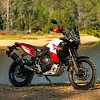
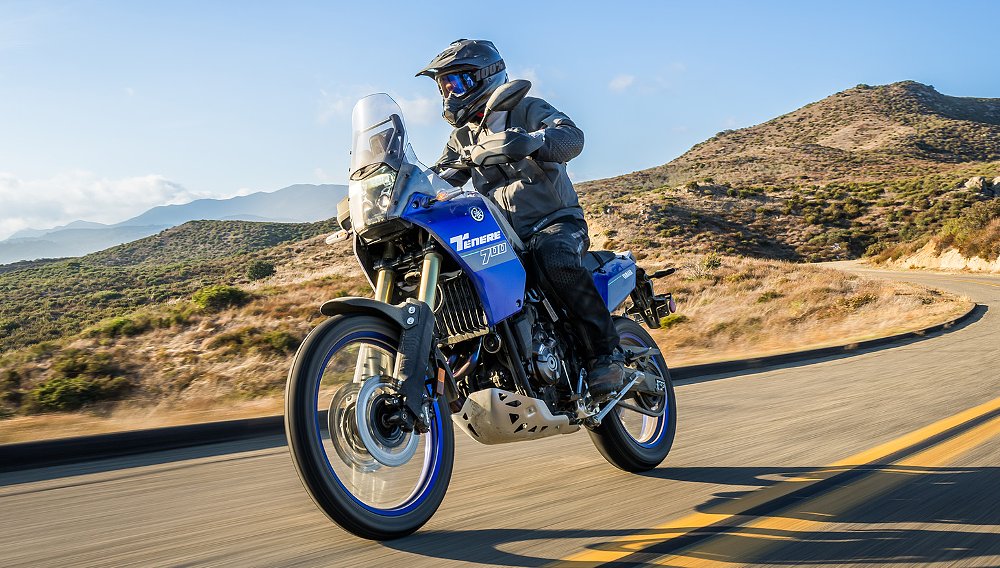
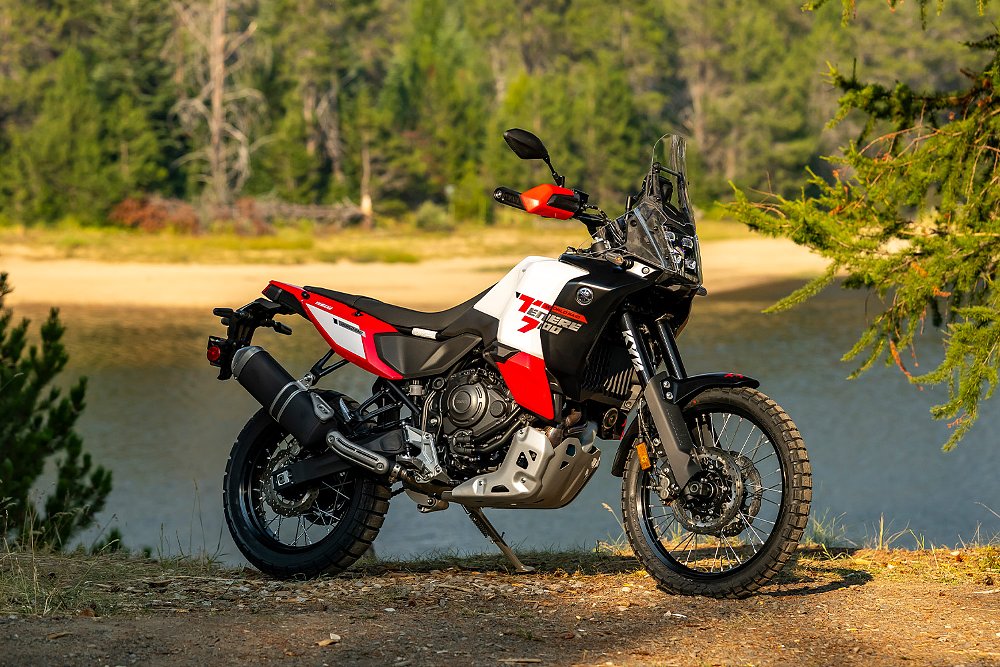
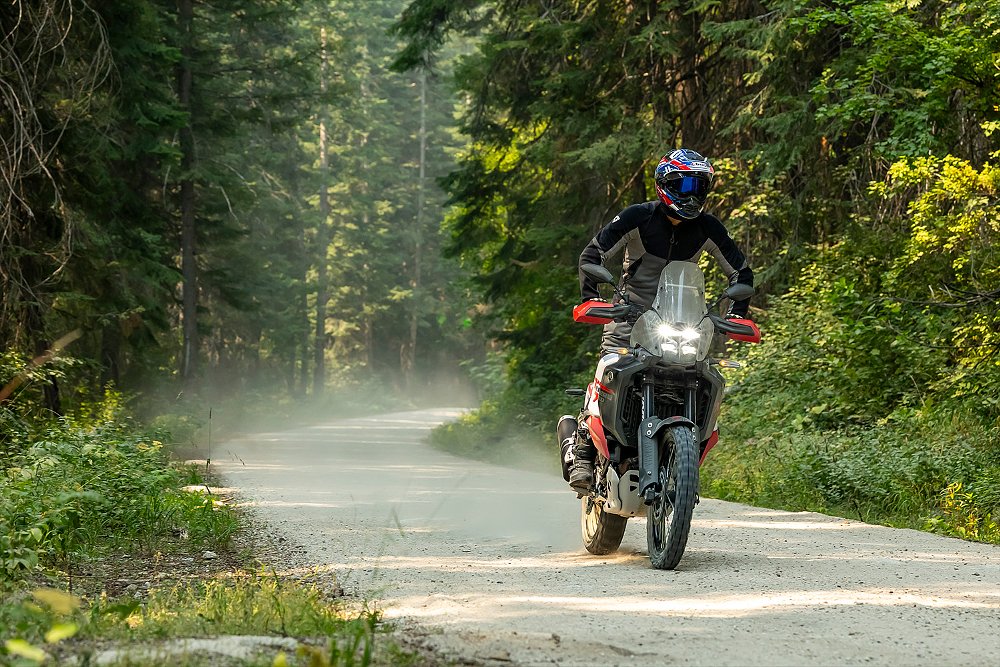
Shafts of sunlight stream through the pines, zebra-striping the trail. A meadow of tall grass stretches to the base of the West Mountains. The tree-lined shores of Lake Cascade pass in and out of my periphery. Loose dirt and gravel crunch under the tires of the Yamaha Ténéré 700 World Raid, leaving plumes of dust in our wake.
This is the type of riding that’s so abundant in North America. This is the type of riding the World Raid was built for. All I can think is, “What the hell took Yamaha so long to bring it here?”

The Iwata firm introduced the up-spec T7 in 2022, but it arrived as a Euro-exclusive variant. The decision wasn’t just a head-scratcher. To North American ADV riders, it was an affront. The model’s rugged build suited the territory’s rugged landscape. Its travel-focused upgrades suited the continent's interstates.
The World Raid seemed tailor-made for a land of wide open spaces and accessible trails. So when Yamaha finally shipped the super-sized Ténéré stateside after four long years, I assumed it would disrupt, no, upend the middleweight adventure class. Much of those expectations stem from the fact that the World Raid is built upon the base T7.
(Some) of its parts
As a fellow journalist noted, motorcycle manufacturers “don’t change things unless they have to.” That rule still applies to the Ténéré 700 World Raid, even if Yamaha made considerable revisions. The standard model’s 689 cc parallel twin remains. So too does the double-cradle, steel-tube, backbone frame it dwells in. While that nucleus preserves the T7’s character, it’s the parts surrounding that core that define the World Raid.
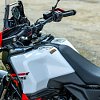
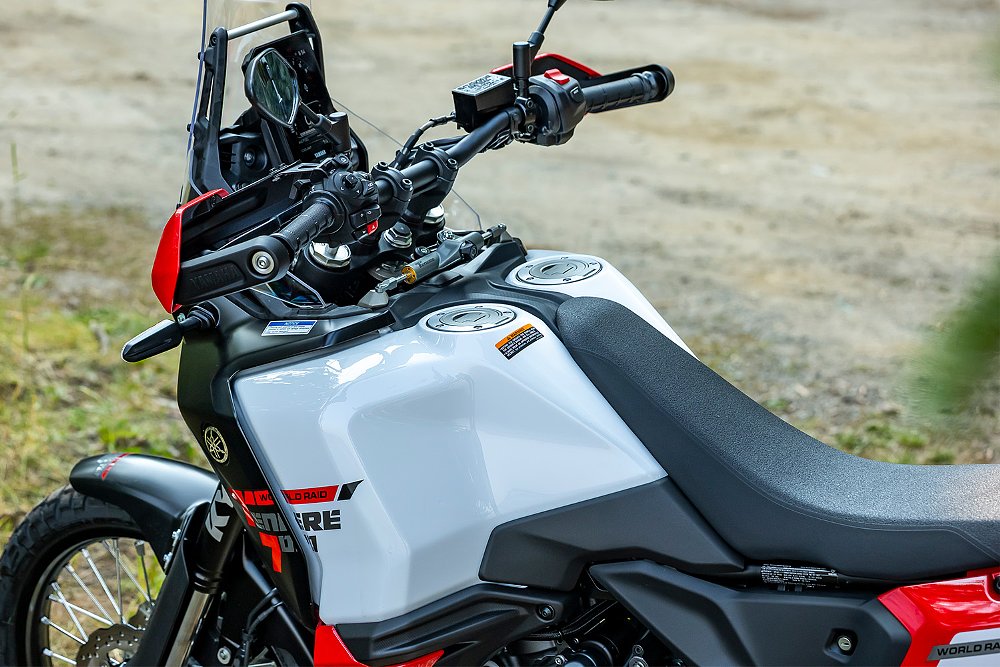
The dual aluminum fuel tanks are the most noticeable among them, both visually and physically. With a 6.1-gallon capacity, the model’s claimed range sits at 310 miles. Such advantages don’t come without their penalties, though. That’s because the extra fuel load leaves the World Raid with a listed curb weight of 485 pounds, or 27 pounds heavier than its rally-inspired relative. It’s a good thing the suspension underwent its own overhaul.
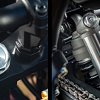
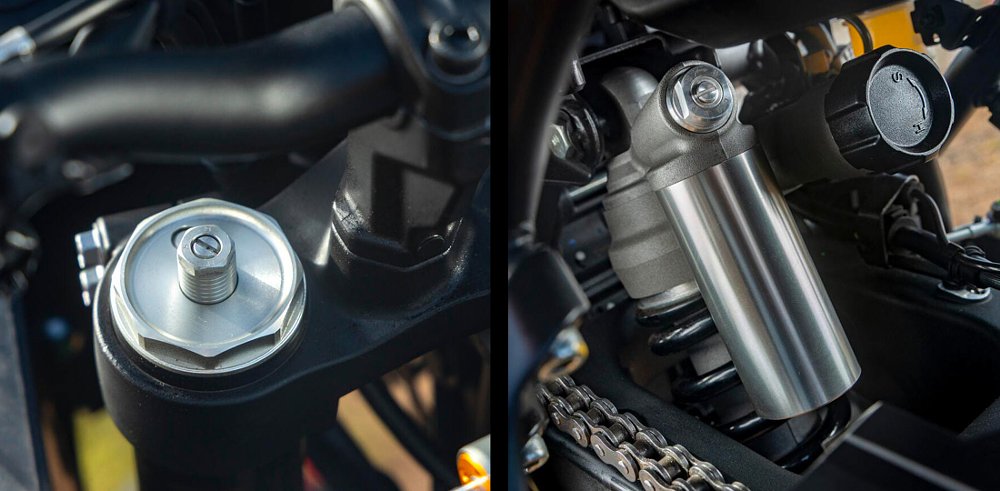
Out goes the base model’s 43 mm fork. In comes a 46 mm KYB unit. Per Yamaha, the larger leg diameter increases front-end rigidity, while updated spring rates and damping specs enhance ground contact, bump absorption, and bottoming resistance. Nine inches of suspension travel sure doesn’t hurt either, which amounts to a 0.7-inch boost over the standard Ténéré’s fork.
Even more changes are adopted out back. Not only is the KYB shock new, the linkage and swingarm to which it connects also receive slight modifications. The result is 8.7 inches of travel (a 0.8-inch increase). Let Team Blue tell it, and the new setup yields improved absorption as well as more consistent and more progressive damping.
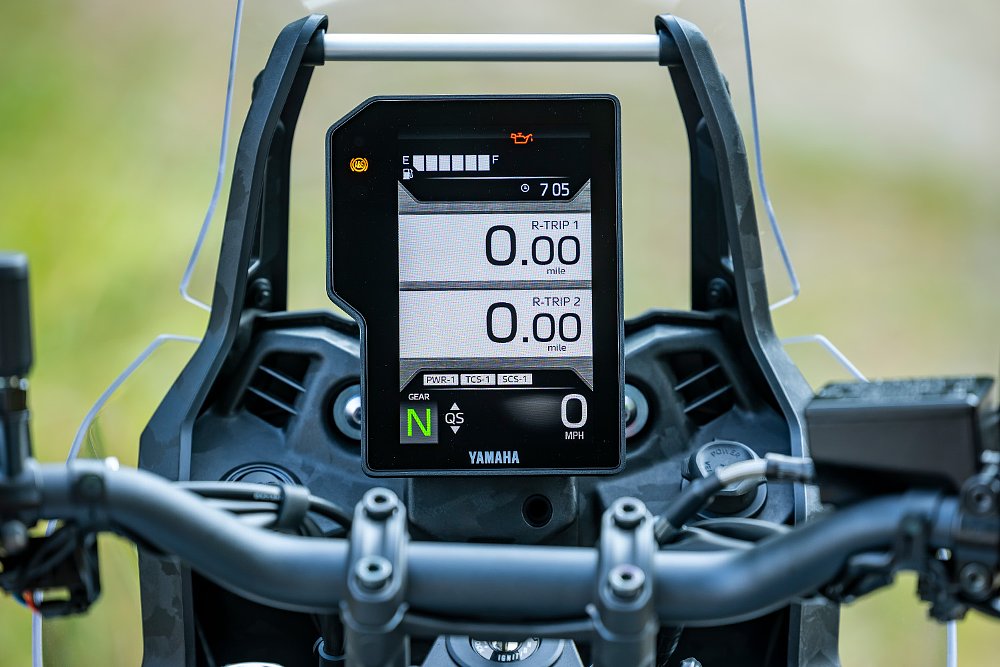
Yes, the bodywork and suspension alterations are extensive, but Yamaha’s employment of a six-axis inertial measurement unit (IMU) is just as transformative. The World Raid sports the same 6.3-inch TFT found on its smaller sibling, but the tech backing that display is far more advanced. There’s lean-sensitive ABS, traction control, and slide control. Also exclusive to the World Raid (within the Ténéré family, at least) is cruise control, a feature that immediately demonstrated its worth on Idaho State Highway 55.
Along the Payette
Twelve Ténéré World Raids purr just outside the entrance to Western Power Sports’ Boise headquarters. The midsummer sun doesn’t just loom overhead; it bounces off the building’s walls and radiates off the blacktop. Smoke from the Spokane wildfires drifts in from over 400 miles northwest, veiling the sky in an ashen gray. It’s a stifling, dry heat, especially when you’re fully (adventure) suited and (adventure) booted. Fortunately, the 120-mile ride between Boise and Donnelly stands to provide some respite from the hot August afternoon.

Yamaha already categorizes the T7 as a touring motorcycle. With the Super Ténéré out of the picture since 2025, the 700 was the only ADV-style option remaining in the lineup. (I consider the Tracer 900 a crossover.) The brand’s adventure-touring family not only gains a new member in the World Raid, but one that’s better outfitted for the task.
The model’s travel aspirations are evident in its 6.1-gallon fuel load. The same goes for its cruise control. But aside from those two long-haul features, the World Raid’s accommodations aren’t that far removed from the Ténéré 700’s. Depending on how you look at it, that’s a good thing or a bad thing.
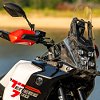
The Japanese OEM is quick to point out the World Raid’s taller windscreen, but the unit only adds 15 mm (0.6 inches) of height to the screen found on the standard model. Without testing both Ténérés back to back, it’s impossible to tell if that extra half-inch generates any additional wind protection.
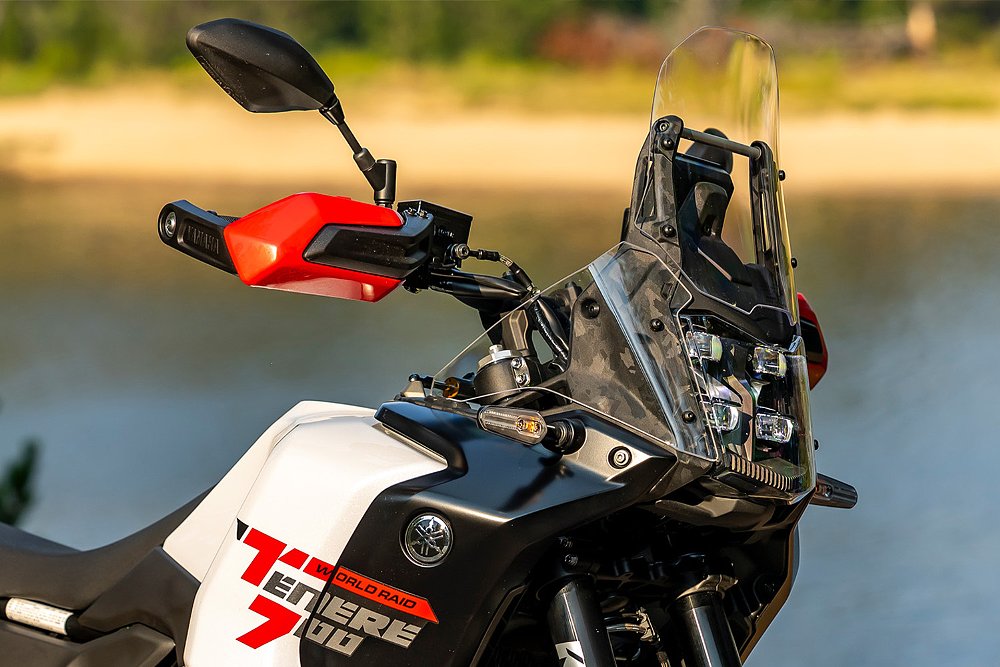
What I can say is that oncoming wind fluttered off my shoulders and helmet; never bordering on serene but never building to a bothersome degree either. I'm five feet, 10 inches tall and the occasional bug still splattered on my helmet’s face shield. I expect the same results for anyone my height or taller. Some T7 owners already spring for clip-on spoilers or aftermarket touring screens. World Raid buyers will probably explore similar options.
The same could be said for the saddle, as its one-piece design only slightly differs from the T7’s seat. Both favor a slim, dirt-bike-style shape. Both go light on the padding, too. That becomes painfully obvious after about an hour aboard the World Raid. No matter how much I repositioned, no matter how often I stood on the pegs, doing so only granted momentary relief.
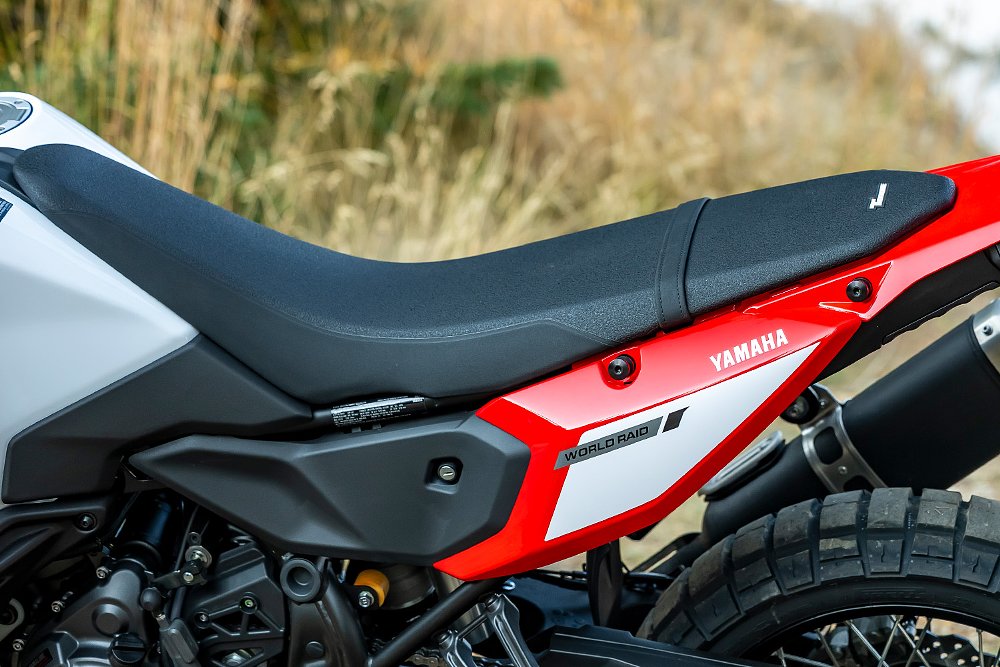
To put it in perspective, my rump was ready for a rest long before the gas gauge fell below its halfway mark. Let’s just say the World Raid isn’t the paragon of touring luxury. However, comfort isn’t its only limiting factor; its engine is, too.
They say familiarity breeds contempt, but I’ll never share such sentiments for Yamaha’s CP2. It’s both accessible and exciting, both versatile and engaging. That doesn’t mean it's the best candidate for a long-distance tourer. The 689 cc twin can log miles with the best of them, but unlike its liter-class rivals, its power isn’t spread broadly across its 9,400 rpm rev range.
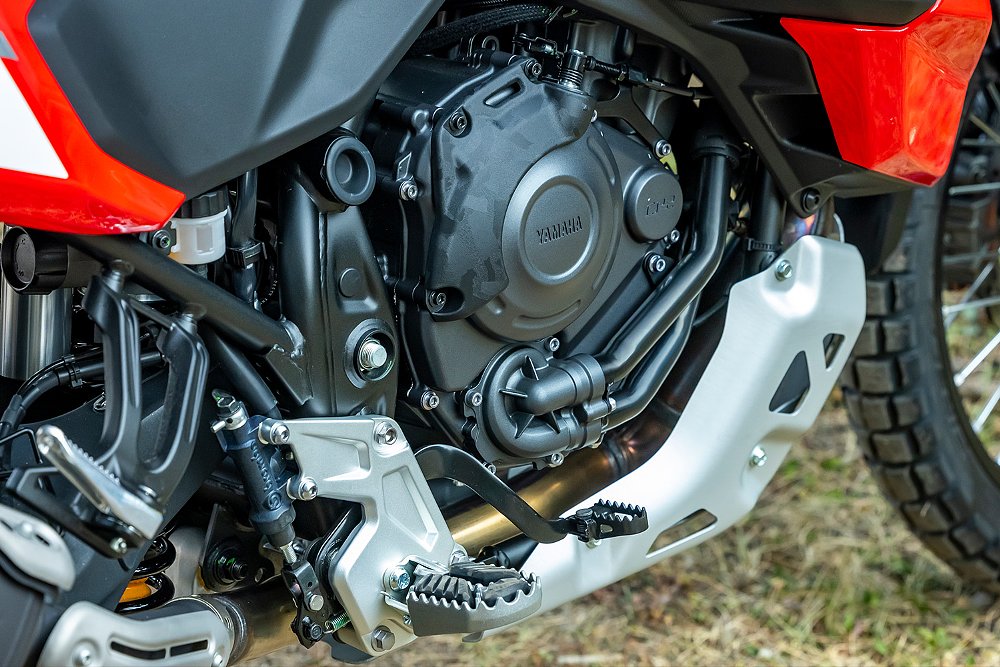
Throttle response may be snappy and direct above 6,000 rpm, but it’s somewhat soft and laggy below that threshold. When riding in the lower half of that bifurcated power curve, overtaking vehicles at interstate speeds often required a downshift. That’s rarely necessary on big-bore tourers.

Why not keep the engine spinning above six grand, you ask? Because at that point, the CP2 starts transmitting engine vibrations through the controls (more specifically, the footpegs). Such effects left this rider choosing between comfortably cruising or pushing the pace, and never the twain shall meet. What’s worth remembering, though, is that the World Raid’s sub-700 cc mill helps it save some el-bees (compared to heavyweight ADVs). That, in turn, benefits the bike when it ventures off-road.
Just a little washboard
The red sun rises behind a blanket of wildfire smoke, casting a rose-colored tint over the nearby West Mountains and Lake Cascade. It’d be romantic if it weren’t so apocalyptic. Yet, the Ténéré World Raid rumbles onward, kicking up rocks and dust, flying between the conifers. I think to myself, “This is what this bike was designed to do.” That epiphany hits me just as I realize I forgot to turn off ABS.
There are a few quirks with the World Raid's electronic controls. If I haven’t tipped it off yet, the system re-engages ABS after every power cycle. Although annoying at first, any owner will remember to turn it off (when needed) over time.
The other oddity concerns the Ténéré’s ride modes, or lack thereof. Instead, the rider adjusts the bike’s power mode, TC settings, slide control, and brake control (cornering ABS) independently. While that grants users greater control over the individual rider aids, it also requires switching several different parameters as opposed to one all-encompassing ride mode. Once the setup is to the rider’s liking, however, the World Raid’s competent chassis comes to the fore.
When I recall the times I’ve ridden the Ténéré 700 off-road, one word comes to mind: tippy. With its long-legged suspension and top-loaded gas tank, the T7 often felt like it wanted to fall into the corner, like sudden inputs would flop the bike right on its side. The World Raid significantly mitigates that sensation. I attribute much of that effect to the dual fuel bladders, which help centralize the model’s mass. The result is a balanced, planted ride that instills not just trust, but confidence.
I was just as impressed with the steering damper that comes standard on the World Raid. I credit it with saving more front-end tucks than I’d like to admit. The only quibble I have with the damper lies in its 16-setting adjuster. It doesn’t need all those adjustments. It only needs one: full strength.

For the first 80 off-road miles, I left the damper in its middle position. Not too soft, not too hard, I reasoned. While the damper smoothed out slappers or tucks, it also felt loose on trickier terrain. At my colleagues' suggestion, I maxxed out the clicker, which steadied the front end, especially over sand patches and rock gardens. But even with its steering damper, even with its tanks mounted low, the World Raid’s weight was still a factor.
Headin’ up the hill
In the videogaming community, there are casual gamers and hardcore gamers. If I applied those dichotomous labels within the adventure crowd, I’d fall in the casual camp. Still, the Ténéré World Raid was far from intimidating. Therein lies the model’s greatest strength. It’s approachable enough for novice off-roaders while remaining capable enough for avid ADVers. That much was clear when the sledding got tougher and the terrain turned technical.
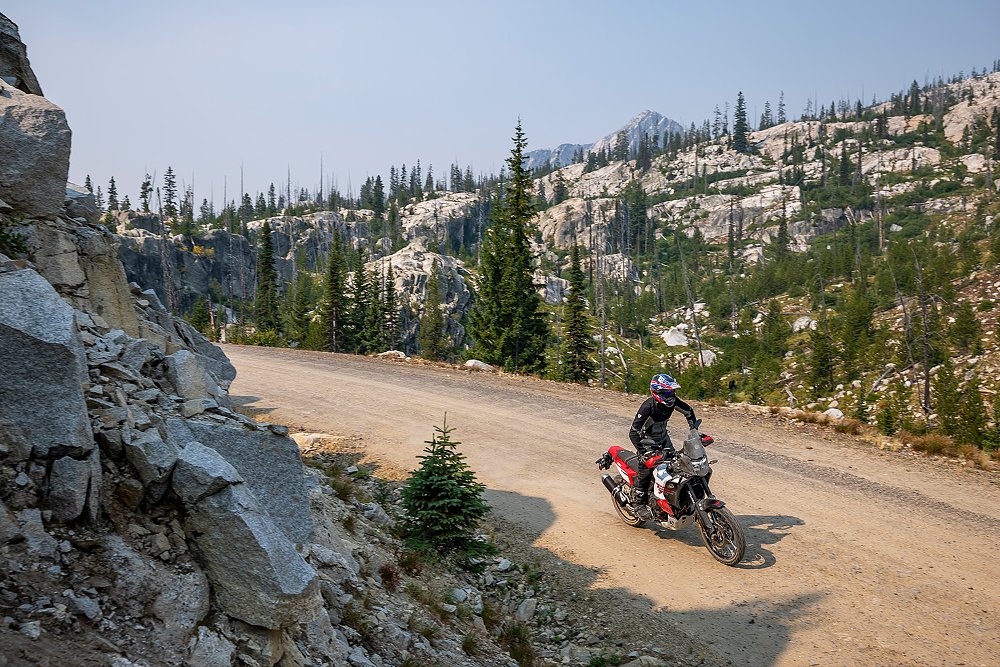
The trails to the top of Tamarack Summit are both fast and flowing and tight and precise. There’s not just sand; there’s silt. There aren’t just rock gardens; there are rock fields. There are steep hill climbs and equally steep descents. Protruding tree roots, embedded rock, deep ruts, you name it, the trails had it.
Some sections required the slow and steady approach. Others necessitated deft clutch modulation and throttle finesse. Shoot, I duck-walked through several stretches of softball-sized rocks. Even turning the bike around became burdensome in such tight quarters. The World Raid is a highly capable bike — even in challenging territory — but it’s still knocking on the door of 500 pounds. To what extent someone can extract that off-road performance greatly depends on whether they’re a casual or hardcore off-road rider.

No small potatoes
When Yamaha debuted the Ténéré 700, it represented a back-to-basics approach. It was as meat and potatoes as they come. No traction control, no quickshifter, no cruise control, just ABS and a cabled throttle. It has since earned modern features, but the World Raid still functions as an elevated version of Team Blue's ADV. It’s a premium Ténéré 700. A T7 Plus, if you will. Starting at $12,999, it’s just $2,000 more than its stablemate. More importantly, it’s equipped to compete with offerings outside the middleweight ranks.

Throughout the model's press launch, I had several discussions with Ian from Big Rock Moto. One potential World Raid rival that kept coming up in our conversations was the Honda Africa Twin. Yes, Big Red’s flagship ADV has a 395 cc advantage over the Yamaha, but it’s also 25 pounds heavier and costs $2,200 more. Such tradeoffs make the tech-laden T7 a viable alternative to Honda’s AT line. Indirect as it may be, that’s just another form of praise.
I still don’t know what took Yamaha so long to bring the Ténéré 700 World Raid to North America. In spite of that delay, I have a feeling it will do just fine here.
| 2026 Yamaha Ténéré 700 World Raid | |
|---|---|
| Price (MSRP) | $12,999 |
| Engine | 689 cc, liquid-cooled, eight-valve, parallel twin |
|
Transmission, final drive |
Six-speed, chain |
| Claimed horsepower | N/A |
| Claimed torque | N/A |
| Frame | Perimeter steel |
| Front suspension | KYB 46 mm fork, adjustable for spring preload, compression, and rebound damping; 9.1 inches of travel |
| Rear suspension | KYB Monocross shock, adjustable for spring preload and rebound damping; 8.7 inches of travel |
| Front brake | Dual Brembo two-piston calipers, 282 mm discs with ABS |
| Rear brake | Brembo two-piston caliper, 245 mm disc with ABS |
| Rake, trail | 27.0 degrees, 4.1 inches |
| Wheelbase | 62.8 inches |
| Seat height | 35.0 inches |
| Fuel capacity | 6.1 gallons |
| Tires | Pirelli Scorpion Rally STR, 90/90R21 front, 150/70R18 rear |
| Claimed weight | 485 pounds |
| Available | Now |
| Warranty | 12 months |
| More info | yamahamotorsports.com |