Shop by Vehicle
 Track Order
 Contact Us

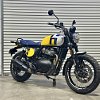
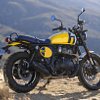
It’s easy enough to take one look at Royal Enfield’s Bear 650 and declare that it isn’t a good scrambler. How is it supposed to “scramble” when the exhaust is dangling down under the engine and the suspension isn’t tall enough? And yet it might be the truest interpretation of a scrambler available today.
For starters, the recipe is correct. Scramblers are modified street bikes, after all, or at least that’s how they started. As the tree of motorcycling grew new branches over the course of the 20th century, off-road machines sprouted in a few different directions. For a brief period — before true dirt bikes proliferated and created a market of their own — full-sized, road-going motorcycles were crudely modified to create quasi-off-road contraptions.

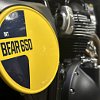
Heavy motorcycles with steel frames and air-cooled engines were the canvases on which people painted their off-road dreams, and that’s how the Bear 650 was conceived, too. Royal Enfield was honest enough to put the full name on the side of the bike: INT Bear 650. As in, a spinoff of the INT 650. But, it’s not just a different exhaust and knobby tires.
The Bear’s suspension is about an inch taller, the swingarm is 1.5 inches longer, the frame has been braced for strength, and the steering-head angle has been relaxed from the INT’s super-sharp 24 degrees to 26.1 degrees. Also, the road-going INT’s 18-inch wheels have been swapped for a 17/19-inch combination. The Bear’s handlebar is taller while the footpegs have been moved back and, probably to compensate a bit for the taller chassis, the saddle has been “contoured” to “allow the rider to move around freely.” More on that in a minute.

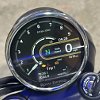
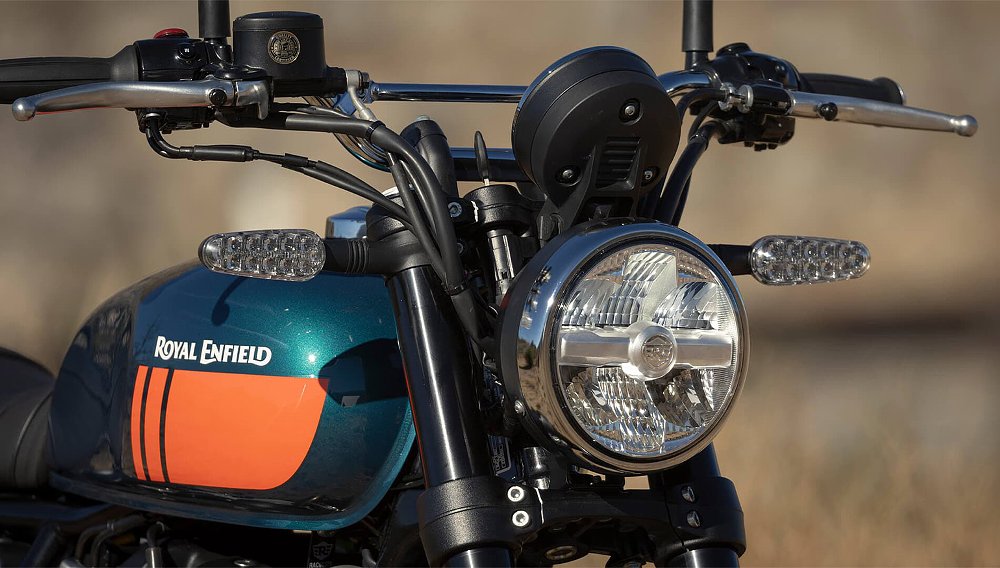
There are a few sprinkles of new tech, too. All-LED lighting, for one, as well as a four-inch TFT dash with integrated turn-by-turn directions and phone connectivity, the same one used on the Himalayan and Guerilla 450 models. For a touch of scrambler spirit, the ABS for the rear wheel can be shut off with a button on the right switchgear. And... actually, that might be all of the “tech.”
Fair enough, because the Bear 650 leans heavily on the nostalgic simplicity of a 648 cc, air-cooled, parallel-twin engine and a chassis with very few frills. Even the price seems a little bit obsolete, at around $7,000 brand-spankin’ new. What can’t it do?
On (and off) the road
Well, in this age of rugged, off-road-ready scramblers it’s tempting to talk about the Bear 650’s dirt-bike chops, especially in light of the surprisingly comprehensive changes that Royal Enfield applied. I won’t keep you waiting any longer — this isn’t a dirt bike of any kind. All of the updates surely help the Bear 650 navigate rough terrain, but saying it’s an off-road machine is kind of like attaching a fishing rod or a life preserver and then saying it’s closer to being a boat. Sure, a little bit, but some key features would still be missing.
A closer look at the numbers tells a more accurate story of the bike’s intentions. For example, that extra inch of suspension travel sounds enticing, until you realize that means 4.5 inches in the rear and 5.1 inches up front. The Bear 650 also weighs 469 pounds (identical to the INT 650 we tested, incidentally), which is within a few pounds of a KTM 1390 Super Duke R and a Honda Transalp. Much “bigger” bikes, in other words.
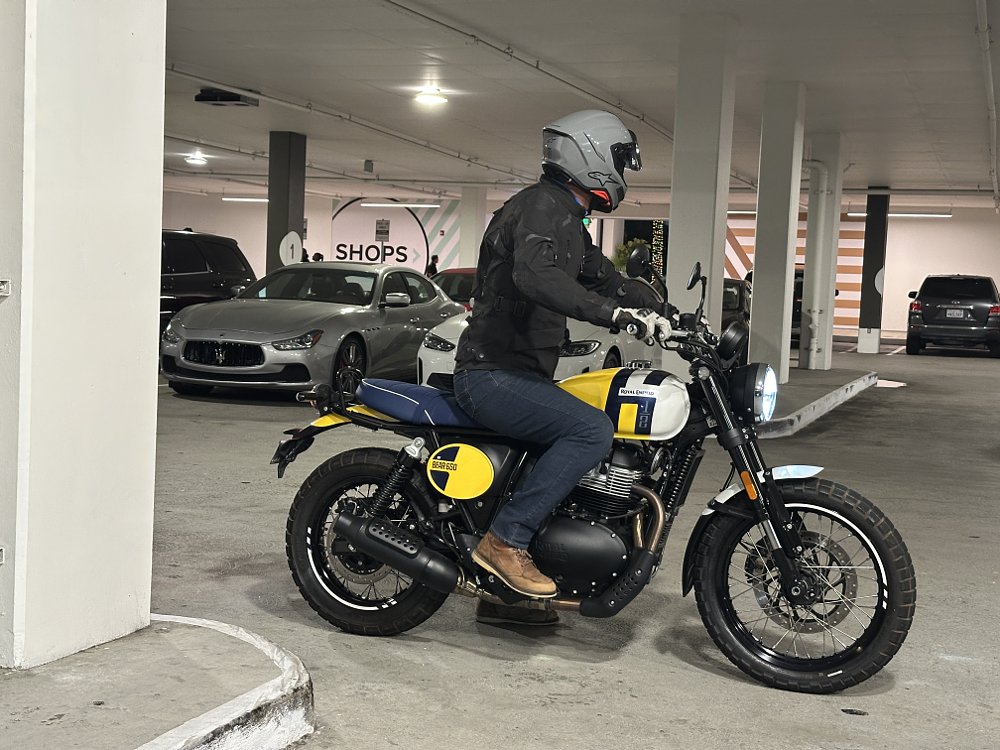
The 19-inch front wheel lends some legitimacy to the off-road ideals. Then again, let’s not forget that just about every motorbike with a 19-inch front rim has, at one time or another, been accused of not being very off-road focused, from Kawasaki’s Versys-X 300 to BMW’s R 1300 GS. But, enough about how it’s not a dirt bike. You get it. There’s a lot more to like about the Bear 650 than there is to criticize.
Maybe most important of all is that despite the Stetson hat and five o’clock shadow, this lil’ outlaw is extremely polite around town. That’s mostly to do with the engine, which uses a 270-degree firing order to make a nice bit of noise and is practically as sweet and smooth as you like. While it doesn’t have the same presence or premium feel as a small-block Triumph twin, keep in mind that’s a pretty high bar.
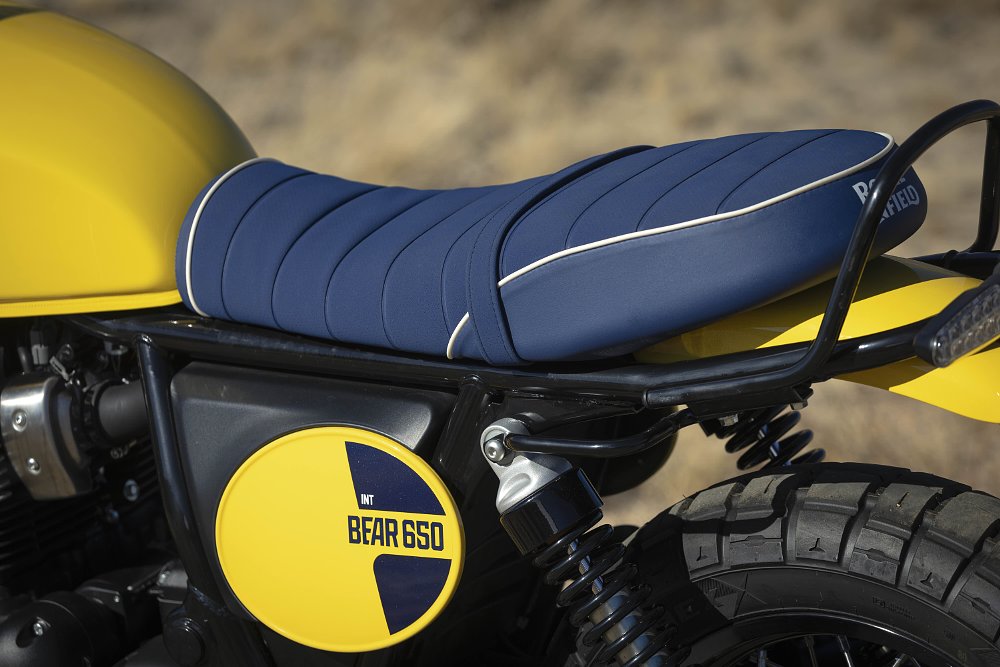
At six feet, two inches tall, I appreciate the basic shape and size of the Bear 650. The handlebar is wide and legroom is decent. The saddle is pretty stiff, seemingly because Royal Enfield chose to remove some of the padding in order to compensate for the bike being taller. If your inseam and wallet can afford it, I would recommend springing for the $190 accessory bench seat, which adds 0.6 inches of height and padding. Not convinced? Sit on the stock unit, then slide back onto the passenger seat and tell me that’s not much, much better.
There’s nothing particularly special about how the Bear handles or delivers a riding experience, it’s enjoyable mostly because the machine is direct and unpretentious. It’ll happily peel through twists and turns on a mountain road all afternoon, or as long as your buns can tolerate the seat, either lugging along at a few thousand rpm or churning out 40-something horsepower and gentle thunder out the exhaust.
Warning: Authenticity alert
Describing the Bear 650’s substantial charm is hard. Lots of motorcycles are pleasant to ride and produce a nice exhaust note. The true reasons that it's lovely are buried beneath the appealing, old-school surface — hidden behind facts and features that wouldn’t otherwise matter.
The engine, for example, uses a 9.5:1 compression ratio, holds more than a gallon of oil, and wants a valve service every 6,000 miles. It’s a beautiful mill to look at, in part because of obviously retro design. But, I think the reason I was excited to ride it goes beyond that. It’s engaging to use because the architecture is genuinely old-fashioned. A twin-shock rear end adds to this, as do little things like the barrel-type hand grips and the seat-to-tank junction that feels like an afterthought.
I say all of this not to be snarky, I promise, but with a lot of admiration. The Bear 650 is a true scrambler. A kinda-sorta off-road-ish thing that has been cobbled together from a street bike. To me, it feels clumsy in the right way. And, to be fair, the sweethearted clunkiness actually blends pretty well with some slightly unexpected creature comforts.
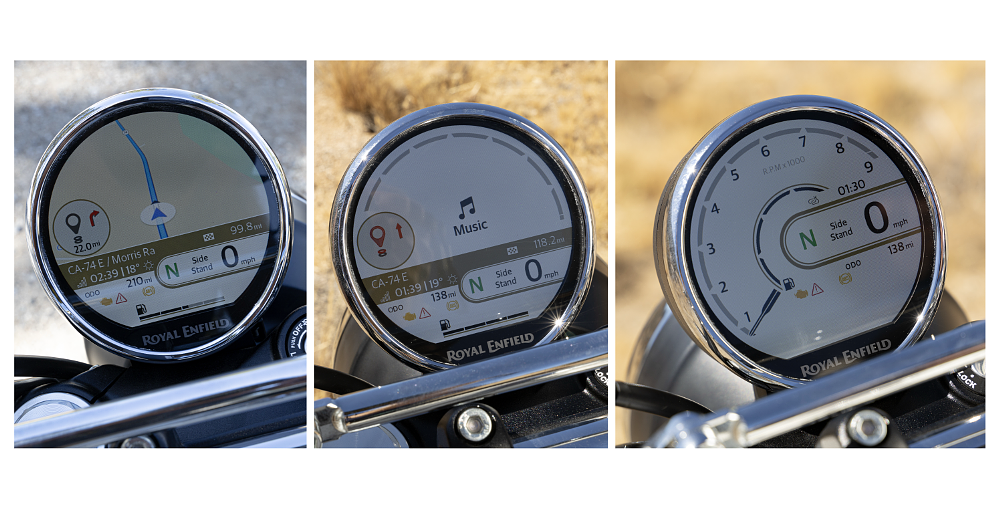
The TFT dash is bright and clear, not to mention the Google-powered turn-by-turn nav system is quite a bit better than many luxury bikes I’ve ridden. The mirrors are pretty smooth, the hand controls are adjustable for reach, and braided-steel plumbing for the brakes offers decent power and feel for a budget system.
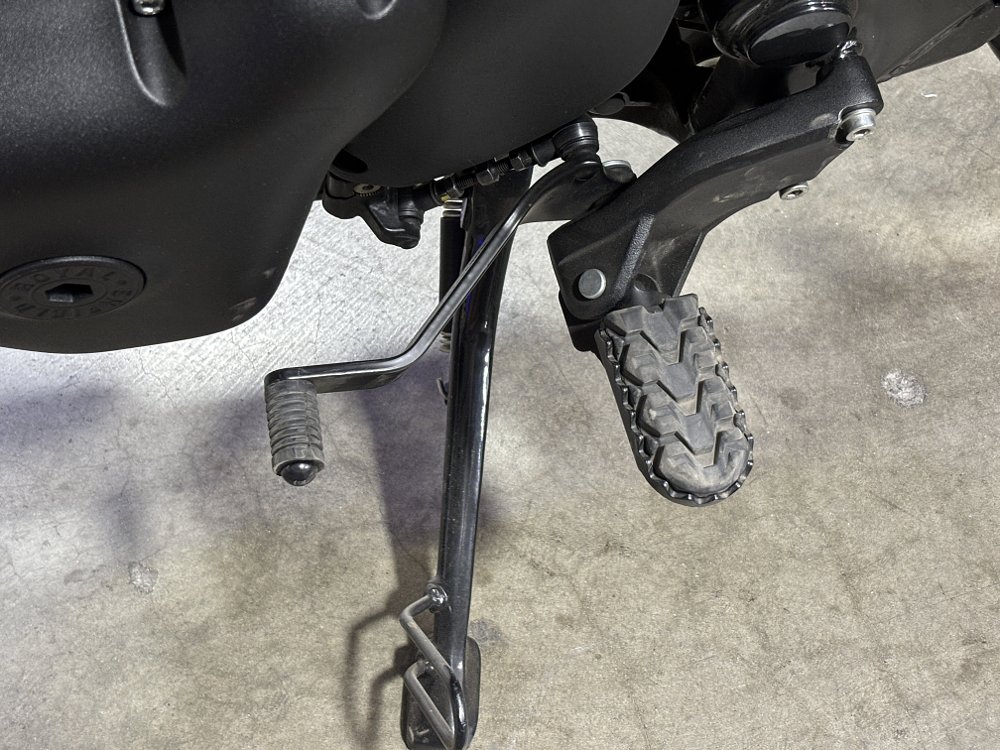
All of it, from the agricultural gearbox to the richly painted gas tank, made me really enjoy riding the Bear 650. Even in the face of some things that are actually quite bad. The rear suspension is a little too stiff for my 200 pounds, never mind anyone lighter. Then there’s the shift lever, which has an absurd bend that made the stamped-steel shaft hit my toe knuckle before the front of my foot got to the padded rubber pedal. It’d be easy to fix as an owner, but how the test riders missed that I’ll never know.
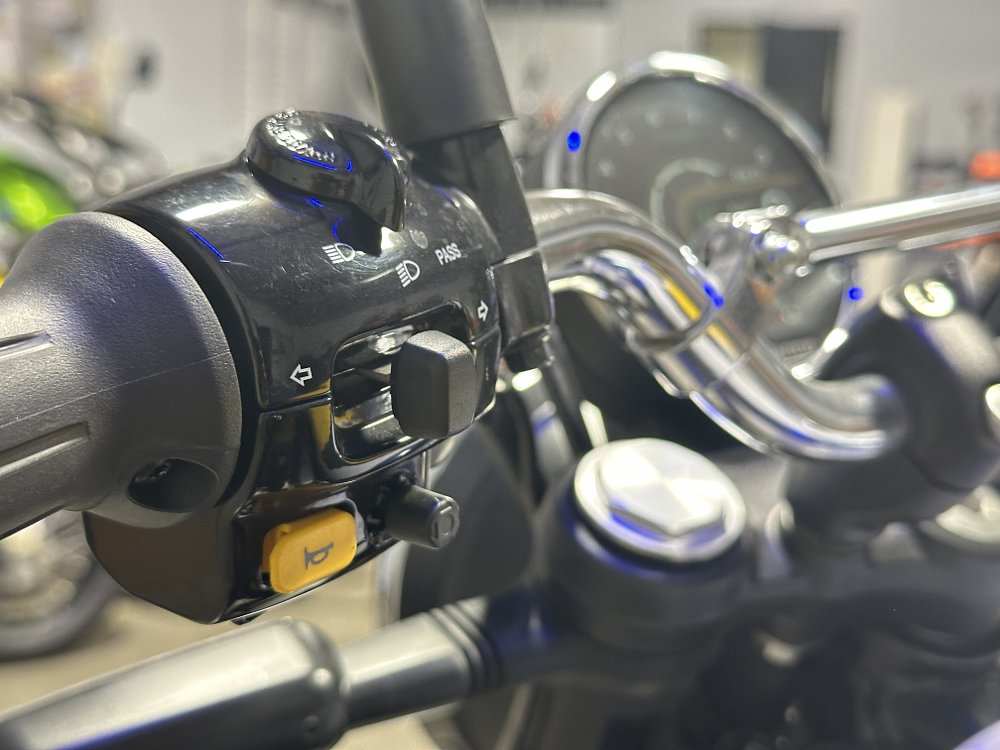
As much as I liked the look of the TFT gauge in the cockpit, the little joystick designed to navigate the menus and select settings is awful. Fiddly, small, no tactile feedback, and fairly miserable to use. And yet all of these complaints really pale in comparison to my final critique, which is that the headlight simply shut off on the freeway at 75 mph. Twice. Not for very long, mind you, and there was enough ambient light from other cars for me to see, but needless to say it's a fairly insane thing for a motorcycle to do, especially one with 1,000 miles on the clock.
Bear necessities
Still, I think the Bear 650 is really satisfying. If I was buying any scrambler I would be putting all of the money down for Triumph’s big honkin’ Scrambler 1200 XE. I am taller than average and I grew up riding dirt bikes, so I want a bike that can actually scramble and I’m not afraid of it being huge. I’ve ridden the XE in the desert, the woods, the snow, and I love that it has nearly all of the capability of a big, burly ADV combined with the kickstand presence of a classic motorcycle. It’s also the better part of $17,000, so we can forget about that for now.

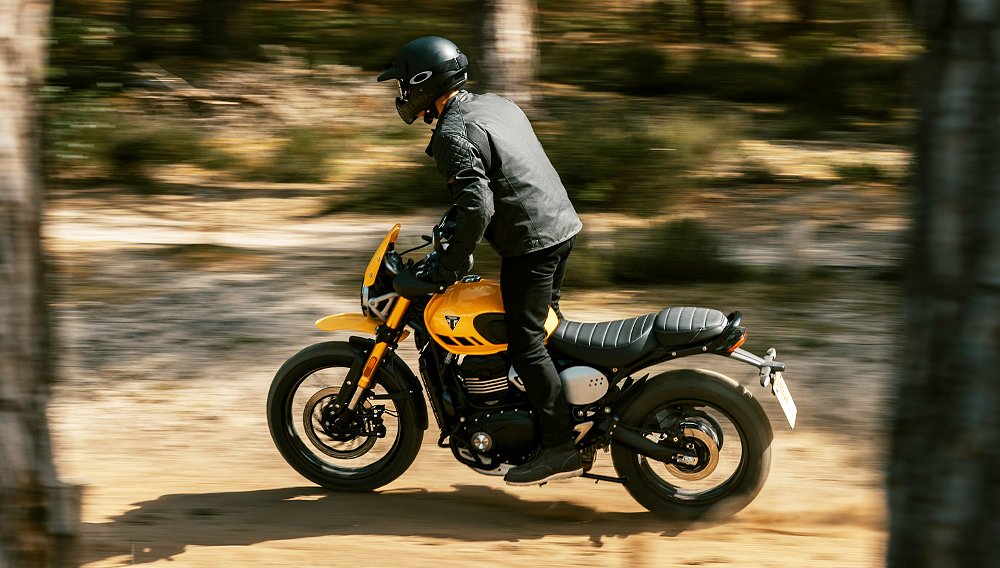
I mulled over other comparisons in my head — Kawasaki’s W800 and Ducati’s Scrambler, both of which are much more expensive, and even Triumph’s Scrambler 400X (or XC), which is a little cheaper but not really in the same class. The comparison I kept coming back to in my head was between the Bear 650 and Triumph’s Scrambler 900, because they’re approximately the same size and feel. It won’t surprise anyone that I think the Scrambler 900 is a better bike — it’s 80% more expensive (!) and is more refined in pretty much every way.
What surprised me about riding the Bear 650 was how I didn’t want a better version of it. I would want that thicker seat, yes, and I would truly love it if the headlight stayed on all the time, but other than that I didn’t want it to be nicer or more luxurious. That’s not the point of a machine like this. If I’m accused of making excuses for the Bear 650, just know that my personal bike is hugely imperfect and I love it all the same. If I were shopping for a mid-size scrambler with classic looks I’d have the Royal Enfield over the Triumph.
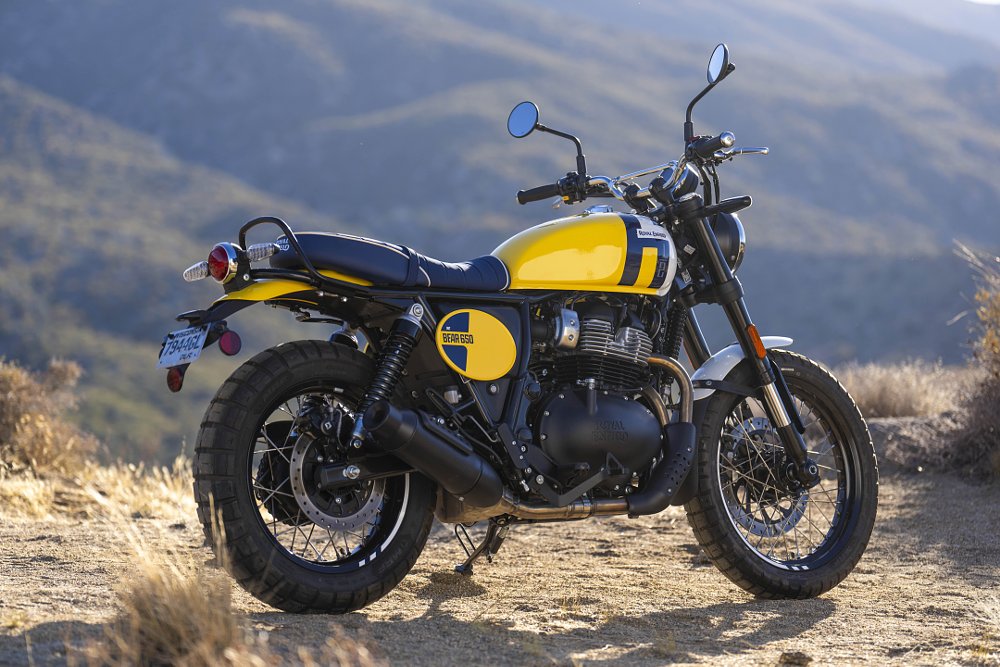
If you want a better bike, the $13,000 Scrambler 900 is there waiting, and it's lovely. If you want a better bike but you need it to be cheaper, get a Royal Enfield INT 650 and you’ll have sharper steering, a thicker seat, the same engine as the Bear, and no TFT dash controls to annoy you. It’s handsome and fun, and a terrific value.
There will be some people who buy a Bear 650 just for the way it looks, and that’s fair enough. Hopefully there won’t be too many that buy it to take off-road adventures. Whatever the reason the key ends up in your hand, just know that it is an authentic scrambler experience. A little bit off kilter, like it’s a project rather than a product. And that’s what a scrambler is supposed to be.
| 2026 Royal Enfield Bear 650 | |
|---|---|
| Price (MSRP) | $6,849 |
| Engine | 648 cc, oil/air-cooled, eight-valve, parallel twin |
|
Transmission, final drive |
Six-speed, chain |
| Claimed horsepower | 47 @ 7,150 rpm |
| Claimed torque | 41.7 foot-pounds @ 5,150 rpm |
| Frame | Steel tube, double cradle |
| Front suspension | Showa 43 mm inverted fork, 5.1 inches of travel |
| Rear suspension | Showa twin shocks, adjustable for spring preload, 4.3 inches of travel |
| Front brake | 320 mm disc, ByBre two-piston caliper, with ABS |
| Rear brake | 270 mm disc, ByBre single-piston caliper, with ABS |
| Rake, trail | 26.1 degrees, 4.6 inches |
| Wheelbase | 57.5 inches |
| Seat height | 32.7 inches |
| Fuel capacity | 4.0 gallons |
| Tires | MRF Nylorex-F; 100/90-19 front, 140/80R17 rear |
| Measured weight | 469 pounds |
| Available | Now |
| Warranty | 24 months |
| More info | www.royalenfield.com |