Shop by Vehicle
 Track Order
 Contact Us
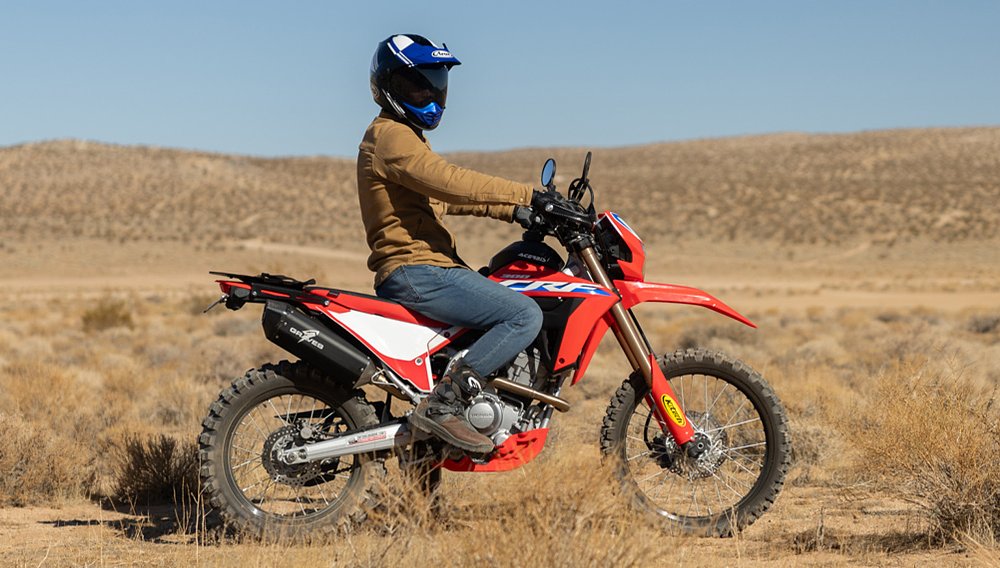
I didn’t grow up riding motorcycles. That much is apparent when I ride off-road.
I take to trail riding the way a cat takes to water. I’m not incapable of trundling down an unpaved path. I’m incapable of enjoying it. Maybe that’s because I’m often aboard some overweight, oversized adventure bike. Maybe that’s because I’m often anxious about dropping said adventure bike (and, more importantly, picking it back up).
Thankfully, those considerations never crossed my mind when riding Honda’s CRF300F.
Family gathering
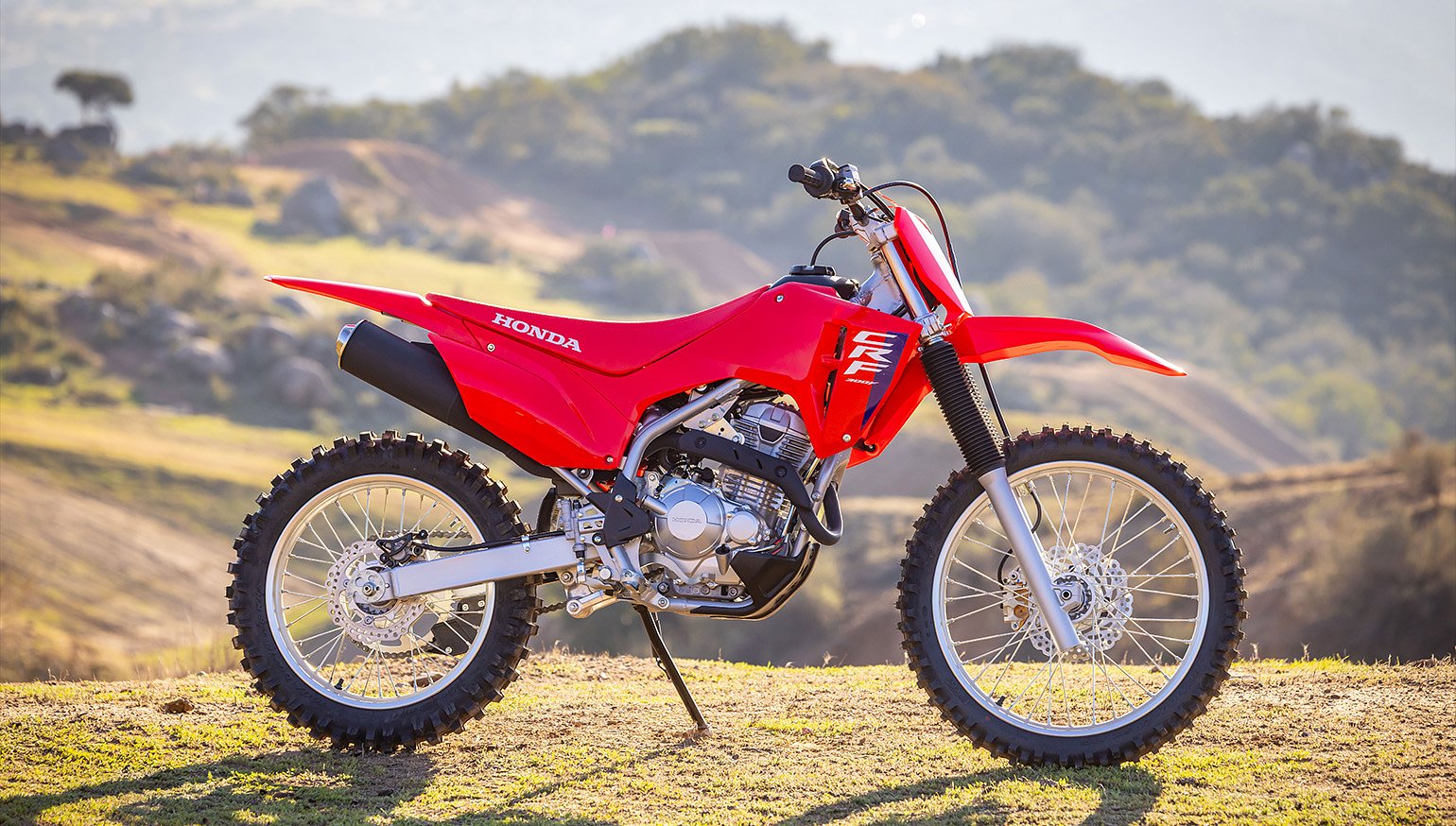
Big Red’s range-topping trail bike dates back to the early 1980s. Updates were rare occurrences, too. Only after 22 years did the XR200R make way for the CRF230F in 2003. More than just a name change, the CRF modernized the platform with disc brakes, electric start, and a 223 cc thumper. Another 16 years passed before the 2019 CRF250F arrived with fuel injection, reworked suspension, and a 250 cc engine.
Those upgrades propelled the trail bike to the top of the adult entry-level enduro segment, as Honda defines this slice of the market. Honda couldn’t rest on its laurels, though. The 250F’s market-share lead started slipping, prompting the Japanese OEM to expedite the model’s life cycle. After seven years, the 250F was out. The CRF300F was in, touting updates that Honda believes “strengthen its position as a market leader.” The first of which is reflected in the CRF’s new name.
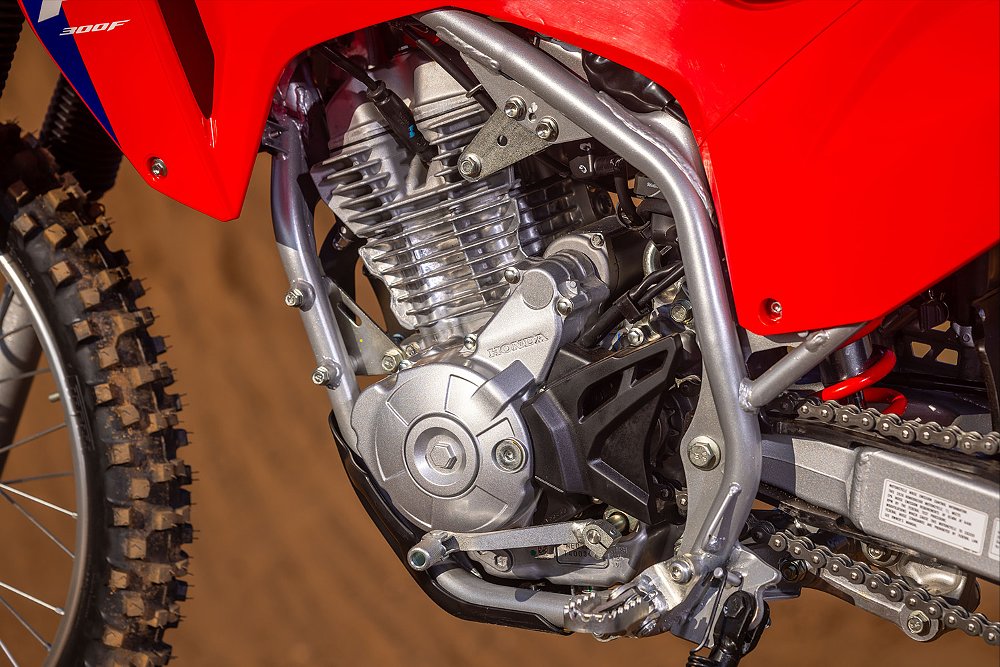
Within the 300F’s steel perimeter frame beats a 294 cc air-cooled single. That’s a 44 cc increase over the outgoing engine. Accounting for that displacement bump is the powerplant’s 77 mm bore, which is 6 mm larger than the 250F’s 71 mm bore. Honda doesn’t list peak horsepower or torque, but it still claims the punched-out mill offers “more power.”
Transferring that extra performance to the rear wheel is a new six-speed gearbox. The brand doesn’t just cram another gear into the existing unit, either. Instead, Honda redesigned the transmission from the ground up, with new gear ratios and heat-resistant clutch discs. It's a fitting companion for the refreshed thumper. So are the 300F’s chassis revisions.
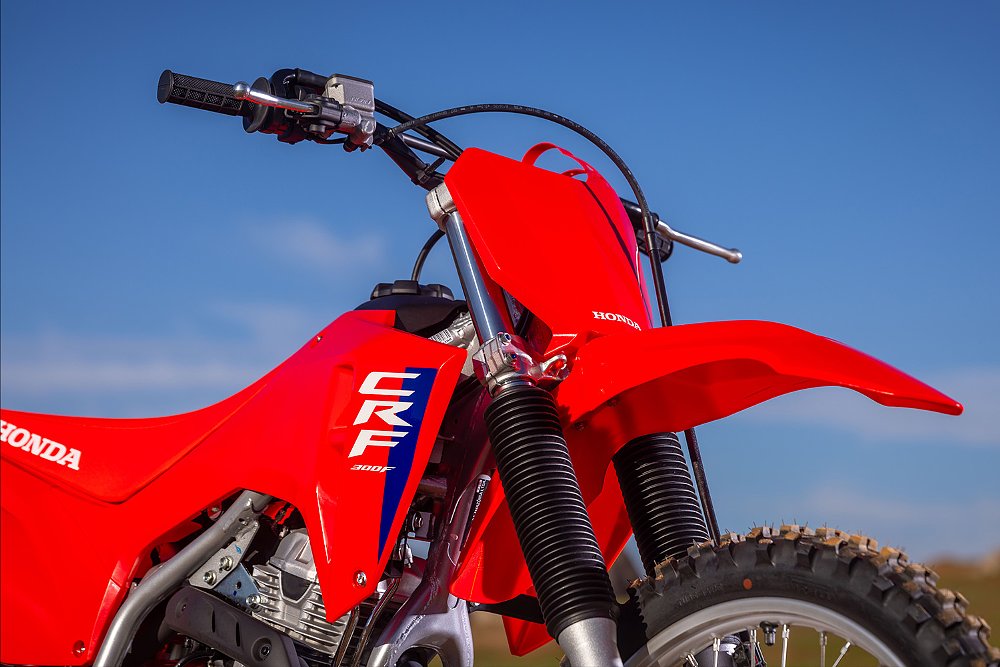
The 41 mm fork’s new damping settings enhance both bottoming resistance and comfort. The shock linkage and bottom triple clamp are now constructed from aluminum, reducing weight and increasing strength. Even the modified engine-hanger improves “handling and feel.” That’s all according to Honda, anyway.
The only way to corroborate those claims was to actually ride the thing, and the trails around California’s Chocolate Mountain Ranch presented a suitable proving ground.
Hot on the trail
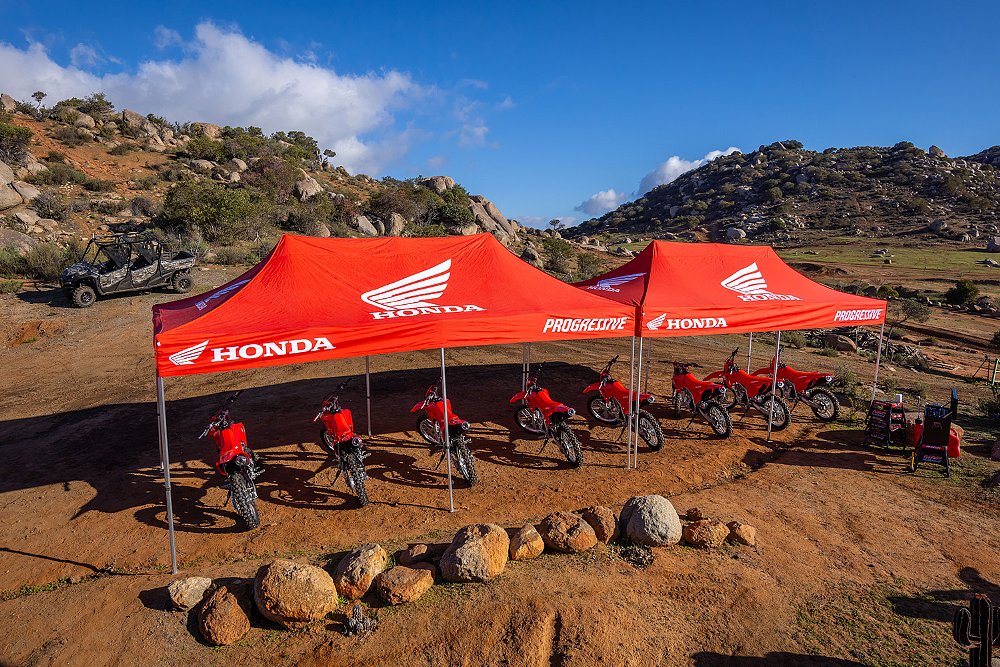
Chocolate Mountain Ranch rests on 245 acres in southern San Diego County. Much of that land is dedicated to raising cattle and growing avocados. The rest of the ranch is reserved for other uses. Namely, riding dirt bikes.
That’s why driving onto the CMR premises felt more like driving through a motocrosser’s playground. There are doubles, triples, tabletops, step-ups, whoops, you name it. No wonder X-Games Freestyle riders practice here. No wonder manufacturers launch competition-worthy dirt bikes here. That's far from the CRF300F’s speed, though.
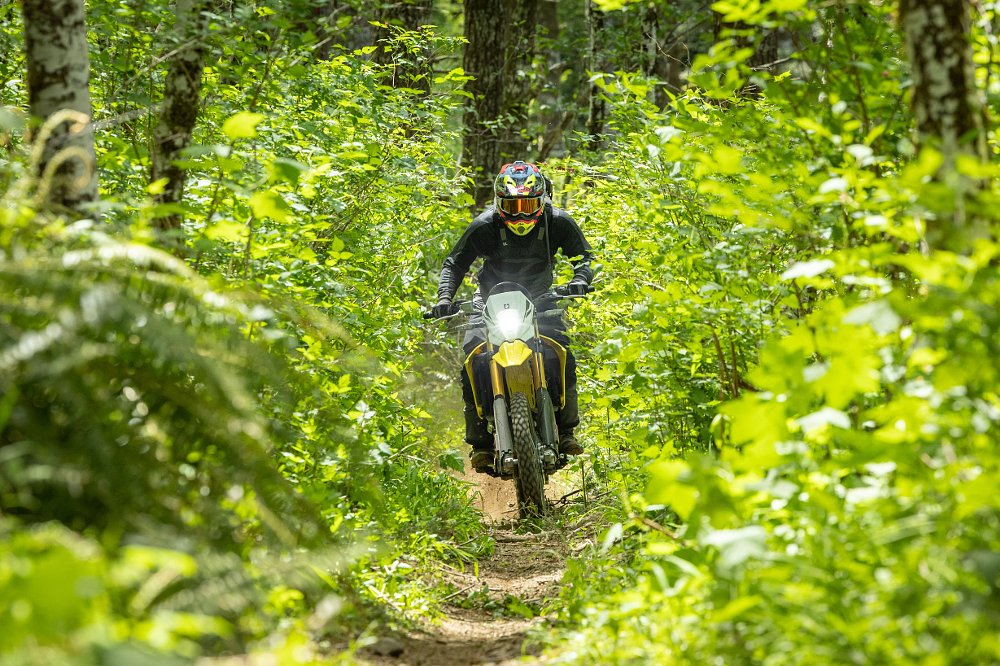
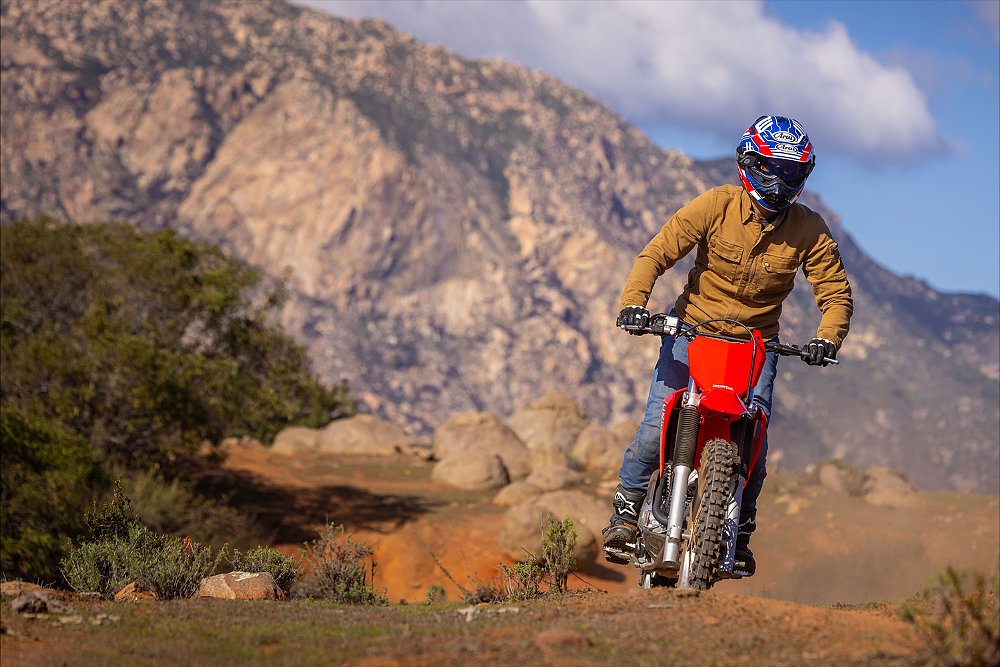
To match the trail bike’s abilities, we rode multiple laps of a 3.5-mile loop Honda mapped out through CMR’s foothills. Variety was the main objective. We’re talking second- and third-gear hill climbs and rocky descents, sandy single-track and muddy rollers. The route weaved through avocado trees. It rumbled over rock gardens and dipped into shady groves. In other words, it was ideal.
Take a seat
Throw a leg over the 300F, and one word comes to mind: basic. Motorcycles are chock full of buttons nowadays. Road-going ones are, anyway. Honda, in particular, is a repeat offender, with models like the NT1100 and Africa Twin featuring complex UI. The CRF300F takes the opposite approach. There’s a start button and a kill switch. That’s it. You can forget a dash, too. A low-fuel light is the only instrument in this “cluster.”
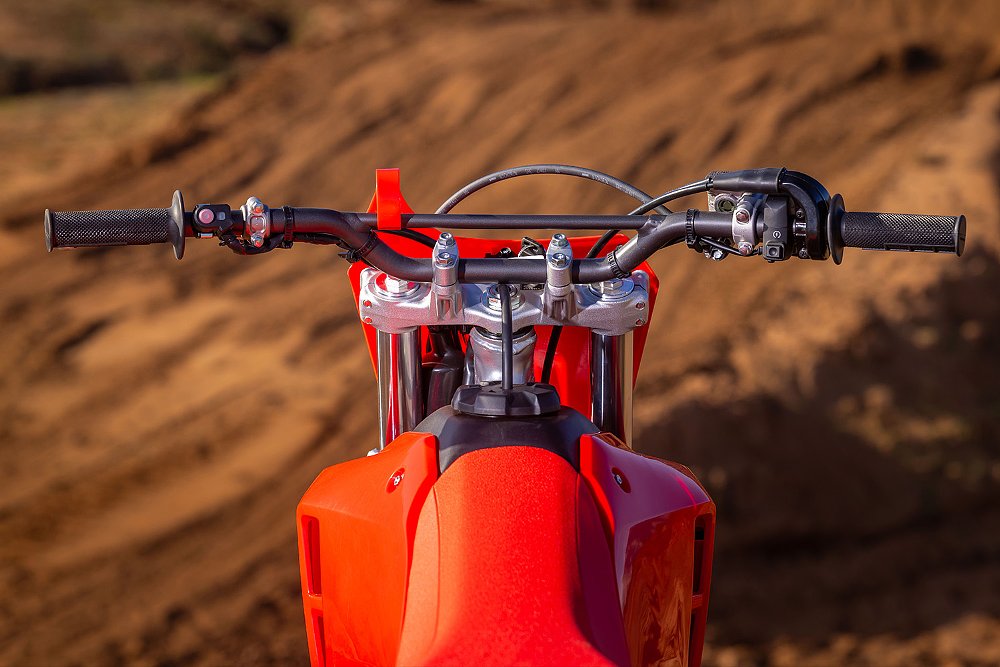
That bare-bones build also informs the 300F’s ride experience. There are no ride modes or traction control. No quickshifter or ABS. Just fire it up, drop the clutch, and throttle out. For someone who’s used to glancing down at a high-res TFT, riding the spartan CRF was a breath of fresh air. Distractions were nil. It’s just you, the 300F, and the trail. I count that among the model’s strengths, but its shortcomings were equally apparent out on the course.
Ari and Zack sometimes throw around the term “sit-down adventure bike.” It’s often designated for models that are meant to explore the trail, not attack it. Think Royal Enfield’s Himalayan 450 or Kawasaki’s KLR650. I see the CRF300F in a similar light, like a “sit-down dirt bike.” That’s because it rides as such.
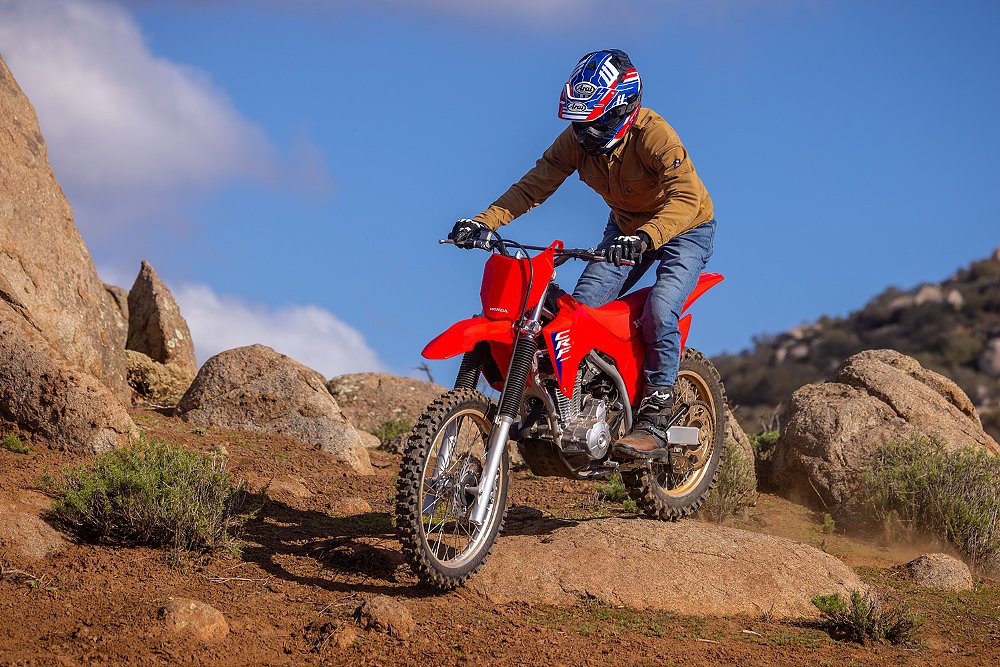
Much of my off-road experience involves muscling big adventure bikes around fire roads. The 300F provides a very different experience. Its steering is both light and responsive. So much so that it borders on twitchy. The suspension is equal parts supportive and compliant. That’s to say I never bottomed the fork or shock, even after launching the bike over a steep single. The six-speed gearbox proved its worth too, with well-spaced gears, especially between second and third.
The CRF tractored up hills, trudged over rock gardens, and paddled through deep sand. Performance may not be the 300F’s calling card but that doesn’t mean it isn’t capable. Still, its limits aren’t hard to find. Hauling into a sharp turn quickly exposed the rear brake’s lack of bite, feel, and response. Simply put, it provides about as much stopping power as a drum brake. (Or, at least it feels that way.)
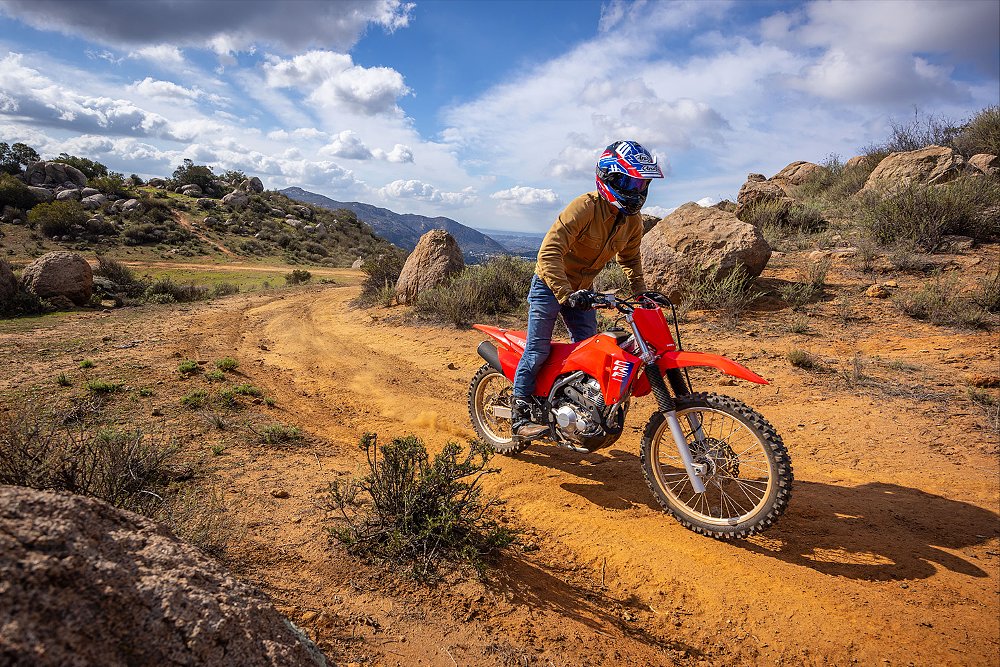
I often called upon the front brake to compensate for the underwhelming rear brake. While that strategy proved fruitful in most cases, I also overloaded the front end more than I’d like to admit. Fortunately, I was able to save each front-wheel tuck, but more aggressive rear brake pads would remedy the situation in short order. Such modifications seem all the more reasonable when considering the CRF300F’s asking price.
Back to basics
It’s no secret. Trail riding isn’t my thing. At the same time, the CRF300F makes a strong case. It’s stone-simple yet durable, with Honda build quality at its back. It’s more capable too, thanks to its bored-out engine, six-speed transmission, and upgraded suspension. What’s more, those upgrades come free of charge, with the 2026 CRF300F maintaining its predecessor’s $4,999 price tag.
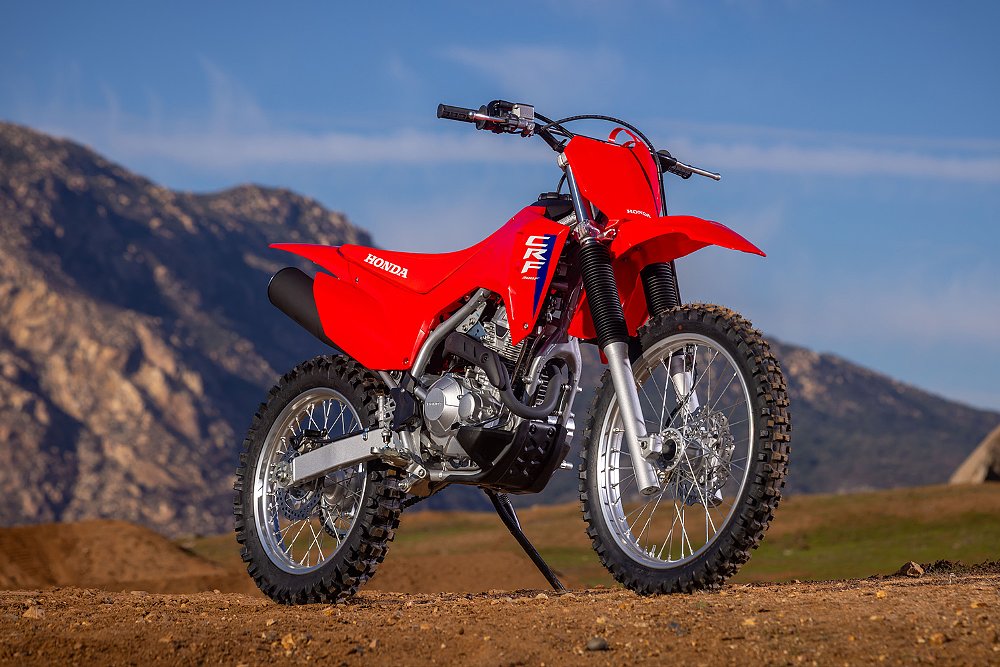
No, I didn’t grow up riding motorcycles. An XR was never parked in the garage of my childhood home. Still, it’s never too late to learn. The CRF300F is a testament to that. There’s a reason Honda’s range-topping trail bike has led its category for so many years. Now that it is improved, but still selling for the same price, it appears certain that Big Red is poised to retain that title with the 2026 CRF300F.
| 2026 Honda CRF300F | |
|---|---|
| Price (MSRP) | $4,999 |
| Engine | 294 cc, air-cooled, four-valve, single |
|
Transmission, final drive |
Six-speed, chain |
| Claimed horsepower | N/A |
| Claimed torque | N/A |
| Frame | Steel perimeter frame |
| Front suspension | Showa 41 mm fork; 9.5 inches of travel |
| Rear suspension | Showa monoshock; 9.1 inches of travel |
| Front brake | Two-piston caliper, 240 mm disc without ABS |
| Rear brake |
Single-piston caliper, 220 mm disc without ABS
|
| Rake, trail | 25.7 degrees, 3.9 inches |
| Wheelbase | 55.8 inches |
| Seat height | 35.0 inches |
| Fuel capacity | 1.6 gallons |
| Tires | Pirelli Scorpion XC, 80/100-21 front, 100/100-18 rear |
| Claimed weight | 273 pounds |
| Available | Now |
| Warranty | Six months |
| More info | powersports.honda.com |