Shop by Vehicle
 Track Order
 Contact Us
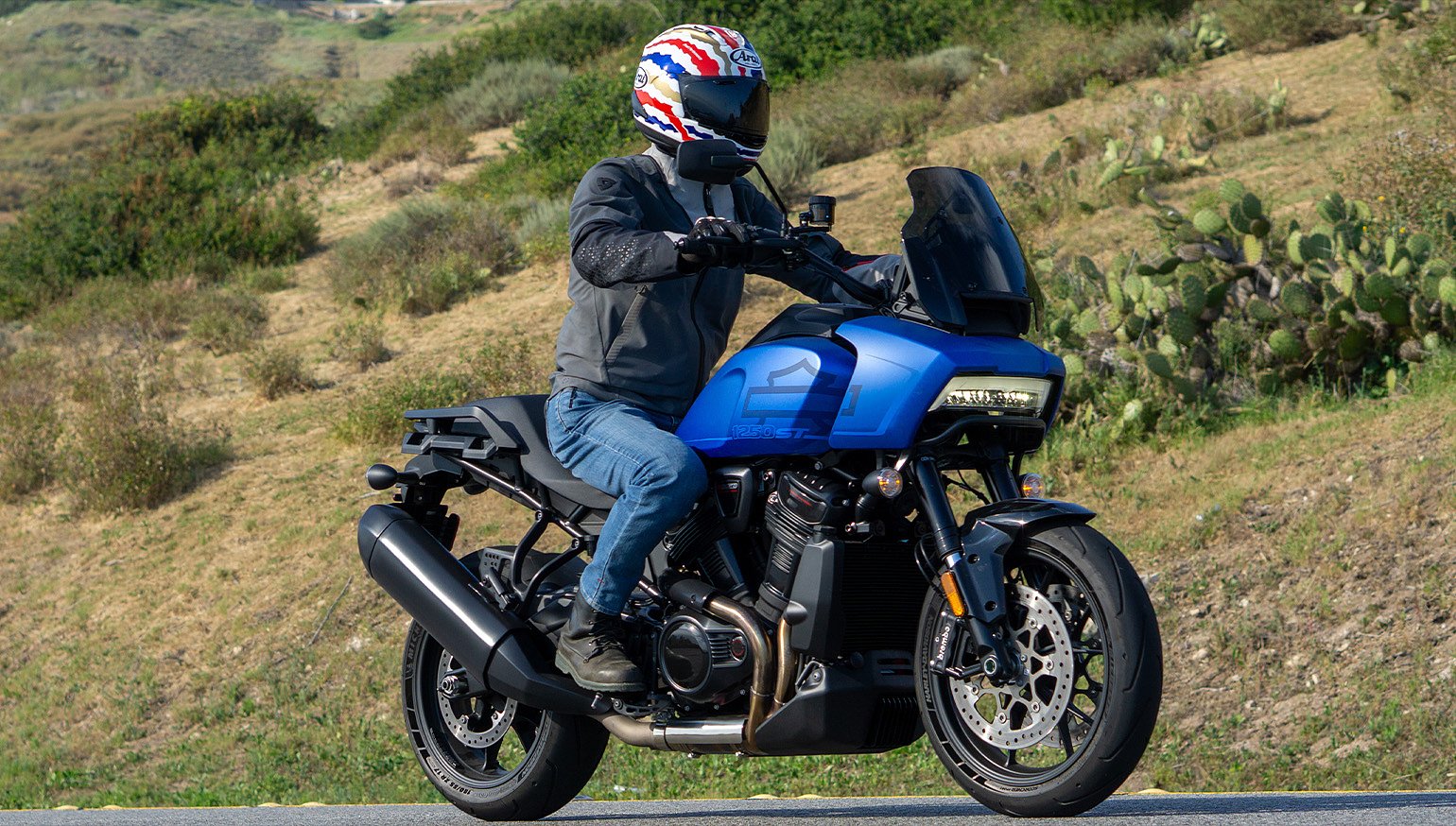
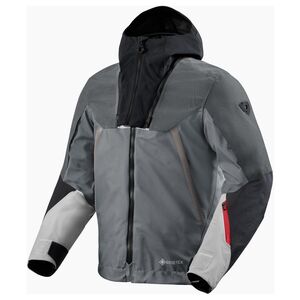
Leather jacket or adventure jacket?
Riding jeans or mesh pants?
Moc toe boots or touring boots?
Half helmet or peaked helmet?
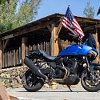
These were the options I weighed moments before my maiden ride on the Pan America ST.
What to wear? It’s a question we answer every day. (Unless you’re a nudist, I guess.) The decision is even more pressing as motorcyclists. Not just from the protection standpoint, either. Conformity has a lot to do with it, too.
There’s a reason ADV gear is seldom seen among the Sturgis crowd. Just like you won’t find fringed chaps anywhere near a crotch rocket. We all dress the part, to a certain extent. It’s not just fashion; it’s function. But it’s also identity. Therein lies the ST’s main hurdle: identity.
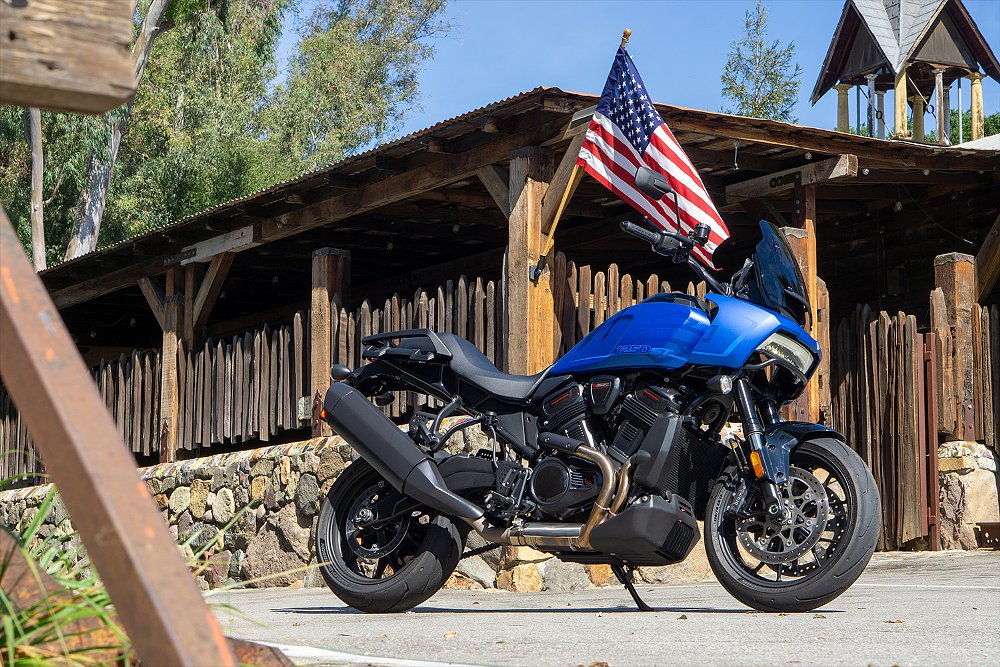
It’s an adventure bike. It’s a sport-touring bike. It’s an adventure-sport-touring bike. But above all, it’s a Harley-Davidson. Like all multi-hyphenates, the ST lives in the gray zones, in the gaps between genres. In that way, it’s a lot of things at once. But what’s its true identity? Only after logging more than 500 miles on the road-running Pan Am did I land on an answer.
Familiar foundations
“What’s the difference? The 17s?” Ari asked, gesturing to the front wheel.
“Basically, yeah,” I surmised. For the most part, I wasn’t lying.
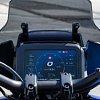
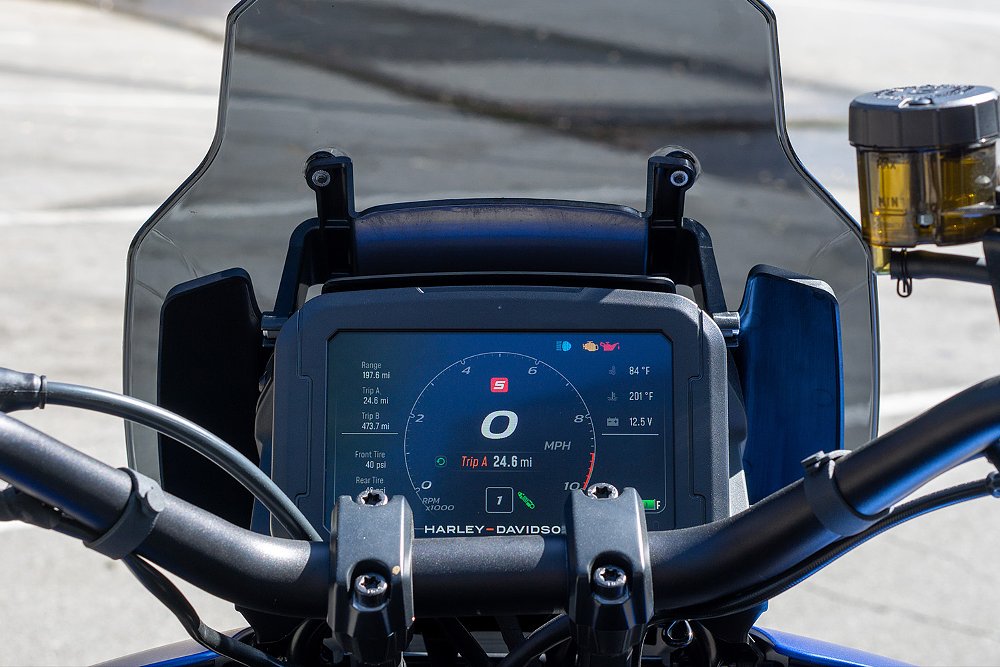
The newest Pan America shares much with its older relative. That goes for its steel trellis frame, aluminum midsection, and the Revolution Max 1250 V-twin that hangs from it. The Brembo braking system is identical. Much of the electronics package remains intact, too, except for the Off-Road features, of course. At the same time, calling attention to those similarities alone ignores the ST’s finer details — details that help individualize this newcomer.
Yes, the adventure-tourer rolls on 17-inch cast wheels, not the original Pan Am’s 19-inch front. It wears “Sport”-branded Michelin Scorchers, not tire maker’s “Adventure”-labeled ones. Such revisions might have warranted the model’s sport-touring (ST) designation alone, but additional adjustments are just as key.
Seat height is a sensitive topic for the Bar and Shield. If you need any convincing, just check out one of its spec sheets, which exclusively list the laden seat heights, not the unladen figures. The brand stubbornly upholds those cruiser conventions when reporting the Pan America ST’s seat height.
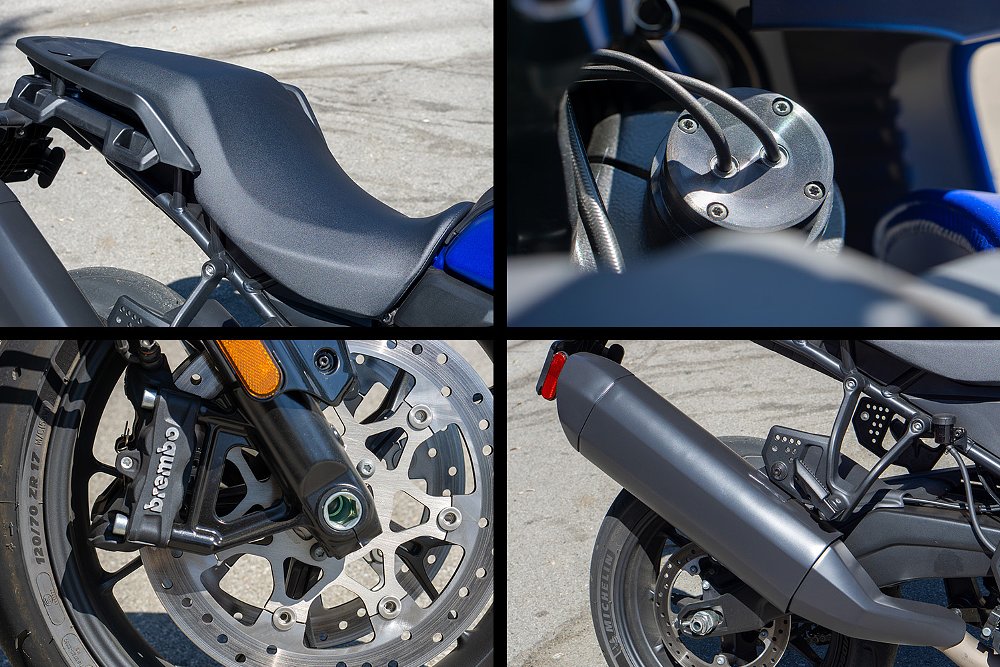
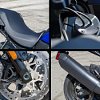
On paper, the model's 29.4-inch seat height sits 2.6 inches lower than the 1250 Special’s 32-inch seat height. Again, both are laden figures. (I measured the ST’s unladen seat height at 32.5 inches). Part of the height difference between the two Pan Ams comes down to the ST’s one-piece two-up seat, which saves 0.5 inches on the adventure trim’s split saddle. The suspension setup contributes, too.
Although spring rates and valving remain consistent across the two Pan Ams, both fork and shock travel are reduced by 0.75 inches on the ST. Adaptive Ride Height (ARH) — a feature that electronically decreases preload to lower the seat height at stops — only drops the saddle another inch or so. Compared to adventure-tourers, the ST is more of a low-rider. That doesn’t stop Harley from hot-rodding the platform with several sporty modifications.
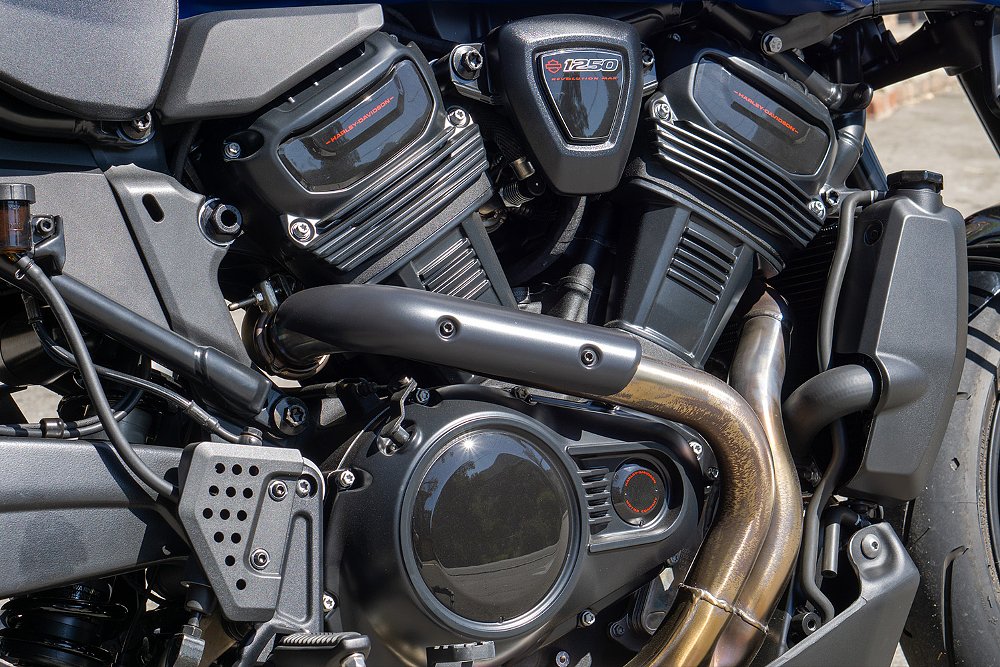
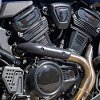
The heart of this iron steed remains the Motor Company's 1,252 cc Revolution Max engine. Its state of tune goes unchanged, too, sitting at a claimed rating of 149 ponies (at 8,750 rpm) and 91 foot-pounds of torque (at 6,750 rpm). The ST’s advantage, however, lies in its Screamin' Eagle Quickshifter, which is standard equipment on the model. The bike also benefits from an updated exhaust, one lightened by the elimination of the system’s mid-chamber. It’s just one of many weight-saving measures.
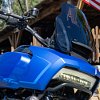
As Willie G. once said, “Form follows function,” and the ST’s styling adheres to that tenet. Gone are the trail-worthy hand guards. The engine guards and center stand are absent, as well. The radiator shroud is streamlined, and the windscreen gets a buzzcut (the trim also removes all height adjustability, unfortunately).
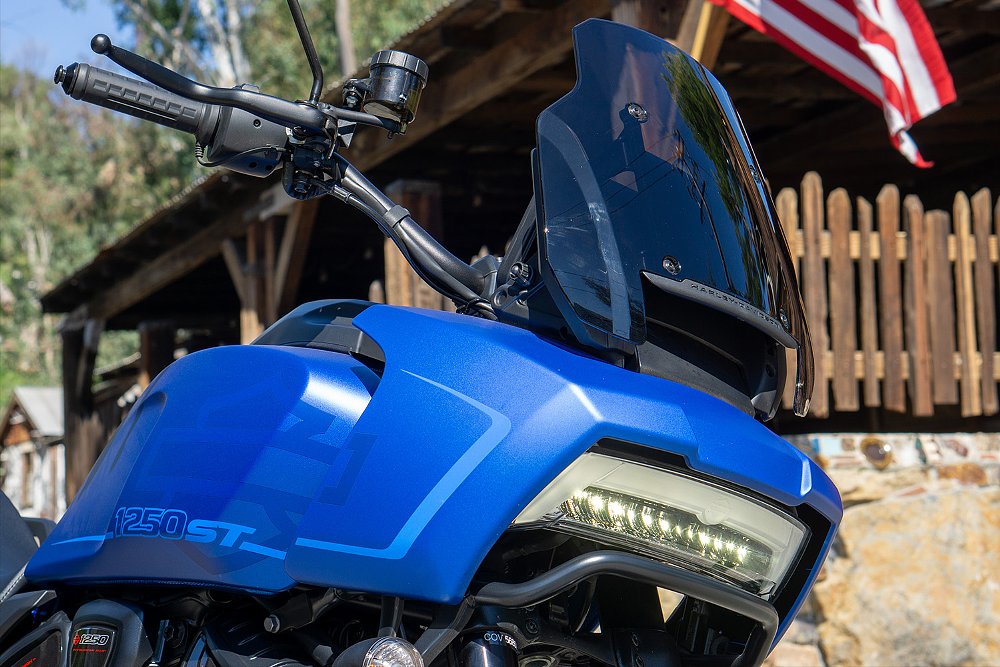
Compared to its sibling, the ST isn’t that much meaner, but it sure is leaner. To the tune of 32 pounds, in fact. Still, a featherweight, it is not. Tipping the ZLA West scales at 547 pounds, this Pan Am lives up to its liter-plus classification. It doesn’t feel that way out on the road, though.
Loud and proud
Harleys are often an acquired taste for outsiders. If you’ve never ridden one, they can seem heavy, unwieldy, and in some cases, downright obnoxious — and rightfully so. The Pan America didn’t fully dispel those myths when it debuted in 2021, but it sure made Hogs more palatable to the larger motorcycling public. The ST is no different.
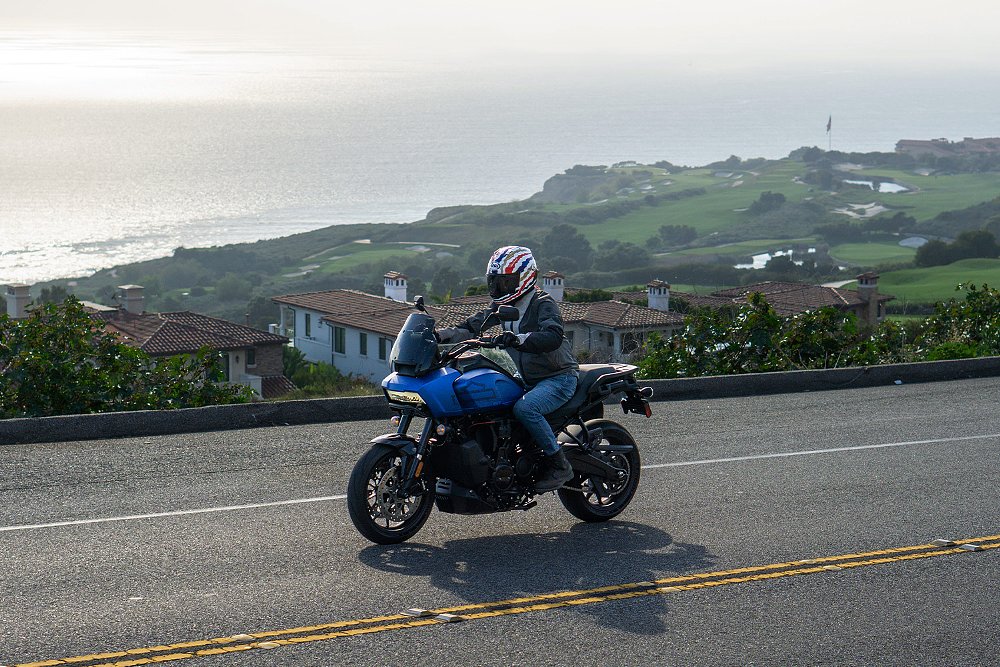
Its exhaust note won’t trip car alarms or trigger wailing babies, but its big-bore twin sure rumbles and shakes through the hand grips and tank. Its nearly 550-pound curb weight is petite in most Harley circles, but it’s still sizable to the broader population. Yes, it's plenty powerful, but it prizes torque, too. Long story short, the ST nudges the Milwaukee marque into more modern territory, all without fully abandoning the Harley je ne sais quoi. That much is most apparent in the saddle.
Harley designers may have weeded out much of the ST’s adventure bike roots, but if any area remains tightly tethered to the original, it’s the rider triangle. Like most ADV ergos, the latest Pan Am favors a neutral riding posture. My feet rested right under me. My hands were pectoral-high. My spine: all but upright. And yet, I wouldn’t call the position all that natural.
Part of that is due to the model’s long fuel cell. If I stretched my arms to the grips, my elbows were practically locked. If I hunched over the tank, back tightness was imminent. The handlebar itself hardly did me any favors. Measuring 33.5 inches in width with 10 inches of rise (including the five-inch risers), it isn't just tall, it's also wide. In many respects, it resembled mini ape hangers. That was especially true at highway speeds, where the ST’s reduced wind protection only introduced extra wind resistance.
My lower half experienced the opposite problem. The ST’s seat height may be lower than the 1250 Special’s, but its footpegs remain in the same position. I can’t characterize the legroom as cramped, but it sure isn’t spacious (especially for a bike of this size). Maybe most indicative was that I often hung my toes off the ST’s footpegs when covering distances of any note. That’s something I only resort to when it’s absolutely necessary.
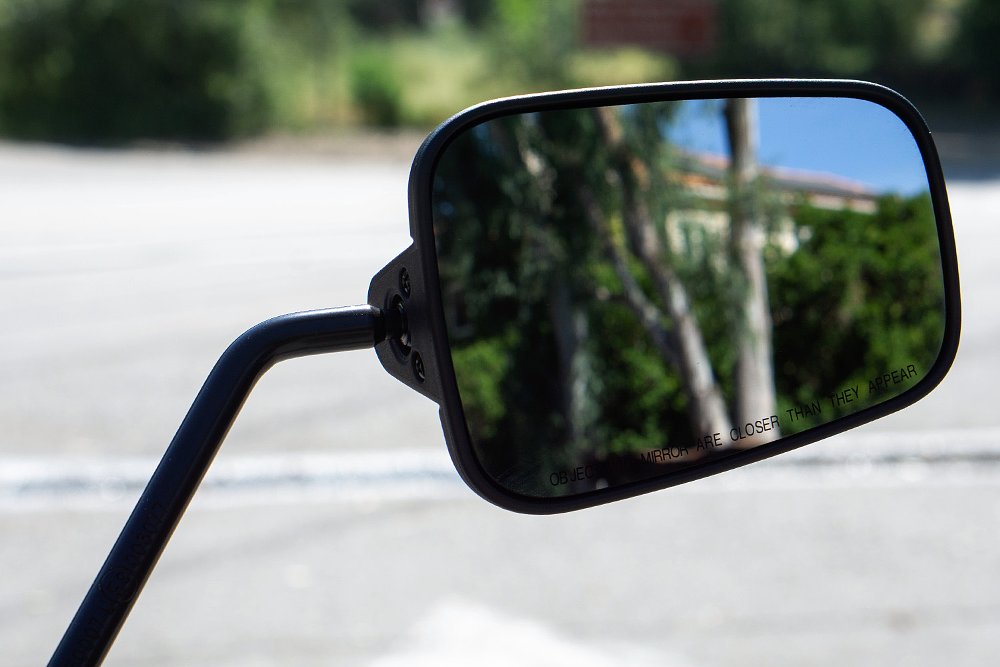
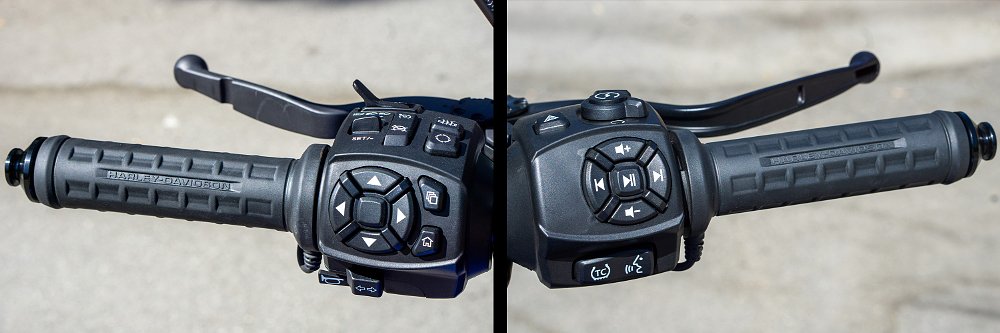
As previously established, H-D uses ST as shorthand for sport-touring. The brand-new Pan Am is certainly capable of the latter half of that title. Its 149-horsepower engine can gallop at a steady clip or sprint past big rigs. Its cruise controls are responsive without being abrupt. Its single-piece seat is multi-hour comfortable. Its heated grips keep the cold at bay, even without the assistance of brush guards. Yes, the ST can do ze touring, but it does the “sport” portion of sport-touring much more justice.
Giddy up
Sometimes, you get on the bike and just want to let off steam. You want to wring out the throttle. Bang through the gears. Flirt with the rev limiter. Flip the Pan America ST into Sport mode and it’s more than happy to oblige. By no means is it a slow trotter in Road mode, but in Sport, it’s tugging at the bit with each twist of the wrist. With ample pull from 4,000 rpm onward, the Rev Max isn’t any less thrilling near its 9,000-rpm redline. It’s even more so, in fact.
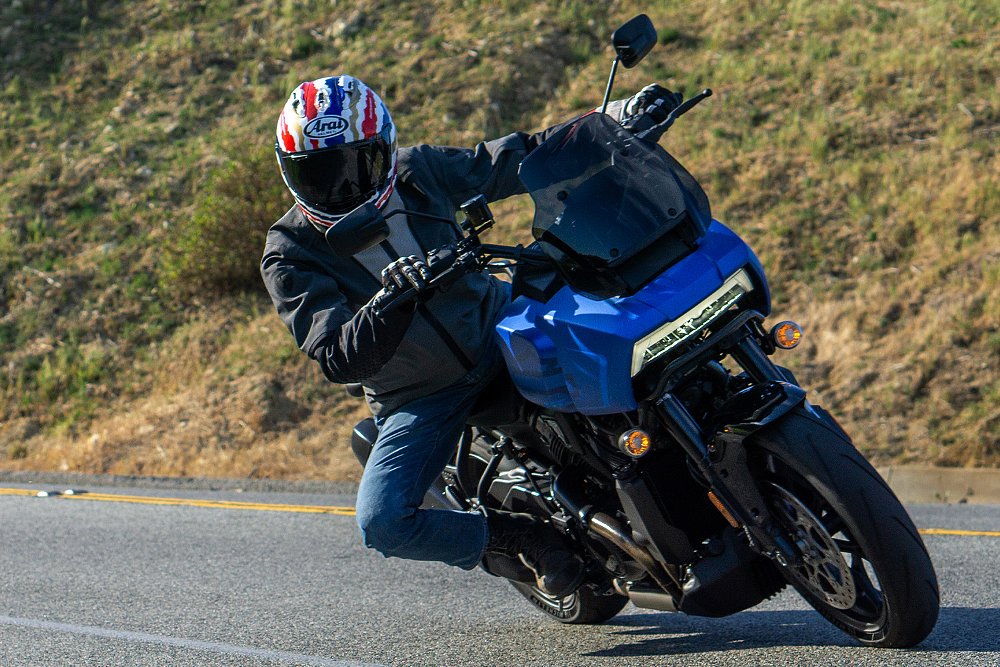
The Common Tread team hasn’t hesitated to praise Harley’s 60-degree V-twin. Spurg did so in his Pan Am first ride. Zack echoed many of those sentiments in his Daily Rider entry. With its lower curb weight and bi-directional quickshifter, the ST only enhances the engine’s performance potential. If the Rev Max 1250 was cooking in the Pan America 1250 Special, it’s cooking with grease in the ST. It does so in spite the model’s quickshifter.
All quickshifters aren’t created equally. Some deliver seemingly seamless shifts. Others, well, don’t. The Pan America ST falls into the latter category. Upshifts were often rough and abrupt aboard the adventurer, especially in the lower gears and at higher revs. I found the transition between third and fourth gear particularly problematic, encountering several false shifts with the pace picked up. Sometimes, haste is waste, which is why, in certain cases, I simply bypassed the ST’s quickshifter with a quick flick of the good old clutch lever.
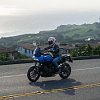
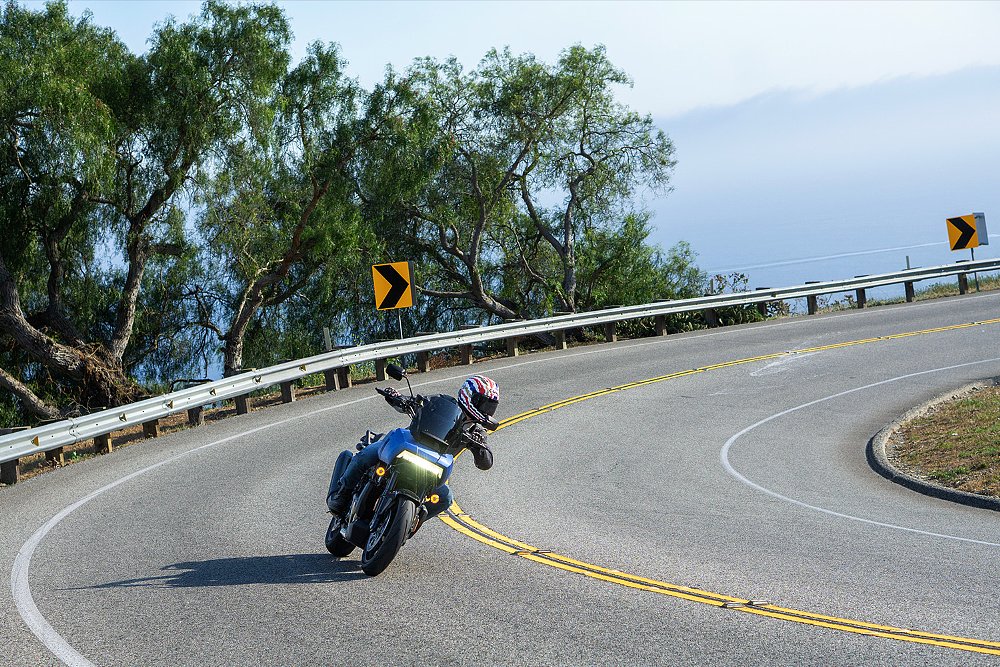
However, that sticky quickshifter couldn’t foil the bike’s strong suit: its handling. The full-size sport-tourer is both stable and planted, but point it into a bend, and it makes a beeline for the exit. Tip-in is immediate. Direction changes are equal parts light and swift.
The model owes some of that litheness to the leverage created by its tall, wide handlebar, but much of it comes down to its well-sorted chassis. The Brembos are sharp, the Michelins offer good grip, and the 17s do what 17s do. The Showa fork and shock are admittedly tuned for comfort straight out of the box, but that’s nothing the compression and rebound clickers can’t address. In sum, the ST is a worthy dance partner. But that one characteristic isn’t the bike's full identity.
Know thyself
When it comes to practicality, Harleys are probably the last thing that comes to mind. Handsome? Sure. Cool? Why not. But, practical? Nah. The Pan America’s arrival already flipped that script. The ST only furthers the plot twist. What the 1250 Special brings to the ADV space, the ST does for the sport-touring segment. It’s sensible, but it’s still a Harley. The grips still course with engine vibes. The build remains big and brawny. The V-twin is still rich with torque.
The Pan America ST is certainly many things in one. But is it one thing for certain? It straddles the borders between sport and touring, between adventure and sport, between domestic and metric. Slotting it into one category — and one category alone — is all but impossible. The only way that I've been able to reduce the ST down to one thing is by acknowledging that it’s a good time. Simple as that.
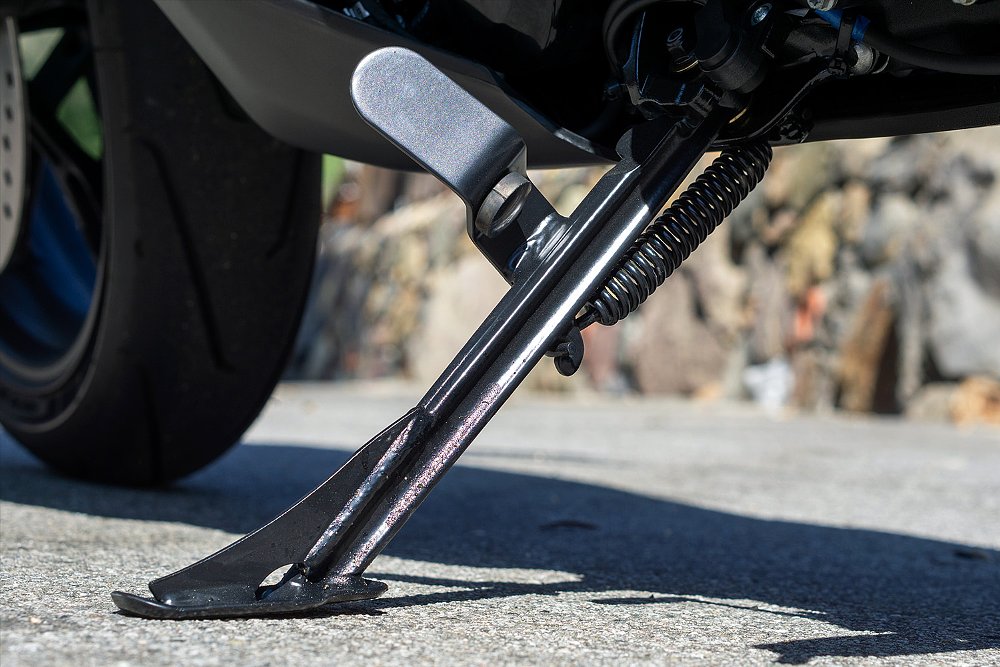
Sure, it’s a sport-adventure-tourer. Sure, it’s a Harley-Davidson. But, above those labels, it’s a fun bike. The kind of bike that, as soon as you put it away, you look forward to riding it again. It's perfect, by no means. It’s neither the fastest nor the most refined in its class. It can run hot, the quickshifter is clunky, and the kickstand is utterly aggravating. This Hog has its warts and snorts, but it also flies. That's what makes it a good time. And that’s true no matter what you decide to wear while riding it.
| 2026 Harley-Davidson Pan America ST | |
|---|---|
| Price (MSRP) | $19,999 |
| Engine | 1,252 cc (76.4 ci), 60-degree, liquid-cooled, four-valve, V-twin |
|
Transmission, final drive |
Six-speed, chain |
| Claimed horsepower | 149 @ 8,750 rpm |
| Claimed torque | 91 foot-pounds @ 6,750 rpm |
| Frame | Steel trellis, aluminum midsection |
| Front suspension | Showa 47 mm inverted fork with electronically adjustable preload and manually adjustable compression and rebound; 6.75 inches of travel |
| Rear suspension | Showa monoshock with automatic electronic preload control and manually adjustable compression and rebound damping; 6.75 inches of travel |
| Front brake | Brembo dual radial-mount four-piston calipers, 320 mm discs with ABS |
| Rear brake | Brembo single-piston caliper, 290 mm disc with ABS |
| Rake, trail | 25.0 degrees, 3.7 inches |
| Wheelbase | 61.8 inches |
| Seat height | 32.5 inches unladen, 30.4 inches laden, 29.4 inches lowered by ARH |
| Fuel capacity | 5.6 gallons |
| Tires | Michelin Scorcher Sport 120/70ZR17 front, 180/55ZR17 rear |
| Measured weight | 547 pounds |
| Available | Now |
| Warranty | 24 months |
| More info | harley-davidson.com |