Shop by Vehicle
 Track Order
 Contact Us
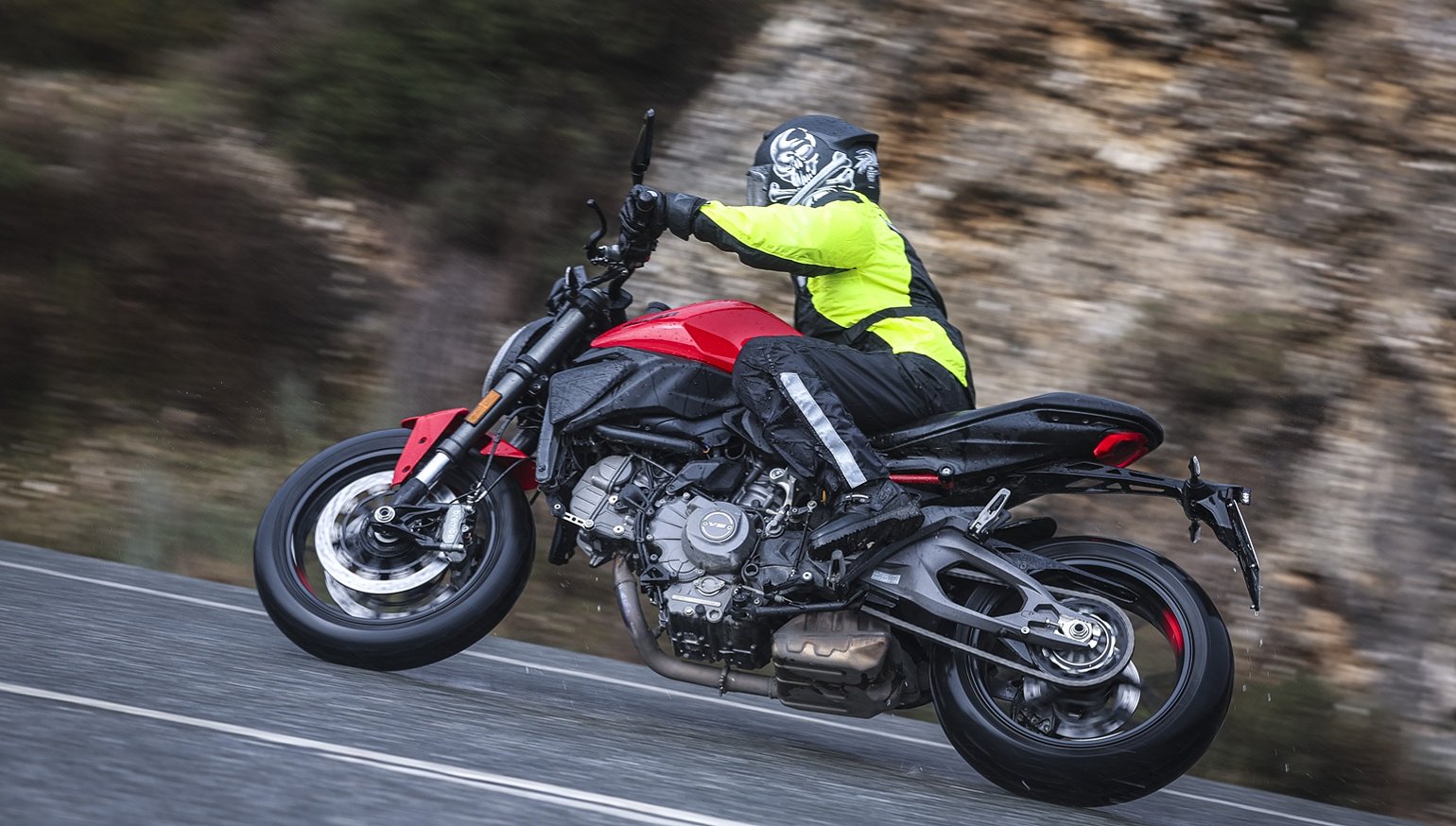
The rain came.
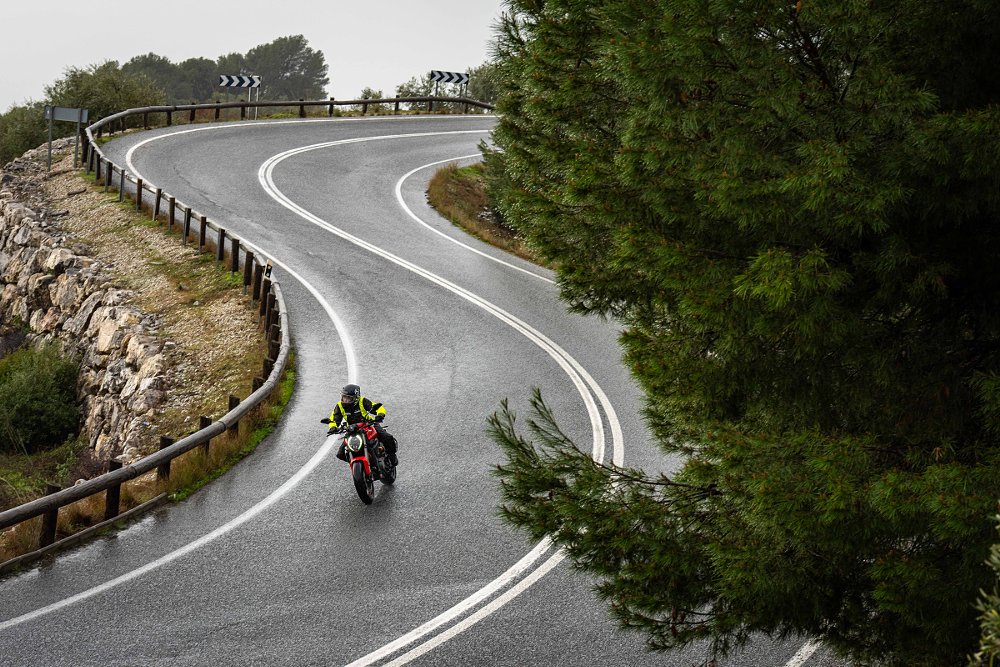
It started with a light mist as we began our pre-ride checks in the parking lot of the hotel. As we took to the road, the mist developed into a sprinkle. By the time we were turning off the highway onto the two-lane road leading up into the hills, the sprinkle had become a steady rain.
Ducati had selected the location for the world introduction to the new Monster after careful consideration, analyzing historical weather patterns, road quality, availability of lodging for a large group of people, proximity to a major airport. Southern Spain, they said, is usually dry in the winter. Normally, it rains for maybe a week. Unfortunately for our frisky Monster protagonist, that week of rain was — like an earworm that won't go away — set on repeat. In fact, Ducati had the dubious distinction of choosing to introduce the world to the fifth-generation Monster in the track of a train of storms that saw months' worth of rain fall within hours and displaced thousands of people amid flooding and landslides in Spain and Portugal.
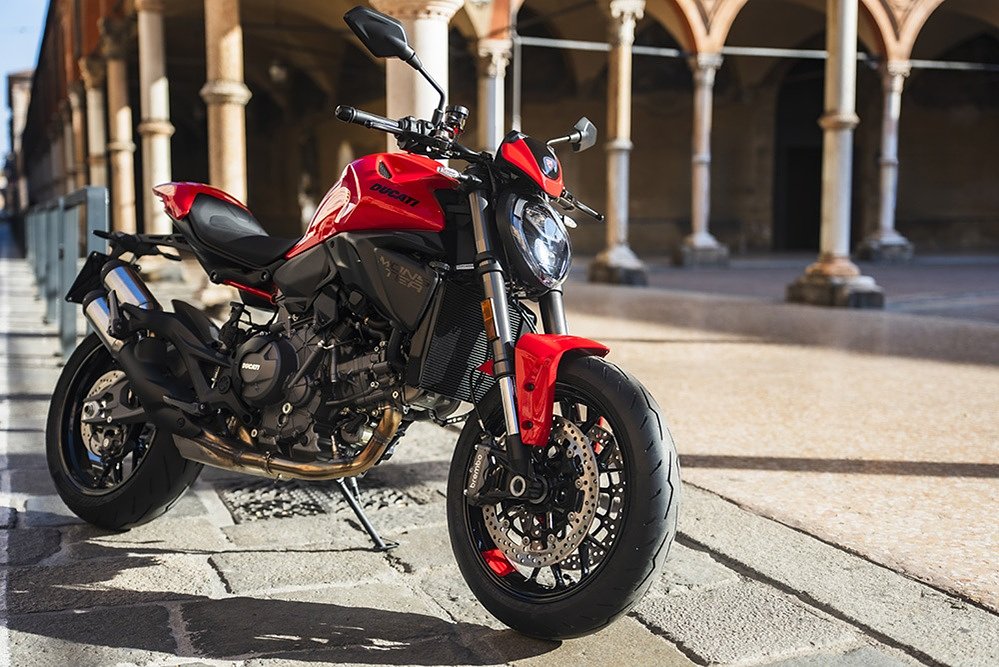
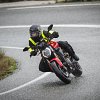
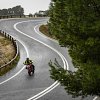
Ducati's test ride guides were full of hope when they laid out a beautiful route of about 100 miles up into the mountains outside of Málaga for the test, and I was, too, as we embarked on our ride. But as we climbed above the city and the tempo and pace of the rain increased, I had to set hope aside so I could focus on the present and found that, despite the ache that pervaded my soul at looking through a perfect, smooth, banked turn that was completely drenched with a river running across it and recognizing that I couldn't just throw the bike into it with abandon (whee!!), it was still possible to enjoy the unique pleasure that is a day spent on two wheels with this completely new Monster.
Riding the Ducati Monster
The version sold in the U.S. market is actually the Monster+, because it comes with the flyscreen and seat cowl, but mechanically it is the same as the base Monster that I rode and is sold elsewhere. The new Monster offers four ride modes: Wet, Urban, Road, and Sport. Each mode comes with default settings for the myriad rider's aids, including cornering ABS, EBC (Engine Braking Control), DTC (Ducati Traction Control), DWC (Ducati Wheelie Control), and DQS (Ducati Quick Shifter), which are all customizable within preset ranges for each mode. I missed the memo requesting that we start the ride in Wet mode and selected ride mode Sport before we embarked on our ride so I could get to know the full capabilities of the motor allowed by the software from the jump, as Sport mode provides the most direct connection between the twist grip and the throttle bodies and enables max power to be achieved.
As we hand over more control of our motorcycling experience to our microchip overlords, we are faced with a conundrum. We've replaced throttle cables that offer a direct connection to the butterflies in the throttle bodies with ride-by-wire technology where a computer receiving signals from a throttle potentiometer interprets the rider's intent while considering additional inputs such as lean angle, front and rear wheel speed, rate of change of engine rpm, etc. Results can be a bit ambiguous. On the one hand, we get faster lap times on the racetrack and greater safety all around. On the other hand, you can be left feeling disconnected from the motor when you roll the throttle on and the computer passes judgment on how quickly and how much you can accelerate. On some motorcycles, it is not even possible to achieve full throttle — the ECU never allows the butterflies to open all the way.
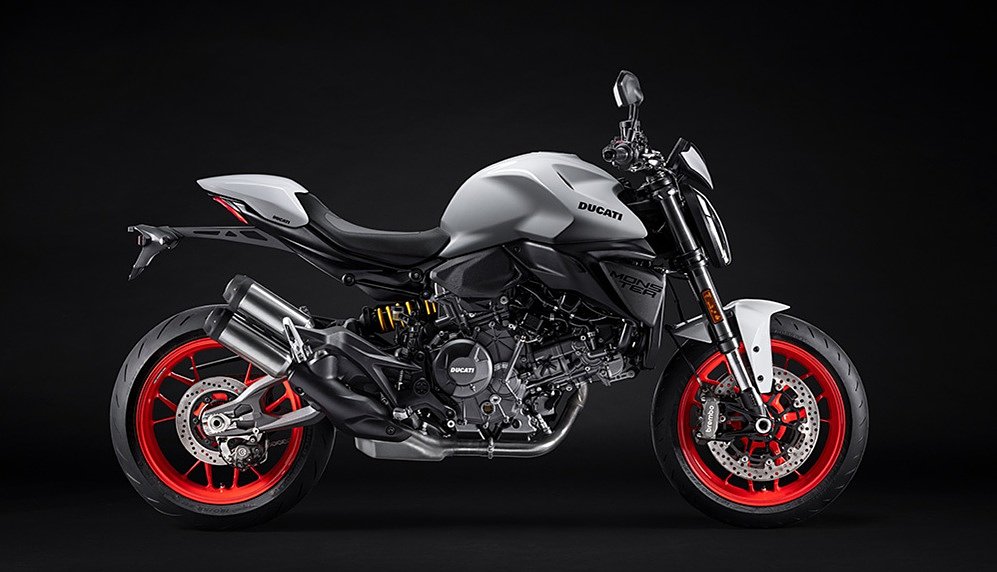
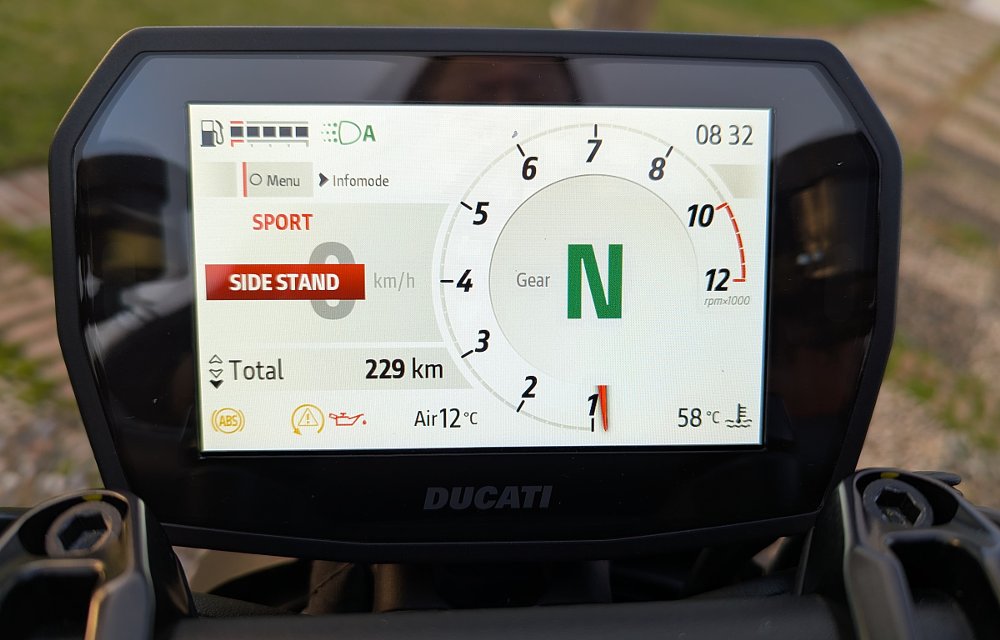
On the Monster, when nudging the shifter into first gear and starting to let out the clutch from a stop, the revs climb by about 500 rpm with no input from the throttle. This is presumably to help prevent stalling when pulling away from a light or stop sign and is the kind of feature that manufacturers are building in to help newer riders overcome clutch-throttle proportioning issues.
Add a little throttle and the motor pulls smoothly away; too much throttle and it lags a little as it catches up, a delay which is more noticeable in Wet mode. But the new Monster motor really comes alive at about 4,000 rpm, as promised by the torque map.
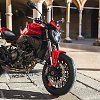
At the core of this Monster beats a new heart: an 890 cc V-twin engine that breathes through valves moved not by desmodromics but by conventional valve springs. Historically, the desmodromic valve system was an intrinsic part of Ducati's identity, and what set it apart from other performance-oriented brands. When Ducati implemented it in their 125 Grand Prix bike in the middle of the last century, the desmo system was a reliable way to ensure precise cam timing in an era of poor metallurgy and unreliable valve springs.
But metals and manufacturing have come a long way in the last 70 years, and as processes and materials evolve, manufacturers have to evolve in kind. The desmo system is effective and iconic, but it is also heavy, expensive, and labor-intensive to maintain. Add to that the restrictions imposed on engine performance by increasingly strict emissions controls, resulting in diminished valve overlap, and the desmo system starts to look a bit less necessary. But I'll leave the controversy over that sea change to the Monsteristi. It is the same V-twin motor that powers the current Panigale and Streetfighter V2 models, but with slightly less peak horsepower (111 versus 120) due to different ECU mapping and a strategic decision by Ducati not to create a power competition between the street-sport-oriented Monster and the more sport-track-oriented Streetfighter.
Which is not to say that the motor in this configuration does not perform. Acceleration feels a little soft until the aforementioned 4,000 rpm, at which point the Monster begins to earn its name. I was surprised, and then impressed, by how easily the bike accelerated into the short straights in between turns to dispatch cars that were interfering with our ability to enjoy the wet mountain roads at speed.
The new V2 motor weighs 13 fewer pounds than the 937 cc Testastretta Evoluzione that powered its Monster predecessor, a weight savings partially achieved through shedding the bulk of the desmo system. This generation V2 is actually the lightest V-twin Ducati has ever produced. Another advantage to the replacement of the desmo system is the extended valve adjustment interval, which went from 18,000 miles to 28,000 miles.
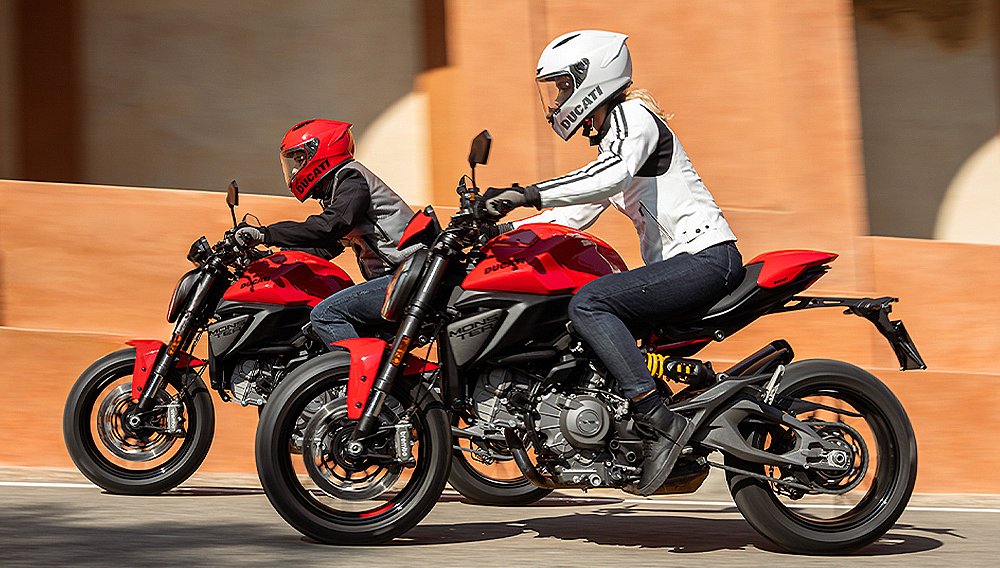
As a whole, the new Monster lost nine pounds compared to the fourth-generation model, weighing in at a claimed 386 pounds with all liquids save fuel, which at full capacity of 3.7 gallons would add about 23 pounds. The bike carries its weight well, with excellent balance complemented by a relatively wide and upright handlebar facilitating confident low-speed maneuvering around the narrow cobblestone streets of small Spanish villages, and a turning radius that makes U-turns and street parking a snap.
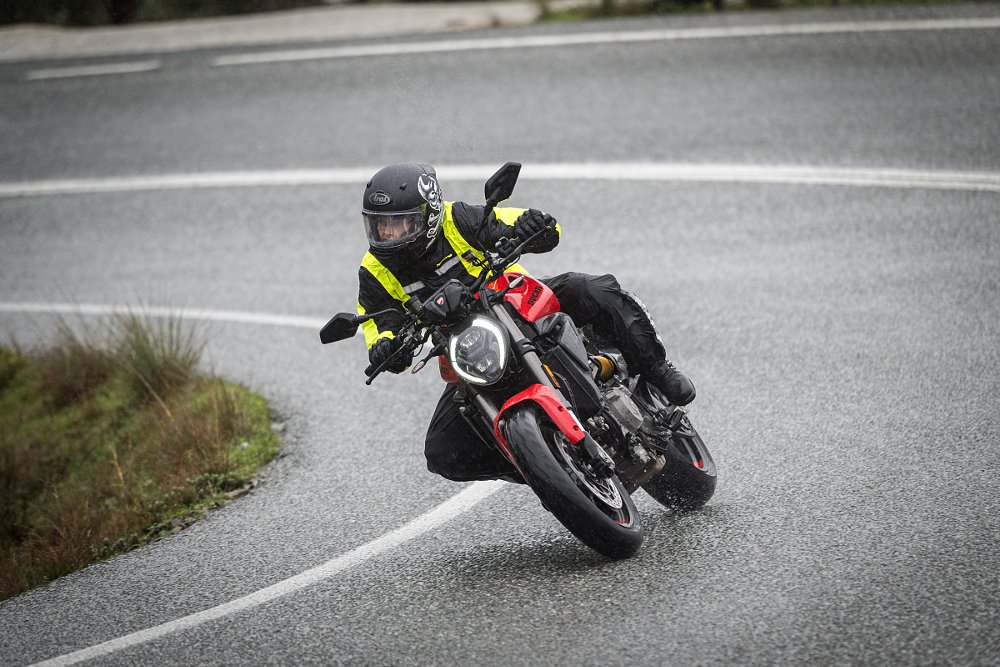
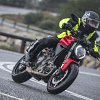
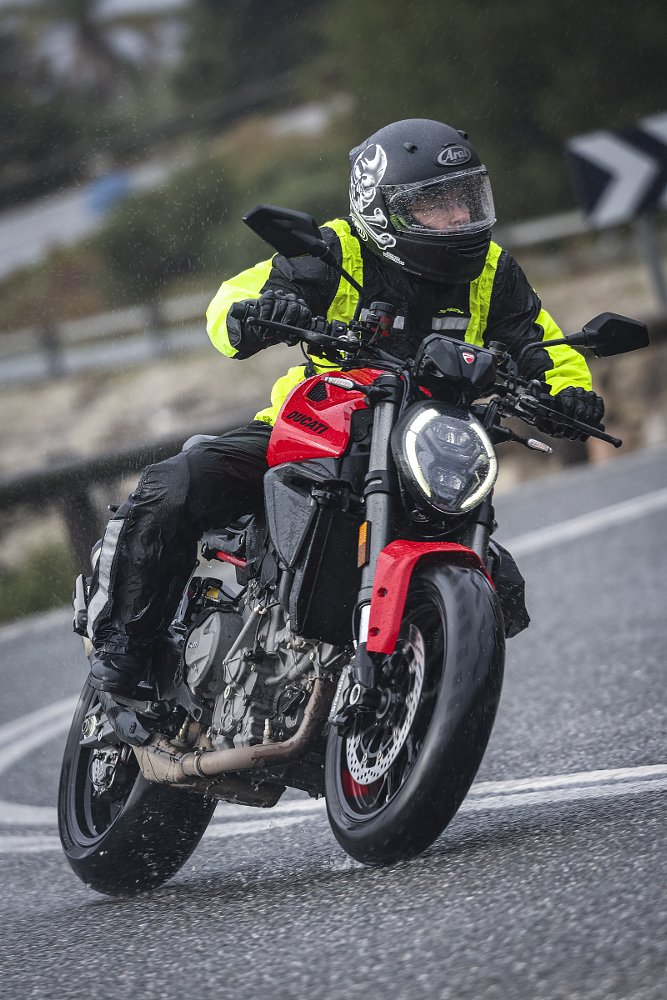
As we navigated a series of perfect low mountain twisties, the Monster hummed happily along, nimbly responding to my inputs instructing it to brake and turn, avoid fallen debris, or suddenly straighten up to ford a small stream spreading across the road. The Monster comes stock with 120/70ZR17 front and 180/55ZR17 rear Pirelli Diablo Rosso IV tires, which performed impressively in the challenging conditions, with the rear only letting slip when confronted with an unreasonable combination of lean angle plus rivulet in a situation outside of the purview of the rider's aids.
After spending some time in Sport mode, I switched to Wet mode because that seemed appropriate for the conditions (it was wet, after all!) but that introduced a slight delay between what I was asking at the throttle and what the bike would deliver. Shortly after I made the switch, we made a pass on a couple of cars in a little straight and I discovered that Wet mode also doesn't let the bike achieve its maximum power. Immediately after that I switched back to Sport, where I found the throttle to be more predictable and the power to be, more. Unlike some motorcycles that can feel abrupt when opening or closing the throttle in the Sport or highest performance mode, the Monster provided smooth fueling in Sport. The Ducati Riding Modes Matrix describes the throttle response in Wet mode as "Smooth" and in Sport mode, "Dynamic." Color me dynamic!
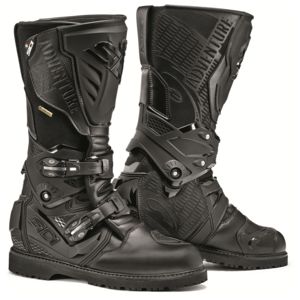
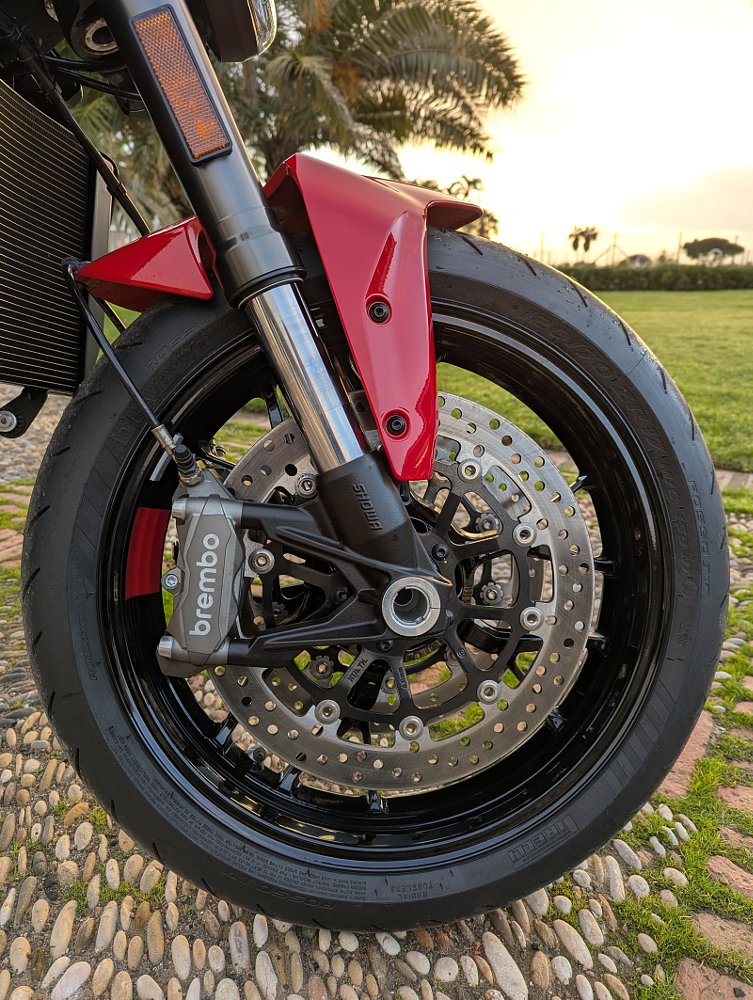
With the conditions such as they were, I didn't ask very much of the front brakes but they delivered what I asked, offering good feel at the lever. The rear brake had a bit of a wooden feel, which could alternatively be explained by the wet pads and disc. The footpeg rubbers called to mind a poster in a childhood friend's dad's den which read: "Slippery when wet." My choice of adventure boots for the ride seemed to offset that somewhat when compared to the flat-soled street boots worn by some of the other participants.
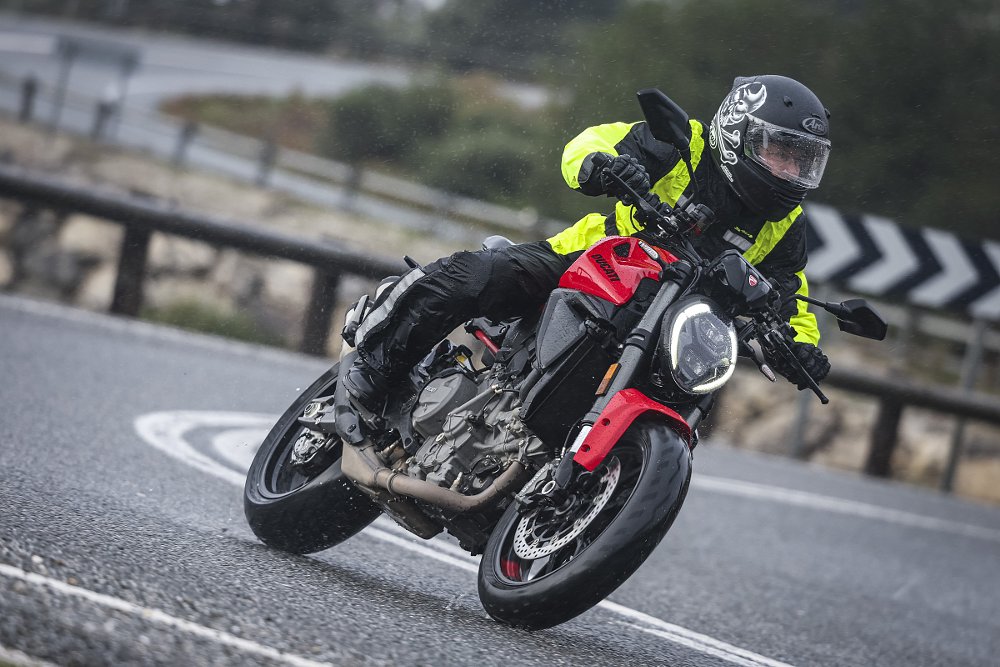
Ergonomically speaking, the Monster is a comfortable ride. The handlebar is wide enough to provide good leverage and tall enough to prevent wrist fatigue caused by too much weight on the hands. Compared to the previous generation Monster, the grips are seven millimeters (0.3 inches) higher and seven millimeters further forward, providing a seating position that's just forward of upright and with knees bent greater than 90 degrees and feet tucked back.
With its narrow seat and 32.1-inch seat height, I could just barely toe-touch the ground with both feet at the same time. For me, at five feet, two inches tall, that's a rarity. Some taller riders noted that they felt a little cramped on the bike and had to keep stretching out their knees, and for these folks Ducati offers a taller seat as an optional accessory.
For shorter riders or riders who want to be able to plant both feet, Ducati offers a seat that's 20 millimeters (0.8 inches) lower and a suspension lowering kit that brings the seat another 20 mm closer to the ground. The kit consists of a shock that has different damping settings and a lower rate spring; and for the fork, lower rate fork springs and a different fork oil level specification to help keep the front suspension from bottoming with the softer springs. The lower seat plus the lowering kit results in a seat height of 30.5 inches, which is a rarity on a bike in this class.
In its stock configuration, the Showa suspension felt comfortable enough, if a little underdamped. The fork is not at all adjustable, while the shock allows for some spring preload adjustment. Stefano Vannucci, Project Manager for the V2 model range, said that the stock suspension is baselined for a rider weight of 75 to 85 kilograms (165 to 187 pounds), with the lowering kit geared towards an average rider weight 10 to 15 kilograms (22 to 33 pounds) less than that. For reference, I am 110 pounds. For an entry-level or casual rider, the stock suspension should be fine.
Among the rider's aids packed into this Monster, I was probably most actively appreciative of the quickshifter, which effectively eliminates the need to close the throttle when shifting (up and down!) and to use the clutch save for when starting from or coming to a stop. When you apply pressure to the shift pedal, the quickshifter briefly interrupts spark and fuel just long enough to relieve tension in the transmission and enable it to shift into the requested gear.
When downshifting, another benefit of the ride-by-wire technology comes into play as the ECU automatically "blips" the throttle to match the revs to the gear you are shifting down to. This version is the second iteration of Ducati's DQS, which was changed from the original version to offer better feel at the pedal.
I love a smooth, quick downshift when decelerating into a corner, and the DQS 2.0 did not disappoint. The feel at my foot was solid and direct, and the revs were matched perfectly. I did discover that it's not possible to downshift using the quickshifter if you're not rolling out of the throttle. The DQS will not shift if the throttle is being held steady. But if you want to do something that the DQS doesn't like, you can just pull in the clutch and shift normally. In both cases, the transmission shifts smoothly and positively. Stefano said that they had received some negative feedback about the previous transmission and had focused on improving it with higher quality components and more even lubrication. I would say that paid off.
Upshifts were also smooth, and occasionally accompanied by that satisfying "pop" out of the exhaust that says: "Yes, I have a quickshifter and I'm going faster now!" I did, however, experience three episodes of glitch when upshifting. Twice, the motor stumbled just after the shift from first to second, as though there was a partial electrical interruption. A third time it failed to complete the shift and left me in neutral, which was quickly corrected with a manual shift.
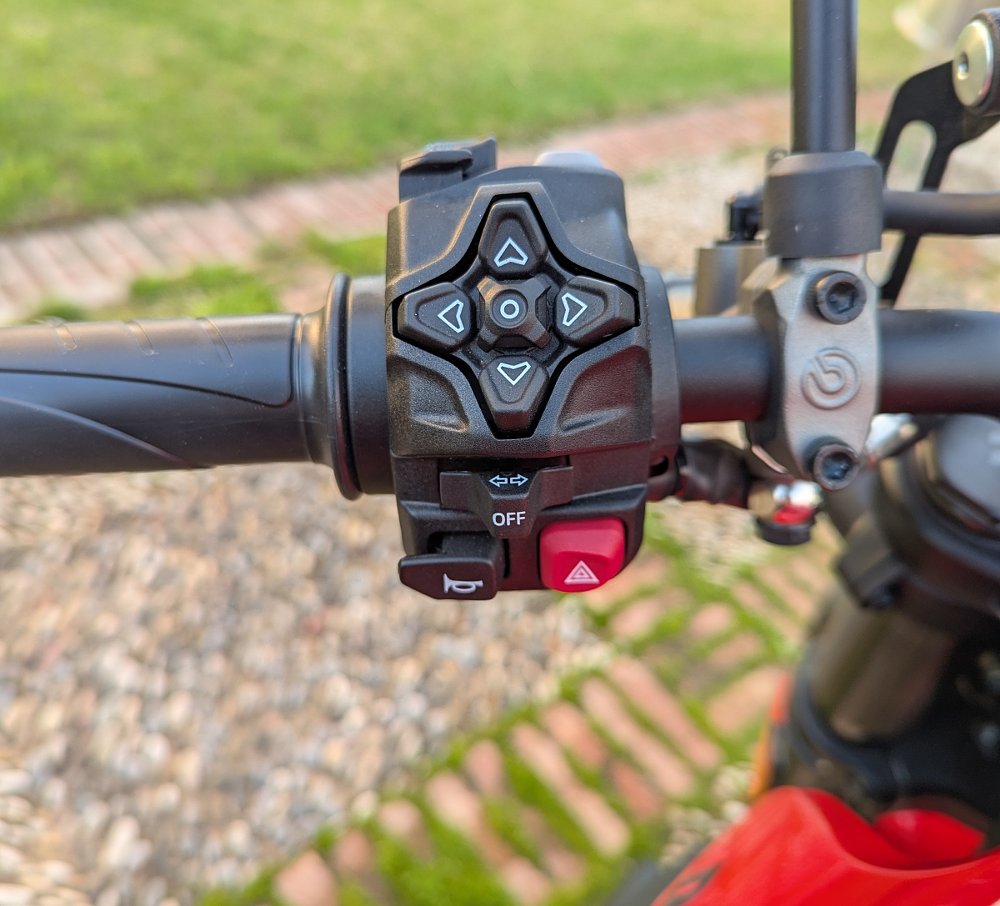
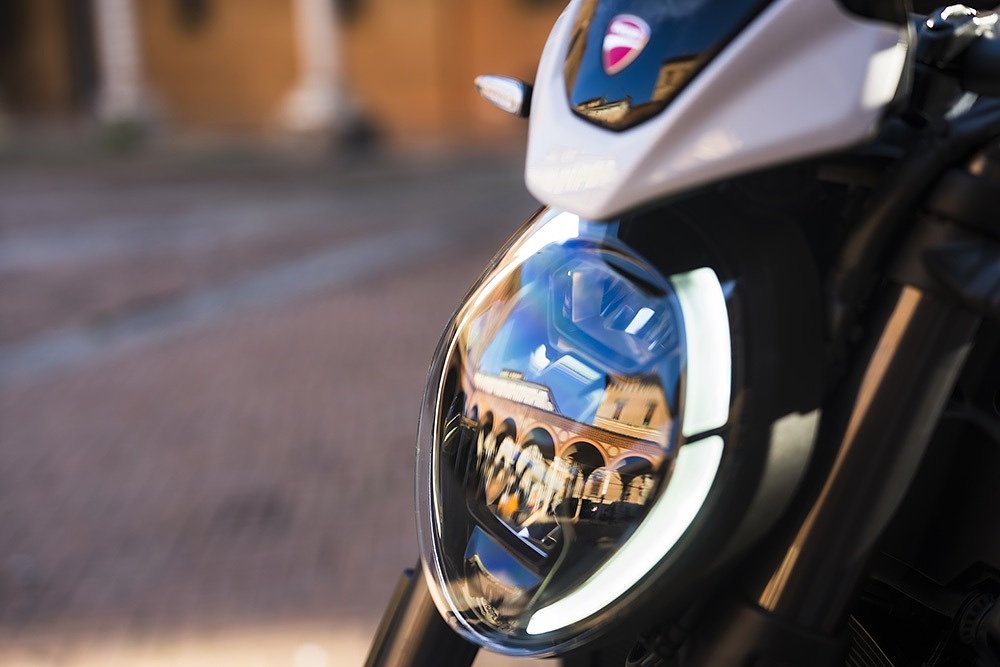
The rider's aids can be selected and/or configured through an easy-to-access interface on the TFT display, which itself is customizable. The left handlebar switch assembly includes a Mode button for toggling between the four ride modes, and a four-way toggle switch with a central Select button for navigating the menus. This switch assembly, however, leaves a little to be desired. It looks and feels a little clunky, and the center Select button had a tendency to stick in the down position. Stefano noted that this was a hot design topic and they had gone through multiple versions in the design phase before settling on this version, but I got the feeling that the settling was still unsettled.
Ducati offers a catalogue of accessories for the new Monster, including the aforementioned high and low seats and lowering kit. The version of the Monster provided for the launch included accessory options cruise control and heated handgrips. I love wearing thin gloves when riding, and I like to extend the riding season as long as possible, so I have an affinity for heated grips. I cannot stress enough how grateful I was for the heated grips on our cold and wet ride.
We stopped for lunch in the town of Ardales, and our guides surveyed us to see if we wanted to curtail our route and start heading back to the hotel on a more direct path, or continue on the original route. Up until that point, in addition to the wet pavement sprinkled with puddles and debris, I had taken note of flooded olive orchards, raging muddy torrents, rivers overflowing their banks, and the occasional 40 mph gust of wind. But the Monster and I were still having fun, the grips were still warm, the tires and electronics were handling the variable traction, and I was game for more.
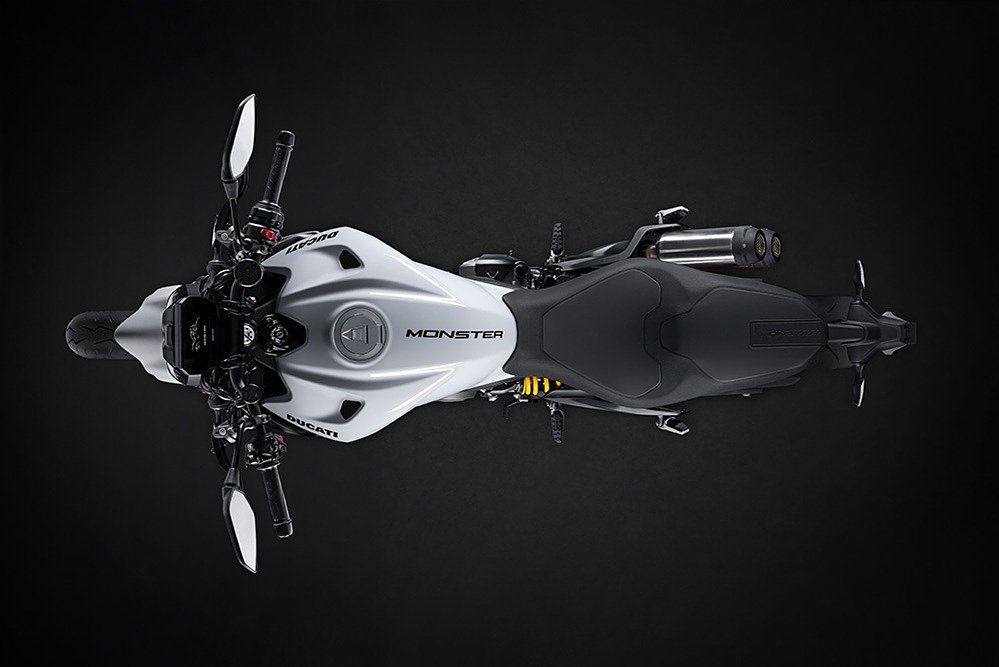
With its rider's aids intended to inspire confidence and increase safety, predictable power, reduced maintenance costs due to longer maintenance intervals, approachable ergonomics, low height, and good balance, this new Ducati Monster provides a solid platform for riders moving up from a smaller bike or anyone who wants a versatile mount for discovering their own two-wheeled adventures. And despite this Monster's divergence from desmo valves and the original trellis frame, Stefano said that so far, client orders for the new Monster have exceeded expectations. Your adventure awaits!
| 2026 Ducati Monster+ | |
|---|---|
| Price (MSRP) | $13,995 in Ducati Red; $14,195 in Iceberg White |
| Engine | 890 cc, liquid-cooled, eight-valve, 90-degree V-twin |
|
Transmission, final drive |
Six-speed, chain |
| Claimed horsepower | 110.7 @ 10,750 rpm |
| Claimed torque | 67 foot-pounds @ 8,250 rpm |
| Frame | Aluminum monocoque |
| Front suspension | Showa 43 mm inverted fork; 5.1 inches of travel |
| Rear suspension | Showa shock, adjustable for spring preload; 5.7 inches of travel |
| Front brake | Brembo M4.32 four-piston calipers, 320 mm discs with ABS |
| Rear brake | Brembo two-piston caliper, 245 mm disc with ABS |
| Rake, trail | 23.3 degrees, 3.6 inches |
| Wheelbase | 58.7 inches |
| Seat height | 32.1 inches |
| Fuel capacity | 3.7 gallons |
| Tires | Pirelli Diablo Rosso IV, 120/70R17 front, 180/55R17 rear |
| Claimed weight | 386 pounds (without fuel) |
| Available | April 2026 |
| Warranty | 24 months |
| More info | ducati.com |