Shop by Vehicle
 Track Order
 Contact Us

Convenience or control?
That’s the decision the R 1300 R forces upon the rider — or at least its Automated Shift Assistant (ASA) does.
Few topics are as polarizing as automatic transmissions. Read internet forums, comment sections, or subreddits covering the topic and it seems people are either pro or anti, with no in between. Arguments are as nuanced and subtle as a shotgun. Here’s the thing: This anti-automatic resistance hardly persists outside the motorcycling community.
Per the U.S. Environmental Protection Agency, automobiles with manual transmissions have declined “below 1% of all production since model year 2021.” Translation: stick-shift cars are hard to come by these days. Yet, manually operated gearboxes remain the norm in the two-wheeled world. That norm is slowly shifting, though. The ASA-equipped R 1300 R is just more evidence.

Automatic response
I’ll be the first to admit that BMW’s automatic transmission, albeit divisive, is the major draw here. Like Super Bowl viewership, most tune in for the spectacle, some have a vested interest, and the rest are here to hate-watch. Auto gearboxes tend to hijack reviews of this sort. The story becomes more about it and less about the overall package. This, I’m afraid, is one of those instances. Maybe more so than others. This would be a very different review if I were writing about the base model R 1300 R without ASA.
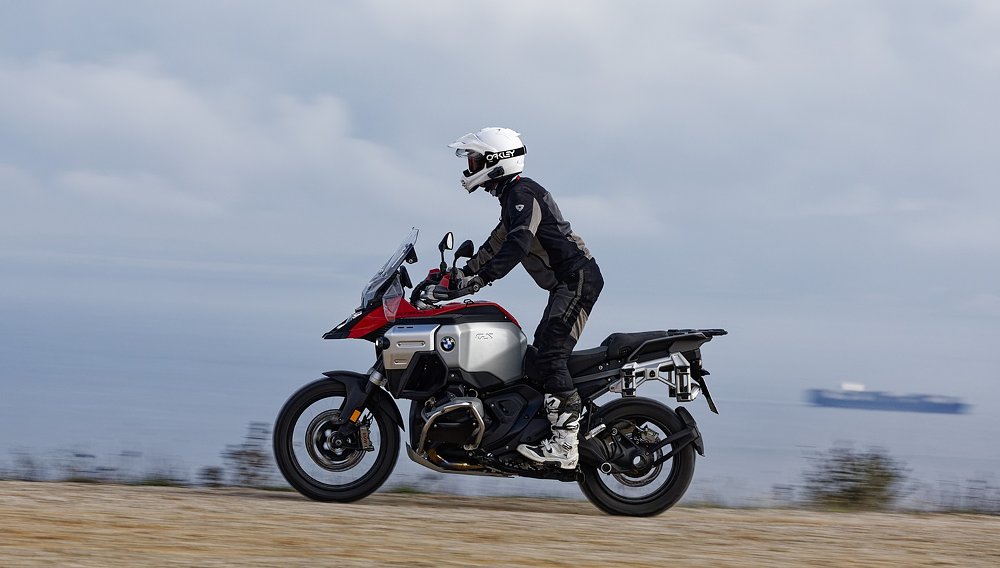
It’s not because ASA is some revolutionary system. It’s not because it outclasses the competition. It’s because ASA’s automatic functions alter everything about the riding experience. If the R 1300 R’s four ride modes (Rain, Road, Dynamic, and Dynamic Pro) change the model’s mood, ASA transforms its entire personality. It determines how much the rider extracts from BMW’s torque-rich boxer. That, in turn, informs the behavior of the two-part frame and semi-active suspension. The rider needs to brake less here or brake more there. It’s all a result of ASA.

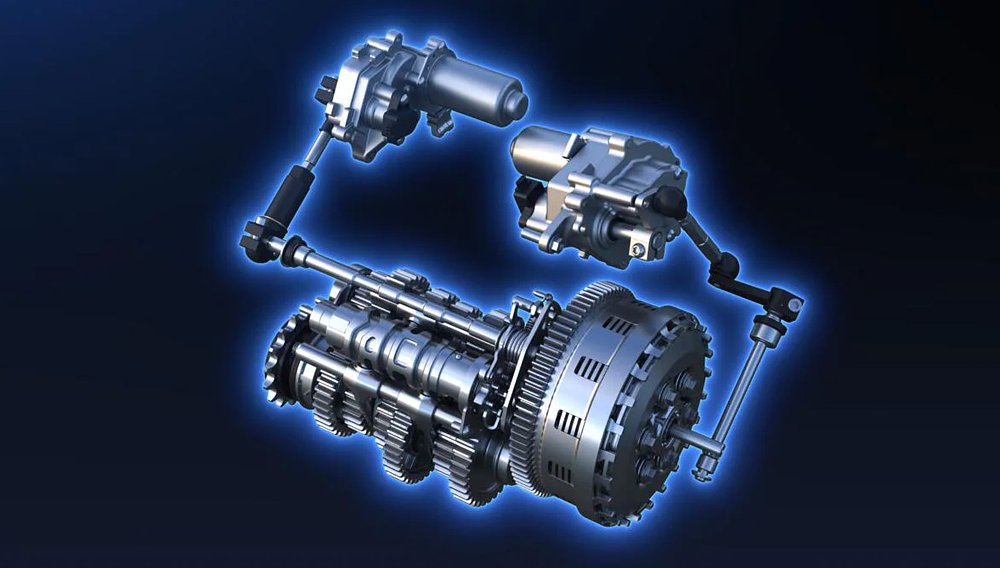
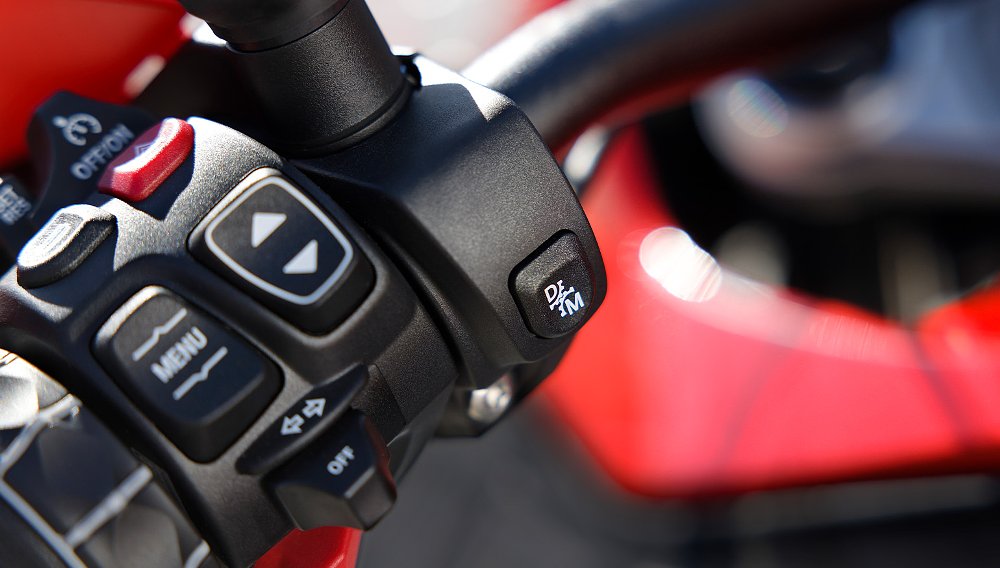
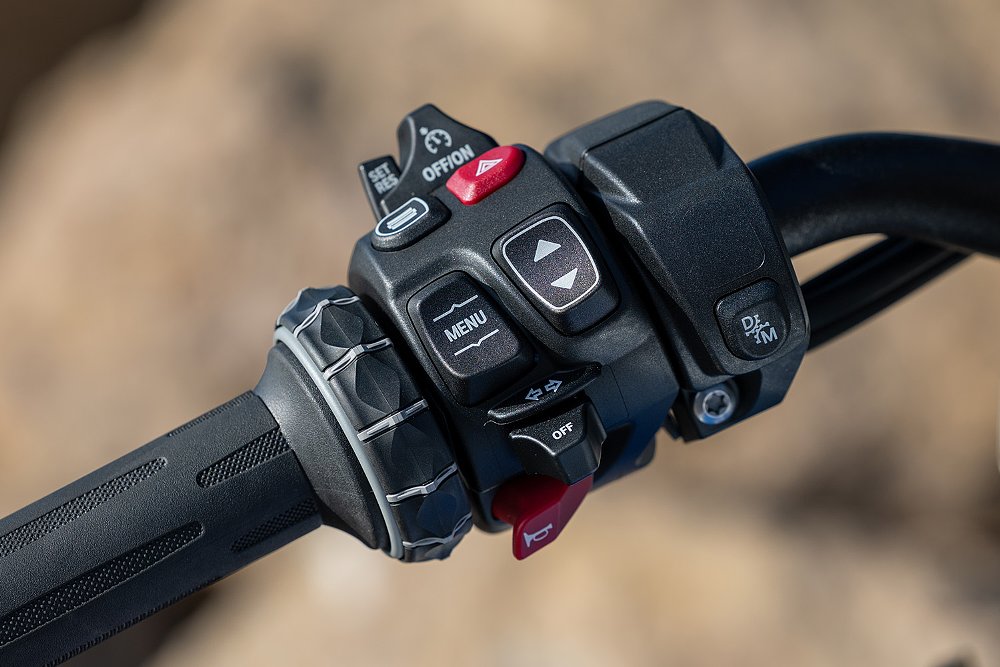
Central to BMW’s automatic transmission is an automatic clutch. The user doesn’t regulate the clutch’s engagement, disengagement, or slip via a bar-mounted lever. An electromechanical actuator does (see the full explainer here). That’s true in both the fully automated D mode (Drive) and the manual M mode. The key differentiator is that the D setting initiates upshifts and downshifts (based on engine speed, throttle position, ride mode, and current lean angle), while M leaves those gear-grabbing responsibilities to the user. Well, for the most part it does.
ASA’s M mode stands for manual, but it’s semi-manual at best. First off, there’s no clutch lever. (Can a system truly achieve manual status without one of those?) Maybe more important is that M mode automatically downshifts when revs fall low enough to stall the engine. Say the rider approaches a stop sign in third gear. ASA takes it upon itself to drop into first, where the auto clutch can maintain idle. That’s just one of the many ways the system rewrites the gearbox guidelines. The first deviation occurs with each power cycle.
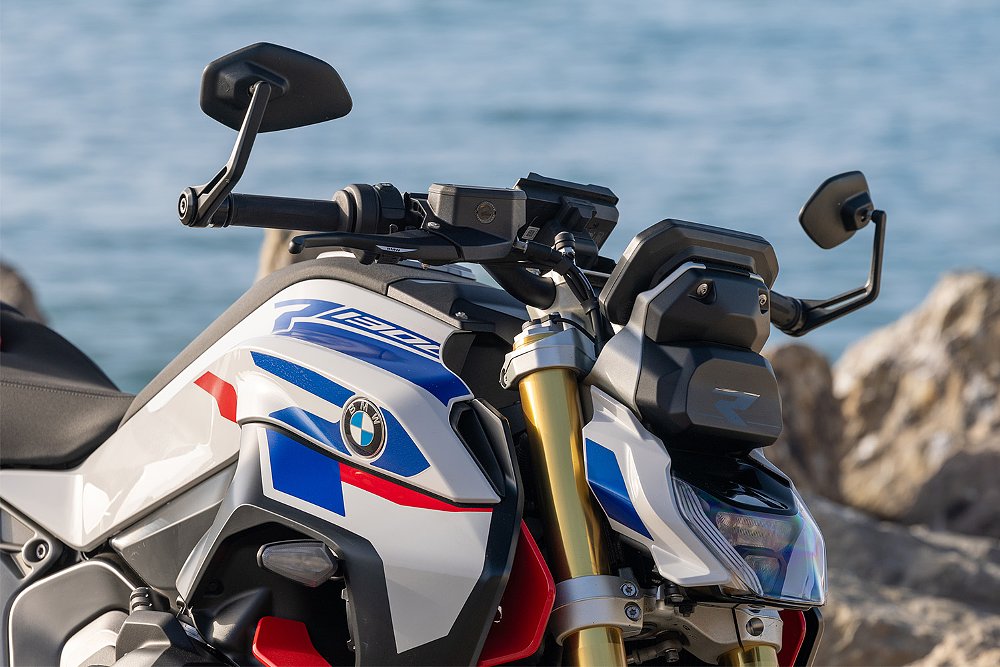
Tap the 1300 R’s PWR button, and its 6.5-inch TFT initializes with a big P in the gear position readout. This occurs any time ASA was previously switched off in first gear, which locks the transmission in Parking mode. It’s a welcome feature for hillside parking, but it also renders the bike immovable when turned off. Want to push it around the garage? Have to move it over a skosh? Need to bump-start it when the battery dies? No dice. Leave your key fob elsewhere, and it quickly becomes ASA’s most aggravating attribute. Fortunately, there is a workaround.

I almost always leave the bike I’m riding in first gear when I hit the kill switch (I have to believe I’m not the only one). Things were no different with the R 1300 R. However, if riders shift into neutral before shutting the bike off, it will remain in neutral while parked, just like a manual motorcycle. If one should forget that extra step, moving the bike requires turning on the bike, and therefore, its key fob. It isn’t ASA's only oddity, either.
Once the user fires up the 1,300 cc twin, the transmission automatically clicks into neutral. Grabbing the front brake lever and tapping down on the shifter pedal engages first gear, wherein the R-type boxer stands idle with an active throttle, akin to an electric motorcycle. Rolling on the gas delivers power to the rear wheel in a surprisingly smooth, controlled manner, one that’s comparable to feathering the clutch. If only ASA’s automated shift pattern felt as natural.

Manufacturers often develop auto gearboxes with engine health in mind. Not performance, not joy, but longevity. The same is true of BMW’s system, which climbs the 1300 R’s gearbox with a series of short shifts. I often found myself wondering, “Why am I in sixth gear at 61 mph?” More importantly, the quick-succession shifts avoid the engine’s engaging midrange, effectively kneecapping the big boxer. With upshifts often occurring around 4,000 rpm, the flat-twin produces neither peak horsepower (at 7,750 rpm) nor maximum torque (at 6,500 rpm) before the next gear is engaged. The opposite strategy applies on the way back down the ladder.

Before the system initiates a downshift, revs typically fall below 2,000 rpm. Sometimes lower. That protocol may minimize engine braking, and therefore engine stress, but it also feels markedly foreign. The transition from second to first gear isn’t just the most frequent example, it’s the most egregious one, because it often occurs after the Beemer comes to a full halt.
That tendency became problematic when rolling through protected right turns or when slowing for a red light that unexpectedly turns green. Such situations left the transmission one gear too high, forcing ASA to slip the clutch until the roadster regains its stride. That only accounts for one of the many ill-timed shifts.
In one instance, ASA downshifted while I was at full lean, apex-adjacent. (That’s a big no-no in my book.) At another point, it upshifted while turning through an intersection, destabilizing the chassis. Those are two shifts that I would never execute myself, illustrating that ASA isn’t modeled after a human’s habits. It shifts like a machine. It shifts like a computer. It doesn’t shift like a rider (not this rider, anyway).
It’s the system’s short-shifting schedule that led to slightly jolting gear changes. Maybe that’s why I felt more like a passenger and less like a pilot, bracing for each upshift. Upshifts that I didn’t initiate. Upshifts that were jarring more times than not. In an automobile, the driver’s body position hardly influences their control over the vehicle. The opposite is true on a motorcycle.
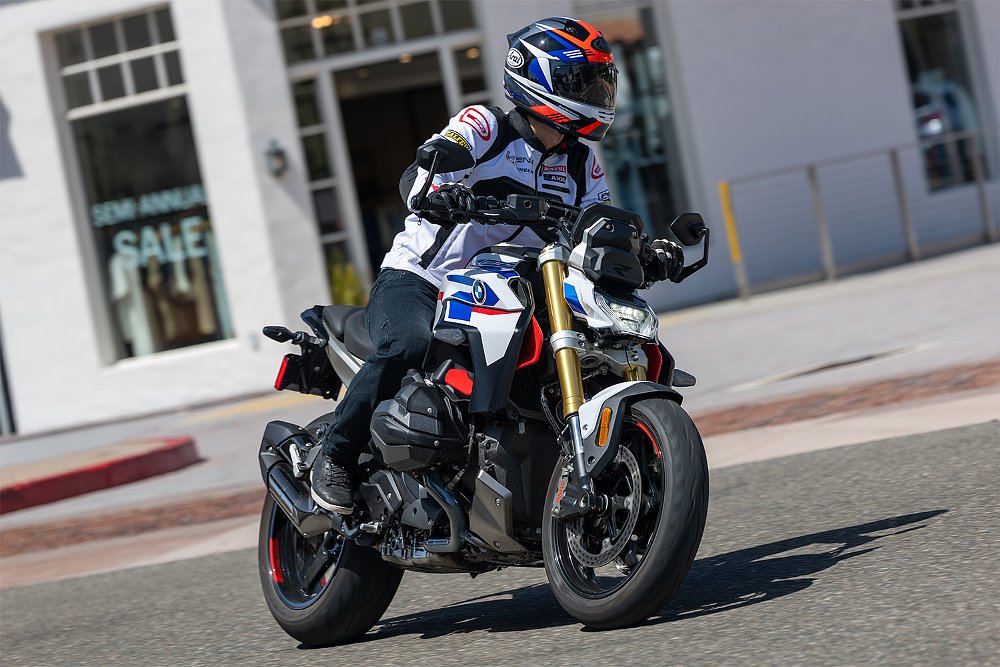
Whether charging through a sweeper or completing a U-turn, the rider’s every movement affects the bike’s behavior and direction. That includes shifting. Delegating that task to a computer has its risks and its rewards. On the 1300 R, minimizing the former while maximizing the latter comes down to the user’s application of ASA’s auto and manual controls.
Convenience or control?
Riding the 1300 R didn’t just give me a greater understanding of BMW’s auto transmission; it gave me a better understanding of my own riding habits. How I tend to rev out an engine. How I (over)rely on engine braking. How my core and forearms flex for every upshift. How my shoulders, biceps, and thighs clench during each downshift.
Those actions went unnoticed because, over time, they became second nature. I didn’t think about them. I just did them. They just happened. You might say they became automatic. But that’s when I enjoy riding most. When I’m led by my instinct informed by experience, not by calculations. When I’m absorbed. When I’m present, but that only happens when I’m in control. When the bike doesn’t just do what I want, but does what I expect. The R 1300 R still achieves that. As long as it’s in the manual ASA mode.

The shift light flashes atop the TFT screen. Click. Fourth gear. Road signs and mountainside outcroppings streak past my helmet. A second-gear corner awaits an eighth-mile away. I pin the throttle. The Beemer shoots ahead. Eighty yards out. Not yet. Sixty yards out. Wait. Forty yards. Now. Bang. Third gear. Bang. Second gear. The bike falls on its side, slashing through the corner like a speed skater at lean.
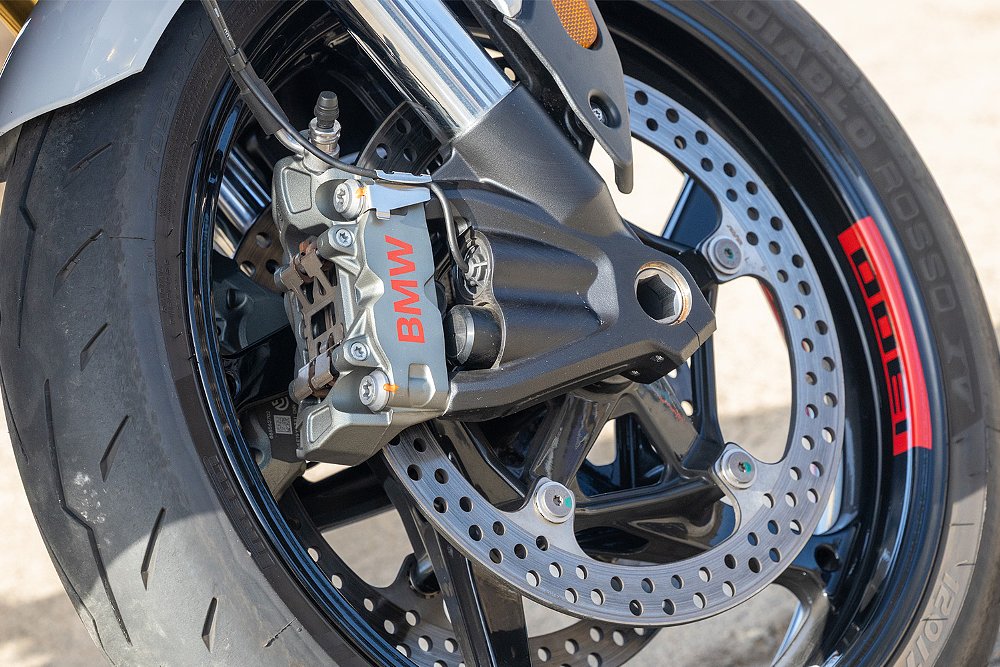
This is what the R 1300 R is capable of in the hands of a confident rider. But that confidence was only attainable when I was in full control in M mode. That’s when I could exploit the 145-horsepower boxer’s meaty midrange; when I could rev it toward its 9,000 rpm redline; when I could leverage the full bite and stopping force of BMW’s Sport Brake calipers; when I could test the edge grip of the Diablo Rosso IVs. Riding the same roads in auto mode only stripped me of that confidence.

With ASA controlling the shift points, my demeanor quickly turned from torrid to tepid. So too did the pace. The bike dropping a gear at inopportune times, like after tip-in (on several occasions, I might add), will do that to anyone. Without knowing exactly when each upshift and downshift would occur, I backed off, opting for a safe, leisurely pace. Instead of attacking each corner, I was just content to complete it.

That’s why I often reserved the automatic D setting for in-town errands or negotiating slow-moving traffic, where gear changes are frequent and speeds are moderate. In those scenarios, ASA saved me the rigamarole of incessantly ascending and descending the gearbox. The feature was just as beneficial when cruising on the interstate, especially when maintaining a mellow cadence. If only that were the model’s M.O.

Measured at 545 pounds, this roadster is far from a lightweight option. In the same breath, BMW builds the bike for speed. It’s the rugby player of the naked-bike ranks. It’s both big and fast, both powerful and agile. None of those qualities are particularly well matched to the ASA’s trade-offs.
At what price?
BMW announced Automated Shift Assistant for its boxer-powered models back in 2024. But just because you can do something doesn’t mean you should. The automatic transmission may be a reasonable feature for touring-biased bikes like the R 1300 RT or R 1300 GS, but it feels misplaced on the R 1300 R. Like putting on a T-shirt backwards, you don’t need to be told that it feels wrong. You just know it.

The R 1300 R is an excellent motorcycle. It’s my favorite among the boxer-driven Beemers, in fact. BMW’s Automated Shift Assistant is a solid system, too. I’ve tested all the automatic transmissions on the market, and in my book, only Honda’s DCT beats ASA (I don’t count Honda’s E-Clutch as an automatic transmission; it’s just an automatic clutch). Both the 1300 R and ASA are good. They’re just not a good fit for one another. It's a good thing BMW offers it as an upgrade on the R 1300 R, not as standard equipment.
One major advantage of ASA is its convenience. BMW’s roadster is anything but that. Luggage is an afterthought. Wind protection is non-existent. (Let’s just say I Googled the difference between assault and battery after my first freeway ride on the bike.) Pragmatism isn’t its priority. Sensibility isn’t its strong suit. The R 1300 R is sporty at heart. It prizes performance. It’s built to drain our adrenals. But to wring that out of the refined roadster, the rider needs full control over its gearbox, not the convenience of an automatic transmission.
| 2026 BMW R 1300 R | |
|---|---|
| Price (MSRP) | $23,660 (as tested), $16,695 (MSRP) |
| Engine | 1,300 cc, air/liquid-cooled, eight-valve, flat twin |
|
Transmission, final drive |
Six-speed, shaft |
| Claimed horsepower | 145 @ 7,750 rpm |
| Claimed torque | 110 foot-pounds @ 6,500 rpm |
| Frame | Steel, sheet metal shell |
| Front suspension | DSA 47 mm fork, electronically adjustable for spring preload, compression, and rebound damping; 5.5 inches of travel |
| Rear suspension | DSA EVO-Paralever monoshock, electronically adjustable for spring preload, compression, and rebound damping; 5.1 inches of travel |
| Front brake | Dual four-piston calipers, 310 mm discs with ABS |
| Rear brake | Single two-piston caliper, 285 mm disc with ABS |
| Rake, trail | 27.5 degrees, 5.0 inches |
| Wheelbase | 59.5 inches |
| Seat height | 30.9 inches |
| Fuel capacity | 4.5 gallons |
| Tires | Pirelli Diablo Rosso IV, 120/70ZR17 front, 190/55ZR17 rear |
| Measured weight | 545 pounds (with ASA) |
| Available | Now |
| Warranty | 36 months/36,000 miles |
| More info | bmwmotorcycles.com |