Shop by Vehicle
 Track Order
 Contact Us
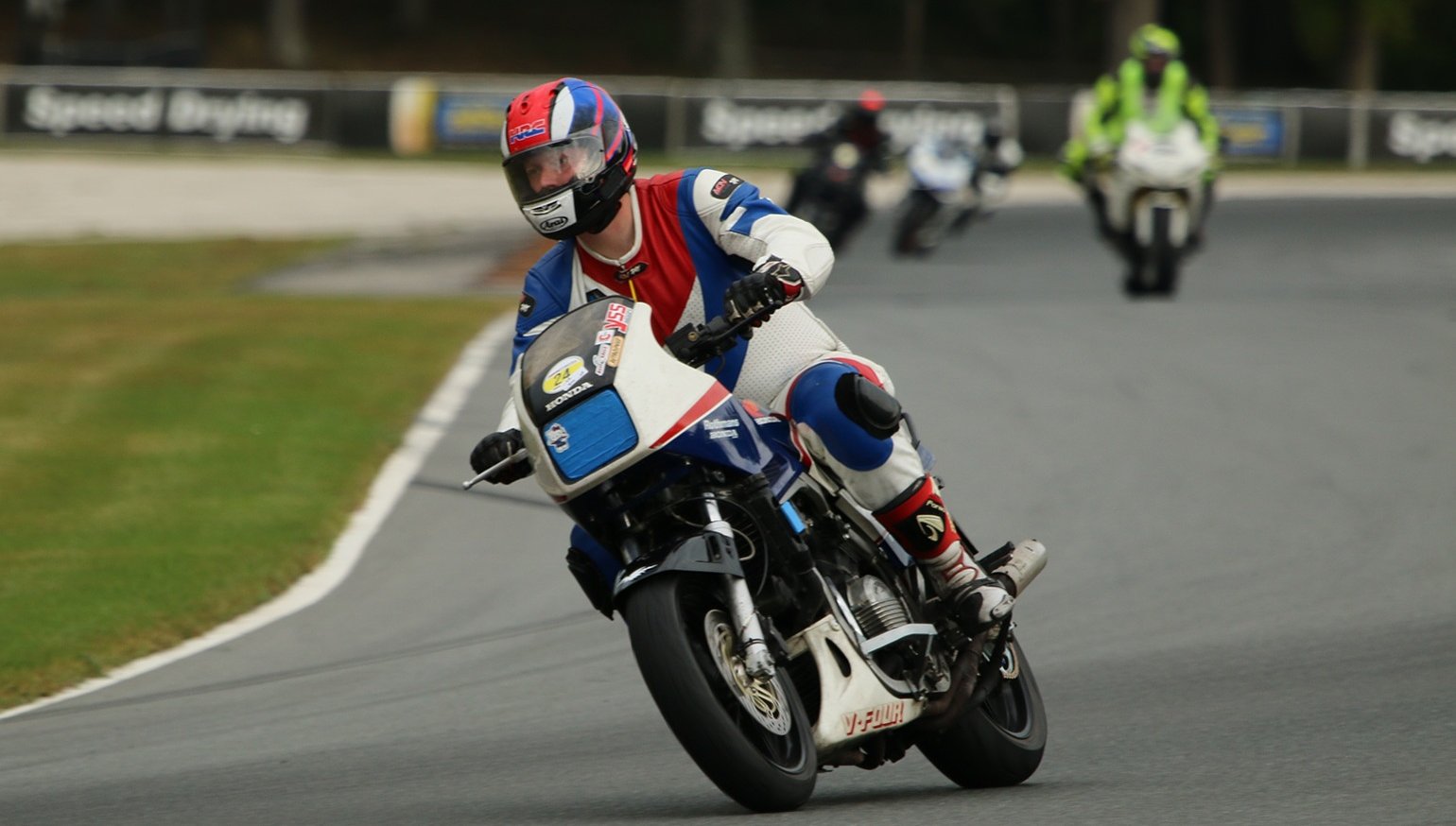
At the end of last season, I participated in my first motorcycle track day. After years of street riding, being a spectator at motorcycle races, and researching track days, I finally committed to trying the experience of circling a race course for myself. In many ways, it went exactly as I'd hoped, but I still came away with some unexpected lessons.
I chose a track day at Road America in Elkhart Lake, Wisconsin, run by Motovid, which provided an incredibly positive experience in every aspect. If you're looking to get on track in the Midwest, I couldn't recommend signing up with them enough!
Here are the main lessons I learned (or were reinforced) from my first track day.
Editor's note: With track-day season gearing up in many areas, are you looking for more resources on doing your first? We have an in-depth article and accompanying video on that. Prefer a podcast? We've got you covered there, too. And don't miss "Five ways to ruin your track day."
You can ride (almost) anything
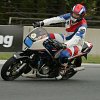
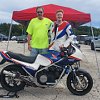
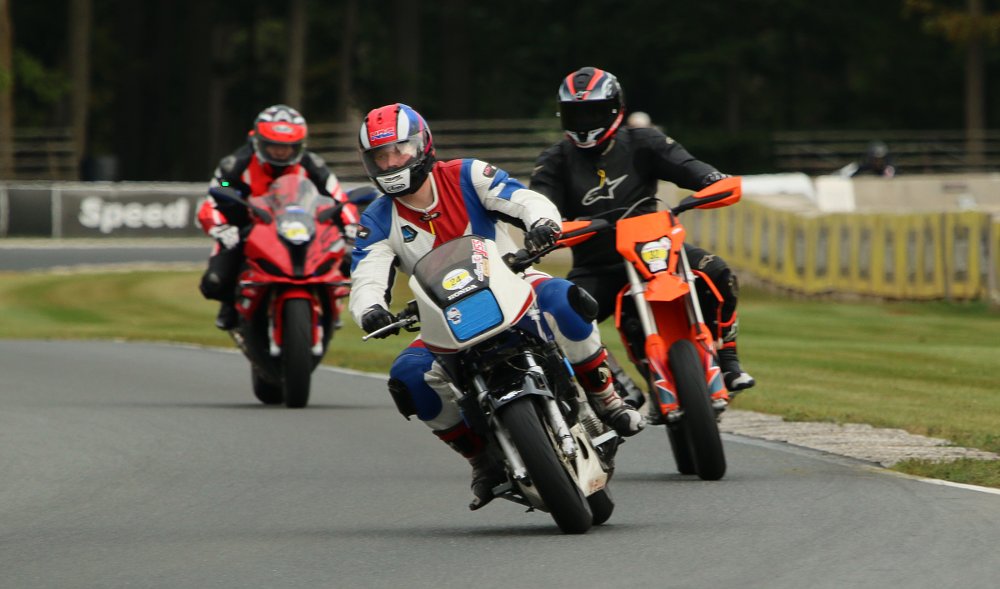
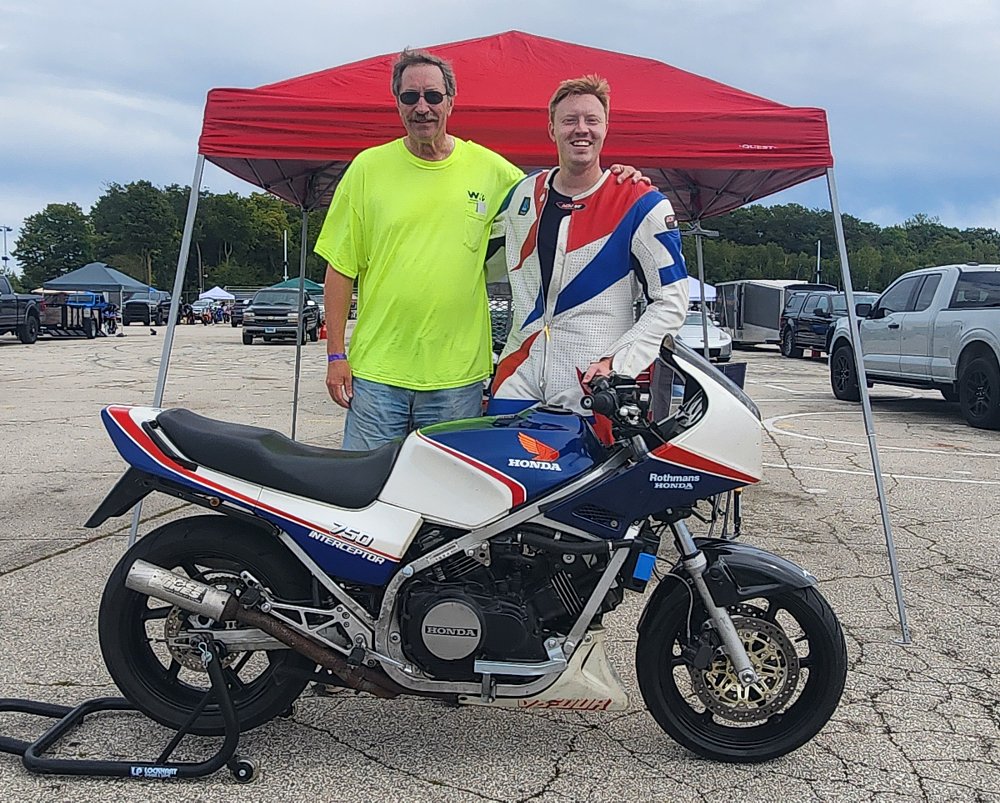
While a lot of advice for a first track day emphasizes that you can "ride what you brung," I was admittedly still a little nervous. What I brung was a 1984 Honda VF750F Interceptor, boasting a 550-pound wet weight (before hauling my 200-something-pound frame) and making a whopping 86 horsepower when it was new. Looking around the paddock in the morning, I had the oldest and slowest bike on the property, at a track with a long straight known for soaking up horsepower and testing top speed. As we lined up for the first session in the novice group, I was following an Aprilia RSV4 and leading a Buell XB12R Firebolt, worried I had brought a butter knife to a gunfight.
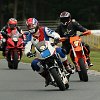
As soon as the group headed out on track though, my fears were calmed. It's easy to get stuck in a competitive mindset, but truthfully, a track day doesn't need to (and more directly, shouldn't) have any competitive component. My goal was to develop my skills and learn the safety and etiquette of sharing a racetrack with others. When my pace was slower or faster than someone else's, there were easy, safe, and predictable ways to change our order so that everyone could focus on their own ride.
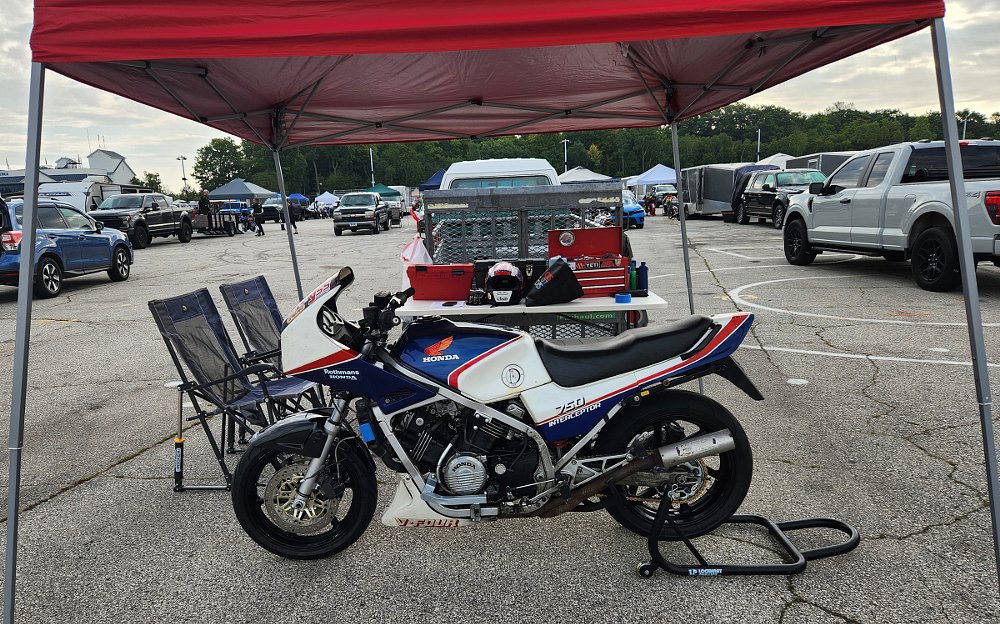
Reflecting on it afterward, participating in a track day has some similarity to playing a round of golf. Golf has rules and etiquette to make sure that you don't detract from others' experience, but the challenge and fun is between you, your game, and the course. In the same way, the track day taught me how to share the track with others safely, while keeping the main focus on navigating the course with my own bike.
Track riding ≠ riding on the absolute limit
Another common sentiment I heard when deciding to ride on track was "don't participate unless you accept the possibility of a crash." I don't inherently disagree with that — riding of any kind anywhere comes with risk. What I think may often be hiding behind that sentiment, though, is the idea that crashes are to be expected, happening at a higher frequency than normal street riding, and riding on track requires an approach that makes crashing a likely outcome. I would not endorse that thought process, given my experience.
I was pleasantly surprised, both in how the event was organized and in my own personal approach, at how easy it was to bite off exactly as much or little as I wanted to chew. I made the choice never to rev my classic bike to the redline, sacrificing "peak" performance for the sake of preserving a bike I also use on the street. I focused on lines, turn-in points, and smooth inputs rather than maximum braking. Track-day riding is a hobby, after all; I don't earn more money for better lap times, there's no factory sponsorship to pay for replacing parts I break, so there was no reason to push beyond my comfort zone.
Novice groups have specific rules on passing and sharing track space to prevent multiple-rider incidents, so the risk of someone else's mistake causing consequences for you is reduced. You still need a level of personal discipline to prevent the "red mist" from clouding your judgment, but in my opinion, that's not much different than the discipline required to ride safely and well on the street.
Riding on the track isn't about riding over your abilities or being reckless. Just the opposite, the track provides a safe and open space to develop as a rider and it rewards staying within your ability and comfort levels.
Everyone is so friendly
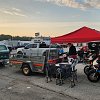
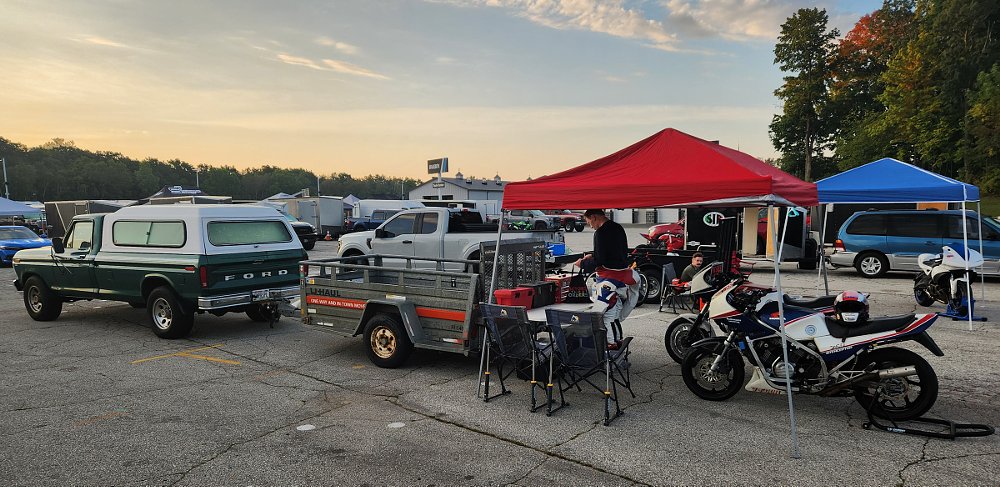
Each person's experience will likely be unique, but I found that the community of participants and observers at the track day was a major highlight. The commitment level to the track day hobby covers the full spectrum — some people and groups arrived with setups that were better equipped than some privateer MotoAmerica racers, while others rode in with a backpack and a good attitude. Truly everyone I interacted with was friendly, helpful, and excited to see someone new joining the hobby.
Coaches will help you learn something
The first few sessions, I found myself consistently dragging the toe sliders of my boots or the feelers on the footpegs. I naively assumed that meant I was turning as sharply with as much corner speed as the bike geometry would allow. Obviously, like most uninformed assumptions, this turned out to be incorrect.
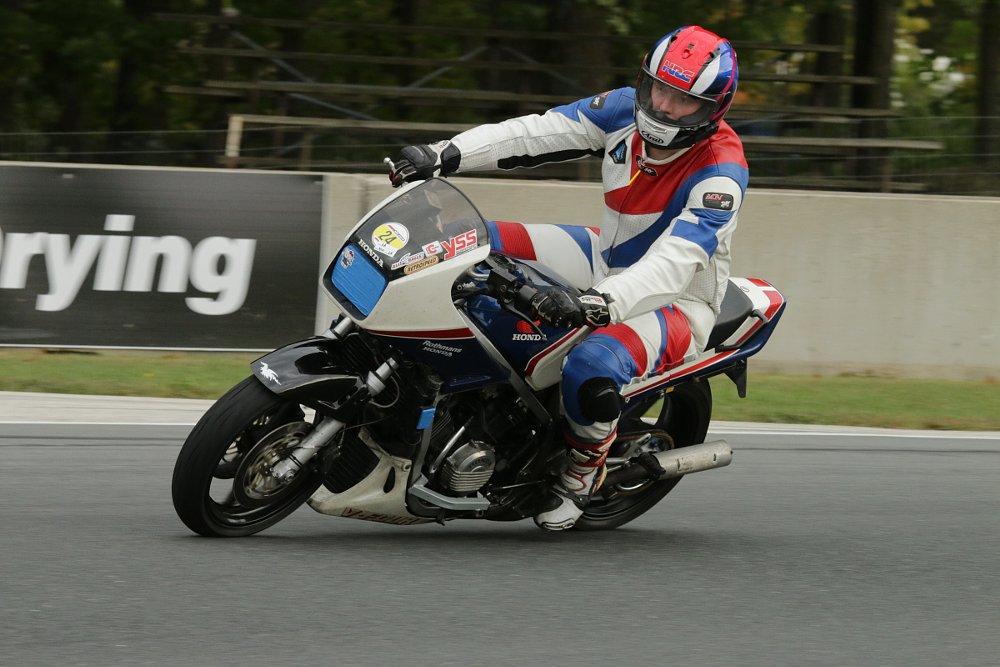
Midway through the day, I asked a rider coach to follow me for a few laps and give me his feedback. He not only obliged, but he even recorded video of me to review. After the session, he went above and beyond to help me with some things he noticed, the primary of which was body position. Demonstrating on his own bike on a paddock stand, he coached me on foot position, using my lower body to stabilize so that my upper body could remain loose for finer control, how to position my head, etc. This one-on-one help was incredible, and a huge credit to the coach personally and the type of event that Motovid puts on.
Equipped with more knowledge and things to practice, I gradually learned how much more potential the bike had if I put it and myself in the right positions. My cornering got smoother, and I touched metal down less and less. It was a really cool insight into how deep and nuanced the technique of riding (in any discipline, really) can be, and how much I still have to work on!
A track day changes your street riding
After my first track day completed, I wondered how I'd feel about returning to street riding. Having been on a closed course without speed limits, curbs, traffic, irregular pavement, etc., I worried that an ordinary but pleasurable afternoon ride might lose some of its appeal. Happily, I discovered just the opposite.
Even after just one day on track, I've noticed that my on-road riding has improved. Mentally, I feel as if my brain has gained a little more bandwidth, a smidge more processing power, a slightly better refresh rate, if you will. Street riding didn't suddenly feel slow or boring, but I noticed that I felt just a bit sharper in anticipating and processing the flow of information street riding throws at you. While I never approached the limits of my bike's performance on the track, I understood better how much capability I had available, and that added to my confidence when riding well below that ceiling on the street.
To sum up, riding a motorcycle on a race course was a bucket-list experience for me that completely lived up to, and exceeded, my expectations. Whatever your riding goals may be, anywhere from improving your street-riding skills to pursuing club racing, a track day can be the perfect first step. It takes a certain level of investment (time and money), the right mental approach, and the willingness to try something new. But you'll find that the folks hosting the event and your fellow riders will support you, wanting you to improve your skills and have a blast doing it.
I've already signed up for another weekend this coming season. I hope to see you out on track, trying the experience at least once. And if you're anything like me, once won't feel like enough.
Image Gallery