
 Shop by Vehicle
 Track Order
 Contact Us

The first motorcycles were born when folks with an engineering bent took what was then called the safety bicycle, bolted a single-cylinder engine inside the diamond frame, incorporated a fuel tank and a leather drive belt, and they were motorcycling.
Riding those first machines was a completely engaging and entirely manual affair in every way. Throttle, spark advance, engine lubrication, heck even pedaling to get up a hill, were all operated by the rider.
How different things are today.
Motorcycles have followed their four-wheeled brethren down the road of ever-increasing technological complexity, providing a staggering and wonderful array of safety, performance, convenience, comfort and "infotainment" functions. As amazing as some of those technologies and the functions they perform may be, though, nothing ever comes without some kind of cost.
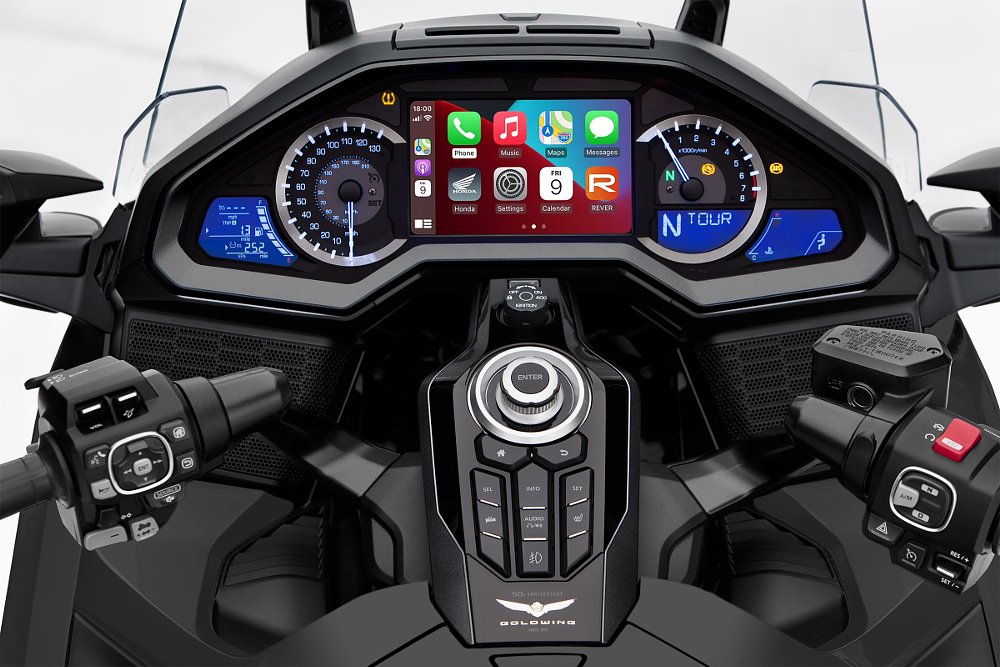
Calculating the hidden costs of tech
Determining what the cost is that one pays for technological support on your modern motorcycle falls into two broad categories: Let's call them "can you?" and "should you?" The first is primarily one of the limitations that technology puts on the ability to maintain that machine in fully working condition, and how long one might be able to keep safely riding that motorcycle. The second is more of an intellectual or philosophical exercise: Should you, as a motorcyclist, share or cede control of certain riding functions to electronic automation?
Lance Oliver's recent review of the new BMW R 1300 RT provides one example of how far technology can go with today's motorcycles. I'm not singling out the RT for criticism. The RT is a paradigm of the highly capable, highly refined traveling motorcycle, and systems like its Dynamic Traction Control (DTC) have saved me from a very serious crash on at least one occasion. Consider, though, that it has five different ride modes, automatically adjusting suspension preload and damping, an automated clutch, active adaptive cruise control, automatic pre-collision braking, and even a system that raises the rear of the motorcycle when it detects that you are trying to put it on its center stand. Lest one incorrectly conclude that only BMW is driving such tech advances, one only needs to look at Honda's newest patent filing for blind spot sensors that take over steering and move the bike automatically away from a detected threat.
Bikes with this much electronic automation are, in the parlance of motor vehicle technologists, "software-defined vehicles." Unlike classic motorcycles, where vehicle response is defined by pieces of metal — carburetor jets, exhaust pipes, flywheels, throttle cables and cams, intake tracts — and their shapes and masses, the modern vehicle's behavior is almost entirely a product of the code that runs on its computers.
So for today's motorcycle manufacturers, the sale of a software-defined vehicle becomes the release point of a software development and maintenance life cycle that potentially has no end. Motorcycle manufacturers have historically not been accustomed to supporting and updating the software that runs their machines. They are also not used to having to protect their software against possible security exposures. IT security companies have demonstrated proof of concepts where insecure vehicle systems could be remotely operated by people with sketchy intentions. Classic motorcycles with a drivability issue could be tuned — adjust an air screw, swap a carb jet. Safety issues or defective parts could be addressed by providing an updated part. Software-defined motorcycles need to have their software updated, which requires a complete regression test of all of the system's software and a certified dealer tech to perform the update.
Think you're technically inclined and you can make that kind of change? Try it and your bike's manufacturer will invalidate your warranty or could even render the machine non-functional.
Riders with an appreciation of motorcycle history also know that the industry's attrition rate is pretty high. Norton Motorcycles, for example, has gone bankrupt no less than 10 separate times. What happens if you buy a motorcycle from a company that goes tango uniform or is acquired by another company that chooses not to support the acquired company's software? In this case, your motorcycle becomes frozen in time. Regardless of whether future bugs are annoying or potentially hazardous, they will not update your software, and their operating environments are designed to be closed so that you can't reconfigure the systems yourself. Software-defined motorcycles (or any software-defined vehicle, for that matter) are, at root, systems that the person who purchased them doesn't truly own, as the configuration and adjustment of the system is something the owner has neither the technical capability nor the access to perform.
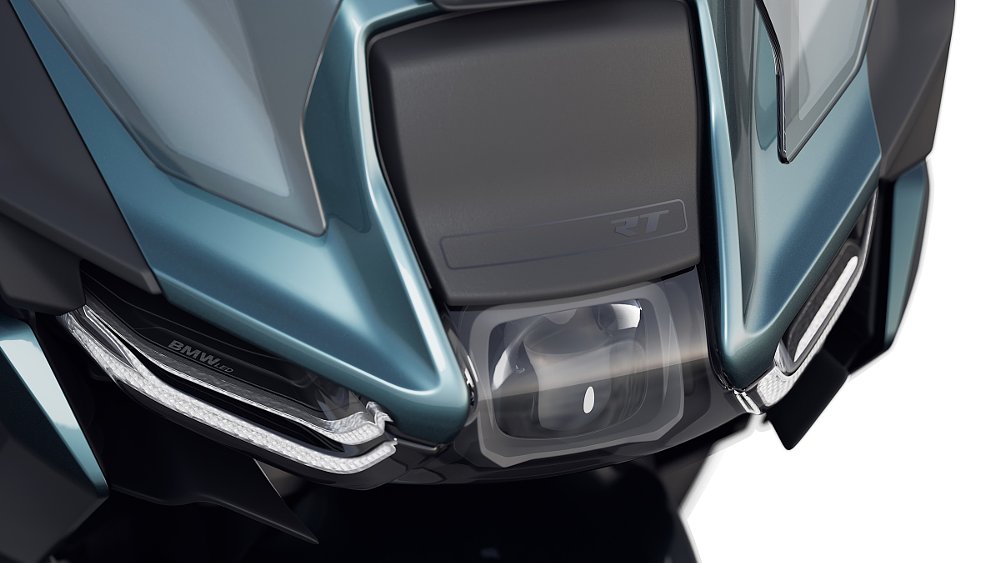
How long will it last, what will maintenance cost?
The components of software-defined motorcycles that are controlled by the onboard electronics also present potential maintenance and serviceability issues. Compare the automated shock absorber units that are used by class-leading touring machinery with preload and damping controlled by a central computer to a set of traditional, fully mechanical shock absorbers that need a complete rebuild. That service, including all seals, fluids, and replacing springs, will cost less than $500 for the old shocks. Perform that same service on an electronically managed suspension and the extra complexity and replacement of electromechanical components like sensors will drive the cost well over $2,000.
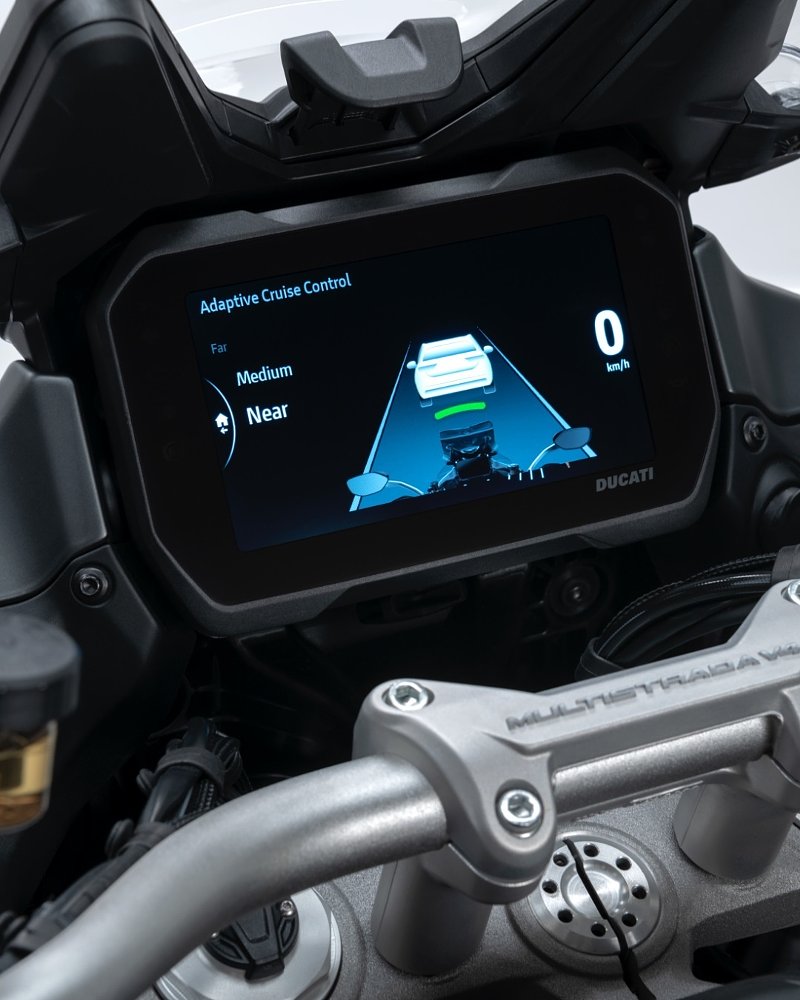
Even safety system components — which most people accept have significant value — create unanticipated issues with service economics. Modern collision-avoidance systems make use of either vision systems or LIDAR systems — or both — to allow the vehicle to sense obstacles in the roadway. Routine traffic accidents can require service processes of such cost and complexity to make keeping a damaged vehicle on the road challenging. Vision systems in automobiles require a complex recalibration or replacement when a windshield has to be replaced. Again, a $300 job can become a $2,500 job. More advanced systems that have multiple sensors in the forward bodywork can lead to the vehicle being totaled due to the minor damage caused by a parking lot fender bender. Imagine your brand-new high-end Euro tourer with a LIDAR unit in the fairing that requires sensor replacement or recalibration due to a minor drop that distorts a few fairing tabs on the frame.
Parts availability for such systems, especially as these machines age, is also an open question. Many core safety systems, such as ABS or stability control systems, are made by vendors such as Bosch and Continental, are shared across OEMs, and are likely to remain available. For other proprietary electronic systems, though, availability of replacement electronics — just like software support — is subject to corporate profitability and responsibility considerations. If your motorcycle never sold in large numbers or its manufacturer was acquired, for example, it's easy to see how some anonymous corporate finance person could easily decide there's no benefit for the company to maintain that model's software or help you repair your 12-year-old bike by stocking a control module or sensor with relatively low demand.
To be fair, parts availability for older bikes has always been an issue, but these technologies dramatically raise both the support cost and complexity, bringing the end of the road for these machines ever closer.
Keeping the info in infotainment
The continued trend towards increasingly sophisticated "infotainment" systems has proved particularly problematic for both motorcycle and automobile manufacturers. Infotainment — which wraps up primarily smartphone-based voice, text, data communication and GPS navigation, along with headset rider-passenger and bike-to-bike communicators and music players — is perhaps the toughest area of technology integration, and the one that seems the hardest to understand the business case for. Almost every online and magazine review I have read for touring and sport-touring motorcycles in the last three years has spent an awkwardly mortifying amount of time and words decrying the failure of these systems to just work as expected. As someone who spent several decades working as a systems engineer in the technology sector, I can't tell you how many e-mails and phone calls I've received from former co-workers or acquaintances who had become distraught over their inability to get all of the components of their motorcycle infotainment system to play nice together, and were hoping I could help them with it.
Sadly, I couldn't help them, but I do have some insight as to why trying to help them is kind of like Don Quijote's tilting at windmills — heroic and well intentioned, but unlikely to be effective. Integration of technical systems becomes a level of magnitude more challenging when one of the systems' components is external to your system — i.e. is designed or built by someone else, and updated on its own schedule, without regard to how your software is maintained and updated. Remember, a motorcycle manufacturer's support for their software-defined motorcycles is a perpetual software development and support project, and supporting two major families of mobile phones, Apple and Android, along with a few smaller phone types, a handful of headset vendors with six to eight generations of headsets, screen-sharing middleware (Apple CarPlay and Android Auto) whose requirements evolve over time, and various versions of the Bluetooth wireless protocol, and you can see how the math of all of the combinations that need to be coded for and tested is not in anyone's favor. Add the dimension of time and the situation gets worse.
The average lifespan of a mobile phone operating system release is a year. Security patches and feature enhancements may be quarterly or even monthly. In a three-year period, one may be looking at three major updates and nine or 10 minor ones. Do you know what doesn't get an update? The processor and memory available in a motorcycle or car "head unit," which is fixed as of the time of release. And even though we're only talking about display and Bluetooth audio functionality, that fixed amount of compute and memory will keep needing to do more and more with the same resources, meaning effectively less performance the longer it is in place.
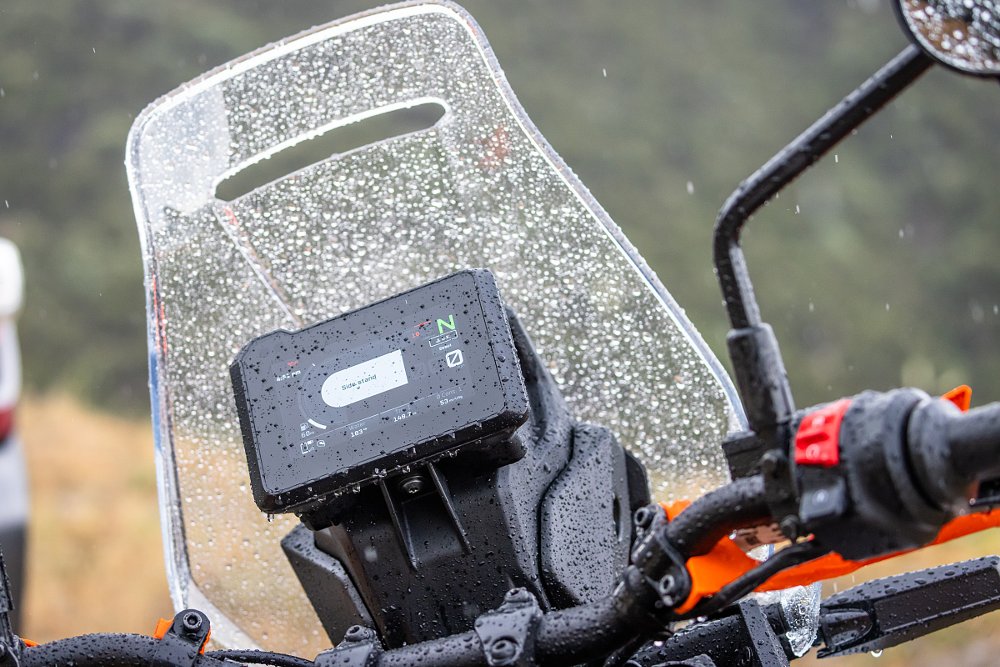
Closely related to the Infotainment systems are the digital displays used to access these systems, many of which are also touchscreens. I've even seen dual-sport and adventure motorcycles that come equipped with large color touchscreen displays. It's difficult for me to understand the design thinking that puts a fragile, expensive display on a piece of equipment that is very likely to be repeatedly dropped (crashed!) in routine use. It's harder still for me to understand the use of touchscreens, which require a rider to remove a hand from the handlebar, to use special gloves with conductive fingers, and interact with an interface that does not provide any measurable haptic feedback that what the rider is asking for has actually been accepted by the system. This just reduces the rider's focus on the road.
Automobile companies are starting to respond to negative feedback from their customers, as well as to some commercial problems that nobody really anticipated, and the unquestioned trend towards touchscreens is starting to swing back to the use of buttons, which can be operated without looking at them and do provide haptic feedback. Motorcycle makers have yet to follow that trend.
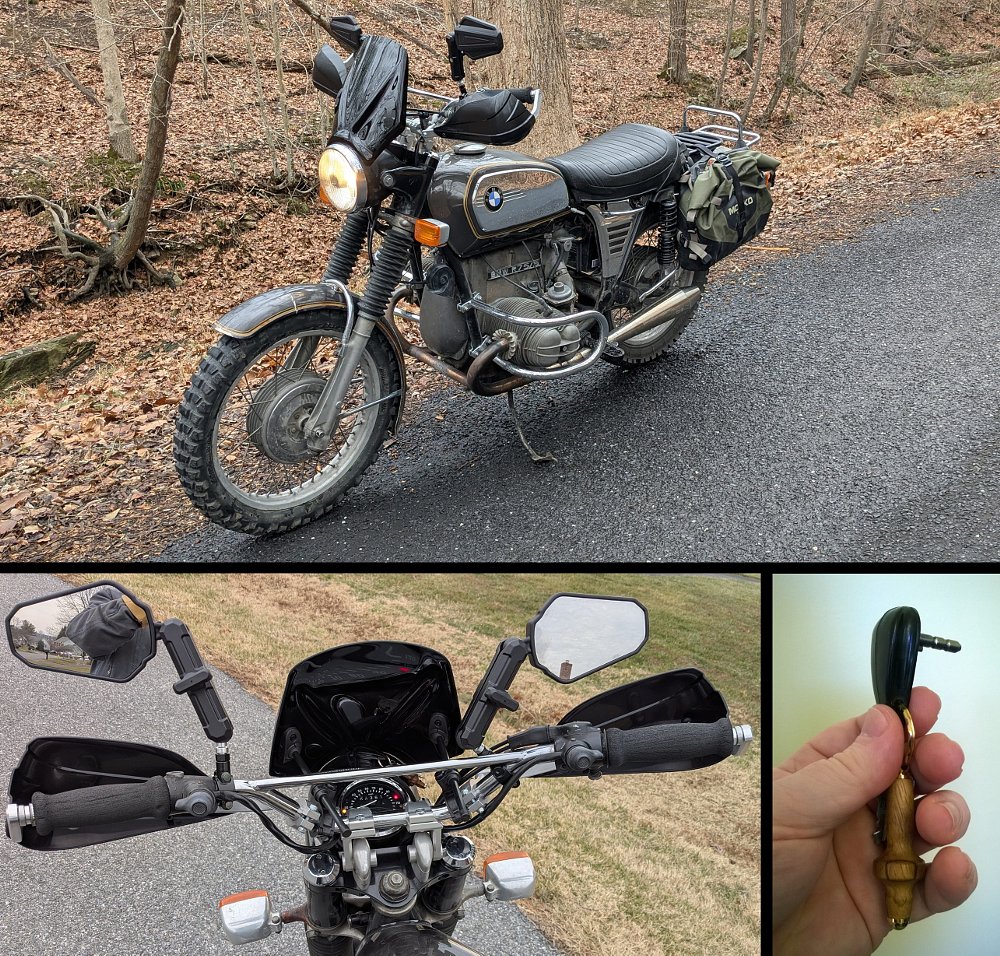
This model of a motorcycle as an integrated technology system is one where manufacturers are only starting to gain any experience managing the life cycle of the combined hardware and software systems. No one can fully anticipate what the technical and commercial limits are to keeping such machines fully functional. Given modern commercial realities, though, the likelihood that the combination of the costs of software support, the complexity of integration with external systems, and the failure rates and costs of stocking highly technical repair spares will see motorcycle companies either choosing to or having no choice but to place limits on the serviceability of newer machines. Enthusiasts with vintage machines are accustomed to continuing to ride and maintain machines that are 50, 60, or even 100 years old. One of my favorite motorcycles is currently 53 years old. Its control interface consists of exactly two analog handlebar switches and it still starts and rides as well or better than it did when it was new. It's hard to see how a 2026 model year machine will be in that same place in 2079.
Will tech save us or slow our learning?
Which brings me to the even deeper issue. Just because one can put this much technology into a motorcycle, should you?
For new riders, systems like ABS and traction control provide a valuable tool to avoid developing advanced riding skills using a destructive training model — i.e. learning through crashing. Very few folks would claim such systems have no value, especially if they help avoid rider injury and vehicle or other property damage.
What such systems do affect, though, is the ability for riders to actually develop advanced riding skills at all. These systems produce a motorcycle that mediates the control inputs of the rider by filtering them though the physics model described in the vehicle's lines of software code. You're not always controlling the motorcycle but rather making requests to the bike's management systems, which decide whether to grant or modify those requests.
Want to spin your rear wheel on a corner exit? On a classic bike, it's entirely up to you how much throttle is too much, and to understand the effects of a sliding wheel on the bike's progress through the corner. On a software-defined motorcycle, though, your ride modes and traction control systems likely have multiple levels of selectable power output and points of intervention before wheelspin is reduced. Taken to an extreme, this level of automation eventually reduces the rider's decision process to something like "I'll just go WFO and let the computer figure it out."
To me, the appeal of motorcycling, at its core, is the danger and thrill of being wholly responsible for one's safe passage down a section of pavement or a rocky trail. It is your skill that keeps your bike upright and keeps you from being injured. A motorcycle that takes that responsibility on itself, it seems to me, has somehow lost track of what brought us all to be motorcyclists in the first place.

You have a choice — and alternatives
It's taken me many years to come to this awareness. I'd found myself swapping between classic and modern motorcycles, riding the same roads or trails back to back on an old bike and a new bike, and realizing that I preferred unmediated control to having more power that wasn't really in my hands. The time I spent in Indiana, becoming acquainted with the designers and motorcycles being made by Janus — which are completely bereft of any modern electronic systems — finally made it impossible for me to ignore what I'd slowly been becoming aware of.
I'm not for a minute advocating for the elimination of all modern vehicle electronics. I am advocating for each of us who rides to become aware that the level of tech that rides with us isn't just a take-it-or-leave-it deal. It's a choice, and one that we, the riders, get to decide.
The more technically complex your motorcycle is, the more expensive it will be to maintain and repair, the less you'll be able to work on it, the shorter its life expectancy will be, and the more divorced your riding experience will be from the immediacy and responsibility of being solely responsible for what's happening at your motorcycle's contact patches.
Regulatory restrictions — such as mandating ABS on all motorcycles — will take some of this choice off the table. Emissions restrictions will take others. But everything else — infotainment, digital displays and touchscreens, radars and LIDARs, adaptive cruise control systems, pre-collision braking, multiple power and traction control modes — really are choices to be made by the rider. Manufacturers have assumed that all of this technology is a one-way street that leads to more tech and fewer mechanical systems. But many of us have either mixed or negative feelings about that direction. There are alternatives, whether a smaller motorcycle with fewer features or something like the machines made by Royal Enfield.
You make your choices, and you take the consequences.
Image Gallery

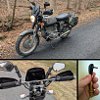
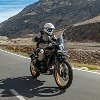
Image Gallery
