Shop by Vehicle
 Track Order
 Contact Us
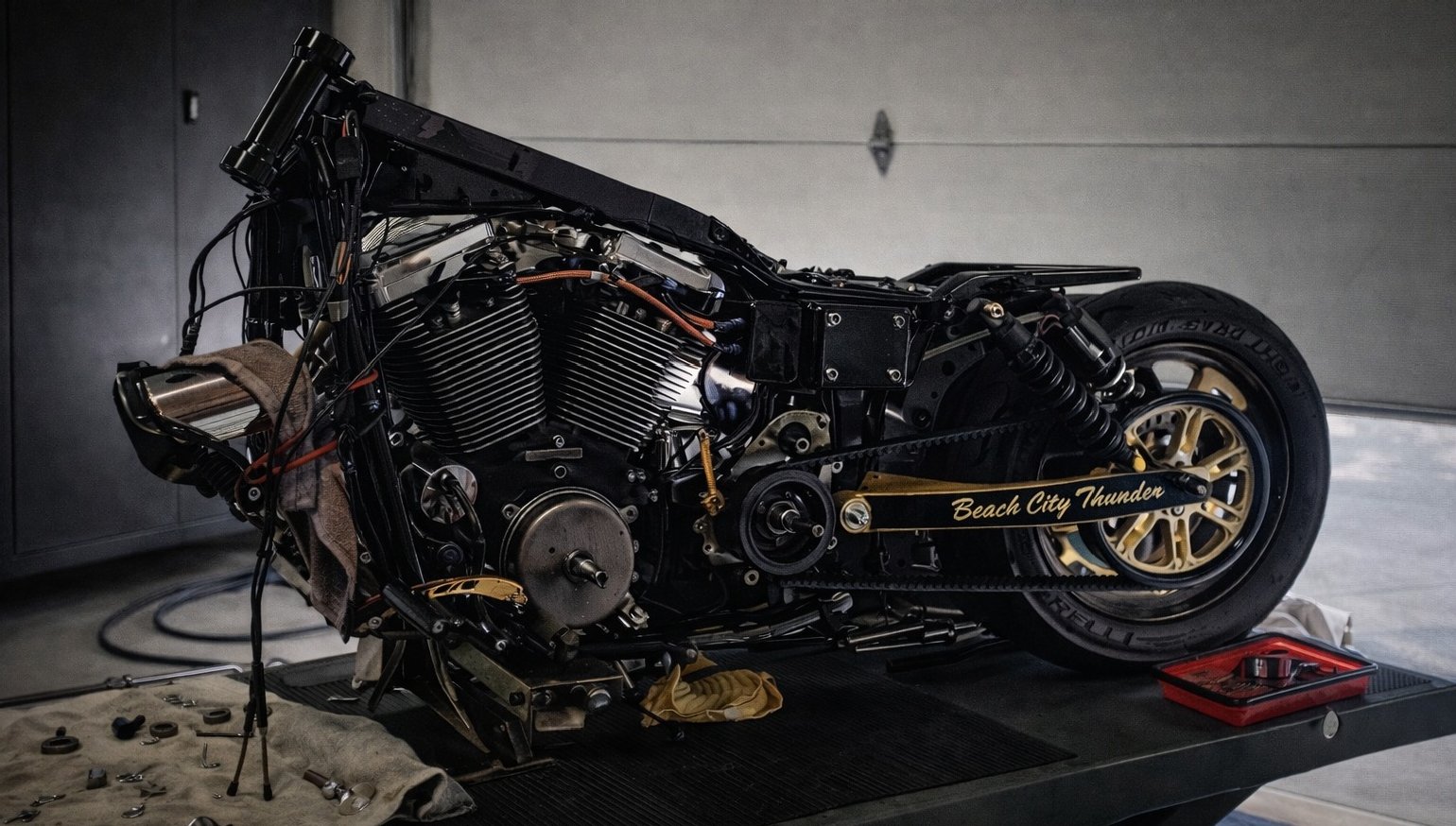
Nobody talks about the middle of a motorcycle DIY project. I'm not talking about the idea that felt flawless at midnight. Not the finished bike, when everything finally aligns. Not even the vision for how you want your dream bike set up.
The middle. The long, grinding stretch where the money is already spent and conviction is all you have left.
Deposits are non-refundable. Parts are paid for, and invoices pile up like receipts for a version of yourself that was more confident than you feel right now. The bike doesn't look better yet. It looks torn down, exposed; expensive. Right when it barely even resembles a motorcycle, that's when it hits you…
That's when the audit starts. Wrong parts. Wrong finish. Wrong vendor. Too much money and too far committed to turn back now.
Nothing has actually gone wrong, but the time and cost invested make doubt feel justified.
The middle is where people start confusing financial discomfort with bad decision-making. They call it being responsible, being cautious. Watching the budget. What they're really doing is flinching — because the number is real now and the vision hasn't materialized yet.
This isn't about paint, powdercoating, or who did the work. It's about whether you trust yourself once the money leaves your account.
Major custom builds and small upgrade projects alike
The same doubt shows up anywhere and everywhere in the do-it-yourselfer's garage. Mid-exhaust swap. Mid-suspension upgrade. Mid-paint decision. Anywhere the cost hits before the reward.
You don't need to be in the middle of a frame-up build to recognize this moment. It shows up the first time you pull an exhaust off a perfectly running bike, spend real money on a replacement, and stare at a pile of parts on the garage floor, wondering why you ever touched it in the first place. The stock setup worked. The upgrade is technically better. But in between, all you can see is cost, inconvenience, and a bike that isn't rideable yet. That pause — the gap between "this made sense" and "this was worth it" — is the same middle, just scaled down.
Every rider who has ever hovered over a checkout button or delayed an install because "maybe later" has been here, whether they call it a build or not.
Most bikes don't get ruined by bad ideas. They get diluted by panic. People start chasing cheaper alternatives. Switching finishes. Downgrading decisions they were excited about a month ago. The original vision erodes, not because it was wrong, but because it got intense.
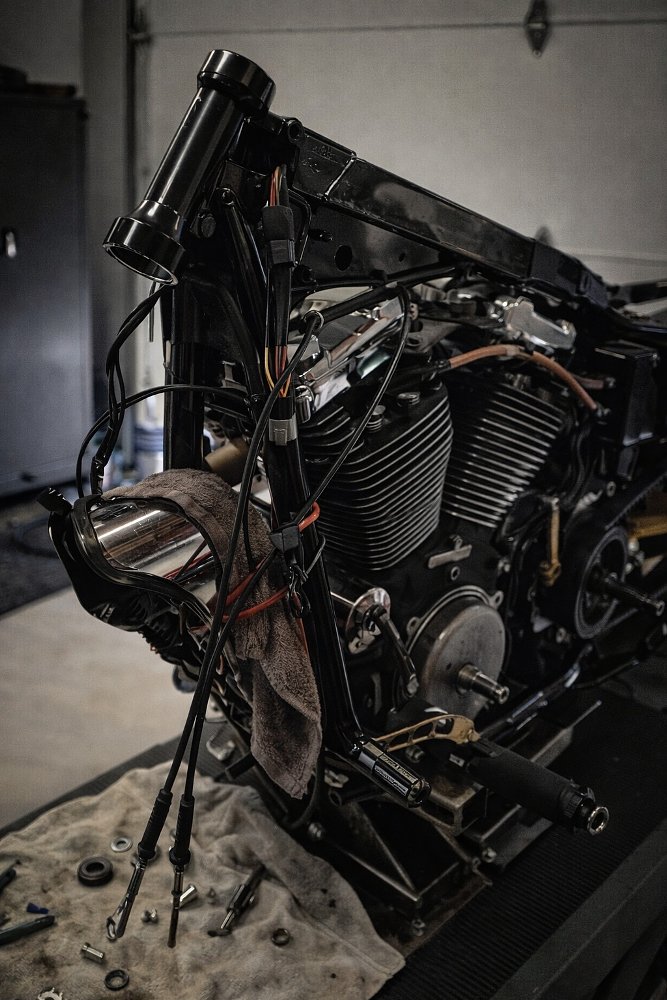
How to get through the middle
I don't waver when the cost shows up. I don't waver when the powdercoat is stalled in shipping, and I certainly don't waver when someone tells me my ideas won't work. That's not bravado on my part. It's clarity.
If I committed to the idea when the number was theoretical, I commit harder when it becomes real. I carry the decision through the ugly middle, where the money hurts and nothing looks finished yet. That's why my vision holds together. That's why it reads intentional instead of compromised.
Good builds aren't optimized. They're defended, and the middle doesn't reward hesitation. It rewards conviction. Most projects won't fail catastrophically. They don't explode or collapse. They get safer. They get talked down into something forgettable and stay right there: in the middle.
I've been turning wrenches long enough to recognize this moment when it shows up. I've seen it as a factory-certified tech, watched it from the other side of the service counter, and lived it through builds that ended up featured in print (along with builds that never did). The pattern is always the same: The people who finish strong aren't the ones with the biggest budgets or the best parts lists. They're the ones who make fewer decisions once the middle starts. They stop negotiating with themselves. They trust the version of themselves who committed before fear had a price tag attached.
So when you hit the middle — and you will — don't ask whether you should change course. Ask whether anything has actually gone wrong. If it hasn't, keep moving. Install the part you already chose. Let the idea survive long enough to prove itself. The middle isn't the time to rethink the build. It's the time to defend it.
That's how projects make it out whole. That's how you get through the middle.
Image Gallery