Shop by Vehicle
 Track Order
 Contact Us
The doctor took me to his office, sat me in a chair, and pointed to the computer monitor. "Your X-rays are extraordinary," he said. He didn't mean that in a good way.
Even a non-doctor like me could see something odd — a lot of cloudy areas clustered around joints in my shoulder and spine. "That's arthritis," the doc said. "That's why you hurt all the time."
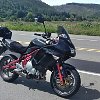
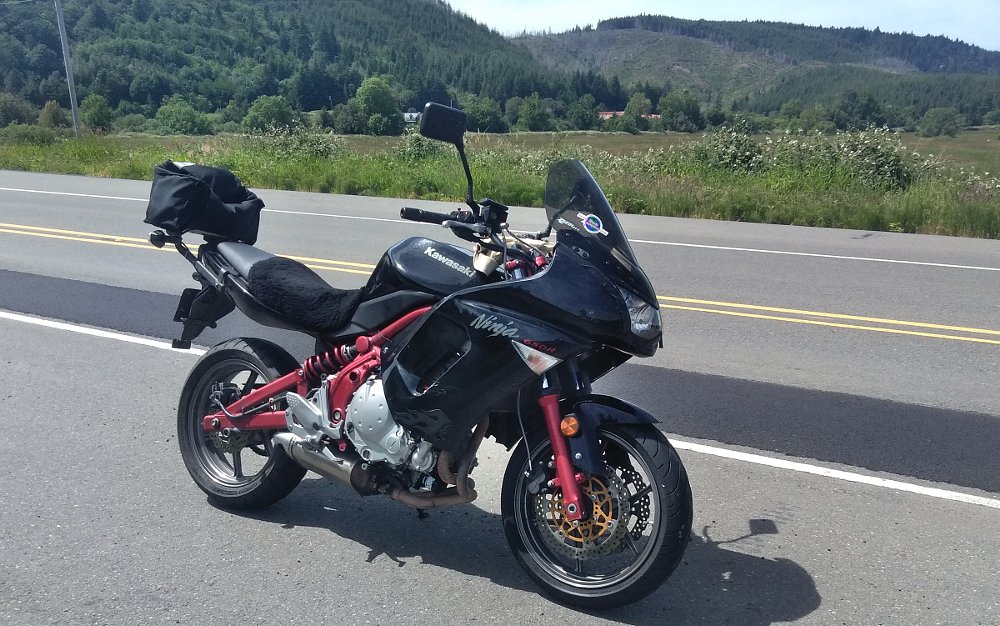
"All the time" included whenever I rode my Kawasaki Ninja 650R, a sport bike I had bought on the cheap when money was tight and later modified extensively to tackle some of its inherent comfort deficiencies. But I was effectively running up the down escalator, and reached a point where there was nothing more I could do to the Ninja.
The doc's diagnosis sealed the Ninja's fate. If I wanted to keep riding, I needed a bike with a wide-open, upright seating position and soft, long-travel suspension that was kind to my back. My next bike had to be cheap, easy to maintain and repair myself, and reliable almost to a fault.
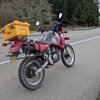
I found it on Craigslist, a 2004 Kawasaki KLR650 with 45,000 miles on the clock. The blurry photo showed the motorcycle equivalent of a horse that had been ridden hard and put away wet. It came with battered Givi hard cases, a rear rack big enough to land small aircraft on, a few other dirt-related mods, and a spare set of Dumpster-ready knobbies. The asking price was $1,250, which was all I could scrape together without having to live on ramen noodles and black coffee for a month.
My friend Eric, who lived in the same town as the seller, checked it out for me. "It's rough outside but it has a good heart," he said after a test ride. I met him at the seller's house, traded an envelope full of Benjamins for the title, and watched them load the bike into Eric's truck.
So begins the resurrection
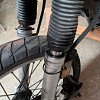
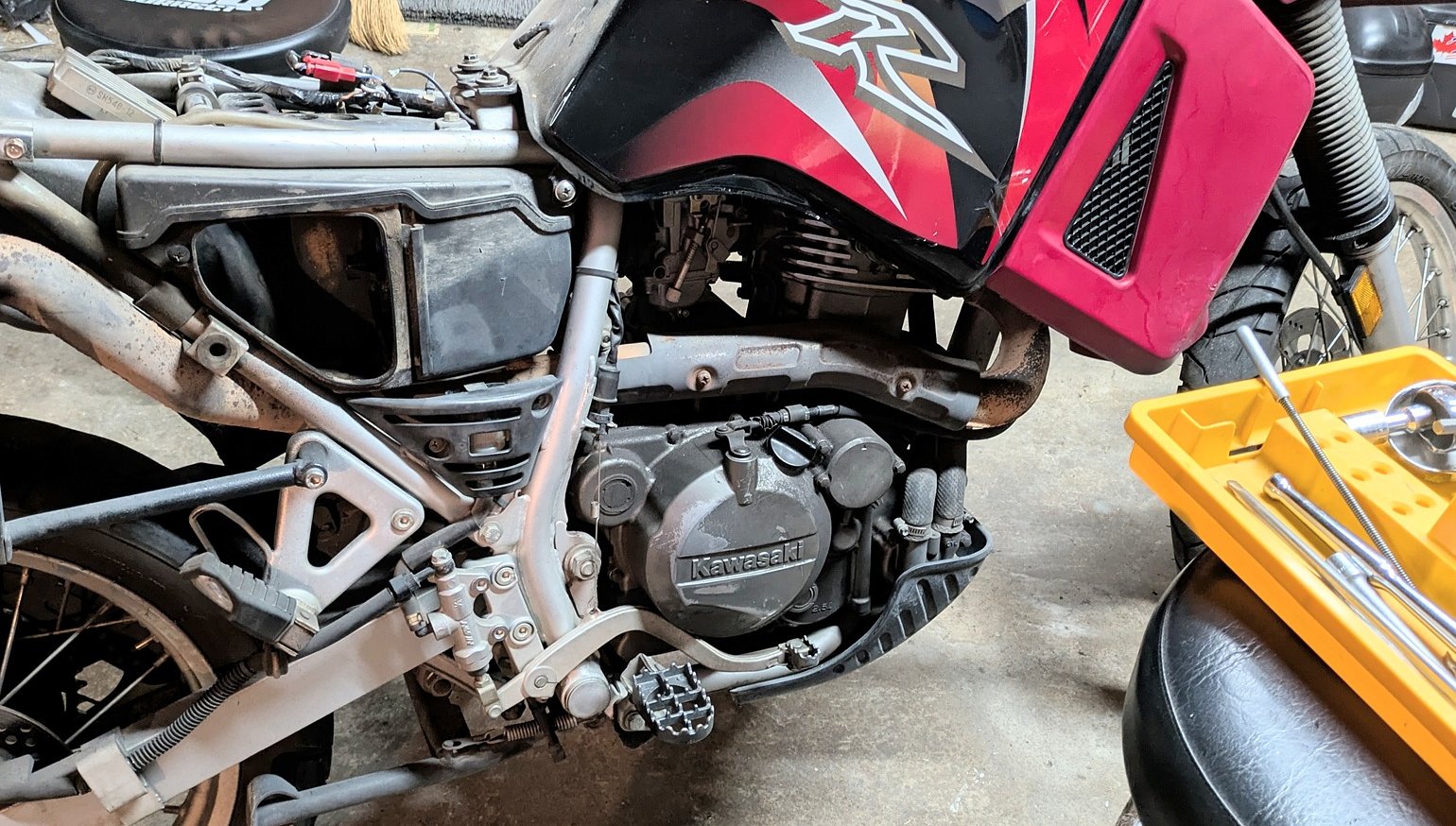
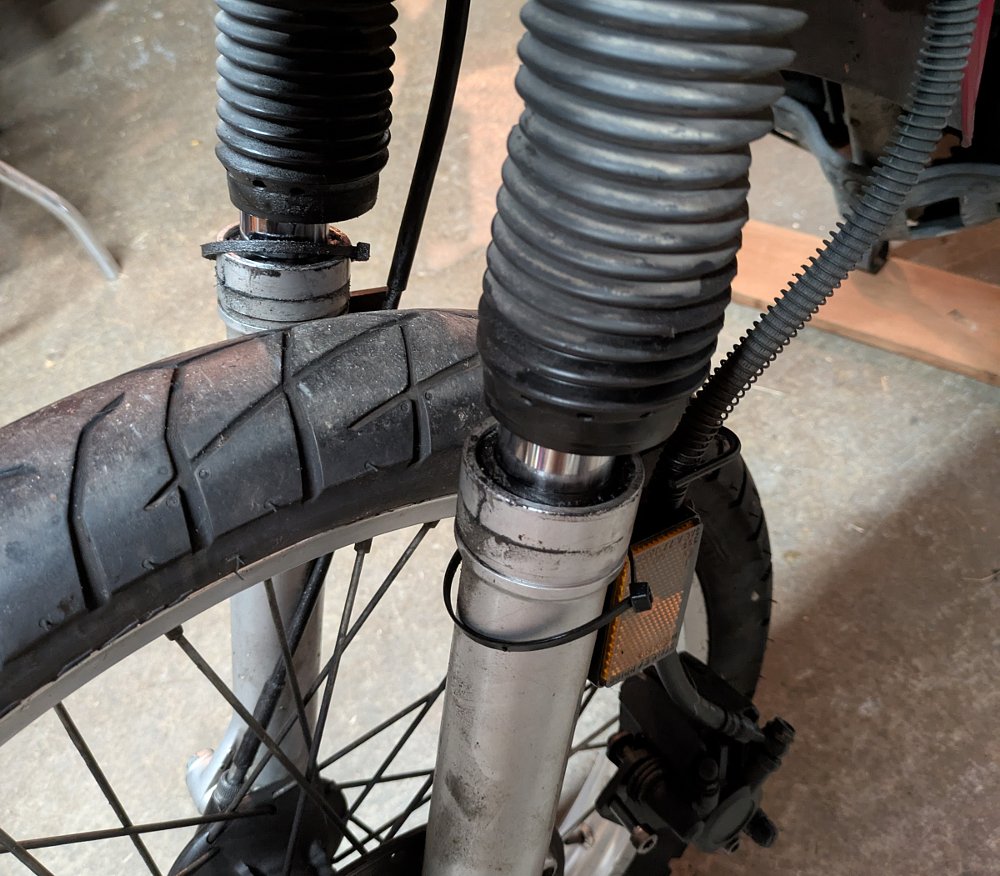
Back at my place we unloaded the KLR and I got my first good look at it. Both fork seals were blown, and fork oil smeared the lower half of the bike from the front brake rotor to the swingarm pivot. The chain sagged and clanked, the sprocket teeth were hooked like beckoning fingers, the tires were cracked and bald, and the fairing and headlight pointed off to the right as if looking for recyclable cans and bottles on the roadside. I started a list of jobs and parts needed to make it roadworthy.
The list multiplied like bacteria. Every item I replaced revealed two more that needed attention. The air filter was a lump of dried mud with bits of foam embedded in it. The oil-soaked front brake pads actually caused the bike to speed up when I pulled the lever. Every nut and bolt on the bike had been torqued to one of two specifications — too tight or too loose. I began to fear I had bought the motorcycle equivalent of a boat, sometimes defined as a hole in the water you throw money into.
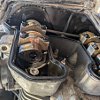
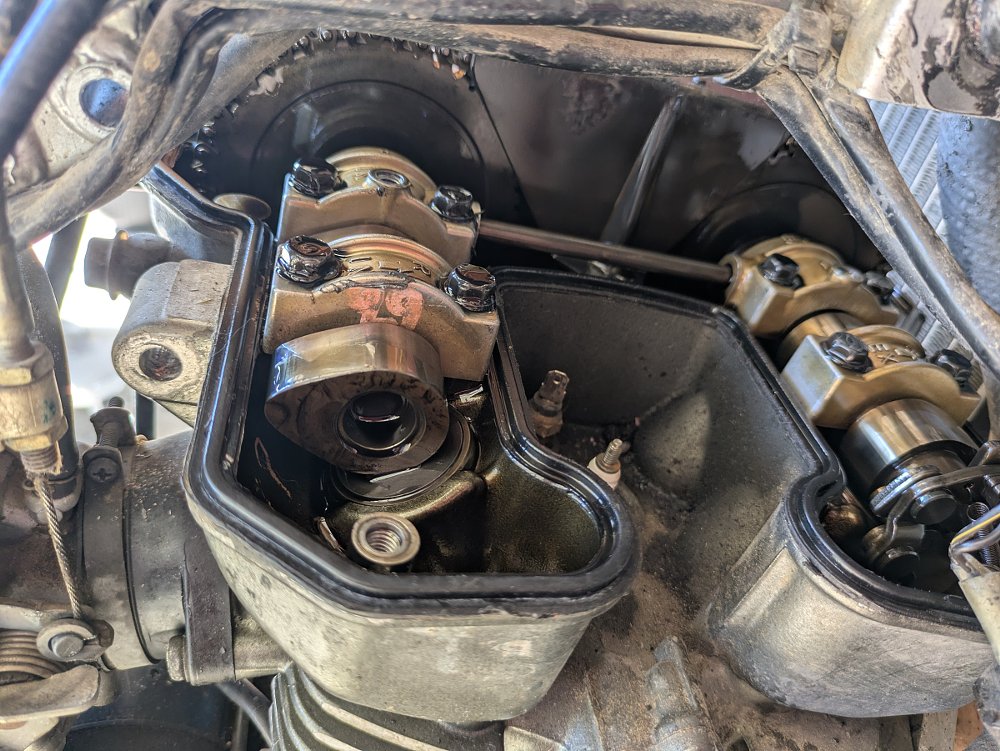
Somewhere along the way, a tedious job turned into a challenge. My aching knees and back aflame, I endured hour after hour of adjusting, replacing, and cleaning, often while kneeling or lying on a cold cement floor. Orders rolled in from parts and accessory suppliers like they were coming off a conveyor belt pointed at my garage. The bills stacked up, but I was determined to get this bike back on the road. I tried and — despite watching dozens of YouTube videos — failed miserably to fit new tires without perforating the tubes, so I farmed that out. But just about everything else, including checking the valves, rebuilding the rear suspension linkage, changing the fork seals, and upgrading the brakes, I managed to pull off with the help of Tylenol, ice packs, and a Visa card whose monthly statements I avoided dwelling on then and which still bring a tear to my eye now.
The KLR's maiden voyage under my ownership was a ride to the DMV to transfer the title to my name. Nothing broke, fell off, or puddled under the engine when I parked. Sure, the seat was too high, the front brake didn't work worth a damn, and the vibration was startling after the Ninja's smooth twin-cylinder engine, but I was a proud papa nonetheless.
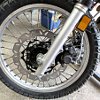
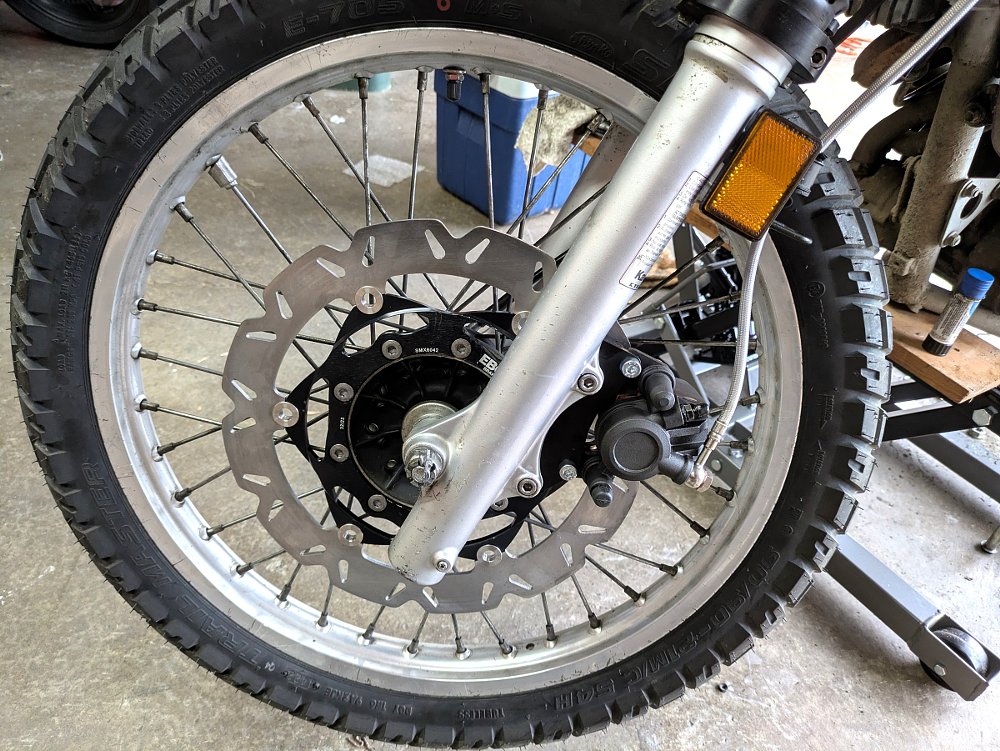
I fiddled with it for another couple of months, fitting an oversize brake rotor, tuning the Progressive Suspension rear shock, and replacing the rock-hard cush damper in the rear wheel. The rack and panniers went on the shelf, replaced by a glaringly yellow plastic tool box I bought somewhere for $11 and used on another bike years ago before deciding it looked a bit too rustic for a sophisticate such as myself. (It turns out that owning a KLR650 and considering oneself sophisticated are mutually exclusive.) I lowered the bike front and rear and got a local welder to shorten the sidestand to match. Now I could flatfoot the bike at stops and get on and off it without a ladder.
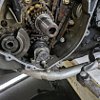
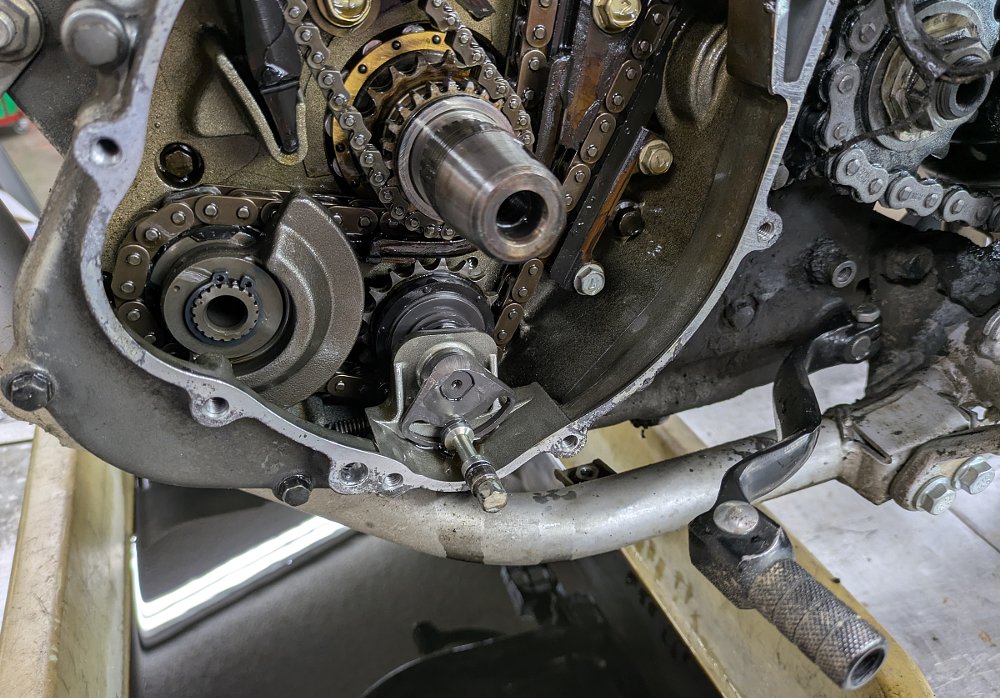
I wimped out on the job of replacing the "doohickey," the counterbalancer chain's adjusting lever, which is either notoriously failure prone or a complete non-issue, depending on who you ask. A mechanic at a Honda dealer, who is also a KLR650 owner, saved my butt and did the job in 90 minutes of shop time. It was the best money I spent on any part of the refurbishment, if only for the peace of mind it gave me.
Yeah, but what's with the stickers?
After dealing with every mechanical issue, I turned my attention to the cosmetic ones. The plastic parts had all faded or shed vital mounting tabs and were plastered with stickers and decals from events and places I'd never been to. I removed some but others remained stubbornly in place. I'll state for the record that I did not attend "Dust to Dawson" in 2009 despite what it says on my front fender, nor have I ever shopped at the surplus store whose logo prominently features a topless cutie in an aviator's helmet, although I suspect their catalog might be worth a look. In the end, I settled for washing the bike and calling it a done deal.
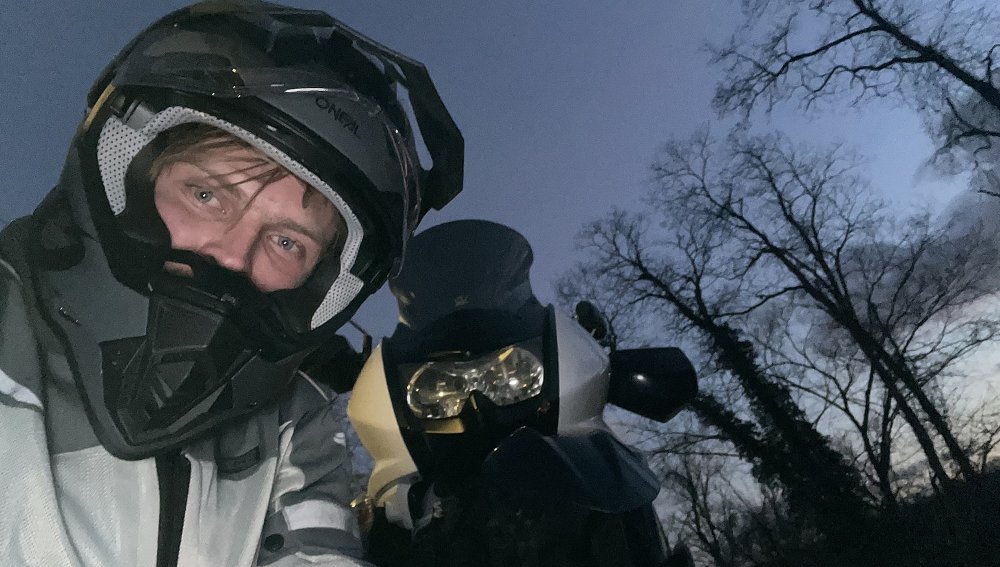
The front brake remains a model of mediocrity, the engine churns like a stationary pump, and the bike's street cred is a negative number. But I can have as much fun on it as I did on the Ninja except at half the speed. Despite being a street guy with zero off-road chops, I've ventured onto a few logging roads where I discovered a new world of riding.
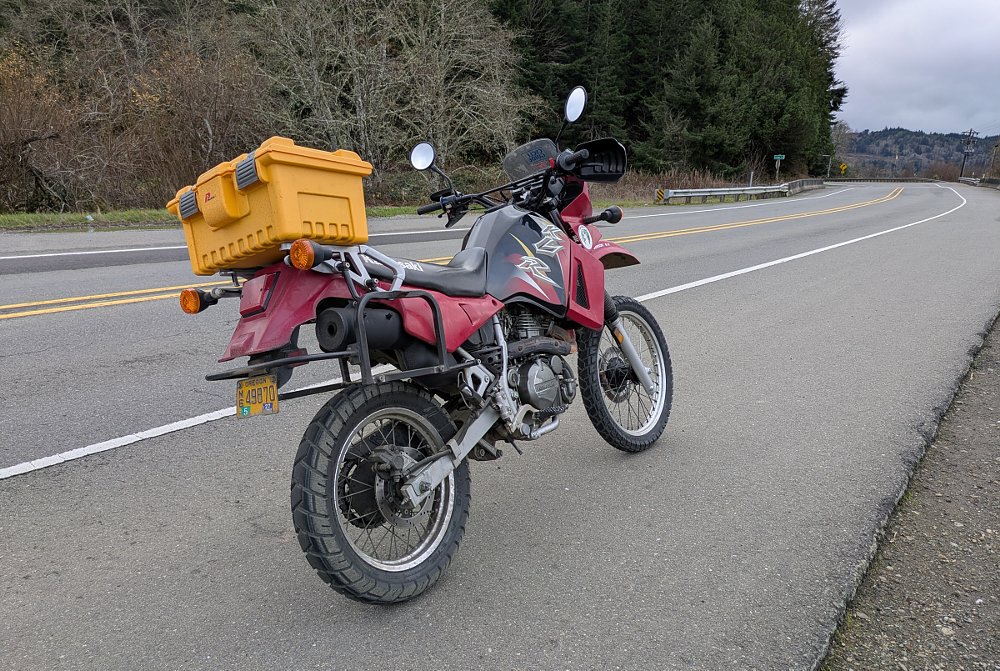
What I have now is a dual-sport whose basic design was carved in stone — maybe literally — in 1987 and hasn't changed greatly in the intervening 39 years. I've been all through it so if anything goes wrong at least I know who to blame. Parts and accessories are plentiful. The knowledge base supporting it is extensive, cordial, and expert.
The Ninja wasn't the bike I wanted, it was the bike I could afford at the time. I put a lot of work into it and I'll miss it in a way. But my KLR650, while also not necessarily the bike I wanted, is the right bike for me at this time of my life. It's slow, ugly, vibey, and cheap — and I mean that in a good way.
Image Gallery