Shop by Vehicle
 Track Order
 Contact Us
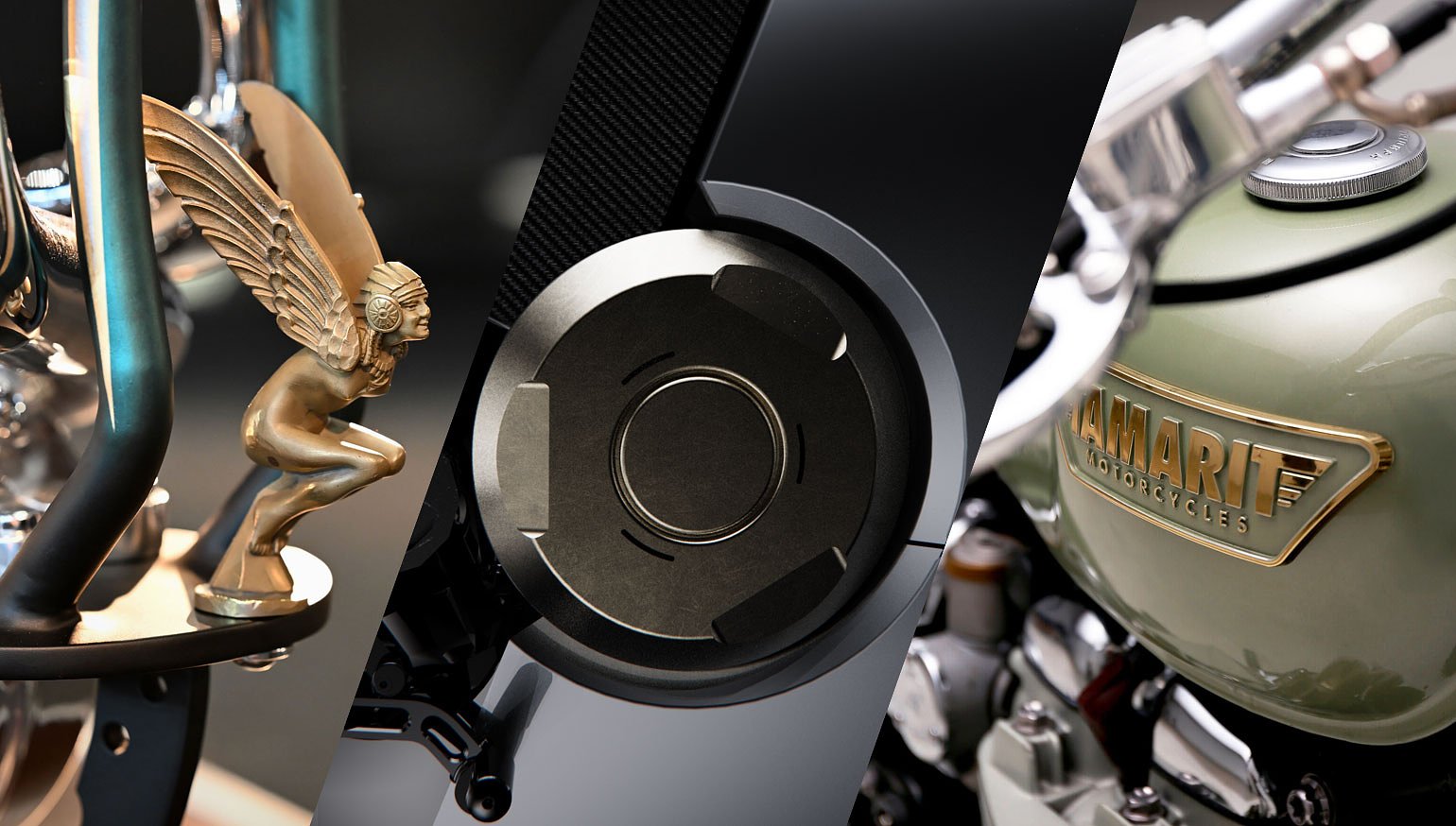
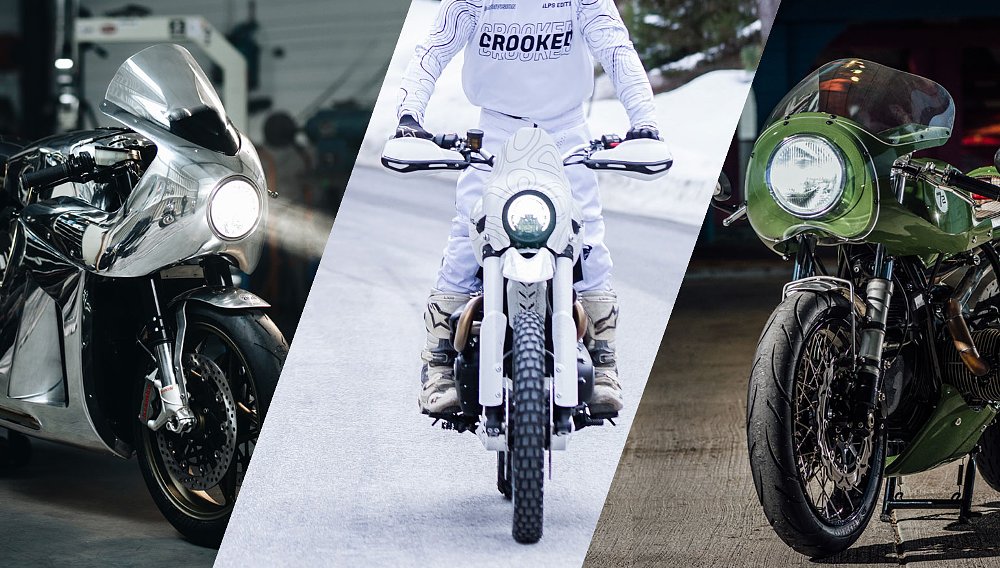
In this edition of the roundup, we celebrate the sculptural approach to custom bike building, or as custom critics put it, form over function. The lineup kicks off with a board-tracker tribute that stole the show at Verona's Motor Bike Expo. Then, Spanish powerhouse Tamarit Motorcycles shows us why they've amassed a portfolio of custom Triumphs fast approaching 200 with their latest Bobber. Wrapping things up is Bandit9's limited-edition Ducati 821 Monster, reimagined as a futuristic street machine.
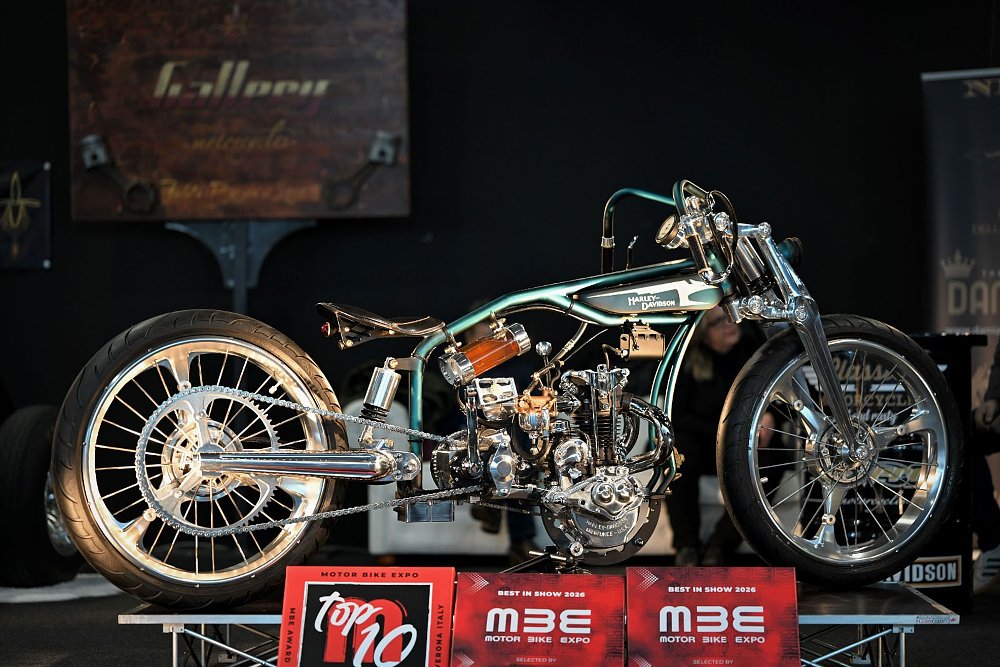
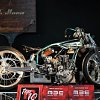
Gallery Motorcycles Nike 350 Peashooter
Each January, the halls of Veronafiere fill with exceptional custom motorcycles. The Verona Motor Bike Expo attracts more than 150,000 enthusiasts and is considered to be the world's premier motorcycle customization trade fair. With an audience like that, it's no surprise Europe's top workshops turn up to showcase their latest work. One builder vying for attention at this year's MBE was Mirko Perugini of Italy's Gallery Motorcycles (Instagram).
For this particular project, Mirko collaborated closely with the bike's owner, Damiano Roncaglioni. A collector of racing motorcycles with a penchant for Harley-Davidsons, Damiano had a clear concept and a collection of rare components to match. Mirko's role was to use them to sculpt a cohesive motorcycle, and the result was exceptional. So special, in fact, that the pair walked away with three prestigious awards, including the coveted Best of Show in the Premium Selection category. The name chosen for the bike, Nike, feels particularly appropriate. Borrowed from the Greek goddess of victory, it reflects the bike's race-bred inspiration and the recognition it received from the MBE judges.
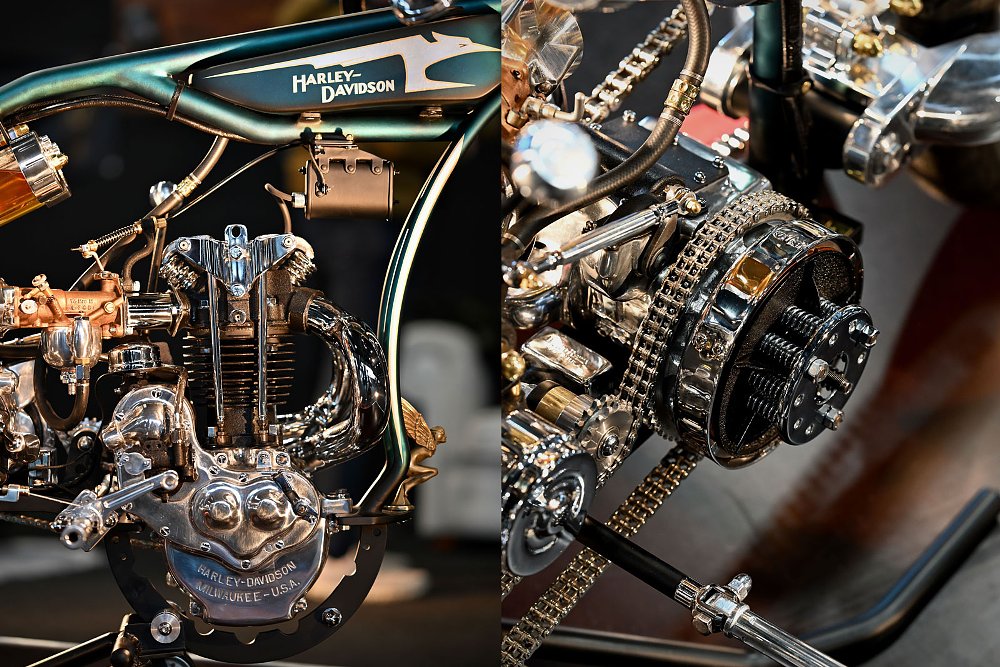
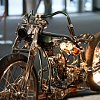
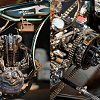
Damiano's vision for Nike was a modern tribute to the fabled board-track racers of the 1920s and '30s. At the heart of the build sits an authentic 1932 Harley-Davidson Model B Peashooter engine. Selected from Damiano's own collection, the racing-spec 350 cc single-cylinder unit was one of Harley-Davidson's early entries into competitive racing. Equipped with an overhead-valve design and other race-focused upgrades, the Peashooter was capable of reaching a very impressive 100 mph.
Supporting Nike's vintage powerplant is a carefully chosen mix of period hardware. Fuel is handled by a 1930s Schebler M88 carburetor paired with a Pachera STG air filter, while a WL gearbox, clutch, and primary drive complete the drivetrain. A bespoke exhaust system rounds out the engine package.
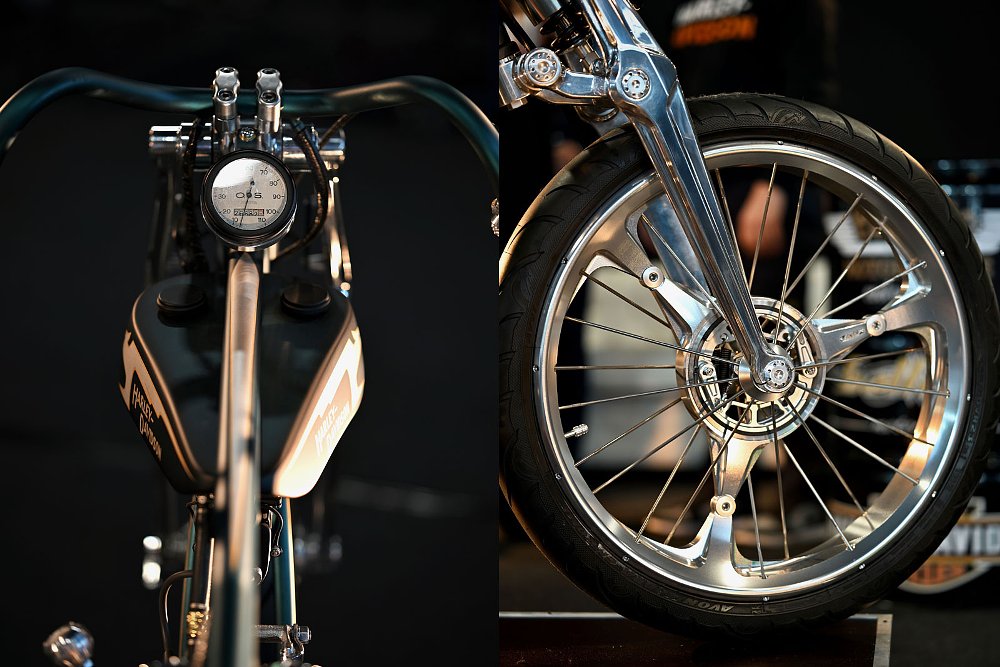
Surrounding the engine is a custom concoction of handmade and off-the-shelf parts. The minimalist custom frame uses the engine as a stressed member, allowing the surrounding structure to remain lean and visually light. Suspension duties front and rear are managed by components from FG Racing Parts, and the bike rolls on custom 23-inch Jonich wheels of Damiano's own design. Hub-mounted drum brakes and Avon tires back up the period-correct aesthetic.
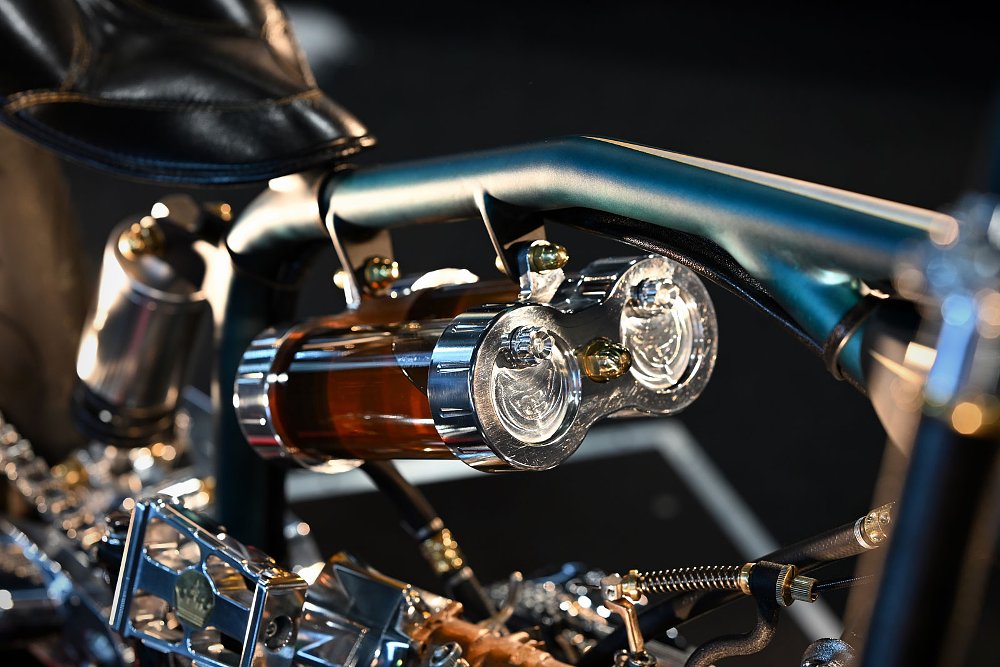
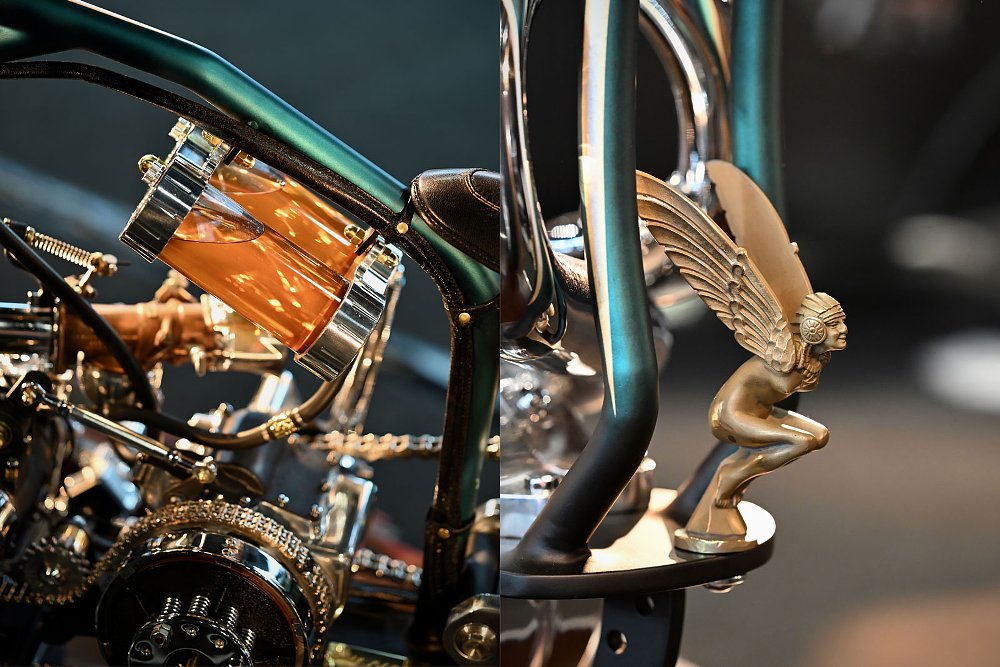
Sitting between the upper frame rails is a handmade board-tracker-style fuel tank, and behind it are twin transparent oil tanks developed by the mechanical specialists at Pachera STG. The bike's foot controls are by Pachera, too, created using a combination of 3D prototyping and CNC machining. The hand controls come from Custom Tech, while Mirko fabricated the handlebar in-house. A floating seat pan, upholstered by Luca Ronzoni of L.R. Leather, completes the look.
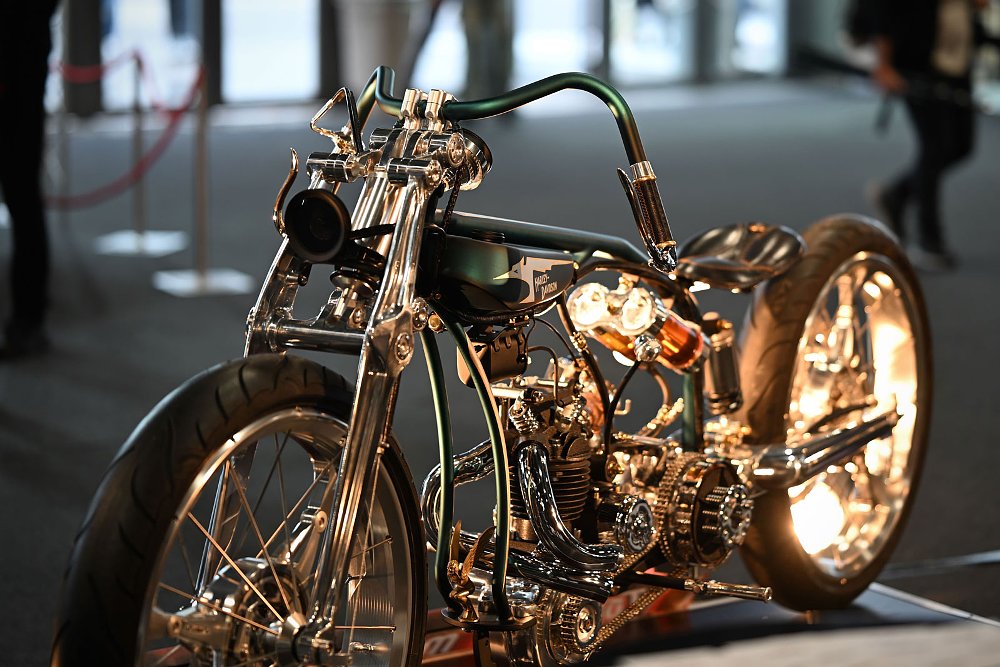
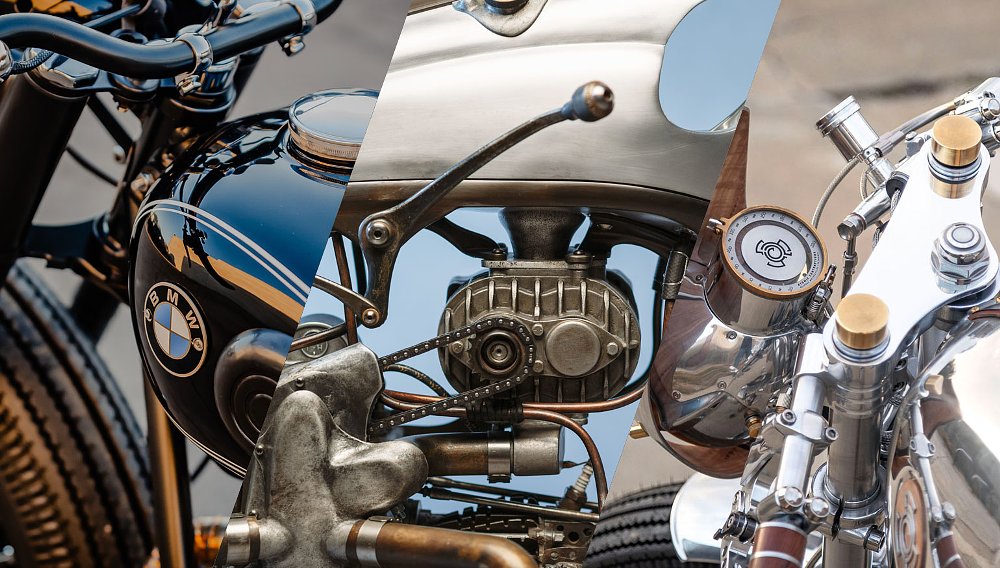
There's no denying this bike's engineering is impressive, but it's the finish that defines Nike. The handmade tank and frame wear a two-tone paint scheme that shifts between metallic green and blue in the light. Elsewhere, nearly every visible surface has been polished to a mirror finish or painstakingly wrapped in gold and silver leaf.
"Every weld, every joint, every surface required hours of manual work," Mirko explains. Judging by the response in Verona, that effort paid off. Nike stands as a faithful tribute to the glory days of board-track racing and a fitting reward for the dedication and craftsmanship that went into it.
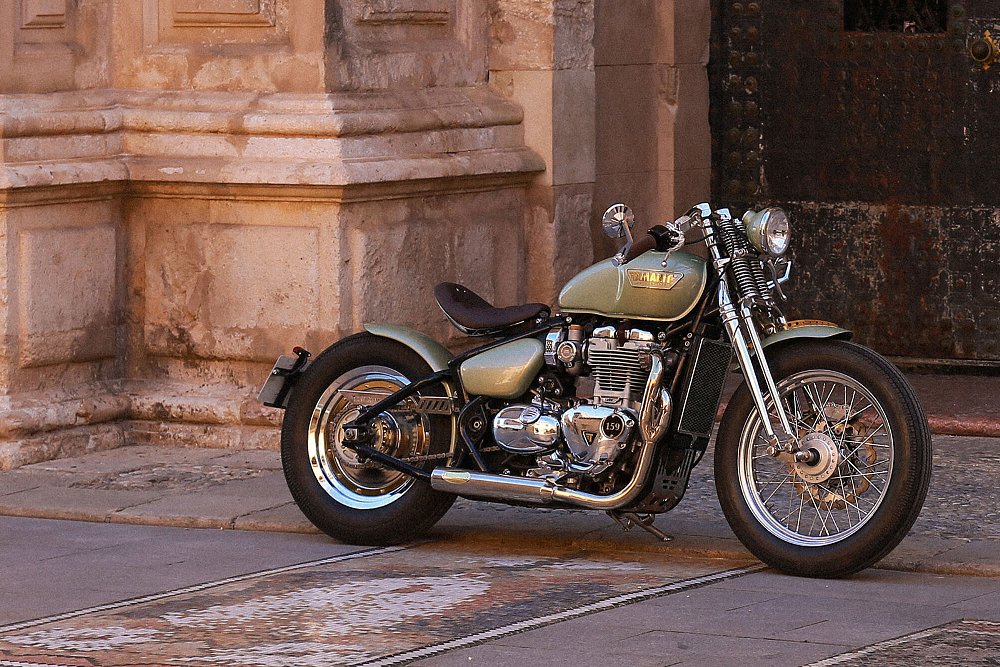
Tamarit Motorcycles Karma Triumph bobber
In the world of motorcycle customization, naysayers often dismiss radical builds as "form over function." Spanish workshop Tamarit Motorcycles (Instagram) isn’t afraid to embrace that opinion, and rightly so. With nearly 200 bespoke builds under their belt, they're obviously doing something right. Their latest creation, a Triumph Bobber named Karma, may be the purest expression of that philosophy so far.
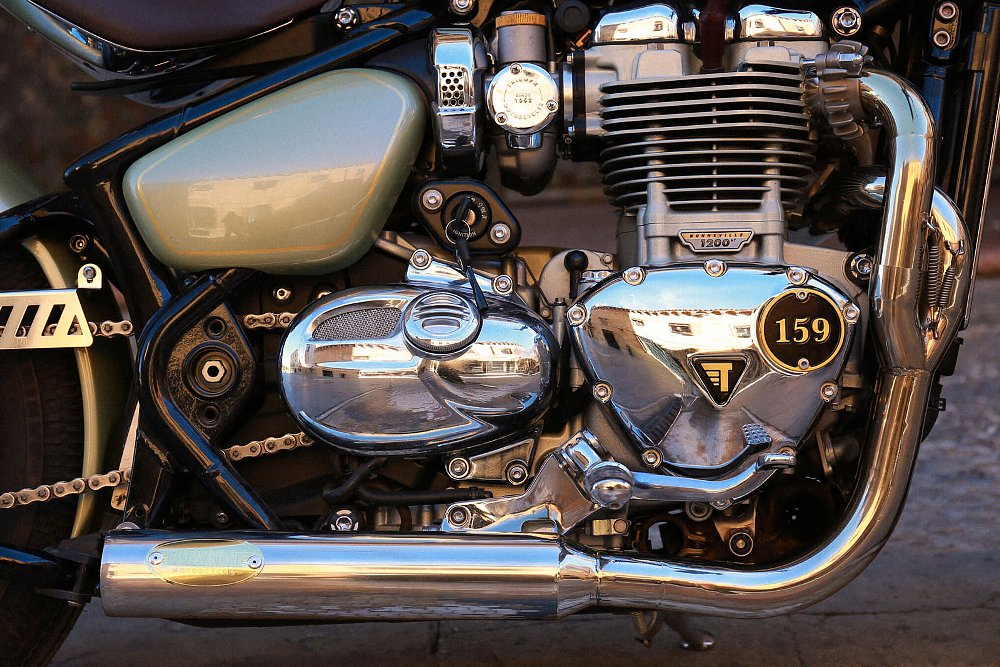
Commissioned as a one-of-one build for a fastidious client, Karma is the physical manifestation of its owner's vision. Tamarit describes the project as something far more deliberate than a typical custom build. "This motorcycle is a bespoke mechanical jewel, where every detail adds value and every finish builds character," they explain. "What's truly exclusive isn't manufactured; it's sculpted."
The project's foundation is a Triumph Bonneville Bobber 1200, chosen for its torquey performance and timeless stance. In typical Tamarit fashion, the engine's performance remains largely unchanged, limiting mods to a custom exhaust system and the addition of a springer front end. From a performance standpoint, the upgrades are subtle, but visually, this Bobber is far from stock.
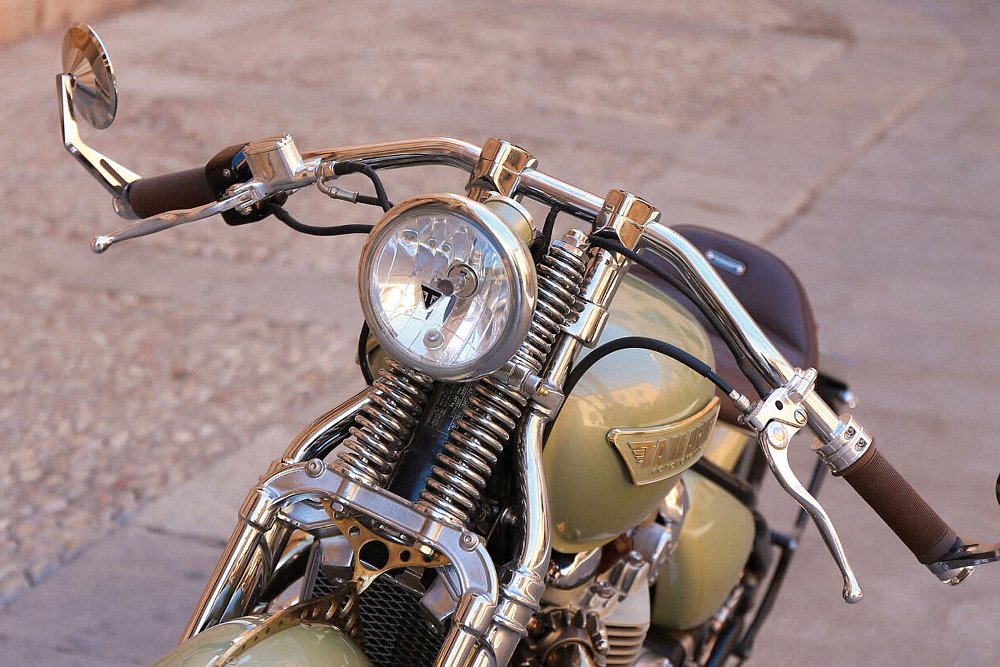
Stylistically, Karma draws heavily from the Baroque aesthetic, a period defined by dramatic ornamentation and unapologetic opulence. To capture that spirit, chrome dominates the build and has been used liberally on the engine, exhaust, front end, and wheels. Gold follows closely behind in the form of polished brass components and metallic paint accents. Tamarit describes the result as "mechanical jewelry," and bringing it to life required more than 450 hours of labor.
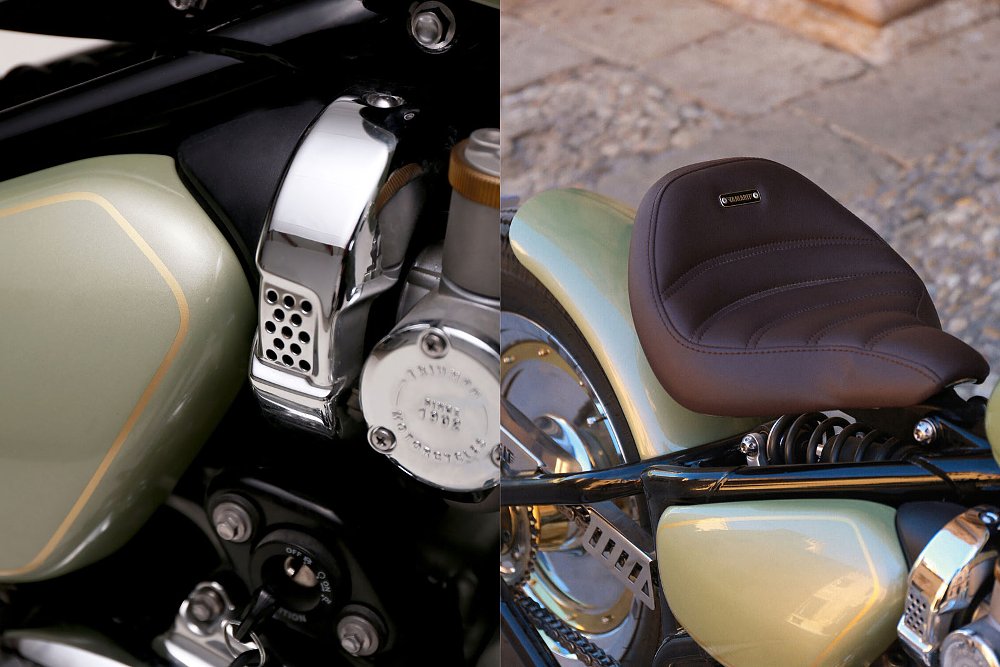
Behind all that shine sits a restrained olive-green paint scheme. The color acts as a subtle backdrop for the chrome and gold, but the color choice wasn't arbitrary. Historically, green is associated with wealth and status, reinforcing the Baroque theme that defines this creation.
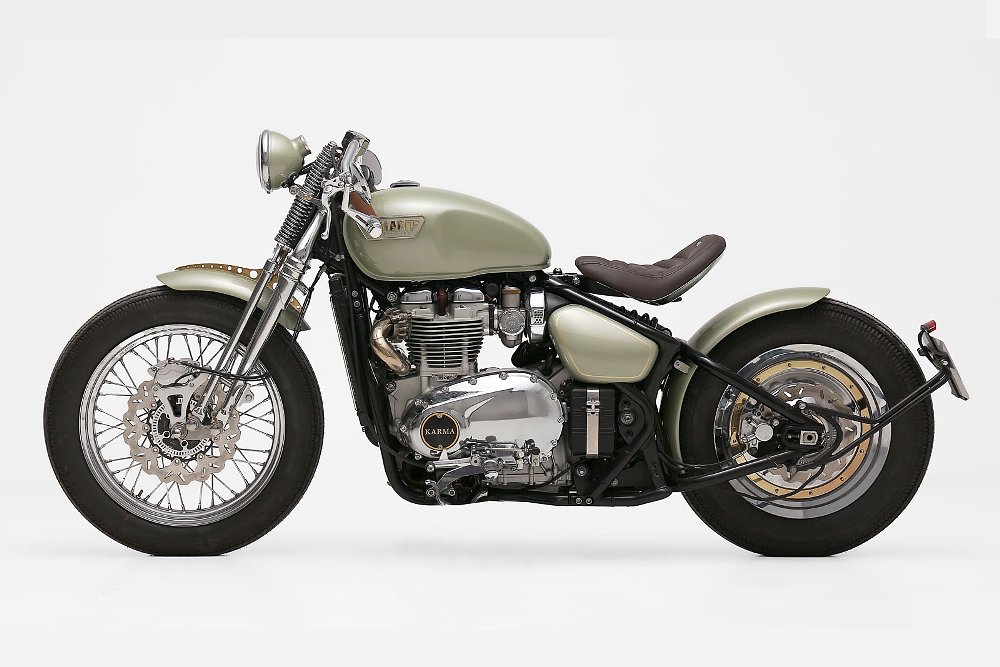
In contrast to the styling, comfort was never the priority. Karma's riding position reflects the bike's uncompromising visual agenda, most notably through a low, narrow clubman-style handlebar that forces the rider into a crouch.
To counter all the bling, accessories are refreshingly minimal. Motogadget components manage the bike's electrical systems and a Motoscope Classic speedometer has been neatly integrated into the headlight, leaving the cockpit clean and uncluttered. The license plate sits on a basic bracket perched behind the rear wheel, and the bulky standard switchblocks are replaced by simplified aftermarket alternatives.
As with all Tamarit builds, Karma is fully engineer-certified and homologated for road use. So despite its unapologetic focus on aesthetics, it was built to be ridden, exactly as a custom motorcycle should be.
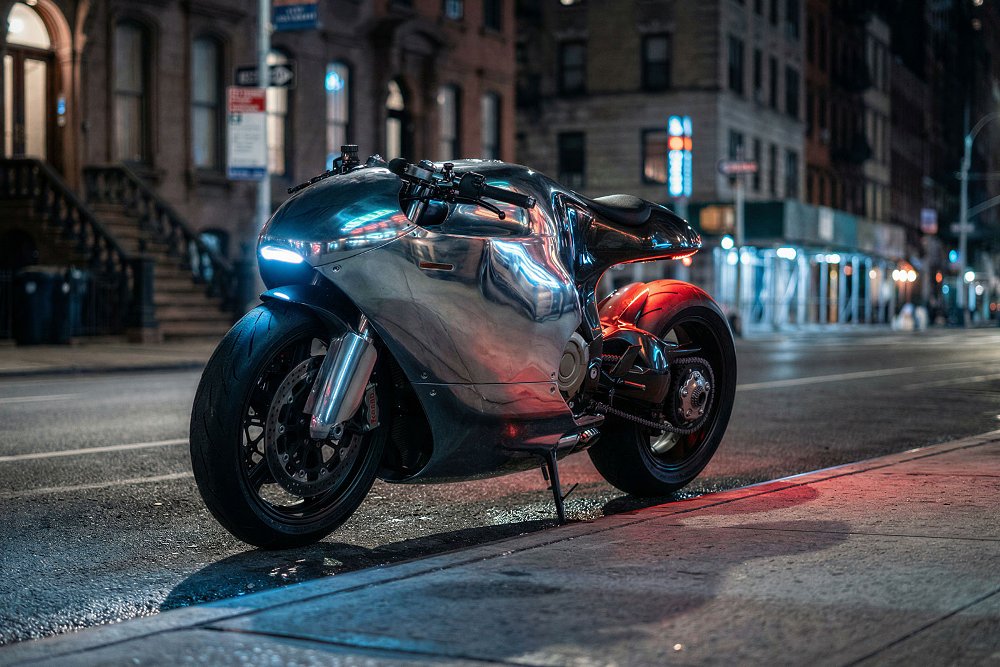
Bandit9 Ducati 821
Growing up in the 1980s, I was fascinated by sci-fi films of the era. While the stories were entertaining for the most part, what really captured my imagination was how they envisioned the future: its fashion, technology, and especially its vehicles. Sadly, much of what those films promised hasn't yet materialized. I'm still waiting for my hoverboard, flying car, and lightsaber. However, thanks to creative minds like Daryl Villanueva and his Bandit9 workshop (Instagram), we get a glimpse of that imagined future in the present day.
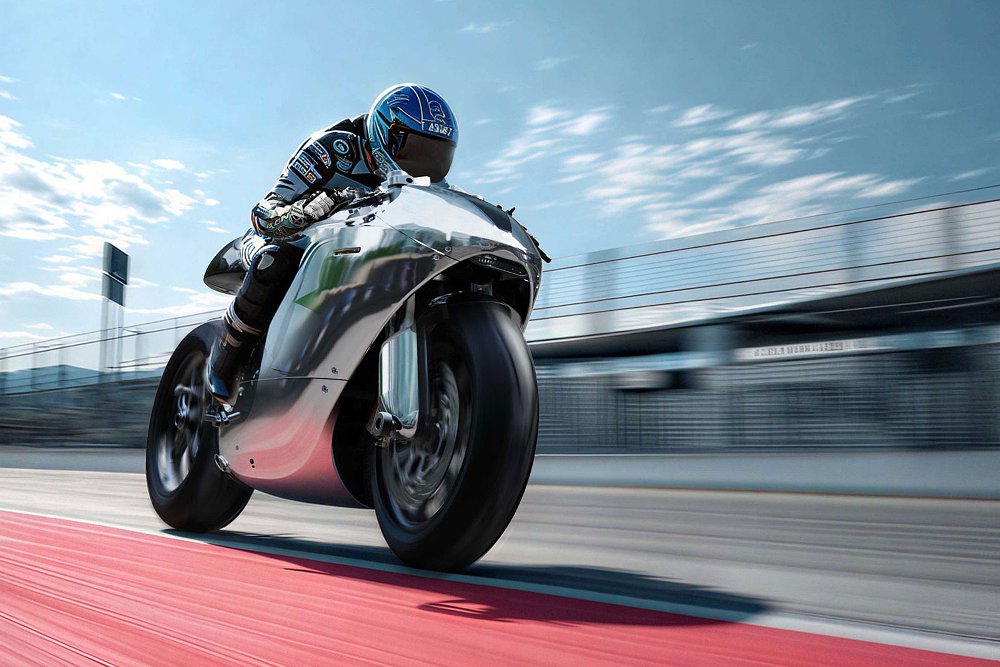
Bandit9 has built a reputation for transforming everyday motorcycles into machines that look as though they've travelled back in time. Their trademark style centers on streamlined forms and the use of modern materials, producing bikes that feel more like rolling sculptures than practical transport. This bike, the Ducati 821, is the workshop's latest creation. Limited to just nine units and priced at $49,900 USD, spotting one on the street would be a rare treat, but simply knowing they exist is enough to stir the imagination.
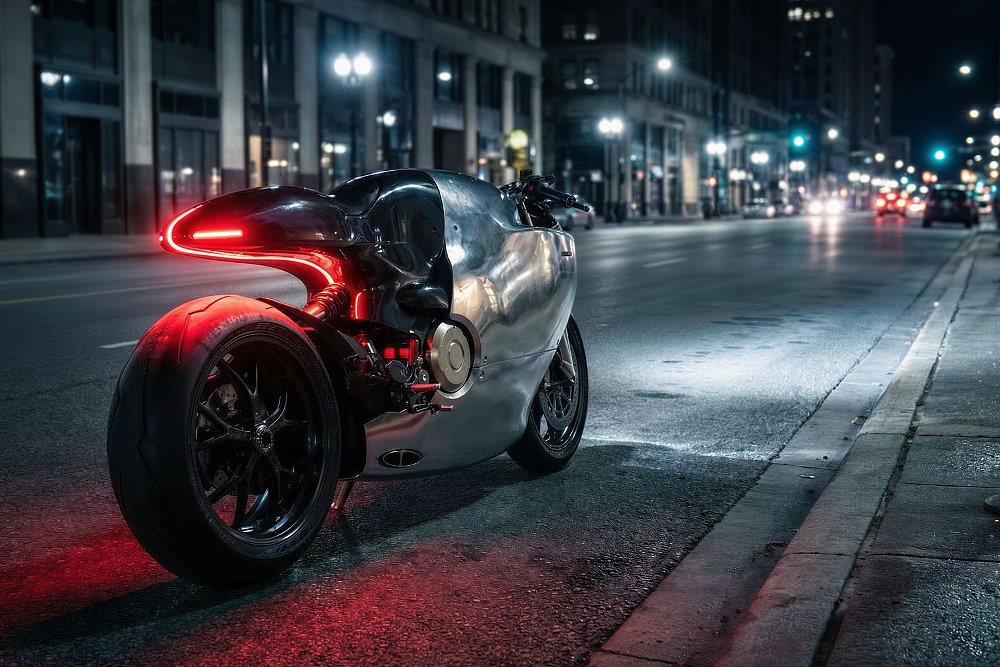
Underneath the radical styling lies the heart of a Ducati Monster 821. Powered by a liquid-cooled 821 cc Testastretta L-Twin producing around 110 horsepower, the 821 can launch from a standstill to 60 mph in roughly 3.3 seconds and reach a top speed of around 225 km/h (140 mph). Known for its nimble handling, the middleweight Monster has earned a reputation as a "king slayer," thanks to its ability to shame larger bikes in the twisties. But visually, it remains very much a traditional Ducati Monster, and that's where Daryl saw an opportunity.
"The Ducati Monster 821 was already performance-ready. We gave it presence," he explains. "What defines our work is not the specification. It's the time it takes to remove what isn't necessary. We refine each line until nothing more can be taken away."
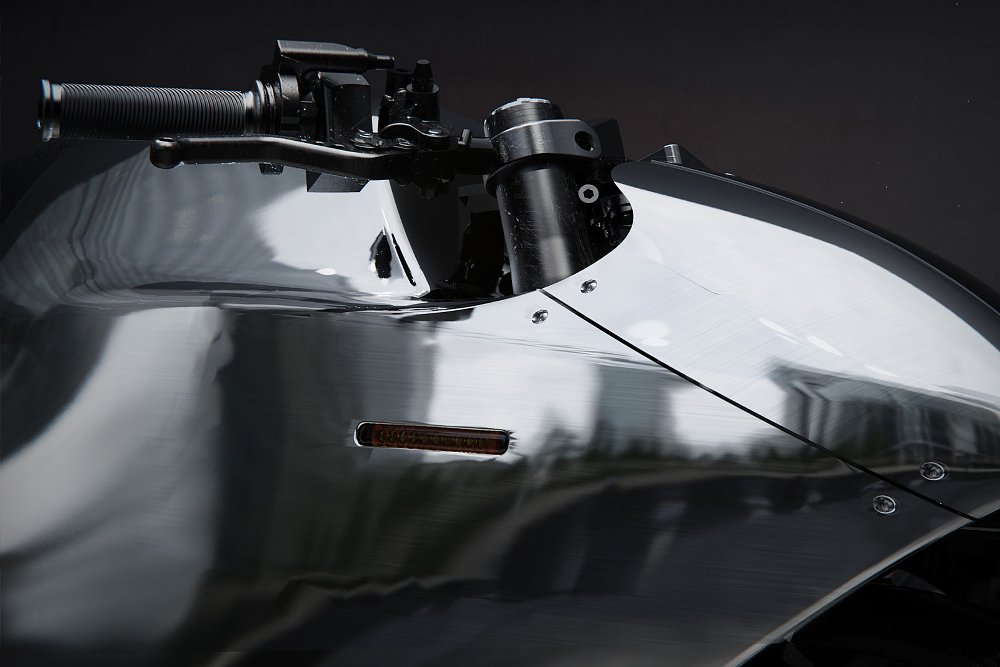
Working with that philosophy, Daryl and his team stripped away the Monster's factory bodywork entirely. In its place sits a hand-formed fairing crafted from aerospace-grade aluminum that wraps around the bike's front half. Out back, a carbon fiber tail unit replaces the stock rear section, seamlessly blending with the metallic front end. Together, the two elements create a single, fluid form that would have looked right at home on the set of Ridley Scott's "Blade Runner."
Maintaining that uninterrupted silhouette was a priority throughout this build. Wherever possible, Bandit9 has concealed or integrated the bike's functional elements into the new bodywork. The exhaust, for example, is almost completely hidden, only visible through a discreet vent at the rear of the belly pan. The headlight has also been absorbed into the bodywork, only visible when switched on.
The most striking integration, however, appears at the rear. Alongside two horizontally mounted taillights that double as turn signals, a vertical LED strip runs from the tip of the tail down to the top of the rear shock. The glowing line that illuminates the rear wheel spawns memories of the lightcycles from the 1982 sci-fi classic "Tron."
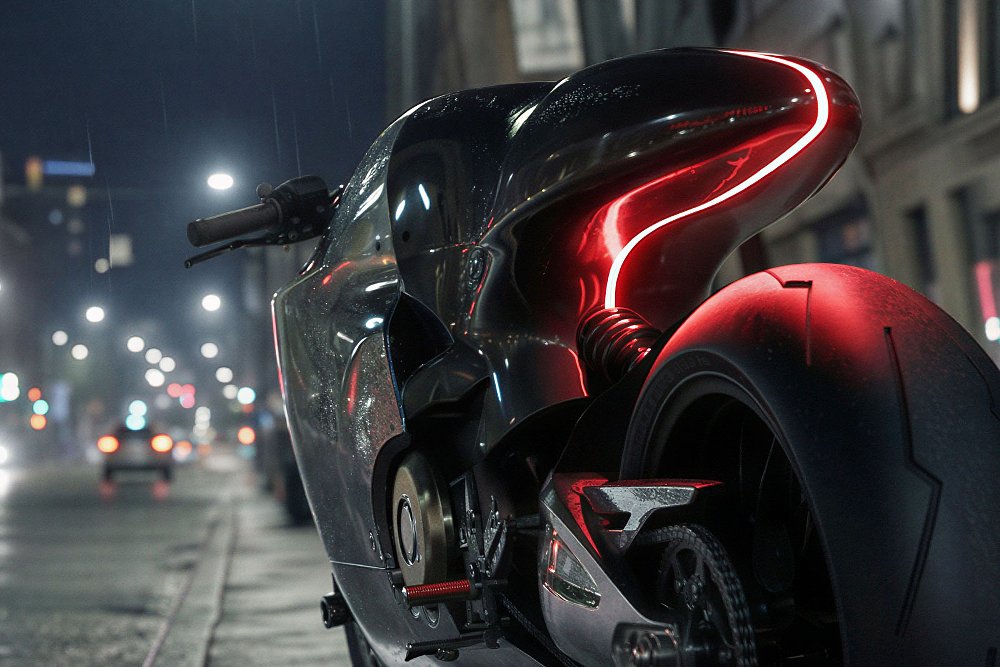
Despite its futuristic facade, Bandit9's Ducati 821 is more than just a showpiece. Beneath the sculpted exterior sits a thoroughly capable performance package, including fully adjustable Sachs suspension, a Brembo braking system with ABS, and 17-inch wheels wrapped in sticky sport rubber.
The result is a machine that blends Ducati's proven performance with Bandit9's unmistakable design language. It may look like a prop from a science fiction film, but this limited-edition custom is very real, and ready to deliver a riding experience that's out of this world.