Shop by Vehicle
 Track Order
 Contact Us
If you asked most riders in the United States or Europe what the future of motorcycles looks like, compressed natural gas probably wouldn't make the list of alternatives to the gasoline-powered internal combustion engine.
Electric? Sure.
Hybrid? Maybe.
Hydrogen? If we see enough concept-bike press releases.
CNG is usually associated with city buses and municipal fleets, not something you'd swing a leg over. In India, that assumption doesn't hold.
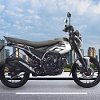
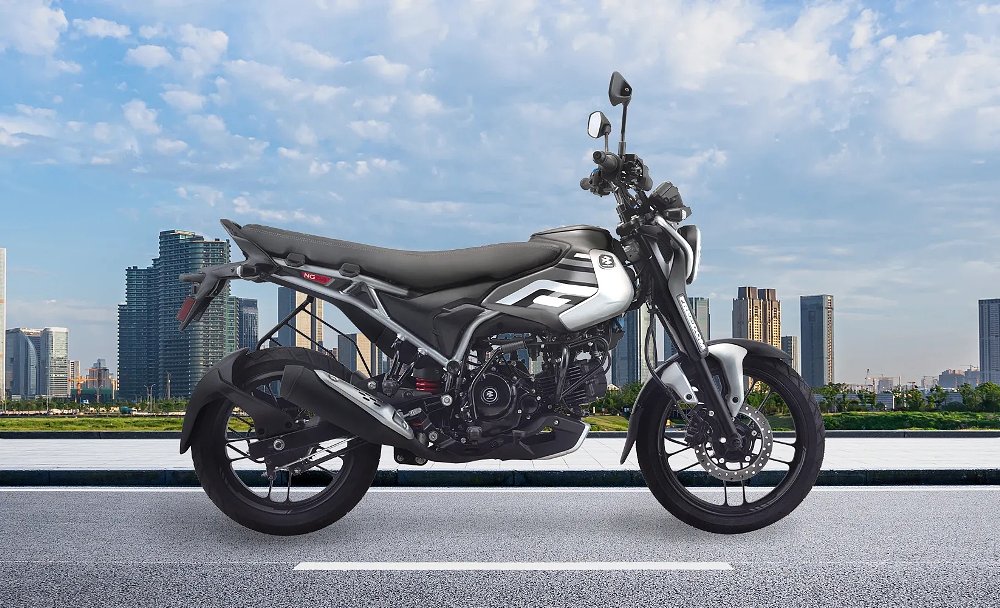
Bajaj's Freedom 125 is the first mass-produced motorcycle designed to run primarily on compressed natural gas, with a small petrol tank as backup. It is an alternative to the gasoline engine that has powered motorcycles for more than a century, but it isn't marketed as futuristic. It isn't positioned as disruptive technology. It's presented as something much simpler: a way to lower the cost of riding every day.
To understand why that matters, you have to understand how motorcycles are used in India, the world's largest motorcycle market.
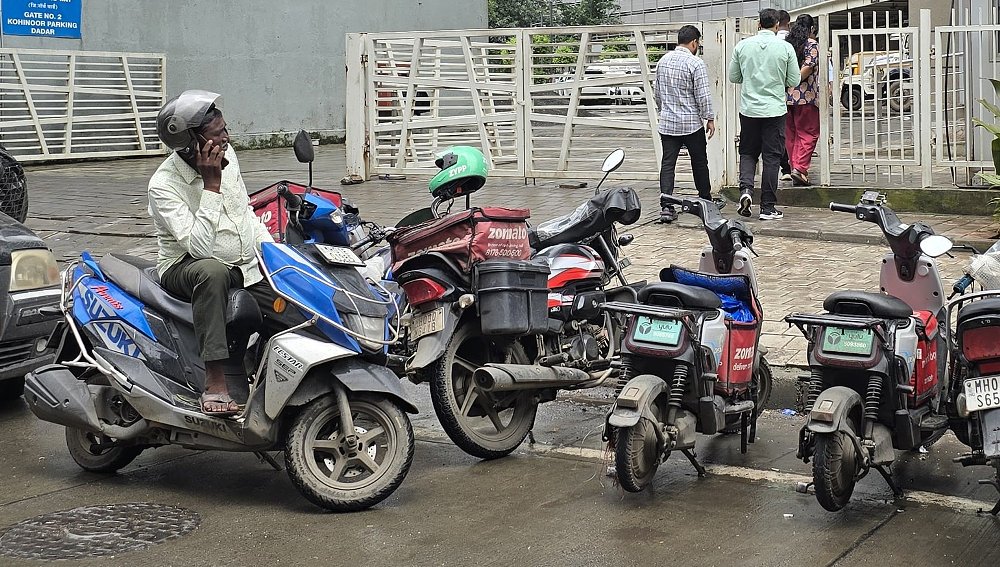
In much of India, a 100 cc to 125 cc motorcycle isn't a second vehicle. It's the vehicle. It carries office workers through traffic, delivery riders across entire cities, and small business owners between job sites. For millions of riders, it's the most affordable way to get around.
When motorcycles are transportation first, operating cost becomes more important than horsepower, styling, or brand heritage. Operating cost is the Freedom 125's selling point.
How the dual-fuel system works
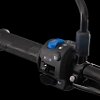
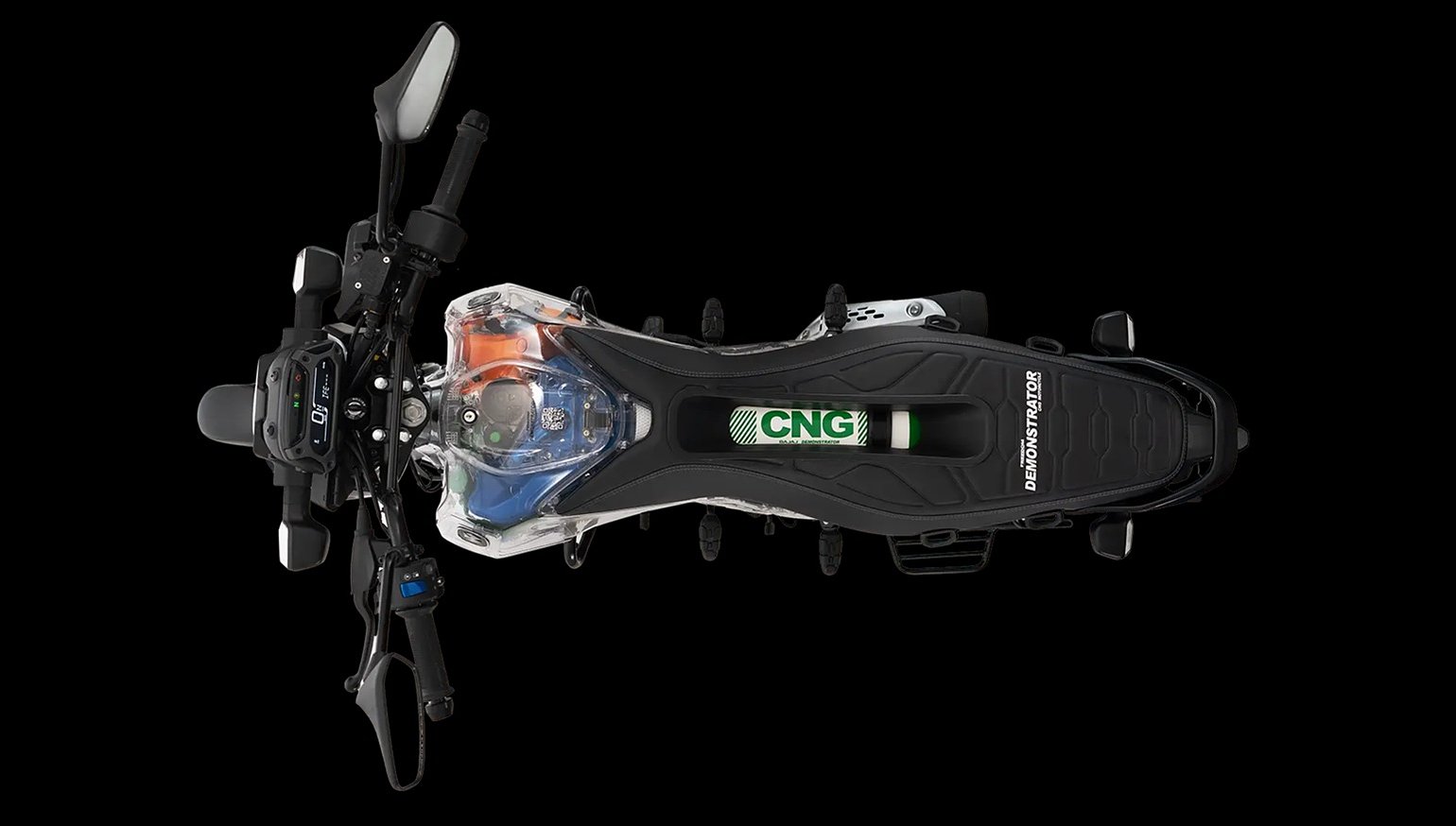
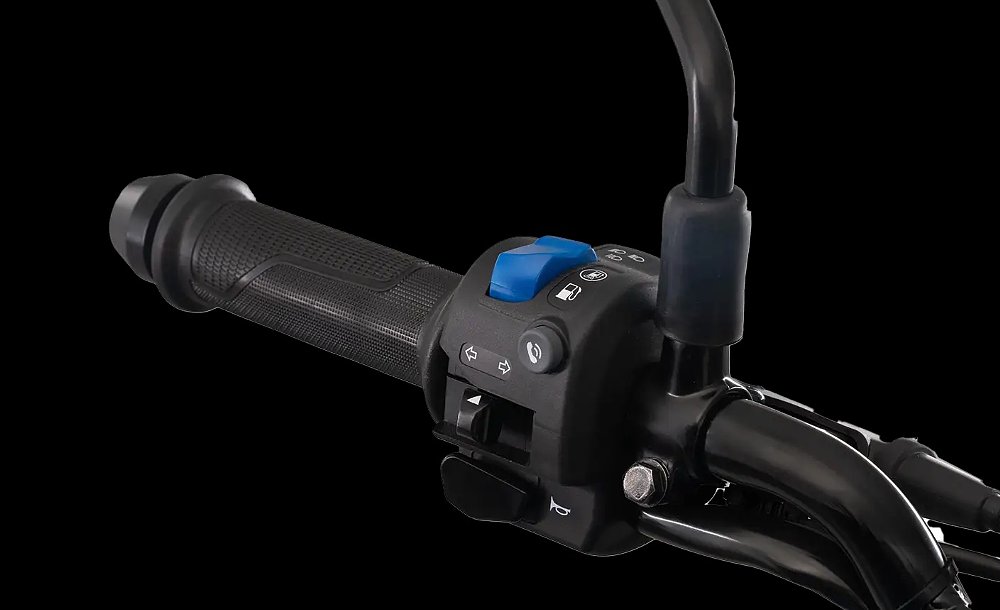
The Freedom 125 carries a two-kilogram CNG cylinder mounted beneath the seat and a small petrol tank above it. CNG serves as the primary fuel. Petrol acts as reserve. A switch on the handlebar allows the rider to choose the fuel mode, and if CNG pressure drops too low, the system automatically transitions to petrol.
Unlike electric motorcycles and scooters, there's no electric motor, no battery pack, no regenerative braking. Mechanically, it remains a conventional 125 cc single-cylinder engine, simply calibrated to operate on two fuels.
In motion, the bike behaves much like any other small commuter. Power output is modest, just under 10 horsepower, which is typical for the segment. Acceleration and top speed are adequate for city use. The experience doesn't feel experimental.
Of course a CNG motorcycle only makes sense if riders can refuel easily. In India's major cities, that condition is largely met. CNG stations serve taxis, buses, and passenger cars, and the Freedom 125 taps into that established network. In a place like the United States, where that infrastructure is not already in place and availability of CNG is limited, a CNG motorcycle would be impractical.
To refuel the Freedom 125, the rider locks the nozzle onto the valve of the CNG tank, the tank pressurizes, and fueling stops automatically once full. It takes longer than topping off with petrol, but nowhere near as long as charging an electric scooter. In larger cities where CNG adoption is common, stations are integrated into existing petrol pump networks, though queues during peak hours are part of the reality. To allay concerns about the safety of the pressurized CNG tank, Bajaj issued this video showing various tests, including running over the motorcycle with a truck.
Bajaj claims a combined range of more than 300 kilometers (186 miles) using both fuels. Most of that range comes from CNG.
The economics that make the dual-fuel motorcycle work
The Freedom's strongest argument isn't novelty. It's arithmetic.
Petrol in India is not inexpensive, typically selling around ₹95 to ₹105 per liter, depending on the state. (That works out to more than $4 per U.S. gallon.) CNG, by comparison, often falls in the ₹75 to ₹90 per kilogram range in major cities, which is a lower price per unit of usable energy. Depending on local pricing and riding conditions, operating costs can fall by roughly a third when using CNG compared to running solely on petrol.
For riders covering 40 to 60 kilometers (25 to 37 miles) a day, which is not unusual in Indian cities, that difference compounds quickly over time. For delivery riders logging higher mileage, the savings are even more pronounced.
Electric two-wheelers also promise low running costs, and in some cases they deliver. But they introduce different trade-offs: higher upfront prices, battery replacement concerns, and charging logistics that vary by location. The Freedom's approach keeps the familiar refueling model intact while reducing day-to-day fuel expense. In daily use, it behaves like other conventional commuter motorcycles sold in India. It doesn't change how you ride. It changes how much you spend doing it.
A secondary benefit: Emissions
Another issue, especially in major cities in India, is emissions. CNG burns cleaner than petrol in terms of particulate matter and certain tailpipe emissions. That's part of the reason why public transportation fleets in India transitioned toward CNG years ago, just as city buses in other parts of the world run on CNG. While the environmental benefit exists, it isn't the headline. The Freedom's primary selling point and its marketing center on cost and practicality.
Global discussions about alternative fuels often frame electrification as the inevitable destination. In many markets, that trajectory makes sense. But not every region approaches the same problem from the same angle. In India, where small motorcycles remain primary transportation for millions, the challenge isn't necessarily eliminating internal combustion, but reducing the cost of using it.
The Bajaj dual-fuel system doesn't promise silent operation or zero emissions like electric vehicles, but it does provide lower daily expense and some environmental benefits. In a country where millions depend on two wheels every day, it's an alternative that fits its environment.
Image Gallery