Shop by Vehicle
 Track Order
 Contact Us


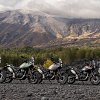
Columns of ash climb into the Sicilian sky, purging from the gaping maw of Mt. Etna. Lava fields tentacle down the mountainside, cooled and hardened to an igneous icing on the Earth’s crust.
Nothing survives the paths of these flows, but the volcanic rock they extrude is equally life-giving. Vineyards of gold and auburn streak the landscape. Pine and birch trees canopy the winding roads. The land is both barren and fertile, both rugged and idyllic. Its harshness is only matched by its beauty. What better place to test Royal Enfield’s new Himalayan 750?
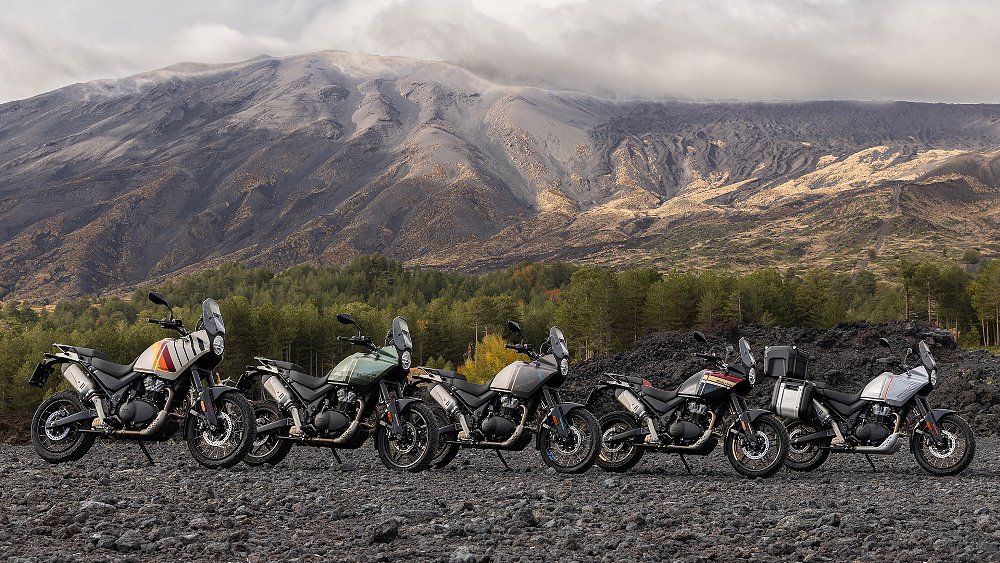
What better place to plow through trails of pyroclastic rock and basalt sand? If only the middleweight Himmy shared those aspirations. You see, the 750 is more attuned to whipping around paved switchbacks, not berms. Any disappointment with that fact isn’t entirely justified. There were signs, after all.
Off-road optional
The Himalayan 750 is one of the worst-kept secrets this side of Watergate. Rumors of the project’s existence date back to 2020. Few details remained under wraps, too. Spy shots produced throughout this period often showed a test mule rolling on a 19-inch front wheel and a 17-inch rear wheel. Its displacement was common knowledge well before RE acknowledged the increase. So it was no surprise when the seven-fiddy rolled out in adventure-touring guise.
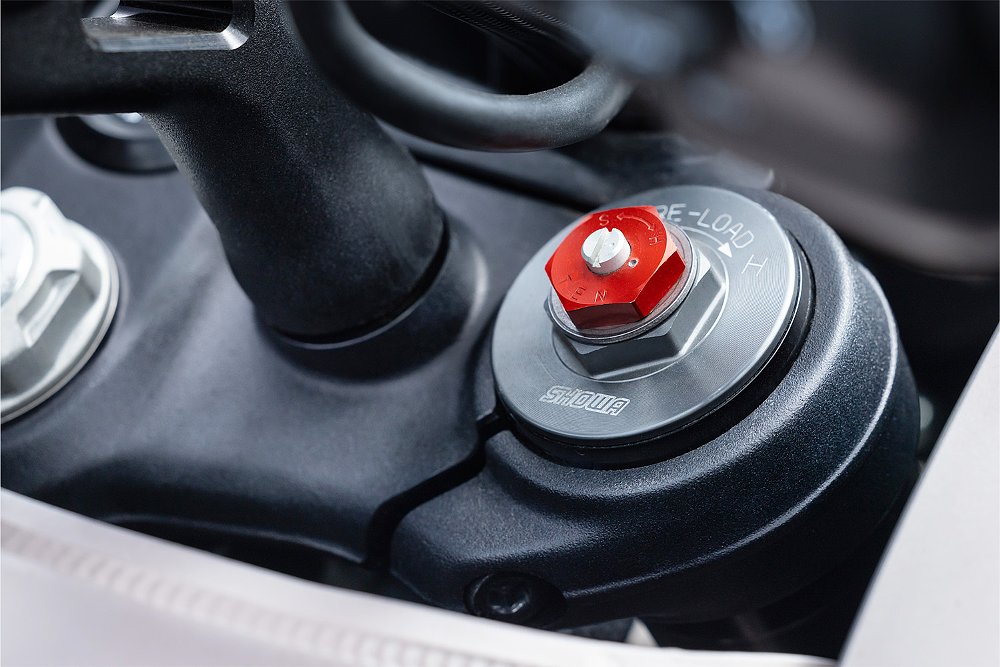
Nowhere is that more evident than the model’s chassis. The 43 mm Showa USD fork touts preload, compression, and rebound adjustability, but its travel only totals 7.5 inches. The preload- and rebound-adjustable monoshock offers even less, at 6.9 inches. As expected, a 19-inch front and 17-inch rear hoop flank the Himalayan, available in both cast and tubeless spoke configurations. The tires they come wrapped in are decidedly road-biased, too.
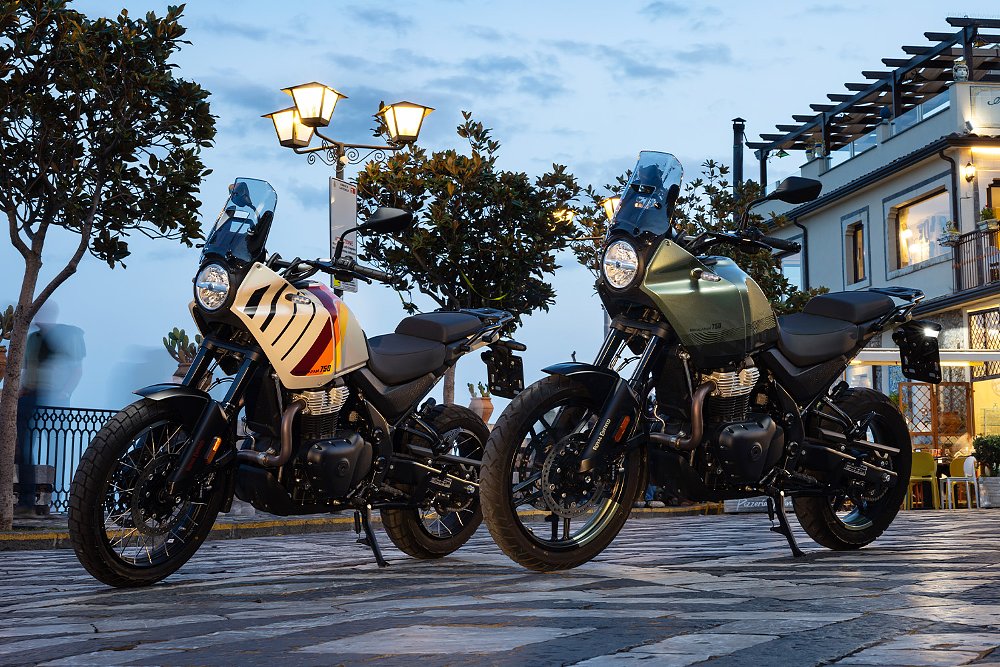
Those provisions produce a ground clearance that isn’t high, but isn’t low, at 8.1 inches. The wheelbase isn’t long, but it isn’t short, at 59.9 inches. The rake isn’t relaxed, but it isn’t aggressive, at 27.9 degrees. The curb weight, however, is indisputably hefty, at 493 pounds (claimed). Good thing the seat height rests at a manageable 32.1 inches.
Anchoring this chassis is a box-section spine frame — one that shares little with the double-cradle unit underlying the brand’s 650 Twins. Functioning as a stressed member of that skeletal structure is Enfield’s redesigned parallel twin. The mill’s stroke remains unchanged at 67.8 mm, but its bore jumps from 78 mm to 83.5 mm, resulting in a 743 cc displacement. Its output grows proportionally, too, now rated at 54.3 horsepower (at 7,250 rpm) and 46.5 foot-pounds (at 5,000 rpm).
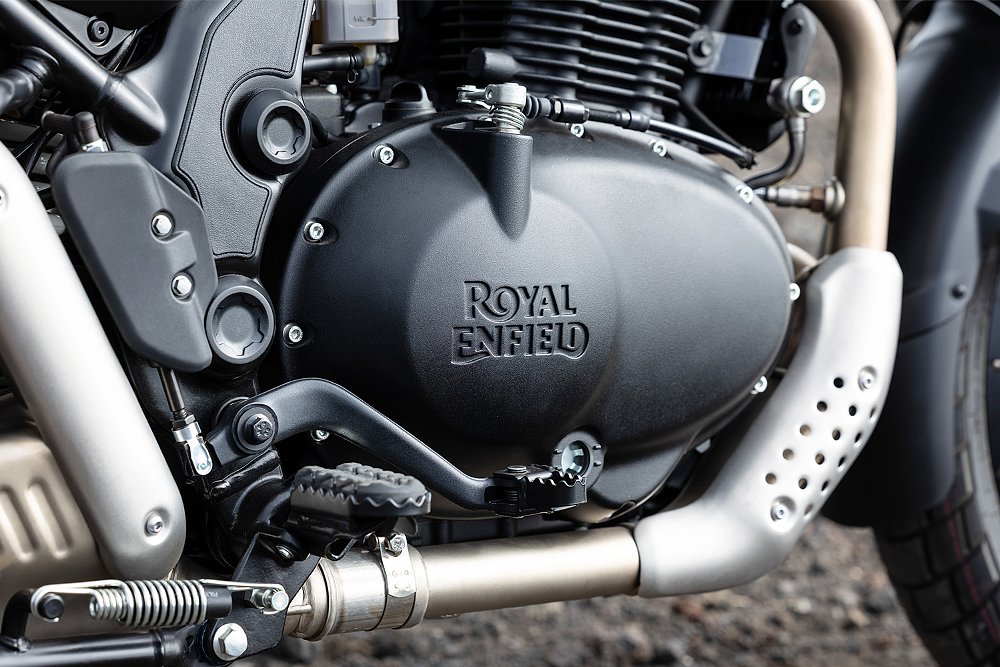
That 743 cc powerplant is just one of many firsts for the Indian OEM. The Himalayan is the first Enfield with a six-axis IMU, which oversees cornering ABS and lean-reliant traction control. It’s the first Enfield with cruise control. Riders can even personalize one of the bike’s five ride modes (Road, Road Sport, Rain, Trail, and Custom), another first for RE. But those innovations are nothing more than feathers in the firm’s cap if they don’t perform on — and off — the Sicilian roads laid before us.
Bon jornu
A layer of dew blankets the manicured lawns. The late-fall sun looms low over the Ionian Sea. The skies above are cloudless, but thunderheads gather in the distance. It's a cool morning. Not cool enough to see your own breath, but cool enough to see vapor billow from the Himalayan’s exhaust. Its punchy, baritone idle contorts into a bellicose bark with each twist of the throttle.
There are 90 miles of twisty roads ahead, more than 3,000 feet to climb, and one big storm cell to outrun. There’s little time to waste. Tossing a leg over the Himmy, I’m immediately struck by how low the 32.1-inch seat height truly is. Driving that point home is the fact that the soles of my boots are planted firmly on the ground. But that comfortable standover height isn’t without a drawback. It comes at the cost of legroom. My knees tucked high and tight, the cockpit isn’t cramped, but it sure is snug. Anyone with an inseam longer than 32 inches might find it increasingly so.
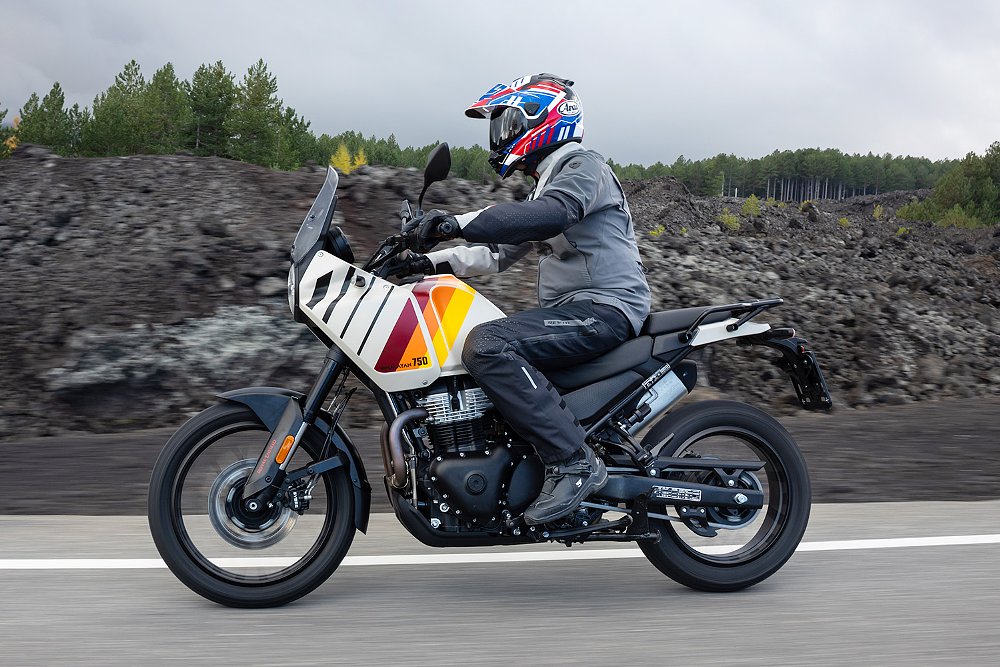
In fact, every aspect of the riding position lives in that space between relaxed and compact. The handlebar offers a mild upsweep, but pullback risers only pushed them closer. My upper half was nearly upright, but my backside pressed against the pillion pad. Adjustment room is limited on the schmedium-sized ADV, but the pocket it provides can accommodate most average-sized Americans.
With my arches on the pegs and my mirrors adjusted, it was time to mosey up the mountain. Which really means it was time to wring out Royal Enfield’s updated engine. The Chennai-based marque will tell you that 75% of the mill’s max torque is available before 2,000 rpm, but the response at the throttle says otherwise. Below 4,000 rpm, roll on is slightly sluggish. The p-twin’s prime performance lies beyond that threshold, but its power curve resembles the surge of a concave ramp, not a linear slope of an inclined ramp.
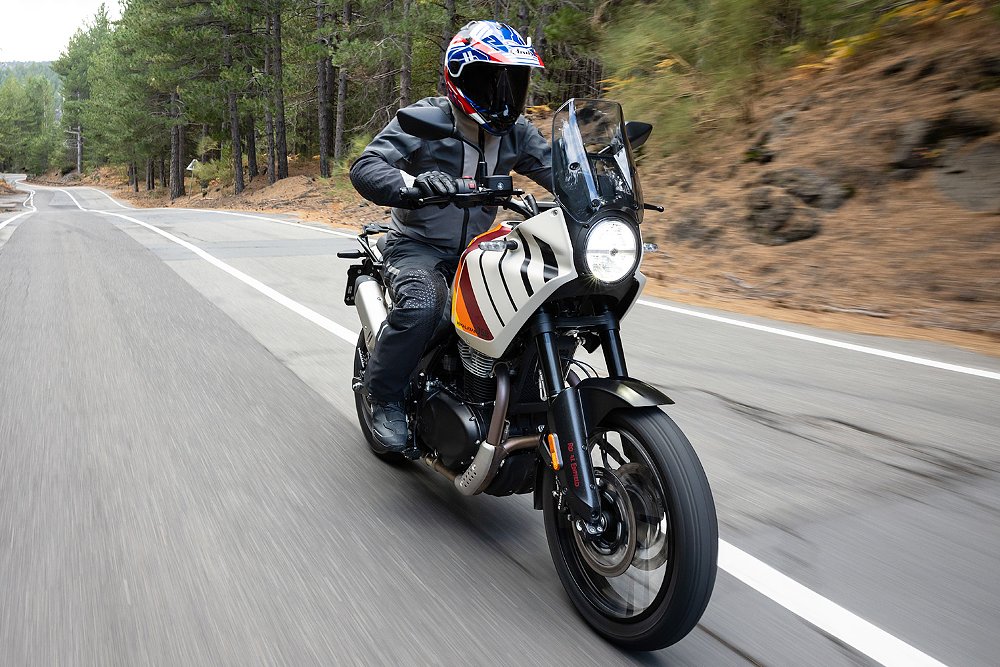
Keeping the engine within that power band wasn’t all that challenging, as long as I remained vigilant with my pre-cornering downshifts. I encountered more issues, however, with the Himalayan’s rev ceiling. The two-pot powerplant is nearly null of vibes. Well, bothersome ones, at least. Not once did I grimace at the pulses coursing through the hand grips, tank sides, or foot pegs. Now, that’s a benefit when you’re covering kilometers at a constant clip, but not when climbing the gears at a frenetic pace.
Without intensifying vibrations to cue my shifts, without signs of engine distress to serve a warning, I frequently ran into the Himmy’s redline at just over 7,000 rpm. I didn’t slowly approach the limiter, either. I slammed into it. Repeatedly. I wasn’t the only rider in our group to do so. It was practically contagious. Over time, I learned to hasten my shifts, but that also truncated the already narrow powerband. With that said, it’s important to acknowledge that the oil/air-cooled block isn’t a hi-po contender. It favors the sensible over the sensational, simplicity over speed. My experience proves it should be ridden as such. If only the bike’s handling prowess didn’t beg for a higher-performing partner.
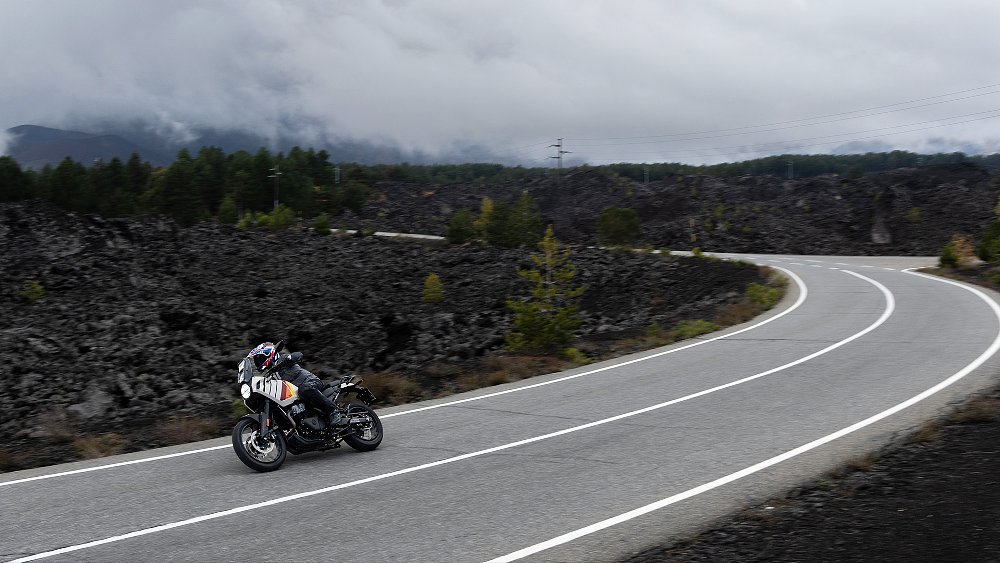
The Himalayan doesn’t just corner well for an adventure bike. It corners well for any street bike. Be it third-gear chicanes or first-gear bends, wide-open sweepers or brake-heavy hairpins, the Himster tracked true from initial turn-in to corner exit. Mid-corner corrections were effortless, hardly upsetting the chassis. Not even wet conditions could ruffle its resolve, with the tires providing sufficient road-holding grip. Plus, maneuvering at slow speeds was a cinch, thanks to its balanced chassis and ample steering sweep.
The only lumps in the Himalayan’s grits were its brakes. The ByBre system is the first dual-disc setup on any Royal Enfield. That’s a laudable milestone. I only wish the calipers pinching the twin 280 mm front rotors were four-piston units, not two-piston ones. On several occasions, I nearly rear ended a colleague as we barreled into a sharp blind curve. For the majority of the Himalayan’s purposes, the brakes offer sufficient performance. Just don’t expect the feel, feedback, and bite of top-shelf componentry. I wish I could find a similar silver lining with the bike’s electronics.

Glitch mode
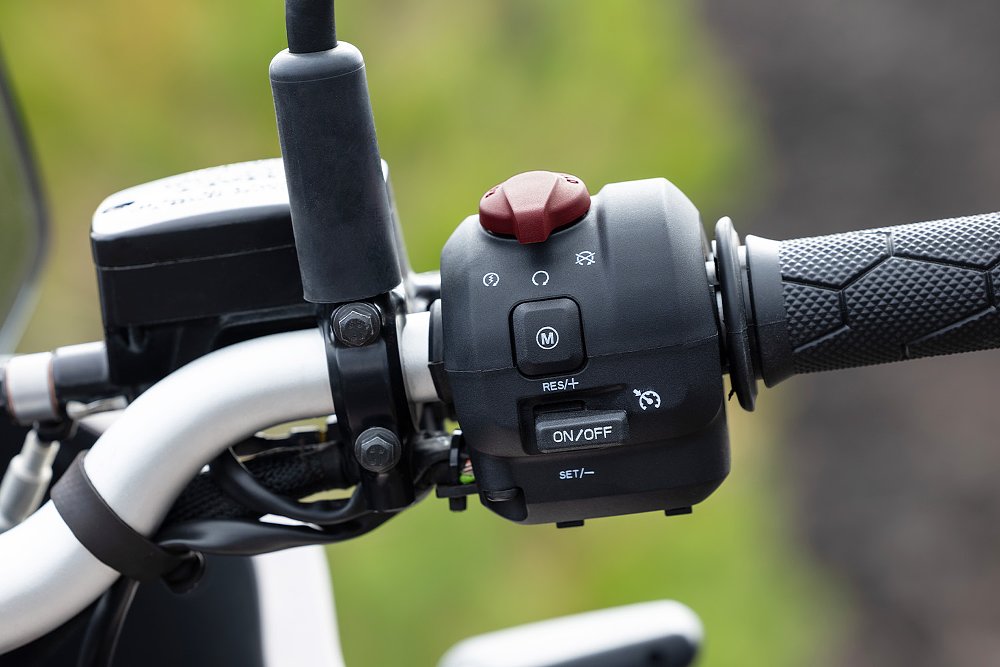
Royal Enfield took a giant step forward by adopting IMU-based rider aids, and I have few bones to pick with its lean-gauging ABS and TC. Neither is intrusive. Neither lacks sophistication. Where my concern lies is with the brand’s ride mode selector. The 750 utilizes the same dedicated Mode button found on the Himalayan 450, and, unfortunately, it’s still plagued by many of the same functional foibles.
Enfield personnel assured our group that users could change ride modes on the fly. That’s technically true, but there’s also caveats that went unmentioned. For instance, I cycled through ride modes while on the go, but the system only registered the change if I rolled off the throttle for three seconds. Oftentimes, our group’s pace didn’t afford that process enough time, with the system then reverting to the previous setting. Aside from that aggravating result, the protocol renders the rider a sitting duck, which is especially dangerous when riding amongst traffic.
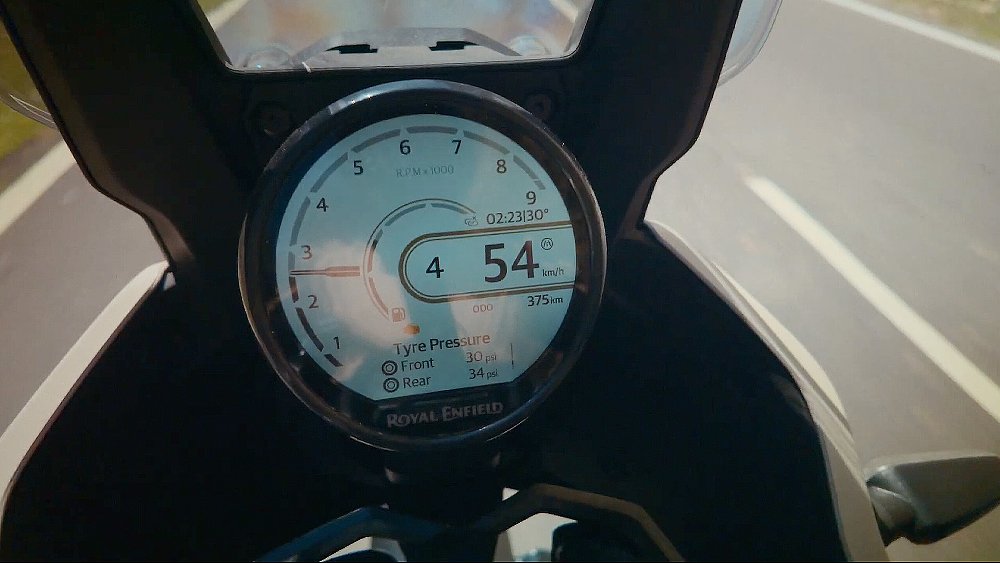
Later in the day, the mode button stopped scrolling through the ride modes altogether. Instead, the system instructed me to cycle the ignition before I attempted another change. Uffa! To sidestep the matter, I limited myself to one ride mode and one ride mode only, which defeats the purpose of offering a wealth of options. How ironic.
Navigating the 750’s user interface was equally irksome. The Home button located at the back of the left switchgear is a prime example. It doesn’t call up the main menu, but functions as a back button instead. Talk about confusing. Worst yet, my particular unit didn’t have a functioning horn. Now, the bikes tested were pre-production units, but I’ve experienced similar tech-based snafus on different Enfields now. It’s a blemish that overshadowed an otherwise enjoyable ride experience. That enjoyment isn’t exclusive to the bike’s on-road presence, either.
Dirt dalliances
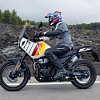
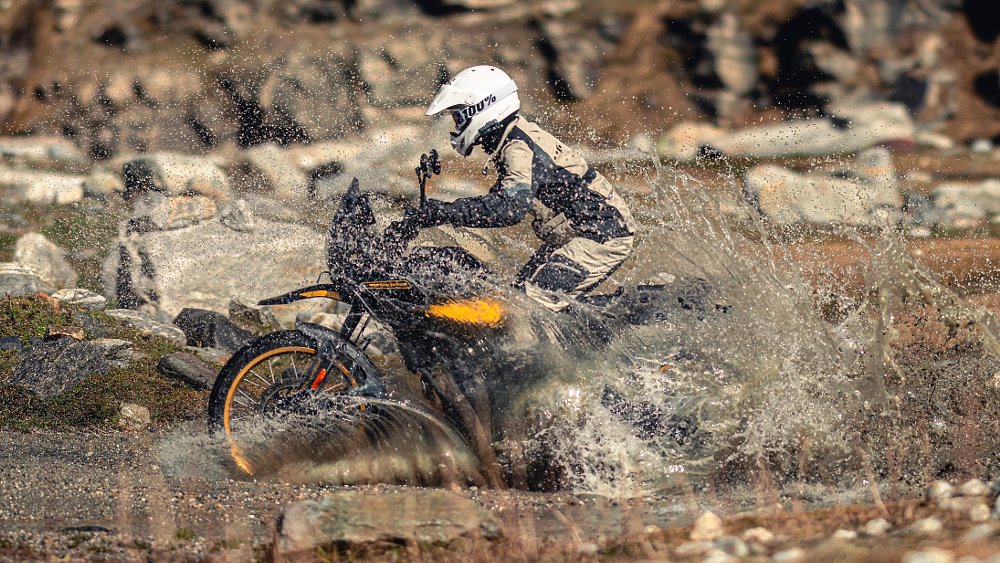
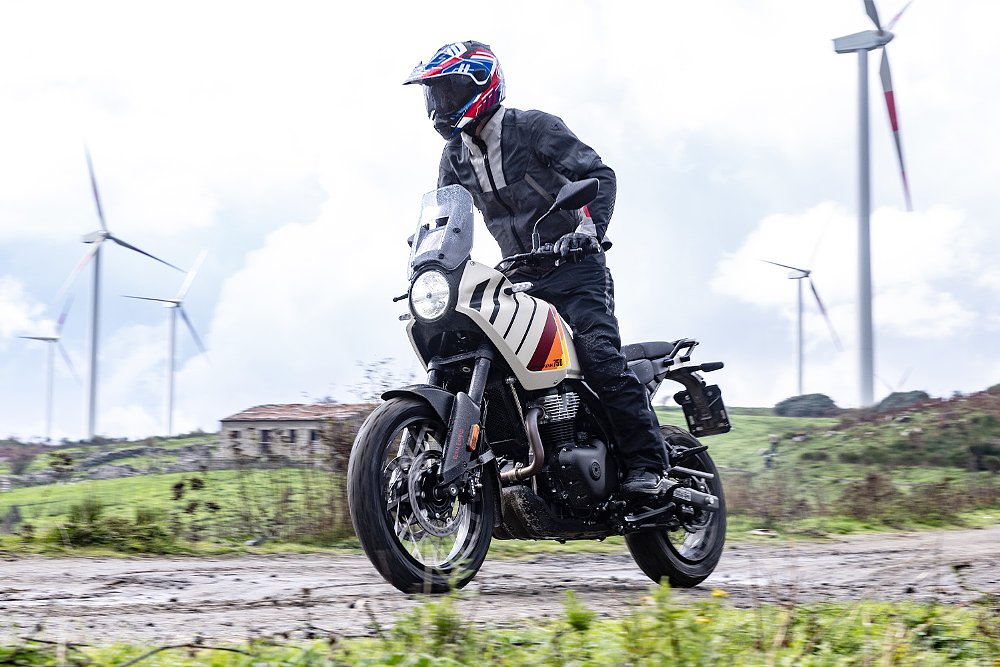
Royal Enfield made a point of Himalayan 750’s off-road limitations. A quick glance at the tread of either tire set and it’s easy to see why. Not only did the ride organizers cap the trail route to a five-mile section, they also allowed testers to bypass the dirt entirely. That’s far from a vote of confidence, but the adventure-tourer performed admirably, regardless. Enfield lists the Him-dinger at just under 500 pounds. It doesn’t carry that weight in an unwieldy manner, though. It feels neither top-heavy nor tippy. Granted, I wouldn’t want to pick up the quarter-ton ADV after a spill, but the low seat height should help prevent such instances.
That seat isn’t always advantageous, however. The Himalayan’s ergonomics are road-oriented. Nowhere is that more apparent than on the trail. Standing tall on the pegs, my knees often hovered right where the tank meets the seat, leaving little surface to grip. Reaching for the hand grips also put a hunch in my back. One that was tolerable for a short period, but one that would undoubtedly grow tiresome over time.
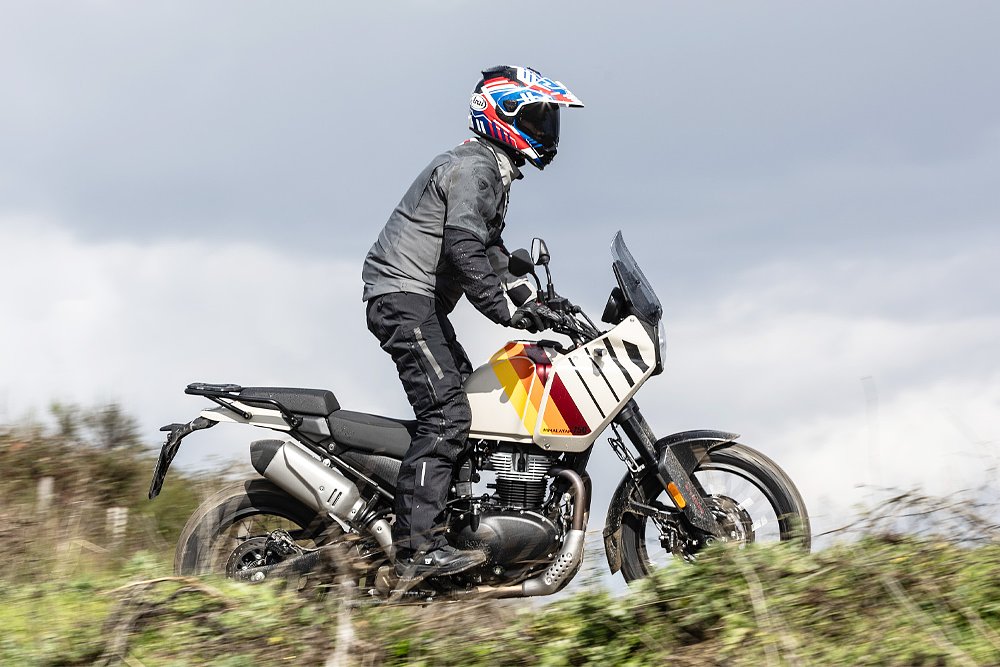
Like any bike, the 750 has its share of strengths and weaknesses. The question isn’t whether the Himalayan can dominate the segment. The question is whether it can it carve out its own niche in the middleweight ADV field — a field that places the utmost value on versatility both on and off the road.
Where to from here?
It seems like Royal Enfield’s technological evolution is directly tied to the Himalayan platform. Its first-ever liquid-cooled engine and fully integrated TFT dash debuted on the Himalayan 450. Now, the Himalayan 750 enters the market as the first RE to feature cruise control, IMU-informed traction control, cornering ABS, a dual-disc setup, and an adjustable windscreen. Even the blinkers are self-cancelling. With its latest Himalayan entry, Enfield appears to be treading into premium territory. It’s certainly tip-toeing on the borderline.

Unfortunately, the model’s U.S. MSRP isn’t available as a reference point, and it won’t be until summer 2027, when the Indian marque ships the first Himalayan 750s Stateside. Only then will we be able to form an opinion about whether the technological accoutrements justify the asking price. What we do know is that Royal Enfield is catering to its customers in the Americas and Europe with the middleweight ADV. If its size doesn’t suggest so, its electronics sure do.
That leaves this writer wondering how far down the rider-aid rabbit hole RE is willing to go. How many advancements will they adopt in the quest to capture new customers? The firm’s classic aesthetics remain intact, but each model introduced also introduces new tech. The Himalayan 750 only provides a semblance of an answer. What Royal Enfield does from this point forward will be even more telling.
| 2027 Royal Enfield Himalayan 750 | |
|---|---|
| Price (MSRP) | TBA |
| Engine | 743 cc, air/oil-cooled, eight-valve, parallel twin |
|
Transmission, final drive |
Six-speed, chain |
| Claimed horsepower | 54.3 @ 7,250 rpm |
| Claimed torque | 46.5 foot-pounds @ 5,000 rpm |
| Frame | Steel box-section spine |
| Front suspension | Showa 43 mm fork, adjustable for spring preload, compression, and rebound damping; 7.5 inches of travel |
| Rear suspension | Showa monoshock, adjustable for spring preload and rebound damping; 6.9 inches of travel |
| Front brake | Dual ByBre two-piston calipers, 280 mm discs with ABS |
| Rear brake | ByBre two-piston caliper, 255 mm disc with ABS |
| Rake, trail | 27.9 degrees, 4.8 inches |
| Wheelbase | 59.9 inches |
| Seat height | 32.1 inches |
| Fuel capacity | 4.7 gallons |
| Tires | Vredestein Centauro XR or CEAT Crossrad AT TL, 110/80-R19 front, 150/70-R17 rear |
| Claimed weight | 493 pounds |
| Available | Summer 2027 |
| Warranty | 24 months |
| More info | royalenfield.com |