Shop by Vehicle
 Track Order
 Contact Us


It’s 2014. Harley-Davidson introduces its first electric prototype, the LiveWire. The production model doesn’t launch until 2019, more than five years later.
It’s 2022. LiveWire, now operating as a subsidiary of the Bar and Shield, opens pre-orders for the S2 Del Mar. Deliveries don’t arrive until late 2023, more than 18 months later.
It’s June 2026. Production of LiveWire's S4 Honcho mini-bikes begins. The Trail trim ships just two months later. The homologated Street version is due by October’s end.
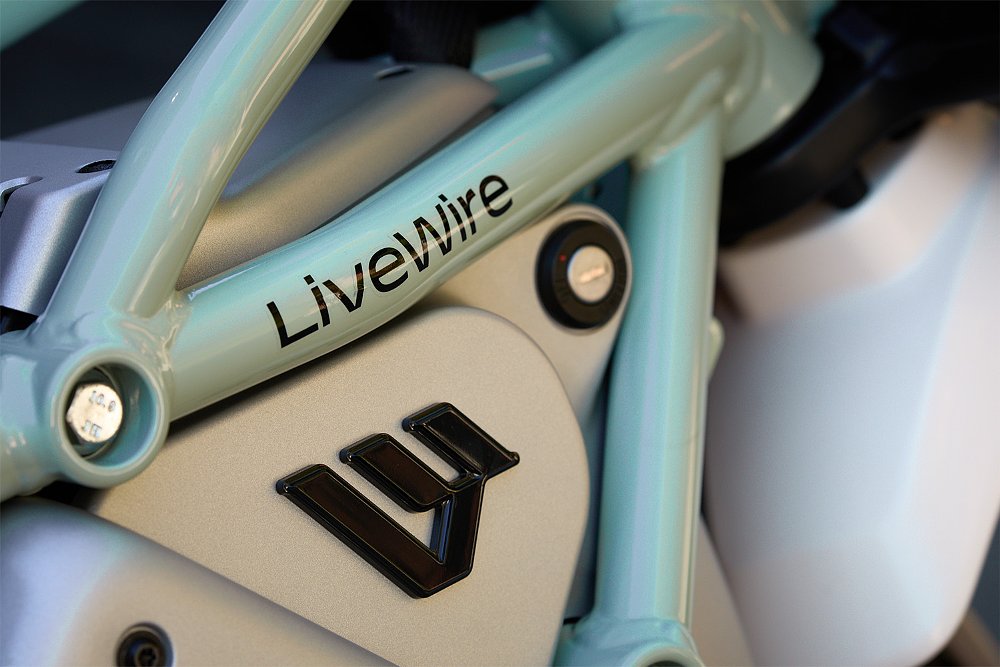
That accelerated timeline illustrates just how quickly LiveWire needs the Honcho to make its debut — and to make an impact. Harley’s electric spin-off already mined the premium space with the LiveWire One, a flagship model whose sales (or lack thereof) prompted not one, but two steep markdowns. The brand even cut prices across its middleweight S2 line to stimulate interest.
Now, LiveWire is placing its chips on the S4 Honcho. On a 125 cc-equivalent mini. On a $5,499 runabout. On an electric Grom, if you will. The e-moto maker casts the road-legal Honcho as a commuter, a grocery-getter, and a joy-rider. Its diminutive stature, pitched as a marker of unpretentious fun. Its removable batteries, marketed to a city-bound, apartment-renting customer base.
That’s all good and well, but the real question is whether the Honcho can breathe youthful energy into the floundering firm. It can only do that if it attracts a broad swath of riders. If it serves both nine-to-fivers and hooligans. If it proves as functional and as playful as LiveWire claims. Therein lies the purpose of this test.
On spec
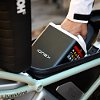
Like the maxi-scooters LiveWire showcased at EICMA 2025, the S4 minis are products of the brand’s partnership with Kymco. The Taiwanese OEM not only manufactures the Honcho, but does so by leveraging its existing technologies. An air-cooled mid-mounted permanent magnet synchronous motor — rated at 9 kW (12.1 horsepower) continuous and 10.7 kW (14.3 horsepower) peak and 20.5 foot-pounds of torque — draws from a pair of 1.74 kWh batteries. They’re not just any power packs, either. They’re Kymco’s Ionex removable batteries.
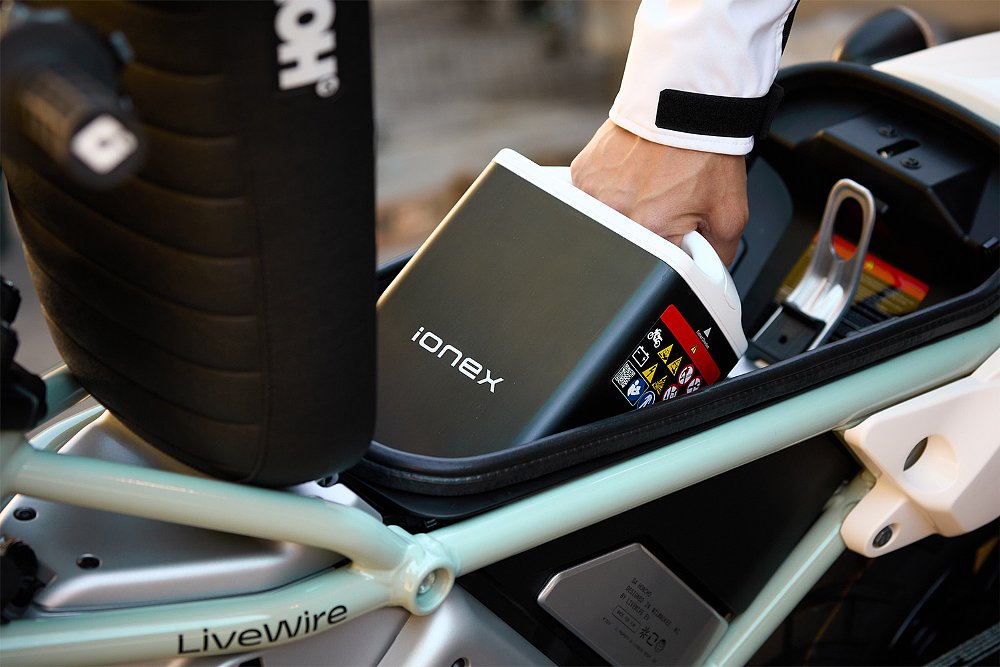
Supported by a battery-swapping network throughout Taiwan, the Ionex ecosystem enables Kymco riders to exchange depleted batteries for fully charged units in a matter of minutes. That portability is ideal for apartment living, too, where Kymco’s in-home charging station unlocks another level of security and versatility. It’s no wonder LiveWire based the Honcho on the Ionex platform, given the marque’s appeals to urbanites.
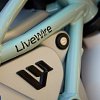
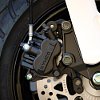
Surrounding that EV powertrain is a steel tubular frame; one that Kymco suspends with a 31 mm inverted fork and an emulsion monoshock. A set of 12-inch cast wheels demonstrate the Honda Grom’s influence over the Honcho's design, while speed-shedding responsibilities fall to Kymco-branded calipers.
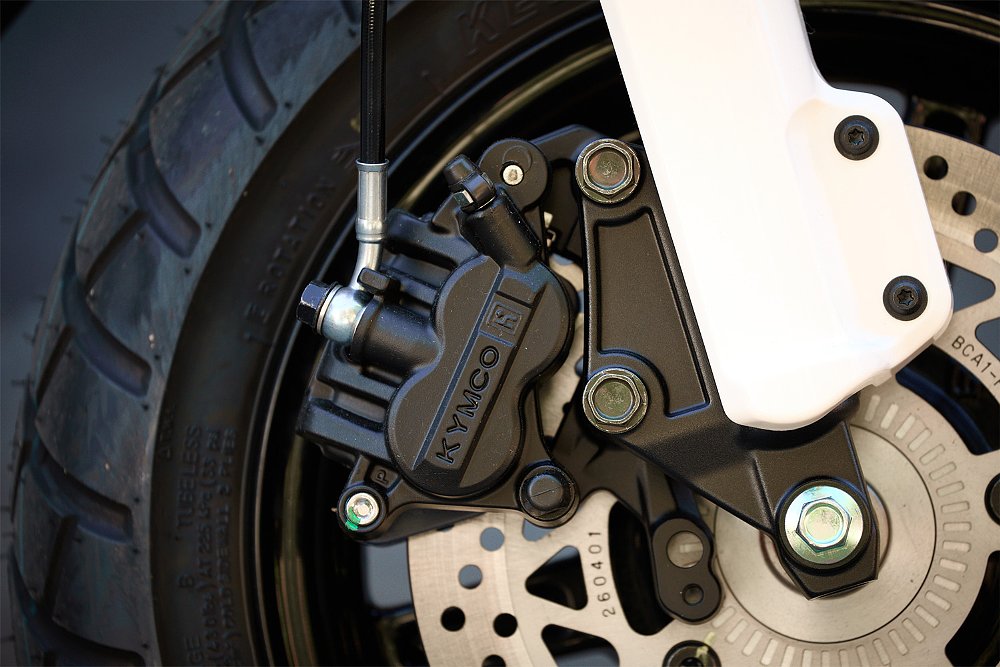
Those chassis provisions not only preserve the model’s mini-bike status but also maintain a manageable seat height of 31 inches. The wheelbase is a short 46.8 inches and the curb weight totals just 267 pounds (as measured on the RevZilla West scales). It goes without saying that the S4’s main ability is accessibility.
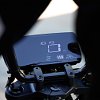
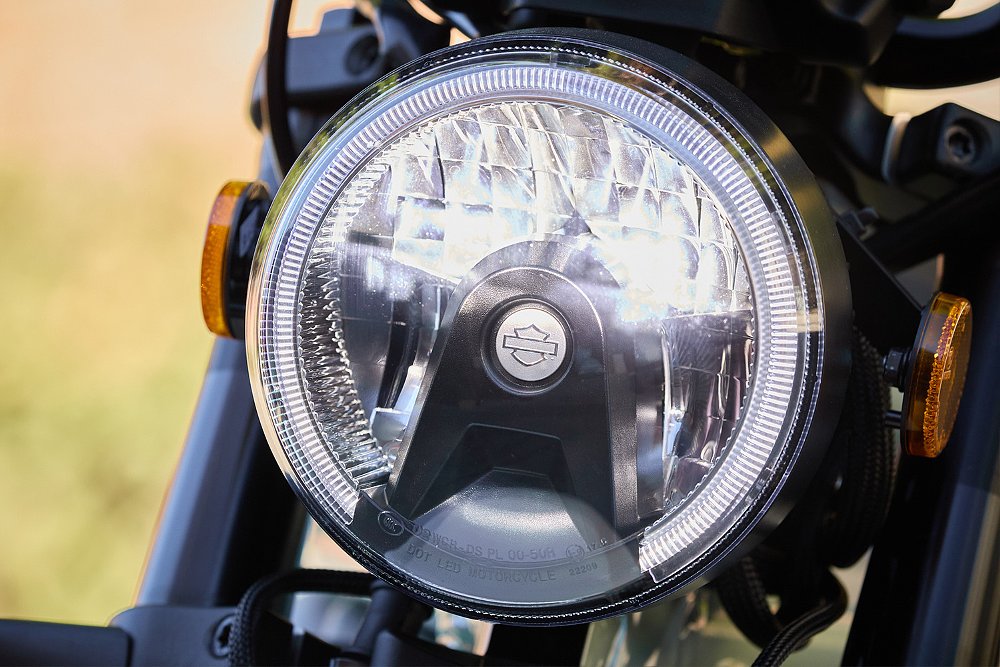
It’s that user-friendly nature that pervades the Honcho Street, including its electronics. A segmented LED display sides with simplicity, reporting speed, charge level, and estimated range. Users can also flick through two trip meters, four regenerative braking settings (1, 2, 3, and Off), and an odometer via rocker switches located on the right switchgear.
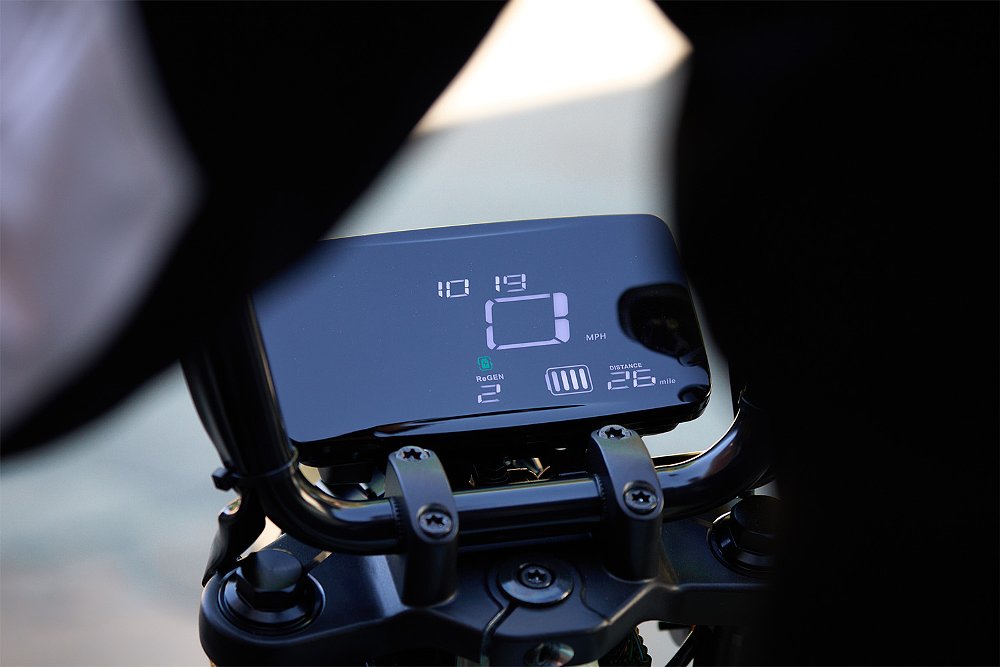
The Honcho favors minimalism, not complexity. It keeps it basic, not cumbersome. The emphasis is on approachability, not luxury. That much is evident in the e-mini’s Type 6 (IEC 62196-6) connector, but that decision poses its own challenges within the U.S. e-charging infrastructure.
The hard sell
My living situation is perfectly suited for the Honcho Street. The parking garage in my apartment building isn’t equipped with EV chargers or outlets. Good thing I can charge the Ionex batteries in the comfort of my own residence, right? I live approximately 20 miles from the RevZilla West office (depending on the route). The Honcho’s 53-mile range is sufficient for round-trip commutes, right? Wrong, on both accounts. Unfortunately, neither of those features panned out in reality.
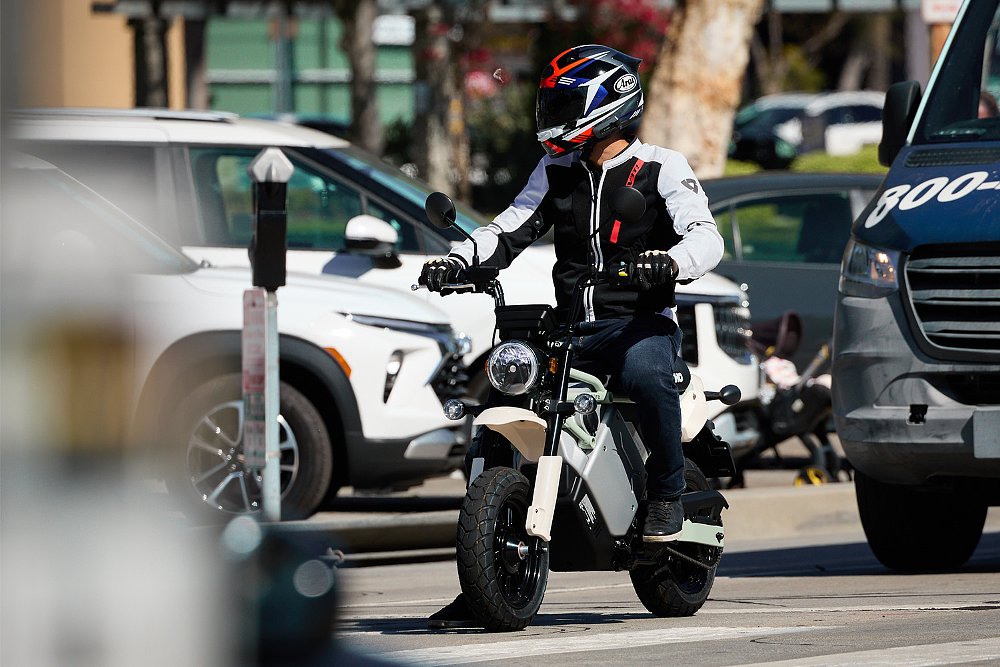
The first letdown was the absence of a docking station. LiveWire’s Global Brand Manager assured me that an in-home charger will arrive in early 2027, but that does customers in my situation no favors in the meantime. If you’re anything like me, you’re wondering how that oversight occurs, especially when LiveWire utilized existing Ionex technology. It's because the power packs within the Honcho aren’t identical to their Taiwanese counterparts, meaning additional development, testing, and certification are required for a model-specific charging cradle.
Could LiveWire have delayed the Honcho Street’s release until the remote battery charger becomes available? Undoubtedly. That strategy would have greatly benefitted the model within the context of this test, because the workaround was far from desirable. Part of that is also due to the Honcho’s Type 6 connector.
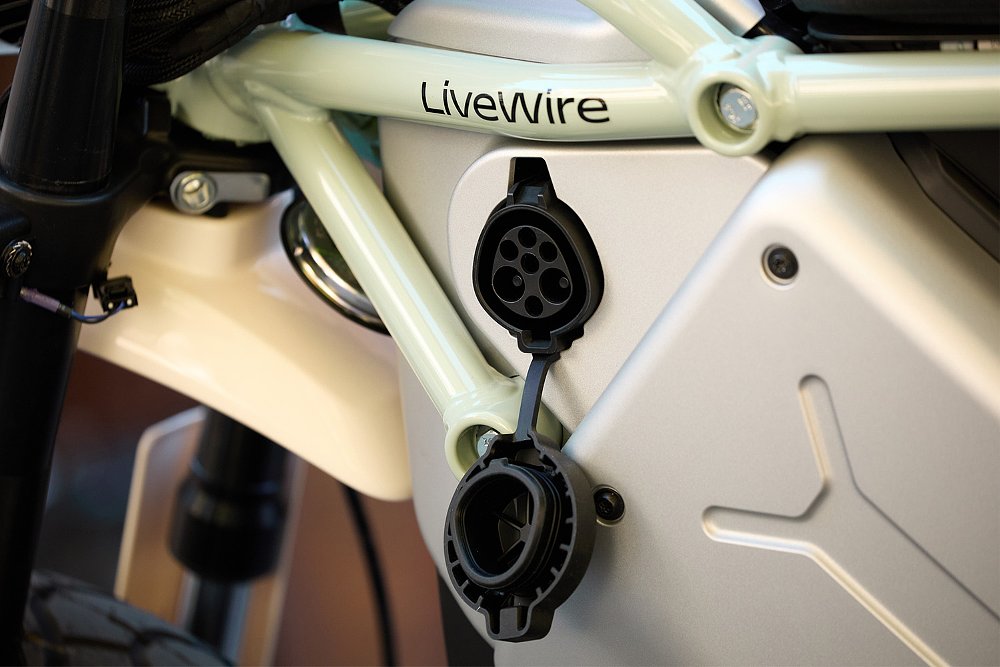
Type 6 chargers are widespread in scooter-heavy markets like Taiwan and India, but they’re rare in the DC fast-charging network so prevalent in the States. That’s one way of saying the Honcho’s public charging options are slim to none. The only means of replenishing the Street’s electrons is by plugging it into a standard wall outlet via the provided charging cable. That’s a big problem for someone like me.
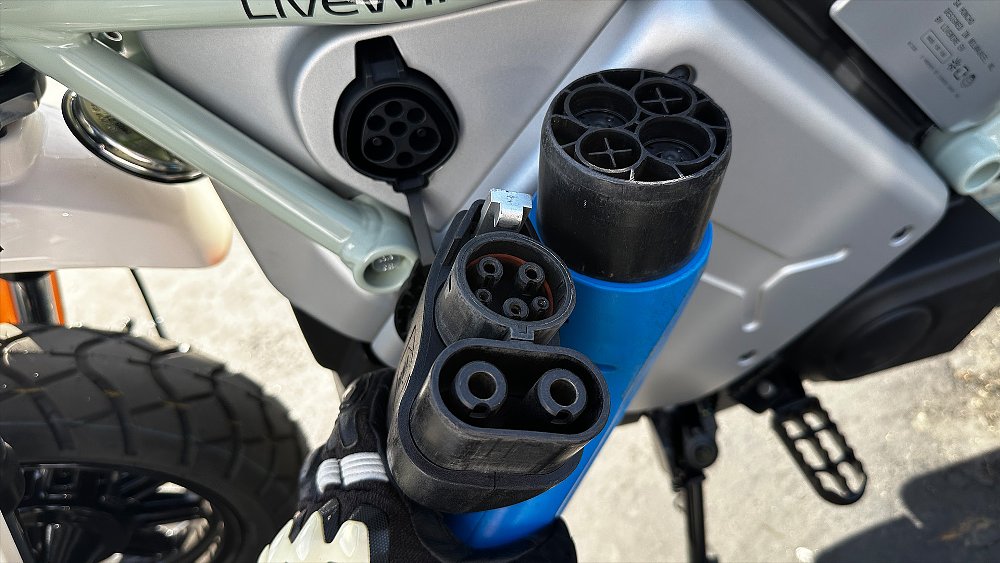
To bypass those limitations, I resorted to externally routing a 100-foot extension cord from my third-floor apartment to my building’s underground garage. It was far from a sophisticated solution, but it was an effective one nonetheless. The LiveWire reliably charged under those circumstances, though I often left it plugged in longer than necessary.
That’s because the LED dash only displays the battery’s current level with a four-bar graphic, not as a percentage. LiveWire estimates that the Ionex batteries gain from 20% to 80% in two hours and from 0% to 100% in 3.5 hours, but without the display confirming that both packs were topped off, I often sided with caution and kept the Honcho charging for four hours or longer. That occurred after almost every ride, too, as the S4 couldn’t complete the round trip between my front door and office door.
Range woes
LiveWire lists the Honcho Street with a WMTC range of 53 miles. Now, it’s important to set expectations with electric two-wheelers. Not one of the many I’ve tested has ever met its claimed range. The S4 is no different. On the route between my West Los Angeles apartment and RevZilla’s Carson office, the average speed (including both stationary and traveling periods) was 27 mph. The freer-flowing traffic often meant I was cruising at 40 to 45 mph.
By the time I arrived at work, I typically covered 20 to 21 miles with nine miles of range remaining. A total traveling distance of 30 miles may seem preposterous to most riders, but my results were greatly dependent on traffic patterns. Navigating the densely populated areas of Mid-City, Downtown Los Angeles, Hollywood, and Beverly Hills dropped my average speed to 18 mph and boosted my range to 38 miles. For context, those tighter confines also restricted my cruising speeds to 30 to 35 mph.
It’s worth noting that neither of those totals would have allowed me to ride to work and back home without plugging in the bike. After all, it’s a 42-mile round trip, four more miles than I ever reached on a single charge. That forced me to haul the seven-pound charger along for the daily commute. Carrying that load was like transporting a bowling ball on my back. That’s not accounting for my laptop or portable tire inflator and patch kit, either.
Without public charger compatibility, without a docking station available, you’ll want to keep the charger on your person. Despite the marketing pitch, there’s currently one way and one way only to refill the batteries: while installed inside the bike. That minimizes the Street’s prospects as a daily rider. What it doesn’t diminish, however, is the bike’s fun factor.
Keep rollin’
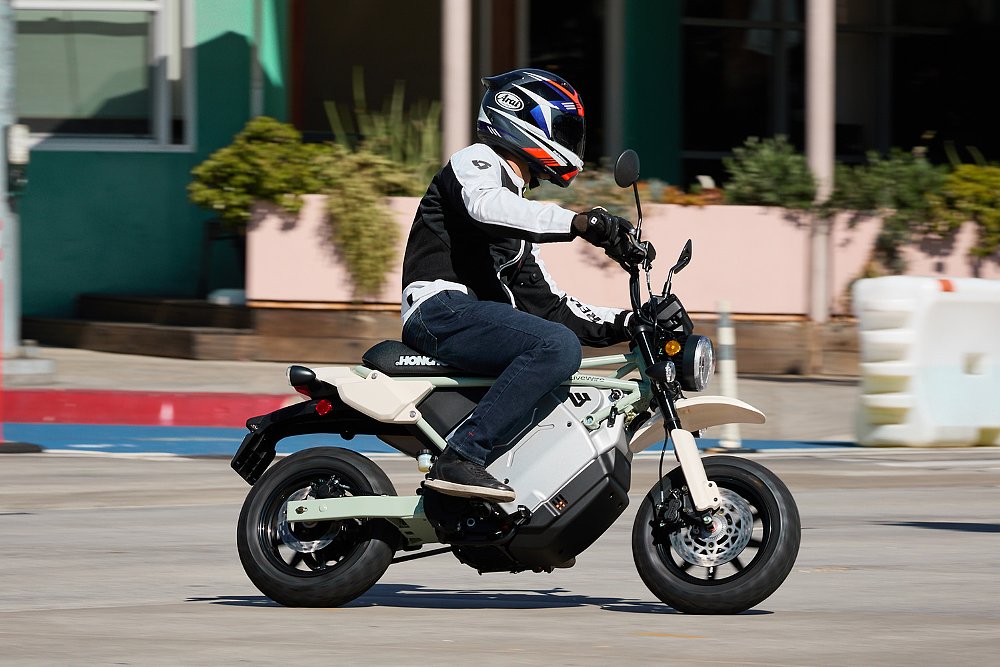
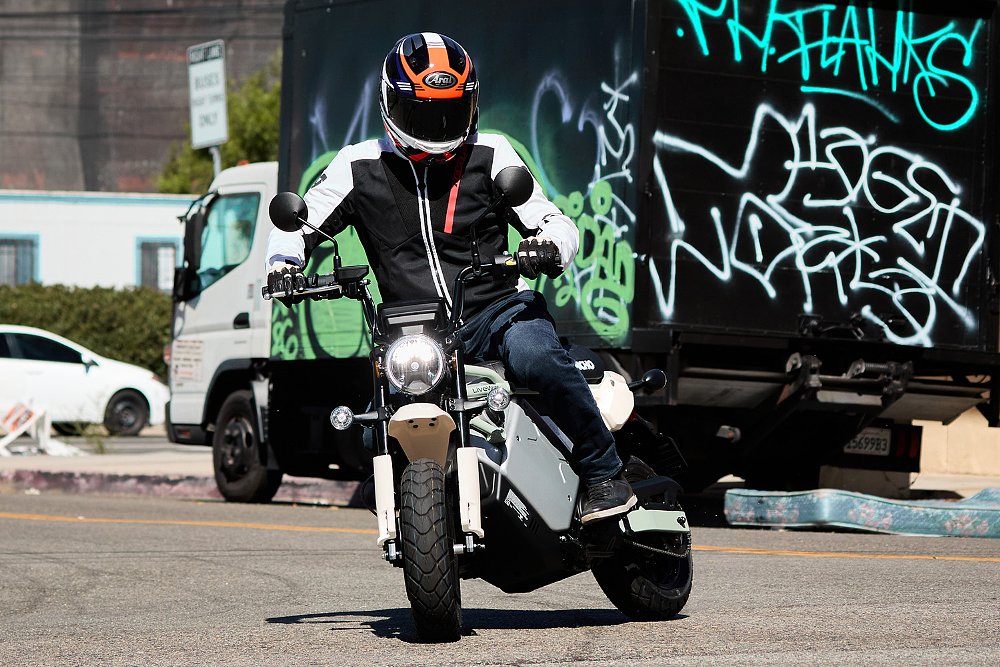
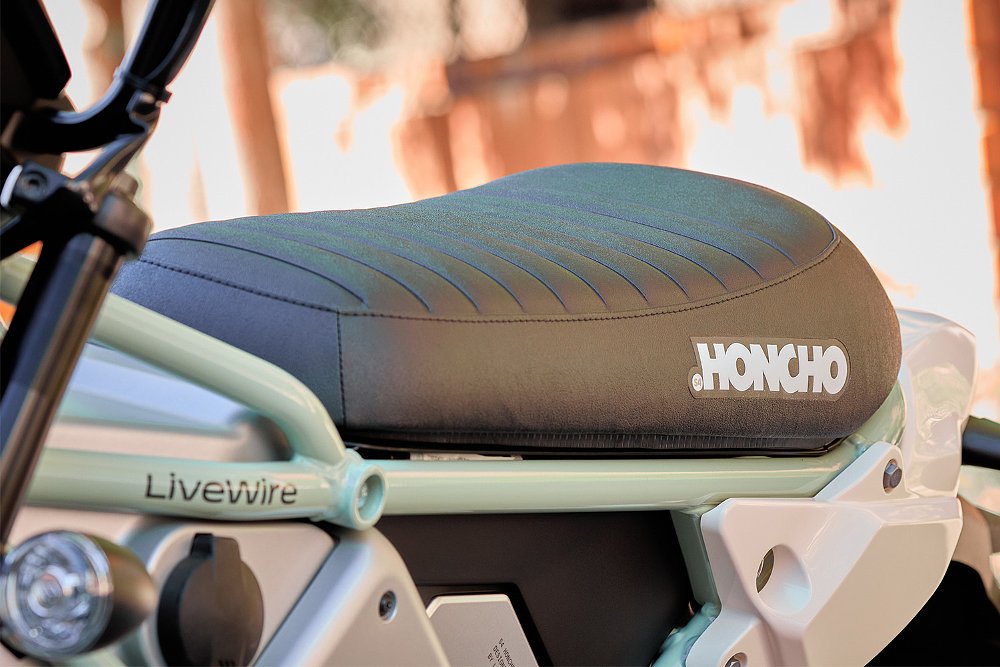
Charging missteps aside, range restrictions excluded, the S4 Honcho is an enjoyable little around-towner. It may be a mini, but this full-sized adult found the rider triangle largely inoffensive. Sure, I slumped to the hand grips instead of stretching to them, with my elbows practically resting at my side. Yes, my 32-inch-inseam legs were bent at a slightly acute angle. Yet, I could hardly muster a complaint, even after a two-hour trip. Even the big tuck-and-roll bench seat held up during that stint, neither too plush nor too stiff for extended rides.
The power delivery felt similarly refined. Kymco knows a thing or two about electric scoots, and the Honcho is only further proof. Throttle response is direct but never abrupt, yielding enough acceleration to pull away from traffic, all without treading into law-breaking territory. The only jarring, herky-jerky sensation occurs when rolling off the throttle in the highest regen setting (3). Otherwise, I found little fault with the drivetrain. It’s a similar case with the chassis.
With a 25-degree rake and a sub-50-inch wheelbase, the Honcho wedges between cars like a cat slinks past potted plants. The handling isn’t just sharp; it's snappy. It’s also balanced enough to negotiate the tightest spaces without nicking a mirror or dabbing a foot. Rush-hour traffic is the Street’s natural habitat, but it’s just as composed at top speed.
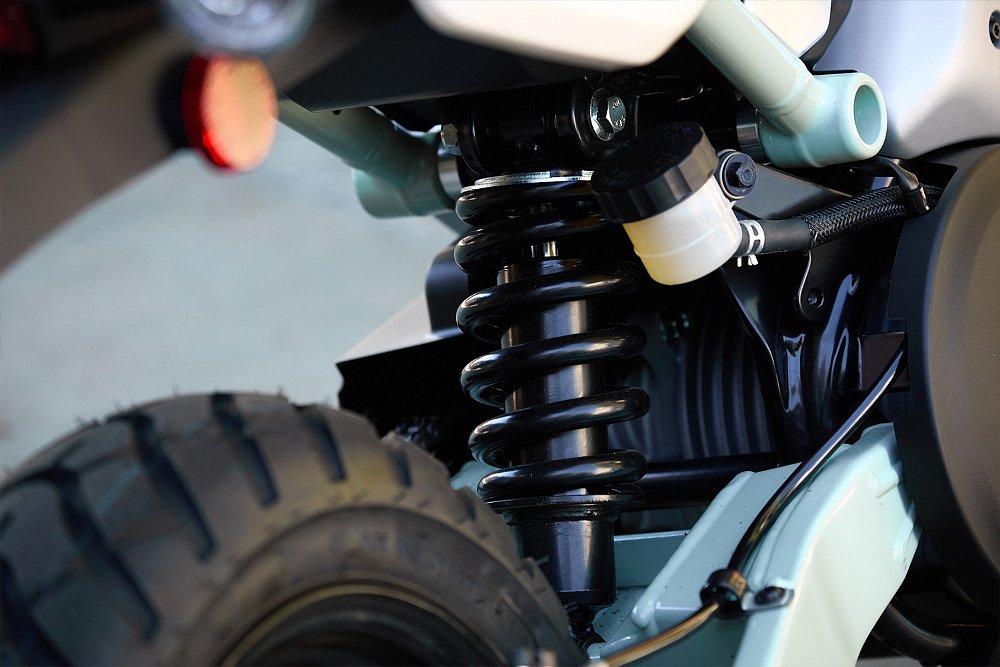
The little LiveWire only reached a maximum speed of 62 mph when charging down the steep La Cienega Pass. That may eclipse the listed top speed of 59 mph but what’s truly noteworthy is that the bike maintained that pace without one wobble. Maybe it owes that straightline stability to its 267-pound curb weight or its 130-section rear tire. It colored me impressed, regardless. What didn’t stir my soul was the rear shock. (It stirred my vertebrae instead.) Touting just 3.9 inches of travel, the monoshock did little to soften the tarmac craters encountered throughout Koreatown and Hollywood.
Even with those detractions, the Honcho Street is a lively little electric. It’s a bike for someone who doesn’t take themselves too seriously. It’s for those who enjoy skidding into a corner or hopping a curb or two. Sustaining a wheelie aboard the stout little electric isn’t an easy feat, but no one will fault you for trying, either. Basically, if your main priority is fun — a silly brand of fun, that is — the Honcho ticks all the boxes. The problem is, it doesn’t do much else.
Little luxuries
The S4 Honcho Street is a polished product. Well, for the most part, anyway. It not only looks the part, its fit and finish rises to the levels maintained by LiveWire and Harley-Davidson before it. Its cockpit is comfy. The powertrain is peppy. Even the interface is well-sorted. That’s what happens when LiveWire employs the electric mobility expertise of a leading scooter maker. The only banana in the Honcho’s tailpipe is the lack of infrastructure to support it.
LiveWire launches the Street-flavored S4 into a market without the battery-swapping network or a Type 6 public charging network its system would have in some other places. Not even a home charging cradle accompanies the model upon its release. Those amenities would have positioned the Honcho as a viable commuter. Their absence renders the electric-powered mini a $5,500 plaything.
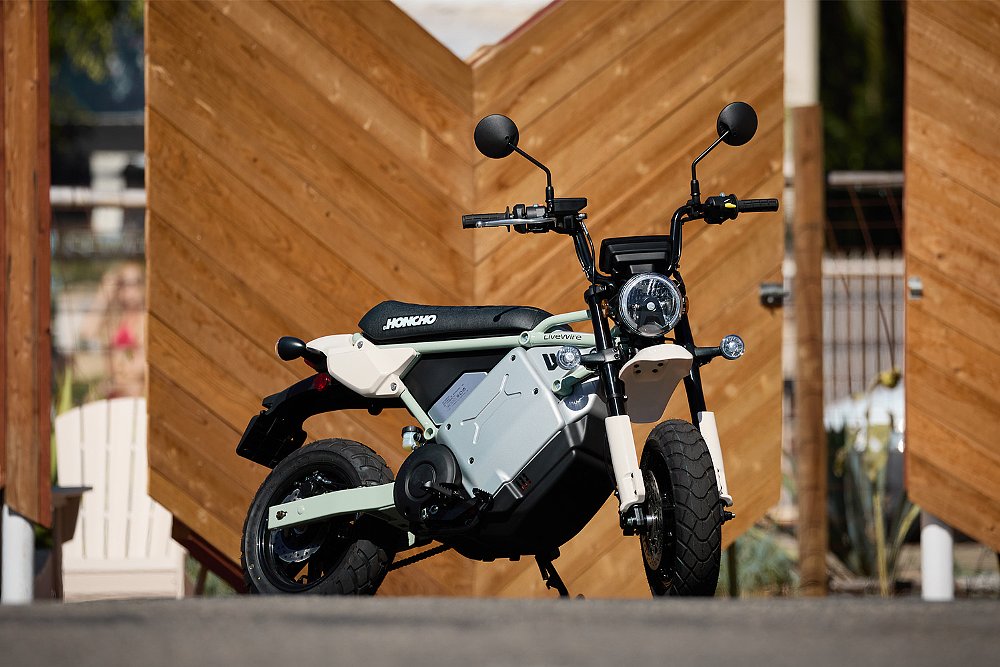
LiveWire added the S4 to its lineup as an alternative to the One and S2; models that are downright luxurious from the mini-bike buyer’s perspective. But justifying the Street’s price tag is all the more challenging when considering its limited range, limited charging options, and limited use case. That positions the model as more of a toy bike and less as a multi-purpose purchase. If that’s the case, at $5,499, the Honchos are little luxuries themselves.
That could change if LiveWire introduces an in-home charging unit in a few month’s time. The model’s success, and LiveWire's, could very well depend on it.
| 2027 LiveWire S4 Honcho Street | |
|---|---|
| Price (MSRP) | $5,499 |
| Drivetrain | Air-cooled mid-mount permanent magnet synchronous motor |
| Claimed output | 9 kW continuous / 10.7 kW peak |
| Frame | Steel tubular |
| Claimed range | 53 miles (WMTC), 73 miles (at 20 mph) |
| Claimed battery capacity | 3.48 kWh (two 1.74 kWh removable batteries) |
| Claimed charge time | 2 hours (20% to 80%), 3.5 hours (0% to 100%) @ Level 1 |
| Front suspension | 31 mm fork; 4.1 inches of travel |
| Rear suspension | Monoshock; 3.9 inches of travel |
| Front brake | Single Kymco two-piston caliper, 240 mm disc no ABS |
| Rear brake | Kymco single-piston caliper, 200 mm disc no ABS |
| Rake, trail | 25.0 degrees, 3.3 inches |
| Wheelbase | 46.8 inches |
| Seat height | 31.0 inches |
| Tires | 120/70-12 front, 130/70-12 rear |
| Measured weight | 267 pounds |
| Available | Now |
| Warranty | 24 months |
| More info | livewire.com |