Shop by Vehicle
 Track Order
 Contact Us

There’s something wonderfully reassuring about single-cylinder bikes.
A few years ago, while working at the Goodwood Festival of Speed, I used an anonymous single-cylinder motorcycle to get there and back each day. Each journey involved a frankly unreasonable amount of time with the throttle pinned, the poor thing screaming its heart out as the scenery scrolled by at a surprising rate of knots, and I wondered multiple times whether I was going to witness the engine spew its innards all over the road in a trail behind me.
But no, it just kept going. It didn’t even use a drop of oil. It simply shrugged off the abuse and relentlessly pressed on as if it wanted to be treated with such flagrant disregard.
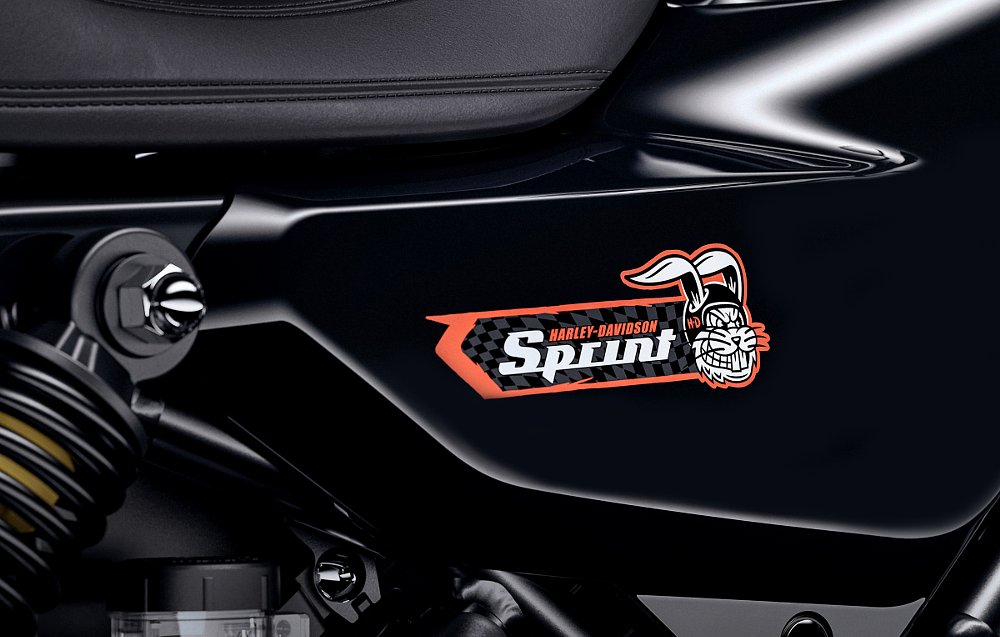
That sturdy and forgiving nature is a rather appealing quality for new riders. And with Harley-Davidson's recent strategy pivot — which, as Lance noted in our first look at the Sprint, is to return to offering a broader range of bikes to attract a larger customer base, rather than concentrating on fewer more expensive models — I have to assume the welcoming nature of a small single is an inspired bit of thinking. Enter the Harley-Davidson Sprint 440.
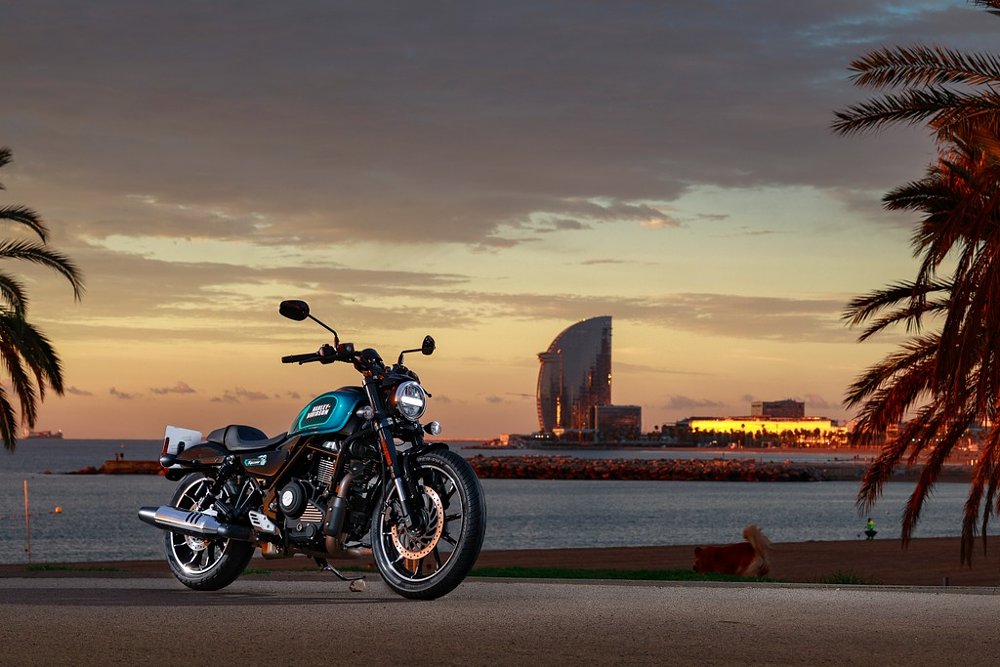
Harley-Davidson styling meets sturdy Indian manufacturing
The Sprint 440 is derived from the Harley-Davidson X 440, which was created in collaboration with Hero MotoCorp for the Indian market. Since 2023, that bike has been very busy feeding the limitless appetite for two-wheelers on the sub-continent. If you stop and think for a moment, that's exactly the kind of foundation to build on for an approachable, accessible starter model… or in other words, it's Harley-Davidson's new strategy crystallizing in front of our eyes.
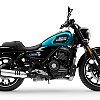
What the Motor Company has therefore done to create the Sprint 440 (available everywhere except India, where the X 440 remains) is lift the X 440 and drop it into a cruiser-shaped mold by lowering the seat, raking the front out, fitting a larger front wheel, adjusting the suspension, and refining the packaging to levels more suited to developed markets. It's also sprinkled some nice detailing all over and then slapped on an agreeable $5,999 price tag, upholding the promise it made last year to deliver a sub-$6k bike.
To put some color to that: The Sprint 440's unladen seat height comes in at 26.9 inches, the rake is increased from 25.5 degrees to 27.6 degrees, the front wheel is 19 inches (up from 18 inches), and rear wheel travel is reduced to 3.0 inches, with front travel at 5.1 inches. Both ends retain KYB suspension, with seven steps of rear preload adjustment.
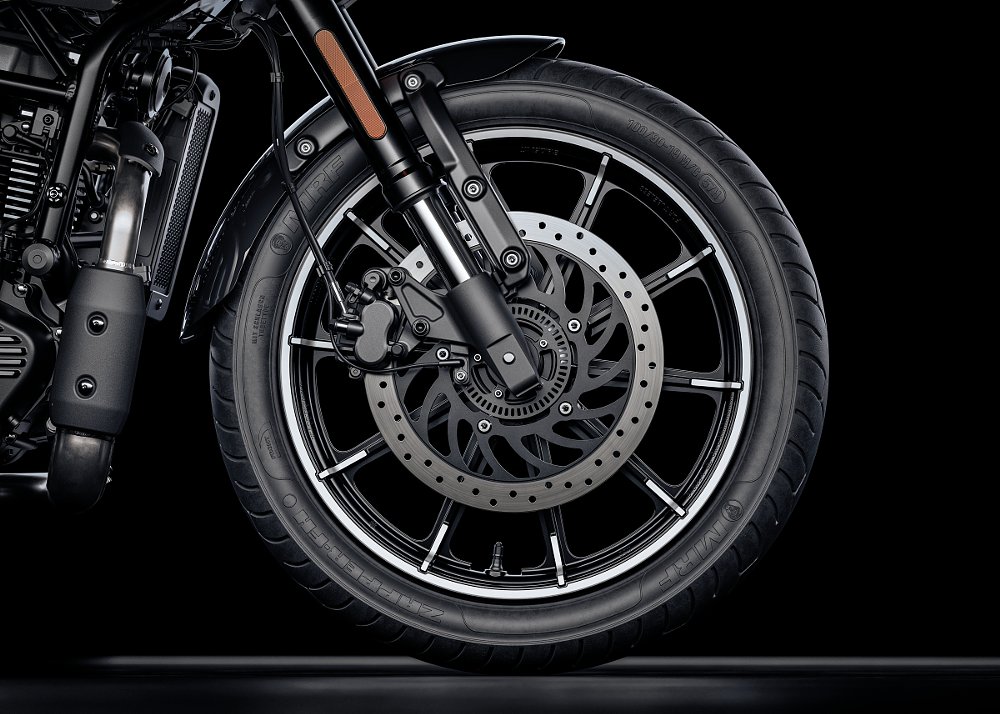
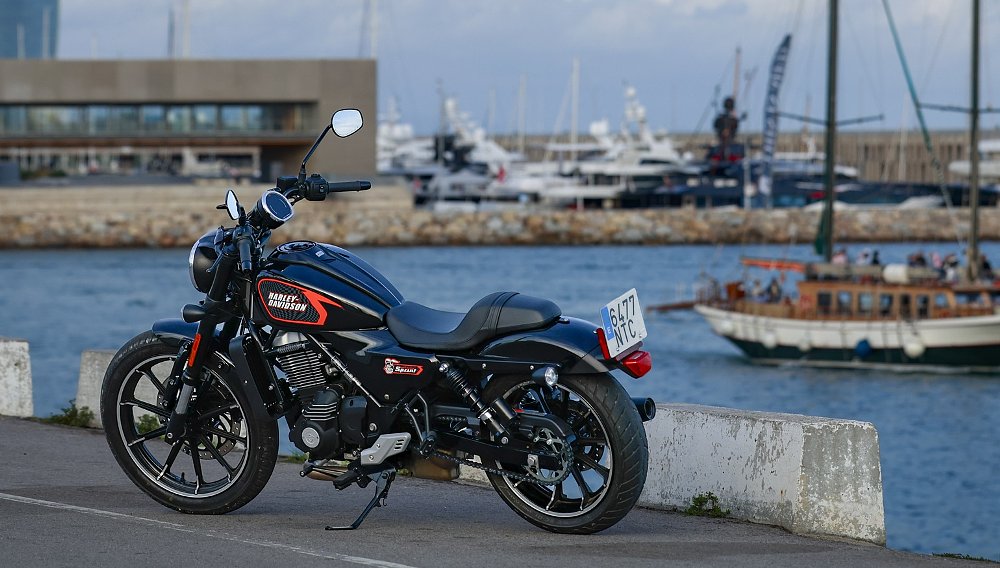
I personally think the packaging is super neat. It's clear to see how cables have been tidied away and clipped behind chassis components as much as possible, leaving (for example) a particularly clear view of the engine's cylinder from both sides. The paint on the tank, fenders, and other minor bits of bodywork is noticeably deep and glossy throughout the three colorways. About the only stand-out cheap-looking part is a plastic surround on the oil cooler, which I suspect will be one of the first items owners swap out for a nicer part.
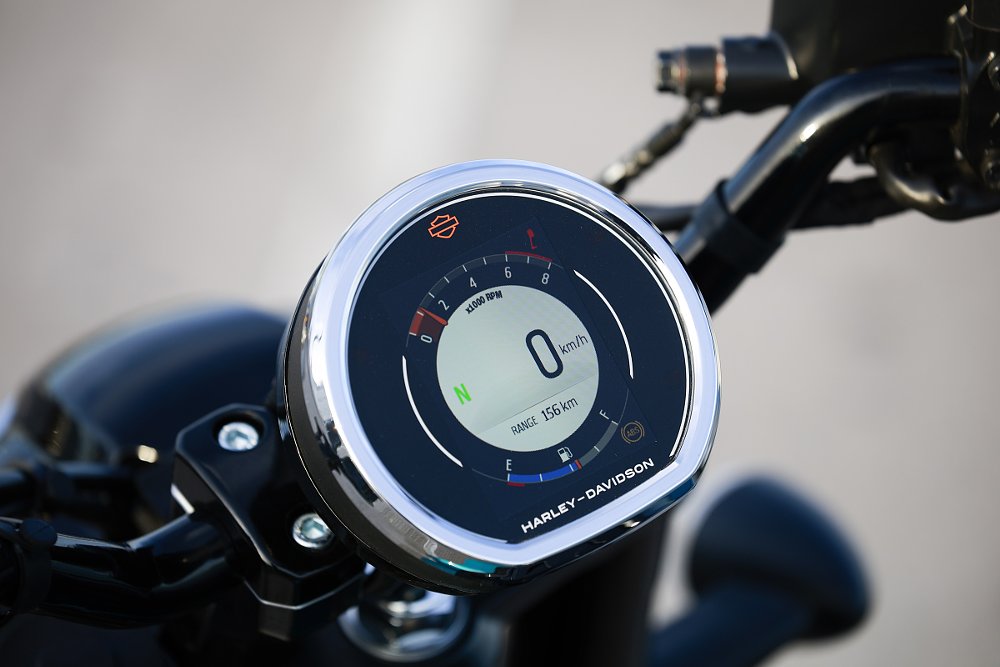
There's a H-D bar logo sitting proud in the headlight, the switches feel quality to the touch (with the mysterious exception of the indicator toggle switch, which is about as solid as a blancmange), and the seat is made of two different textured materials. A color TFT display is mounted in a forward position to help accentuate a visual line running from the base of the tank, over its shoulders, and towards the headlight. The display looks stylish and tells you the basics — odometer, two trip meters, the time, fuel range, fuel level, speed, and engine speed — and doesn't complicate matters with anything else, though on the ride, I did find myself wanting a temperature gauge.
Bjorn Shuster, H-D's head of design, pointed out various other nice touches, including a graduated machining profile on the cylinder head fins to give it a taller appearance. I don't know if this actually works, as I've nothing to compare it with, but it certainly looks good. And the machining on the alloy wheel spokes is likewise intended to increase the visual perception of the wheel size, which Bjorn claims adds to the stance and character.
Quite honestly speaking, walking around the bike in a static setting makes for a convincing experience. It's visibly well put together, with a presence that belies its relatively modest dimensions. I think it feels like more than $6,000 worth of metal, and I dare say that from 20 yards you might even think it's an 883 Sportster or Iron 1200 for a moment or two. It's certainly going to cause a few double-takes. It simply doesn't jump out as a bike which started life in India for an entirely different market — and I've been around enough of those to know, having spent a considerable amount of time in India's Bangalore and Chennai.
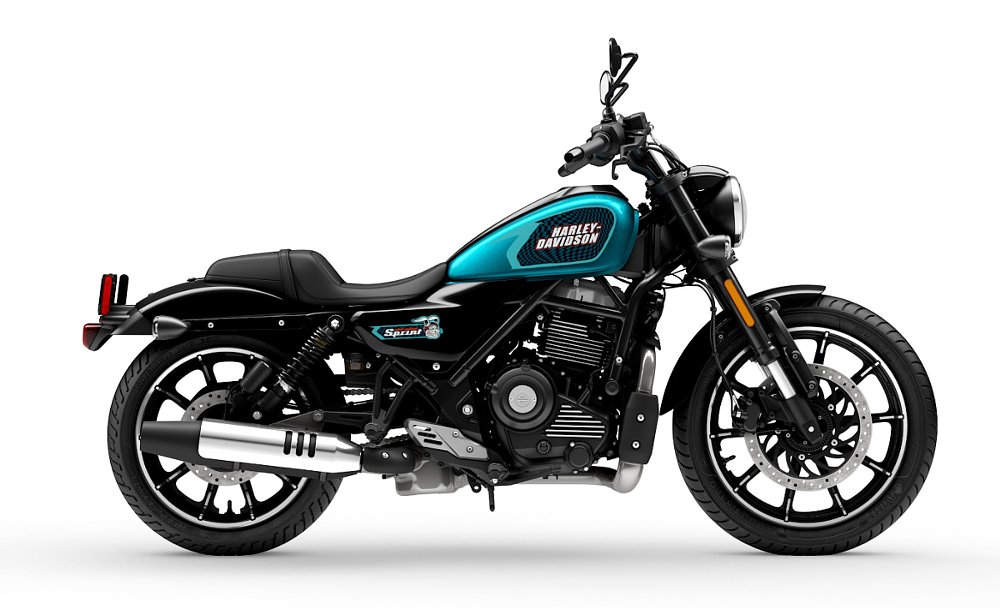
Let's get some more stats and numbers out of the way. It weighs 412 pounds (187 kilograms) ready to ride, makes 27 horsepower at 6,000 rpm and 28 foot-pounds of torque at 4,000 rpm. Among its many rivals, the Sprint is neither the lightest nor the heaviest, the most powerful nor the least. It sits comfortably in the middle, more or less. A notable omission is traction control. The reason for this is purely related to the price point and I think most would agree that traction control is unnecessary at this level of output.
I've spent time aboard both Triumph's Speed 400 and Royal Enfield's Scram 411, and I think the Sprint occupies an interesting position between them. The Triumph is a revvier, more enthusiastic machine, with considerably more power and an appetite for being ridden harder. The Royal Enfield is much closer in spirit to the Sprint 440, with its laid-back, single-cylinder delivery and equally modest performance. But to my mind, the Sprint brings something different to the table: a distinctly Harley take on the small-capacity motorcycle, with convincing fit and finish, cruiser ergonomics, and a very low seat height.
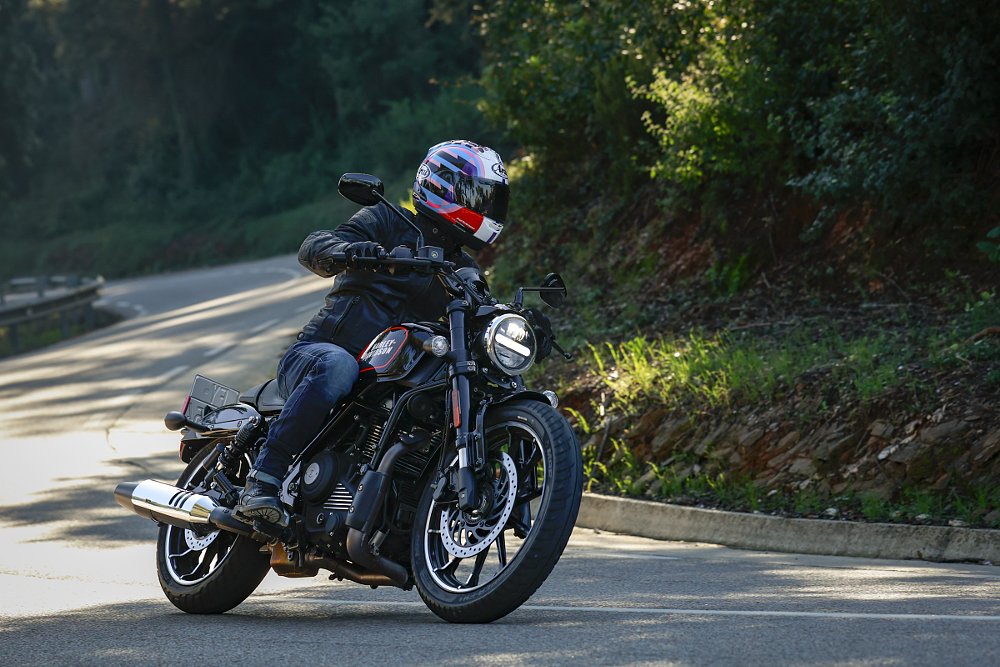
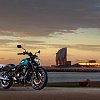
Riding the Sprint 440 around Barcelona
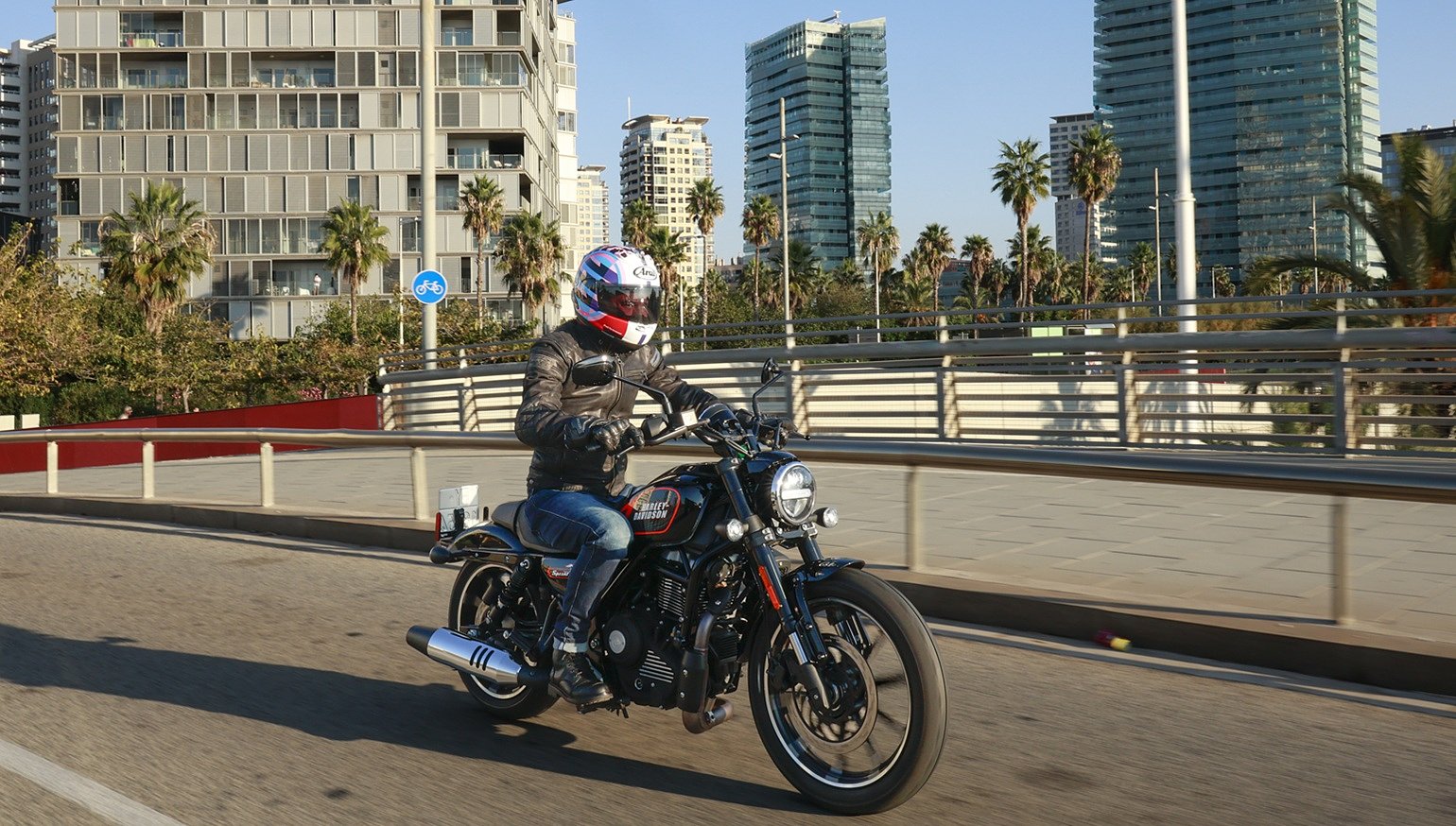
I'm not going to tell you that I spent our 87-mile (140-kilometer) ride around Barcelona performing the same antics as I did while to-ing and fro-ing from Goodwood, because I didn't — as that would be completely daft. The 440 cc engine doesn't do what some of the other 400(ish) cc engines out there do: It doesn't chase revs, nor for that matter, horsepower. And anyway, the Sprint's meant to be a cruiser.
Thanks to its long 88 mm stroke, the engine gets going early, delivers appreciable torque through the first two-thirds of the rev range, and then suggests the best thing to do is throw another gear at it. You can add more revs if you like, but after about 5,000 rpm it becomes a waste of time. This engine is all about the bottom and middle of the rev range. Town work was mostly a case of using third to fifth gear, with occasional stints in sixth above 40 mph. Swapping gears is a smooth affair and comes without resistance because the clutch is nice and light, should you even decide to use it in the first place. I did, and I also didn't, and it didn't seem to matter either way.
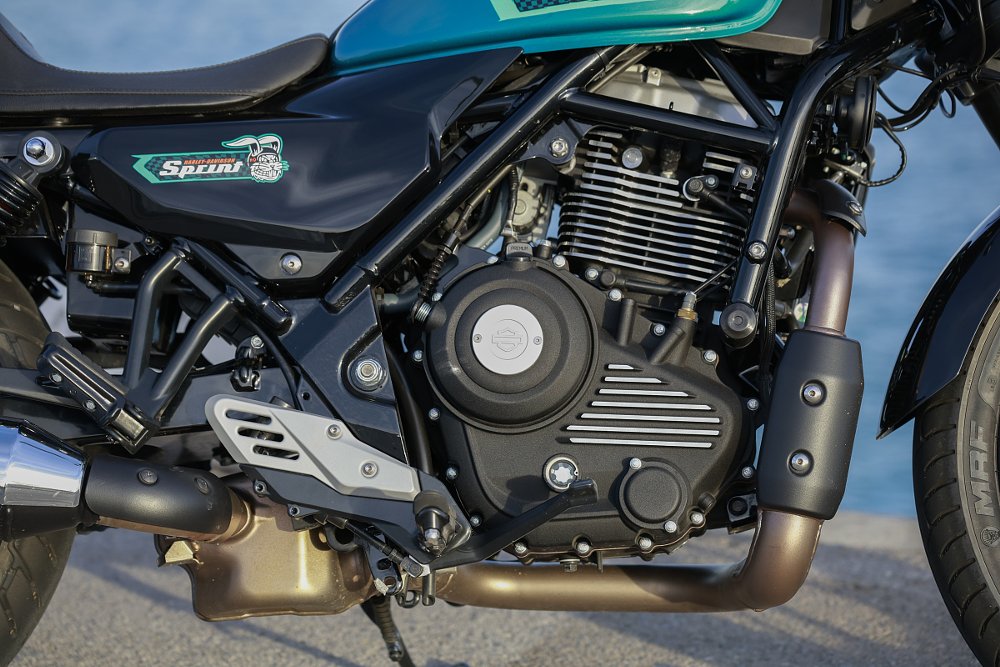
Bjorn also explained that while the guts of the 440's engine haven't been tinkered with at all, the mapping and timing have, specifically to make the engine idle with a hint of vibration. Think slightly lumpy soup, not purée. And it is actually quite compelling. I was surprised to feel an undulating, resonating pulse through the handlebar and footpegs at idle, and I immediately suspected something had been done to provoke this, as no other singles I can recall manage it quite like the Sprint 440 does.
The exhaust note is deep and "blappy," making a pleasing bap-bap-bap when labored. Short-shifting is the way to go, and I definitely spent a lot of time using the throttle as a tool for soundtrack-based entertainment. Bap-bapp-bapababab… bap-bap-bap! It's fun, and heads do turn. No, it doesn’t sound like a V-twin Harley because it's a single cylinder, but the noise it does make is good and certainly different from the competition.
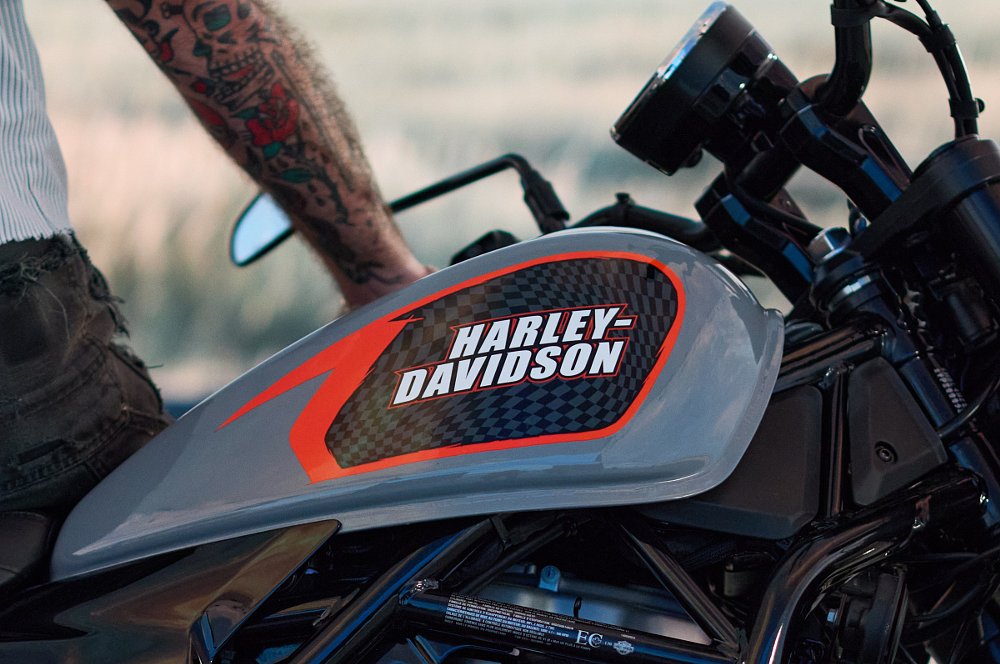
Mid-way through the ride, after we'd wriggled out of Barcelona's traffic and up into the mountains, all the cards landed in my mind to form a picture of what I was actually riding and who it's mostly for. The Sprint packs an eager, happy engine with a top end at redline that's softer than a kitten's ear. It's coupled to an easy gearbox with predictable ratios — you can pull away from stop lights in second gear and barely notice you're not in first. Fueling and throttle response are superb. The brakes — and especially the rear brake — have a good bite and appropriate power for the speeds the Sprint 440 is most comfortable at. The steering lock is excellent for slow-speed work and the 19-inch front tire rides over typical city bumps without fuss.
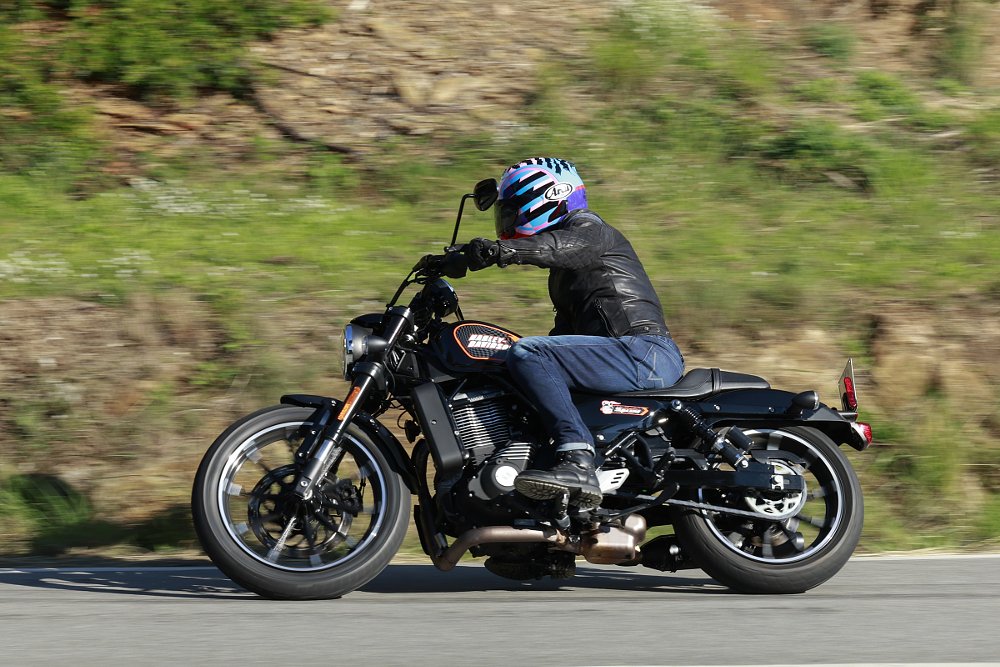
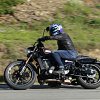
Out of the city, our ride took us through the Garraf Natural Park and I had fun on the twistier sections of road, scraping the pegs and seeing how early I could get to full throttle (hint: quite early), but the Sprint is not remotely meant for that because while the chassis has far more ability than the engine can exploit, you'll quickly run out of ground clearance and braking power and suffer from a complete lack of top-end.
One question U.S. riders often ask about a bike in this class is whether it will handle freeway speeds. Officially, Harley-Davidson says the Sprint 440's top speed is 81 mph (130 kph) and based on our limited ride, I'd guess that's about right. Acceleration up to 65 mph happens rather quickly, but further progress beyond that builds very slowly.
What it adds up to
Harley-Davidson's marketing spiel tells you that the Sprint 440 has something for literally everyone: newer riders, returning riders looking to ease back in, and experienced riders who want to add something simple and easy to the lineup. While you could claim that's not untrue, I think the Sprint 440 definitely offers the most for new riders. Overwhelmingly, the picture that formed in my mind during my ride was of a new rider and the Sprint's qualities back that up.
The riding position feels so natural you basically spend no time thinking about it and the low center of gravity feels friendly and predictable. If you told me the Sprint 440 weighed 260 pounds, I think I'd believe you. It's a proper-looking machine that doesn't intimidate, demand much experience, or require particularly long legs or strong forearms. It looks the part, sounds good, and carries some feel-good factor when it's parked up. Then you ride it and discover that virtually everything about it seems designed to be easy. It's hard to knock that.
I think for returning riders looking for excitement the shelf life will be limited and the need to move on to pastures bigger and more powerful will quickly appear. But all that said, for the commuting rider of any ability? The Sprint 440 has the legs for that duty. Drain covers, bumps and ruts in city roads will occasionally overwhelm the suspension, but that shouldn't put you off.
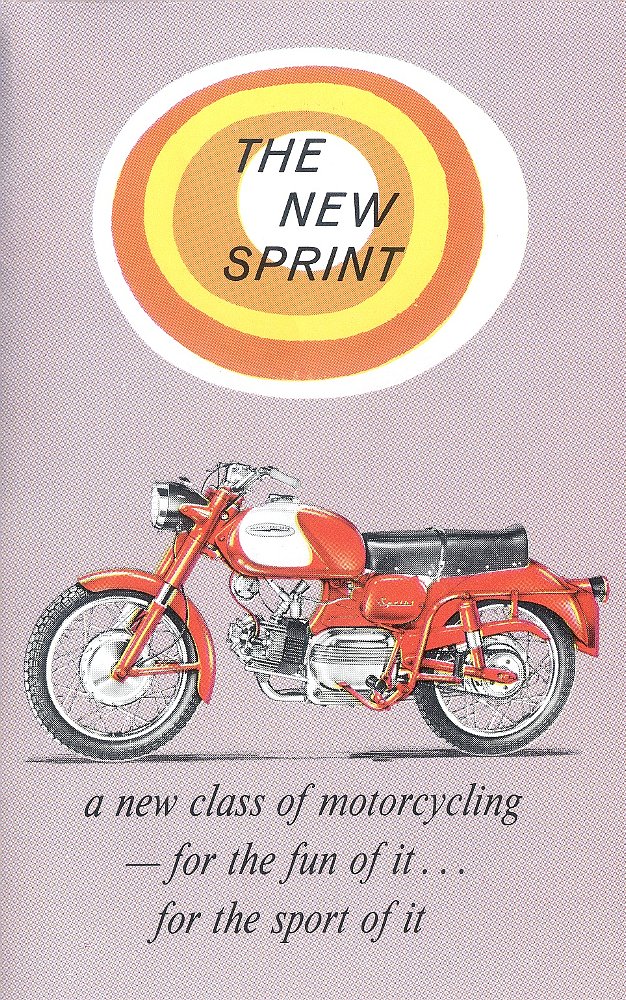
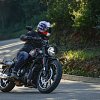
Will the Sprint 440 help execute Harley-Davidson's strategy and bring more people into the fold? I definitely think so. The pull of the Bar and Shield is strong and the Sprint 440 is compelling on its own merits. There's an elephant in the room, in that some will say it's "not a real Harley" because it lacks a cylinder and originated outside Wisconsin. But I say that's nonsense. It has genuine Harley character and presence and, anyway, the company has a long history of collaborations, even drawing inspiration from its Aermacchi partnership of the 1960s. At one point during our ride, I looked at the following bikes in my mirrors; the silhouette was unmistakably Harley-Davidson.
For $5,999, there's precious little to complain about. The indicator switch feels cheap, the exhaust is an unfortunate consequence of emissions regulations and inherited chassis design, and experienced riders will eventually find themselves wishing for a little more shove. But the Sprint is handsome, characterful, easy to ride and, above all, fun — and when the price tag is considered, the shortcomings barely register. It's a Harley that welcomes newcomers without demanding they first develop the forearms of a gorilla or the bank balance of a lawyer. The only question is whether the youngest of new riders will be into a cruiser-esque bike or prefer something a bit more peppy, like Triumph's Speed 400.
And if my experience riding that poor, anonymous single to Goodwood taught me anything, it's that there's something rather charming about a motorcycle you can simply get on, ride, and not worry about, no matter what you get up to on it. The Sprint 440 has that same uncomplicated charm. I suspect a great many new riders are going to love it.
| 2027 Harley-Davidson Sprint 440 | |
|---|---|
| Price (MSRP) |
$5,999 U.S. $8,499 Canada |
| Engine | 440 cc, air-and-oil-cooled, two-valve single |
|
Transmission, final drive |
Six-speed, chain |
| Claimed horsepower | 27 @ 6,000 rpm |
| Claimed torque | 28 foot-pounds @ 4,000 rpm |
| Frame | Tubular steel |
| Front suspension | 43 mm inverted fork; 5.1 inches of travel |
| Rear suspension | Dual shocks adjustable for preload; 3.0 inches of travel |
| Front brake | Single two-piston caliper, 320 mm disc with ABS |
| Rear brake | Single-piston caliper, 240 mm disc with ABS |
| Rake, trail | 27.6 degrees, 4.26 inches |
| Wheelbase | 57.1 inches |
| Seat height | 26.9 inches |
| Fuel capacity | 2.4 gallons |
| Tires | 100/90-19 front, 150/60ZR17 rear |
| Claimed weight | 412 pounds |
| Warranty | 24 months |
| Available | Spring 2027 in the United States, earlier elsewhere |