Shop by Vehicle
 Track Order
 Contact Us
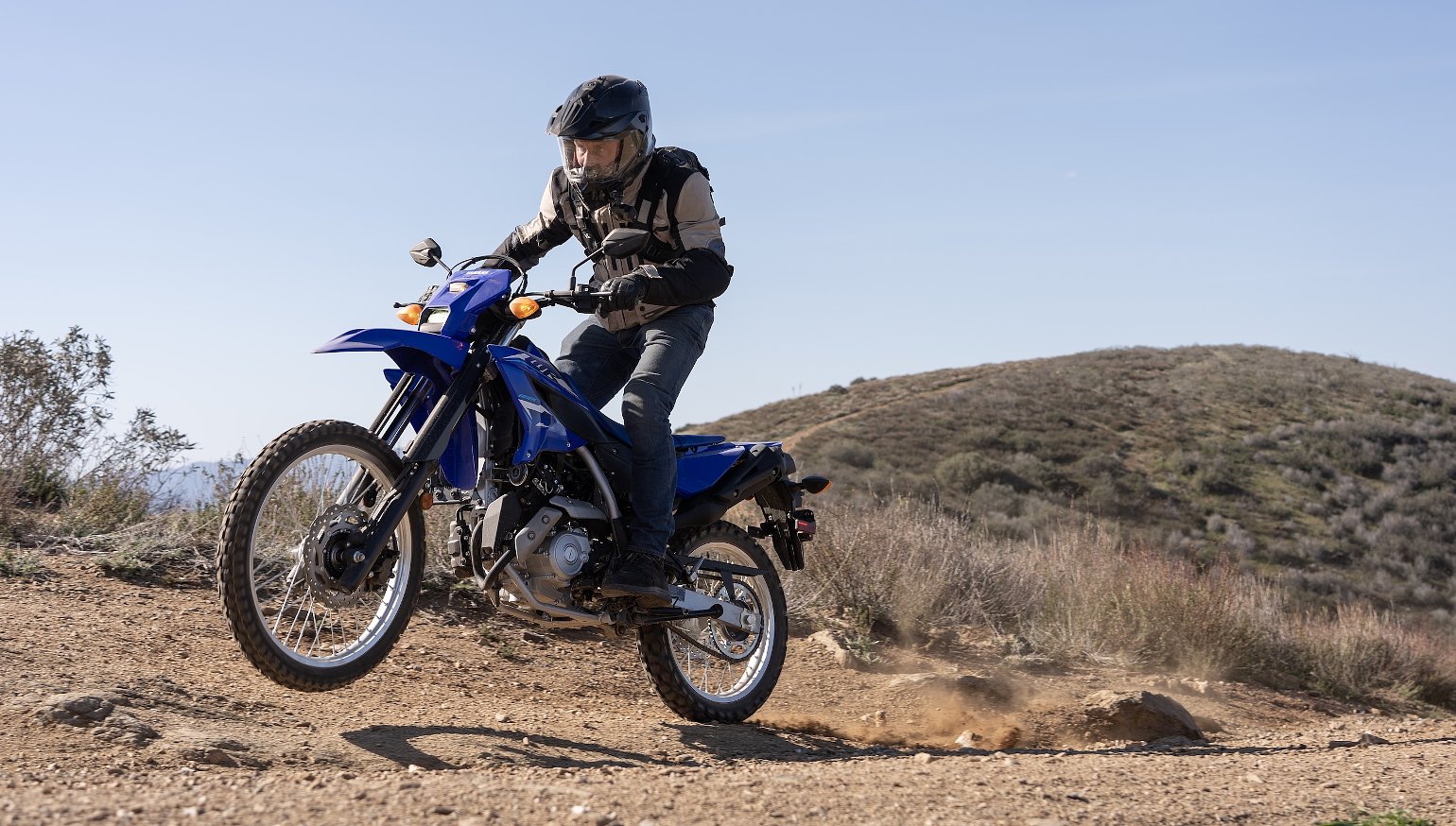
I was not expecting to be excited by an entry-level bike’s spec sheet. Yet my eyebrows kept rising as I reviewed the 2026 Yamaha WR125R’s press materials, and they reached a crescendo when I saw that it has variable valve actuation.
That’s right, VVA, on a $3,999 125. Previously, if you wanted that power-spreading tech you’d need to spend at least $16,499 on a Suzuki GSX-R1000, and frankly, the Yamaha’s two distinct intake-cam profiles are more similar to BMW’s Shift Cam (available on the R 1300 GS or R 1300 RT, both with starting prices well above $20,000) than Suzuki’s simpler intake-cam phasing. Sure, I wondered if VVA would actually make a difference on such a small engine, but the fact that the bike has it is exciting.
Surprising sophistication
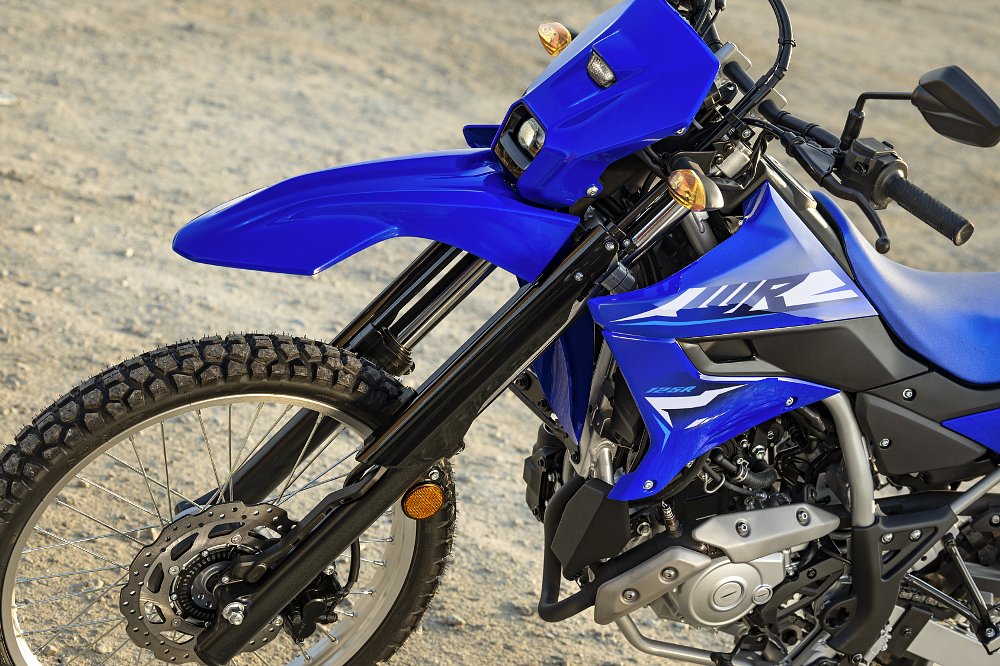
VVA is the frosting on top of a spec-sheet cake that includes a fully modern, liquid-cooled, fuel-injected, four-valve engine (as opposed to old-school, two-valve, air-cooled setups like Yamaha’s own TW200 and XT250, Honda’s XR150L, and Kawasaki’s KLX230 Sherpa S), front-only ABS, an LCD dash with tachometer, gas gauge, gear-position indicator, and Bluetooth connectivity, LED headlight and taillight, full-size 21-inch front and 18-inch rear wheels, and a beefy (by small-bike standards) 41 mm fork.
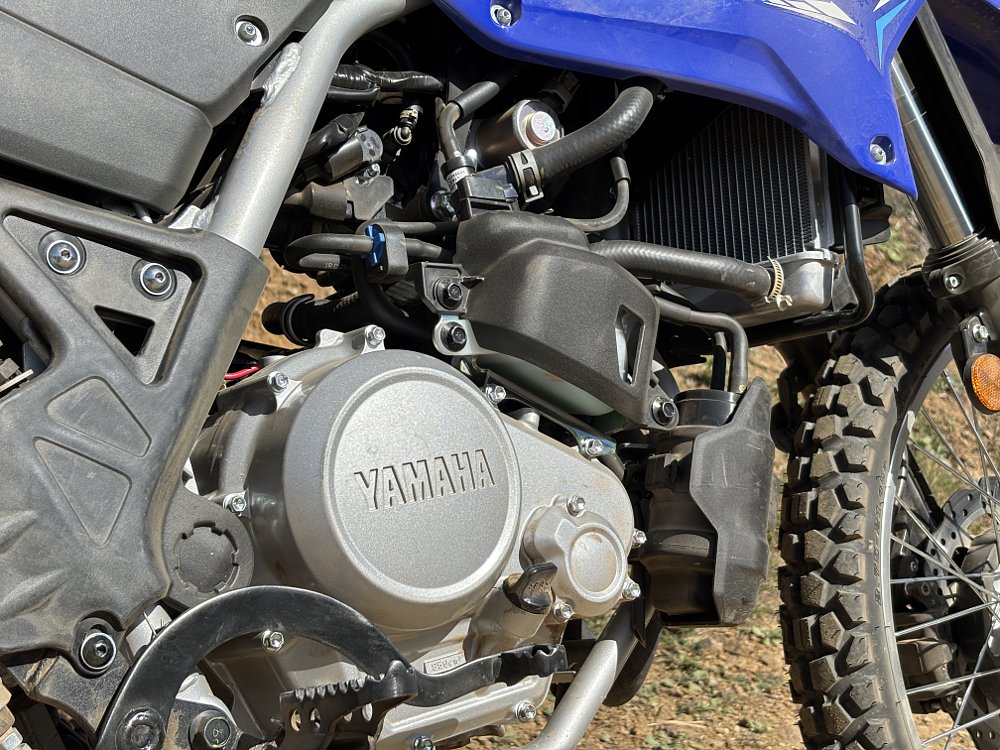
That’s a lot of features and tech for four grand. Honda’s $3,400 XR150L is the only comparable motorcycle that’s more affordable, but that bike is decidedly rudimentary. Then again, the XR150L undercuts the WR125R by 22 pounds, and has a much more approachable seat height. The WR’s coolant and copious add-ons put the bike at a claimed 304 pounds with the 2.1-gallon tank full, and this beginner bike has a surprisingly tall 34.4-inch seat height.
Specs in practice
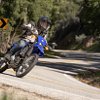
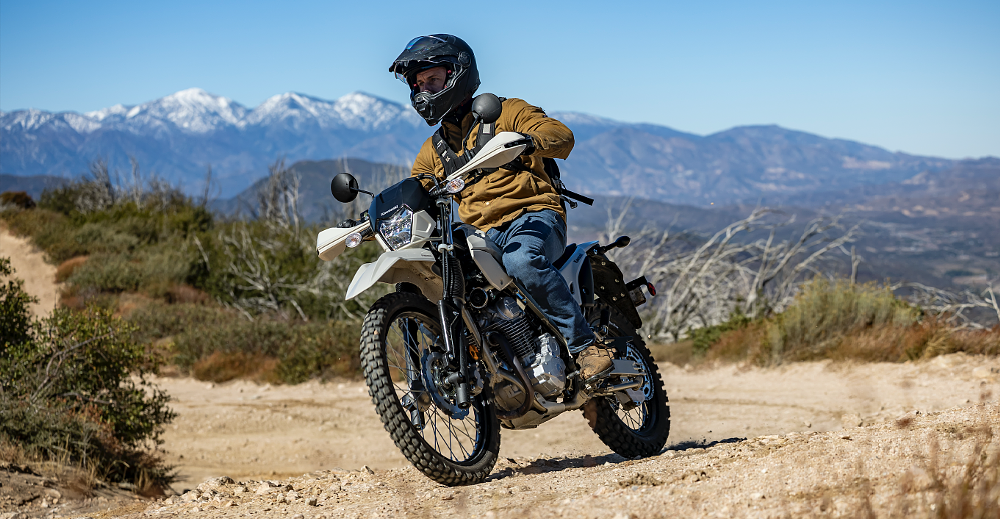
Specs are only a table of contents, so I was eager to spend a day aboard Yamaha’s new machine to get the full story and see how the bike actually works. The WR strikes a contemporary off-road pose with its radiator shrouds and a long motocross seat that extends well up the gas tank. At five feet, eleven inches tall, I could easily put my feet on the ground, and with my boots on the pegs I had a comfortable bend in my knees. Likewise, the wide ⅞-inch steel handlebar put my hands in a natural position, so while the WR may be small in terms of displacement, its proportions work for full-sized riders. On the flipside, anyone under five foot, eight inches will likely struggle to touch the ground with both feet.
Starting the bike reminds you just how few cc you’re working with, because you can barely hear or feel the engine running. If you’ve ridden a Honda Grom or Kawasaki Z125, you have an idea of what the WR125R feels like when you open the throttle below 8,000 rpm. Above that, when the engine is really revving and the VVA solenoid activates the rocker arm for the second cam profile, the bike has a bit more pep, but nobody is ever going to call this thing fast.
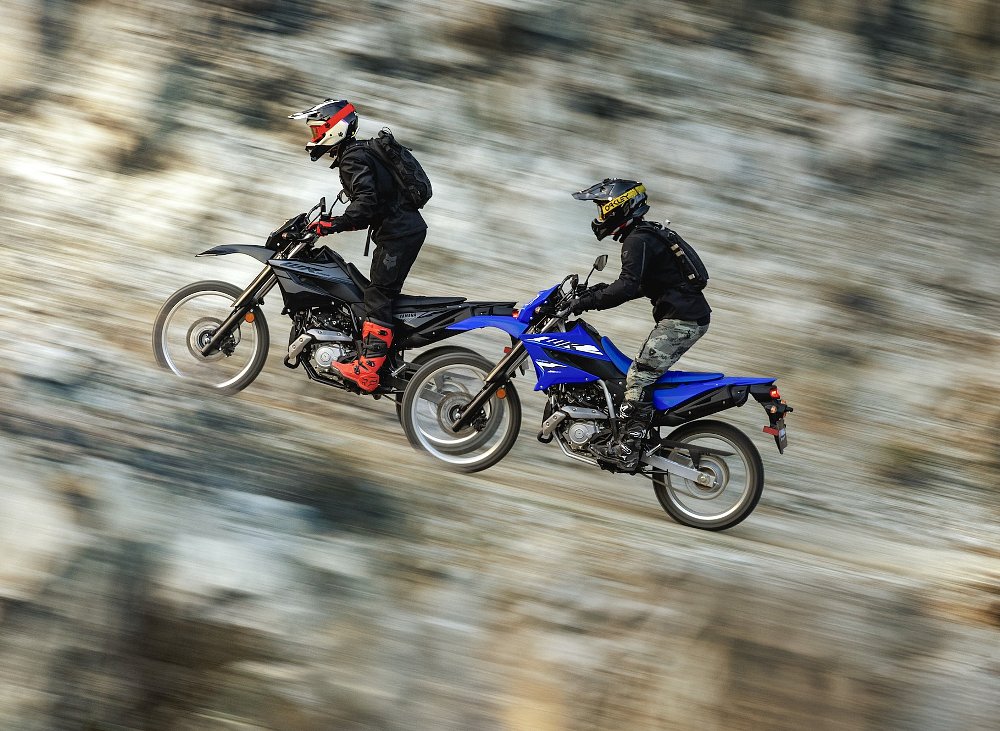
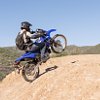
The rev limiter kicks in somewhere around 11,500 rpm, at which point you’re traveling at roughly 67 miles per hour. That’s on flat pavement, in a full tuck. If you’re facing an incline, especially off-road, a downshift (or several) are in order. The engine gets the job done, but demands a measure of aggressiveness that might not come naturally to a new rider. Even in first gear, steep inclines will likely require some clutch finesse unless you really get a run at them.
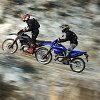
The good news for folks who want to exercise the WR in the dirt is that it has excellent suspension, with a comfortably compliant ride combined with great spring support and damping. That means you can push the bike pretty hard and hit ruts and rocks at speed without blowing through the stroke or getting unstable.
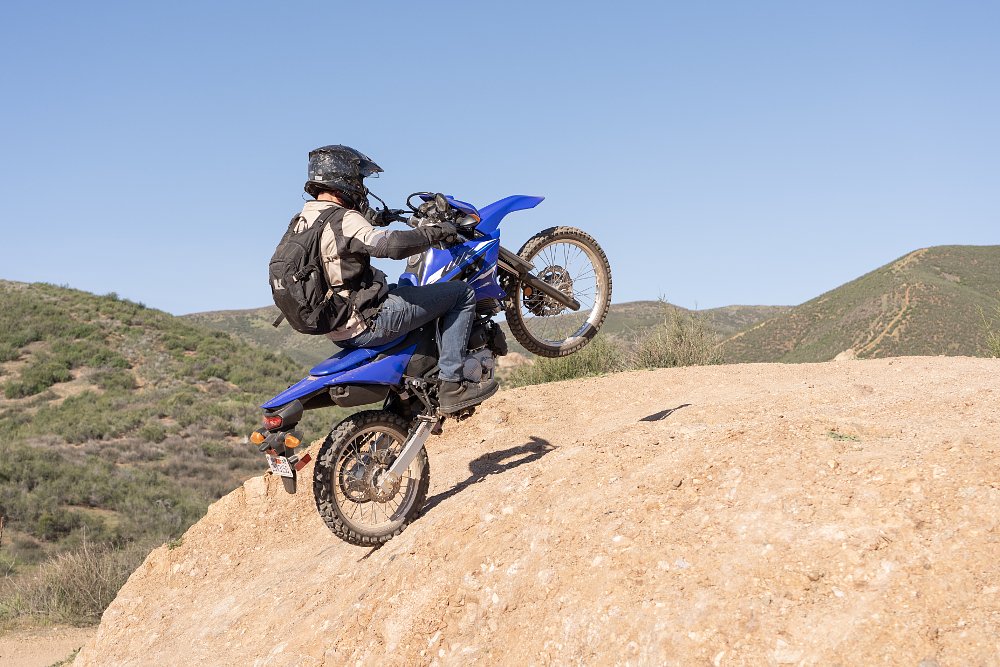
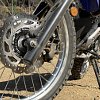
Front-only ABS is also a boon, and is surprisingly lenient for a beginner bike. You can still lock the rear tire, which like the front is the popular Dunlop D605 designed for a 50/50 blend of on- and off-road use.
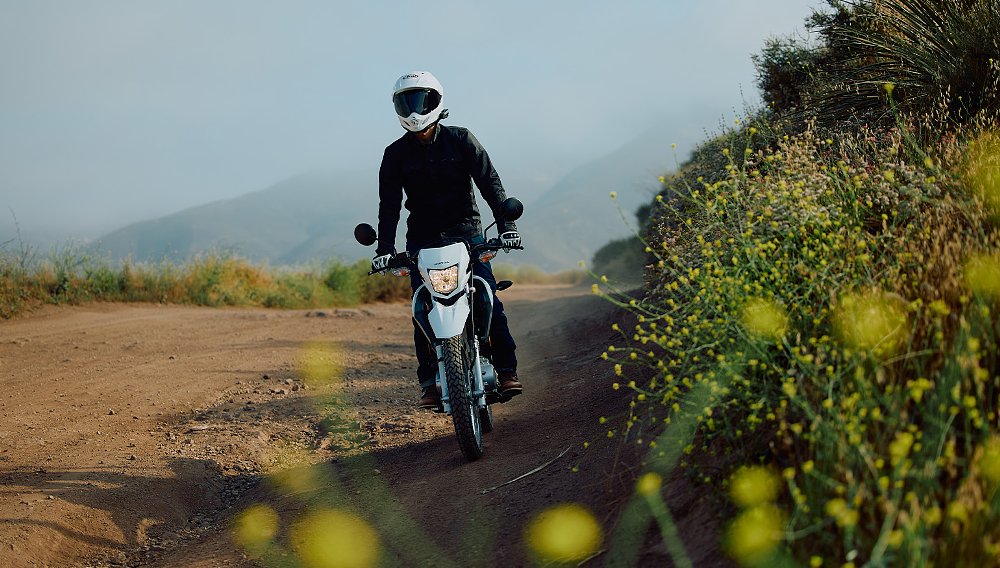
As our group explored further into the mountains that separate the Los Angeles Basin from the Mojave Desert, I imagined being a new rider, and a huge smile came across my face. This bike, with its low price, all-surface capability, 90-plus MPG efficiency, and modern amenities, is undeniably a great entry point for a newb. Off-road riding is the best way to get started on two wheels, and the new WR125R is almost the best beginner dual-sport on the market. Almost.
Missing the mark
For a beginner bike, the WR misses the mark in two crucial ways. Machines meant to attract inexperienced riders benefit from low seats, and 34.4 inches is not low. True, Yamaha offers a one-inch shorter saddle in the accessory catalog, but it seems like 33.4 inches would have been a better place to start.
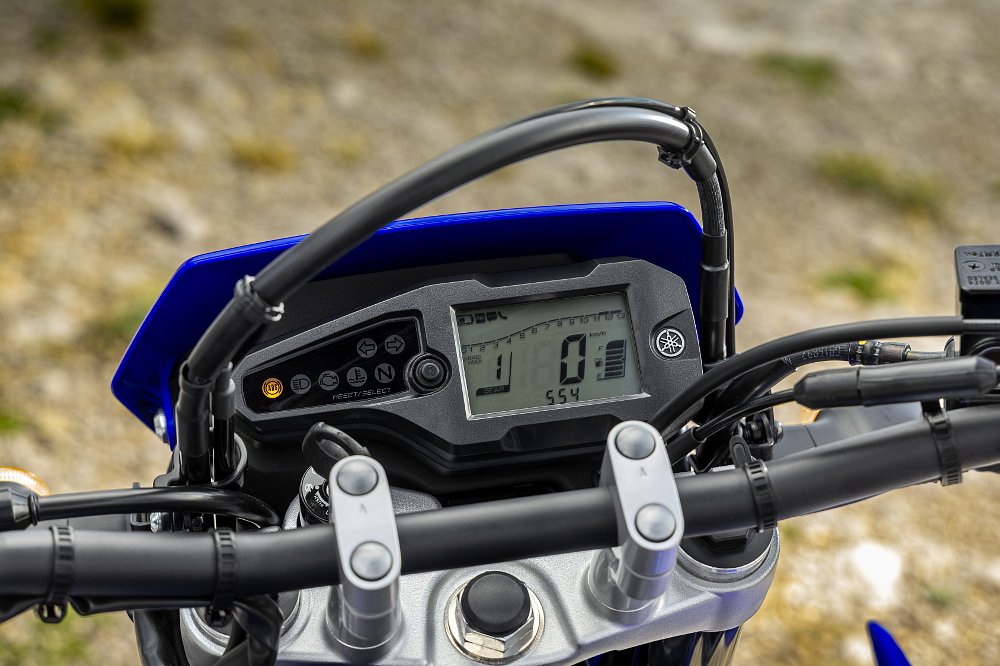
A bigger issue, though, is the engine. While I was initially enthusiastic about the WR’s flashy motor tech, it left me underwhelmed and a little disappointed. It’s like putting Swiss-watch mechanicals inside a wall clock — impressive engineering, but it lacks the muscle to move the hands with any authority. I can’t help but think how much better this bike would be with the (now discontinued) XT250’s workhorse of a 249 cc, air-cooled, two-valve mill. It’s not as exciting from a technological standpoint, but it’s more tractable and versatile, which could ultimately lead to more exciting adventures for the rider.
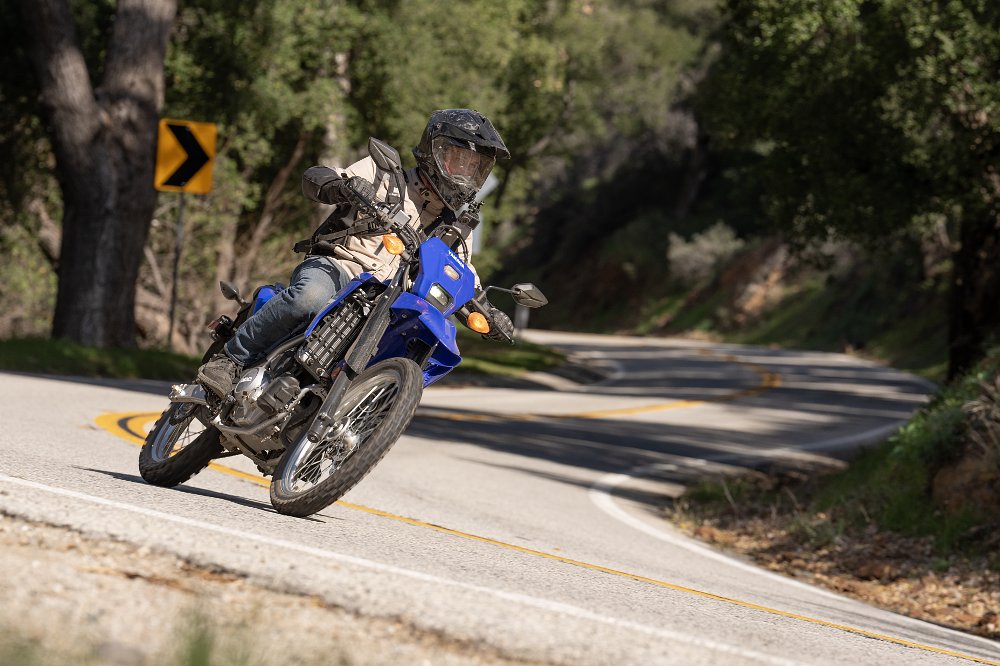
I understand how we got here, though. The WR125R is a global bike, built in Yamaha’s Indonesia factory for Asian markets where 125 cc is the default displacement, and Europe with its cap of 125 cc and 15 horsepower for A1 license holders. Americans might benefit from a 250 variant, but it would limit the bike’s viability for the rest of the globe. Interestingly, other parts of the world have had VVA for over a decade — the technology debuted in the NMAX scooter way back in 2015.
As much as I may lament the WR’s lack of grunt and 65ish-mph top speed, Groms max out at 55 mph, and those bikes are wildly popular. Hopefully my perspective on the bike’s performance is skewed by my experience, and the newer riders this bike is aimed at will be absolutely tickled by their new bike, just like I was when I first read about it.
| 2026 Yamaha WR125R | |
|---|---|
| Price (MSRP) | $3,999 |
| Engine | 125 cc, liquid-cooled, four-valve single |
|
Transmission, final drive |
Six-speed, chain |
| Claimed horsepower | 14.3 @ 10,000 rpm |
| Claimed torque | 8.3 foot-pounds @ 6,500 rpm |
| Frame | Steel perimeter |
| Front suspension | KYB 41 mm fork; 8.5 inches of travel |
| Rear suspension | KYB shock adjustable for preload; 7.3 inches of travel |
| Front brake | Two-piston caliper, 267 mm disc with ABS |
| Rear brake | Single-piston caliper, 220 mm disc |
| Rake, trail | 28.3 degrees, 4.6 inches |
| Wheelbase | 56.3 inches |
| Seat height | 34.4 inches |
| Fuel capacity | 2.1 gallons |
| Tires | Dunlop D605 90/90-21 front, 110/80-18 rear |
| Claimed weight | 304 pounds |
| Available | Now |
| Warranty | 12 months |
| More info | Yamaha.com |