Shop by Vehicle
 Track Order
 Contact Us
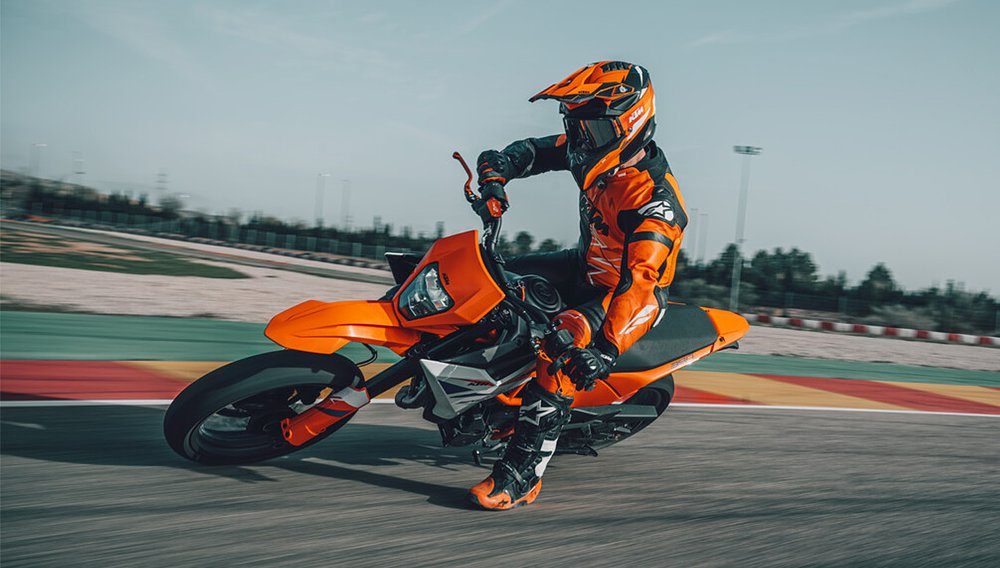
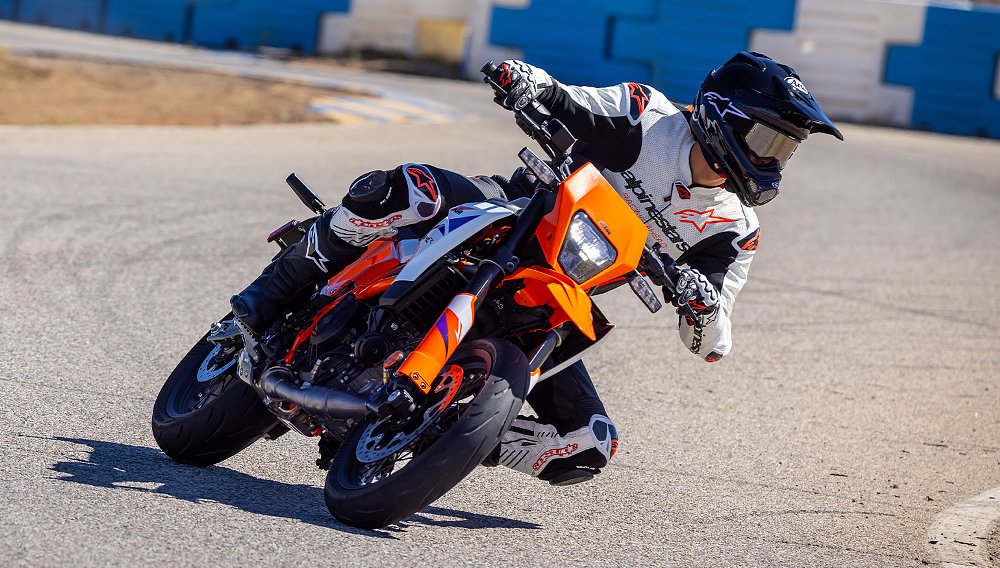
When I picked up the KTM 690 SMC R, I made a conscious choice not to do any online research. No reviews, no videos, no forums. Other people's opinions — no matter how unbiased we try to be — tend to plant a seed. I wanted a clean slate and to let the bike speak for itself.
At the track, it usually takes me a lap to form about 80% of my opinion of a motorcycle. On the street, which is where this bike is primarily intended to live, those impressions arrive more gradually. You don't get the same apples-to-apples context the track provides. Still, I figured a quick loop around my Los Angeles neighborhood would get things started.
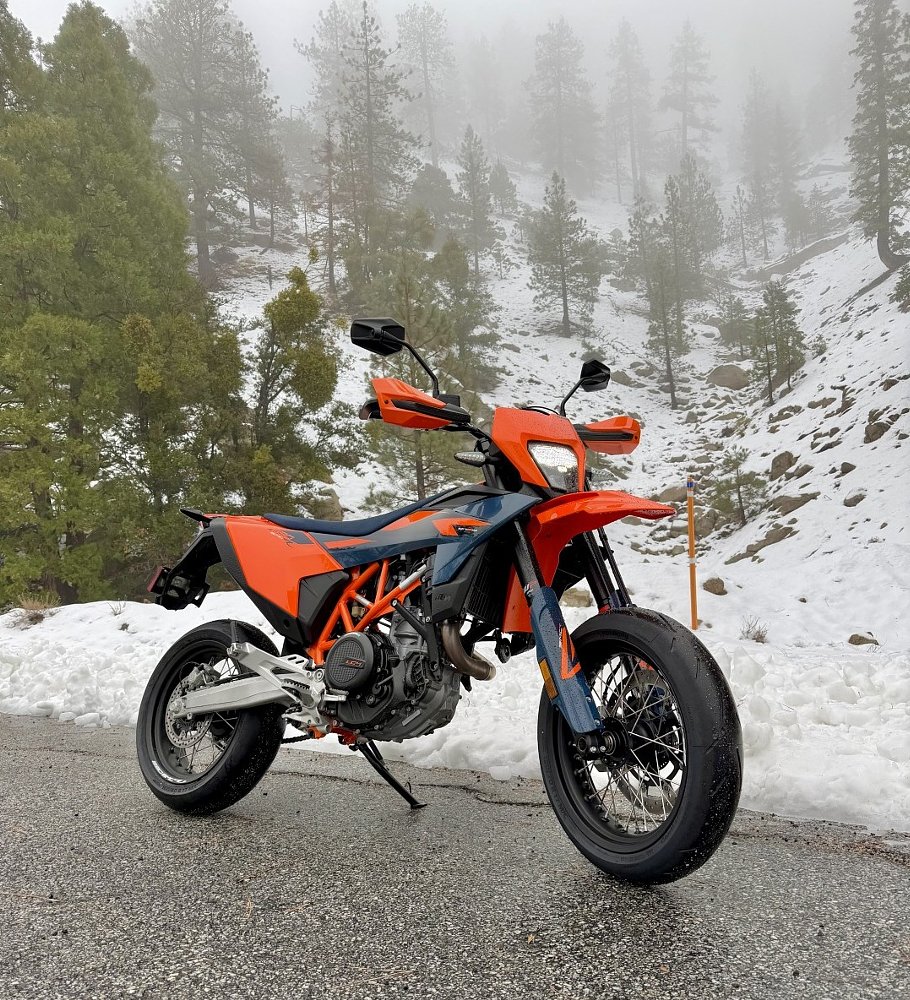
After taking delivery, I rolled the SMC R around the block. It felt good, so I added a short highway stint. While on the freeway, I thought, "Why not run up Angeles Crest and try a few corners?" A few corners turned into a few more, which turned into "I'll just go a little farther up the mountain."
Before I knew it, my "ride around the block" had me at 6,000 feet, with snow on both sides of the road, patches of sand and ice, and frozen fingers warmed only by pressing them against the clutch cover. Then I pointed the bike back toward L.A.
A brief history of supermoto (including mine)
The concept traces back to ABC's televised "Superbikers" event in Carlsbad, California, starting in 1979, that pitted racers from different disciplines against each other on a hybrid track — part road course, part flat-track, part motocross — that produced unforgettable battles. Riders gravitated toward 500 cc two-stroke motocross bikes with big brakes and flat-track tires. "Superbikers" faded in the United States but Europe embraced what became Supermotard, which grew from grassroots oddity to mainstream sport. In the early 2000s, supermoto racing exploded globally and enjoyed a solid decade before cooling off. But it was enough momentum for manufacturers to bring factory-built supermoto models to U.S. dealers: KTM's Duke series, Suzuki's DR-Z400SM, Ducati's Hypermotard, Aprilia's SXV and Dorsoduro, among others.

My love for supermoto began in 1985 when I was 15, riding a first-generation Kawasaki KLR600. Through Kawasaki's support of the California Superbike School, I got one as a loaner and eventually moved to a KLR650 I fitted with 17-inch wheels front and rear plus street tires. In my teens, I fancied myself a marauder carving through the tight roads of Beachwood Canyon, the alleys below the Hollywood sign, and Sunset Boulevard — wheelies all day, every day. I'm fairly sure I was the first person to jump Baxter Street, now internet-famous after a Tesla took flight over it.
What struck me then — and still holds true — is the versatility of a supermoto. In the city, riding a sport bike often feels like using a cheese grater to cut steak: the wrong tool for the job. When production supermotos finally emerged, they felt like the right answer.
More recently, I've owned the Husqvarna FS 450 supermoto, a purpose-built, non-street-legal race bike. I've logged plenty of laps at local kart tracks alongside national and international racers training in the off-season. I also guest-coach at SoCal Supermoto with Brian Murray and crew.
Supermoto has been woven into my riding life for decades. I'm a fan — unapologetically so.
My takeaways from that unexpected shakedown ride
After that first "ride around the block" that turned into much more, I jotted down my first impressions:
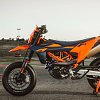
- It's a good-looking motorcycle. The proportions and bodywork are cohesive and sharp.
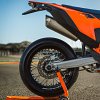
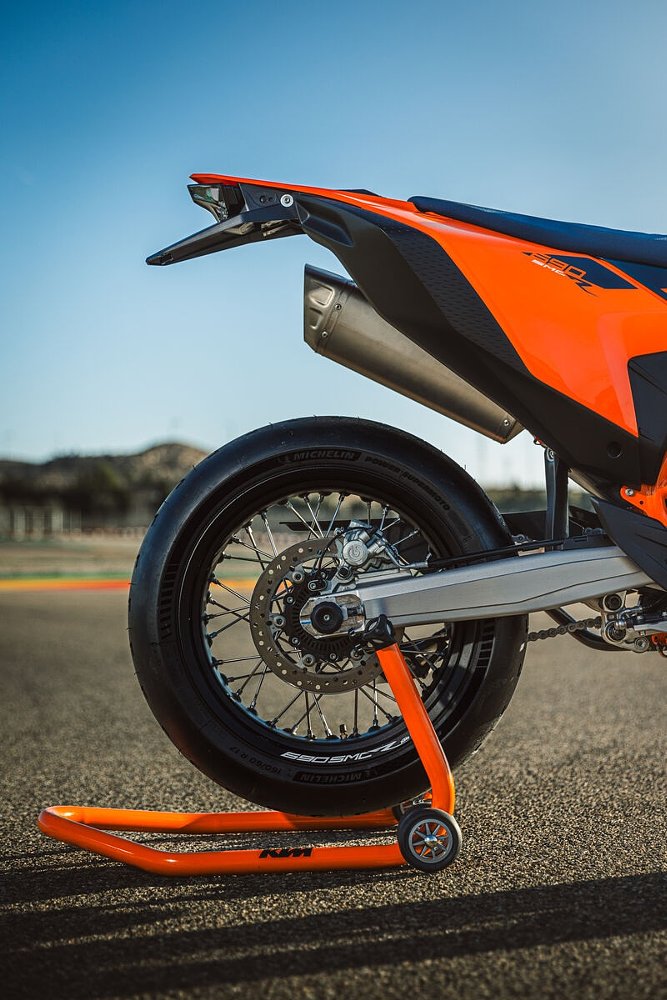
- The details show quality. CNC-machined triple clamps, swingarm milling, and the integrated tail-section fuel cap all give it a premium feel. It avoids the plasticky look common on some singles.
- Reasonable noise at idle. It won't wake the neighborhood every time you fire it up.
- It's tall. I'm five feet, 10 inches tall with a 32-inch inseam and fit it fine, but shorter riders will be on tiptoe or shifting to one side at stops because of the 35.4-inch seat height. My five-foot, five-inch-tall lady couldn’t manage it comfortably. Taller riders will love the roomy ergonomics while shorter riders may feel like they're climbing onto a draft horse.
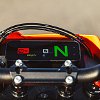
- Excellent quickshifter. Upshifts and downshifts are crisp with a satisfying mechanical click. Neutral is easy to find.
- Surprisingly smooth for a 692 cc single. Far smoother than its displacement would suggest.
- Strong, controllable brakes. Initial bite is gentle. There's no sudden fork dive (important for off-road riding). Hard braking requires firm pressure, which I prefer.
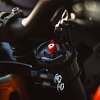
- Fork damping was overly restrictive out of the crate. Compressing the fork produced a loud “sucking” sound from excessive damping. Fortunately, the finger-adjustable clickers made it a 30-second fix, no tools required.
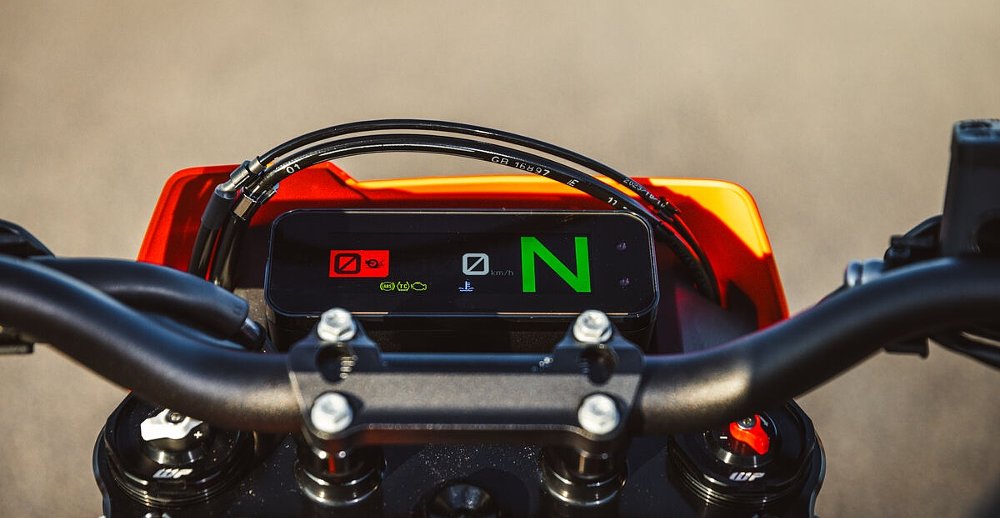
- Riding modes are highly customizable — maybe too customizable. Ten traction-control levels on a supermoto feels… ambitious.
- Good, usable power, but don't expect endless reserves. It pulls well but won’t be confused with a big twin. A 50-to-80 mph roll-on takes a breath. Power delivery at low rpm is smooth and linear — rare for a big single — which speaks to KTM’s mapping work.
- Its natural habitats are the city and the canyons. Agility makes it work in tight urban environments and tangled back roads alike. Long highway stretches and gentle sweepers aren't where it excels.
- It really shines on tight, twisty roads. Handling is stable, predictable, and neutral. A miniscule tendency to stand up mid-corner, likely due to tire profile.
- Highway manners are just acceptable but not its strength. Wind buffeting gets tiring on long stints.
- Limited off-road credibility. Yes, it can handle a fire road. No, it’s not your go-to dirt machine.
- Low fatigue. The upright seating and roomy saddle provide multiple comfortable positions.
- It runs hot at idle. On a 70-degree day, the radiator fan kicked on after 45 seconds of idling.

Taking the KTM 690 SMC R to the track
Because it's a supermoto, I had to ride it in its other intended element. I visited SoCal Supermoto at APEX Racing Center in Perris, California, which has a one-kilometer paved section and a dirt section with berms and jumps.
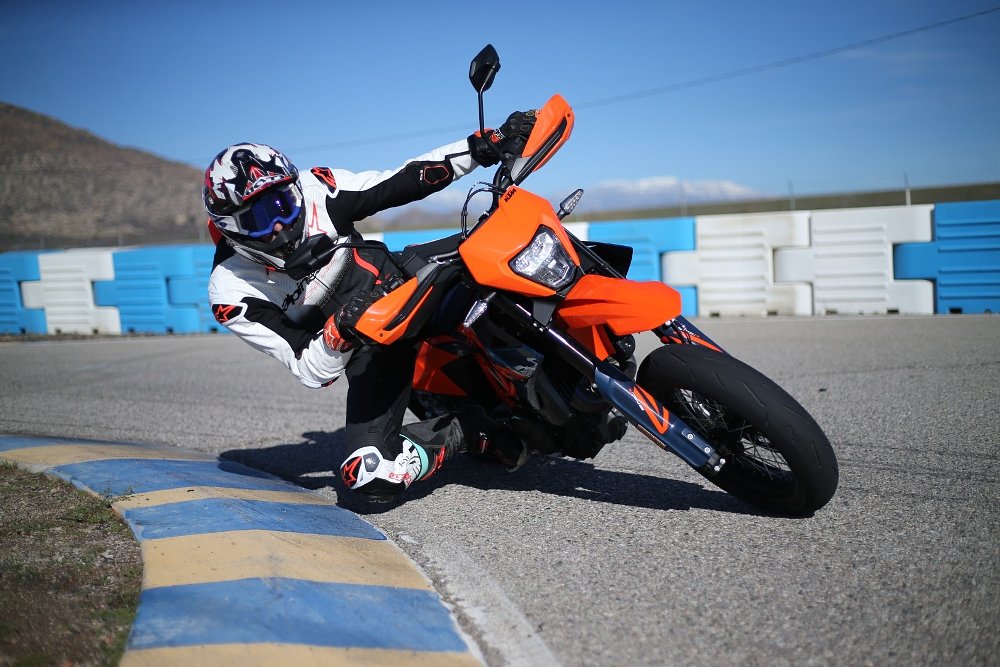
On the pavement, the bike felt balanced and neutral, consistent with my street impressions. I dialed in a bit more rebound damping, a simple task with the finger-adjustable clickers. Power delivery is so progressive off the bottom that you need to recalibrate your throttle timing for the earliest possible roll-on. This is a good thing: Managing a snappy big single gets tiresome quickly.
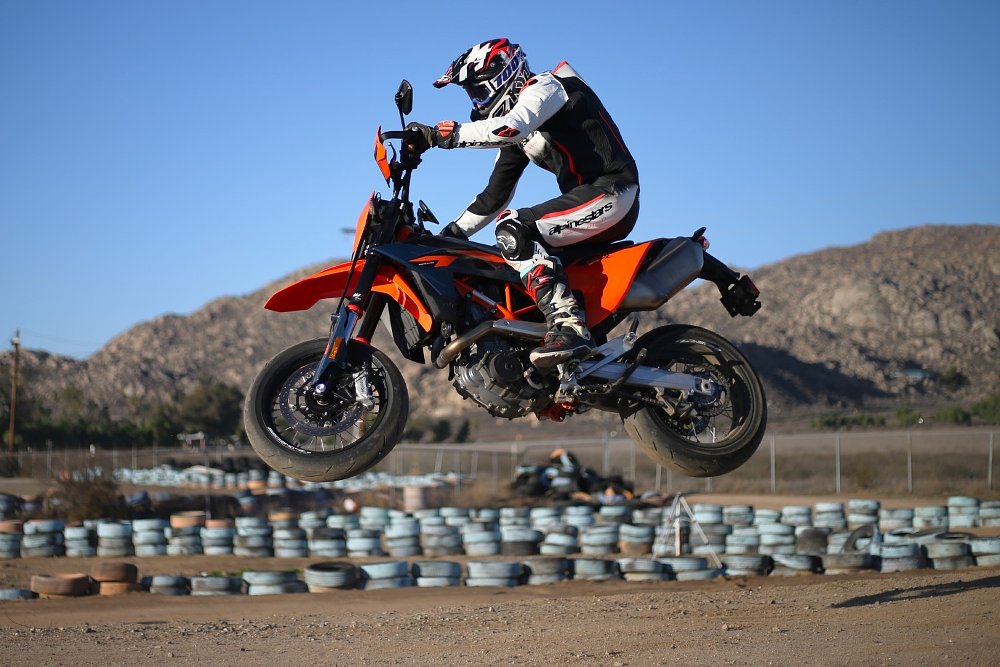
The dirt section was the big question mark, especially the jumps. I expected harsh landings and sketchy behavior. Instead, landings were plush, and rear-tire spin was smooth and predictable. It performed far better than expected.
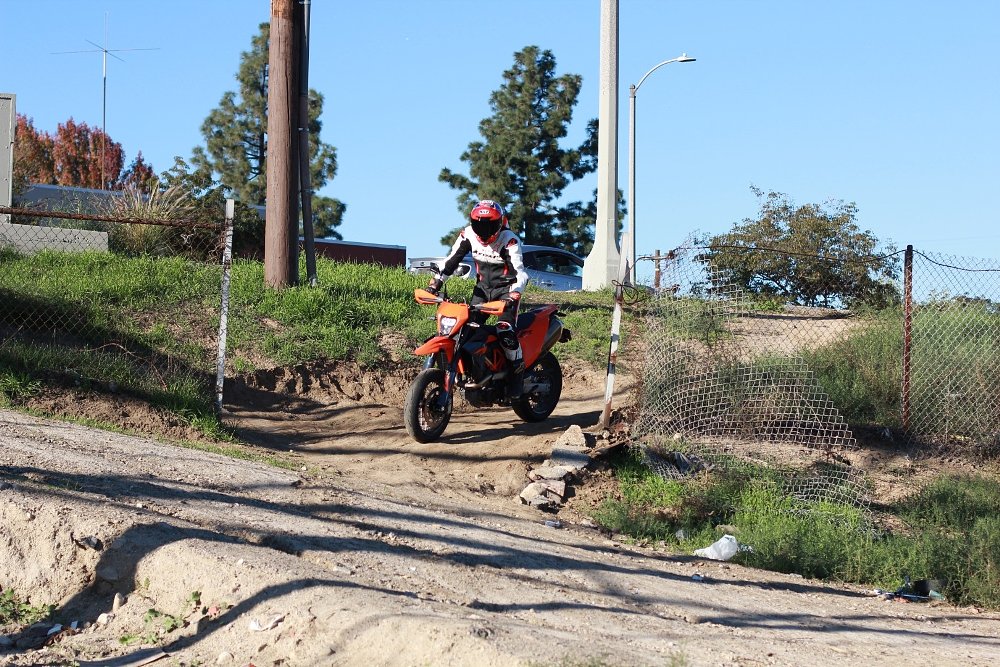
To be clear, this is not your first choice for serious off-roading, but for mild dirt, curb drops, or descending a gentle set of stairs, it's totally capable.
Why choose a Supermoto? Who is it for?
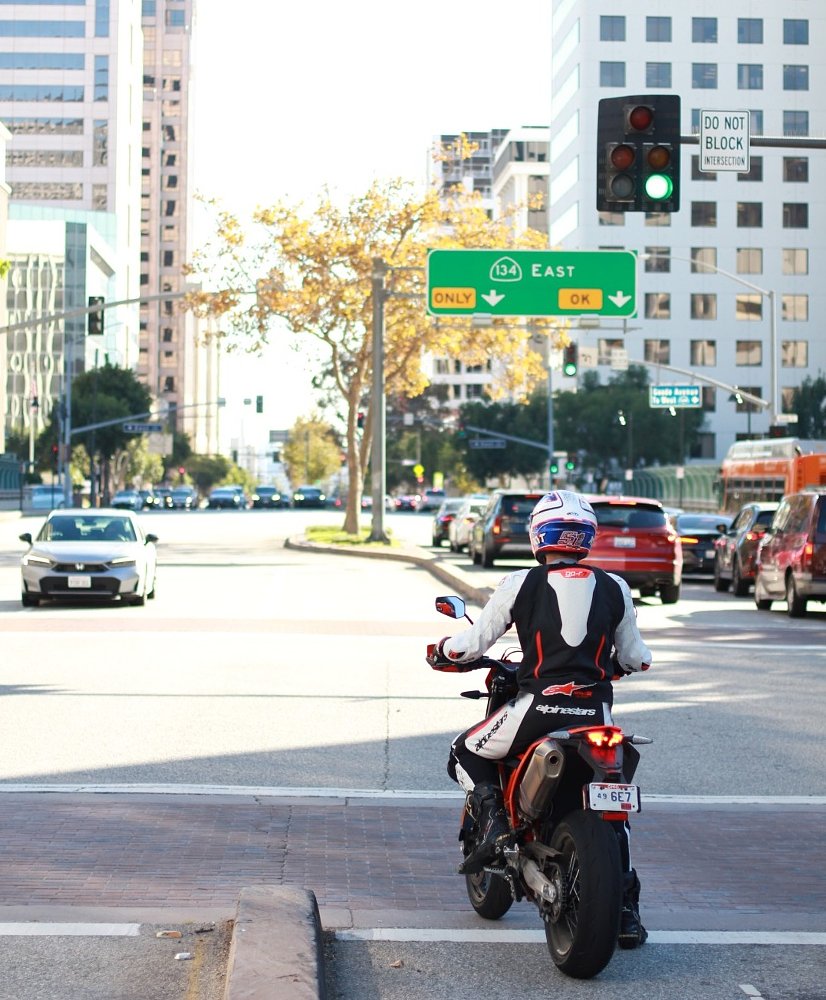
As mentioned, the KTM 690 SMC R is at home on twisty roads and in urban environments. Riding in the city is a mixed bag with constant surprises, and this bike's light weight, agility, tight turning radius, bottom-end torque, and supple suspension all contribute to greater urban mobility — and, frankly, survival. Riding up a curb to park on the sidewalk has that slight "I do my own thing" outlaw flavor that seems built into supermoto DNA.
The highway is another story. I rode the bike roughly 140 miles round-trip on Los Angeles freeways heading to and from APEX. The highway portions were fatiguing. Wind buffeting becomes annoying, and while the bike isn't unstable, it's no cruiser. But once I hit downtown L.A. gridlock in the dark, the bike's strengths came flooding back. The tall seating position gives a clear view over traffic, and the agility makes threading through cars almost effortless.
So who's it for and why?
- City commuters, because the upright posture improves vision in traffic and the tight turning radius comes in handy.
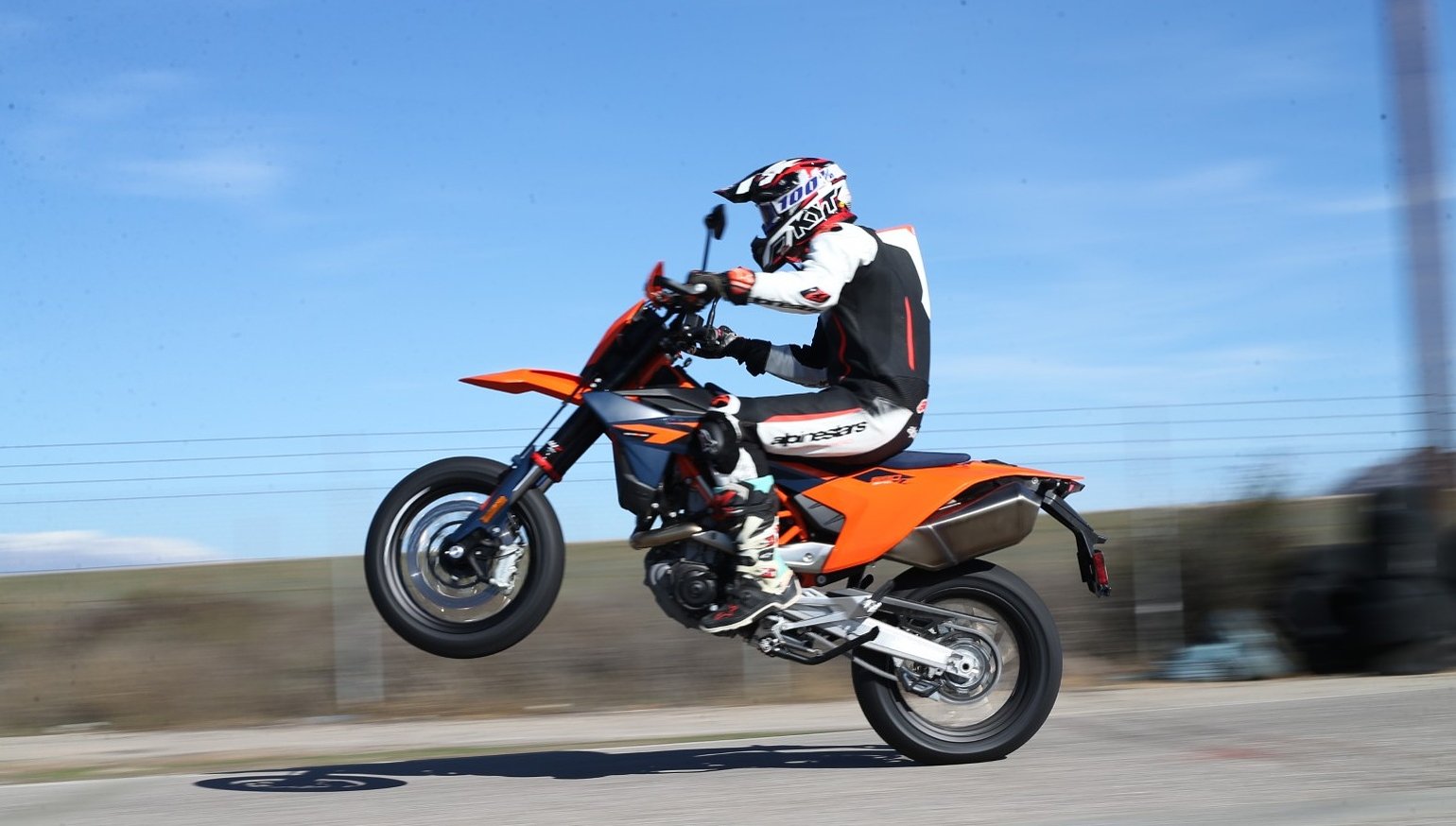
- Weekend canyon riders, because the light weight and wide handlebar make changes of direction effortless (not to mention a willingness — some would say eagerness — to wheelie).
- Former motocross riders now avoiding high-risk dirt riding but wanting something lively on the street, because the light weight will remind them of dirt bikes.
- Riders with back issues who can't tolerate sport bike ergonomics, again because of the upright riding position.
- Riders in geographically confined areas (Hawaii comes to mind) because they won't be riding long distances where highway comfort matters.
- Riders regularly navigating potholes, uneven pavement, and mixed conditions because the suspension shrugs off rough surfaces.
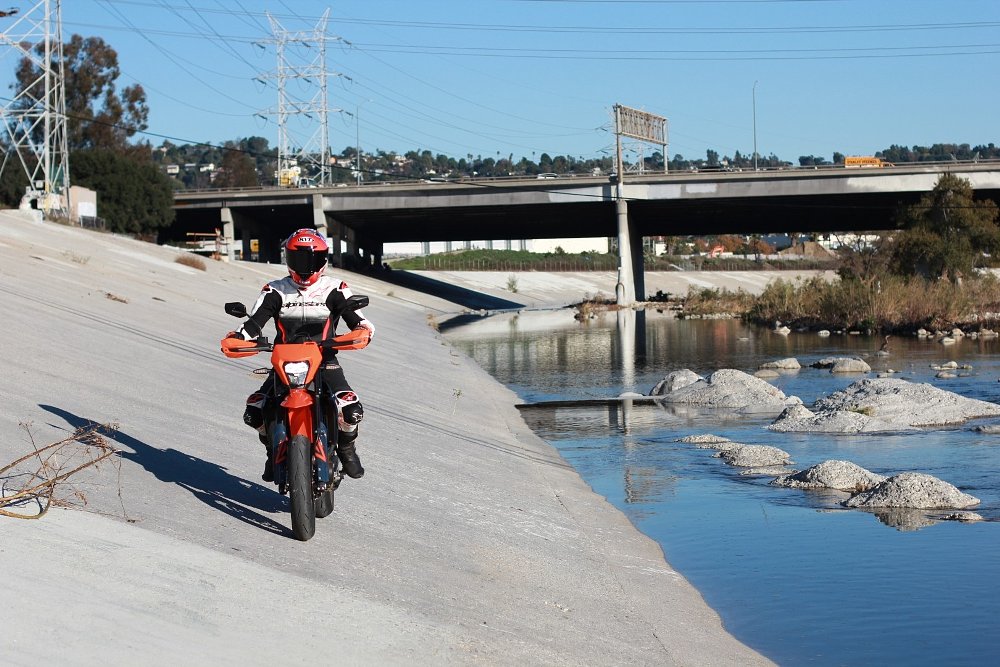
It's hard to overstate the fun factor of a supermoto. Most riders don't fully get supermotos until they ride one. In the city and on technical roads, they're intoxicating. They make everyday riding feel less intimidating and a whole lot more fun.
The KTM 690 SMC R is fun, confidence-inspiring, and a true jack of all trades, master of none, but in the most endearing way possible. If you've read this far, you likely already know whether a bike like this fits your riding profile.
If you value agility, urban capability, canyon carving, and the unmistakable grin that comes from a well-sorted supermoto, the 690 SMC R should be on your shortlist.
| 2026 KTM 690 SMC R | |
|---|---|
| Price (MSRP) | $13,399 |
| Engine | 692.7 cc, liquid-cooled, four-valve, single |
|
Transmission, final drive |
Six-speed, chain |
| Claimed horsepower | 78 |
| Claimed torque | 54 foot-pounds |
| Frame | Steel trellis |
| Front suspension | WP APEX 48 mm fork, adjustable for compression and rebound damping; 8.8 inches of travel |
| Rear suspension | WP APEX shock, adjustable for preload, high- and low-speed compression, and rebound damping; 9.4 inches of travel |
| Front brake | Single Brembo four-piston caliper, 300 mm disc with ABS |
| Rear brake | Brembo caliper, 240 mm disc with ABS |
| Rake, trail | 26.4 degrees, 4.3 inches |
| Wheelbase | 58.1 inches |
| Seat height | 35.4 inches |
| Fuel capacity | 3.5 gallons |
| Tires | 120/70R17 front, 160/60R17 rear |
| Claimed weight | 357 pounds wet |
| Available | Now |
| More info | ktm.com |