Shop by Vehicle
 Track Order
 Contact Us
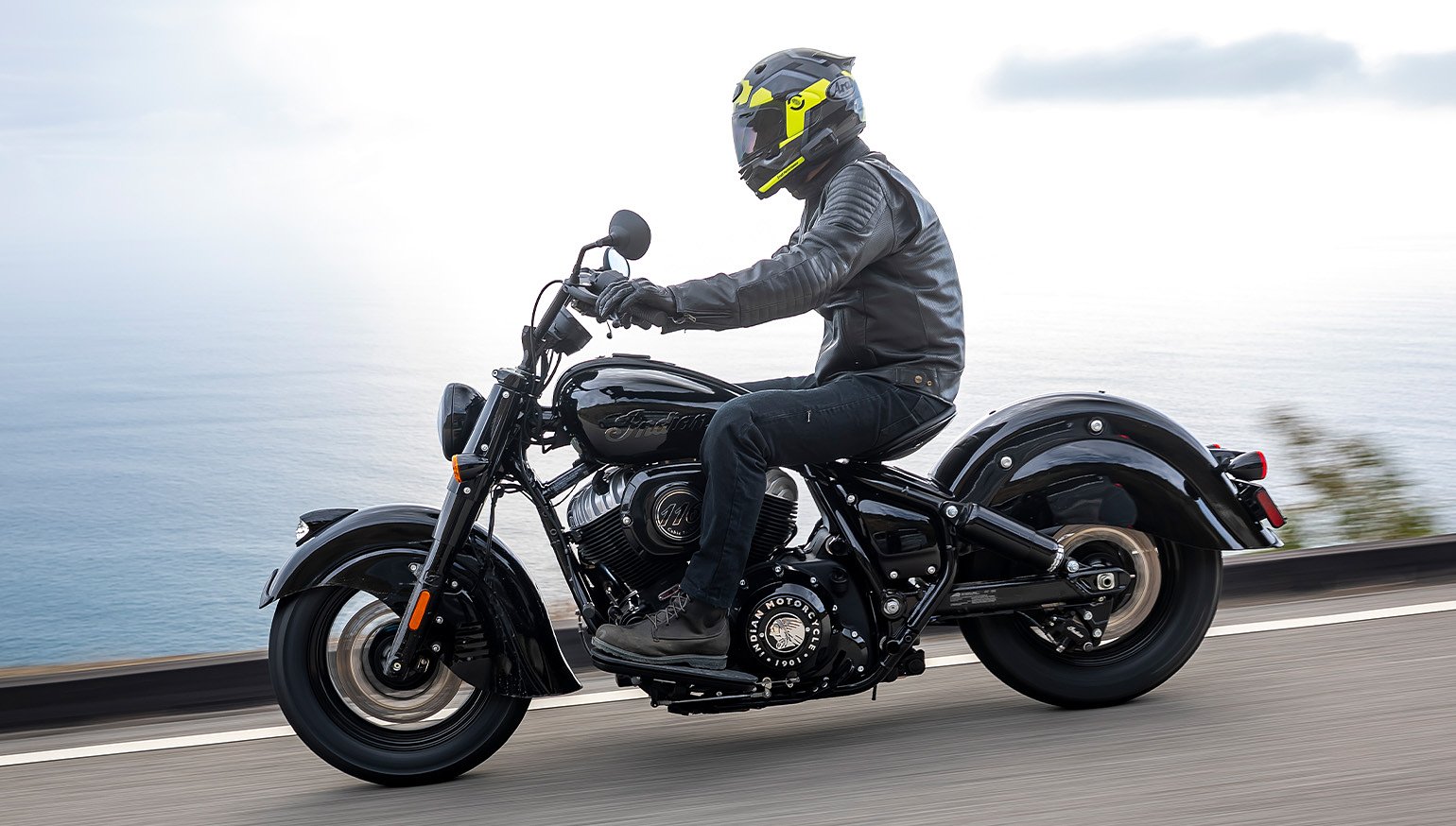
It’s easy to dismiss the Chief Vintage as a design exercise. A parts-bin special. Nostalgia bait, even. I’m guilty of that offense myself. One look at the vintage-passing cruiser, and it’s clear why.
Under its valanced fenders, below its floating seat, behind its throwback handlebar, the Chief Vintage is just an amalgam of other Chiefs. Its headlight nacelle, fork shrouds, and covered shocks hail from the Chief Bobber. Its Thunderstroke 116 V-twin is mechanically identical to those powering the Sport Chief and Super Chief.
In other words, there’s nothing new under all that period-correct eye candy. Or so I thought. Attending the model’s press launch in Hollywood, California, revealed that even if the Vintage is just a dolled-up Chief, it has a soul of its own.

Technically speaking
Take a peek at the spec sheets for the Chief Vintage, Sport Chief, and Chief Bobber, and you’d probably come down with a case of triple vision. That’s to say all three models share strikingly similar dimensions. The trio rolls on 16-inch wire-spoke wheels. Their 46 mm fork yields 5.2 inches of travel. Their preload-adjustable shocks provide even less, at three inches. Their rake (29 degrees), trail (5.2 inches), and wheelbase (64 inches) remain consistent, too.
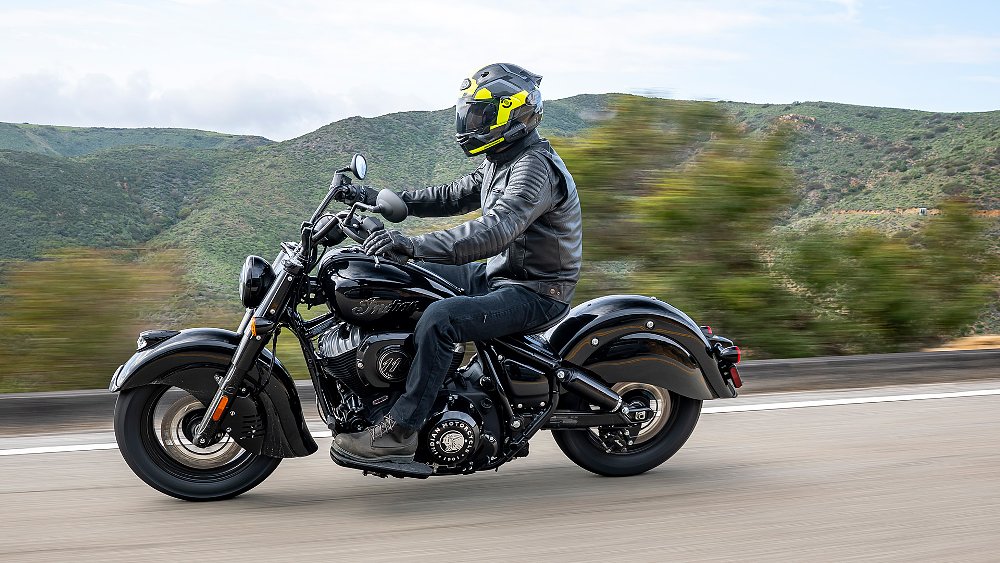
Where the Vintage charts its own course is in the ergonomics department. That was immediately evident when rolling out of the Sheraton Universal Hotel parking lot. The model’s solo saddle rests at a lofty (for the Chief platform, anyway) 27 inches. The full-length floorboards open the legroom, all without placing too much weight on this rider’s bony backside. I fully anticipated the ‘40s-style handlebar to position my hands at waist level, but a set of risers lifted my mitts to just under the pectorals.

Contrary to expectations, the floating seat was a comfortable place to park my posterior. Yes, it feels like sitting on an oversized spoon. Sure, it’s thinly padded. At the same time, the Vintage sufficiently absorbed the garden-variety potholes and bumps found along the stretch of U.S. Route 101 between Universal City and Calabasas. Not bad for a bike with just three inches of rear suspension travel. That doesn’t mean its limits weren’t painfully apparent, though.
By the time our group scurried up the fast and flowing twists and turns of Encinal Canyon Road, the sun had dried any dampness left by the morning showers. Such conditions permitted a brisk pace. Those speeds also showcased the rear suspension’s limitations.
The Vintage’s solo seat sure looks stylish but roll over one long undulating bump and it quickly turns into a catapult arm. One such dip sent me airborne long enough to contemplate my last will and testament. The sharp edged bumps encountered on Decker Road only reiterated the rear end’s damping deficiencies. The audible grunts echoing through my helmet provided proof.
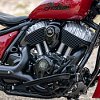
As far as road inconsistencies go, the Chief Vintage is an effective communicator (for better and for worse). The same could be said when it comes to its Thunderstroke 116 engine. At nearly two liters of displacement (1,890 cc), Indian’s air-cooled V-twin piles on the torque, with 120 foot-pounds reportedly arriving at just 2,900 rpm. However, the mill is most responsive above that threshold, not under it. The only problem with that top-end power profile are the vibes that accompany it.
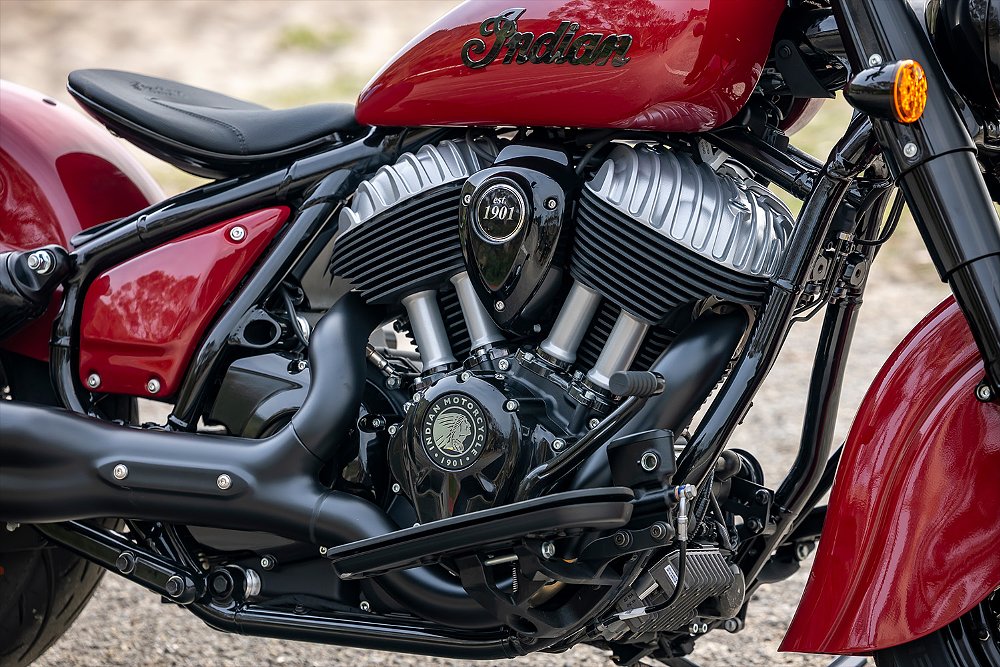
Weaving through Los Angeles gridlock requires deft reaction times from both rider and bike. Keeping the Chief in the meat of its powerband achieved that, allowing me to blast through narrow gaps in rush-hour traffic at a moment’s notice. Doing so also kept the hand grips, floorboards, and seat buzzing. So much so that the cockpit felt like sitting in one of those mall massage chairs. While I rankled at the rumbly ride, it’s a sensation that isn’t all that foreign to cruiser fans. It’s the Vintage’s handling that is.
Nostalgia, made nimble
Comb through the Chief Vintage’s specs with a fine-tooth comb and you’ll find one minor difference between it and its stablemates. Granted, the Sport Chief and Super Chief also favor a 16-inch rear wheel, but the unit found on the Vintage measures 3.5 inches in width. Whereas Indian spoons 180-section rears onto the Sport and Super’s five-inch-wide rims, the Vintage’s narrower hoop warrants the use of 150-section rear tire. That not only suits the variant's retro leanings but also benefits its physical leanings.

To the eye, the Chief Vintage is sleek and graceful. It handles as such, too. Tip-in is smooth and effortless, void of the resistance imparted by wider tire profiles. Its steering is natural and predictable, allowing the 721-pound cruiser to float from apex to exit. Its 64-inch wheelbase compelled a slower pace through the second-gear hairpins of Decker Road, but the stability it provided through the speedy esses of Encinal Canyon was a fair tradeoff.
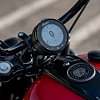
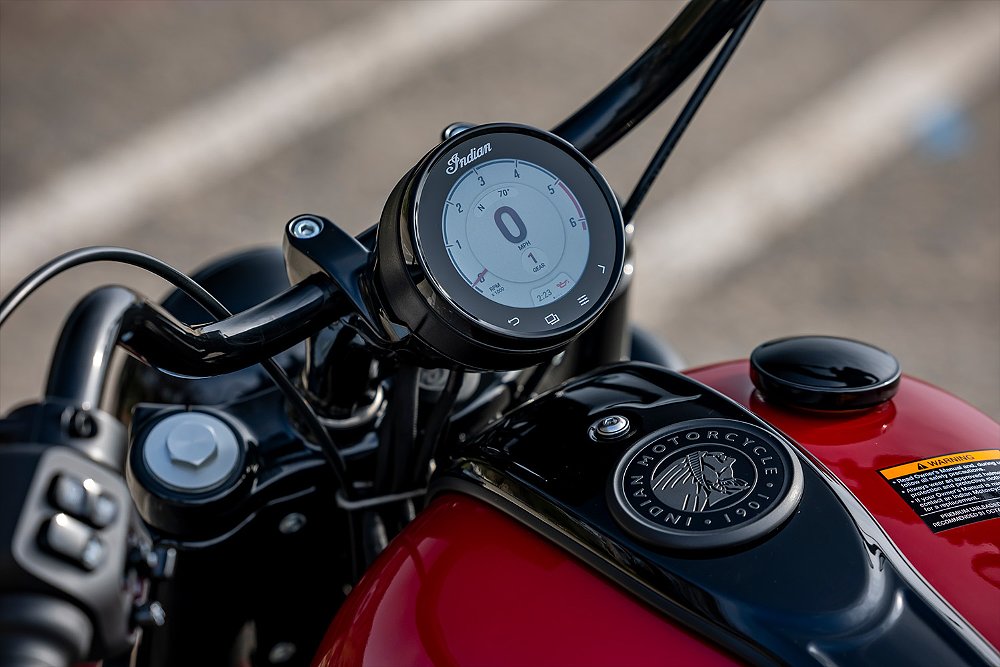
The only quality that undermines the model’s nimble nature is its single-disc front brake. Sure, the setup delivered enough bite force when putting around town, but the higher the needle climbed on the digital speedo, the less effective it proved. Even when combining the front brake with the rear, I overcooked several corners on our ride route. Performance may not top the priority list for Chief Vintage customers, but the bike’s braking performance is a caveat worth noting. It’s just one of several.
Backhanded compliments
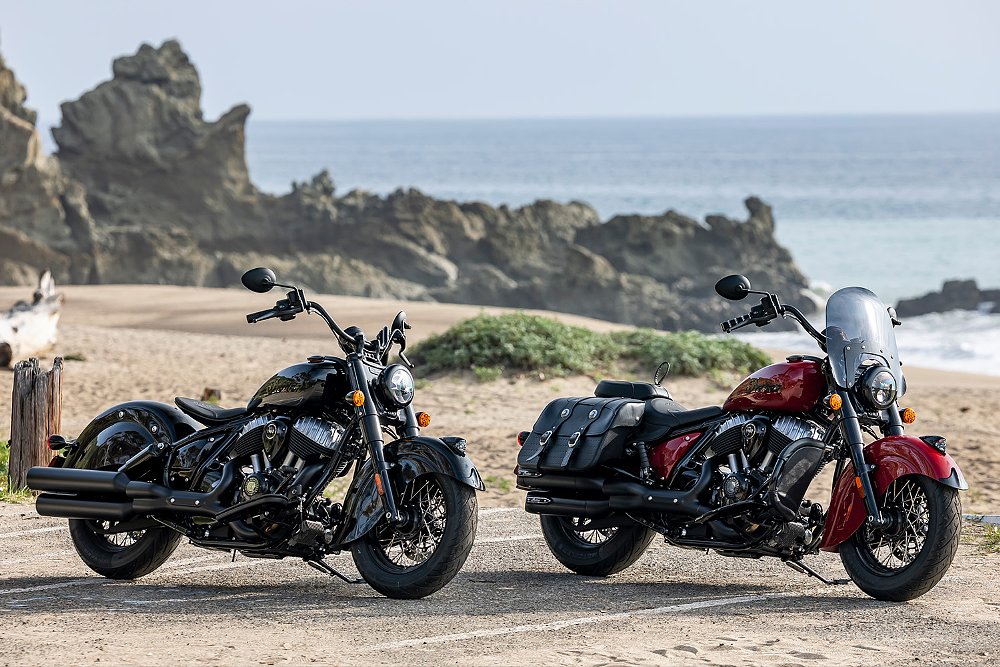
The Chief Vintage surprises in numerous ways. It handles well for a 700-pound cruiser. Its cockpit is comfortable, despite its floating saddle and limited rear travel. It’s at home on the highway, even without wind protection. But tacking on those qualifications is like saying, “You’re articulate for a brute.” The antique-aspiring cruiser has its share of strengths and weaknesses, but it’s the model’s styling that will truly lure customers to Indian showrooms.
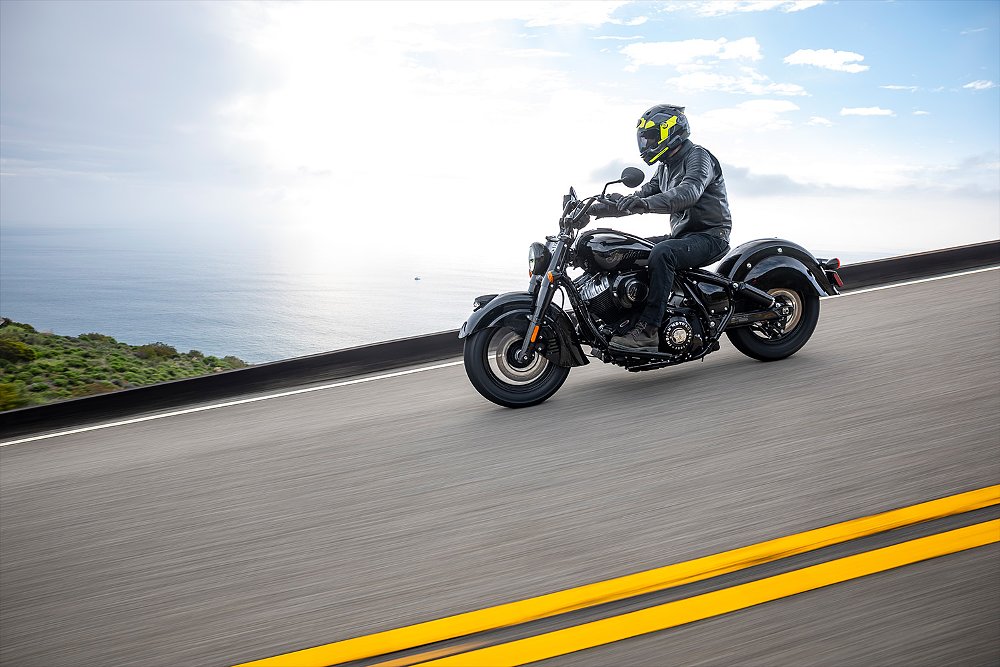
For many cruiser riders, a bike’s looks aren’t just first, they’re foremost. That’s something the Chief Vintage has in abundance. From the Turbo Silver finishes on the V-twin's heads to the lit headdress ornament, the variant’s fit and finish stands up to the Vintage name. That’s clear in photos, but it’s that much more conclusive in person. Yes, the Chief Vintage is a design exercise. It’s nostalgia bait. As far as cruisers go, that’s not such a bad thing.
| 2026 Indian Chief Vintage | |
|---|---|
| Price (MSRP) | $19,999 |
| Engine | 1,890 cc, air-cooled, four-valve, V-twin |
|
Transmission, final drive |
Six-speed, belt |
| Claimed horsepower | N/A |
| Claimed torque | 120 foot-pounds @ 2,900 rpm |
| Frame | Steel tubular |
| Front suspension | 46 mm fork; 5.2 inches of travel |
| Rear suspension | Dual shocks, adjustable for spring preload; 3.0 inches of travel |
| Front brake | Single four-piston caliper, 298 mm with ABS |
| Rear brake | Two-piston caliper, 298 mm disc with ABS |
| Rake, trail | 29.0 degrees, 5.2 inches |
| Wheelbase | 64.0 inches |
| Seat height | 27.0 inches |
| Fuel capacity | 4.0 gallons |
| Tires | Metzeler Cruisetec, 130/90B16 front, 150/80B16 rear |
| Claimed weight | 721 pounds |
| Available | March 2026 |
| Warranty | 24 months (unlimited miles) |
| More info | indianmotorcycle.com |